‘Prove AI use’ says Amazon if you want a promotion

Welcome back. We hope you had a great weekend. Let us know what you think of the design of today’s newsle
tter. Hit reply and let us know—your feedback helps us make this better for everyone.
IN TODAY’S NEWSLETTER
1. Amazon says ‘prove AI use’ if you want a promotion
2. AI fights back against insurance claim denials
3. Chimps, AI and the human language
 AI AT WORKAmazon says ‘prove AI use’ if you want a promotion


Amazon employees working in its smart home division now face a new career reality: demonstrate measurable AI usage or risk being overlooked for promotions. Ring founder and Amazon RBKS division head Jamie Siminoff announced the policy in a Wednesday email, requiring all promotion applications to detail specific examples of AI use. The mandate applies to Amazon’s Ring and Blink security cameras, Key in-home delivery service and Sidewalk wireless network — all part of the RBKS organization that Siminoff oversees.

Starting in the third quarter, employees seeking advancement must describe how they’ve used generative AI or other AI tools to improve operational efficiency or customer experience. Managers face an even higher bar, needing to prove they’ve used AI to accomplish “more with less” while avoiding headcount expansion.The policy reflects CEO Andy Jassy’s broader push to return Amazon to its startup roots, emphasizing speed, efficiency and innovative thinking. Siminoff’s return to Amazon two months ago, replacing former RBKS leader Liz Hamren, came amid this cultural shift toward leaner operations.

Amazon isn’t alone in tying career advancement to AI adoption. Microsoft has begun evaluating employees based on their use of internal AI tools, while Shopify announced in April that managers must prove AI cannot perform a job before approving new hires.The requirements vary by role at RBKS:Individual contributors must explain how AI improved their performance or efficiency. Managers must demonstrate strategic AI implementation that delivers better results without additional staff. All promotion applications must include concrete examples of AI projects and their outcomes. Daily AI use is strongly encouraged across product and operations teams. Siminoff has encouraged RBKS employees to utilize AI at least once a day since June, describing the transformation as reminiscent of Ring’s early days. “We are reimagining Ring from the ground up with AI first,” Siminoff wrote in a recent email obtained by Business Insider. “It feels like the early days again — same energy and the same potential to revolutionize how we do our neighborhood safety.”A Ring spokesperson confirmed the promotion initiative to Fortune, noting that Siminoff’s rule applies only to RBKS employees, not Amazon as a whole. However, the policy aligns with comments Jassy made last month that AI would reduce the company’s workforce through improved efficiency.Amazon has made AI fluency a job requirement, disguised as a career development opportunity. The RBKS policy transforms technology adoption from an optional skill to a mandatory gateway for advancement. This creates a troubling precedent. Career growth now depends on demonstrating measurable AI integration, rather than traditional performance metrics such as revenue generation, team leadership, or customer satisfaction. Employees who excel in areas that don’t easily mesh with current AI tools face an uphill battle for promotion.The policy also assumes equal access to AI-integrated projects across teams. Not every role at Ring or Blink naturally lends itself to AI experimentation, yet the promotion requirements make no distinction between departments with obvious AI applications and those where integration feels forced. Siminoff’s approach may drive efficiency gains, but it risks creating internal inequality based on technological adoption rather than actual job performance. The most concerning aspect is how this could become the template for promotion policies across Amazon and beyond.

Posted in Uncategorized | Tagged , , , , | Leave a comment

Visionaries. Once it was Lemass & Whitaker but sadly now we have none. I would ask people to follow Dan O’Brien because he can see the writing on the wall and Ireland does not want to be back in the 1980’s forced emigration; 1950’s or for that matter the 1930’s. Stop, Read and let the fools run. Please share.

Dan O’Brien

@danobrien20

·

21st July 2025

From many of the reactions here, it is worth pointing out that ‘the economy’ is not somebody else’s greasy till. In this case, it is hundreds of thousand of workers whose livelihoods depend on American companies. It is the tax revenues* that pay for the treatment of sick peopleShow more

Quote

Dan O’Brien

@danobrien20

·

Jul 19

Democracies have interests and values. Putting values before interests is unusual in foreign policy, particularly when interests are sacrificed. That is what has happened with Ireland’s Israel/Palestine position, and the costs became abundantly clear this past week. Delusions

Show more

Posted in Uncategorized | Leave a comment

John Mearsheimer: TRUMP will be facing ENDLESS TROUBLE /Putin Won’t Relent in 50 Days

Daniel Davis / Deep Dive

Jul 20, 2025 Daniel Davis Deep Dive Audio PodcastsDaniel Davis Deep Dive Merch: Etsy store https://www.etsy.com/shop/DanielDavis… Mearsheimer argues that once a president enters a war, it becomes their own and is extremely difficult to exit—something Trump has failed to understand. Biden, in contrast, made significant efforts to avoid war with Iran, even resisting Israeli attempts to provoke U.S. involvement in 2024. Trump, however, “took the bait” and committed the U.S. to a war with Iran on June 22, naively believing it would be a quick and decisive operation. Similarly, Trump’s 50-day ultimatum for ending the Russia-Ukraine conflict is unrealistic and detached from geopolitical reality. The speaker predicts a prolonged, unwinnable war in Ukraine with Russia eventually prevailing, leading to a toxic geopolitical environment—a “frozen conflict” filled with mutual hostility and subversion. They also highlight the arbitrary nature of Trump’s 50-day timeline, attributing it to his impulsive style. In the second half, attention turns to Putin’s recent comments in Russian media, where he reflects on his early naïveté and misplaced trust in the West post-Cold War. The speaker traces this mistrust back to NATO’s eastward expansion in the 1990s despite initial U.S. diplomatic overtures. Putin’s disillusionment has grown over decades, culminating in hardened opposition to the West. Finally, Senator Blumenthal is criticized for suggesting that force is the only language Putin understands. The speaker counters that military force has not succeeded in containing Iran or Russia. The Iranian regime withstood the recent 12-day war, retained enriched uranium, and could rebuild its capabilities. Similarly, Russia remains resilient despite years of Western pressure, and military force has failed to change that. The belief that stronger military posturing will produce favorable outcomes is, in the speaker’s view, a “pipe dream.”

Posted in Uncategorized | Tagged , , , , | Leave a comment

Col Doug Macgregor: MORE WEAPONS for UKRAINE is MEANINGLESS

Daniel Davis / Deep Di

Posted in Uncategorized | Leave a comment

1946 UK … The 1946 Squatters

Posted in Uncategorized | Leave a comment

The Rundown Tech: UK babies born with DNA from 3 people

 UK babies born with DNA from 3 people
Image source: New Castle University
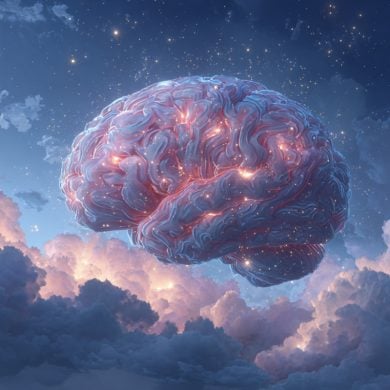
The Rundown: Eight healthy babies have been born in the UK using mitochondrial donation, a biotech breakthrough that combines DNA from three people to dramatically reduce the risk of children inheriting potentially fatal mitochondrial diseases.
The details:
The procedure, known as mitochondrial replacement therapy (MRT), transfers the parents’ nuclear DNA into a donor egg with healthy mitochondria.Only about 0.1% of a person’s total DNA comes from mitochondria, so the vast majority of the child’s genetic traits are inherited from the parents.This IVF technique is reserved for women at very high risk of passing on severe mitochondrial disease, and candidates are vetted by a regulatory body.The team from Newcastle University published their results in two papers in The New England Journal of Medicine.
Why it matters: The team spent years finessing this technique, lauded as one of medicine’s most ambitious gene-editing pivots. It is a high-wire act in bioengineering — bypassing disease inheritance without altering the nuclear genome — making it ethically and technically distinct from embryo gene editing like CRISPR.
Posted in Uncategorized | Leave a comment

COURAGE.MEDIA (Ayaan Hirsi Ali) …. South Africa

Ernst Roets | EP18

South Africa’s downward spiral: a warning for the West

13 Jul 2025

Ayaan Hirsi Ali

View articles

Ayaan is joined by Ernst Roets, a South African activist, author, and the founder of a new think tank that seeks to promote a more sustainable political system for his country. He explains how South Africa’s 140+ race-based laws are turning the once prosperous nation into a third world country where not one government department functions properly, convicted felons and rapists are hired as police officers, and women and children cannot walk alone on the streets in broad daylight.

Become a Free

Posted in Uncategorized | Leave a comment

Neuroscience News: AI … how we really make decisions. Comment: Could this explain why people with TBI or mental illness find it so difficult to exercise choice?

Tiny AI Models Reveal How We Really Make Decisions

FeaturedNeuroscience

·July 18, 2025

Summary: Decision-making often involves trial and error, but conventional models assume we always act optimally based on past experience. A new study used small, interpretable artificial neural networks to uncover how humans and animals actually make choices—revealing the suboptimal strategies we often use.

These models predicted individual decisions more accurately than traditional theories by reflecting real-world, imperfect behavior. This work could transform how we understand cognitive strategies and tailor mental health or behavioral interventions.

Key Facts:

  • Realistic Insights: Tiny AI models revealed decision-making strategies are often suboptimal but systematic.
  • Individual Differences: The models predicted individual behavior better than optimality-based frameworks.
  • Broader Impact: Findings may inform mental health approaches by mapping cognitive diversity.

Source: NYU

Researchers have long been interested in how humans and animals make decisions by focusing on trial-and-error behavior informed by recent information.

However, the conventional frameworks for understanding these behaviors may overlook certain realities of decision-making because they assume we make the best decisions after taking into account our past experiences.

This shows the outline of a head.
However, existing models of this process, because they are aimed at depicting optimal decision-making, often fail to capture realistic behavior. Credit: Neuroscience News

A newly released study by a team of scientists deploys AI in innovative ways to better understand this process.

By using tiny artificial neural networks, the researchers’ work illuminates in detail what drives an individual’s actual choices—regardless of whether those choices are optimal or not.

“Instead of assuming how brains should learn in optimizing our decisions, we developed an alternative approach to discover how individual brains actually learn to make decisions,” explains Marcelo Mattar, an assistant professor in New York University’s Department of Psychology and one of the authors of the paper, which appears in the journal Nature.

“This approach functions like a detective, uncovering how decisions are actually made by animals and humans. By using tiny neural networks—small enough to be understood but powerful enough to capture complex behavior—we’ve discovered decision-making strategies that scientists have overlooked for decades.”

The study’s authors note that small neural networks—simplified versions of the neural networks typically used in commercial AI applications—can predict the choices of animals much better than classical cognitive models, which assume optimal behavior, because of their ability to illuminate suboptimal behavioral patterns.

In laboratory tasks, these predictions are also as good as those made by larger neural networks, such as those powering commercial AI applications.

“An advantage of using very small networks is that they enable us to deploy mathematical tools to easily interpret the reasons, or mechanisms, behind an individual’s choices, which would be more difficult if we had used large neural networks such as the ones used in most AI applications,” adds author Ji-An Li, a doctoral student in the Neurosciences Graduate Program at the University of California, San Diego.

“Large neural networks used in AI are very good at predicting things,” says author Marcus Benna, an assistant professor of neurobiology at UC San Diego’s School of Biological Sciences.

“For example, they can predict which movie you would like to watch next. However, it is very challenging to describe succinctly what strategies these complex machine learning models employ to make their predictions —such as why they think you will like one movie more than another one.

“By training the simplest versions of these AI models to predict animals’ choices and analyzing their dynamics using methods from physics, we can shed light on their inner workings in more easily understandable terms.”

Understanding how animals and humans learn from experience to make decisions is not only a primary goal in the sciences, but, more broadly, useful in the realms of business, government, and technology.

However, existing models of this process, because they are aimed at depicting optimal decision-making, often fail to capture realistic behavior.

Overall, the model described in the new Nature study matched the decision-making processes of humans, non-human primates, and laboratory rats.

Notably, the model predicted decisions that were suboptimal, thereby better reflecting the “real-world” nature of decision-making—and in contrast to assumptions of traditional models, which are focused on explaining optimal decision-making.

Moreover, the NYU and UC San Diego scientists’ model was able to predict decision-making at the individual level, revealing how each participant deploys different strategies in reaching their decisions.

“Just as studying individual differences in physical characteristics has revolutionized medicine, understanding individual differences in decision-making strategies could transform our approach to mental health and cognitive function,” concludes Mattar.

Funding: The research was supported by grants from the National Science Foundation (CNS-1730158, ACI-1540112, ACI-1541349, OAC-1826967, OAC-2112167, CNS-2100237, CNS-2120019), the Kavli Institute for Brain and Mind, the University of California Office of the President, and UC San Diego’s California Institute for Telecommunications and Information Technology/Qualcomm Institute.

About this AI and decision-making research news

Author: James Devitt
Source: NYU
Contact: James Devitt – NYU
Image: The image is credited to Neuroscience News

Original Research: Open access.
“Discovering cognitive strategies with tiny recurrent neural networks” by Marcelo Mattar et al. Nature


Abstract

Discovering cognitive strategies with tiny recurrent neural networks

Understanding how animals and humans learn from experience to make adaptive decisions is a fundamental goal of neuroscience and psychology.

Normative modelling frameworks such as Bayesian inference and reinforcement learning provide valuable insights into the principles governing adaptive behaviour.

However, the simplicity of these frameworks often limits their ability to capture realistic biological behaviour, leading to cycles of handcrafted adjustments that are prone to researcher subjectivity.

Here we present a novel modelling approach that leverages recurrent neural networks to discover the cognitive algorithms governing biological decision-making.

We show that neural networks with just one to four units often outperform classical cognitive models and match larger neural networks in predicting the choices of individual animals and humans, across six well-studied reward-learning tasks.

Critically, we can interpret the trained networks using dynamical systems concepts, enabling a unified comparison of cognitive models and revealing detailed mechanisms underlying choice behaviour.

Our approach also estimates the dimensionality of behaviour and offers insights into algorithms learned by meta-reinforcement learning artificial intelligence agents.

Overall, we present a systematic approach for discovering interpretable cognitive strategies in decision-making, offering insights into neural mechanisms and a foundation for studying healthy and dysfunctional cognition.

Join our Newsletter

 I agree to have my personal information transferred to AWeber for Neuroscience Newsletter ( more information )

Sign up to receive our recent neuroscience headlines and summaries sent to your email once a day, totally free.

We hate spam and only use your email to contact you about newsletters. You can cancel your subscription any time.

Tags

AIArtificial Intelligencebrain researchcognitiondecision makingDeep LearningMachine LearningneurobiologyNeuroscienceNYU

ShareTweetShareShareSubmitEmail

Neuroscience News

Neuroscience News posts science research news from labs, universities, hospitals and news departments around the world. Science articles cover neuroscience, psychology, AI, robotics, neurology, brain cancer, mental health, machine learning, autism, Parkinson’s, Alzheimer’s, brain research, depression and other sciences.

Related

This shows a brain and DNA.

Why Antidepressants Work Better for Some

This shows a doctor and herbal remedies.

Illusory Beliefs Fuel Risky Health Choices

This shows a brain and clouds.

Sleeping Brain Reveals Clues to Hidden Disorders

Leave a Reply

Your email address will not be published. Required fields are marked *

Comment *

Name *

Email *

Website

Notify me of follow-up comments by email.

Notify me of new posts by email.

Neuroscience News Footer Logo

Neuroscience News Sitemap
Neuroscience Graduate and Undergraduate Programs
Free Neuroscience MOOCs
About
Contact Us
Privacy Policy
Submit Neuroscience News
Subscribe for Emails

Neuroscience Research
Psychology News
Brain Cancer Research
Alzheimer’s Disease
Parkinson’s News
Autism / ASD News
Neurotechnology News
Artificial Intelligence News
Robotics News

Search Neuroscience News

Neuroscience News is an online science magazine offering free to read research articles about neuroscience, neurology, psychology, artificial intelligence, neurotechnology, robotics, deep learning, neurosurgery, mental health and more.

Neuroscience News

Neuroscience News Logo

This shows a brain and DNA.

This shows the outline of a head.

This shows a doctor and herbal remedies.

This shows a brain and clouds.

Update Privacy Settings

Posted in Uncategorized | Tagged , , , , | Leave a comment

Futurism: Economic Trade and Tariff War. What is China doing?

China Is Using Trump’s Tactics Against Him to Corner the EV Market

A masterful gambit, sir.

/ Advanced Transport/ China/ Donald Trump/ Elon Musk

Tasos Katopodis via Getty / Futurism

Image by Tasos Katopodis via Getty / Futurism

Although Donald Trump presents himself as a fierce adversary of China, some of his policy moves appear to be a significant boon for the People’s Republic.

This spring, as Trump’s chaotic tariff war captured headlines, a game-changing electric vehicle provision in his “Big Beautiful Bill” lurked just below the surface. After being signed into law on July 4, it turns out that the massive piece of legislation is set to completely upend the American EV market.

That’s thanks to a provision in the bill which terminates the US’s long-standing $7,500 tax credits for buyers of new EVs, which tech companies like Tesla used to establish themselves as key players in the global EV market.

Analysts writing for Foreign Policy have called this a major handout to Chinese automakers, who are already leading the market as the number one global exporter of EVs. When EV tax credits do expire — which will come three months earlier than originally planned, thanks to the US Senate — the “entire [EV] supply chain could be ceded to China.”

USA Today adds that US automakers are set to lose “billions of dollars” in manufacturing investments as American EV purchasing slows to a crawl without the $7,500 discount. That in turn could lead to “major job losses for Americans,” and may very well give China the go-ahead to crush the United States in the EV trade once and for all.

Though the fall-out is still months away, Chinese lawmakers aren’t waiting to set up the killing blow. Instead, they’re taking a page out of Trump’s tariff playbook by moving to heavily restrict US access to electric vehicle batteries through the market.

As the Wall Street Journal reported, China recently added components and technology related to EV battery production to its list of export restrictions. Basically, this means that authorities in Beijing will have to approve the export of any EV battery tech leaving China. For the rest of the world, this could mean supply chain slowdowns, higher prices, and depending on geopolitical attitudes, the halt of exports altogether.

“By managing emerging technologies across the entire EV industry, China, already a leader, can further strengthen its competitive position against other nations,” Tang Jin, a senior research at Mizuho Bank, told the WSJ.

China already has a firm grasp on the world’s EV market, with a commanding lead on crucial links in the supply chain, like lithium mining and battery cell production. When it comes to electric vehicles, Beijing is certainly playing with a stacked deck.

Trump, on the other hand, may not care to keep American auto factories open — a bizarre choice, given his insistence on “reindustrializing” the country — but those involved in the country’s $120 billion EV market sure do.

More on China: BYD Is Suddenly Crushing Tesla

Share This Article

Posted in Uncategorized | Tagged , , , , | Leave a comment

EL PAIS: Impact of AI

Select:

EL PAÍS

subscribe LOG IN

Society

Youtubers Latest News

psychology

Is artificial intelligence turning off our minds?

Despite its undeniable advantages, using AI programs introduces latent threats such as biases, mental laziness, and cognitive debt

Pilar Jericó

Pilar Jericó

JUL 17, 2025 – 12:35 CEST

Share on Whatsapp

Share on Facebook

Share on Twitter

Share on Bluesky

Share on Linkedin

Copy link

Artificial intelligence is like living with a teenager: sometimes brilliant; other times, a little clumsy, but it never ceases to amaze us… When we interact with artificial intelligence (AI) programs like ChatGPT, Gemini, Claude, Grok, and so many others, we are amazed by their tremendous potential to transform the future, both at work and in our everyday lives. These are applications that inspire curiosity and in which we also place our trust. In fact, a recent study published in Harvard Business Review lists among the most prominent uses of AI in 2025 its role as emotional support. Beyond generating texts or automating tasks, these tools are being used as therapists, to organize our lives, and even to help clarify our life purpose. And this is just the beginning. As Dr. Silvia Leal, technology expert and advisor to the OECD, predicted: “We will talk more with chatbots or AI applications than with our partners.” She published this in 2017; today, many people spend more time with AI-powered tools or devices than with real humans. To make proper use of this technology, we need to understand the risks our minds face when they come into contact with it. Let’s look at three of the most relevant ones.

The first risk stems from the world of bias. Dr. Leal explains: “AI advances without being able to avoid data biases or internet lies. Furthermore, it develops in our own image and likeness, and humans are far from perfect.” In other words, this technology will be fast and surprising, but it can fail. Furthermore, the belief that AI is infallible accentuates our automation bias, whereby we don’t question the results it offers us or we blindly follow a browser, even if it takes us to a site we think is wrong.

The second risk arises from our brain’s energy conservation. Our gray matter is programmed to save effort; it weighs 2% of our body, but consumes more than 20% of our daily energy. For this reason, we tend to avoid certain unnecessary efforts and fall into what is known as cognitive laziness. Due to laziness, we stop remembering phone numbers or practicing mental calculations if we have address books or calculators on our phones. Also because of laziness, when faced with a doubt, we have an unconscious tendency to look for a quick solution to reduce the discomfort, according to researchers at the University of Texas, after analyzing how frequently students reviewed their exams before handing them in. With this natural starting point, it’s not surprising that AI accentuates cognitive laziness and begins to weaken our memory when it comes to recalling information.

Finally, and related to the previous point, the third unconscious risk may be the most worrying of all: the brain activities we “sacrifice” beyond memory. In a recent experiment conducted by MIT, the activity of 32 brain regions of volunteers writing essays on philanthropy was measured over the course of four sessions and using different resources. The first group had no help; the second could only rely on search engines like Google; and the third could use ChatGPT. After the sessions, they discovered that the third group recorded lower brain activity, poorer memory of what they had written, and a weaker sense of authorship compared to the other groups, especially the first. Or, as the researchers themselves noted, the groups that used the AI “consistently underperformed at neural, linguistic, and behavioral levels.” But even worse, the last essay the volunteers had to write had to be a compilation of the previous three, and in this case, they were asked to switch resources. Those who had used AI switched to relying solely on their own reflections, and so on. What emerged was that the group that had initially used ChatGPT maintained the same limited mental activity, even when they no longer had access to it. This phenomenon is known as “cognitive debt.” In other words, intensive use of AI can provide short-term benefits, but at the cost of impaired learning, the ability to form complex ideas, creativity, motivation, or a deep connection with what they’ve learned, among others.

The three difficulties mentioned above warn us of something important: with AI, we run the risk of becoming increasingly dependent and of exerting less mental effort in our daily activities. Furthermore, we know that the brain, in its efficiency, tends to weaken the functions it doesn’t exercise. Therefore, we need to train critical thinking, make conscious and limited use of artificial intelligence, turning it into a coach and not a crutch that could replace many of our mental processes. We must question the results this technology offers us based on our experience or that of other sources, use it as a mental sparring partner, but not turn it into a shortcut that compromises our learning or into an all-knowing oracle.

Pilar Jericó is the author of the Happiness Lab blog.

Sign up for our weekly newsletter to get more English-language news coverage from EL PAÍS USA Edition

Sign up to EL PAÍS US Edition bulletin

Society El País in English on Facebook

Society El País in English on Twitter

More information

IA emociones

AI cannot feel emotions, but it can recognize them in an image

Manuel G. Pascual

Cirujia

A robot shows that machines may one day replace human surgeons

Daniel Mediavilla

Posted in Uncategorized | Tagged , , , , | Leave a comment