The Rundown: In a defiant stand-off with French authorities, X declared it will refuse to cooperate with a sweeping French criminal investigation into alleged algorithmic bias and “foreign interference.”
The details:
Authorities have requested deep access to X’s algorithmic recommendation code, moderation logs, back-end AI systems, and user metadata.The probe centers on accusations that X’s algorithm amplifies hate speech, misinformation, and possible foreign influence during sensitive election periods.X says it’s resisting the inquiry on both legal and ethical grounds, claiming the probe is an attempt to “weaponize regulation” against opposition speech.Notably, authorities have labeled X an “organized gang” in their probe, which equips French law enforcement with the power to wiretap X executives.
Why it matters:
This dispute could be a pivotal test for how much access European governments can demand from U.S. tech platforms. If France ramps up enforcement or imposes sanctions on X, it could fuel a major EU-U.S. clash over digital sovereignty, impacting everything from privacy rules to broader tech and data sharing partnerships.
The Trump administration’s refusal to release the Epstein files and videos is done not only to protect Trump, but the ruling class. They all belong to the same club. Read the article here: https://chrishedges.substack.com/p/tr…
“To date, when faced with an amnesic problem, we thought of attention deficits or difficulties in acquiring information. Our results suggest that there could also be a failure in these segmentation signals, in how information is structured in the brain”, they note.
Quote above: this is science at its best. Many people who are homeless have traumatic brain injuries, neurological conditions, drug addictions, alcohol addictions. How many people are just one paycheck from homelessness.
Jul 19, 2025
The Safer Kentucky Act Is Making Homelessness Worse. Across America, new laws are punishing homeless people simply for existing. In Kentucky, the Safer Kentucky Act makes it illegal to sit, lie down, or carry something as basic as a blanket in public. Homeless people are being fined, arrested, and jailed, even when they have nowhere else to live. We went to Louisville to see the impact firsthand. We spoke with people who’ve been cited for sleeping, threatened with jail, and forced to move from place to place every few days, losing their belongings again and again. One elderly woman told us how a police officer dragged her down a set of stairs. We also highlight the story of a pregnant woman who was given a citation while she was in labor. This isn’t just happening in Kentucky. Since the Grants Pass Supreme Court ruling, over 260 cities have passed similar laws. These policies don’t reduce homelessness; they make it worse. But we’ve also seen what works: housing-first programs, low-barrier shelters, and supportive services that restore dignity, save lives, and save taxpayer money. We’re wasting lives and taxpayer dollars on failed policies. The only real way forward is housing and support, not handcuffs. More arrests won’t end homelessness. Housing will. ✊ Take action to support the Housing Not Handcuffs Act: https://housingnothandcuffs.org/hnhact Support VOCAL Kentucky here: https://vocal-ky.org This documentary is a collaboration between Invisible People and the National Law Center on Homelessness and Poverty. MORE: Illegal to Sleep: Grants Pass’ Cruel War on Homelessness • Illegal to Sleep: Grants Pass’ Cruel War o… From a Tent to a Home: No Longer Homeless • From a Tent to a Home: No Longer Homeless Can We End Homelessness? Hennepin County Shows How • Can We End Homelessness? Hennepin County S…
Summary: Researchers have identified ripple-type brain waves as key to how humans segment and store memories. By recording brain activity in epilepsy patients watching a TV episode, they found ripples marked event boundaries in the hippocampus while supporting information processing in cortical areas.
This segmentation acts like punctuation, helping organize experiences into coherent episodes. The findings may inform therapies for memory impairments by targeting how the brain structures information.
Key Facts:
Ripple Waves Identified: Ripples mark memory episode boundaries in the hippocampus.
Naturalistic Context: Study captured ripple dynamics during real-life-like experience watching a TV show.
Therapeutic Potential: Insights could guide strategies for memory disorders by enhancing information segmentation.
Source: University of Barcelona
A research team from the Faculty of Psychology at the University of Barcelona, the UB Institute of Neurosciences (UBneuro) and the Bellvitge Biomedical Research Institute (IDIBELL) has identified, for the first time in humans, and in a realistic environment, a key neurophysiological mechanism in memory formation: ripple-type brain waves —high-frequency electrical oscillations that mark and organize the different episodes or fragments of information that the brain stores as memories.
These findings, published in the journal Nature Communications, deepen our understanding of how memory is organized in the human brain and open up new avenues for addressing disorders related to memory impairment.
The results could also have important implications for understanding memory disorders and developing future therapeutic interventions. Credit: Neuroscience News
The study is led by Lluís Fuentemilla, a researcher at the IDIBELL and UBneuro Cognition and Brain Plasticity research group, and is part of the doctoral thesis carried out in this same group by Marta Silva, the article’s first author, who is currently at Columbia University (United States). Experts from the Epilepsy Unit at Hospital Clínic de Barcelona – August Pi i Sunyer Biomedical Research Institute (IDIBAPS), Columbia University, Ruhr University Bochum and Ludwig Maximilian University of Munich (Germany) also participated in the study. The recollection of specific episodes is the basis of memory. Although experience is constant, there is evidence that the brain segments it when there are changes in the flow of information to convert it into memories.
“These segments mark the point at which the brain closes one episode in memory and begins recording another. For example, when you are doing something and you receive a phone call or the doorbell rings, the brain identifies that there has been a change in the course of the experience and uses these events as if they were punctuation marks, a full stop in a sentence, to proceed to store what you were doing in the form of an episode”, says Lluís Fuentemilla.
Previous studies in mice have indicated that ripples play a fundamental role in memory formation.
“These waves are thought to coordinate information transfer between the hippocampus and neocortical regions — the temporal and frontal cortex — helping to integrate new memories. This neural signal is key to generating synaptic potentiation, allowing the brain to fix and consolidate a memory”, note the researchers.
A pioneering experiment
Although these signals have been extensively studied in animals, especially mice, their analysis in humans has been very limited. This is due to the difficulty of recording them, as they originate in brain areas that require the use of intracranial electrodes.
In this study, however, researchers have managed to analyse these waves in a naturalistic context, i.e. in conditions close to everyday life.
To achieve this, they recorded the intracranial electrophysiological activity of ten patients with epilepsy — who had undergone surgery for clinical reasons — while they watched the first episode of the BBC series Sherlock, which lasts 50 minutes.
“This type of narrative format, as in real life, features scene changes that the brain identifies as event boundaries. The participants were then asked to recall and recount what they remembered of the plot”, the authors explain.
The results showed a dynamic pattern of ripple wave activation during memory encoding.
“We observed that these waves occurred in both the hippocampus and neocortical areas. However, they followed a different temporal rhythm: in the hippocampus, ripple activity increased at the boundaries of events, reflecting their role in segmentation; in contrast, in cortical regions, their presence was higher during the internal development of events”, says Marta Silva.
According to the researchers, this pattern suggests coordination between the two brain structures, as if they were “an orchestra”: the neocortical regions actively process information, and the hippocampus kicks in when there is a change of scene to “pack and consolidate” the memory.
Segmenting to remember
These findings reinforce the idea of the importance of segmentation and structuring in memory formation.
“What we see, both in this study and in related work, is that it is not enough to pay attention and record information, but that it is equally or more important to organize it in the context of the constant flow of information.
“In other words, it is not just a matter of activating the brain’s machinery while it is recording information, but also of acting as an orchestra conductor who marks when the memory begins and ends.
“These signals help not only to record what is happening as it happens, but also to organize the information coherently”, they point out.
The results could also have important implications for understanding memory disorders and developing future therapeutic interventions.
“To date, when faced with an amnesic problem, we thought of attention deficits or difficulties in acquiring information. Our results suggest that there could also be a failure in these segmentation signals, in how information is structured in the brain”, they note.
In this sense, the study opens the door to exploring therapies that consider how information is organized at the brain level.
“In older people, for example, who are beginning to show memory impairment, it could be beneficial to present information in a more structured way, with clear pauses between relevant events. Not only as a matter of cognitive rhythm, but because this could facilitate its correct encoding and storage”, they conclude.
About this memory and neuroscience research news
Author: Rosa Martínez Source: University of Barcelona Contact: Rosa Martínez – University of Barcelona Image: The image is credited to Neuroscience News
MITMIT’s device lets anyone train robotsImage source: MITThe Rundown: MIT researchers just developed a breakthrough: a smart, handheld device that lets anyone — engineer, machinist, or a total novice — train a robot by guiding it through tasks, either remotely, by direct manipulation, or simply by demo.
The details:MIT’s versatile demonstration interface (VDI) supports joystick-wielding teleoperation, hands-on physical guidance, or simply mimicking a demo.Equipped with gyroscopes, accelerometers, and force sensors, the VDI captures fine movements and pressure for ultra-precise robot training.The attachment is engineered to fit a variety of existing collaborative robotic arms, making it easy to adopt without major hardware changes.Users can switch between teaching methods within a single session depending on what’s most efficient or safe for the task.Why it matters: In tests, factory workers used the VDI to teach robots complicated assembly lines, from snap-fit assembly to precision mold handling, with researchers reporting a dramatic reduction in training time and error rates as compared to traditional methods, and with no coding skills required.
According to a leaked intelligence report, the recent US attacks against Iran’s nuclear facilities likely pushed back their nuclear program by only a few months—a far cry from Donald Trump’s initial claim that Iran’s nuclear enrichment facilities had been “completely and totally obliterated.” Since Trump withdrew the US from the Iran deal—formally known as the Joint Comprehensive Plan of Action (JCPOA)—in 2018, Iran has built back its stockpile of enriched uranium and even started enriching at levels that could create a bomb. These military actions against Iran’s nuclear weapons development are the latest in a long line of efforts to prevent a nuclear breakout within the Middle East and North Africa. Israel is believed to be the first Middle Eastern nation to develop a nuclear weapon, which it accomplished through covert means. Meanwhile, countries that renounced efforts to develop nuclear weapons, like Libya, Syria, and Iraq, later saw their leaders deposed and sometimes brutally executed. Still, other nations have sought to follow Israel’s path to develop their own weapons, which could have cascading effects around the world. If Trump is interested in resolving the crisis, diplomacy remains the best method for preventing a nuclear breakout in Iran and beyond. 0:00 – Introduction 1:21 – Origins of Israel’s nuclear weapons program 1:48 – Uranium enrichment 2:35 – Stolen uranium 3:28 – Israel’s nuclear weapons arsenal 4:22 – Origins of Iran’s nuclear weapons program 4:27 – Geopolitical consequences of an Iranian nuclear weapon 5:23 – The Iran Deal 6:01 – US attacks on Iran’s nuclear facilities 6:25 – What happens next? #Israel#Iran#nuclearweapons#Trump
Welcome back. We hope you had a great weekend. Let us know what you think of the design of today’s newsle
tter. Hit reply and let us know—your feedback helps us make this better for everyone.
IN TODAY’S NEWSLETTER
1. Amazon says ‘prove AI use’ if you want a promotion
2. AI fights back against insurance claim denials
3. Chimps, AI and the human language
AI AT WORKAmazon says ‘prove AI use’ if you want a promotion
Amazon employees working in its smart home division now face a new career reality: demonstrate measurable AI usage or risk being overlooked for promotions. Ring founder and Amazon RBKS division head Jamie Siminoff announced the policy in a Wednesday email, requiring all promotion applications to detail specific examples of AI use. The mandate applies to Amazon’s Ring and Blink security cameras, Key in-home delivery service and Sidewalk wireless network — all part of the RBKS organization that Siminoff oversees.
Starting in the third quarter, employees seeking advancement must describe how they’ve used generative AI or other AI tools to improve operational efficiency or customer experience. Managers face an even higher bar, needing to prove they’ve used AI to accomplish “more with less” while avoiding headcount expansion.The policy reflects CEO Andy Jassy’s broader push to return Amazon to its startup roots, emphasizing speed, efficiency and innovative thinking. Siminoff’s return to Amazon two months ago, replacing former RBKS leader Liz Hamren, came amid this cultural shift toward leaner operations.
Amazon isn’t alone in tying career advancement to AI adoption. Microsoft has begun evaluating employees based on their use of internal AI tools, while Shopify announced in April that managers must prove AI cannot perform a job before approving new hires.The requirements vary by role at RBKS:Individual contributors must explain how AI improved their performance or efficiency. Managers must demonstrate strategic AI implementation that delivers better results without additional staff. All promotion applications must include concrete examples of AI projects and their outcomes. Daily AI use is strongly encouraged across product and operations teams. Siminoff has encouraged RBKS employees to utilize AI at least once a day since June, describing the transformation as reminiscent of Ring’s early days. “We are reimagining Ring from the ground up with AI first,” Siminoff wrote in a recent email obtained by Business Insider. “It feels like the early days again — same energy and the same potential to revolutionize how we do our neighborhood safety.”A Ring spokesperson confirmed the promotion initiative to Fortune, noting that Siminoff’s rule applies only to RBKS employees, not Amazon as a whole. However, the policy aligns with comments Jassy made last month that AI would reduce the company’s workforce through improved efficiency.Amazon has made AI fluency a job requirement, disguised as a career development opportunity. The RBKS policy transforms technology adoption from an optional skill to a mandatory gateway for advancement. This creates a troubling precedent. Career growth now depends on demonstrating measurable AI integration, rather than traditional performance metrics such as revenue generation, team leadership, or customer satisfaction. Employees who excel in areas that don’t easily mesh with current AI tools face an uphill battle for promotion.The policy also assumes equal access to AI-integrated projects across teams. Not every role at Ring or Blink naturally lends itself to AI experimentation, yet the promotion requirements make no distinction between departments with obvious AI applications and those where integration feels forced. Siminoff’s approach may drive efficiency gains, but it risks creating internal inequality based on technological adoption rather than actual job performance. The most concerning aspect is how this could become the template for promotion policies across Amazon and beyond.

 Image source: Daniel Oberhaus/Wikimedia Commons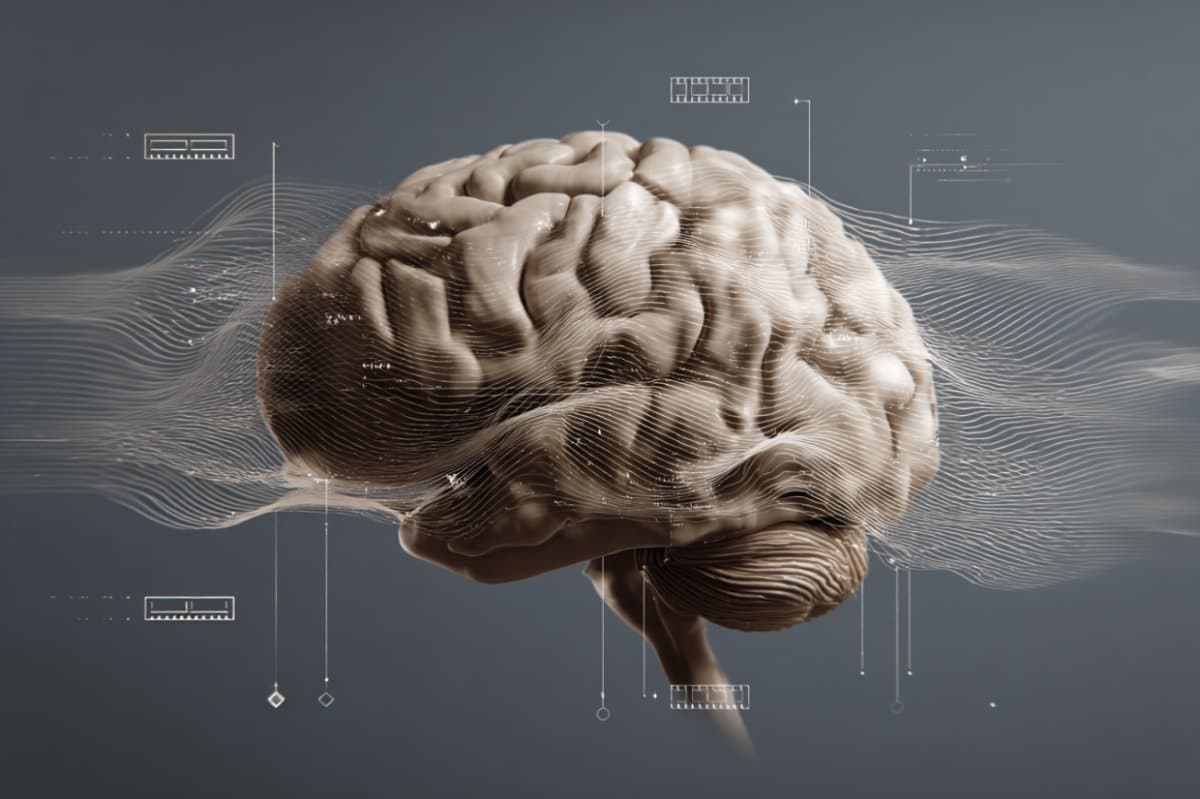

 Image source: MITThe Rundown: MIT researchers just


 Amazon has made AI fluency a job requirement, disguised as a career development opportunity. The RBKS policy transforms technology adoption from an optional skill to a mandatory gateway for advancement. This creates a troubling precedent. Career growth now depends on demonstrating measurable AI integration, rather than traditional performance metrics such as revenue generation, team leadership, or customer satisfaction. Employees who excel in areas that don’t easily mesh with current AI tools face an uphill battle for promotion.The policy also assumes equal access to AI-integrated projects across teams. Not every role at Ring or Blink naturally lends itself to AI experimentation, yet the promotion requirements make no distinction between departments with obvious AI applications and those where integration feels forced. Siminoff’s approach may drive efficiency gains, but it risks creating internal inequality based on technological adoption rather than actual job performance. The most concerning aspect is how this could become the template for promotion policies across Amazon and beyond.
