AI’s wide proliferation shares some striking similarities with the ways viruses spread, as an international team of researchers argue in a new paper that has yet to be peer reviewed. They set out to lay out a new theoretical framework about how we’re increasingly becoming hooked on tools like OpenAI’s ChatGPT and Anthropic’s Claude, and how it’s changing our collective ways of understanding the world around us.
“Here we introduce the idea of [large language models] as cognitive viruses,” they write. “Culturally transmitted technologies whose spread is promoted by their usefulness but can also increase dependence through cognitive offloading.”
“More generally, humans have always externalized parts of cognition into language, writing, institutions, and technology,” the researchers write. “This externalization has been the engine of rapid and accelerated change driven by culture. AI represents a new step in this process, one in which external cognitive machinery becomes increasingly active and agent-like.”
This transition to adapting LLMs also “has a contagion-like component,” because the spread occurs “because people learn from other people.”
It’s a slippery slope, the researchers argue, as the “loss of autonomy becomes self-reinforcing and the population can move rapidly toward a state of much stronger cognitive offloading and lower cognitive competence.”
Put simply, the widespread use of LLMs could be making us much dumber than we were before — not to mention wreaking complex psychological and sociological changes that we’re only starting to understand.
At the same time, there are ways to protect ourselves from being infected through a process the researchers dub “cognitive immunization.”
“At the population level, immunization does not mean preventing contact with AI,” the paper reads. “It means preserving the practices and institutions that keep human cognition active: unaided problem solving, verification, critical discussion, periods of deliberate disengagement, maintenance of non-AI skills, and educational designs in which the model supports rather than completes the cognitive task.”
I’m a senior editor at Futurism, where I edit and write about NASA and the private space sector, as well as topics ranging from SETI and artificial intelligence to tech and medical policy.
Sweden is imagined as the land of equality, modesty and Jantelagen – the unwritten rule that no one should think they are better than anyone else. But there has also been a fascination within Sweden with its billionaires, especially those who abide by these dominant cultural norms.
In the case of Ingvar Kamprad, the founder of furniture giant IKEA, Swedes appreciated that he drove an old car (a Volvo, of course), engaged with employees working on the floor in his stores, and every year personally handed out Christmas gifts. His (some would say strategic) display of ordinariness made people overlook the fact that Kamprad was one of the world’s richest people and had moved to Switzerland to avoid Sweden’s high taxes.
But things have changed. The Wall Street Journal has written about Sweden’s surprising “capitalist makeover” and the Financial Times has reported on the idea the country is “overflowing with billionaires”. And in 2024 The BBC broadcast a documentary podcast called Super-rich Swedes. There are good reasons for their interest.
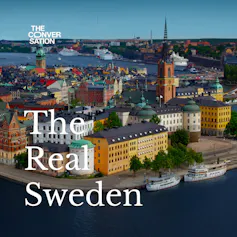
We think we know Sweden – a peaceful nation grounded in social democracy, natural beauty, IKEA and Abba. But in 2026, is this still the real Sweden? Ahead of the country’s general election on September 13, The Conversation UK has teamed up with its Swedish partner universities for a series of articles examining why this small nation remains so fascinating.
While for a long time Sweden was a country with some of the world’s highest taxes, this no longer applies to capital taxation. For instance, it no longer has a wealth tax, an inheritance tax or a property tax. The ideal of egalitarianism doesn’t seem to align with patterns of wealth accumulation, especially at the very top.
Forbes calculates more than 50 US-dollar billionaires in Sweden. This becomes even more extraordinary in a country of just 10.6 million people.
We used Forbes and UN data and found that in 2025 Sweden ranked fourth globally, with 4.7 dollar billionaires per million people. When excluding micro-states (fewer than one million people), Sweden is outnumbered only by Singapore (9.9), Hong Kong (9.1) and Cyprus (7.3), but before Switzerland (4.6) in fifth place. It ranks much higher than some of the world’s largest economies like the US (2.7), Germany (2.1), Canada (2.0) and the UK (0.8).
It is difficult to say for sure whether changes in regulation and wealth concentration have altered cultural norms, but there are clear indicators. Younger generations are now expressing strong materialistic values. When they rank what matters in life, earning money comes second to being with friends and far more important than being with family or getting an education.
Young Swedes and adults alike dream of building a “money machine” by investing in stocks so they can exit the labour market long before retirement.This might be surprising to some, since Sweden has long been shaped by a strong work ethic, both politically and culturally.
In research for a yet-to-be published paper, we found Swedish tabloids and business magazines show a remarkable rise in reporting about billionaires. This includes a fascination with their personal lives and framing them in positive terms such as “entrepreneurs”, “investors” and “philanthropists” (rather than “capitalists”, for example).
Awe and suspicion
This does not mean that wealth is no longer a sensitive topic in Sweden. When studying articles about billionaires in one of the country’s leading tabloids, we found an ambivalent form of “wealth porn”. In Sweden “wealth porn” tends to oscillate between celebrating it and questioning the luxurious lifestyles of billionaires.
The articles tempt readers with drone images and descriptions of lavish mansions – but they also repeatedly point out how reluctant the billionaires are to display and talk about their wealth. This frames the topic as socially sensitive and sometimes even dangerous to the billionaires’ personal safety. Readers are invited to fantasise about life as a billionaire – the transgressive act of breaking Jantelagen adds spice to the fantasy.
This kind of “wealth porn” remains focused on the moral issues around conspicuous consumption. Even though Sweden has long been a model of social democracy, the processes through which billionaires accumulate fortunes, and the political influence such wealth can generate,largely escape scrutiny.
Swedes don’t mind admitting they’d like to get rich – but are conflicted about those who are already ultra-wealthy. nrqemi/Shutterstock
Swedes’ ambivalence towards billionaires is also illustrated in a recent survey we conducted with a representative sample of the population. We asked people a set of questions about their views on money and wealth – it turned out that many find money a strong personal motivator. These people supported statements like “to have a lot of money is an important driver for me”. This suggests there is no social taboo around trying to get rich.
People also said money matters socially, as they largely supported statements like “money gives status and respect”. This indicates that hiding personal wealth may not be so important. In fact, displaying it might bring social benefits – being seen as a successful entrepreneur and someone to look up to, for example. We also asked about caps on wealth, but found strong support for statements like “one can never have too much money”.
While this indicates that Swedes value wealth, they still hold an ambiguous relationship with the super-rich. People reacted strongly against seeing the rich as “good role models for others”.
Striving to get rich seems to have become more socially acceptable in Sweden. Perhaps it always has been the way, but Swedes just never spoke about it (at least not in public). Actually being rich remains a contested topic. If Jantelagen still exerts any influence, it seems to be centred on shaping attitudes towards the wealthy themselves – rather than as a force to discourage the pursuit of wealth.
Foreign Secretary Ed Miliband said the measures were in response to what he called “settler terrorism” in the occupied territories. The measures are part of the UK’s efforts to support a two-state solution.
The center-left Labour Party government has previously sanctioned some Israeli settlers and illegal outposts over violence against Palestinians and illegal development in the West Bank.
The announcement came as the foreign ministers of 11 other governments announced they too would be slapping sanctions on trade with Israeli settlements.
Canada, Denmark, Finland, France, Iceland, Ireland, Norway, Poland, Portugal, Spain, and Sweden also plan to limit trade with the settlements, according to a joint statement.
Meanwhile, an EU Foreign Affairs spokesperson said the bloc “adopted three packages of sanctions against extreme settlers and their entities.”
“I can announce today that we will introduce an import ban on goods from illegal settlements in the occupied territories,”UK Foreign Secretary Ed Miliband announced in the House of Commons.
“We will take action against specific companies and individuals who provide services such as construction, infrastructure, financing or real estate for settlement expansion,” Miliband said.
The foreign secretary said those financing or facilitating illegal settlement would “face the full force of UK sanctions.”
Before announcing the sanctions, Miliband said that “settler terrorism was rampant” and referenced various instances of violence in the West Bank.
Miliband accused the Israeli government of turning a “blind eye” to what he called “ethnic cleansing” by settlers in the West Bank.
Why is the UK restricting trade?
The measures appear to be setting the tone for relations between Britain’s new Prime Minister Andy Burnham and Israel.
According to a Downing Street readout of a phone call between the British leader and US President Donald Trump on the phone on Monday, Burnham laid out “the UK’s commitment to working towards peace and security in the region,” and stressed the importance of a two-state solution in Israel and the Palestinian territories.
Burnham, along with French President Emmanuel Macron and Canadian Prime Minister Mark Carney, said in a joint statement on Tuesday that Canada, France and the UK will “take steps to ban the importation of goods from settlements and enforce targeted measures against settlements and those who facilitate them or profit from them.”
The United Kingdom, Canada and France recognized Palestinian statehood last year in an attempt to revive efforts to achieve a two-state solution.
The moves come as Prime Minister Benjamin Netanyahu’s right-wing government forges ahead with settlement construction in the West Bank, raising fears among some Western governments that it threatens any possible two-state solution. Israeli settlements in the West Bank are illegal under international law.
The UK has previously condemned the violence while calling for civilians to be protected and for those responsible to be held accountable.
Palestinian group watches for Israeli settlers in West Bank
The Palestinian Authority welcomed the announcement of sanctions, calling the measures “an important step” to accountability.
“This as an important practical step toward holding the settlement system accountable and demonstrating non-recognition of the unlawful situation created by the occupation,” Palestinian President Mahmoud Abbas’s office said in a statement.
Israel orders closure of UK consulate in Jerusalem
Ahead of the announcement, Israel’s Foreign Minister Gideon Saar already indicated that Israel would respond.
“If Britain acts against Israel, Israel will act against Britain,” Saar warned.
Saar ordered the closure of the British consulate in Jerusalem once the measures became known.
“The accusations made today by the foreign secretary in the British Parliament were outrageous lies,” Saar said in response to Miliband accusing Israeli settlers of ethnic cleansing in the occupied Palestinian territory.
Saar also said 11 British MPs, including former Labour leader Jeremy Corbyn and veteran Labour lawmaker Diane Abbott, would be banned from entry to Israel. Fahad Ansari, a lawyer and director of the anti-Zionist Riverway to Sea organization, will also be hit with an entry ban.
Israel’s hard-line public security minister, Itamar Ben-Gvir, urged Prime Minister Benjamin Netanyahu to publicly recognize the Falkland Islands as “Argentine territory under occupation, which the British violently steal from the Argentine people.”
UK decision also met with domestic condemnation
Britain’s chief rabbi, Ephraim Mirvis, called it a “dark day for British Jews” while accusing the UK government of engaging in “gesture politics.”
“These measures will succeed only in bolstering the very extremism they seek to target,” Mirvis wrote in a post on X.
Tom Tugendhat, a British Conservative Party lawmaker who serves as shadow foreign secretary, said that “turning Israel into a pariah will risk sectarian division in our own country and risk a further rise in antisemitic violence on our own streets.”
The Hong Kong Jockey Club Charities Trust is Asia’s top philanthropic organizations—but it’s just shy of the global top ten.
Add Fortune on Google for similar content. Add us on Google
Asia’s richest families approach philanthropy in much the same way they approach business: Managing things directly and keeping a close eye on outputs, rather than just writing the checks.
Recommended Video
Who Really Controls the Future of AI?
That’s one of the conclusions from a new report from the Bridgespan Group, a U.S.-based philanthropy advisory group, released at the Philanthropy for Better Cities Forum in Hong Kong on Sept. 7.
Asia’s family fortunes are still younger than the rest of the world’s. About 94% of the Asian families Bridgespan studied are in their first or second generation of wealth, versus 85% of families in high-income economies elsewhere. Around as many are still in control of the businesses that made them rich, compared with 68% outside the region.
That continued ownership shapes how Asian families give. Business-linked givingdominates in Asia, used by 95% of wealthy families in the region’s middle-income economies and 80% in its high-income ones. Elsewhere, just 28% of high-income families give through their businesses.Most Western families instead choose to set up their own foundation: Bill Gates and Warren Buffett, for example, chose to set up their own foundations rather than give through Microsoft or Berkshire Hathaway.
“The level of control that families expect to have over their giving—because they’re still so used to having that level of control over the corporate—is definitely a lot more hands-on,” says Gwendolyn Lim, head of Southeast Asia at Bridgespan and an author of the report.
She traces the habit to the conglomerate era, when Asia’s tycoons built sprawling groups by spotting “gaps in the market” and grew comfortable running operations that had nothing to do with each other.
When they turned to philanthropy, they saw similar gaps, such as non-profits lacking the capacity to do good work or governments unwilling to step in to take action. The result was the “operating foundation” that both funded and managed charitable projects.
Western philanthropists, on the other hand, are surrounded by mature civil-society groups, and so are more content to just deliver funding through grants. Bridgespan’s report finds that families in middle-income countries are more likely to administer their own programs than those in higher-income countries.
Working with the state
More than three-quarters of Asian family philanthropies partner with the government, versus 58% outside Asia.
That willingness to work with the state is unique, Lim says. Asian families are used to dealing with ministries through their businesses, and thus see few qualms in doing so again through their charities.
Yet Western donors are more wary of the government. “If you talk to American or European philanthropists, working closely with the government is something that makes them nervous,” she says. “Their faces change a little bit. They’re like, ‘Maybe we influence the government from an advocacy perspective.’”
Bridgespan’s report notes that Asian families might fund pilot programs to prove that something works, before handing over successful models to the government to run at a larger scale. Lim points out that philanthropic families are “usually standard bearers who are able to experiment a lot more.”
Another difference is that Asian philanthropists are more willing than their Western counterparts to report how much work they’re doing, using metrics like schools built or teachers trained. More than 80% of Asian families report their outputs, compared with 45% of families in high-income economies elsewhere.
Yet relatively few families—in Asia or elsewhere—report outcomes, or how things changed because of what an organization did. “They go: ‘I don’t want to pay you to measure outcomes, but I want you to report on outcomes.’ That’s pretty terrible,” Lim admits.
The world’s largest givers
This week, Bridgespan also updated its rankings of the world’s largest corporate and institutional givers, based on average annual giving between 2020 and 2024.
The Hong Kong Jockey Club, the city’s only authorized betting operator, tops Asia’s corporate rankings at $774 million a year, ahead of Tencent at $404 million.
Globally, the Jockey Club is the only Asian entity in the corporate top 10, at No. 8, behind Deutsche Telekom and well behind Johnson & Johnson, the world’s largest corporate giver at $3.8 billion a year.
Much of the Jockey Club’s money is funneled through the Hong Kong Jockey Club Charities Trust. The Trust gave an average of $705 million a year between 2020 and 2024, putting it in the lead among Asian philanthropic organizations, but just shy of the global top 10. The Gates Foundation leads the way among institutional funders at $6.5 billion per year.
The top 20 Asian philanthropies together gave $2.7 billion annually; the global top 20, $21.4 billion.
Both reports were commissioned by Bridgespan’s Funders’ Council, whose members include the Institute of Philanthropy, the Gates Foundation, and the Rockefeller Foundation, and were released at the Philanthropy for Better Cities Forum, organized by the Jockey Club.
The first line of risk
According to AVPN, a network of Asia-based social investors, the region faces a development funding shortfall of $26 trillion through 2030. Filling that gap will be a tall order.
“We call philanthropy the first line of risk,” Lim says. “Philanthropic giving fills the spots where corporates may be too nervous to invest. And family philanthropy is even more at the vanguard of giving.”
Yet the gap Asian philanthropy is being asked to fill keeps growing. The Trump administration’s dismantling of the U.S. Agency for International Development canceled roughly 83% of the agency’s programs, gutting development budgets in a region where USAID once spent about $860 million a year; in Indonesia and the Philippines, program values fell by 95% or more. Aid financing to Southeast Asia could drop by more than $2 billion, according to estimates from the Lowy Institute.
Nobody, Lim concedes, can plug the hole left by Washington. “Governments can’t fill the gap. Philanthropy can’t fill the gap. There’s not enough money,” she says.
Still, in the “Asian decade,” Asia’s philanthropists will need to find some way to pick up the slack. “This is the decade where our own people have to help our own people,” she says.
Fortune Daily breaks the traditional barrier between audience and newsroom. The show transforms Fortune’s trusted reporting into actionable, conversational, and entertaining insights for an emerging class of business leaders. Watch here.
Our bestseller “Smart Brevity” gave companies a common language and skill set to simplify communications. A week from today, Jim, Roy, and I will be out with “
Simplify: Do 50% More with 50% Less,” which gives you tools to kill complexity so you can be happier and more productive.
Why it matters: We’re hearing from lots of overwhelmed leaders trying to simplify how their organizations operate. But it’s hard to get everyone aligned to make it happen. And AI turns out to be a massive complexity-generation machine, drowning us in decks and dashboards.
Your solution: “Simplify.”
Case in point: Roy ran across a podcast featuring psychologist Ron Friedman, author of “Superteams,” who has studied how to cut through the bloat of meetings and messages to give you more time for work that matters. Among his findings that match the “Simplify” mindset:
The average office worker spends 18 hours a week in meetings and 11 hours digging through messages. That’s 73% of the week — leaving just over one day a week for real work.
High-performing organizations ruthlessly cut back on standing meetings, stand-ups and check-ins. “Meetings are a last resort, not a default,” he says.
Friedman recommends meeting-free days, when no one is expected to respond to in-the-moment messages. He calls these “Get Things Done Days.”
Want more productivity power tools? “Simplify” will help you, and everyone in your company, do the right work … not more work.Preorder “Simplify.”
A week and a half before October 7, 2023 UAE President Sheikh Mohamed bin Zayed called Israeli Prime Minister Benjamin Netanyahu from Abu Dhabi and spoke with him for 45 minutes. In that conversation, bin Zayed warned that Hamas’ leader in Gaza, Yahya Sinwar, was planning a major operation against Israel.
OpenAI CEO Sam Altman speaks Wednesday during the G20 Innovation Ministerial in Chapel Hill, N.C. Photo: Matt Ramey/AFP via Getty Images
OpenAI CEO Sam Altmansays this era is bringing the revenge of the “idea guy” — the once-annoying aspiring entrepreneur burbling about their brainstorm with no technical chops to pull it off. Altman says it would be like saying: “I have a great idea for a song. I just need that guy with the guitar to make it for me.”
“It really did strike me as ridiculous,” Altman told me in Chapel Hill, N.C. “But now we’re watching a whole generation of people iterate on ideas faster than they ever could. The economics have been reset for what it means to make a new small business or large business.”
Why it matters: Polls show most Americans think the risks of AI outweigh the benefits, with data-center rage as a bipartisan bonfire in the midterms. Altman — who’s trying to sell AI into a massive backlash — wants to remind Americans that amid all the real risks, AI can equal opportunity.“This is gonna be the best time in the world to do a startup,” Altman said recently.
Reality check: These new tools are great for idea people. But most people are doers, not dreamers, and don’t feel they have the time or AI skills to spin up a startup in their spare time.
Our experience is that AI is a real unlock for a very small percentage of people who are idea generators or problem solvers, and in a position to put that into action.
By the numbers: An American startup boom ignited during COVID and continued through this summer. Filings of new-business applications have continued to set records in the chatbot era.
The number of new U.S. businesses formed in the first half of this year, over 3 million, is the most for a January-June stretch in Census Bureau data going back to 2005.
The backstory: I first heard Altman’s “idea guy” riff last spring, when he was talking onstage with Stripe CEO Patrick Collison, who asked how traits of successful founders were changing in this era.
“We would make fun of these [idea] people,” Altman said. “They weren’t that successful. And it was kind of always personally annoying to me. All of a sudden it’s like the revenge of the idea guys.”
That stuck in my mind. So when I sat down with Altman, 41, last week at the Carolina Inn in a bilateral meeting room during the G20 Innovation Ministerial, I asked him how that notion could be useful for today’s AI users, or for people who should be wielding AI but are skeptics.
With GPT-6 Astra, OpenAI’s powerful new model, Altman said, “you can start and run a small business effectively. … It’s like anyone who wants to have a company now has genius-level employees in every area of expertise.“
Keep reading. Hot online … Jakub Pachocki, OpenAI’s chief scientist, posted 3,000 words on the state of AI yesterday, “An Alien Mind,” with the stark warning: “The risks associated with AI are unfortunately going to grow from here. A very capable agent explicitly trained and instructed to carry out nefarious acts presents a new kind of danger … “
“I expect and hope for voluntary slowdowns [by the labs] to become commonplace until shared safety bars are established.”
Keep reading.Disclosure: Axios and OpenAI have a licensing and technology agreement that allows OpenAI to access part of Axios’ story archives while helping fund the launch of Axios into four local cities and providing some AI tools. Axios has editorial independence.
Germany’s St. Petersburg consulate will be closed down from September 18Image: Olga Maltseva/AFP
The Russian Foreign Ministry announced on Monday that it is closing Germany’s consulate in St. Petersburg.
The German consulate in St. Petersburg must cease its operations by September 18 at the latest, according to the Foreign Ministry.
“It was the German authorities who, once again, provoked a new round of escalation in bilateral relations,” the Foreign Ministry said, adding Berlin “bears full and complete responsibility” for the consequences.
Germany, Russia trade barbs over Leipzig drone attack
The moves are a direct response to Germany’s decision to close the Russian consulate in Bonn and Russia’s cultural center in Berlin, a decision Russia labeled “unfriendly.”
Germany blames Russia for attempted terror attack in Leipzig
The EU, too, said the incident had all the signs of “state sponsored terrorism.”
The Leipzig airport is an important international freight hub, also used for providing support to Ukraine.
Russia Foreign Minister Sergey Lavrov rejected Germany’s allegations, calling them “the beginning of a real war.”
Edited by: Wesley Dockery
Don’t let the algorithm hide the news. If you rely on our team for trusted reporting, please take a moment to select us as your Preferred Source on Google by clicking here and hitting the “star” or “preferred” button, so you’ll always see our verified news first.
Illustration: Sarah Grillo/Axios. Stock: Getty ImagesThe war with Iran has now cost U.S. consumers $100 billion in higher energy prices, Axios’ Ben Berkowitz writes from a real-time Brown University estimate.
The bill is rising another $1 million about every two minutes.
By the numbers:The Iran War Energy Cost Tracker from Brown’s Watson School says higher gasoline and diesel prices have cost the average U.S. household more than $760 since the war began Feb. 28. (Latest numbers.)
Most of that is gas, though the diesel burden is rising faster lately.
Stunning stat: The average national price of a gallon of regular gas was $4.15 today, per AAA.That’s nearly a dollar higher than last year, and well above the previous Labor Day weekend record of $3.82 from 2012.
President Trump insists Americans are willing to pay higher prices to keep Iran from having a nuclear weapon. Yet voters consistently say inflation is the most important issue. Go deeper.











 OpenAI CEO Sam Altman speaks Wednesday during the G20 Innovation Ministerial in Chapel Hill, N.C. Photo: Matt Ramey/AFP via Getty Images
 Why it matters: Polls show
  By the numbers: An American
 Hot online … Jakub Pachocki, OpenAI’s chief scientist,
 Illustration: Sarah Grillo/Axios. Stock: Getty ImagesThe war with Iran has now cost U.S. consumers $100 billion in higher energy prices, Axios’ Ben Berkowitz writes from a real-time Brown University estimate.
 By the numbers: The Iran War Energy Cost Tracker from Brown’s Watson School says higher gasoline and diesel prices have cost the average U.S. household more than $760 since the war began Feb. 28.
  President Trump insists Americans are willing to pay higher prices to keep Iran from having a nuclear weapon. Yet voters consistently say inflation is the most important issue.
