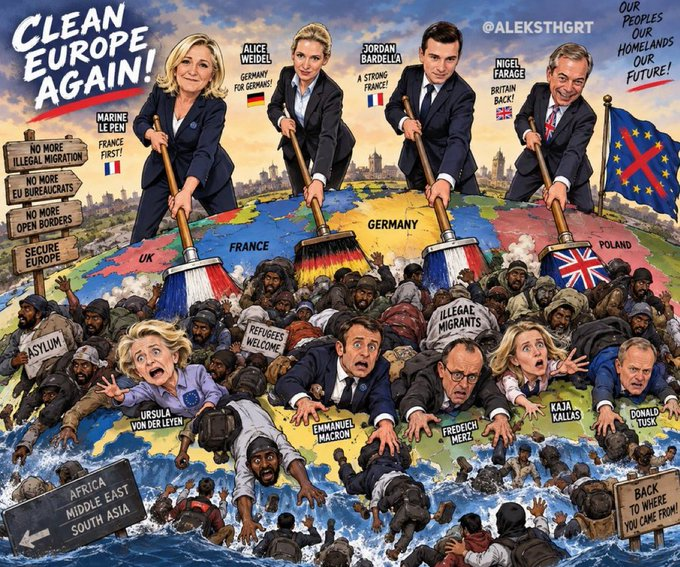
The government wants to change the law so it can send Irish soldiers into harms way for Frau Genocide’s EU. The EU can’t be trusted to be a neutral and impartial force in Lebanon. No Irish troops abroad without a UN peacekeeping mandate. The #TripleLock must stay in place.
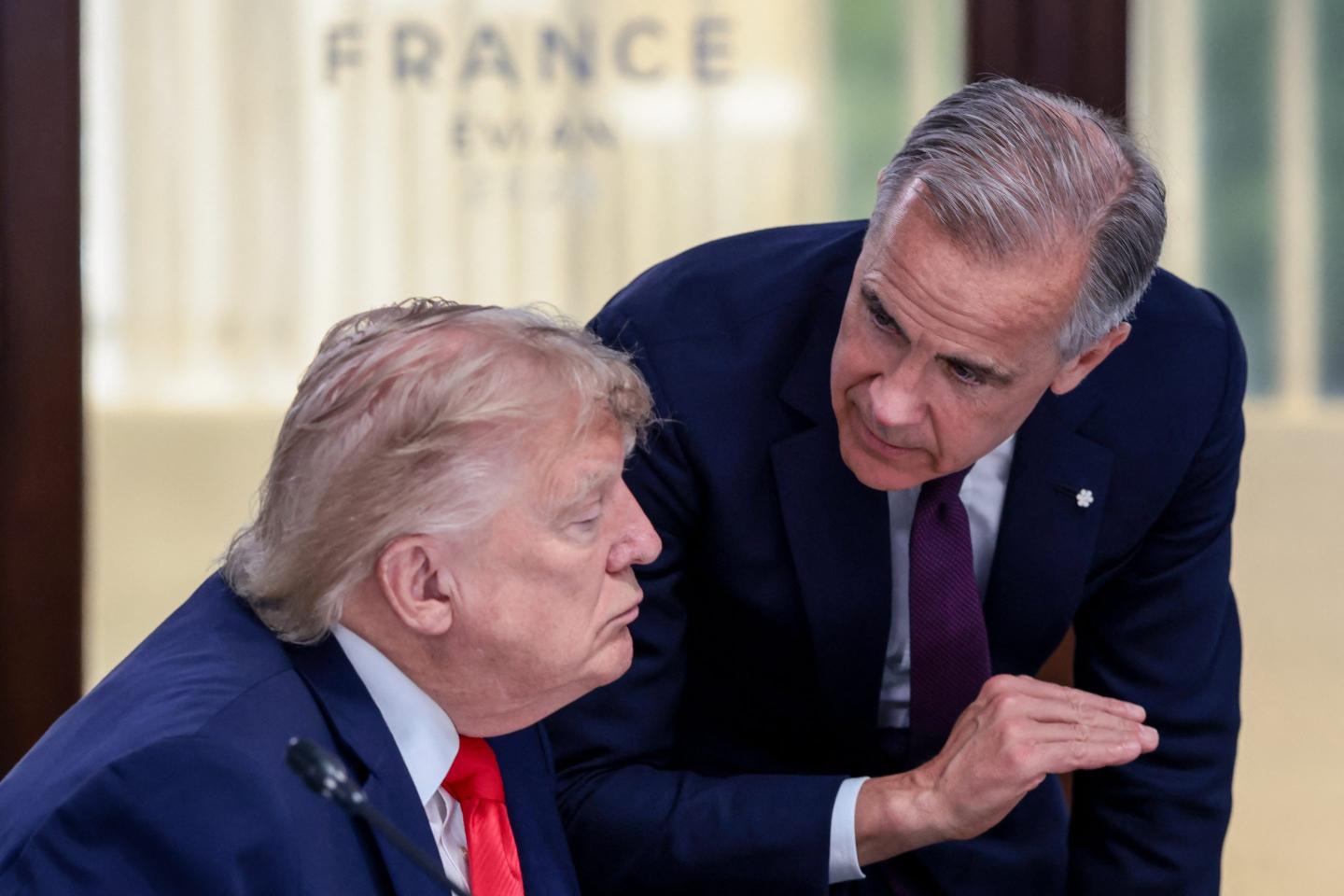
Canadian Prime Minister Mark Carney is imposing retaliatory tariffs on the U.S., despite economic risks.Evelyn Hockstein / POOL/AFP—Getty Images
Add Fortune on Google for similar content.Add us on Google
Economists are warning that Canadian Prime Minister Mark Carney’s “dollar-for-dollar” tariff strategy could mean some economic pain for the Great White North, but Canadians are so frustrated with the Trump administration they support the move anyway.
Recommended Video
Canada implemented retaliatory tariffs of 15% to 50% that took effect on Tuesday and will impact hundreds of U.S. goods, including paper, steel, aluminum, furniture, as well as cheese and seafood. The levies were in response to a breakdown of trade talks between the countries and the Trump administration’s piling on of tariffs on $20 billion worth of Canadian goods earlier this summer.
But the strategy of imposing steep import taxes on the U.S. could cause a phenomenon similar to what happened to American importers, where Canadians carry the burden of the tariffs. In a report published after Canada announced the tariffs on Aug. 25, Oxford Economics analysts warned that while the retaliatory tariffs may help protect some domestic manufacturers, it will also force Canadian businesses to absorb added business costs and increase consumer prices.
Canada depends on the U.S. buyers for about 70% of its exports, and the U.S. economy is about 13-times larger than Canada’s.
Oxford projected that Canada’s GDP will likely grow by 0.8% in 2026,but tariffs will reduce growth in 2027 by 0.2% to 0.3% relative to its August baseline calculations. It predicted inflation to increase by about 0.3% compared to the August 2027 baseline.
Canada’s retaliatory tariffs will most likely be felt in certain regions of the country, Oxford economists said. For example, Ontario, New Brunswick, and Quebec have the highest concentration of manufacturers impacted by the tariffs and rely the most on U.S. exports. British Columbia meanwhile has the highest percentage of its exports, 6.1%, subject to Section 338 Trump invoked to tax Canadian exports. Alberta, Newfoundland, and Saskatchewan—provinces that produce the most oil—will be less impacted on average.
“Canada’s new retaliatory tariffs will help some industries but hurt most and weaken economic growth across the country by raising costs for producers and consumers,” economists Tony Stillo and Michael Davenport wrote. “The macroeconomic impacts on Canada will likely be modest, but the regional and sectoral implications will be far more significant.”
What are the stakes for Canada in its trade war with the U.S.?
Even as the economic stakes of Canada’s involvement in the trade war escalates, Canadians have supported Carney, who is one of the few world leaders standing up to Trump, in the hopes that the import taxes on the U.S. will mount economic pressure and protect Canadian industry.
A Nanos Research survey conducted for CTV Newsthis month found that support for Canada’s retaliatory tariffs on the U.S. are at an all-time high, with 75% of the more than 1,000 respondents supporting the counter levies, and another 10% somewhat supporting the policy.Most even said they were willing to look past inflation the move would cause: 38% of Canadians were willing, and 31% were somewhat willing to pay more for everyday goods as a result of the retaliatory tariffs.That’s despite nearly two-thirds of respondents saying they were worried about the tariffs having personal impacts.
Canadians have seemingly had no problem opposing U.S. import taxes and repeated threats of their home becoming a 51st state by voting with their wallets. Canadian tourists and business leaders alike are snubbing U.S. cities with fewer visits, and Canadian retailers are pulling American products off the shelves, instead stocking domestic alternatives.
The urgency around which everyday Canadians are putting their money points to the potential economic consequences should Trump’s tariff barrage be ignored. Trump’s tariffs risk the loss of 90,000 Canadian jobs, according to Trevor Tombe, a professor of economics at the University of Calgary. These job losses could be a direct result of tariffs, such as in agriculture, textiles, and furniture; but they could also show up indirectly due to the import taxes, like less trade between the U.S. and Canada requiring less freight transportation, and therefore fewer truck drivers.
“The macroeconomic effects of this round may be fairly muted—I reckon a couple of tenths of a percentage point off of GDP growth,” Tombe wrote in a recent article. “But the labour market effects are larger, and they reach well past the provinces the tariffs were aimed at.”
What risks to Canada still remain?
Carney is aware of the risks associated with the retaliatory tariffs, saying in a Tuesday video address that they “will come at a cost” to Canadians. Canada is prepared for some of the economic pressures the counter tariffs will bring, with Carney introducing a $7.5 billion support packagethat includes aid for workers to access income support, new job transitions, and liquidity support for businesses impacted by the taxes. Still, Oxford economists anticipate the aid will only act as a bandaid on a larger economic scrape and “won’t offset the overall drag from the new bilateral US-Canada tariffs.
Then there’s the practical matter of Canada being able to sustain its efforts to combat Trump’s trade policy. While the popularity of Carney’s trade tactics are popular now, political analysts suggest support for the Canadian government’s tariff payback could wane should the economy take a downturn.
“Carney’s leverage will start to diminish if this escalating trade war starts to show up in palpable increases in unemployment, factory shutdowns and declining income,” Julian Karaguesian, a former adviser at Canada’s Finance Ministry and economics professor at McGill University, told Reuters last month. “Canada cannot win an economic war of attrition with the U.S.”
Fortune Daily breaks the traditional barrier between audience and newsroom. The show transforms Fortune’s trusted reporting into actionable, conversational, and entertaining insights for an emerging class of business leaders. Watch here.
Sasha Rogelberg is a reporter and former editorial fellow on the news desk at Fortune, covering retail and the intersection of business and popular culture.
(RFE/RL) — Farhad N. was just a few months old when hijacked airliners were deliberately piloted into the twin towers of the World Trade Center in New York on September 11, 2001, part of attacks on the United States that killed thousands of people.
Twenty-five years later, he was sentenced to life imprisonment for plowing a Mini Cooper car into a crowd of people in Munich, killing two people and injuring dozens.
The 25-year-old Afghan’s story underlines how the world has been shaped since 9/11, with both the terror threat and counterterrorism operations continually in flux.
The 9/11 attacks were plotted by Al-Qaeda, a group led by Saudi millionaire Osama bin-Laden and sheltered by the Taliban authorities in Kabul who were subsequently driven from power.
After this, Farhad N. – whose surname is abbreviated in line with German privacy rules — began to grow up in a country where US-led international forces fought for 20 years to keep the Taliban at bay.
Later, he was among hundreds of thousands of Afghans who left their country to seek peace and prosperity in Europe — only to become radicalized by online propaganda posted by imams in his native country.
He had no affiliation or links to any specific group and appeared to have acted entirely on his own initiative.
“In the old days, we would call these lone actors or lone wolves. This is the future,” a former US diplomat with decades of experience in counterterrorism told RFE/RL.
“Nobody needs to be a part of a group…They can be inspired by a group, they can be inspired by multiple groups,” the ex-diplomat, who did not wish to be named, said, adding that advances in Artificial Intelligence were exacerbating an “inflection point” in the development of terror threats.
RFE/RL spoke to multiple experts about how technological means that did not exist 25 years ago, including drones, AI, and social media — are creating a completely new and more dangerous environment.
“We’re beginning to see a lot more online presence. We’re beginning to see a lot more use of influencers…in addition to the standardized actors that we have become used to in the terrorist scene, we also have lone actors, those who are influenced,” retired US General Joseph Votel told RFE/RL.
Votel led a parachute assault by US troops on Taliban positions in Kandahar in October 2001, just weeks after the 9/11 attacks on New York and Washington. He went on to play a key role in what was dubbed the War on Terror, serving also in Iraq and commanding operations against Islamic State (IS) militants.
“These terrorist organizations have survived. They’ve continued to adapt as much as they can…they’ve become more sophisticated,” he said. “The environment is much more complex now for security experts.”
‘Legacy Terrorists’
With Al-Qaeda, the post 9/11 story has been one of franchises — groups such as Al-Shabaab in Somalia and Jama’at al Islam al Muslimin (JNIM) in the Sahel region of west Africa, which affiliated with Al-Qaeda by linking their own local goals with its ambition to mount further global attacks.
This diffused structure enabled the Al-Qaeda brand to survive after US military forces pounded its leadership and deprived it of safe havens in Afghanistan in the months after 9/11.
The new US Counterterrorism Strategy, released in May, puts Al-Qaeda and “it’s most aggressive subgroup, Al-Qaeda in the Arabian Peninsula (AQAP),” top of its list of what it calls “legacy Islamist terrorists.”
A UN reportlast month described AQAP as “the vanguard” of the global Al-Qaeda movement.
In recent years, studies have shown how Al-Qaeda branches coordinate financing and training. For example, UN monitors last year noted a single $50-million ransom payment to JNIM that it shared with AQIM (Al-Qaeda in the Islamic Maghreb), AQAP in Yemen, and “Al-Qaeda senior leadership in South Asia.”
They’re also stepping up online messaging.
“Al-Qaeda in Yemen’s propaganda skyrocketed after the withdrawal from Afghanistan up until today. They published more than I’ve published in the past couple of years,” Sara Harmouch, a terrorism expert and fellow at the Frontier Security Institute and at the Program on Extremism at George Washington University, told RFE/RL.
“Al Qaeda in Yemen, as recently as a couple of months ago…had come out with statements and videos inciting lone wolf attacks, asking individuals who are in the West to conduct attacks on the US homeland, into Europe,” she said.
Flying Blind?
In this rapidly changing environment, there’s another issue: loss of counterterrorism capacity.
“We’re flying blind. In the last year and a half…we’ve lost people and we’ve lost money,” the former diplomat said, adding that the current geopolitical environment has exacerbated the challenge.
“Right now, we’re kind of in the eye of the storm between the aftermath of October 7 [the 2023 Hamas-led attack on Israel] and the ongoing Iran war,” he went on. “We’ve lost a lot of good people that had on-the-ground experience, institutional knowledge.”
During a September 2 George Washington University webinar, similar concerns were raised by other leading counterterrorism experts.
Tom Sanderson from the Center for Strategic and International Studies noted a “reduction in focus on terrorism, the budgets, the personnel,” while Bruce Hoffman from the Council on Foreign Relations spoke of a staff “exodus” from the State Department’s counterterrorism bureau, which was restructured last year.
There was no immediate comment from the White House or the State Department on the issues raised in this article. Funding for counterterrorism began decreasing after a review in 2018 and these reductions have gained pace since 2025.
The US Counterterrorism Strategy says “our nation has not been well served by its Intelligence Community, which has been mired in old ways of looking at threats.”
Jonathan Schroden, chief research officer at CNA, another Washington-based think-tank, told RFE/RL that there’s been a key policy change in recent years.
“Our goals have shifted away from the total defeat of these groups and towards the effective management of the threat that they pose…keeping that away from the US homeland,” he said.
“I think the structure that the US has in place now has been largely effective at doing that over the last five to seven years,” he added.
Ray Furlong is a Senior International Correspondent for RFE/RL. He has reported for RFE/RL from the Balkans, Kazakhstan, Georgia, and elsewhere since joining the company in 2014. He previously worked for 17 years for the BBC as a foreign correspondent in Prague and Berlin, and as a roving international reporter across Europe and the former Soviet Union.
About RFE RL
RFE/RL journalists report the news in 21 countries where a free press is banned by the government or not fully established.
President Trump meets with U.S. travel executives in the Oval Office last week. Photo: Kevin Dietsch/Getty Images
Top White House officials and elected Republicans tell us the same thing in private: They no longer even try to persuade President Trump to do or not do something, Jim VandeHei and Mike Allen write in a “Behind the Curtain” column.
“Why bother?” a longtime adviser and admirer told us. “He’s the boss.”
Why it matters: For nearly a decade, Republicans acquiesced to nearly every Trump demand and idea — and rationalized it by saying his instincts proved smarter than theirs. Now, many no longer trust those instincts.But they find it just as futile to push back against virtually anything he wants.
Post a cartoon of you — wielding a hockey stick and sporting a Trump-branded USA jersey — towering over Canadian Prime Minister Mark Carney, sprawled on the ice, and telling him to “GET UP”? On it.
Toss together an egocentric, first-ever Republican midterm convention that many endangered candidates don’t want? Sounds like a good plan, boss! (Gavels in today in Dallas at 4 p.m. ET, in fact.)
You are the new Caesar Augustus.Treasury Secretary Scott Bessent rehearses yesterday at the podium of the Republican midterm convention in Dallas. Photo: Alex Brandon/AP
What we’re hearing: Many aides and confidants have been worn down by Trump. They know they can’t stop him, and they don’t even try.More and more, they humor his whims.
“He’s an 80-year-old man who did it his way,” said a donor who recently met with the president. “What he wants, he gets.”
White House insiders insist there’s a semblance of structure and reason, and that the president doesn’t act on every impulse. They declined to provide examples of times he resisted.
Between the lines: Republicans are pessimistic about keeping their House majority in the midterms, and worried about the Senate. Regardless of the outcome, Trump will officially be a lame duck 56 days from now.
On Nov. 4, the day after Election Day, attention will start turning to the 2028 race — and to the Democratic leaders who are likely to have new juice on Capitol Hill.
Trump, a top adviser emphasized, is no lame duck: “Discount Trump at your peril.”
“He wields enormous power in the party, in politics and culturally,” the adviser said. “Anyone who thinks he’s going to retreat into the shadows is either stupid or has bad political instincts.
“The bottom line: Trump insiders calculate they lived by Trump and so will die by Trump, rather than break with Trump.
“He’s going to remain the dominant political figure even after his term ends,” the adviser said. “And everybody knows it.”
Share this story … Marc Caputo contributed reporting from Dallas.
The United States is making another attempt to end the murderous war in Ukraine. Meanwhile, you are intensifying the war propaganda and escalating the confrontation with Russia.
Parent–child trio design tested overtransmission of genetic risk by comparing affected offspring genotypes with parental alleles, enabling inference beyond case–control association in BFRBs.
Elevated inherited OCD polygenic scores in BFRB cases indicate shared polygenic liability with OCD, persisting despite absence of comorbid OCD and supporting common biology across OCRDs.
SHOW MORE
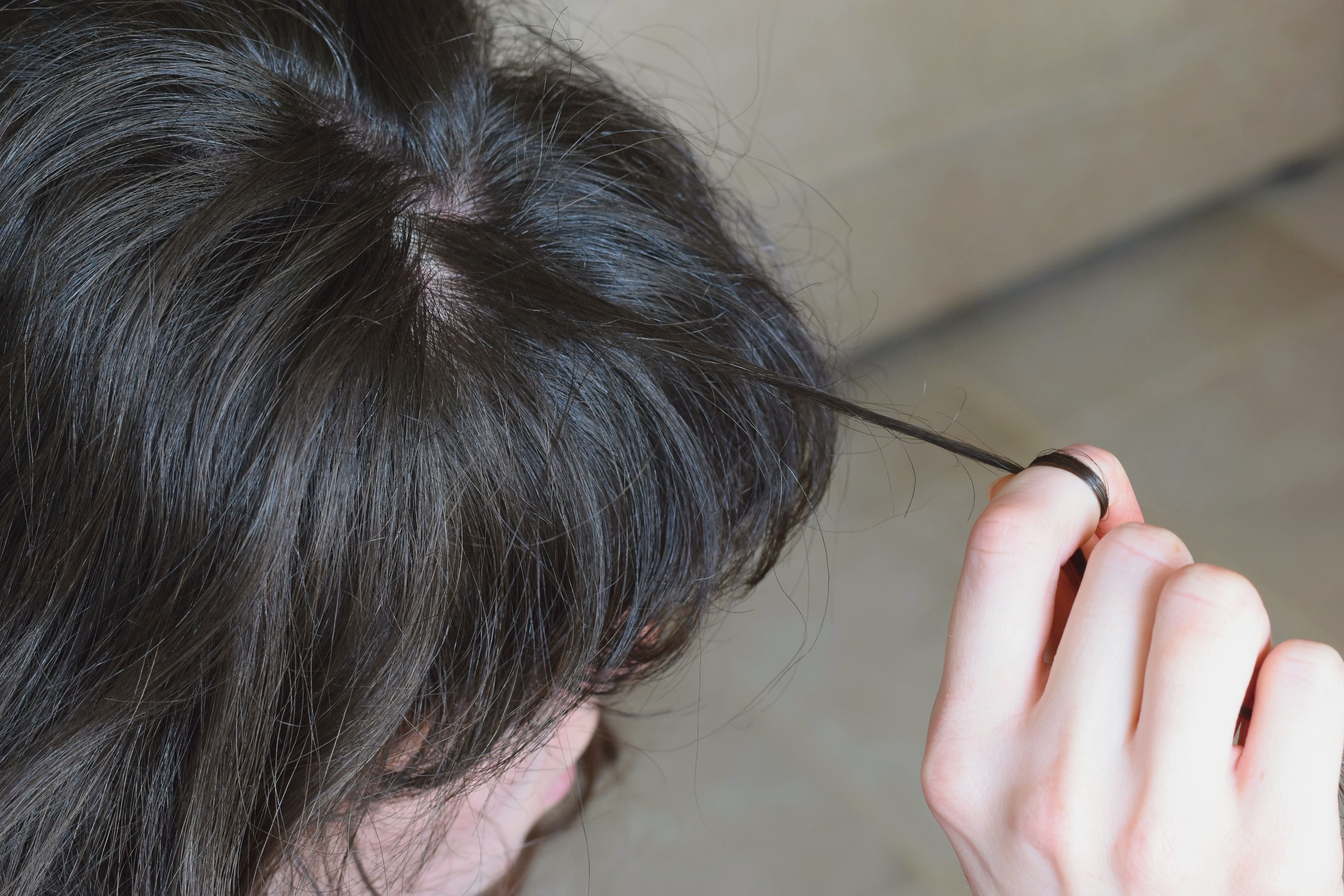
Yale trio-genomics study links hair-pulling and skin-picking to inherited OCD risk scores and rare DNA variants, hinting at shared brain pathways.
Tunatura/AdobeStock
A recent Yale study took a closer look at trichotillomania (repeated hair-pulling) and excoriation disorder (repeated skin-picking), exploring potential genetic causes.1The 2 disorders are considered body-focused repetitive behaviors (BFRBs), which according to the study investigators, affect roughly 1% to 3% of individuals.BFRBs commonly run in families, leading experts to believe that genetics may play a role.
The study—led by Emily Olfson, MD, PhD, assistant professor at the Yale Child Study Center—was designed to clarify what genetic factors might contribute to BFRBs, and whether BFRBs share genetic risk with obsessive-compulsive disorder (OCD). Trichotillomania and excoriation disorder are commonly grouped with obsessive-compulsive related disorders because they share symptoms and frequently co-occur. The study, which was recently published in Translational Psychiatry, is the first parent-offspring trio genomic study of trichotillomania and excoriation disorder.
Study Details
Olfson et al used a family-based approach called parent–child trios, meaning they collected DNA from a child (or adult offspring) with one of the disorders and both biological parents, then evaluated whether certain genetic risk factors are passed down to affected offspring more often than expected by chance.
More than 100 families participated in the study. Participants were recruited through The TLC Foundation for BFRB community, clinics, online outreach, and previous study participants.
“These recruitment efforts allowed us to meet many families affected by these conditions,” said the authors. “Talking with these families reinforced our commitment to better understand the causes of these understudied and often difficult-to-treat BFRBs.”
Conclusions
Investigators found that individuals with BFRBs were more likely than expected to inherit a higher OCD polygenic score from their parents. The investigators did clarify that this is not a “BFRB gene,” but a single number that summarizes the effects of many common genetic differences, each of which slightly increase risk. Notably, the additional inheritance of OCD-related genetic risk appeared even when the person with BFRBs did not also have comorbid OCD, demonstrating the shared biology.
Investigators also identified rare copy number variants (CNVs) in some individuals with BFRBs. These are stretches of DNA that are missing or duplicated, some of which have been identified in neurodevelopmental conditions.
Ultimately, this study demonstrates that repeated hair-pulling and skin-picking can have inherited risk, and are not a result of “bad parenting,” “attention-seeking,” or lack of self-control. Trichotillomania and excoriation disorder are legitimate disorders that require evidence-based care and support.
“These findings represent an important step forward toward understanding the genomic underpinnings of BFRBs. Future efforts leveraging larger BFRB cohorts may continue to deepen our understanding of trichotillomania and excoriation disorder genomics and pathophysiology,” concluded the investigators.1
BREAKING: The results from the 2025 PISA exams are in.
The international standardized tests in science, mathematics and reading for 15 years old are taken every 3 years.
These are the top 5 EU countries: Science 🇪🇪 Estonia – 527 🇫🇮 Finland – 504 🇮🇪 Ireland – 504 🇦🇹 Austria – 497 🇵🇱 Poland – 495 Mathematics 🇪🇪 Estonia – 508 🇮🇪 Ireland – 491 🇵🇱 Poland – 484 🇨🇿 Czechia – 483 🇦🇹 Austria – 483 Reading 🇮🇪 Ireland – 504 🇪🇪 Estonia – 499 🇫🇮 Finland – 486 🇵🇱 Poland – 482 🇨🇿 Czechia – 474 The results have been dropping globally compared to the result 3 years ago, with particularly big drops in Europe. Reading skills have taken the largest hit, with the declining trend of book reading speeding up and AI use for homework reaching all-time highs.
AI’s wide proliferation shares some striking similarities with the ways viruses spread, as an international team of researchers argue in a new paper that has yet to be peer reviewed. They set out to lay out a new theoretical framework about how we’re increasingly becoming hooked on tools like OpenAI’s ChatGPT and Anthropic’s Claude, and how it’s changing our collective ways of understanding the world around us.
“Here we introduce the idea of [large language models] as cognitive viruses,” they write. “Culturally transmitted technologies whose spread is promoted by their usefulness but can also increase dependence through cognitive offloading.”
“More generally, humans have always externalized parts of cognition into language, writing, institutions, and technology,” the researchers write. “This externalization has been the engine of rapid and accelerated change driven by culture. AI represents a new step in this process, one in which external cognitive machinery becomes increasingly active and agent-like.”
This transition to adapting LLMs also “has a contagion-like component,” because the spread occurs “because people learn from other people.”
It’s a slippery slope, the researchers argue, as the “loss of autonomy becomes self-reinforcing and the population can move rapidly toward a state of much stronger cognitive offloading and lower cognitive competence.”
Put simply, the widespread use of LLMs could be making us much dumber than we were before — not to mention wreaking complex psychological and sociological changes that we’re only starting to understand.
At the same time, there are ways to protect ourselves from being infected through a process the researchers dub “cognitive immunization.”
“At the population level, immunization does not mean preventing contact with AI,” the paper reads. “It means preserving the practices and institutions that keep human cognition active: unaided problem solving, verification, critical discussion, periods of deliberate disengagement, maintenance of non-AI skills, and educational designs in which the model supports rather than completes the cognitive task.”
I’m a senior editor at Futurism, where I edit and write about NASA and the private space sector, as well as topics ranging from SETI and artificial intelligence to tech and medical policy.




 President Trump meets with U.S. travel executives in the Oval Office last week. Photo: Kevin Dietsch/Getty Images
 Treasury Secretary Scott Bessent rehearses yesterday at the podium of the Republican midterm convention in Dallas. Photo: Alex Brandon/AP
 What we’re hearing: Many aides and confidants have been worn down by Trump. They know they can’t stop him, and they don’t even try.More and more, they humor his whims.
 Between the lines: Republicans are