Source close to Speaker Ghalibaf: Iran’s “Third Struggle” plan will close Bab el-Mandeb Strait by fire and disable all 7 undersea internet cables in Strait of Hormuz if US strikes resume this weekend. Iran will also fire hundreds of next-generation missiles & drones daily at Gulf energy targets.
🚨 BREAKING: 🇮🇷 Iran prepares extreme response 🔥 Source close to Speaker Ghalibaf: Iran’s “Third Struggle” plan will close Bab el-Mandeb Strait by fire and disable all 7 undersea internet cables in Strait of Hormuz if US strikes resume this weekend. Iran will also fire hundreds… pic.twitter.com/B0twu0uqnN
— Ebrahim Zolfaghari Commentary (@Irantimes02) May 23, 2026
JUST NOW: U.S. President Donald Trump just posted a map on Truth Social labeling Iran as part of a 'United States of the Middle East. pic.twitter.com/K6baEMw6Jj
Islamist terrorism continues to claim numerous victims worldwide. Extremist networks are financed in part by donations from Germany. But investigations often prove to be difficult.
Citing US President Donald Trump’s alliances with tech billionaires and the pressure on US media outlets, investigative journalist Carole Cadwalladr tells DW we are accelerating toward “a techno‑fascist future.”
Carole Cadwalladr is working to expose the “broligarchy” and its increasing influence on state power in the US and UK through her new outlet “The Nerve.”
Despite the dystopian picture, Cadwalladr insisted nothing is inevitable. She sat down with DW to discuss how democracies are being reshaped and how citizens can push back.
Tomi Oladipo Tomi Oladipo is a British-born Nigerian journalist based in Berlin.
“The rise of AI is the next industrial revolution,” Gloria Caulfield, a real estate executive, told recent graduates of arts, humanities, and communication at the University of Central Florida. The response? A chorus of boos. Caulfield turned to the organizers: “What happened?” she asked. She looked back at the young people in the audience: “Ok, I’ve struck a chord, may I finish?” And she continued: “Only a few years ago, AI wasn’t a factor in our lives,” she added. And then they applauded, and Caulfield smiled with relief. The video of her bewilderment went viral.
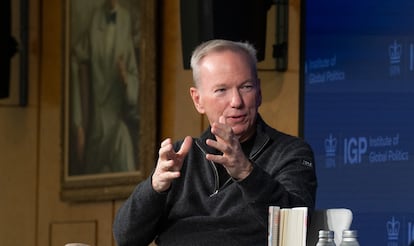
The booing of AI in Florida wasn’t the only such incident at American universities over the weekend. Eric Schmidt, former CEO of Google, was presiding over the commencement ceremony at the University of Arizona before thousands of students. Schmidt uttered phrases that young people have heard a thousand times before: “The question isn’t whether AI will shape the world. It will. The question is whether you will help shape AI,” he said. He continued: “AI will affect everything, whichever path you choose.” And he was booed.
The reasons for the jeers will be varied: from fear of an uncertain future to weariness with the evangelical rhetoric surrounding AI. Just recently, at the University of Central Florida, there was controversy over a class called “Art of AI” for art students. One student argued that he pays tuition to learn skills, not to use a generative AI that would prevent him from then using those skills.
This trend is reflected in recent polls. Over the past year, according to a Gallup survey published in April in the U.S., Generation Z’s sentiment toward AI has become more negative. The percentage of young people enthusiastic about AI has fallen 14 points to 22%, while those angry about it have risen nine points to 31%. Anxiety about AI remains stable at 42%.
In a Pew Research global survey on AI, the generation most consistently concerned about the technology is those aged over 50. Those least concerned are the youngest, aged between 18 and 34. This pattern holds true, with a significant percentage difference of more than 24 points between younger and older generations in countries like Greece, Brazil, Argentina, Italy, and Japan. The United States, however, is the country where this difference is smallest: young people are almost as concerned as older generations about the emergence of AI in everyday life.
In another commencement address, music industry executive Scott Borchetta also had to defend himself against some heckling during his speech at Middle Tennessee State University: “This industry will change. It’s changed more in the last 10 years than in the 50 years prior. Streaming rewrote the economics. Social media rewrote the discovery model. AI is rewriting production while we sit here,” he said, eliciting some boos. Borchetta then went off-script: “I know, accept it. Like I said, it’s a tool. Either you can hear me now or you can pay me later. Do something. The things you learned here in your first year may already be obsolete.”
In the case of Schmidt, the booing was already anticipated. In 2025, a former lover accused him of rape, and he also appears in the Epstein files. University organizations had distributed leaflets encouraging the booing. To make matters worse, at their historic rival, Arizona State University, the graduation sponsor was actor Harrison Ford, who was being awarded an honorary doctorate for his environmental activism.
A university spokesperson told a local media outlet that Schmidt’s invitation was extended due to “recognition of his extraordinary leadership and global contributions” and because “he continues to drive research and discovery through important philanthropic and scientific initiatives, including collaborations that support key projects at the University of Arizona.”
Sign up for our weekly newsletter to get more English-language news coverage from EL PAÍS USA Edition
Walmart shoppers are feeling the crunch of higher prices at the pump, and it could be a sign of where the economy is heading.
Recommended Video
I spent 1 hour with Donald Trump – Behind the Scenes With The President
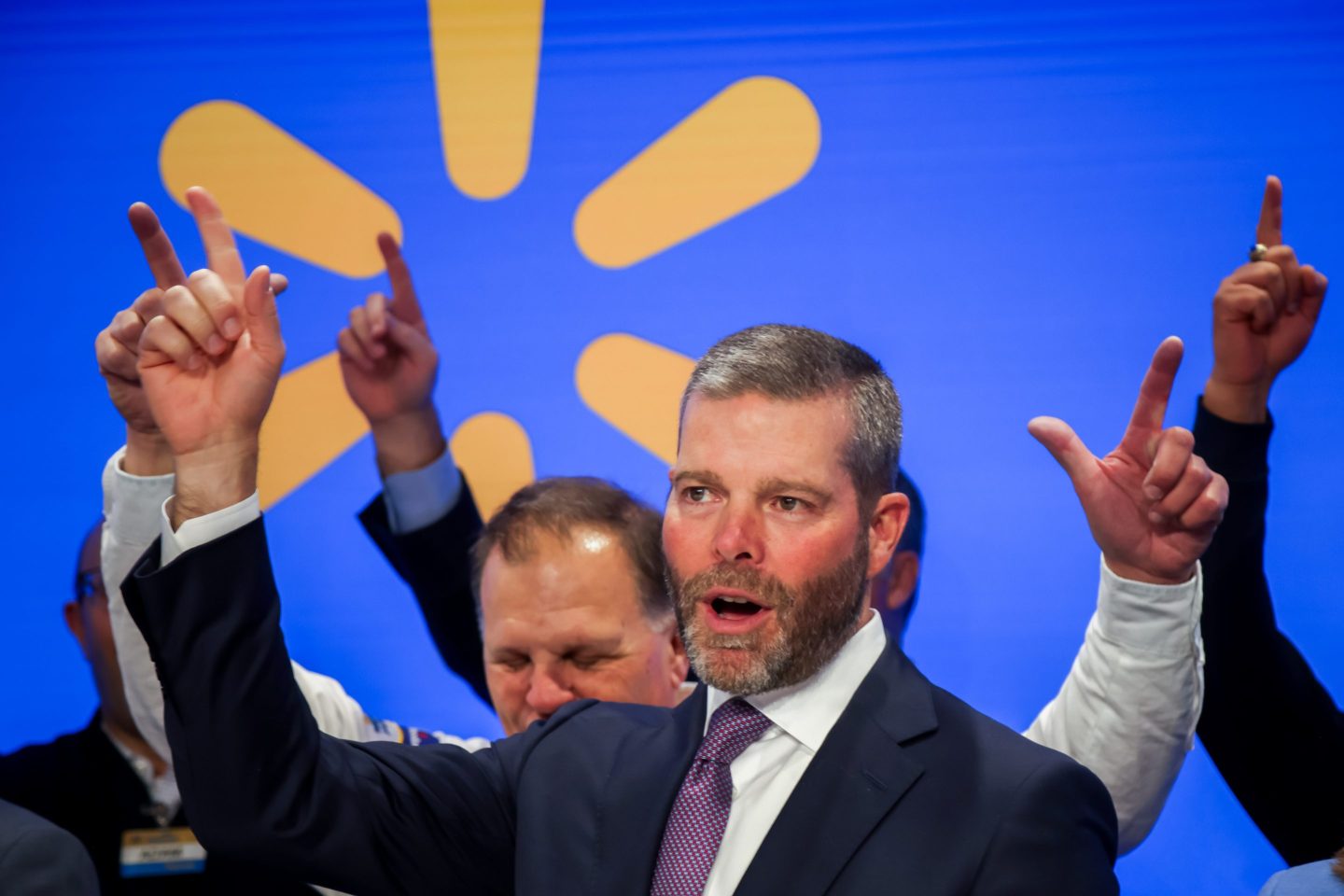
Walmart CFO John David Rainey said during the retailer’s latest quarterly earnings call this week shoppers were filling their gas tanks with fewer than 10 gallons of gas on average for the first time since 2022.
“That’s an indication of stress,” he said during the call.
While high-income customers are doing fine and spending robustly, he said, the same can’t be said about lower-income consumers.
“The lower-income consumer is more budget conscious and perhaps navigating financial distress,” he added.
Rainey’s comments come as the national average for gas prices stood at $4.55 Friday, a whopping 42% increase from a year ago.As of this week, the price of gas in all 50 states was above $4, and as high as $6 in California.
The war in Iran has upended global supply chains and nearly ceased oil shipments through the Strait of Hormuz, through which around 20 million barrels flowed daily before the war. In total, Americans have spent $44.8 billion more than they usually would on gas and diesel since the war started in February, translating to about an extra $190 per household, TheNew York Timesreported, citing data from Brown University researchers.
These rising prices have contributed to increasing inflation, which came in at 3.8% in April, up 0.6% month-over-month, according to the latest Consumer Price Index. Consumer sentiment also fell for the third straight month in May and is now at an all-time-low, according to the University of Michigan’s monthly survey.
The higher inflation fueled by skyrocketing gas prices has the potential to hit customers’ wallets, Rainey added.
Walmart isn’t the only company sounding the alarm about consumers changing their buying habits due to economic pressure.
Earlier this year, Costco CFO Gary Millerchip warned the wholesale retailer was seeing inflation in products like beef and candy, as well as a slight pickup in non-food items. While he said this trend was not concerning so far, he noted: “Members are very focused on quality and value.”
Dollar General’s latest earnings from March also revealed a surge of 122% in the company’s $426 million net income compared to the same period last year. This was partly a result of a value-conscious consumer, CEO Todd Vasos said.
“I think that the consumer really needs a Dollar General at this point as we look ahead with all of what’s ahead of that consumer, including the macroeconomic pressures that are out there and the geopolitical pieces that we’re all watching very closely,” Vasos said on the company’s earnings call.
Subscribe to Fortune Gulf Brief. Every Tuesday, this new newsletter will deliver clear-eyed, authoritative intelligence on the deals, decisions, policies, and power shifts shaping one of the world’s most consequential regions, written for the people who need to act on it. Sign up here.
Sexual harassment on public transport will be tackled as part of a new campaign to drive up reporting of harassment on trains and support victims.
The campaign challenges behaviours such as staring, intrusive questions and unwelcome comments, and backs passengers to report incidents to the British Transport Police (BTP).
Launched under the government’s ongoing, flagship Enough campaign, the new partnership with key rail organisations seeks to send a clear message that sexual harassment on trains and at stations will not be tolerated.
Bold, action‑focused messaging will be rolled out across posters and digital screens, clearly signposting how to get help – whether by texting BTP, speaking to rail staff, or by reporting online.
Developed alongside the Department for Transport, Network Rail, the Rail Delivery Group and BTP, the campaign puts women’s safety at the forefront of the rail network. It will run across stations, in carriages and online, backing passengers to report abuse and ensuring it is taken seriously.
In another major step forward for rail safety, the Department for Transport and BTP are launching the national Safer Railway Scheme, meaning that, for the first time, train operators will be expected to show what they are doing to prevent harassment, support victims and train staff to respond properly.
Launching today, the Safer Railway Scheme recognises rail companies that meet clear safety standards – from tackling crime and responding to victims, to creating environments where staff are empowered to report abuse – putting the safety of women and girls at the heart of how the rail network operates.
Operators are independently assessed by the British Transport Police against 8 clear standards – including how they support victims, protect vulnerable passengers, train staff, and prevent crime and harassment. To be accredited, they must meet a minimum standard, scoring at least 70% overall.
This action follows the Public Sexual Harassment Act which makes intentional, sex-based harassment in public a criminal offence. That means perpetrators can now face a criminal record, fines, and even up to 2 years in prison, as the government drives forward with the most ambitious set of reforms in tackling these issues in decades.
This all forms a key part of the government’s pioneering Violence against Women and Girls Strategy which deploys the full power of the state to halve this issue in a decade.
Minister for Safeguarding and Violence against Women and Girls Natalie Fleet said:
I know what it is like to experience this kind of behaviour – the fear, the anger, and the way it changes how you move through the world. Too many women carry this every day, including on their journeys to work or home.
By working with the rail sector through the Enough campaign – from stations and platforms to digital channels – we are using every opportunity to challenge abuse and make public transport safer for women and girls.
But we will not stop there. We will deploy the full power of the state to make this country safe for women and girls.
Local Transport Minister Lilian Greenwood said:
Everyone deserves to feel safe when they travel, yet too many women and girls still experience behaviour that makes them feel uncomfortable. That is simply not acceptable.
The Safer Railway Scheme is a major step forward in setting clear expectations for train operators to prevent harassment and take strong action when incidents do happen – so women and girls can travel with confidence and peace of mind.
Peter Gibbons, Chief Security Officer at Network Rail, said:
Sexual harassment has no place in society, and that includes on our trains or anywhere in our stations – that’s why we’re proud to be part of the Enough campaign. We are already working with British Transport Police and the rest of the rail industry to expand CCTV coverage, give police real-time access to footage, and make it easier for passengers to report incidents. But there is still more to do.
As an industry, we have committed to clear, measurable action to protect women and girls across the whole rail network. From ensuring our staff are properly trained to recognise and respond to harassment, to working with partners to target the locations where these incidents have historically happened, we want the safest possible railway that works for everyone.
Issy Warren, Director of Programmes at Our Streets Now, said:
Unwanted sexual behaviour, comments and advances is an everyday experience for millions of women and girls up and down the UK.
Public sexual harassment restricts our ability to travel safely and confidently and all too often, the behaviour goes unchallenged and unreported.
We are pleased that the Public Sexual Harassment Act we campaigned for has led to this duty for train operators to prevent harassment under the Safer Railway Scheme.
Public sexual harassment should never be dismissed as a normal part of growing up in the UK.
Victims and Tackling Violence Against Women and Girls Minister Catherine Atkinson said:
No one should live in fear of violence or harassment, at any time, but especially when they’re simply trying to get from A to B.
This government has taken decisive action to tackle violence against women and girls, from strengthening laws and boosting support for victims, to launching the Enough campaign to change attitudes and behaviours across society.
Today’s changes are a crucial stepping stone to halving violence against women and girls in a decade.
Jacqueline Starr, Executive Chair and Chief Executive Officer of Rail Delivery Group, said:
The expansion of the Enough campaign is a welcome and important step in challenging the attitudes and behaviours that enable violence against women and girls. We’re proud to have supported the development of this campaign, and we remain committed to its continued impact across the network.
Alongside this, the Safer Railway Scheme sets a clear ambition for all train operators to meet recognised standards that improve passenger confidence and reduce both crime and the fear of crime. Everyone has the right to travel and work without fear. The rail industry will continue to work closely with government and British Transport Police to deepen awareness, strengthen reporting and embed safeguarding across the rail network.
BTP Assistant Chief Constable Charlie Doyle said:
We simply will not tolerate sexual harassment on the railway network, and stamping out this unacceptable behaviour relies on us all working closely together to ensure that stations and trains are a safe place for everyone.
Our officers are out 24/7 across the railway network, but we need to know exactly what’s going on so we can take action.
Save 61016 in your phone and text us if you ever need us. It’s free and discreet, and every report helps us to build a picture. Enough is enough.
Google DeepMind CEO Demis Hassabis speaks during a keynote address at Google I/O yesterday in Mountain View, Calif. Photo: Benjamin Fanjoy/Getty Images Axios tech expert Ina Fried writes from Google’s annual I/O conference, which draws 5,000 professional developers to Mountain View, Calif.:
Google is reinventing the product that made it one of the richest companies in history: search.Google DeepMind co-founder and CEO Demis Hassabis tells Ina in an interview that “agents in search is the next step. One of the cool things we get to do here at Google is build technologies that get immediately deployed into multibillion-dollar products.
“Why it matters: Search is the cash cow that funds Google’s sprawling empire. But it faces an existential threat from AI chatbots, so the company is moving proactively to upend its own core business before someone else does.
Zoom in: In what it billed as the biggest change to the search box since its debut, Google announced yesterday that it’s allowing the box to expand for longer queries and chat-style exchanges.
Google has been headed in this direction for a while. It already puts AI-generated summaries at the top of search results and has a more chat-like experience, AI Mode.
But the company’s announcement pushes that strategy much further, signaling Google’s determination to keep users from drifting to standalone chatbots.
As part of that effort, Google is bringing the hottest trend in AI — agents — into search.
Instead of just finding out when your favorite band is coming to town, users can create a standing query that alerts them if any of the acts announce shows nearby.
Similar “information agents” can help with recurring questions about shopping and news.Shahram Izadi, Google’s general manager and vice president of XR (extended reality), speaks yesterday at the Google I/O developer conference in Mountain View, Calif. Photo: Manuel Orbegozo/Reuters
On the hardware front, Google is finally moving forward with AI glasses, more than a decade after the flop of Google Glass. Meta has had success here with its Ray-Ban smart glasses, and Google sees its AI and search prowess as a way to stand out from its rival.
Google said the audio-only version of the smart glasses, being co-developed with Samsung and eyewear makers Warby Parker and Gentle Monster (pictured above), will be available this fall.
What’s next: Hassabis says his timeline on when to expect AGI is roughly the same as he’s been estimating for the past few years. Expect it in 2030, “maybe plus or minus one year,” he tells Axios.Share this story … Everything Google announced.








 Google DeepMind CEO Demis Hassabis speaks during a keynote address at Google I/O yesterday in Mountain View, Calif. Photo: Benjamin Fanjoy/Getty Images Axios tech expert Ina Fried writes from Google’s annual I/O conference, which draws 5,000 professional developers to Mountain View, Calif.:
 Zoom in: In what it billed as the biggest change to the search box since its debut, Google announced yesterday that it’s allowing the box to expand for longer queries and chat-style exchanges.
 Shahram Izadi, Google’s general manager and vice president of XR (extended reality), speaks yesterday at the Google I/O developer conference in Mountain View, Calif. Photo: Manuel Orbegozo/Reuters
 On the hardware front, Google is finally moving forward with AI glasses, more than a decade after the flop of Google Glass. Meta has had success here with its Ray-Ban smart glasses, and Google sees its AI and search prowess as a way to stand out from its rival.
 What’s next: Hassabis says his timeline on when to expect AGI is roughly the same as he’s been estimating for the past few years. Expect it in 2030, “maybe plus or minus one year,” he tells Axios.Share this story …
