Fortune: Time to focus on new credo “Learn, Unlearn and Relearn”; get the skills too. In the US there is a shortage in construction workers! Why?

North America Immigration

America is suffering a shortage of construction workers and sabotaging its ability to fill vacancies by wiping out the industry’s immigrant backbone

Sasha Rogelberg

By 

Sasha Rogelberg

Reporter

May 23, 2026, 6:30 AM ET

Add us on
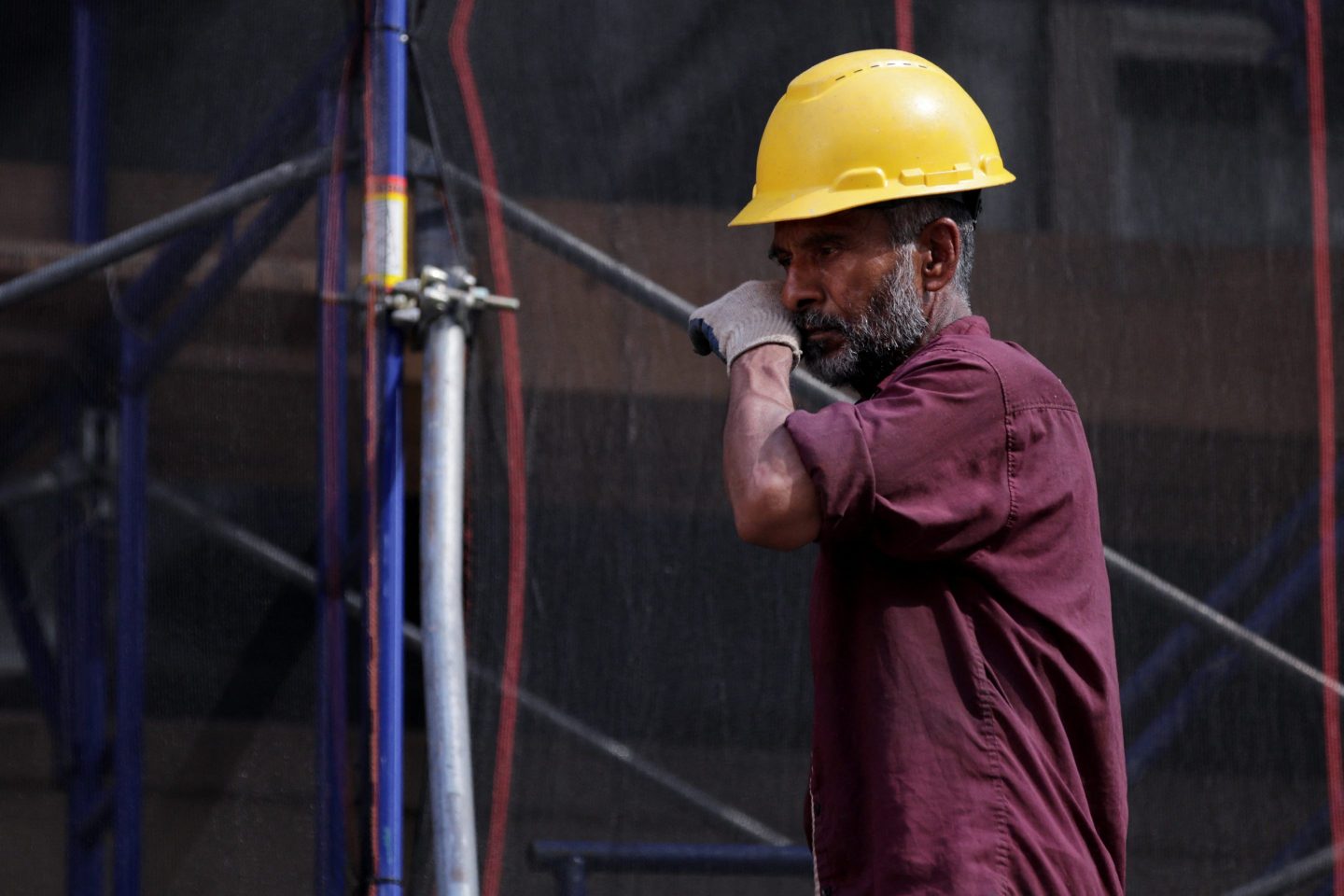
A construction worker wearing a yellow helmet wipes his nose with his hand.

The Trump administration’s immigration crackdown has exacerbated a construction labor shortage.LEONARDO MUNOZ/AFP—Getty Images

Last July, construction site superintendent Robby Robertson warned his $20 million recreation center project in Mobile, Alabama, would likely be delayed for three weeks. He told Reuters that half of his workers stopped showing up to the site after an Immigration and Customs Enforcement raid on another site in Florida, nearly 230 miles away, afraid of facing the risk of deportation.

Recommended Video


The delay would cost Robertson an estimated $84,000, with $4,000 of daily “liquidation damages” mounting for each day the project dragged past its Nov. 1 deadline.

Robertson’s problem may be a nationwide challenge. New data has confirmed economists’ concern that the Trump administration’s immigration crackdown has led to fewer jobs in critical industries, particularly construction, reifying fears of labor shortages, delays, and ultimately passed-down costs to homebuyers.

A working paper recently published by the National Bureau of Economic Research found employment among likely undocumented immigrants dropped 4% on average in areas where ICE conducted recent raids. Construction was the most affected industry the researchers tracked, with employment dropping 7.5% for undocumented workers. The Associated General Contractors of America (AGC) estimates 35% of construction workers are immigrants.

Despite immigrants’ role in the construction industry—and the broader economy—the Trump administration has taken substantial efforts to curb immigration. On Friday, the White House announced that most foreigners seeking green cards must go back to their home countries in order to apply, a policy shift that could impact hundreds of thousands of foreigners seeking permanent residency in the U.S.

But it’s not just construction jobs at risk because of the immigration crackdown, economists warn. 

“If the supply of immigrants is cut off, as it seems to be with the borders effectively closed these days, I think it will get much harder for the construction industry to fill positions,” Ken Simonson, chief economist at AGC, told Fortune.

“But the even bigger, broader concern is that the population as a whole is going to stop growing, and that will mean less demand for homes, for schools, for retail, for many consumer-facing kinds of construction projects, and a general slowdown in economic growth that sooner or later affects every kind of construction. I think that’s a real risk.”

Where have the construction workers gone?

Even prior to Trump’s clampdown on immigration, the U.S. was facing both a labor shortage in construction and a slowdown in homes being built. Last year, construction workers broke ground on about 1.36 million homes, a 0.6% drop from 2024, according to data from the Federal Reserve Bank of St. Louis, a worrying statistic for economists saying the U.S. needs to build 3 million to 4 million additional homes “beyond normal construction” to resolve the country’s housing crisis.

According to the Associated Builders and Contractors, a trade group, the U.S. must hire 349,000 more construction workers in 2026 in order to meet demand. By comparison, the U.S. added 181,000 total jobs in 2025.

Paid Content

Inside the 2026 Breakthrough Prize ceremony

From Breakthrough Prize

Simonson said that while construction has been hit by the same low-hire, low-fire conditions straining job growth, the industry faces more severe shortages from both an aging workforce and dwindling interest from younger generations.

“There certainly is turnover in construction,” he said. “There are a lot of retirements happening, and so to keep that construction employment rising, we do need a pool of new entrants to the workforce.”

But the U.S. population of 18-to-22-year-olds has peaked, Simonson noted, and while more Gen Z workers are joining construction, the generation makes up just 14% of payroll, with Millennials and Gen X holding 71% of the jobs. From 2019 to 2023, the share of Baby Boomers in construction fell from 20.6% to 14.2%.

Tony Payan, a fellow at Rice University’s Baker Institute for Public Policy, said if labor shortages in the industry continue, construction companies will face cost overruns from delays or have to hike wages to attract workers from competing companies. Already facing tight margins, construction firms are not going to be able to absorb those costs.

“Everything is going to be passed down to the consumer,” Payan told Fortune.

Why construction jobs are being threatened

Historically, immigrants have been able to fill some of the gaps in construction’s labor supply, but mass deportation efforts have impacted more than just these foreign-born workers. Elizabeth Cox, a professional research assistant at the University of Colorado Denver and co-author of the NBER study on ICE’s impact on construction labor participation, said fear has been one of a few drivers of job losses.

“A lot of this is likely due to the public perception of ICE activity, and that people are a little bit more fearful than they have been in previous instances,” Cox told Fortune.

While deportation directly removes someone from the labor market, it also produces chilling effects, discouraging immigrants, particularly those undocumented, from participating in everyday activities, Cox said.

Those chilling effects account for why foreign-born workers may no longer participate in the labor market, but does not fully account for why immigration crackdowns would lead to fewer U.S.-born workers. 

Cox explained fewer immigrants generally leads to less growth, which can disincentivize a workplace from hiring in general. Immigrants fulfill a complementary role in the workplace, meaning their jobs necessitate roles to support their work that may be more likely to be held by U.S.-born workers. For example, at a construction site, fewer laborers would necessitate fewer electricians to be working on site, as well as fewer managers to oversee the work.

Finding solutions to construction’s labor problem

Payan said the Trump administration could take action to address construction’s labor problem. While the agriculture industry has a dedicated H-2A visa for temporary agriculture workers, it does not have a specific visa for those in construction. Instead, there’s an H-2B visa for non-agricultural workers. 

But these designations are meant for mostly seasonal or intermittent workers, not construction jobs that have yearlong demand. Visas are often granted for only up to one year, while many construction jobs require seasoned workers with certifications and good insurance.

“You need workers for at least a few years to train them and get them to be quite good at what they’re doing, so that they can deliver the project on time, on cost, and of course do it well,” Payan said.

With little likelihood of a visa being created to accommodate foreign-born construction workers, he noted construction companies have some, albeit limited, options to ease the burden of labor shortages. AI has helped to automate some roles in the industry, but automated construction equipment is still expensive and not yet reliable, Payan warned.

Moreover, more automation in construction doesn’t necessarily reduce jobs, as humans still need to oversee the work of the robots. Construction firms can also raise wages, but run into the problem of competing for the same pool of workers.

“They’re really at a quandary as to what to do,” Payan said. “Construction company owners and CEOs, they’re really at this point of reaching into the depths to compete for the available labor. It essentially means greater costs, that’s it.”

The Fortune 500 Innovation Forum will convene Fortune 500 executives, U.S. policy officials, top founders, and thought leaders to help define what’s next for the American economy, Nov. 16-17 in Detroit. Apply here.

About the Author

By Sasha RogelbergReporter

Sasha Rogelberg is a reporter and former editorial fellow on the news desk at Fortune, covering retail and the intersection of business and popular culture.

Posted in Uncategorized | Tagged , , , , | Leave a comment

Fortune: Elon Musk’s SpaceX IPO filing just told us what business he’s betting on for the future—and it’s not rockets

InvestingFinance

Elon Musk’s SpaceX IPO filing just told us what business he’s betting on for the future—and it’s not rockets

Shawn Tully

By 

Shawn Tully

Senior Editor-at-Large

May 23, 2026, 4:00 AM ET

Add us on

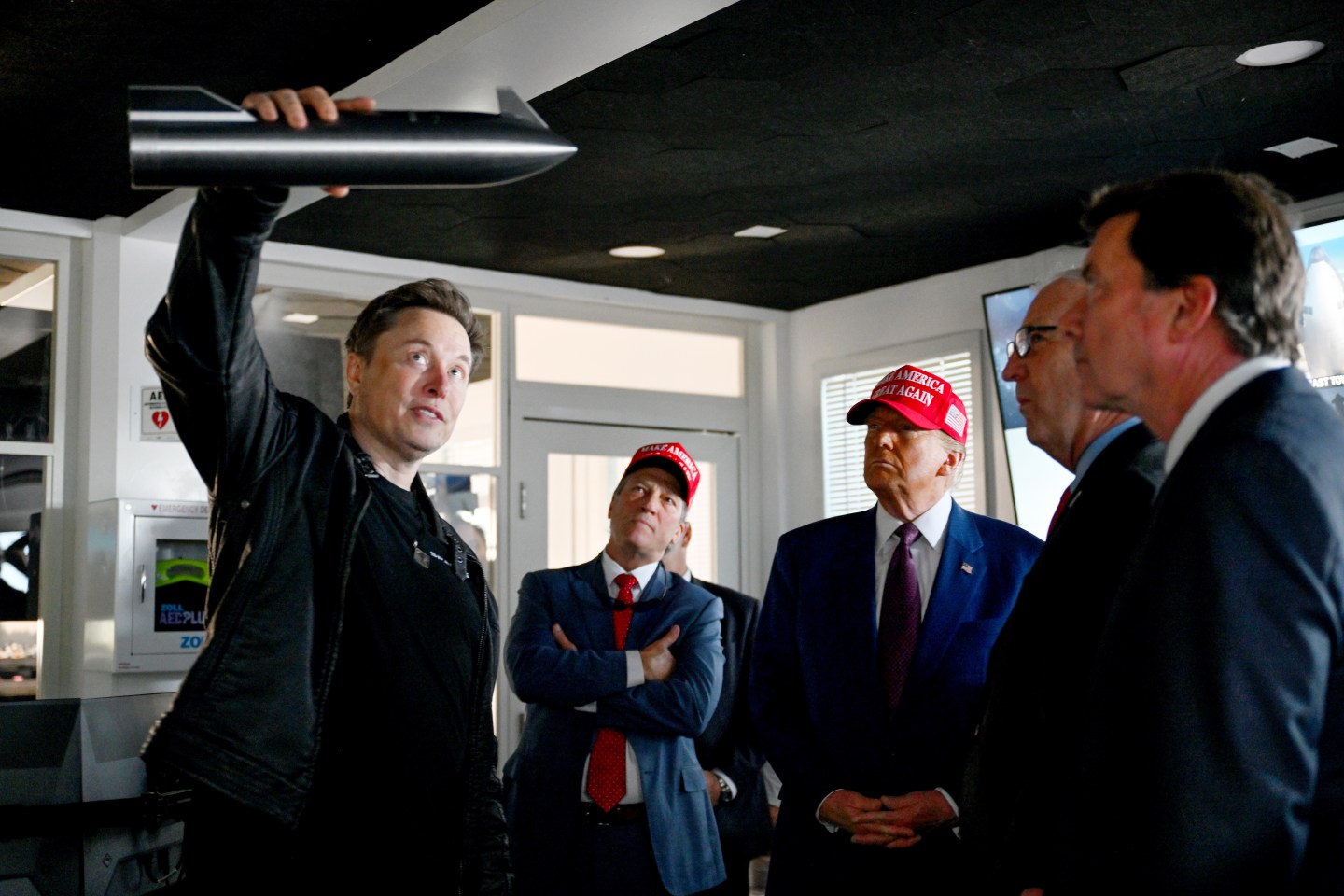
Elon Musk gives a tour to U.S. President-elect Donald Trump and lawmakers of the control room before the launch of the sixth test flight of the SpaceX Starship rocket on November 19, 2024 in Brownsville, Texas.

Elon Musk gives a tour to U.S. President-elect Donald Trump and lawmakers of the control room before the launch of the sixth test flight of the SpaceX Starship rocket on November 19, 2024 in Brownsville, Texas.Brandon Bell/Getty Images

It’s no surprise that the SpaceX offering statement, filed the evening of May 20, shows that as of today, the rocket, satellite and AI enterprise sports tiny revenues and books large losses. That its market cap following the IPO slated for mid-June’s expected to hit $1.5 trillion or more highlights that its fans are basing their overwhelming optimism almost exclusively on great things to come. But a careful reading of the S-1 reveals substantial barriers in the path to achieving the sorcerous performance required to reward shareholders who flock to the most anticipated debut ever seen.

Recommended Video


The reason isn’t simply that SpaceX will be fighting the law of large numbers by starting life as a public company as an extremely expensive stock. Put simply, as the prospectus highlights, Elon Musk’s creation has essentially re-invented itself from a commercial space pioneer facing relatively mild competition, to an AI-centric player that’s vying for the same dollars and customers, as the hyperscaler crowd led by Microsoft, Google, OpenAI, Coreweave, and sundry smaller but still formidable participants.

To win in that crowded and hot sector, SpaceX will need to go super-big on capex for data centers and R&D that hatches fresh enterprise products. As the prospectus displays, those already-huge expenditures are already accelerating, and they’ll keep ramping over the next few years. Yet garnering major profits from AI may take a lot longer. The S-1 makes that point as well. The original space businesses may prove highly successful, but it’s likely not big enough to do most of the work. It’s clear that Musk’s ambitions, and the investors’ hopes as reflected in the valuation, are heavily tilted to a knockout performance in AI.

To handicap SpaceX’s prospects, it’s crucial to ignore the Wall Street buzz and Musk hype about colonies on the moon and examine, via the prospectus, how much money SpaceX now pours into fashioning the AI franchise, and what it’s reaping from the space ventures to support it.

An excellent new report from David Trainer, CEO of financial research firm New Constructs, identifies several weaknesses threaten SpaceX’s prospects. They include a lopsided governance structure where the funds and individual will own almost 60% of shares but get almost no voting power. Instead, Elon Musk will exercise virtually total control; the founder and CEO can’t be removed from office by a shareholder vote and is free to name a board dominated by insiders. (This reporter addressed these issues in a previous story https://fortune.com/2026/05/22/space-x-stock-ipo-price-elon-musk-shareholders/.) Trainer also notes that SpaceX will make its public debut as the most unprofitable player in all of its main businesses.

Another red flag: Trainer dug into the S-1 to find that the lion’s share of the projected IPO proceeds is already spoken for. So the question arise, where will all this money needed for capex come from? The potential share issuance and borrowing needed to the AI march could prove a big negative for investors.

Of the two non-AI sectors, rockets are spouting losses while the satellite side’s thriving

As the S-1 shows, SpaceX stands on three main legs, Space, Connectivity and AI. All told, the consolidated enterprise posted $18.7 billion revenue and booked an operating loss of $2.6 billion. AI is the biggest drag, highlighting the challenge ahead. Space comprises the rocket lineup that the company manufactures in-house, and deploys to launch its own satellites. It also sells rockets to NASA and performs launches as a contractor for the agency, as well as hosting special orbital trips for high-paying VIPs.

By contrast, the Connectivity segment’s a big money-spinner that boasts an outstanding runway. It’s SpaceX’s only profitable franchise, and accounts for almost two-thirds of total sales. The Starlink segment runs a galaxy of 9,600 satellites, three-quarters of the total fleet in orbit. Over ten-million users pay subscriptions for mobile and broadband service. The business is well protected, since it’s far the biggest global player in commercial satellites, and the gigantic investment and tech wizardry needed to challenge its dominance provides a deep moat. It’s also annuity-style steady.

In the 12 months ended in Q1, Starlink doubled its roster of subscribers to reach that 10 million mark. The downside: The new customers it’s adding are getting less profitable. Its revenue per sub, a key metric, has fallen from $99 in 2023 to $66 in Q1 of this year. As a result, revenue growth lagged, rising 50% in 2025 vs last year to $11.4 billion. So far, the segment’s extremely profitable, returning $4.4 billion in operating income last year for a margin of 30%. Still, it’s facing strong pricing competition from terrestrial networks, operated by everyone from T-Mobile to Google fiber that users often find more reliable than satellite service. The overriding issue: Connectivity’s subscription machine, even if it keeps growing fast, isn’t nearly big enough to drive the kind of revenues and profits SpaceX will need to reward shareholders.

A big concern for shareholders: The IPO proceeds won’t be available from funding most of its AI capex. So where will the the tens of billions a year come from?

Instead, that burden falls to AI. It’s just recently that SpaceX recast itself as a giant in the hottest tech arena of this century. The shift came in February, when it merged with Musk-controlled xAI, a combo that reportedly boosted SpaceX’s private valuation by $250 billion. AI’s also responsible for the lion’s share of the deficits: In the past five quarters, it’s collected $4 billion in revenues and suffered over twice that amount, $8.9 billion, in operating losses.

Paid Content

How Calix culture powers a new era of broadband

From Calix

As Trainer observes, the losses from Space, and especially AI–despite Starlink’s success––place SpaceX as a whole dead last among all of its peers in broadband and mobile and in AI, measured by both profitability and return on invested capital. It scored -7% and -3% respectively in those categories last year, far behind Comcast (12% and 6%), AT&T (17% and 4%), Amazon (11% and 14%), and even Coreweave (10% and 1%).

That company-wide deficit in profitability could potentially raises questions about it will fund its gigantic requirement for the capex required to deliver on its promise make its AI side a supreme winner.

SpaceX is rapidly expanding at its portfolio of data centers newly acquired from xAI. The flagships are the aptly-named Colossus I and II facilities in Memphis covering a total of 2 million square feet. It’s also spending $20 billion on a new hyper-scale center in Mississippi. Since the start of 2025, the AI side has lavished $20.4 billion on infrastructure, two-thirds of the SpaceX’s total capes over that span. In Q1, the prized segment’s bill came to a staggering $7.7 billion. Last year, AI absorbed the equivalent of 60% of the overall enterprise’s R&D, and the number for Q1 hit $3.5 billion, twice the dollars spent a year ago.

The math suggests that Musk is marshaling his genius for hype, as well as legendary reputation as a visionary, to create a highly-overvalued stock. Hence, the IPO’s generated such seldom-seen excitement that it’s expected to raise $80 billion, yet will require SpaceX to sell only around 5% of its shares. It would appear, then, that SpaceX will be amass warchest sizable enough to fund a few years of AI investment on its down.

But as Trainer spotlights, that’s not the case. As he points out, SpaceX has pre-pledged $62.8 billion, 78% of the expected proceeds, for payments to third parties. Almost exactly one-third each will go to Valor Equity Partners, a major early investor, Musk’s X Corp. and xAI creditors holders for repayment of debt, and Echostar for the “Spectrum Acquisition Closing.” That leaves less than $18 billion to devote towards growing SpaceX, principally by financing the promised explosion in AI compute capacity. Keep in mind that the AI area devoured more than amount just in the past five quarters.

The problem: $18 billion won’t last long, given the escalation in the AI spend, not just on capex, but operating expenses and R&D. It’s clear from the S-1 that the free cash flow from the rest of the company can fund just a piddling portion of what’s needed. By Fortune‘s estimate, the rest of SpaceX outside of AI last year generated just $1 billion free cash flow that could potentially support what Musk sees as its principal engine. The prospectus also talks about floating more shares and issuing debt to keep data center build rushing forward. But those moves will cost shareholders in dilution and rising interest expense.

Perhaps the most important statement in the entire, roughly 400 page document comes on page 53, where SpaceX details the immense expense and long timeline needed to mine the super-rich AI lode. The prospectus states, “We expect to allocate substantial capital to expand our compute infrastructure, and we expect a multi-year investment horizon before these deployments translate into sustained positive AI Segment Adjusted EBITDA. During this investment period, our capital expenditures will scale as quickly.” Keep in mind that’s “scaling up” from capex that in Q1 alone, reached a towering $7.7 billion.

The effusive document also reveals how heavily SpaceX is leaning on its new AI arm to achieve the explosive growth in revenues and profits needed to reward investors buying in at a $1. 5 trillion valuation. Page 11 displays one of the S-1 chief set-pieces, a chart showing the total addressable markets for each of its three segments. SpaceX projects its total TAM at a staggering $28.5 trillion. The corker: Of that total, AI accounts for $26.5 trillion or 93%. As Trainer writes, “Large TAMs provide strong growth potential. They also invite competition.” SpaceX is moving from relying on a satellite business it dominates to a field that’s lured a pantheon of the world’s most successful enterprises, from Microsoft to Google. The pie will expand fast, but sundry rivals will be vying for the pieces––a scenario that’s sure to pressure prices and margins.

Trainer’s a master of using discount models to forecast how much companies must earn in the future to justify huge market caps today. His analysis posits that to deliver decent returns to shareholders at a $1.5 trillion valuation, SpaceX would need to be booking $189 billion in annual profits by 2035. At $1.75 trillion, the bogey rises to $245 billion. For 2025, no U.S. company came close to even the lower number. As Trainer avows, Musk is counting on “Out of this World Profits” to ring the bell. And keep in mind, SpaceX is debuting as an enterprise that’s in the red.

If investors should focus on one item in the S-1, it’s not the gauzy stuff about solar powered data centers in orbit, but Musk’s frank admission that making money in AI will cost a ton and take a long time. Folks and funds may be right to back him. But though the spirits over the most eagerly awaited IPO are super-high, the risks are just as big.

The Fortune 500 Innovation Forum will convene Fortune 500 executives, U.S. policy officials, top founders, and thought leaders to help define what’s next for the American economy, Nov. 16-17 in Detroit. Apply here.

About the Author

By Shawn TullySenior Editor-at-Large

Shawn Tully is a senior editor-at-large at Fortune, covering the biggest trends in business, aviation, politics, and leadership.

Posted in Uncategorized | Tagged , , , , | Leave a comment

The Boring Company yes Elon Musk put this up. Ireland, it would have been CRH which is now quoted top 500 in US stocks but this below is real progress going forward

Posted in Uncategorized | Leave a comment

Order Order Order … why do we always see war in the near distance when we witness this discipline by so many people under the control of their Government and Leaders

Posted in Uncategorized | Leave a comment

Clash Report: Dr Yu Jie : China Foreign Policy Expert, Chatham House. Did you know China & Russia share a 4,300 km border?

Posted in Uncategorized | Leave a comment

GeniusThinking: Renaissance historian Ada Palmer just revealed why Leonardo da Vinci actually buried his own science…

Posted in Uncategorized | Leave a comment

Bloomberg Originals: Jeffrey Epstein built a network of elites across finance, politics and academia …

Posted in Uncategorized | Leave a comment

Axios: Republicans sour on Trump economy


Axios AM
By Mike Allen · May 23, 2026
 Happy Saturday! It’s Memorial Day weekend, in remembrance of U.S. service members who died serving America.Smart Brevity™ count: 1,345 words … 5 mins. Thanks to Neal Rothschild for orchestrating. Edited by Katie Lewis.
 
 
1 big thing: Republicans sour on Trump economy
 
Illustration: Aïda Amer/Axios. Stock: Getty Images

President Trump promised an economic golden age when he returned to office last year.

Instead, voters are in their crankiest mood in years about their financial outlook — and the pessimism is spreading even to Republicans, Axios’ Mike Zapler writes.

Why it matters: The growing GOP gloom could hardly come at a worse time for Trump and the party — less than six months out from a midterm that’s likely to turn on the economy. 

Trump’s approval rating has been dropping for months. But the University of Michigan’s May consumer sentiment survey released yesterday revealed something more striking: Republicans are beginning to lose confidence in the economy, too.

Republican and independent voters’ attitudes about the economy hit a low point in Trump’s second term, per the survey. Overall sentiment hit an all-time low, period.

Expectations that inflation will remain high shot up among everyone surveyed, but especially Republicans. The long-run inflation expectations for Republicans “are currently more than double their February 2025 reading on a monthly basis,” the Michigan survey found.A line chart that tracks the consumer sentiment index monthly from January 1978 to May 2026. The index ranges from 44.8 to 112. In the listed data points, it ranges from 83.7 in January 1978 to 95.7 in March 2002, then hits 44.8 in May 2026, an all-time low.Data: University of Michigan. Chart: Axios Visuals 

By the numbers: An AP/NORC poll out this week found that around 6 in 10 Republicans approve of Trump’s handling of the economy. That’s down from about 8 in 10 in February.

Gallup’s gauge of consumer economic confidence released yesterday found that Republicans’ economic outlook has dipped for the past four months, to the lowest level of Trump’s second term.

A CBS News/YouGov poll this month told much the same story: Just 36% of Republicans said Trump’s policies were making them financially better off.Share this story.
Posted in Uncategorized | Tagged , , , , | Leave a comment

Breaking: Hormuz/Bab el-Mandeb … are we witnessing assymetric war … cutting pipelines goes beyond?

Iran prepares extreme response

🔥

Source close to Speaker Ghalibaf: Iran’s “Third Struggle” plan will close Bab el-Mandeb Strait by fire and disable all 7 undersea internet cables in Strait of Hormuz if US strikes resume this weekend. Iran will also fire hundreds of next-generation missiles & drones daily at Gulf energy targets.

Posted in Uncategorized | Leave a comment

Robert A. Pape This is the strongest signal that Trump will resume bombing imminently. No commercial aircraft over Iran

Posted in Uncategorized | Leave a comment