On October 31, 1991, a 79-year-old Mary Anne MacLeod Trump stepped out of her Rolls-Royce on Union Turnpike near her home in Jamaica Estates, Queens, when a 16-year-old mugger grabbed her purse and threw her to the ground, and what followed was not just a violent crime but the event that quietly reframed the entire final decade of her life and revealed how her son, the real estate billionaire Donald Trump, actually showed up when it mattered for the people he loved.
Mary Anne’s purse contained $14. She refused to let it go. The mugger beat her on the pavement, breaking her ribs, fracturing multiple bones, causing a brain hemorrhage, and inflicting permanent damage to both her sight and her hearing, injuries from which she never fully recovered. A bread-truck driver named Lawrence Herbert witnessed the attack, chased down the teenager, and held him until police arrived.
The assailant later pleaded guilty to robbery and assault and received a sentence of three to nine years in prison. Donald Trump subsequently tracked down Lawrence Herbert and sent him a personal check specifically intended to keep Herbert from losing his home to foreclosure, a quiet, direct, and entirely unpublicized act of gratitude for a man who had saved his mother.
Mary Anne spent the last nine years of her life significantly diminished by that attack, her vision and hearing permanently impaired, surviving her husband Fred by approximately a year before dying on August 7, 2000, at Long Island Jewish Medical Center in New Hyde Park, New York, at age 88.
She had come to America 70 years earlier with $50, worked in other people’s mansions, married a builder from Queens, raised a future president, and in the end was mugged on her own street for $14, her Rolls-Royce parked just feet away. The death notice in the Stornoway Gazette, the newspaper of her Scottish hometown, read simply that Mary Ann Trump, aged 88, was the daughter of the late Malcolm and Mary MacLeod of 5 Tong, the fishing village she had left at 18 and never stopped belonging to
Palantir CEO Alex Karp at the White House in March. Photo: Aaron Schwartz/CNP/Bloomberg via Getty
Palantir is battling the Pentagon’s Defense Intelligence Agency for the ability to bid for a contract to modernize its data analytics system, according to a filing obtained by Axios’ Maria Curi.
Why it matters: Palantir’s already massive Pentagon foothold could expand to the agency tasked with providing foreign military intelligence to prevent and win wars.
Palantir argues in its protest that the DIA is wasting taxpayer money, and flouting the law, by refusing to consider a commercial solution for its data analytics modernization.
The agency launched MARS (Machine-assisted Analytic Rapid-Repository System) eight years ago and has been developing it ever since to replace a Cold War-era system.
The White House wants any company to be able to compete, a senior Trump national security official told Axios.
“The president has issued several EOs pushing to field the best tech the private sector has to offer,” the official said. “I wouldn’t be surprised if there’s swift action to remedy this and ensure any company that wants to compete is given a fair chance.
A UK Lawmaker Urges Investigation After Sierra Leone’s First Lady Admits Continued Use of Subsidized Housing
News
Sierra Leone’s first lady is again under fire as she holds onto her subsidized flat more than a year after OCCRP and The Times exposed her tenancy at the property.
A British lawmaker has urged a South London council to investigate the tenancy of the first lady of Sierra Leone after she publicly admitted she is holding onto a taxpayer-subsidized apartment designed for the city’s most vulnerable residents.
To the thousands of low-income families languishing on a waitlist for subsidized housing in South London, a two-bedroom apartment in the borough of Southwark is a lifeline. But to Fatima Bio, the wife of Sierra Leonean President Julius Maada Bio, it is a property she has held onto – even as she moved into a presidential palace and acquired luxury real estate in West Africa, as an OCCRP investigation revealed last year.
Council homes in the United Kingdom are specifically designed to provide below-market rents for individuals with limited housing options, where eligibility is typically conditioned by low income and limited savings.
Speaking to OCCRP, Member of Parliament for Bermondsey and Old Southwark Neil Coyle said that he had asked Southwark Council to investigate the use of the property by the first lady.
“There are rules about residency which appear to have been broken. If she is not living in the U.K. the property should be available for people living in Southwark,” he said, referencing council housing regulations that require tenants use the property as their primary residence.
“The waiting list for a home here is very high and no abuse should be tolerated. To know someone is living in opulence elsewhere whilst families wait for homes in London is a travesty and must be tackled,” he added.
The revelations about Bio’s use of council housing were first published jointly by OCCRP and The Times in May 2025 as part of OCCRP’s investigation into the first lady’s acquisitions of high-end properties in Gambia. In an interview with the BBC this week, Bio confirmed she continued to keep the apartment and that her children, who are British citizens, were residing there.
“I’m paying for my council house myself. I have not committed any crime,” said Bio, a former Nollywood actress who had moved to London in the early 2000s. Working as a model and actress in the city’s African diaspora cultural scene, she moved to the Southwark flat in 2007, before relocating to Sierra Leone when her husband assumed the presidency in 2018.
The U.K. is currently grappling with a severe shortage of social housing. In Southwark alone, more than 18,000 households remain on a waiting list for accommodation, with thousands currently living in temporary housing.
On Thursday a neighbor living in Southwark told OCCRP that the flat does not appear to have full-time residents, with mail regularly piling up, as reporters observed during the visit of the property in February and July last year.
When confronted by the BBC about the additional portfolio of luxury properties in the West African country Gambia, which OCCRP’s investigation had revealed, Bio refused to directly confirm or deny ownership, telling the broadcaster: “I don’t have to deny it. I don’t have to acknowledge it.”
Drawing on sales records and other documents obtained by reporters, the investigation found that Bio, her mother, and two half-brothers had spent over $2.1 million on at least 10 real estate purchases, including luxury villas, beachfront apartments, and a four-storey apartment building.
Southwark Council has declined to comment directly on the First Lady’s tenancy. However, the council indicated that it routinely investigates instances where there are concerns over whether a tenant is meeting their obligations, notably the requirement that the council flat serves as a primary residence.
Bio did not respond to OCCRP’s requests to comment.
May 22, 2026
Support fearless reporting. Unlock crucial insights.
Youth Fusion held the inaugural session of the Youth Hotline campaign in June 2023, with 17 participants from 16 countries. Photo courtesy of Ivan Siluianov Share
Listen to this article:
06:39
This audio was generated using an automated voice. Learn more.
It has been more than four years since Russia invaded Ukraine and changed my life. I happened to be in Moscow on the day of the “special military operation,” a catchphrase used by Russian authorities in place of the word “war,” which was erased from public rhetoric. The night before the invasion, my roommate and I were frantically scrolling through the Telegram messaging app, trying to make sense of Russian President Vladimir Putin’s recognition of the Donetsk and Luhansk republics in eastern Ukraine as independent states. As students at Russia’s top diplomatic academy, we were also asking ourselves a quieter question: What did this mean for our future?
The following morning, I woke up to footage of Russian troops crossing into Ukraine. I remember sitting in disbelief. I felt deceived. For years, I had developed a habit of treating information from both Russian and Western sources with caution. That instinct suddenly felt insufficient. As I made my way to campus on that dark, freezing morning of February 24, 2022, I wondered who I should believe and what was actually happening.
When I arrived, I sensed that many other students were wondering the same thing. Some professors were cautious and subdued. That did not surprise me. Many of them were former diplomats who had spent long careers inside the Ministry of Foreign Affairs. One reaction, however, stood out for its sheer absurdity. It was my first class of the day: Global Security Issues, taught by a senior diplomat from the foreign policy planning department. More than 50 students joined the class on Zoom, but it felt less like a lecture and more like a confrontation.
“How do our country’s actions comply with the international law we study so diligently?” I asked.
Other questions followed. The chat quickly filled with sharp, critical remarks.
“I don’t want NATO missiles to land on my kids’ heads,” the professor replied. “I feel ashamed of you for picking Swiss cheese and French wine over the safety of our people.” Her voice sounded defensive and emotional.
For the first time, it felt freeing to argue.
Meanwhile, friends from Finland and the United States flooded me with messages about bombings and civilian casualties. I dismissed many of them. I did not want them to be true. Studying in an environment where Western reporting was routinely labeled foreign propaganda made it easier to doubt, harder to confront reality. But reality has a way of breaking through.
At that time, I was working part-time for a Swedish language school online. I had always believed that languages build bridges. They help create trust and a sense of belonging. As a teenager, I set out to learn six foreign languages to better understand the world around me. I did not expect that Swedish would one day reshape my understanding of peace.
In 2022, Sweden became one of many European states that welcomed Ukrainian refugees. Through my teaching, I met Ukrainian doctors, factory workers, and business owners who spoke Russian and had a familiar sense of humor. The difference was that they had been forced to leave their homes. I had not. Listening to their stories made the war tangible in a way no news article ever could. While I was teaching them Swedish, they were teaching me resilience and kindness. Their stories spoke louder than any political narrative. Those conversations shifted something in me. They clarified my values. They also gave birth to an idea: a campaign that could promote peace and disarmament through personal connection and stories.
As the war continued, nuclear rhetoric became increasingly visible in public discourse. In Russia, references to nuclear escalation were used to frame the conflict as existential and to deter deeper Western involvement. At the same time, there was virtually no domestic space for meaningful nuclear disarmament dialogue. That absence pushed me to look outward.
I found such a space in Youth Fusion, a network of young professionals committed to educating the next generation about nuclear disarmament and broader peace and security issues. At a time when most international projects involving Russia were mothballed, it was refreshing to participate in an international, intergenerational dialogue with policy practitioners and advocates working on risk reduction.
Out of that exchange of ideas, I created the Youth Hotline.
The Hotline is an educational initiative designed to connect young people from the United States, Russia, Ukraine, and beyond. The name draws on the famous Cold War direct line between Washington and Moscow, reinterpreted for a generation that believes peace requires more than two leaders talking. In its first iteration, the Hotline brought together 21 participants from 15 countries. Over four intensive weeks, they took part in expert webinars, worked on a themed project focused on nuclear disarmament, and built connections through dedicated networking sessions—all alongside academics, researchers, and diplomats. The goal was to examine what peace means: not as an abstract ideal, but as a responsibility. The Hotline built relationships across political divides. Human connection became the foundation.
It has been humbling to see how the project opened new opportunities for some participants in peace and security work globally. At a time when my own career aspirations in Russia were quietly crumbling, building the Hotline gave me a renewed sense of purpose.
This year, the program entered its second iteration, focusing on nuclear risk reduction and built around the principle that young people should be co-creators of solutions, not just learners. The new team introduced diplomatic simulations, placing participants in the role of state delegates navigating a fictional nuclear crisis at the United Nations, as well as mentorship opportunities with practitioners and civil society experts. The aim was not only discussion, but preparation.
The generation growing up today is witnessing war unfold in real time. The narratives young people absorb now will shape the decisions they make in the future. If they grow up sealed within rigid and propagandistic worldviews, the divisions of today may harden into the conflicts of tomorrow. If instead we connect young people early and across borders, expose them to dialogue, and equip them with the tools to think critically and empathetically, we create a different possibility.
Today’s young people will one day hold positions of influence. The question is whether our leaders will leave them to inherit grievance and fear, or whether they will help them cultivate the capacity to lead with responsibility and peace.
Together, we make the world safer.
The Bulletin elevates expert voices above the noise. But as an independent nonprofit organization, our operations depend on the support of readers like you. Help us continue to deliver quality journalism that holds leaders accountable. Your support of our work at any level is important. In return, we promise our coverage will be understandable, influential, vigilant, solution-oriented, and fair-minded. Together we can make a difference.
Summary: A precision functional genomics study successfully mapped the biological timing and cellular consequences of a major schizophrenia-associated gene. The research investigates ZNF804A, the very first risk gene identified from human genomic data, and pinpoints its peak activity during a critical early developmental window.
By utilizing CRISPR-Cas9 gene editing to suppress ZNF804A in developing cortical neurons, neuroscientists exposed a direct structural link between localized protein production and hyper-excitable synaptic signaling. This breakthrough bridges a long-standing knowledge gap in psychiatric medicine, translating abstract genetic risk into tangible neurobiological pathways.
Key Facts
Bridging the Genetic Chasm: Schizophrenia is among the most heritable psychiatric conditions known, with genomic studies identifying 287 distinct risk loci. However, conventional genetics fails to explain when these genes become active or how they alter physical brain tissue.
The Second-Trimester Window: Using functional genomics, researchers confirmed that ZNF804A is sequentially orchestrated to become highly active early in brain development, specifically matching the second trimester of neurodevelopment.
Targeting Glutamatergic Neurons: The study discovered that ZNF804A concentrates its expression and regulatory power within glutamatergic neurons during this early phase, allowing scientists to isolate its specific cellular mechanics.
The CRISPR Interruption: Investigators deployed CRISPR-Cas9 gene editing to intentionally cut out parts of the ZNF804A DNA in these developing cells. This impaired the gene’s ability to translate its corresponding protein, allowing the team to observe what happens when its function is lost.
Localized Translation Overdrive: Neurons with impaired ZNF804A abnormally accelerated local protein translation by transporting excess ribosomes (the cell’s protein-building factories) directly to the tips of their branching dendrites.
Electrical Hyper-Excitability: This surge in localized protein production directly increased the density of essential signaling proteins sitting on the synaptic membranes. When chemically stimulated, these ZNF804A-deficient junctions proved to be far more electrically active and excitable than normal neurons.
Source: King’s College London
Researchers at King’s College London have identified the biological nature and timing of changes in human cortical neurons caused by altering activity of a schizophrenia-associated gene in developing human neurons.
This discovery links a genetic risk factor to cellular changes in neurons; an essential step for understanding the neurobiology of this mental illness and developing future treatments.
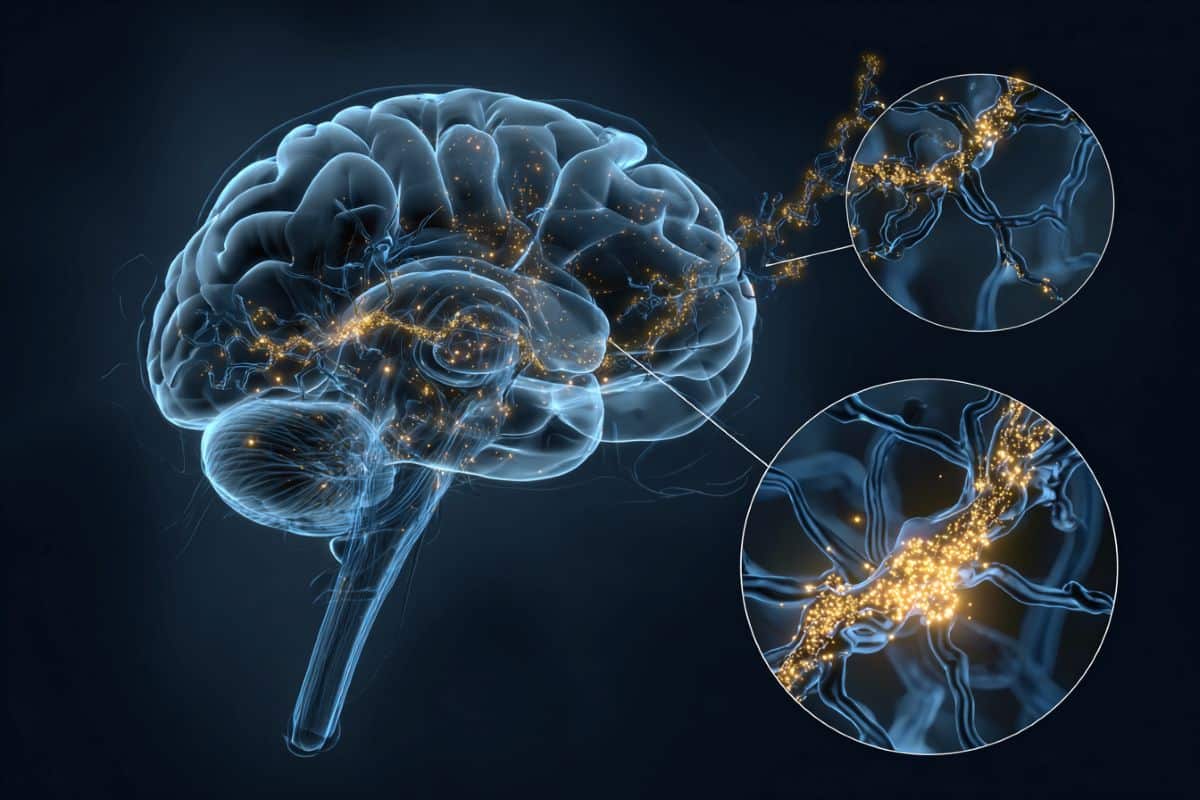
Precision functional genomics data published in the journal Science Advances demonstrates that utilizing CRISPR-Cas9 to suppress the schizophrenia risk gene ZNF804A in developing glutamatergic neurons triggers an abnormal rush of local protein translation and hyper-excitable synaptic signaling. Credit: Neuroscience News
Schizophrenia is estimated to be one of the most heritable psychiatric conditions, with a strong developmental aspect. Large scale human genomic studies have identified many genetic variants which are thought to increase the likelihood of schizophrenia.
However, the link between these genetic risk variants and the underlying neurobiology of schizophrenia is less well understood. Addressing this knowledge gap provides vital information that could ultimately help develop therapies for the disorder.
This new research, published in Science Advances, from neuroscientists at the Institute of Psychiatry, Psychology & Neuroscience (IoPPN), starts to bridge the knowledge gap between genetics and their neural consequences that lead to symptoms of schizophrenia.
Professor Deepak Srivastava, Professor of Molecular Neuroscience at IoPPN King’s College London and joint senior author on the paper said: “While previous large-scale genetic studies have identified genetic risk factors for schizophrenia, they don’t tell you when in development that gene is active or which cell type it’s expressed in. To get at this information we needed to use precision functional genomics.”
Relatively little is known about the mechanism of the first schizophrenia-related gene to be identified from genomic data, ZNF804A. The study identifies a specific type of neuron where ZNF804A is most active in an important developmental window.
The findings also establish a novel link between two previously identified cellular processes associated with the gene: synaptic regulation and protein production regulation.
Dr Laura Sichlinger, Research Fellow at University of Pennsylvania and first author on the study said: “Schizophrenia is a highly complex disorder. It has both a genetic and environmental component.
“There are 287 loci so far identified by genomic studies in humans. To be able to understand what the genes normally do in neurons is a step forward in understanding the biology of the disorder.”
Brain development is a carefully coordinated process triggered by sequentially activated genes that choreograph the precise maturation of different types of neurons and support cells in the brain. To understand developmental disorders, it is essential to identfy the timing of gene activation.
The study confirmed that ZNF804A is most active early in development, consistent with previous studies that showed it to be highly expressed in the brain during the second trimester of neurodevelopment.
The new research uncovered that ZNF804A was most active in glutamatergic neurons in this developmental period. Crucially, this helped the researchers focus their investigation on this type of neuron, at this particular developmental stage.
To understand how ZNF804A contributes to the underlying neurobiology and ultimately symptoms of schizophrenia, researchers prevented the gene from functioning as it would normally in these glutamatergic neurons. To do this they employed a gene-editing approach called CRISPR-Cas9.
This method works by cutting out part of the DNA in a specific gene, meaning it will be less able to be translated in its corresponding protein. Essentially, it will be able to do less of its normal function in the cell.
By looking at the changes that happened after interfering with ZNF804A, researchers could infer what the gene might be doing in development and what types of cellular processes might be altered in neurons with schizophrenia-related mutations.
Scientists then used a microscope to look at the junctions, called synapses, between neurons with supressed ZNF804A gene activity. These junctions are run by a series of proteins sitting on the neuronal membrane. Some sit on the neuron sending the signal; some on the neuron receiving the signal. Changes in the numbers of these synaptic proteins can impact how the neurons send and receive signals.
The microscopy images revealed that there were more proteins at the synapses between the glutamatergic neurons, suggesting they might be more electrically excitable than normal.
This was confirmed by chemically stimulating the neurons causing them to be more electrically active. The neurons which had less ZNF804A gene responded more than normal ones.
Some of the proteins that sit at the synapse can be created through a process called ‘protein translation’ in which a biological blueprint (called mRNA) of the protein is read in, and the corresponding protein is produced. Normally if more proteins are being made in a neuron, scientists will see evidence of more translation.
Neurons are cells with distinctive shapes, much like trees with many branching projections. The junctions between neurons can form at many parts of the neuron but often lie on the smallest branches called dendrites. To get proteins to these synapses, neurons must transport ribosomes (the machinery that builds new proteins) to the ends of the dendrite branch.
This provides an ideal way to regulate how much protein is made at specific neuronal junctions: by controlling where the ribosomes are, and how many are available to make new proteins.
The schizophrenia risk gene ZNF804A has previously been associated with cells’ protein translation machinery. However, it was unknown how this related to links to synapses and signalling between neurons.
The new study found that the neurons with impaired ZNF804A had more synapses and they had more protein production locally in their dendrites, providing a crucial link between these two cellular functions of ZNF804A. This paves the way towards a comprehensive mechanistic understanding of the role this gene plays in neuronal development.
Professor Anthony Vernon, Professor of Neuropsychopharmacology at IoPPN, King’s College London and joint senior author on the paper said: “We want to stress that these specific genetic manipulations of developing neurons do not mimic the full complement of genetic risk linked to schizophrenia. Rather, they are a tool that allow us to understand what specific risk genes, in this case, ZNF804A control in a cell and developmental timepoint specific manner.
“This in turn illuminates the biological processes and pathways that may be affected by specific schizophrenia-linked genetic mutations, such as those in ZNF804A. The next step is to use these tools at scale to ask whether and how the diverse array of risk genes linked to schizophrenia may converge on similar pathways and produce similar phenotypes.”
Funding: This research was funded by the UK Medical Research Council (MRC Centre for Neurodevelopmental Disorders, MRC Doctoral Training Partnership), Royal Society UK, Brain and Behavior Foundation and the National Centre for the Replacement, Refinement and Reduction of Animals in Research.
Key Questions Answered:
Q: If humans have hundreds of genes linked to schizophrenia, why does solving this single gene matter so much?
A: Think of schizophrenia as an incredibly complex jigsaw puzzle with 287 separate edge pieces scattered across the genome. Knowing that a gene causes a risk doesn’t tell a doctor how to treat it. ZNF804A was the very first piece of the puzzle ever discovered, yet its inner workings remained a mystery. By successfully tracking down exactly when it fires and showing that it prevents brain cells from becoming electrical hotheads, King’s College London has given science a concrete blueprint to start linking all the other risk genes together.
Q: How does a tiny error in protein production at a branch tip cause an electrical malfunction in the brain?
A: Neurons are shaped like miniature trees with long, branching arms called dendrites. To communicate, they build communication junctions, synapses, at the very tips of these branches. Normally, ZNF804A acts like a strict traffic warden, controlling how many protein-building factories (ribosomes) make it to those branches. When you break that gene, the factories flood the dendrites, churning out an uncontrolled excess of local proteins. This overcrowded grid makes the synapses far more electrically excitable than they should be, scrambling the brain’s internal signaling.
Q: Does this mean we can use CRISPR gene editing to immediately cure schizophrenia in adults?
A: No, and it is crucial to temper expectations. This study did not use CRISPR as a cure, but rather as an elite research tool to intentionally break a specific mechanism so scientists could watch what went wrong. Because ZNF804A does its critical work during the second trimester of fetal development, an adult’s brain architecture has already been cast. However, by explicitly showing that the target is a hyper-active protein factory in glutamatergic neurons, it gives drug developers a clear bullseye to design future medications that can quiet these hyper-excitable pathways.
Editorial Notes:
This article was edited by a Neuroscience News editor.
Journal paper reviewed in full.
Additional context added by our staff.
About this schizophrenia and genetics research news
Author: Franca Davenport Source: King’s College London Contact: Franca Davenport – King’s College London Image: The image is credited to Neuroscience News
In his latest “ask ian,” Ian Bremmer examines US–Iran tensions, as President Trump signals possible military strikes but repeatedly pulls back amid regional pressure and limited strategic options.
If you ever wanted to work at SpaceX, here’s your golden opportunity They’re on the hunt for world-class engineers and physicists, even those with absolutely no experience in AI. What’s the application process? A simple email with around 3 bullet points proving you have the exceptional ability to work with the best of the best. The bonus? Elon will personally review all emails “that pass reasonable sanity checks.” What are you waiting for?
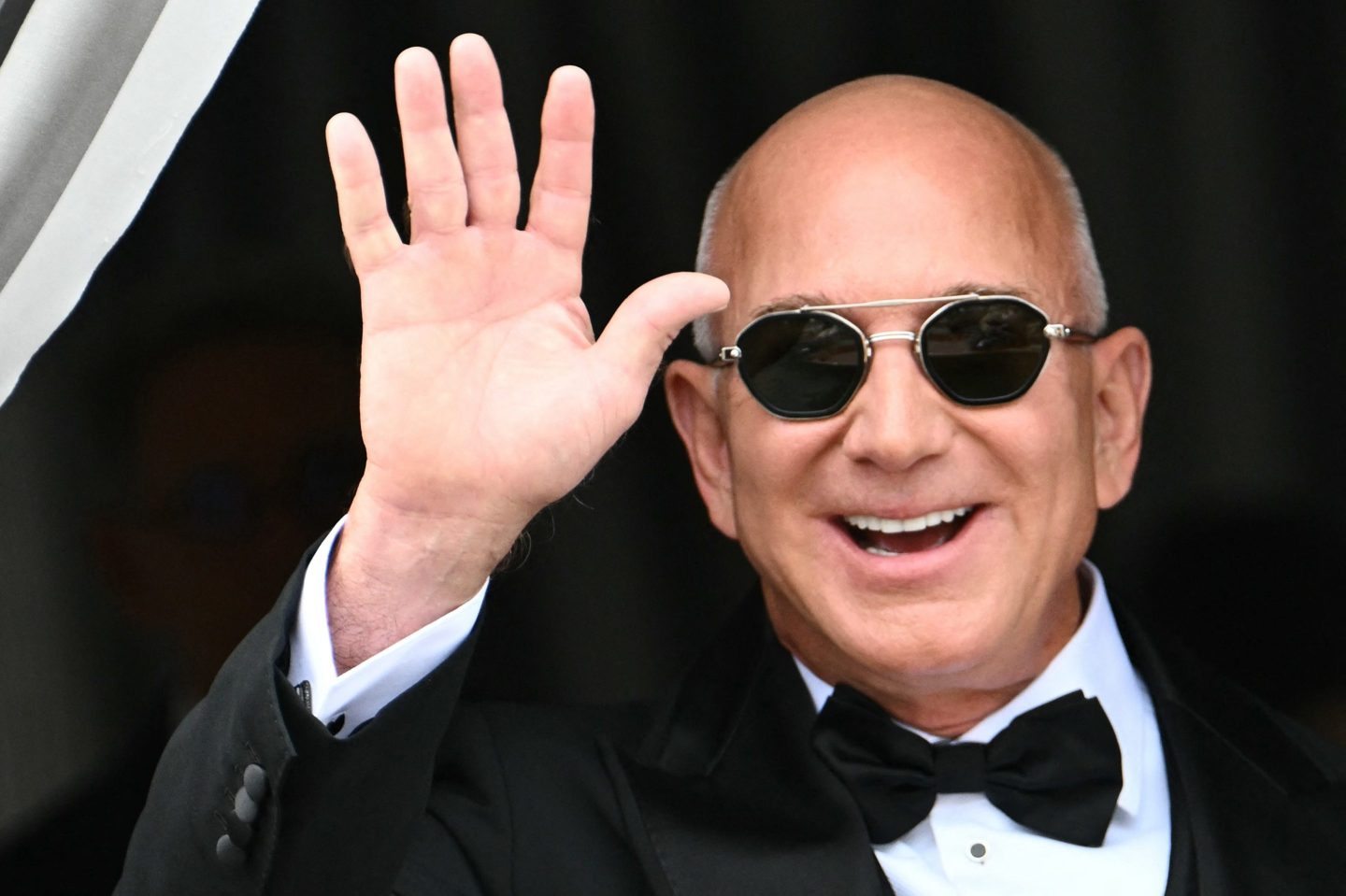
Billionaire Amazon founder, Jeff Bezos, says the bottom 50% of Americans should pay no federal income tax—and he plans to pitch the idea to President Trump.STEFANO RELLANDINI/AFP via Getty Images
For roughly 76 million American households, federal income taxes could eventually disappear—if a proposal by billionaire Amazon founder Jeff Bezos ever becomes reality.
Recommended Video
MacKenzie Scott has donated more than $19 billion
The now Blue Origin owner argued in a recent interview with CNBC that the bottom half of U.S. earners should pay no income tax, saying that working Americans shouldn’t be placed under increased financial pressure, considering they contribute a relatively small share of total tax revenue anyway.
“The bottom half of income earners in this country pay only 3% of the taxes,” Bezos said. “I think it should be zero.”
To make his case, Bezos questioned why a hypothetical healthcare worker as an example: “Why is a nurse in Queens who makes $75,000 a year paying more than $1,000 a month in taxes?”
“To me, it’s kind of absurd that we’re doing this. We shouldn’t be asking this nurse in Queens to send money to Washington,” Bezos added. “They should be sending her an apology. It really makes no sense.”
While Bezos did not elaborate on his exact calculations, workers in the U.S. are generally required to pay federal income, Social Security, Medicare—and in most states, state income—taxes. Combined together, it can stretch into the thousands of dollars.
Because the U.S. tax system is progressive, higher earners generally pay a larger share of their income in federal taxes. In 2023, the bottom half of taxpayers (those making roughly under $54,000) accounted for roughly 12% of total adjusted gross income—but they paid just 3% of all federal income taxes, according to IRS data analyzed by the Tax Foundation. The average household in that group paid about $913 in federal income tax. However, when refundable tax credits are factored in, the bottom 40% of taxpayers already pay effectively no federal income tax on average, reported CNBC.
Bezos, who has maintained a warm relationship with President Donald Trump, said he plans to advocate for the idea with political leaders, arguing that exempting lower earners from federal income taxes would represent only “a small amount of money for the government.”
“It is part of our job as citizens and as business leaders to share our ideas,” Bezos said. “And this one would actually help people.”
Bezos—with a net worth of $280 billion—says even if his tax bill was doubled, it wouldn’t help
Bezos’s concern for affordability may come as a surprise considering his estimated net worth north of $280 billion—the fourth highest of any person in the world. And while he said he personally pays “billions of dollars” in taxes, his tax history has long drawn scrutiny.
A ProPublica investigation released in 2021 found that Bezos—like several of America’s wealthiest billionaires—used tax strategies that have dramatically reduced his tax burden in certain years. In 2007 and 2011, for example, he paid no federal income tax at all, in part because investment losses outweighed reported income. Analyzing Bezos’ wealth growth alongside his reported income and taxes paid between 2014 and 2018, ProPublica calculated his so-called ‘true tax rate’ at 0.98%.
Still, Bezos said he is open to a policy debate over what constitutes a fair tax burden for the wealthy. The top 1% of taxpayers accounted for nearly 21% of total adjusted gross income in 2023, but paid roughly 38% of all federal income taxes that year.
“We can argue about what the fair share is. That’s a policy debate, that’s okay,” Bezos said. “But the vilification is the thing that’s just the distraction.”
But even after fixing tax loopholes or increasing taxes on the wealthy would not address what Bezos sees as a larger government spending problem. He pointed to inefficiencies in New York City’s public school system as an example.
“If we ran Amazon the way New York City runs their school system, your packages would take six weeks to arrive. We’d have to charge you a $100 delivery fee. And then when the package did finally arrive, it’d have the wrong item in it anyway.”
“You could double the taxes I pay, and it’s not gonna help that teacher in Queens. I promise you,” he added.
New York City mayor Zohran Mamdani pushed back on X, writing: “I know a few teachers in Queens who would beg to differ.”
Bezos plans to give away ‘most of his wealth’ in his lifetime—but his ex-wife MacKenzie Scott already has a head start
While Bezos has not signed The Giving Pledge—the philanthropic initiative created by Warren Buffett, Bill Gates, and Melinda French Gates encouraging billionaires to give away a majority of their fortunes in their lifetime or wills—the Amazon founder said he’s committed to giving away most of his wealth in his lifetime.
At the same time, he acknowledged the challenge of doing philanthropy effectively, echoing comments from billionaires including Buffett and Elon Musk, who have said giving away massive sums of money well is often harder than it appears.
Bezos argued to CNBC that the long-term societal impact of companies like Amazon and Blue Origin may ultimately prove even more valuable than philanthropy alone. Creating products and services that improve people’s lives, he said, is the kind of impact aspiring entrepreneurs should prioritize.
“Everybody out there who’s a potential entrepreneur make sure you focus on that,” Bezos said. “You will be creating value for society if you’re successful at pleasing your customers.”
The Fortune 500 Innovation Forum will convene Fortune 500 executives, U.S. policy officials, top founders, and thought leaders to help define what’s next for the American economy, Nov. 16-17 in Detroit. Apply here.
Photo illustration: Sarah Grillo/Axios. Photo: Ethan Miller/Getty Images
Never in 250 years has America witnessed a sitting president shield himself and his family from tax scrutiny, after leveraging policies that benefit his own businesses and personal portfolios, as Donald J. Trump has done, Axios’ Jim VandeHei and Mike Allen write in a “Behind the Curtain” column.
Why it matters: This isn’t a hidden scandal. Trump has done this publicly and proudly. Last year, we called it the “most unprecedented presidency in 250 years.”
In doing so, he has set a precedent — once so unfathomable as to be laughable — that it’s OK for presidents and family members to make billions off deals affected by government decisions, then use the Justice Department to secure lifetime protection from scrutiny of their past tax returns.
Trump’s crypto venture alone has been a windfall unlike anything in the history of presidential business, generating more cash for the Trump family in 16 months than the entire Trump real estate empire produced from 2010 through 2017, according to The Wall Street Journal.
“I let my kids … do business,” Trump said in a January interview with The New York Times. “I prohibited them from doing business in my first term, and I got absolutely no credit for it.
“We were debating how to capture just how unprecedented Trump’s actions are, when every week of every year seems filled with unprecedented words and actions. Let’s try this. Imagine America put these questions to a public referendum:
Presidents and their family members, unlike other U.S. citizens, shall be granted lifetime immunity from federal audits and criminal investigations of their past tax returns.
Presidents, while in office, can maintain massive personal crypto and stock portfolios that buy and sell hundreds of millions of dollars in industries directly regulated by their own administration.
How would you vote?
It’s hard to imagine more than single-digit support for any of these. Yet Trump is doing all three and paving the way for future presidents to do the same. That’s why precedents by presidents often matter as much as laws themselves.
Between the lines: This is more than just a Trump problem. Look at the astonishing number of lawmakers trading and making money off stocks, often with insider knowledge of looming congressional action.
Pollsters have asked how Americans feel about officials trading stocks while in office, and it’s one of the rare genuinely bipartisan issues in politics today.
Flashback: After Watergate, modern presidents from both parties built elaborate legal and ethical structures designed to separate public office from private enrichment.
Jimmy Carter placed his peanut farm into a blind trust. Ronald Reagan, both Bushes and Bill Clinton followed suit. Barack Obama held only diversified assets like Treasury bonds and index funds. Even wealthy businessmen entering politics generally treated direct entanglements as toxic.
Over the same decades, congressional stock trading and post-Citizens United money normalized self-enrichment around political power. Trump pushed that trajectory into terrain previous presidents viewed as untouchable.
Vice President Vancesaid during a White House briefing this week: “The president doesn’t sit at the Oval Office on his computer on his, like, Robinhood account, buying and selling stocks — that’s absurd. He has independent wealth advisers who manage his money. … He’s not making these stock trades himself.”
Trump’s approach to Taiwan could jeopardize its future. Indo-Pacific allies are taking note
Trump’s comments on Taiwan after his meeting with Xi and an apparent move towards ‘strategic stability’ with China could have consequences for Taiwan’s future and erode trust among US allies.
Expert comment
Published 19 May 2026 —4 minute READ
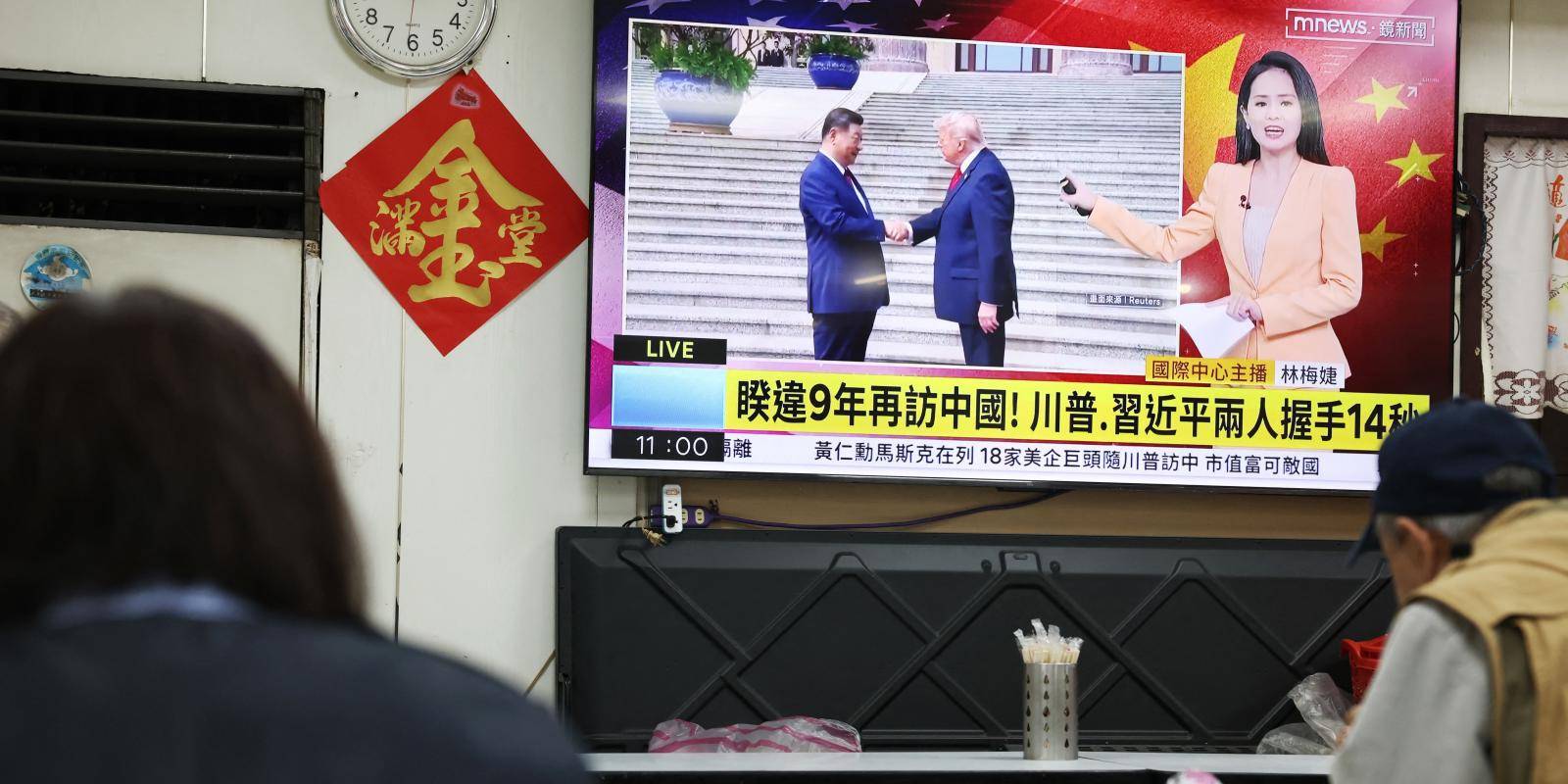
Image — A television news programme at a restaurant in Taipei on 14 May 2026 shows the meeting between the US President Donald Trump and China’s President Xi Jinping in Beijing. Photo by I-Hwa Cheng / AFP via Getty Images.
When US President Donald Trump met with China’s President Xi Jinping in Beijing last week, there was concern that he might negotiate the future of Taiwan to strike a deal with China. For Beijing, Taiwan is the most important issue in the US-China bilateral relationship. Xi even warned that if the issue is mishandled, it could trigger ‘clashes and even conflicts’.
Reports in the run-up to the meeting suggested that China would seek a change in America’s long-standing position on Taiwanese independence. Rather than merely ‘not support’ it, China wants the US to ‘oppose’ Taiwan’s independence and to endorse Beijing’s goal of unification.Such a shift in US policy might appear symbolic, but it would be disastrous not only for the self-governing island, but also for America’s posture in the Indo-Pacific and the region’s security.
In the end, such a shift did not materialize. US Secretary of State Marco Rubio even asserted that America’s position remains unchanged. But the momentary respite has merely deferred the underlying anxiety.
Endangering Taiwan’s security
A better insight into Trump’s thinking on Taiwan comes from an interview with Fox News, that aired soon after he departed Beijing. Three things stood out. First, Trump said that he will use a $14bn weapons sales package to Taiwan that requires his approval as a ‘very good negotiating chip’ to deal with China. Earlier this year, the president deferred the multi-billion-dollar sale of missiles, anti-drone equipment and air-defence systems until after the summit to avoid derailing it.
Trump also said he has consulted with Xi on the matter and seems willing to negotiate a future arms sale to Taiwan with Beijing. This runs against one of the 1982 US Six Assurances to Taiwan, which states that the United States will not consult with China on its arms transfers to Taiwan. The assurances serve to reassure Taipei to restrain it from provocations and bolster its defensive capabilities to deter Beijing. Further delaying arms deliveries could operationally weaken Taiwan’s defensive capabilities, upend the military deterrent – and make Taiwan more jittery.Related workThe Trump-Xi summit: What does the US want from China and will Trump get it? Independent Thinking podcast
With Trump and Xi reportedly set to meet at least three more times this year, the temptation to hold back US arms transfers in order to preserve the summit cadence will only grow. It could also tempt Beijing into asking for more concessions that weaken US security guarantees, such as restrictions on cabinet visits to Taiwan or curtailing US transits by the Taiwanese president.
Second, when asked about whether the United States would come to Taiwan’s aid in case of a conflict, Trump maintained the US line of strategic ambiguity.But he also said that the US was not looking to fight a war 9,500 miles away. Ambiguity only works as deterrence when underwritten by credible resolve – and Trump’s comments cast doubt over that. The statements also come as US military resources have been diverted from the Indo-Pacific to the Middle East and its munitions stockpiles are depleted. Beijing could read this as an opportunity to test American credibility, and slowly chip away at Taiwan’s resolve by ramping up its intimidation tactics.
Third, during the interview Trump parroted Beijing’s view of who is to blame for tensions in the Taiwan Strait. ‘We are not looking to have somebody say let’s go independent because the United States is backing us’, he said. Beijing has framed Taiwan’s desire for independence as the main reason for the deterioration of relations. Trump also failed to mention Beijing’s relentless coercive pressure on Taiwan and actions in the Taiwan Strait. His tacit endorsement could serve to legitimize Beijing’s narrative and tactics.
Taken together, Trump’s comments undercut the precarious balance that has characterized US policy on Taiwan for decades. It would sow doubt among the Taiwanese public about the credibility of the US security guarantee and their own ability to defend the island. They could also embolden Xi, who seeks a fourth term next year and has vowed to not let the Taiwan issue pass onto the next generation.
Implications of US–China ‘strategic stability’
Another concern arising from the summit is Beijing’s new framing of the US-China bilateral relationship as pursuing ‘constructive strategic stability’. Marco Rubio also echoed this phrase in his interview with NBC News during the summit, implying Washington has endorsed this idea, at least rhetorically. What it actually means is unclear. Beijing has long preferred vague formulations because it can change their substance based on its interest. This could have implications for Taiwan. Any US action contrary to Beijing’s core interests on the issue could be framed as a violation of this strategic stability, with Washington cast as the disruptive party. How much the Trump administration cares about the framing is unclear. But if it does, the pattern of withholding assistance to Taiwan as leverage could harden into the new baseline.
Our flagship email provides a round-up of content, plus the latest on events and how to connect with the institute.Enter emailSubscribe
content
The implications of this send ripples beyond the Taiwan Strait. America’s allies in the region depend on treaty commitments that, however formal, ultimately rest on the willingness of a US president to honour them. There are already growing concerns among allies about US reliability under the Trump administration. Now there is the added worry that a US-China relationship based on strategic stability could see Washington, either explicitly or tacitly, fold the interests of its allies into a bilateral framework with China, rather than deal with them on their own terms. Related workUS Indo-Pacific allies are unhappy about Trump’s defence demands. But they have to comply
If US allies in the region grow more anxious about being managed rather than defended they may begin pursuing more aggressive measures for their own security, including nuclearization. Two key allies, Japan and South Korea, are already ramping up their defence spending and strengthening their domestic defence industries, as well as bolstering security partnerships with other regional partners. Japan also recently overhauled its decades-old ban on defence equipment exports. But nothing can replace American security guarantees.
It also further complicates any discussions of burden-sharing between the Trump administration and Asian allies. The US is already pressing South Korea to allow US Forces Korea to be re-oriented away from North Korea and towards China and should open negotiations with Japan later this year on the renewal of the Special Measures Agreement, due to expire in March 2027, which determines the financial and logistical burdens of the US–Japan alliance. After the Trump–Xi summit, such conversations may sit within a broader discussion about whether American alliances are strategic assets or bargaining chips.
For decades, peace in the Indo-Pacific has rested on the consistency of US policy towards the Taiwan Strait and a belief in America’s willingness to honour its commitments. Absent that, the region would enter uncharted and dangerous waters. Even without a ‘grand bargain’ on Taiwan, Trump’s Beijing visit may have left the US with a weaker hand, Taiwan’s security more precarious, and the region more volatile.


 Palantir CEO Alex Karp at the White House in March. Photo: Aaron Schwartz/CNP/Bloomberg via Getty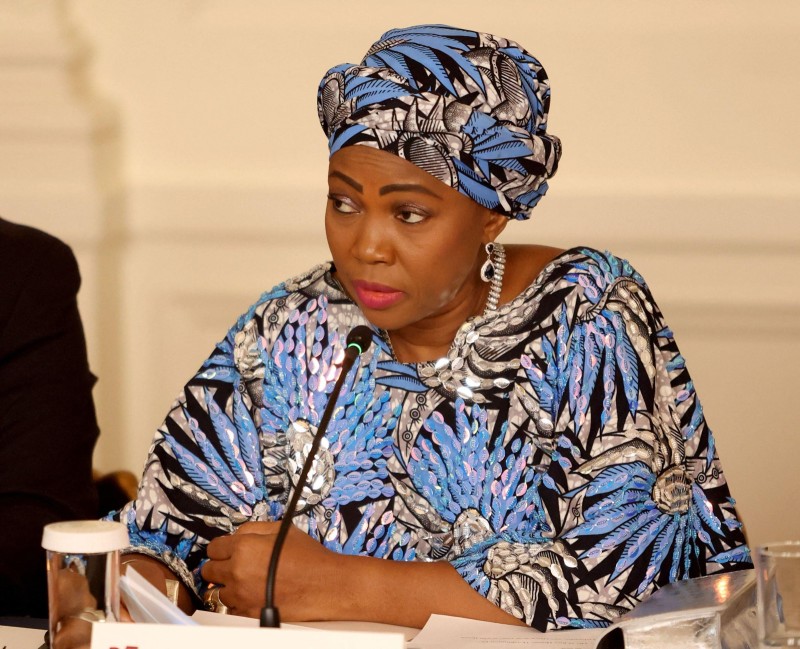
 Youth Fusion held the inaugural session of the Youth Hotline campaign in June 2023, with 17 participants from 16 countries. Photo courtesy of Ivan Siluianov Share