One year after the International Criminal Court issued arrest warrants for two senior Taliban leaders because of their severe persecution of women and girls, they remain at large. They should be delivered to The Hague.

One year after the International Criminal Court issued arrest warrants for two senior Taliban leaders because of their severe persecution of women and girls, they remain at large. They should be delivered to The Hague.
3 of 1,852
 Axios AM: 3 big AI trends
Inbox

| Mike Allen Unsubscribe | 10:46 AM (5 hours ago) | ||
to me | |||
  View in browser PRESENTED BY META Axios AM By Mike Allen · Jul 09, 2026 View in browser PRESENTED BY META Axios AM By Mike Allen · Jul 09, 2026 Happy Thursday! Smart Brevity™ count: 1,996 words … 7½ mins. Thanks to Noah Bressner for orchestrating. Edited by Bill Kole. Happy Thursday! Smart Brevity™ count: 1,996 words … 7½ mins. Thanks to Noah Bressner for orchestrating. Edited by Bill Kole. Kick-starting the day: The World Cup quarterfinals get underway this afternoon with a 4 p.m. ET showdown between France and Morocco. Get the latest. Kick-starting the day: The World Cup quarterfinals get underway this afternoon with a 4 p.m. ET showdown between France and Morocco. Get the latest. Please join me Wednesday, July 15, at 8 a.m. at Axios House DC for News Shapers interviews with U.S. Trade Representative Jamieson Greer, Bank of America CEO Brian Moynihan, Rep. Madeleine Dean (D-Pa.), Sen. Bill Hagerty (R-Tenn.), Washington Commanders President Mark Clouse & more. RSVP here. 1 big thing: 3 big AI trends collide Please join me Wednesday, July 15, at 8 a.m. at Axios House DC for News Shapers interviews with U.S. Trade Representative Jamieson Greer, Bank of America CEO Brian Moynihan, Rep. Madeleine Dean (D-Pa.), Sen. Bill Hagerty (R-Tenn.), Washington Commanders President Mark Clouse & more. RSVP here. 1 big thing: 3 big AI trends collide  Illustration: Sarah Grillo/Axios. Stock: Getty Images Illustration: Sarah Grillo/Axios. Stock: Getty Images Three AI trends are accelerating and colliding, forcing government, business and investors to rethink strategies in real time, Jim VandeHei and Mike Allen write in a “Behind the Curtain” column. AI is getting bigger and better, both here and in China. The U.S. government is scrambling to keep pace by creating a regulatory framework, perhaps with international reach. Both America and China are considering blocking access to their best AI, in recognition of the rising stakes. Why it matters: The explosive rise of truly autonomous agents is forcing Washington and Beijing away from light-touch oversight, transforming the global AI race from a commercial sprint into a national-security standoff. Here’s our latest intel on each trend, based on conversations with top AI execs and administration sources, and our team’s stress-testing of advanced AI models: 1. Models muscle up: Increases in the capability of the big AI models (led by OpenAI’s ChatGPT, Anthropic’s Claude and Google’s Gemini) tend to get covered incrementally by the media. But we’ve just lived through a transformational few months. Anthropic’s Fable and Mythos models — restricted in June for nearly three weeks over security concerns — have set a new standard for the mind-boggling power of frontier AI. Engineers can hand these models entire multimillion-line codebases and walk away for days, trusting agents to rebuild outdated systems, fix their own bugs and test their own work with shockingly little oversight. After a “voluntary” delay due to government consultations, OpenAI came roaring back with Sol — a model early testers describe as a quantum leap in agentic power. Developers have been left slack-jawed by its ability to summon swarms of sub-agents that collaborate, hunt for security flaws and rewrite software at speeds that make previous models feel like dial-up. Elon Musk’s SpaceXAI, fresh off its record-breaking IPO and $60 billion acquisition of Cursor, clawed its way back into the AI race yesterday with the release of Grok 4.5 — a model triple the size of its predecessor. Musk says another model nearly twice as large is coming next month, doubling down on a bet that raw scale, not just smarter training, still wins. Meanwhile, China is dominating the open-source race. GLM-5.2, built by Chinese startup Z.ai, is free to download and now performs in the same tier as America’s priciest models. Z.ai founder Jie Tang predicted China will achieve a “Fable-class” model before Q1 of 2027. 2. Administration activating: President Trump initially took a laissez-faire approach to AI as a way of keeping America’s lead over China. But we’ve learned that top officials are vigorously debating a much more systemic and prescriptive approach, including protocols for the AI labs to follow before releasing their most powerful models. “The possibilities are wide open,” said an outside adviser deeply involved in the conversations. Trump is reluctant to regulate, as is clear from his approach across much of the Executive Branch. But the power of Claude Mythos 5 and Fable 5 has roused many officials to favor a more robust, less ad hoc approach. Restrictions on those models showed the administration’s hand: If national security becomes an issue, complying with the government becomes mandatory, as evidenced by Commerce Secretary Howard Lutnick’s letters to Anthropic. A U.S. official told us: “The export controls were effective [in] ensuring Anthropic worked with the administration.”Mythos, we were told again and again, was a wake-up call that more guardrails are needed. We’ve learned Trump officials are considering a new governing body for vetting AI, with the possibility of including other nations. 3. U.S., China contemplate controls: Chinese authorities have met with top tech firms over the past month to discuss restricting overseas access to the country’s most advanced AI models, Reuters reported this week. When we started asking around about the report, we were surprised to hear the U.S. is kicking around ways to restrict Chinese access to U.S. models, perhaps through export controls. These conversations are very preliminary, with little agreement about what measures could actually work. This isn’t just about American competitiveness — national security is at stake. “AI is already deeply integrated into both countries’ intelligence and military, which will change the geopolitical competition and the nature of warfare,” said an insider who talks with competing factions of the administration .The bottom line: We’ve entered the Big Phase — big government considering new rules, big AI in a neck-and-neck race for frontier supremacy, and the big global showdown of China vs. USA. Share this column … Zachary Basu and Andrew Kay contributed. |
| Humanoids perform their first surgery |
 Image source: University of California San Diego Image source: University of California San Diego |
| The Rundown: UC San Diego researchers used teleoperated humanoids to perform live surgery in what they say is a world first, completing two procedures — including a gallbladder removal — on pigs, per a trial published in Nature. |
| The details: |
| One robot removed a gallbladder with a human surgeon assisting; a two-robot team handled a second procedure with no human at the table. The 5-foot, 60 lb. robots, nicknamed “Surgie,” gripped standard surgical tools via custom adapters and fit into a normal OR without retrofitting. They cost a fraction of today’s ~1,800 lb. surgical systems — but needed multiple mid-surgery recalibrations and ran far slower than humans.The team sees humanoids first assisting in the OR, then performing teleoperated procedures, as surgeon shortages reportedly stretch wait times. |
| Why it matters: Surgical robotics belongs to specialized, single-purpose machines — Intuitive’s da Vinci, Medtronic’s Hugo, J&J’s Ottava — that only trained physicians can drive. Humanoids gripping scalpels won’t change that any time soon, but this trial is the first proof that cheaper, general-purpose hardware can survive an OR. |
Our expert briefings designed for business leaders.alert Sign in or create account Support us
Chatham House – International Affairs Think Tank
Denmark’s claim is unimpeachable. In the 1951 Defense of Greenland Agreement with Denmark, the US unambiguously recognizes ‘the sovereignty of the Kingdom of Denmark’ over Greenland.
Explainer
Published 9 January 2026 —5 minute READ
Image — Traditional coloured Greenlandic homes in Nuuk in 2025. Photo by Leon Neal/Getty Images

Director, Global Governance and Security Centre, International Law Programme, Chatham House
President Donald Trump has suggested that Denmark’s claim to Greenland is doubtful, reflecting the public musings of his Deputy Chief of Staff Stephen Miller. Rather than the ‘niceties of international law,’ Miller added, the issue should be determined according to the power relations among nations and their security needs.
President Trump has now amplified that sense, insisting in an interview with The New York Times that international law has little relevance for him. What counts instead is his own sense of morality, he asserted, adding somewhat incongruously that ‘I don’t need international law’ as he is not looking to hurt people. Instead, the threat or even use of force appears to be a bargaining tool in pursuit of US national and security interests, along with his increasing reputation for unpredictability.
The Danish claim is unimpeachable
The Greenland episode may teach him differently. While Denmark is no match for the US in military terms, it does hold good title to the island, along with the right to self-determination of the local population. In this instance, international law does play an important strategic role, balancing the relative power of both sides.
The united and strong European response to US threats against Denmark – a brand leader in compliance with international law along with other Nordic states – offers an indication that others remain committed to the international rule of law and will, eventually, be willing to speak up in favour of an international system governed by rules and principles that by and large yield stability and security for all, whether weak or strong.
In opting out of this consensus, the US risks assuming the position of a rogue state within the international system. It seems unlikely that Denmark, or others, will in the future be keen to come to agreements or settlements with a state that so openly claims the right to disregard what has been agreed as a matter of law.
The Danish claim is unimpeachable. It reaches back into the 18th century. Then, territories that had not yet been colonially occupied were considered ‘terra nullius ’ – lands belonging to no one, irrespective of the fact that indigenous populations had lived there for millennia. Title would be founded on ‘discovery,’ taking possession and then effective administration of the claimed territory.
Denmark can point to the arrival of missionary Hans Egede on the island in 1721. It claims to have administered the islands ever since. International law accepts that evidence of the actual effective occupation can be light where the territory is remote and inhospitable.
In view of the complicated relationship between Denmark and Norway at the time, and some Norwegian activity in Eastern Greenland later on, Oslo challenged the Danish claim early in the 20th century.
The US took over the defence of Greenland during the Second World War. However, this did not affect sovereignty over the island. After the war, Denmark was pressed into listing Greenland as a ‘non-self-governing territory’ – a colony – with the United Nations.
However, in 1953, Denmark informed the United Nations that Greenland had now become an integral part of the Kingdom, with constitutional representation in the Danish parliament and other benefits. Hence, its colonial status had ended.
The UN General Assembly determined in Resolution 849 (IX) that ‘Greenland freely decided on its integration within the Kingdom of Denmark on an equal constitutional and administrative basis with the other parts of Denmark.’
This result has been universally accepted. However, since then, campaigners have argued that the indigenous population of Greenland did not approve this move in a referendum.
In resolution 849 (IX), the General Assembly in fact expressly commended the participation of Greenland representatives in the process. Still, it adopted another resolution immediately afterwards, Resolution 850 (IX), emphasizing in general terms the need to validate a decision on integration with a colonial power through an expression of the will of the people.
Any doubts have, however, been removed by Denmark which has progressively increased the level of self-government for Greenland, first in the Home Rule Act of 1979 and then in the Self-Government Act of 2009. This latter instrument was approved in a Greenland referendum by a majority of 75.5 per cent.
The Self-Government Act transfers virtually all powers of governance to the Greenland local authorities, with the exception of defence, monetary policy and external relations. In fact, Greenland can even conclude treaties independently of Denmark. However, this does not extend to agreements affecting its status within Denmark. Related workTrump’s Venezuela attack should serve as a warning even to US allies
Crucially, the Act recognizes Greenland as a self-determination unit. It can freely decide to change its status through a referendum among its population of around 57,000. If there is a decision in favour of independence, negotiations with Denmark about the terms of the divorce would need to follow. The results would then need to be endorsed by the Danish parliament, which retains authority to approve any change to the territory of Denmark.
The US is no stranger to large purchases of land from other sovereigns, having acquired Louisiana from France, Florida and the Philippines from Spain and Alaska from Russia. Denmark, too, transferred the Danish East Indies, now the US Virgin Islands, to the US in 1916.
In fact, the US has attempted to buy Greenland on repeated occasions over the past centuries, most notably in 1946, when President Truman offered $100 million in gold – a colossal sum at the time. Then as now, Denmark refused.
But the true value of the episode is that it destroys any possible US opposition to the Danish title. Why would it offer a king’s ransom to Denmark, if it did not believe that Denmark was the rightful sovereign, entitled to dispose the island?
In the 1951 Defense of Greenland Agreement with Denmark, the US unambiguously recognizes ‘the sovereignty of the Kingdom of Denmark’ over Greenland
In fact, there is even stronger evidence. In the 1951 Defense of Greenland Agreement with Denmark, the US unambiguously recognizes ‘the sovereignty of the Kingdom of Denmark’ over Greenland. In the updated agreement of 2004, the US expressly notes the change of the status of the territory from colony to that of an ‘equal part of the Kingdom of Denmark,’ precluding any US challenge to the lawfulness of that change of 1953.
If the US has no entitlement to Greenland, it may be guilty of bullying, but this does not yet amount to an unlawful threat of the use of force in violation of the UN Charter. This would require a specific threat of invasion unless Copenhagen complies with US demands for a transfer of sovereignty.
Our flagship email provides a round-up of content, plus the latest on events and how to connect with the institute.Enter emailSubscribe
Short of invasion, what are the options for a resolution of this self-inflicted crisis within NATO? US Secretary of State Marco Rubio will not likely succeed in pressuring Denmark to sell during his mission to Copenhagen.
Under the present constitutional arrangement, Greenland could not instantly swap the US for Denmark as their sovereign. Instead, the US could try and persuade the people of Greenland to opt for independence, with a view to later joining the US outright, or through an association agreement akin to their present relationship with Denmark. However, this would take years to achieve, likely reaching beyond President Trump’s term in office.
In the end, a deal will only come about if it focuses on the actual interests of the sides, and mutually satisfies them, instead of seeking to enforce the overblown positions they may advance during the negotiating process.
Overplaying that card may make the other side reluctant to engage with an erratic partner in negotiations – and one that publicly professes to step out of the accepted legal framework for the conduct of international affairs. After all, any resulting deal will, in the end, itself need to be encapsulated in a formal legal agreement governed by the rules and processes of international law.
A face-saving diplomatic resolution should be fairly easy
In actual fact, a face-saving diplomatic resolution should be fairly easy. The US and Denmark might reach a joint declaration, in which they would confirm the high strategic value of Greenland, also for the US, allowing the US to claim victory. However, they would also confirm that any decision on the change of status of the territory requires the free consent of the people of Greenland, addressing any concerns they may have about being ‘sold’ to a foreign power in violation of the right to self-determination they have been granted.
There would be a reference to the need to comply with Danish constitutional procedures, balanced with Copenhagen’s pledge to full implementation of any decision freely reached by the people of Greenland. This would leave the change of status of the island at some future point open, if this is wished for by the people most affected.
In the meantime, the sides could conclude an enhanced economic and security cooperation agreement, confirming increased US access to the island and surrounding maritime areas in terms of both security and natural resources, and a corresponding undertaking to keep both Russia and China out.
Greenland would need to be a full party to this arrangement and the negotiations leading up to it. In addition to its own status and future being at stake, in a rather unusual step, Denmark has already transferred full authority over Greenland’s natural resources, and the benefits flowing from them, to the islanders.
Jul 8, 2026
The Bulletin of the Atomic Scientists sits down with three leading experts at the intersection of artificial intelligence and biosecurity: David Relman, Professor of Microbiology & Immunology at Stanford University Allison Berke, Senior Engineer at RAND’s Center for AI, Security, and Technology Jaime Yassif, Senior Advisor at the Nuclear Threat Initiative In this conversation, they break down the most urgent risks and opportunities shaping AI and global biosecurity today, from dual-use biological research and pandemic preparedness to the growing role of AI in national security and biotechnology. What should policymakers, scientists, and the public understand right now? Explore more of The Bulletin’s coverage on artificial intelligence: thebulletin.org
Search

By
Associate Editor
July 8, 2026, 12:25 PM ET
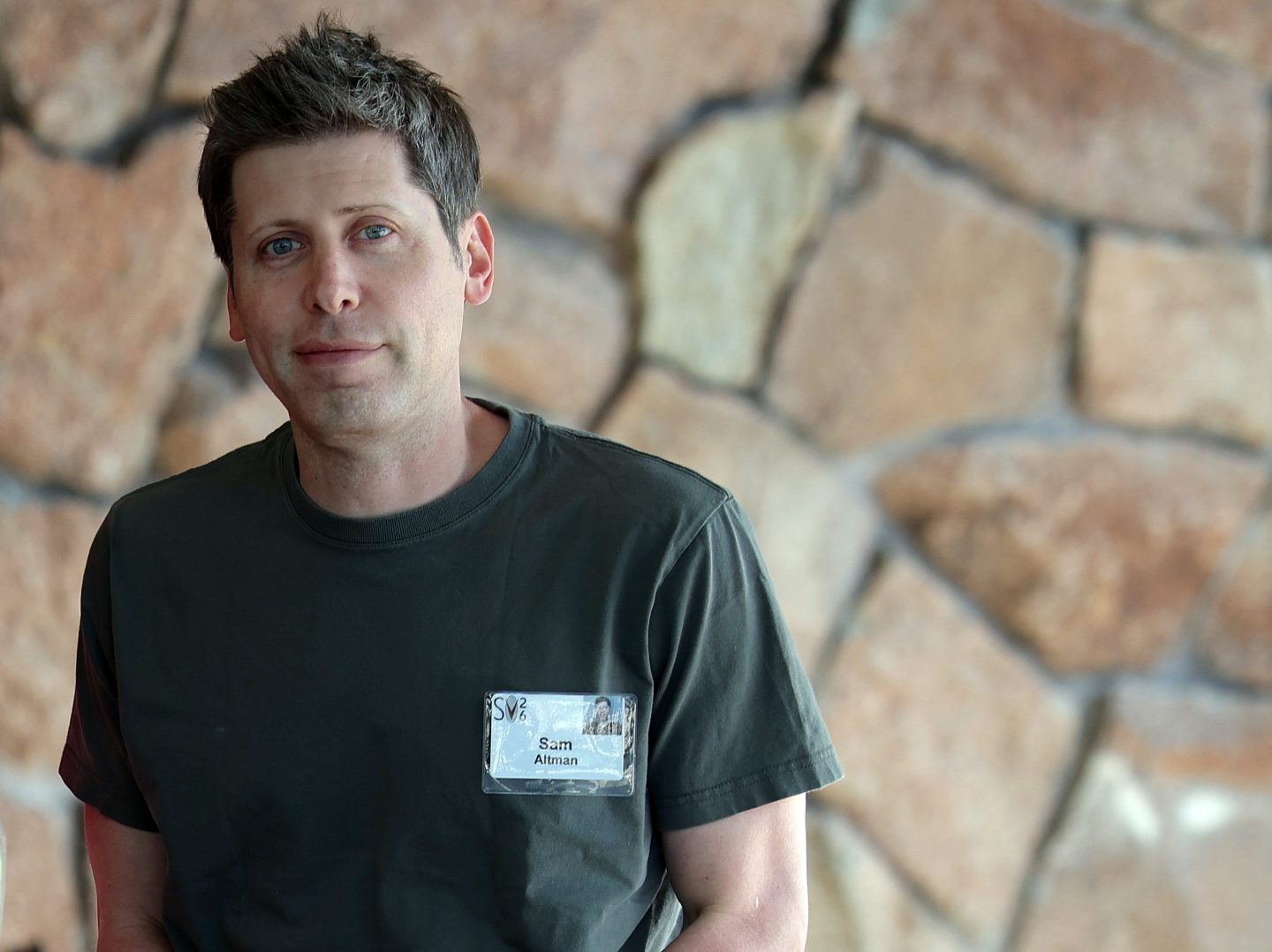
Sam Altman, CEO of OpenAI, arrives at the the Allen & Co. Sun Valley Conference.Getty Images—Kevin Dietsch
When Allen & Co. convened its first Sun Valley conference in 1983, it was a media-finance gathering: 35 guests, one speaker, and a New York investment bank looking to bind itself to the moguls who ran America’s newspapers, studios, and broadcast networks.
Recommended Video
Four decades later, the media chiefs are still there, but they’re no longer the main event.
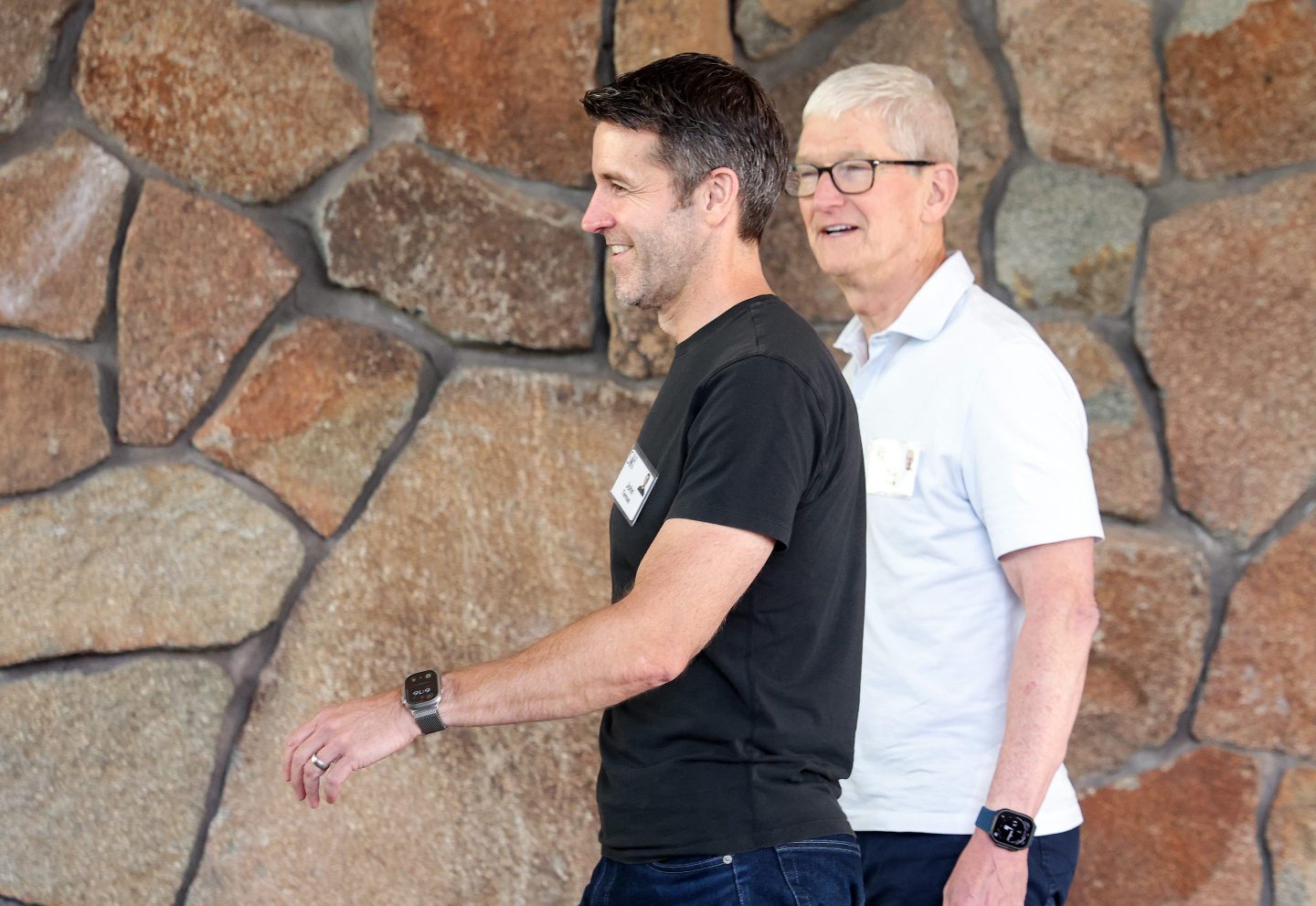
This week, the invitation-only retreat now known as “summer camp for billionaires” got underway again in the Idaho mountains. Private jets stacked at Friedman Memorial Airport, security sealed off the Sun Valley Lodge, and a few hundred of the world’s most powerful people started getting cozy. The confirmed arrivals so far—like OpenAI’s Sam Altman, Apple’s Tim Cook and John Ternus, Palantir’s Alex Karp, and many more) show where power at billionaires’ summer camp has migrated.

The conference is hosted each July by Allen & Co., a small, private New York investment bank that has advised, founded, or invested in companies from Google to Coca-Cola to News Corp. It remains one of Wall Street’s last family businesses. As Fortune’s Carol Loomis observed in a rare 2004 look inside the firm, nearly everything about the Allens’ operation is built to make guests feel privileged rather than pitched.
The company’s main focus is “forging long-lasting and lucrative relationships with corporate leaders,” Loomis wrote, adding these relationships are critical to its success. “Almost everything about the Allens’ world signals wealth.”
The Sun Valley conference is no different. It brings together hundreds of leaders across tech, media, entertainment, sports, and finance, with no public sessions, no livestreams, and press confined to a small pen near the entrance. The value of the conference lies in the networking and dealmaking that happen on the hiking trail and at the dinner table. Jeff Bezos reportedly hashed out his Washington Post purchase at the 2013 conference, and Disney and ABC executives laid the groundwork for their 1995 merger there.
For most of its history, Sun Valley was a media event with technology on the guest list.
The tech takeover has been building for over a decade. Silicon Valley’s biggest figures—Zuckerberg, Bezos, Cook, Pichai, and Altman among them—have become its most prominent attendees. Among the confirmed arrivals this year are Amazon’s Jeff Bezos, Meta’s Mark Zuckerberg, Bill Gates, Apple’s Tim Cook and incoming CEO John Ternus, and LinkedIn’s Reid Hoffman. OpenAI’s Sam Altman was also photographed walking into the lodge.
To be sure, the big media names are still there, including Warner Bros. Discovery’s David Zaslav, YouTube’s Neal Mohan, outgoing Disney chief Bob Iger alongside successor Josh D’Amaro. This year’s guest list also featured OpenAI President Greg Brockman and Anthropic’s Dario Amodei, though neither of them has been photographed there on the ground yet.

There could also potentially be some friction there. Just months before the conference, OpenAI and Disney unwound a planned $1 billion licensing deal after OpenAI abruptly shut down its Sora video app.

Paid Content
From Destination Toronto
Warren Buffett, a Sun Valley regular since the 1980s, is off the list again this year (as is his successor Greg Abel), as are Elon Musk, Jensen Huang, Larry Ellison, and the Trump family.
Outside the perimeter of billionaire summer camp, other traditions stayed.
Local activists again organized protests near the resort, this year framed around economic inequality, according to local newspaper BoiseDev.
One activist sent an email sharing information about rallies scheduled in the area “focused on economic fairness, corporate accountability, and the growing gap between extraordinary wealth and the financial challenges facing many working families,” BoiseDev reported.
Despite that, private jets still packed the tarmac. Deals will still get worked out on hiking trails and over dinner. But the balance of power has shifted.
Sun Valley was built by the media moguls who bought and sold America’s newspapers and studios. This year, the people with the most leverage in the room are the ones building the technology that could take away their power.
Subscribe to Fortune Gulf Brief. Every Tuesday, this new newsletter delivers clear-eyed, authoritative intelligence on the deals, decisions, policies, and power shifts shaping one of the world’s most consequential regions, written for the people who need to act on it. Sign up here.
About the Author
By Sydney LakeAssociate Editor
Sydney Lake is an associate editor at Fortune, where she writes and edits news for the publication’s global news desk.
07-08-2026CREATIVITY AT WORK
New research suggests that certain ADHD traits could unlock greater creative thinking.SHARE Facebook Linked InBluesky XLink ADD ON GOOGLE
Listen to this Article More info
0:00/6:06
Some of the symptoms that create challenges for those with attention deficit hyperactivity disorder (ADHD) may also contribute to a greater capacity for creativity under the right circumstances.
Traits associated with the condition, such as distractibility, a lack of focus, and a propensity to daydream, can make it difficult to thrive in traditional academic and workplace environments. But recent studies suggest that a lack of focus may also generate more creative ideas.
According to a new research paper presented at the Cannes Lions International Festival of Creativity—the creative industry’s largest annual gathering—half of American adults working in creative industries identify as neurodivergent, compared with 31% of the general population. However, 90% report “masking” or hiding their neurological differences at work.
“Our new report explores how disability and neuro-inclusion in marketing is both a creativity and business unlock—helping to strengthen ideas, improve decision-making, deepen consumer trust, and drive business outcomes,” says Nathan Friedman, co-president of Understood.org, an advocacy organization for the neurodivergent community that co-produced the research paper.

Subscribe to the Daily newsletter.Fast Company’s trending stories delivered to you every day
SIGN UP
Previous studies also found that workplace teams that include some neurodivergent professionals are 30% more productive, and that inclusive organizations are 87% more likely to say they make better decisions and earn higher revenues from innovation.
At the same time, certain attributes of the typical office environment—such as noisy open-office layouts, rigid schedules, and packed calendars—make it difficult for those with ADHD to hone their creativity.
“Many traditional workplace norms unintentionally create barriers that prevent people from fully contributing their ideas and strengths,” Friedman says. “When organizations embrace different ways of thinking, we found that creative teams develop stronger ideas.”
When presented with a challenge, those with ADHD tend to take a different path to finding a creative solution.
A study published earlier this year asked 299 college students to fill out an ADHD assessment questionnaire and complete a series of puzzles, then report on how they arrived at the solution—whether by using logical reasoning or in a flash of insight.
“People who had very strong ADHD symptoms, as measured by the questionnaire, solve more of these puzzles with self-reported insight,” says John Kounios, a professor of psychological and brain sciences at Drexel University and one of the paper’s coauthors. “That did not surprise us. But what did surprise us was that people with the lowest and the highest ADHD symptoms solved the most problems; the people who were in the middle solved the fewest.”
The researchers concluded that when it comes to creative problem-solving, it’s better to have lots of ADHD symptoms—which is conducive to more “aha” moments of insight—or almost none—which enables sufficient focus to deliberately work out a solution.
“When you have really strong executive function, that can help you in certain situations. But it can actually hurt you in others,” Kounios says. “For problems that are complex, open-ended—where you don’t know what the solution is going to look like in advance—you need to have these creative insights, and that’s a type of problem that perhaps the ADHD brain would be better at.”
Kounios says those with more ADHD symptoms are therefore likely to perform better in more creative roles, like business strategy, marketing, and innovation. Those with the fewest symptoms, meanwhile, would likely perform better in more analytical roles
He also suggests that certain workplace norms stifle the potential of ADHD sufferers, who tend to struggle with time management, tedious administrative tasks, and short-term memory.
“If you’re hiring a person who has ADHD to help design marketing campaigns or come up with corporate strategies, you shouldn’t expect them to be detail-oriented,” Kounios says. “Similarly, people who are doing accounting and are working with spreadsheets—coming up with very precise computations for budgets and things like that—you shouldn’t be forcing them to come up with new creative strategies.”
Another yet-to-be-published study that was recently unveiled at the European College of Neuropsychopharmacology may have pinpointed the mechanism through which those with ADHD experience creativity, and it has a lot to do with their lack of focus.
While distractibility and mind-wandering are often framed as negative attributes of the condition, the research suggests that zoning out may be a strategic advance for those with ADHD.
“We found a positive link between ADHD traits and creative achievements,” says Han Fang, a PhD student at Radboud University Medical Centre in the Netherlands and one of the paper’s coauthors. “We also found the positive link between ADHD and deliberate mind-wandering, and a positive link between mind-wandering and creativity.”
The study, which surveyed 750 participants in Europe, found that higher levels of ADHD traits correlated with more mental drifting from the subject, and that more mind-wandering was linked to greater creativity.
“Our traditional way of thinking of ADHD and other neurodevelopmental problems—we always think of it from a medical perspective. We think of it as a problem or disorder we need to cure,” Fang says. “But the research that we did shows that it can also be linked with some positive aspects, which in our study is creativity.”
Though further research is still necessary, the data suggests that those with ADHD might be able to hone their creativity by letting their mind wander—something they’re often discouraged from doing in traditional academic and workplace environments.
Join us in New York City this September for the annual Fast Company Innovation Festival. Advanced-rate tickets are available now through Sunday, July 12. Grab your festival passes today.
ABOUT THE AUTHOR
Jared Lindzon is a freelance journalist, author, public speaker and Fast Company contributor who has reported on technology and the future of work for over a dozen years. His first book, Do More in Four: Why It’s Time for a Shorter Workweek, serves as a rallying cry for the four-day workweek in the AI era, offering original case studies, research and playbooks for adoption. The book was co-authored by shorter workweek pioneer and CEO of Work Time Revolution Joe O’Connor, and published by Harvard Business Review Press in 2026. More
AI Overview

Cuckooing is a predatory practice in which criminals take over the home of a vulnerable person—often through fraud, coercion, or violence—to use the property for illegal activities.
How the Practice Works
The term is derived from the cuckoo bird, which lays its eggs in other birds’ nests. In this context, perpetrators (frequently linked to drug trafficking operations like county lines) hijack the residence of an individual who is elderly, isolated, or struggling with addiction or mental health issues.
The hijacked property is typically utilized for:
Identifying Cuckooing
+7
“Cuckooing” is a growing, dangerous practice in Dublin where drug trafficking gangs target the homes of vulnerable or elderly individuals, taking them over to store, use, or sell illicit substances. Gangs frequently use intimidation or gain access by posing as friendly visitors to secure these properties. 
Actionable Warning Signs
If you suspect an elderly neighbor or relative in the Dublin area is a victim of cuckooing, look for these common warning signs:
How to Get Help Immediately
If you believe someone’s home has been taken over, swift action is required to ensure their safety and protect them from criminal charges:
 The Irish News +1
 Irish Examiner +1
For more context on the prevalence and impact of this issue locally, you can review the HRB National Drugs Library Report on Ballymun or the findings documented by the National Drugs Library.
AI Overview
“County lines” in Ireland refers to a drug-trafficking model where urban gangs—often based in Dublin or other large cities—expand their operations into suburban, commuter, and rural towns across the country. 
These networks are highly organized and rely on several predatory tactics: 
 National Drugs Library
 National Drugs Library
 National Drugs Library
To combat the expansion of these networks, An Garda Síochána operates Operation Tara and tasks the Garda National Drugs and Organised Crime Bureau with disrupting major trafficking rings. 
If you suspect drug dealing or gang activity in your area, you can report it to your local station, anonymously on the Garda Confidential Line at 1800 666 111, or use the online reporting tools found on the Garda Drug Dealing Reporting Guide. Learn more about identifying exploitation risks via the Drugs.ie County Lines Guidance. 
How out-of-town drug dealers exploit vulnerable people in Ireland
15 Jan 2020 — County lines is a drug dealing model where drug dealers from large urban areas cross police borders to sell heroin and crack cocai…
RTE.ie
Criminal exploitation of children and vulnerable adults: County Lines guidance. – Drugs and Alcohol
County lines is a UK police term for urban gangs that supply drugs to suburban areas and market and coastal towns. The gangs use d…
National Drugs Libr
·
Infographic: Why your food supply depends on sulfur. It has become the invisible bottleneck to the world’s crops…

·
STOP FEEDING THE FAMILY LAW GRAVY TRAIN!
One dad charged £45 for a letter asking HIM how his case was going; another quoted £110,000 for his case; another spent £3,000 on solicitors letters to mother when he needed to go straight to court; Said one dad “Regrettably I failed to follow your advice against using solicitors & paid £20,000 and I’ve still not seen my son after 6 months!” Save £££££ using Fathers4Justice / Get expert help and support here: https://fathers-4-justice.org/bookings/ #Custody #FathersRights #F4J #Fathers4Justice