Ireland is officially one of the wealthiest countries on the planet, beating out Germany, France, and the UK. But if you walk the streets of Dublin, you won’t see a utopia. Instead, you’ll find young professionals spending half their salaries to rent a single bedroom, state nurses enduring hour-long commutes, and a massive housing crisis that is forcing an entire generation to flee the country. How did a nation go from being the poorest in Europe to an economic “miracle”—and why does that miracle feel like a scam to the people actually living there? In this video, we dive deep into the true cost of the “Celtic Tiger.” We expose how global mega-corporations like Apple, Google, and Meta turned Ireland into Europe’s ultimate tax haven, artificially inflating the country’s GDP while leaving the working class behind. From the $14 billion Apple tax scandal to the devastating rental market controlled by foreign investment funds, this is the story of an economy built for transnational capital, not for its citizens.
00:02 The GDP Illusion: Why Ireland looks so rich 03:32 How the “Celtic Tiger” was born (and died) 08:17 The $14 Billion Apple Tax Scandal 13:19 Rich Country, Homeless Citizens: The housing crisis 18:35 Escaping the shadow of the Church 23:52 The “Double Irish”: Europe’s biggest tax haven 28:54 The Breaking Point: Immigration and social fracture 34:13 Why US Big Tech controls Ireland’s destiny 38:57 The Silent Exodus: Why the youth are fleeing 45:13 The Stuffed Tiger: What happens when the money leaves?
Political scientist John Mearsheimer analyzes the escalating US-Iran conflict, arguing that President Donald Trump faces a difficult strategic challenge as tensions continue to rise in the Middle East. Mearsheimer discusses the importance of the Strait of Hormuz, Iran’s regional position, and the broader consequences of military escalation. He argues that the conflict could have implications beyond the Middle East, potentially accelerating shifts in the global balance of power involving China and Russia.
Demis Hassabis offers useful AI safety system While others in the AI industry have issued general calls to prioritize AI safety, Google DeepMind’s Demis Hassabis has proposed an actual system. On Tuesday, Hassabis published a 1,500-word article on Twitter titled “A Framework for Frontier AI and the Dawning of a New Age” that makes a series of recommendations for how the industry could establish standards and appoint an organization to oversee them. “The rapid progress we’re seeing in AI requires a new approach to testing frontier AI model capabilities that is dynamic, adaptable, and rigorous,” Hassabis wrote. “The US is well positioned, given its economic and technical standing, to take the first step in developing such a framework.”
He recommended that the industry create a non-governmental organization similar to the Financial Industry Regulatory Authority (FINRA), which oversees and regulates stock brokers and financial advisors in the US.
It’s pragmatic that the UK-based Hassabis recommended the effort begin in the US, where the three biggest frontier AI labs, Google, OpenAI, and Anthropic, are primarily headquartered.
In his essay, the 650-word section “A Framework for a Frontier AI Standards Body” is where he lays out his main points.
Here are his recommendations:
Create an independent standards body: Establish a US-led, federally overseen public-private organization, run by leading technical experts, to develop, update, and enforce evaluations of frontier AI models.
Require rigorous testing before deployment: Ahead of release, frontier models should have mandatory evaluations for cybersecurity, biological threats, deception, agentic capabilities, and national security issues.
Raise the bar for frontier labs: Based on new standards, makers of the most capable models should publish technical documentation, invest substantially in AI safety, vet key hires, maintain strong cybersecurity, and address vulnerabilities systematically.
Build an adaptable international framework: Encourage global cooperation on AI safety, establish independent auditors, and retain the ability to coordinate a slowdown in frontier AI development (via pre-deployment approvals), if the risks become too severe. Hassabis also acknowledges that such an effort would need to be resourced appropriately in order to succeed, and so he divorces those resources from the ups and downs of government and politics.
“Funding would need to be substantial and likely mostly come from industry, in order to attract world-class technical talent and provide the necessary compute resources for large-scale testing,” he said.
Chris Canal, CEO of Equistamp, an AI safety evaluator of frontier models, told The Deep View his perspective on what’s needed for such an organization to succeed. “The entire job of a standards body is keeping the barrier to mass harm high enough that society survives its worst actors,” said Canal. “The body should publish predictions of what the next generation of models will score before release, and be graded publicly on its accuracy. A testing regime that can’t predict is [only] measuring the past.” I applaud Hassabis for the specificity of his recommendations, even if his individual proposals get dissected and transformed by others. In fact, especially if they start a dialogue and then get dissected and transformed by others. There’s been too much fear mongering about AI in 2026 and not enough people putting forward actual proposals and being willing to have them put under the microscope. I said something similar in April when OpenAI researchers put forward their ideas for an AI New Deal and in May when Pope Leo XIV released hisAI manifesto. The world needs creative thinking and bold ideas to start more public dialogue around the future of AI. If we want to see AI take a different trajectory, then it’s up to all of us to engage in the dialogue.Ping me on Twitter to let me know your thoughts.
Childhood amygdala reactivity to emotional faces serves as an isolated predictor of mid-adolescent social health, driving sex-divergent trajectories that accelerate peer integration for girls while fueling social withdrawal for boys. Credit: Neuroscience News
The Amygdala Predicts Teen Isolation Years in Advance
Summary: Evaluating a massive cohort of nearly 6,000 youth, the investigators discovered that a child’s raw amygdala activity when viewing emotional faces acts as an isolated biological crystal ball, accurately predicting their quantitative peer involvement exactly two years later. Crucially, this neural radar operates in entirely opposite directions for boys and girls.
The Amygdala as an Isolated Predictor: Out of all the complex regions comprising the human “social brain” network, the amygdala emerged as the only distinct structure whose baseline activation levels when processing emotional faces statistically predicted an adolescent’s real-world social health profiles two years down the line.
The Sex-Divergent Split: The core discovery revealed an intense biological split regarding how face-driven amygdala activity dictates future peer engagement:
Adolescent Girls: High baseline amygdala reactivity to emotional faces predicted a higher degree of real-world peer involvement and deeper integration into friend groups two years later.
Adolescent Boys: Identical high amygdala reactivity to emotional faces predicted a lower degree of real-world peer involvement and increased social pulling-back over the same two-year window.
Beyond Fight-or-Flight: While textbook biology predominantly frames the amygdala as an ancient survival trigger governing fight-or-flight maneuvers and primal fear, this study cements its role as a high-speed processor of nuanced, everyday interpersonal signals.
Asynchronous Lifespan Development: Dr. Myles N. Arrington emphasizes that adolescence represents a developmental bottleneck where different sub-regions of the brain mature at mismatched speeds. The findings suggest that the internal clocks governing amygdala development tick along vastly different schedules for boys and girls, driving opposite behavioral adaptations to identical social stimuli.
Predicting Real-World Social Profiles: This computational analysis builds on prior TEEN Lab research that classified adolescents into distinct “social health profiles.” These profiles look past simple friend counts to weigh subtle variables, including peer group composition and the frequency of interpersonal conflicts. Early amygdala scanning accurately determined which exact social profile a child would inhabit as they transitioned into a teenager.
It’s been said that eyes are a window to the soul, but new research has found that an adolescent’s brain response to a face might open a window to their social future.
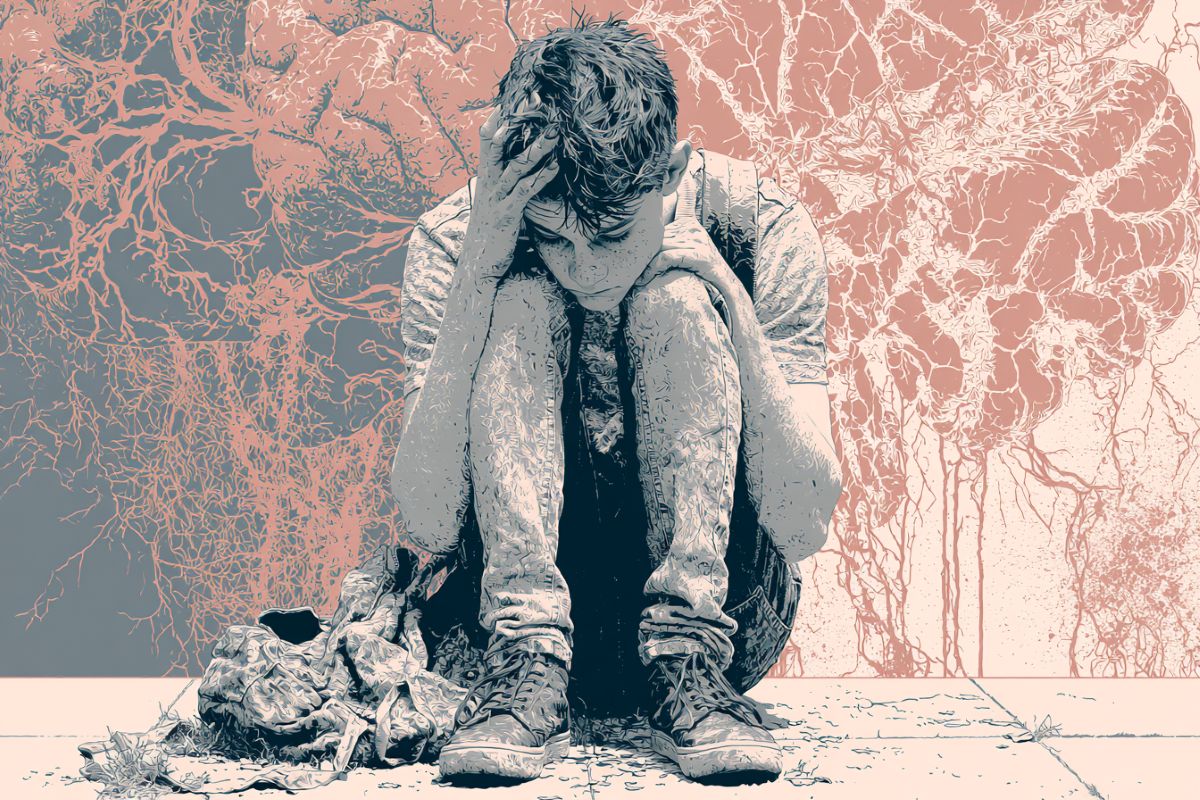
A new study at the University of California, Davis Center for Mind and Brain found that high activity in the amygdala when an adolescent looks at a face showing emotions predicts their social health two years later. The increased amygdala activity for girls predicted more involvement with their peers, but predicted less involvement for boys.
The amygdala is best known for the fight-or-flight response and controls strong emotional reactions, especially fear. It is also one of the core brain regions that process information from faces.
“Faces contain a lot of social information, and perceptually or cognitively humans process that information really, really quickly,” said Myles N. Arrington, lead author and postdoctoral fellow working with Professor Amanda E. Guyer, a co-author who directs the Teen Experiences, Emotions & Neurodevelopment (TEEN) Lab. “That makes it great for neuroscience, because as soon as you show a face to a person it doesn’t take long for their brain to respond.”
The paper was recently published in the journal Developmental Cognitive Neuroscience with UC Davis co-authors Johnna R. Swartz and Jeffrey R. Fine.
The social brain and future social health
The “social brain” is an idea from neuroscience that specific key brain regions are behind nearly every aspect of our social behavior. These brain regions help us recognize people we know, and they guide us in understanding the thoughts of others as well as our own. These regions’ development during adolescence plays an important role in peer relationships later on, but it’s been unclear exactly how.
This study tested the social brain’s impact on future social health with data from 5,832 participants in the Adolescent Brain Cognitive Development, or ABCD, Study. Participants were between 8 and 11 years old between 2017 and 2018 when shown images of either faces or places while their brain activity was observed with fMRI imaging showing blood flow in the brain. Data on their social health was collected two years later.
The team compared brain activity when participants viewed faces, which contain a high amount of social information, versus places, which have none. They also compared brain activity when participants viewed faces showing positive or negative emotions and faces showing no emotion.
In addition to finding that high amygdala activation predicted boys and girls moving in opposite directions socially two years later, the analysis showed that the amygdala was the only brain region that predicted a participant’s future social health.
Building on teen social health research
In a prior study, the team identified social health profiles that grouped teens by a mix of factors that included their number of friends, who was in their friend group and how much conflict they had with peers. Activation in the amygdala when seeing faces showing emotion predicted which of those profiles the participants would fall into two years later.
Arrington said that this study provides a valuable insight into how the brain develops during adolescence, a period when different parts of the brain develop at different rates. The results suggest that these differences in development between boys and girls may play a role in social health later on.
“For adolescents in particular, there’s a lot of development happening in this age range in the amygdala specifically, but it doesn’t look the same for everyone,” said Arrington.
Funding: The work was supported by the National Institutes of Health.
Key Questions Answered:
Q: Why do neuroscientists use faces instead of other objects to scan the “social brain” in action?
A:Human faces are essentially high-density data packets packed with critical survival and social information. From an evolutionary perspective, our minds must decode facial expressions, eye contact, and emotional cues almost instantly to identify friends, allies, or threats. Because our visual and neural architecture is hyper-tuned to read this data, showing a face to a participant inside an fMRI scanner acts like a high-speed jump-start for the brain. It causes social networks to light up immediately, allowing scientists to capture clean, rapid measurements of neural processing without waiting for long cognitive tasks to unfold.
Q: Why would high amygdala activity make girls more social but cause boys to withdraw from friends?
A: This points directly to the uneven, asynchronous way the brain develops during puberty. The amygdala matures at different speeds and follows separate hormonal timelines in boys and girls. For an adolescent girl, a highly reactive amygdala might reflect a healthy, heightened sensitivity to social cues that motivates her to actively engage, seek out friendships, and build peer networks. For an adolescent boy at that same age, high amygdala reactivity might register those same emotional expressions as stressful, overwhelming, or threatening, subconsciously driving him to pull back from peer groups as a defensive coping mechanism.
Q: How does this research help us better support teenagers struggling with their mental or social health?
A:Historically, when a teenager struggles with isolation, social anxiety, or toxic peer conflicts, clinical interventions are completely reactive, deployed only after the social damage has already caused emotional distress. By proving that a quick fMRI scan can predict a child’s social profile two full years in advance, this study lays the foundation for proactive, preventive support. If educators and clinicians can identify children whose early brain signatures put them at high risk for future isolation or social friction, they can introduce tailored communication and resilience strategies before those difficult adolescent milestones ever arrive.
Humanity’s Population Could Fall Much Faster Than We Think
For centuries, the world’s population grew at an unprecedented pace, rising from just 1 billion in 1800 to over 8 billion today. But that era is ending.
Global fertility has dropped from about five children per woman in the 1960s to around 2.3 today, with many countries already below the replacement rate.As populations age and birth rates decline, the UN expects humanity to peak at around 10.3 billion in the 2080s before slowly shrinking.
But what if a major global crisis changed everything?
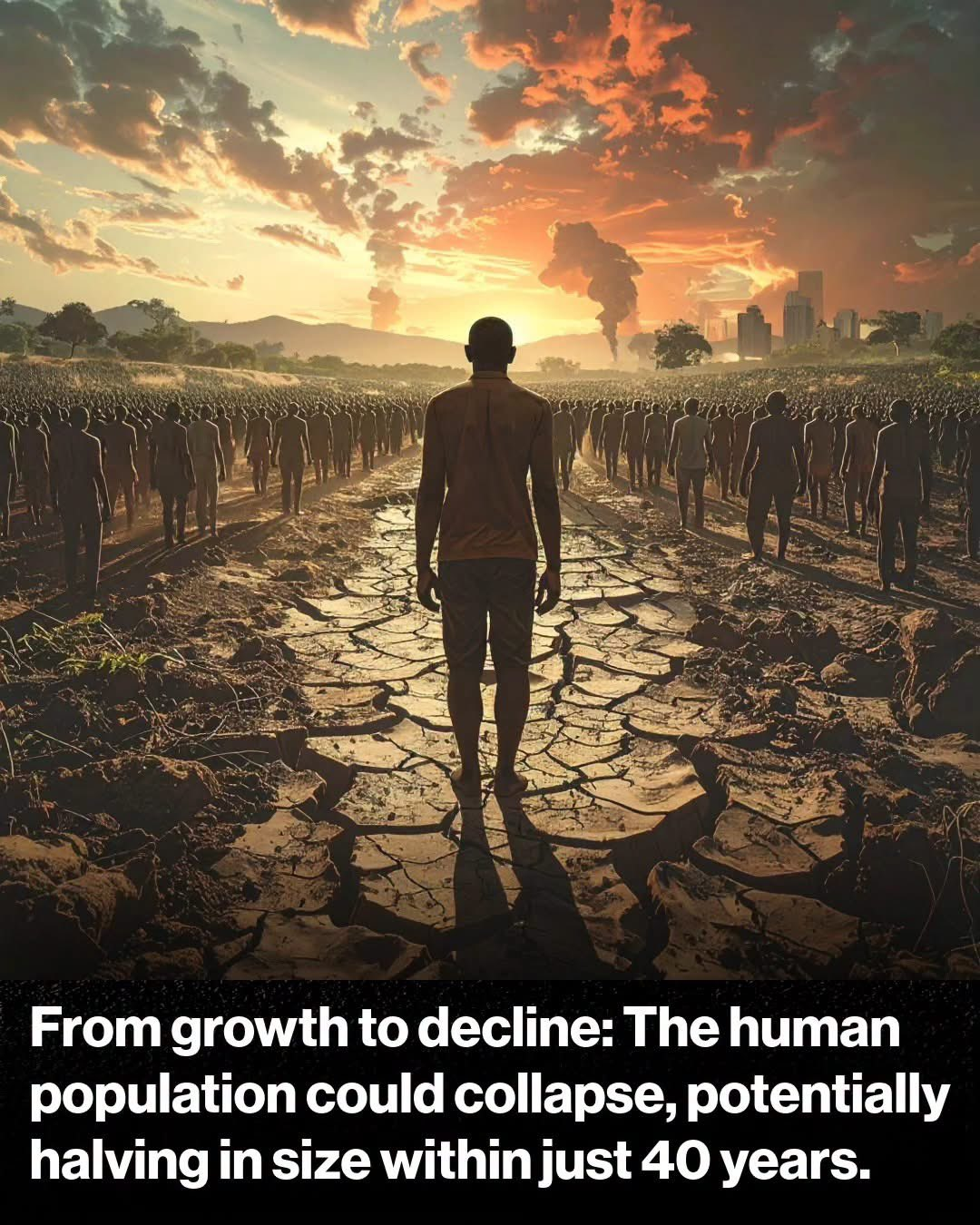
A recent mathematical study suggests that if Earth’s carrying capacity suddenly fell to around 2 billion people due to severe environmental collapse, pandemics, resource shortages, or conflict, the global population could halve in just 40 years. It’s a hypothetical scenario—not a prediction—but it highlights how quickly demographic trends can shift under extreme stress.
The future of humanity may depend not only on how many people are born, but on how well we navigate the challenges ahead.
Source: Study published in Chaos, Solitons & Fractals (2026), reported by the New York Post.
A year after founder Fred Smith’s death, FedEx’s CEO charts his own path
In today’s CEO Daily: FedEx CEO Raj Subramaniam is leading through a moment of “re-globalization.
”The big leadership story: New York bans new AI data centers for now.
The markets: Mostly up after softer-than-expected U.S. inflation data
Plus: All the news and watercooler chat from Fortune.
Good morning. Fortune Editor-in-Chief Alyson Shontell writing from New York this morning. “If you don’t like change, you’re going to hate extinction.” That’s the framing FedEx CEO Raj Subramaniam uses to motivate his troops, particularly in unpredictable times. Subramaniam has dubbed the recent supply chain disruption brought on by geopolitical conflict, tariffs, and more as a moment of “re-globalization.” And, as a company that moves almost 19 million packages per day, FedEx is on the front lines of it.I spoke to Subramaniam in June at FedEx’s Memphis headquarters for Fortune’s Titans and Disruptors podcast to learn how he’s leading through it and what he’s seeing around the corner. We also spoke about his transition to the top job after a multi-decade ascent from an entry-level FedEx position.
Subramaniam, the second CEO in the company’s 53-year history, is operating for the first time without his mentor and sounding board. One year ago, FedEx’s founder, Fred Smith, died at the age of 80. Taking the reins from a legendary founder—as Subramaniam did in 2022—is a great privilege, he told me. “I always say that I can see far because I’m standing on the shoulders of a giant,” he said. That giant had groomed Subramaniam for the top job for years, as he rose through the ranks and served stints as FedEx’s president and chief operating officer. But as any CEO will tell you, even the most carefully planned leadership transition isn’t easy. “When the time came, I said, ‘I can do this,’” Subramaniam recalled. “But no, the whole thing changed … This is a whole different level.”
As requests and demands came in from all sides, Subramaniam found himself having to say no—a lot. To stay focused on what mattered most, he set aside time to create his own CEO job description and KPIs. One of those was to be a guardian of the culture that the company’s founder built. He recounted a conversation with Smith when he stepped into the CEO role: “I told him that a lot of things might change—whether we have new technology, [we] may have new people, we may buy new companies,” he recalled. “But one thing that is not going to change is the FedEx culture, and that’s why I came to work here in the first place.
You can listen to our full conversation—including the unlikely origins of FedEx’s AI-powered data business, which came from a young employee directly to the CEO—here. Contact CEO Daily via Diane Brady at diane.brady@fortune.com
A Peterson Foundation bus stop sign displays the national debt on June 12, 2026 in Washington, DC.Tasos Katopodis – Getty Images for the Peter G. Peterson Foundation
In the debate about the level of threat the U.S. national debt poses to the economy, most people can agree that any crisis will be felt most sharply by the youngest people in the economy.
For example, Citadel CEO Ken Griffin has previously warned that surging debt is an issue the government cannot afford to ignore, writing in his 2023 letter to shareholders that “It is irresponsible for the U.S. government to incur a deficit of 6.4% when unemployment is hovering around 3.75%. We must stop borrowing at the expense of future generations.”
A report published yesterday by the Peter G Peterson Foundation suggests that Gen Z, in particular, will face a smaller job market with lower wages if the fiscal trajectory of the country continues to persist.
“Rising interest costs not only crowd out resources for public investments within the budget, but also deter private investment in businesses, which slows economic growth and negatively impacts the labor market,” the report says.
One might argue that the Peter G Peterson Foundation would issue such a warning—after all, the organization was founded to find solutions to get America on a more sustainable fiscal path.
However, the think tank has outsourced some of its data analysis—most notably to EY’s Quantitative Economics and Statistics (QUEST) practice, which found this spring that the rising debt path will reduce the number of jobs in the U.S. by 1.2 million by 2035, compared to a scenario in which lawmakers stabilize the debt.
By 2055, on an annual and cumulative basis, this adds up to 2.7 million jobs, and a loss of 3.6 million jobs by 2075. Of course, 50 years into the future it is Gen Z and Gen Alpha who will make up the bulk of the workforce—meaning these are the generations which will be most impacted by the shrinkage.
Of course, an optimist might suggest that by 2075 the economy could survive with fewer jobs thanks to the efficiencies provided by artificial intelligence—JPMorgan Chase CEO Jamie Dimon, for example, believes that economically developed nations will end up with workweeks of 3.5 days.
But Dimon is also in the camp of individuals worried about how America’s borrowing habit may come home to roost. He sees a bond market crisis as the most likely outcome, saying in April that while the U.S. economy will navigate the upheaval, it’s not the right way to deal with the issue. Speaking on a live podcast with Nicolai Tangen, CEO of Norges Bank Investment Management (NBIM), Dimon said: “I just think maturity should say you should deal with it as opposed to let it happen.”
Lower wages
The EY analysis commissioned by the Peterson Foundation also found that take-home pay shrinks over time if policymakers don’t slow the pace of debt accumulation. The annual difference in wages compared to a stabilized debt baseline drops by 0.6% by 2035, 3% by 2055 and 5.3% by 2075.
In fact, interest payments on the debt are now $20 billion larger than the outlays for the Departments of Defense, Commerce, Homeland Security, Education, the Environmental Protection Agency, the Small Business Administration, and the U.S. Coronavirus Refundable Credits scheme—combined.
The Peterson Foundation urged younger people—those it believes will be most impacted by debt—to ensure policymakers take action. The report concludes: “The growing national debt will both shrink the labor market and drive down wages, contributing to an uncertain economic future for millions of younger Americans. The decisions that today’s leaders make about America’s fiscal future are extremely consequential to the next generation.
“The good news is that young Americans can play a critical role in ensuring a more prosperous economic future by making their voices heard.”
Subscribe to Fortune Gulf Brief. Every Tuesday, this new newsletter delivers clear-eyed, authoritative intelligence on the deals, decisions, policies, and power shifts shaping one of the world’s most consequential regions, written for the people who need to act on it. Sign up here.
Eleanor Pringle is an award-winning senior reporter at Fortune covering news, the economy, and personal finance. Eleanor previously worked as a business correspondent and news editor in regional news in the U.K. She completed her journalism training with the Press Association after earning a degree from the University of East Anglia.
During the Troubles, a harrowing 30-year conflict over the constitutional status of Northern Ireland, music opened up alternative ways of understanding identity.
Along with boxing and greyhound racing, music offered a rare site of cross-community interaction. Musical identities also offered a powerful counterpoint to the media’s depiction of young people in Northern Ireland as either vulnerable victims or potential recruits to paramilitary organisations.
This spirit of resistance through culture has deep roots. In the decades preceding the Troubles, Belfast had boasted a vibrant jazz and R&B scene, with venues like the Maritime Club and Sammy Houston’s serving as cultural hubs.
However, as conflict intensified into the 1970s, international artists became increasingly reluctant to play in Northern Ireland. While traditional showbands (dance bands that played a mix of pop covers, rock and roll, country and traditional Irish music) continued to tour, they failed to appeal to the evolving youth culture.
Rather than disengaging, young people sought alternative ways to connect with the music they loved. They would cross territorial boundaries between Protestant and Catholic communities for band practice, house parties or underground gigs – and constructed their own subcultures through homemade clothing, DIY fanzines and scrapbooking. In doing so, they forged entirely new ways of identifying with what it meant to be from Northern Ireland.
As the decade went on, the arrival of punk and emergence of local bands such as Stiff Little Fingers and The Outcasts brought young people from both communities to venues such as The Pound and The Harp, and the Good Vibrations record shop. These spaces provided a third space as an alternative to the hostility and violence of everyday life.
Our mission is to share knowledge and inform decisions.
About us
Scrapbooking as sanctuary
Scrapbooking, in particular, offered an important way to construct this alternative sense of identity. Over the past year, I have studied a fantastic collection of music scrapbooks held at Belfast’s Oh Yeah! Music Centre, created by teenager Carol Clerk between 1970 and 1973. Clerk went on to become a leading journalist for the music magazine Melody Maker.
Within the pages of her scrapbooks, Clerk meticulously documented the early career of her musical hero, Irish blues-rock guitarist Rory Gallagher.She compiled hundreds of newspaper cuttings, photographs and handwritten notes.
In doing so, she shut out – if briefly – the everyday realities of military checkpoints, curfews and violence, creating an alternative world structured entirely around music as a space of refuge.
One of the Rory Gallagher spreads in Carol Clerk’s scrapbook. Oh Yeah! Music Centre, Author provided (no reuse)
In the early 1970s, Gallagher was one of the few artists to continue performing in Belfast, returning every Christmas for a concert at the Ulster Hall. For fans, these concerts offered a chink of light, where young people from both communities could unite under a shared passion, rather than a political or religious identity.
Today, a statue of Gallagher sits outside the venue, serving as a permanent testament to the reconciling power of music.
A page from Carol Clerk’s scrapbook including Gallagher’s gum. Oh Yeah! Music Centre, Author provided (no reuse)
Clerk’s scrapbooks preserve these fleeting moments of unity through intimate keepsakes including ticket stubs, autographs, and even a packet of chewing gum from which Gallagher had taken a piece. Most poignant, however, is her inclusion of letters to newspaper and magazine editors written by young fans in 1972 – one of the bloodiest years of the conflict.
One boy from Newtownabbey, writing to the Belfast Telegraph, vividly described the “elation” inside the Ulster Hall, and how the streets outside were temporarily filled with “dancing happy teenagers” and “excited voices”. This was “a very welcome change from the usual sounds we have come to associate with Belfast”.
Another fan recounts to Disc and Music Echo how “tears clouded [his] eyes” due to the joyous atmosphere inside the venue, while a letter in Sounds poignantly asks: “When are other artists going to realise kids still live here and are hungry for music?”
Reimagining belonging
These historical insights still have important implications for how people in Northern Ireland think about identity and belonging today.
Research has shown that younger generations are often more comfortable with complex and overlapping identities than previous generations. Many move between multiple forms of belonging, identifying as British, Irish, Northern Irish or combinations of all three. Others increasingly define themselves through interests, communities and cultural affiliations that extend beyond traditional political categories.
Naturally, the technologies through which musical identities occur have changed dramatically since the 1970s. Young people no longer cut up music magazines or glue newspaper clippings into scrapbooks. Instead, they curate personalised playlists, create TikTok content, participate in online fandoms and build digital communities around shared interests. Yet the underlying impulse remains remarkably similar.
Like Clerk’s scrapbooks, these practices allow young people to tell stories about who they are and where they belong. They create connections that are not necessarily determined by neighbourhood, religion, ethnicity or politics.
Ultimately, music continues to offer invaluable opportunities to imagine different forms of community – reminding us, just as it did during the darkest days of the Troubles, what unites us rather than what separates us.