Can’t-miss innovations from the bleeding edge of science and techEmail addressSign Up
The world has been obsessed with what Gen Z is or isn’t doing.
They’re not having sex, apparently. They don’t go out. And let’s not forget drinking: for the young twenty-somethings to forgo damaging their livers and brains by imbibing poison as prolifically as their predecessors clearly shows a lack of respect — and that they don’t know anything about having a good time.
But it appears that in the end, the apple doesn’t fall too far from the tree. New research from beverage retail research group IWSR shows that Gen Z are now catching up on boozing like a friend knocking back a whole row of shots after showing up later than they said they would.
“They’re late to the party, they’re not skipping the party,” IWSR president Marten Lodewijks told Business Insider.
According to the survey, 74 percent of Gen-Zers say they’ve had at least one drink over the past six months, a huge leap from 66 percent just three three years ago. The heaviest drinkers were Millennials at 81 percent, and the lightest were Baby Boomers at 71 percent. Gen X, fittingly, were in the middle at 77 percent.
The legal drinking age youths are catching up, but their drinking habits look a little different from their elders’. They’re drinking more cocktails than any other generation, with 84 saying that they had a mixed drink in the past six months. Gen-Zers were also the most likely to follow government health guidance on alcohol (49 percent), and the most likely to say they drank alcohol with five or more people on their last occasion (18 percent).
In a statement, Lodewijks declared that Gen-Z’s reputation as the generation of moderation “is now conclusively debunked.”
“The evidence demonstrates that Gen Z consumers enjoy drinking at roughly the same levels as the rest of society,” he added.
In retrospect, it always should’ve been clear why Gen-Zers didn’t drink as much. Shifting attitudes towards drinking culture may be part of it, sure, but what almost certainly had the biggest part to say was the COVID-19 pandemic that stopped them from going out around when many of them just hit their legal drinking age.
“They were literally coming of age at a point in which everything got shut down,” Lodewijks told BI.
The Rundown: Claude Fable 5 just produced a one-line formula that breaks the Jacobian conjecture, a famous algebra rule that has stumped mathematicians since 1939, with Anthropic’s Levent Alpöge disproving it with a hilariously casual post on X.
The details:
Alpöge posted the proof over the weekend on X, thanking his “close friend fable for working during the World Cup final”.The field had previously seen several other claimed solutions unravel, but experts say this answer is short enough to confirm directly.
Famed mathematician T.T. Moh predicted in 2008 that a solution to the Jacobian conjecture could take humans “another 100 years.” Math has seen a wave of frontier-model wins this year, including several open Erdős problems and OAI solving the 80-year-old unit distance puzzle.
Why it matters: The world’s top mathematicians have spent decades working on the Jacobian conjecture, and Fable appears to have casually solved it as a side quest during the World Cup. When you sit with that, picturing what another year, or 5, or 10 looks like with scaling models gets pretty hard to fathom.
Elon Musk just said there will be more Optimus robots outperforming the best human surgeons than there are surgeons on Earth. Within three years.
Musk: “Three years at scale. Meaning there will be more Optimus robots that are great surgeons than there are all surgeons on Earth.” One robot matching a great surgeon is a milestone.Thousands surpassing them, in every hospital, at once, is the end of surgical scarcity. Those are not the same event.
Musk: “It takes a long time for a human to become… and even then, the knowledge is constantly evolving, it’s hard to keep up with everything. Doctors have limited time, they make mistakes.” Fifteen years to produce one great surgeon. One pair of hands at the end of it. An entire career of mastery, bottlenecked because expertise lives inside a single body.
Optimus doesn’t train for fifteen years. It learns once and replicates infinitely. The best surgeon alive can save one life at a time. Optimus takes that same precision and removes the ceiling. Every operating room. Every country. Simultaneously. Right now, your survival depends less on what medicine knows than on who happens to be available when you arrive.Geography. Timing. Luck. That’s what sits between you and the best possible care.
A child born in rural sub-Saharan Africa and a child born in Manhattan have access to fundamentally different medicine.Not because the knowledge doesn’t exist. Because it’s trapped inside people who can only be in one place at a time. Every person who ever died waiting for a surgeon died while the knowledge to save them existed somewhere on Earth. It just wasn’t in the room.
Musk just put a three-year deadline on solving that. We accepted surgical scarcity the way we accepted gravity. As permanent. As a fact of being human, something you endure, not a problem you solve. It was never permanent.
It was a limitation no one had the technology or the audacity to remove. The greatest surgeon who ever lived is already dead. Everything they mastered is gone. The entire history of medicine was never defined by what we knew. It was defined by how few hands could do it. We spent ten thousand years building mastery inside things that die, and wondering why it was scarce.
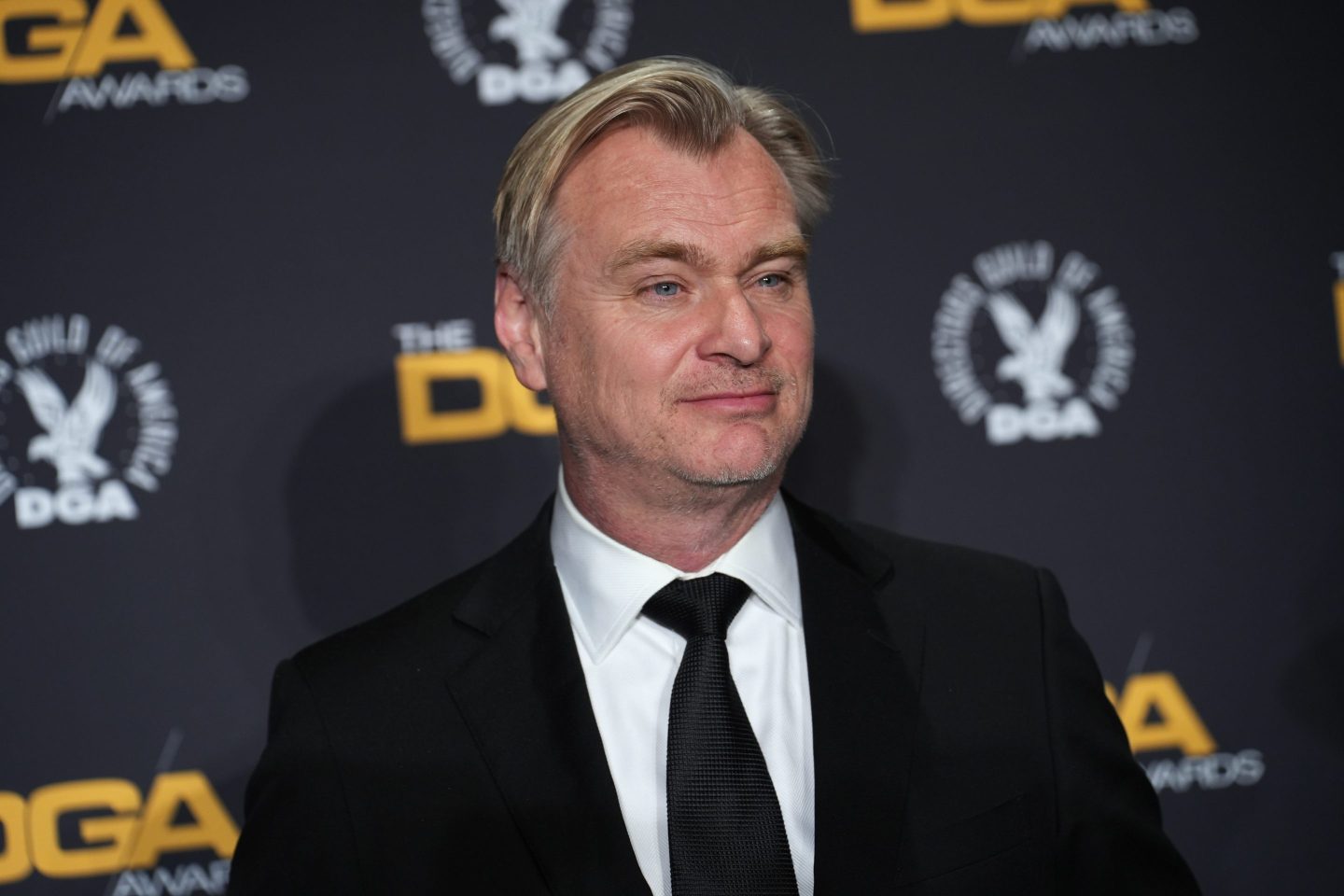
Before Christopher Nolan became one of Hollywood’s most successful directors, he faced rejection: ‘Film school didn’t want me.’JC Olivera/Variety via Getty Images
The opening weekend for The Odyssey was nothing short of epic. Christopher Nolan’s adaptation of Homer’s nearly 3,000-year-old tale brought in $262.1 million worldwide, topping the global box office and surpassing the opening weekend of his previous blockbuster, Oppenheimer.He’s also the icon behind The Dark Knight trilogy, Interstellar, and Inception. But Nolan was once deemed not talented enough for film school.
Recommended Video
Eva Longoria kept her day job as a headhunter after landing her first acting role
Born in London, Nolan fell in love with movies as a child and began making short videos with his action figures. By the time he was 10 or 11, “I knew I wanted to make films,” he recounted to The Telegraph. But when he tried to follow the traditional path into the industry, he was rejected.
“It’s not that I didn’t want to go to film school, it’s that film school didn’t want me,” Nolan said in 2017. “In the end, I don’t think I was cut out for film school.”
Instead of closing the door on his dream, Nolan pivoted to studying English literature at University College London, a decision he has since been credited with strengthening his screenwriting and deepening his understanding of language and metaphor. And looking back, that experience has also shaped his long-standing philosophy on failure.
“If the film doesn’t work, it’s my fault,” he said to The Guardian in 2005. “If I fail, I fail on my own terms.”
Even after winning an Oscar and amassing $250 million to his name, Nolan says future success is far from guaranteed
Today, Nolan has reached the highest levels of Hollywood, with his 2024 film Oppenheimer bringing home the Academy Award for Best Picture and earning his first Oscar for Best Director. His estimated net worth stands at roughly $250 million.
But success has not made his career’s work any less intimidating. After spending $250 million to shoot The Odyssey in the larger IMAX format and assembling a star-studded cast that includes Matt Damon, Anne Hathaway, and Tom Holland, Nolan said the pressure of releasing a film still feels overwhelming.
“It never gets any easier, and it’s absolutely terrifying,” the 55-year-old said on The Daily Show ahead of The Odyssey’s widely anticipated release. “For me, a film is not finished until the audience tells you what it is. I’m so nervous but excited to open the film, and then we’ll take a breath.”
Beyond its record-setting box office performance, The Odyssey has also earned a 95% rating on Rotten Tomatoes.
Like Nolan, James Cameron and Steven Spielberg took unconventional paths to Hollywood director stardom
Nolan isn’t the only blockbuster filmmaker whose career began outside what might feel like the traditional pipeline.
James Cameron—the Titanic and Avatar director who became a billionaire last year—similarly did not pursue a formal film education.After briefly studying physics at Fullerton College in California he dropped out, later electing to teach himself visual effects and filmmaking while supporting himself with jobs as a truck driver and janitor.
“I was completely an autodidact,” he told The New York Times. “I just went to USC and studied on my own time. I wasn’t enrolled. I just snuck in, went to the library and studied it all.”
That self-taught approach became part of Cameron’s philosophy as a filmmaker.
“I’m attracted, in case you haven’t noticed, by things I don’t know how to do,” Cameron told CBS News last December. “Because you grow and you learn. If I’m still making movies when I got an oxygen tube up my nose and I’m 87 or whatever, should I be that lucky, I want to still be doing things I don’t know how to do.”
Steven Spielberg has similarly argued that careers rarely unfold exactly as planned. Early in his career, he found creative ways to finance his films—including odd jobs like whitewashing citrus trees—and eventually caught the attention of Hollywood executives, setting him on a path to the $7.1 billion fortune he has today.
Speaking at the Academy of Achievement in 2006, the Oscar-winning director behind film franchises like Jurassic Park and Indiana Jones recommended people embrace unexpected opportunities rather than waiting for a perfectly mapped-out path.
“You have to every day of your lives be ready to hear what whispers in your ear; it very rarely shouts,” Spielberg said.
“And if you can listen to the whisper, and if it tickles your heart, and it’s something you think you want to do for the rest of your life, then that is going to be what you do for the rest of your life, and we will benefit from everything you do.”
The Fortune 500 Innovation Forum will convene Fortune 500 executives, U.S. policy officials, top founders, and thought leaders to help define what’s next for the American economy, Nov. 16-17 in Detroit. Apply here.
Generative AI has given anyone the ability to create practically any content with a few simple prompts. That can be dangerous when it’s used to distort reality.
In a Common Sense Media survey of more than 1,300 teens ages 13 to 17, 44% reported that they believed they have seen AI-generated sexual content, including explicit imagery and videos, with this content largely showing up on social media platforms like TikTok, Instagram and X. Of those who reported seeing this content, 79% said their exposure to it was accidental.
What’s more: A quarter of those who have seen AI-generated sexual content say they have seen it depicting themselves or people they know personally.
Around two-thirds of teens surveyed worry about being the target of deepfake sexual content without their consent. As a result, 38% reported that they are more careful about what they post, 30% have made their social media accounts private, 23% post pictures and videos of themselves less often, and 9% have deleted social media entirely.
AI has lowered the barrier for entry to creating and accessing this content, Common Sense Media noted. “Technologies that can generate sexual content are too easily accessible to teens, and the social media platforms that allow the distribution of this content are not doing a good enough job of detecting, blocking, and taking it down,” the report wrote.
Many reported understanding the impacts that AI-generated sexual content could have. Roughly two-thirds of the survey pool reported that they believe this kind of content distorts their peers’ ideas of body image, shifts trust in media and has changed expectations of romantic partners. And 60% of those who have seen this kind of content agree that it has warped their perception of what real bodies look like.
While 82% surveyed agreed that creating this content without the subject’s consent should be illegal, nearly a quarter view the content as less harmful than real explicit imagery, according to the report, because “no one gets hurt.”
The report highlights a problem that has manifested in recent years as increasingly powerful AI models continue hitting the market. In particular, it’s an issue that xAI’s Grok has faced. In January, Grok flooded X with AI-generated deepfake nudity, forcing it to limit the model’s image generation capabilities. Still, problems persist: Last week, xAI sued a user who allegedly used Grok to generate child sexual abuse material.
And the issue extends beyond just one chatbot. On Friday, San Francisco City Attorney David Chiu sent a cease-and-desist letter to Apple and Google, demanding that the tech giants take down 13 “nudify” apps that allow users to digitally undress people.
“AI companies have made this content easy to create and hard to avoid,” Supreet Mann, director of research at Common Sense Media, told The Deep View. “App stores should stop hosting ‘nudifying’ apps, incorporate age assurance into platforms that are not intended for minors, and invest in sexual deepfake detection rather than relying on kids to report it after the fact.”
AI-generated explicit content and deepfakes are just one example of a broader issue: When powerful AI can be accessed by anyone with a wifi connection, who is culpable for the damage when things go awry? Broadly, it’s true that some AI model providers have tried to account for existing and potential damage, such as OpenAI’s parental controls and age prediction system to flag harmful behaviors of young users. Still, for now, given how nascent the tech remains, responsibility for harm is largely on a case-by-case basis and handled through the legal system, such as in the several allegationsagainst AI companies for their models’ role in suicides. However, not only is the cat out of the bag, but that cat is growing more powerful by the day. These tools are already in the hands of young users who do not know how to wield them safely, as well as adults who seek to wield them maliciously. Without binding legislation around these issues and as the scale of the damage continues to grow, are the AI labs responsible for cleaning up the aftermath?
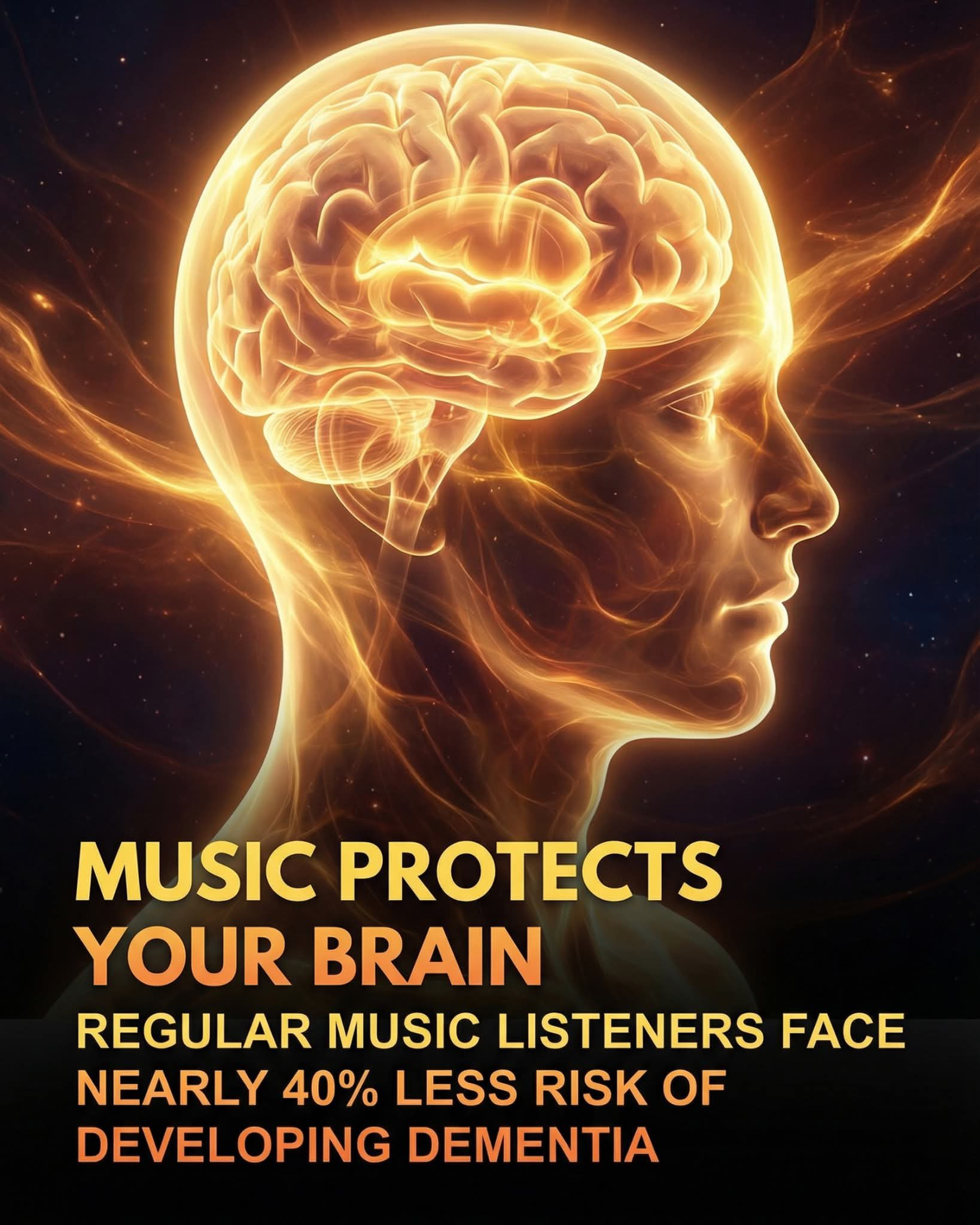
New research reveals that listening to music can slash dementia risk by 40%. A landmark Monash University-led study involving more than 10,800 participants has discovered a powerful connection between music and cognitive preservation in seniors.
Researchers found that consistently listening to music after age 70 is associated with a staggering 39 percent reduction in dementia risk. For those who play an instrument, the risk is lowered by 35 percent, indicating that both active and passive musical engagement can serve as a potent shield against brain decline.
Lead researchers Emma Jaffa and Professor Joanne Ryan emphasize that these findings offer a vital, accessible strategy for maintaining brain health in an aging global population. Beyond reducing dementia risk, regular musical engagement was linked to sharper episodic memory and improved overall cognition. As medicine continues to extend human lifespans, integrating music into daily life represents a simple yet transformative lifestyle choice that may delay the onset of neurodegenerative conditions where cures remain elusive.
source: Jaffa, E., & Ryan, J. (2025). What is the association between music-related leisure activities and dementia risk? A cohort study. International Journal of Geriatric Psychiatry.
Tuberculosis (TB) was one of the most feared fates in our country for over a century. Ordinary people called the cruel fatal disease Consumption or the White Plague. It was fecking horrible, and although its almost a punchline in the 21st century we should remember the horror and heartache this killer caused.
TB spread rapidly through air droplets when the infected coughed, sneezed, or even spoke. This airborne transmission got amplified by damp, windowless rooms, poor ventilation, and extreme over-crowding. So basically daily life for your average Dublin family. Once contracted the Mycobacterium tuberculosis bacteria attacked your lungs. You got agonising chronic chocking coughs, chest pain, coughing up blood and night sweats. Then your body started wasting away (hence the name “consumption”).
Mortality rate was around 50% to 70%, with young adults and infants suffering worst. If you survived you got to witness your loved ones suffer this evil torture. While TB deaths fell in England and Scotland at the turn of the century, Ireland’s climbed! Peaking around 1904. Dublin’s tenements were hotbeds for the horrible death. Huge malnurished families slept top to toe in single rooms, sharing facilities with a dozen more households and a cough could a whole floor of the tenement out. It was called the poor man’s disease, but it also took out its fair share of doctors and their families, and the midde class they interacted with the slums.Though it hunted hardest among the young and the underfed, aged twenty-five to thirty-five, cruelly robbing families of their breadwinners.
And there was a shame attached to it too, even if you had survived a bout of it. A diagnosis could cost you your job, your marriage and your circle of friends.Families who could afford to forged death certificates. Neighbours crossed the street rather than share air with a consumptive. Some change to this social stigma in Dublin came from an unlikely quarter.
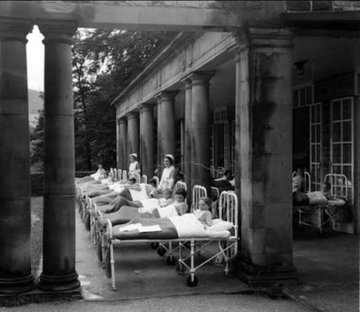
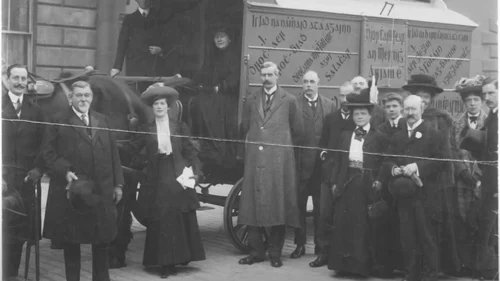
Lady Aberdeen, wife of the Lord Lieutenant, founded the Women’s National Health Association in 1907. Caravans toured the country with lectures and pamphlets preaching ventilation and clean living, radical stuff at the time but also entirely unrealistic if you and a dozen family members were living cheek to jowel in a rotten tenemant. Anyway the WNHA got Peamount Sanatorium built in 1912 and pushed through the Tuberculosis Prevention Acts of 1908 and 1913. Before antibiotics, the only treatment was rest and fresh air. Patients at Crooksling and Heatherside lay out on verandas through the frost, wrapped in blankets, some enduring “collapse therapy,” where a lung was deliberately deflated to force it to heal.
Your loved ones couldnt visit, and obviously most never left alive.Me auntie Mary Buchanan from East Wall was a childhood victim of it among the many thousands of young people for whom death was the only release from an agony witnessed by their loved ones.
By the 1940s TB was still Ireland’s quiet war, and it took Noël Browne, Minister for Health from 1948 to 1951 and a survivor of childhood TB himself, to properly declare it.Mobile X-ray units rolled from town to town and sanatoria went up, including the one at Blanchardstown, which later became James Connolly Memorial Hospital. Then came modern miracles of medicine like streptomycin, then isoniazid and PAS. For the first time, TB could be cured. By the 1950s the BCG vaccine reached the country’s children and death wards began to empty. By the sixties TB had slipped from the national consciousness, replaced by cancer and heart disease. The sanatoria closed or turned into general hospitals. Buy the Dublin Time Machine a pint and support the DTM Book https://ko-fi.com/buchanandublintimemachine
The greatest evil on earth is the USA and Israel. All truth is gone. If you believe Iran killed 52,000 people in 3 days you need medical help. Meanwhile Netanyahu is murdering relentlessly and wanted for war crimes. Trump and Israel illegally bombing Iran. Fuck the USA

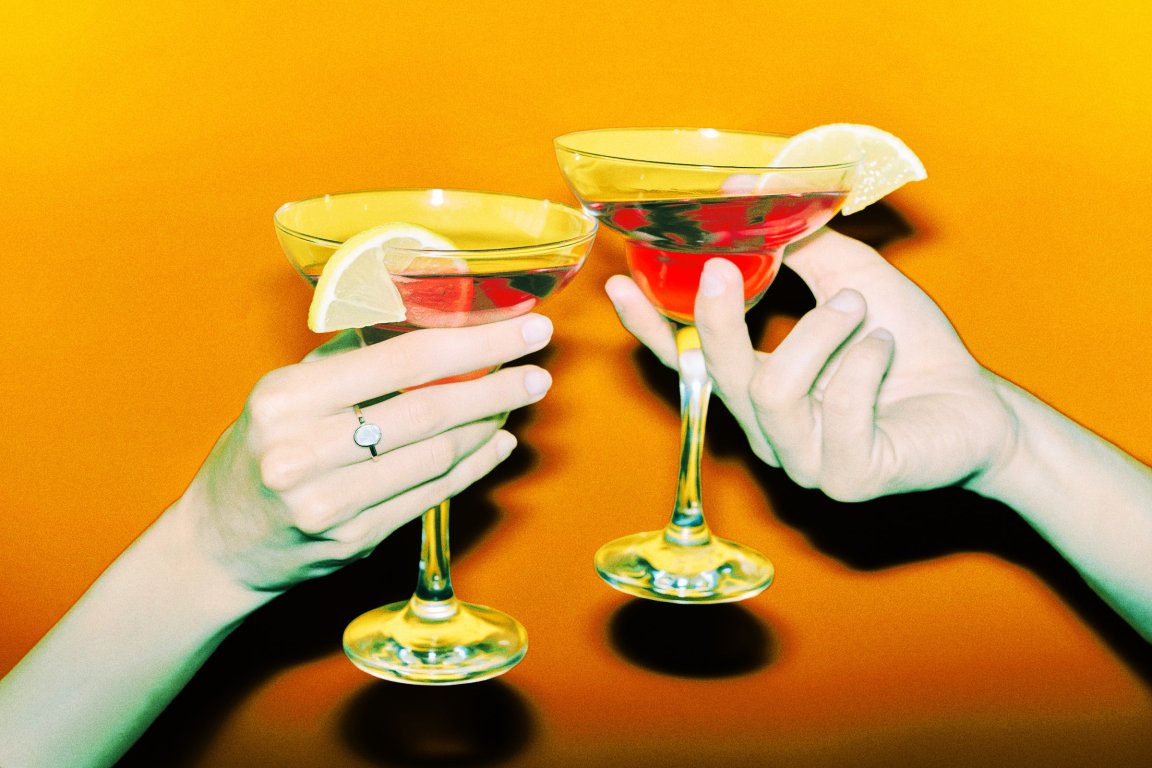

 Image source: @_alpoge_ on X / The Rundown