
Tuberculosis (TB) was one of the most feared fates in our country for over a century. Ordinary people called the cruel fatal disease Consumption or the White Plague. It was fecking horrible, and although its almost a punchline in the 21st century we should remember the horror and heartache this killer caused.
TB spread rapidly through air droplets when the infected coughed, sneezed, or even spoke. This airborne transmission got amplified by damp, windowless rooms, poor ventilation, and extreme over-crowding. So basically daily life for your average Dublin family. Once contracted the Mycobacterium tuberculosis bacteria attacked your lungs. You got agonising chronic chocking coughs, chest pain, coughing up blood and night sweats. Then your body started wasting away (hence the name “consumption”).
Mortality rate was around 50% to 70%, with young adults and infants suffering worst. If you survived you got to witness your loved ones suffer this evil torture. While TB deaths fell in England and Scotland at the turn of the century, Ireland’s climbed! Peaking around 1904. Dublin’s tenements were hotbeds for the horrible death. Huge malnurished families slept top to toe in single rooms, sharing facilities with a dozen more households and a cough could a whole floor of the tenement out. It was called the poor man’s disease, but it also took out its fair share of doctors and their families, and the midde class they interacted with the slums. Though it hunted hardest among the young and the underfed, aged twenty-five to thirty-five, cruelly robbing families of their breadwinners.
And there was a shame attached to it too, even if you had survived a bout of it. A diagnosis could cost you your job, your marriage and your circle of friends. Families who could afford to forged death certificates. Neighbours crossed the street rather than share air with a consumptive. Some change to this social stigma in Dublin came from an unlikely quarter.
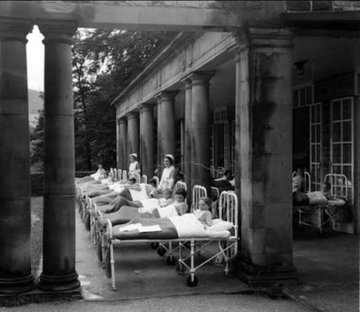
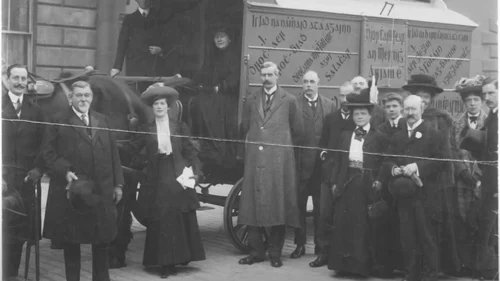
Lady Aberdeen, wife of the Lord Lieutenant, founded the Women’s National Health Association in 1907. Caravans toured the country with lectures and pamphlets preaching ventilation and clean living, radical stuff at the time but also entirely unrealistic if you and a dozen family members were living cheek to jowel in a rotten tenemant. Anyway the WNHA got Peamount Sanatorium built in 1912 and pushed through the Tuberculosis Prevention Acts of 1908 and 1913. Before antibiotics, the only treatment was rest and fresh air. Patients at Crooksling and Heatherside lay out on verandas through the frost, wrapped in blankets, some enduring “collapse therapy,” where a lung was deliberately deflated to force it to heal.
Your loved ones couldnt visit, and obviously most never left alive. Me auntie Mary Buchanan from East Wall was a childhood victim of it among the many thousands of young people for whom death was the only release from an agony witnessed by their loved ones.
By the 1940s TB was still Ireland’s quiet war, and it took Noël Browne, Minister for Health from 1948 to 1951 and a survivor of childhood TB himself, to properly declare it. Mobile X-ray units rolled from town to town and sanatoria went up, including the one at Blanchardstown, which later became James Connolly Memorial Hospital. Then came modern miracles of medicine like streptomycin, then isoniazid and PAS. For the first time, TB could be cured. By the 1950s the BCG vaccine reached the country’s children and death wards began to empty. By the sixties TB had slipped from the national consciousness, replaced by cancer and heart disease. The sanatoria closed or turned into general hospitals. Buy the Dublin Time Machine a pint and support the DTM Book https://ko-fi.com/buchanandublintimemachine

 canisgallicus