
Drug 10 times stronger than fentanyl claiming lives in the US
By Mike McRae
September 29, 2026
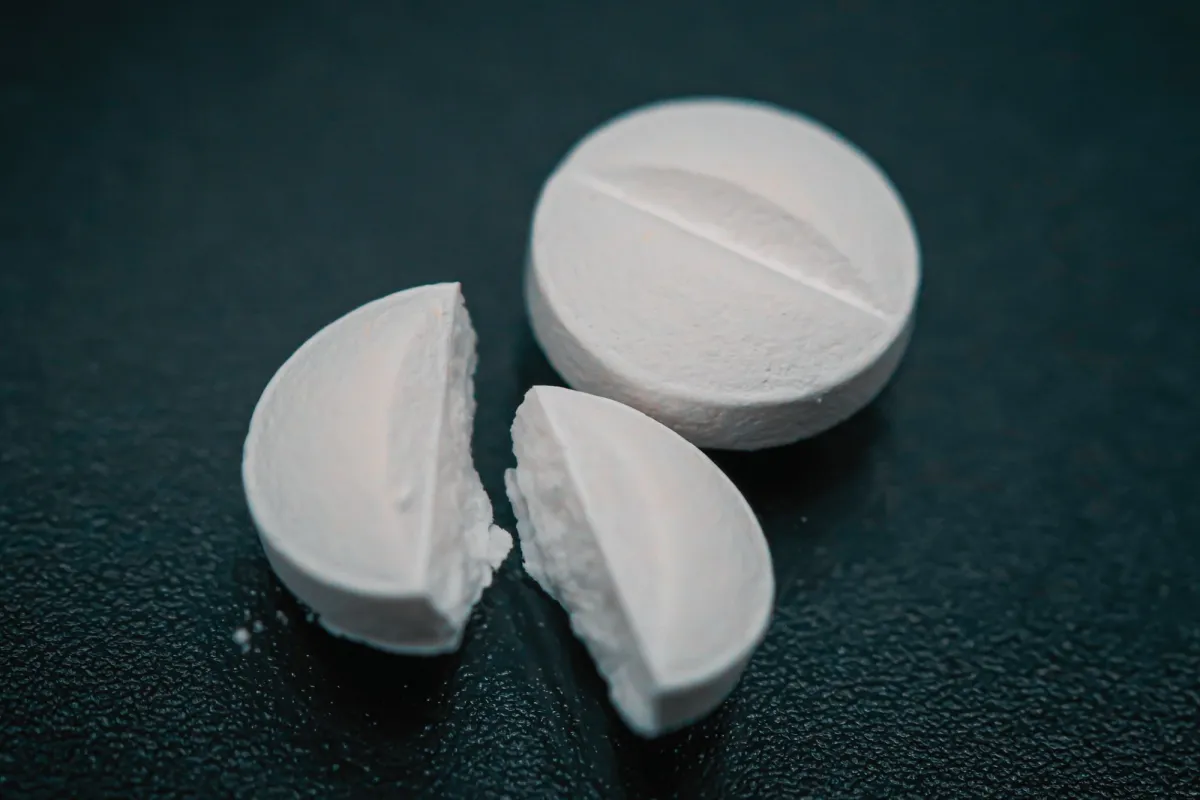
Opioid epidemic has a new threat.
(birgl/pixabay/Canva)
View 1 Images
A synthetic opioid up to 10 times stronger than fentanyl is attracting attention as an emerging global threat, having been officially tied to more than 40 fatal overdoses over the past two years in the US alone.
That figure is likely to be far greater, with authorities and researchers finding themselves in the dark on just how widespread the use of the compound cychlorphine may already be.
Like morphine and fentanyl, cychlorphine locks onto the brain’s mu-opioid receptors, reducing pain and increasing euphoria. Its structure puts it into a completely separate class of synthetic opioid agonists, though, one that preclinical studies suggest may affect breathing and blood flow at far lower doses than even fentanyl.
If you’ve never heard of the drug, you’re far from alone. First identified just two years ago by the US Center for Forensic Science Research and Education, cychlorphine still lacks a standardized test that can quickly detect its presence in clinical samples.
Nonetheless, global surveillance programs suggest the market for the novel synthetic opioid (NSO) is increasing, especially in North America, with cychlorphine since detected in close to 200 drug seizures across 10 countries, and considered to be responsible for at least 78 deaths.
In April this year, the White House Office of National Drug Control Policy issued a drug threat notice on the drug, emphasising its proliferation through regions in the South, Midwest, and Northeast.
And an editorial published in the Journal of Pain Research makes it clear just how serious the threat could be.
“The lethality and speed of cychlorphine’s emergence make it an urgent NSO threat currently facing clinicians, first responders, and public health practitioners,” writes a team of authors led by Temple University pharmacologist Robert B Raffa.
While the drug’s appearance is new, the pattern of its emergence is anything but.
For decades, the illicit distribution and use of opioids has become an increasing public health problem. Fuelled in part by the overprescription of painkillers like OxyContin in the 1990s, the market for unregulated substitutes exploded into what became regarded as an epidemic by the turn of the millennium.
Efforts to curb the distribution and use of opioids have since resulted in an arms race between drug manufacturers and surveillance programs.
Fentanyl – a pharmaceutical developed in the 1960s as a safer alternative to morphine – proliferated as a cheaper, more convenient additive. Its potency made it easier to transport in smaller quantities, leading to a surge in its distribution in the 2010s.
Since the international control of a class of synthetic opioids called brorphines in 2022, and China’s blanket ban on another class known as nitazenes in 2025, a window of opportunity has opened for new opioid agonists – one quickly filled by cychlorphine.
While authorities bring themselves up to speed on the extent of the problem in the community, medical specialists are still determining the most effective method for treating overdoses.
First responders typically treat opioid overdoses with a drug called naloxone, which temporarily blocks the mu-opioid receptors.
“We do know it’s more powerful than fentanyl and that naloxone, or Narcan, does not completely block the effects of the drug and multiple doses may be needed to prevent an overdose,” chief medical examiner at Knox County Regional Forensic Center Darinka Mileusnic-Polchan said in February.
Raffa and his colleagues argue that the reasoning behind the advice isn’t based on solid evidence. What’s more, cychlorphine’s tendency to be detected in association with other drugs that interfere with naloxone suggests it may not be the synthetic opioid that’s the problem.
There’s no doubt we’ll be hearing more about this novel opioid and the dangers it poses to the wider community.
The editorial was published in the Journal of Pain Research.
Source: MedicalXpress
We recommend
- Generating 1O2 and cobalt (IV)=O through efficient peroxymonosulfate activation by ZnCo2O4 nanosheets for pollutant control(opens in new tab)Xiaoke Zhang, Nano Research, 2024
- Tenosynovial Giant Cell Tumor Treatment Revolution: Vimseltinib’s Edge Over Pexidartinib(opens in new tab)Muhammad Affan Abid, Syed Abid Hussain, Mustafa Kamal, Medicine Advances, 2025
- Study on the corner overpressure characteristics of concentrated reflected shock wave due to internal blast in cabin(opens in new tab)Explosion and Shock Waves, 2023
- Ordering Degree Regulation of Pt2NiCo Intermetallics for Efficient Oxygen Reduction Reaction(opens in new tab)Chen-Hao Zhang, Han-Yu Hu, Jun-Hao Yang, et al., Journal of Electrochemistry, 2025
- Higher inhibition of caffeic acid than chlorogenic acid against methylglyoxal and advanced glycosylation end products induced oxidative damage(opens in new tab)Luyi Li, Rui Liu, Xiangxing Meng, et al., Food Science and Human Wellness, 2025
- The modification toward excited-state dynamics and catalytic activity by isomeric Au44 clusters(opens in new tab)Tongxin Song, Nano Research, 2023
Tags
Society & CommunityOpioidsAddictionHeroinPainkillers

Mike is a highly respected science journalist, having written and edited news on innovation, discovery, and technology for more than 20 years. He is also a published author with the University of Queensland Press (Tribal Science: Brains, Beliefs, and Bad Ideas and Unwell: What Makes a Disease a Disease?), and has worked extensively teaching science and producing educational resources.
Sign up for our FREE daily New Atlas newsletter!


