

- NEWS Q&A
- 30 September 2026
How to spend $25 billion on science: OpenAI’s staggeringly rich research charity gets under way
Jacob Trefethen, who leads life sciences at the OpenAI Foundation, speaks to Nature about the organization’s ambitions to cure disease.
By

The OpenAI Foundation — the charity arm of the artificial-intelligence behemoth — is on track to become one of the wealthiest non-profit organizations on the planet. And, with a 26% stake in OpenAI, which is seeking a valuation of around US$1.4 trillion, it could even become the richest. The foundation was created in October 2025, after a tumultuous shake-up of OpenAI’s governance and structure. It has so far committed to giving away at least $25 billion.
This month, the foundation cut a round of cheques as part of a $125-million commitment to fund the creation of freely available data for health and life-sciences research. The grants included $40 million for a project at the University of North Carolina at Chapel Hill to develop cancer vaccines; $500,000 for a pilot project to repurpose data from bankrupt biotechnology companies; and $15 million to an effort to better predict how drugs cross the blood–brain barrier and other membranes. Those awards follow a tranche of $100 million for Alzheimer’s disease research.
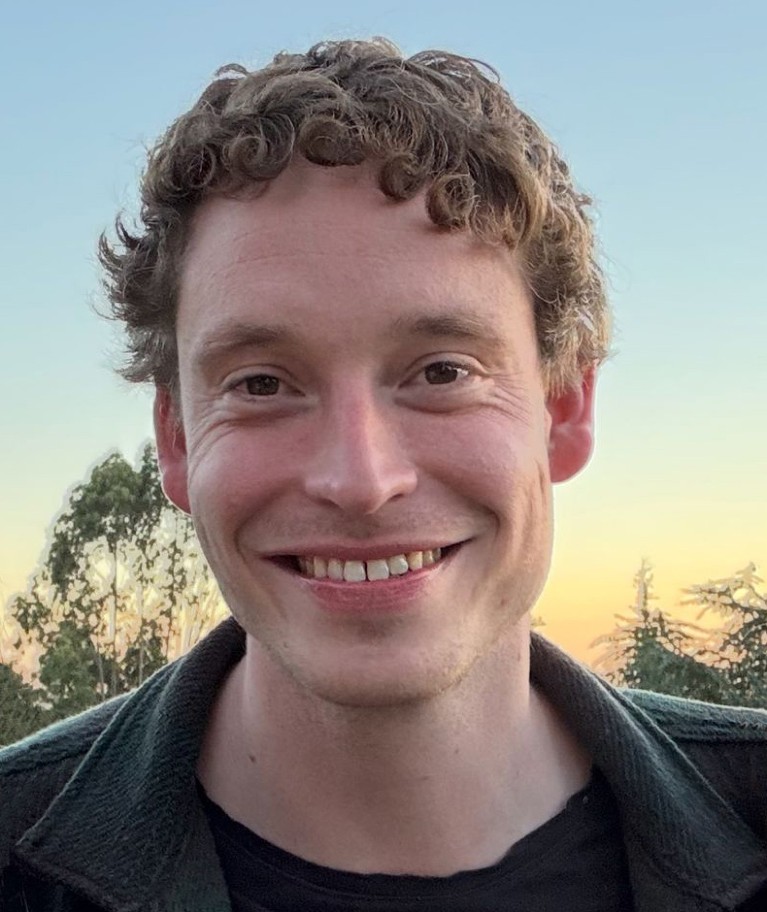
Jacob Trefethen, who previously worked at Coefficient Giving, a billionaire-funded foundation, is now head of life sciences at the OpenAI Foundation in San Francisco, California. He tells Nature that this is only the start, and the foundation plans to move fast.
Why is the OpenAI Foundation funding health and life sciences?
Our mission is to ensure AI benefits all of humanity. Part of the reason that we’re starting in the life sciences and health is that we think that’s one of the areas where AI can have the most benefit.
The non-profit Chan Zuckerberg Initiative announced in 2016 that its aim was to cure all disease by the end of the century. Does the OpenAI Foundation have a similar goal?
We intend to be ambitious. We have started with three areas in the life sciences to focus: AI for Alzheimer’s; public data for health; and high-burden diseases — which for us means any disease that leads to over half a million deaths around the world each year or similarly massive ill health.
We’re going to try and ask the question, what’s newly possible, for example, in tuberculosis — the largest infectious killer — that may help people who don’t currently have good-enough options. We have a kind of unifying philosophy and a hope to move quickly.
How do biological data fit in?
We think that the combination of intelligence and more observations of the world is what will deliver breakthroughs for people against disease. And those observations mean scientific data.
We think a lot of these problems that we’re working on, like Alzheimer’s, we collectively don’t know enough to deliver treatments that are excellent for patients. And so that requires more data of various forms to get there, probably. We want to support that underlying scientific infrastructure so that all researchers can build on it and all patients can benefit.
Is it a bit self-serving for the OpenAI Foundation to support projects that will generate data that could make OpenAI’s model more capable?
Enjoying our latest content?
Log in or create an account to continue
- Access the most recent journalism from Nature’s award-winning team
- Explore the latest features & opinion covering groundbreaking research
Access through your institution
or
 Continue with Google
 Continue with ORCiD
doi: https://doi.org/10.1038/d41586-026-03015-0
This interview has been edited for length and clarity.
Latest on:
- Diseases
- Funding
- Institutions
 Harmful tau spreads like self-propagating prion proteinsNews & Views
  Osteoclasts intercept meningeal lymphatic paths for dural metastasisArticle
  Human genetics implicates a BACH2–NRF2 axis in fetal haemoglobin activationArticle

Jobs
- Faculty Positions in the Advanced Leukemia Therapies and Research Center – JR152492Cincinnati Children’s invites applications for tenure-track faculty positions in the Cancer and Blood Diseases Institute.Cincinnati, OhioCincinnati Children’s
- Postdoctoral Position in Circular RNA Biology and Inflammatory Bowel DiseasePostdoctoral position (3 years) in circular RNA (circRNA) biology and intestinal inflammation/IBD — Necker Institute (INEM), Paris.Paris, Ile-de-France (FR)INEM Institute
- AI ScientistJoin the Casale Group at Human Technopole in Milan to build AI systems that turn human genetics and biomedical data into disease discoveries.Milan (IT)Human Technopole
- Graduate Student – Microbiome Therapeutics and Cancer ImmunotherapyPhD position studying the gut microbiome in cancer immunotherapy in a translational research environmentMontréal, Quebec (CA)CHUM Microbiome Centre
- Post-Doctoral Research Fellow – Microbiome Therapeutics and Cancer ImmunotherapyPostdoctoral fellow to develop microbiome-based therapies and understand their mechanism-of-action.Montréal, Quebec (CA)CHUM Microbiome Centre
Related Articles
- Who gets credit in the AI era? OpenAI maths bombshell sparks debate
- OpenAI claims huge maths breakthrough on a famed ‘Millennium Problem’
 OpenAI’s ‘deep research’ tool: is it useful for scientists?
- BioRxiv preprint server gets cash boost from Chan Zuckerberg Initiative
Subjects
Sign up to Nature Briefing
An essential round-up of science news, opinion and analysis, delivered to your inbox every weekday.Email addressYes! Sign me up to receive the daily Nature Briefing email. I agree my information will be processed in accordance with the Nature and Springer Nature Limited Privacy Policy.
Nature (Nature)
ISSN 1476-4687 (online)
ISSN 0028-0836 (print)
nature.com footer links
About Nature Portfolio
Discover content
Publishing policies
Author & Researcher services
- Reprints & permissions
- Research data
- Language editing
- Scientific editing
- Nature Masterclasses
- Research Solutions
Libraries & institutions
Advertising & partnerships
Professional development
Regional websites
- Privacy Policy
- Use of cookies
- Your privacy choices/Manage cookies
- Legal notice
- Accessibility statement
- Terms & Conditions
- Your US state privacy rights

© 2026 Springer Nature LimitedClose

Sign up for the Nature Briefing


