
Doctors Just Used AI to Perform Brain Surgery
“It’s given me my life back.”
Published Aug 29, 2026 1:02 PM EDT
Add Futurism(opens in a new tab)More information
Sign up to see the future, today
Can’t-miss innovations from the bleeding edge of science and tech Email address Sign Up
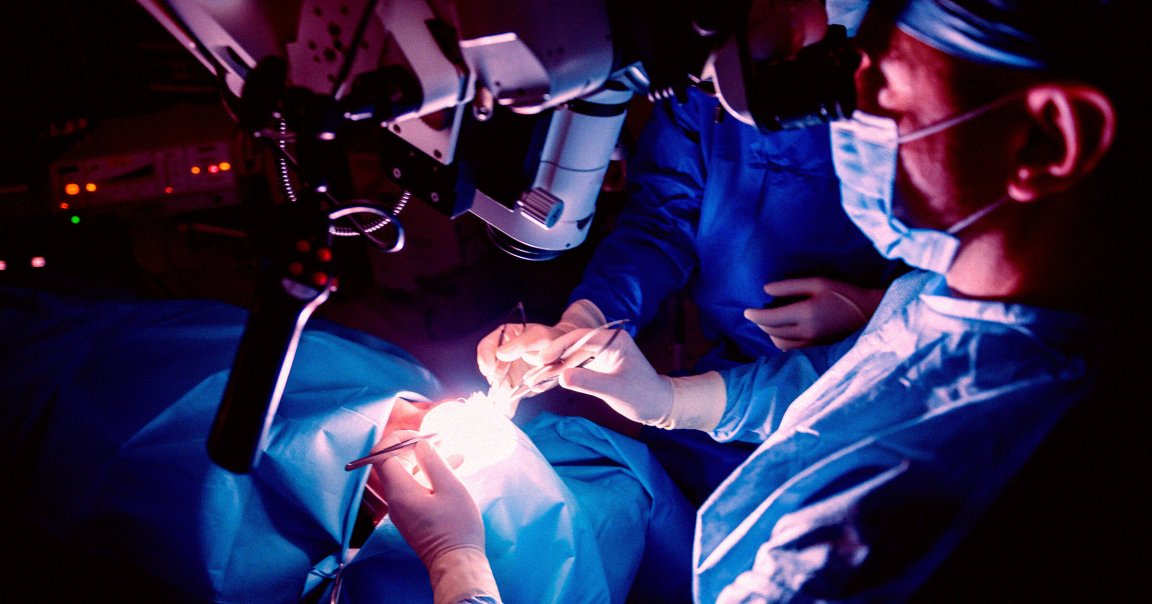
A team of neurosurgeons in London have used AI to help them operate on a man’s brain.
The AI tool analyzed live footage of the operation and flagged key brain structures like nerves and blood vessels as surgeons removed a large tumor on the patient’s pituitary gland, according to The Guardian, ensuring that they didn’t poke around where they shouldn’t be.
The surgery, performed at the National Hospital for Neurology and Neurosurgery in May, saved the eyesight of the patient, 48-year-old Rhys Hibbert. Details of the procedure, though, were kept under wraps until now.
“When I came round… I could see everything in the room clearly,” Hibbert told The Guardian. Before the surgery, he couldn’t walk on his own without glasses or walking sticks.
The pituitary gland is an especially delicate part of the brain to operate on, located right next to the arteries that bring blood to the brain and the optic nerves that control vision. “Going a millimeter wrong can make a critical difference,” health officials said, per the newspaper, possibly leading to blindness, stroke, and death.
Unearthing a tumor there, at the base of the brain hidden from view, posed an even greater challenge. The surgeons would have to cut a precise path to get to the benign growth without damaging the brain.
That’s where the AI tool proved useful. Trained on hundreds of surgical videos of pituitary tumor removals, the AI system “has been exposed to a breadth of surgical examples that would take a surgeon many years to encounter,” Sophia Bano, an associate professor in robotics and AI at University College London and the technical lead for the AI tool, told The Guardian. During its training, researchers manually drew around the vessels and nerves in each video so the AI could get an accurate idea of where they are.
The human doctors remained in control of the entire procedure, but the AI tool played a critical role in guiding their work. Analyzing the procedure through a camera planted in the base of the skull via the nose, it tracked the doctors’ surgical instruments in real time, identified where hidden vessels and nerves were most likely to be, and highlighted safe areas to extract the tumor, according to the BBC, which compared it to facial recognition tech for hidden anatomy.
“From a patient safety perspective, I can see absolutely the benefit. There are no road signs inside our head,” Hibbert told the BBC.
It’s an incredible achievement, though it does raise uncomfortable questions about what happens if the tech goes wrong. The use of AI in medical fields remains a touchy subject, as more doctors rely on AI tools to take clinical notes and look up symptoms.
For surgeries like a pituitary tumor removal, a surgeon typically studies brain scans so they intimately know each patient’s unique anatomy before going in, the BBC noted. Experts worry, though, that doctors may become too dependent on AI tools, especially as a new generation of med students are being raised on using them.
Hibbert knows where he stands.
“It’s given me my life back,” he said of the surgery.
More on neuroscience: We Are Admittedly Creeped Out by These Chunks of Human Brain Matter That Have Lived Longer Than a Toddler
Add Futurism as a preferred source on Google to see more of our reporting.

Frank Landymore
Contributing Writer
I’m a tech and science correspondent for Futurism, where I’m particularly interested in astrophysics, the business and ethics of artificial intelligence and automation, and the environment.


