
Reed Hastings says AI will drive a return to humanities: ‘I’d be doubling down on emotional skills’

By
Reporter
April 27, 2026, 12:55 PM ET
Add us on
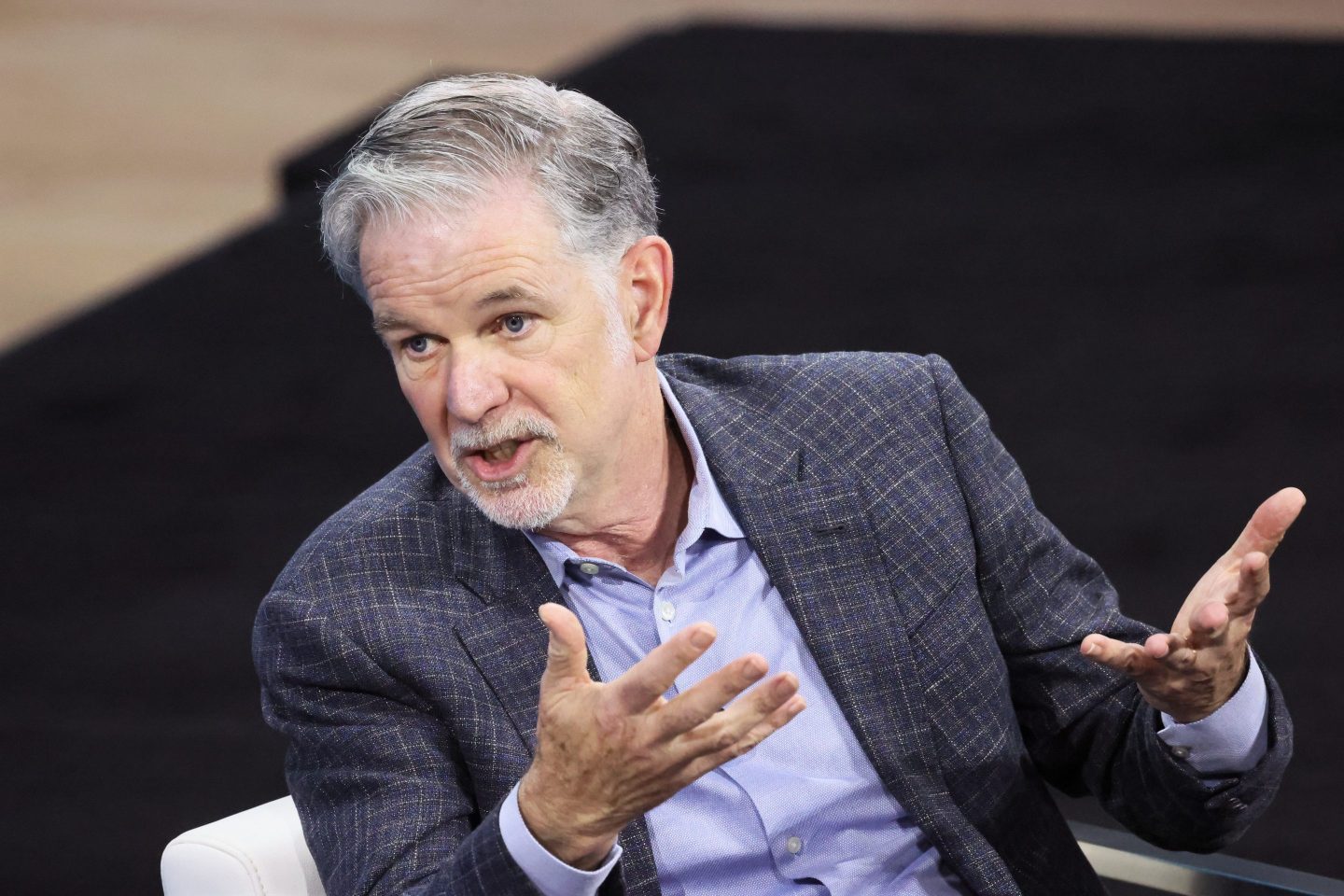
Netflix cofounder Reed Hastings in November 2022.Michael M. Santiago—Getty Images
Reed Hastings, cofounder, former CEO, and now chairman of the board at Netflix, studied AI and computer science back in the 1980s. Decades later, he thinks today’s AI revolution could bring back an emphasis on the humanities as a field of study.
Recommended Video
After graduating with a degree in math from Maine’s Bowdoin College, Hastings pursued a Master of Science degree in computer science and artificial intelligence at Stanford. The earlier AI revolution he was a part of didn’t pan out, but the current AI wave shows signs of completely upheaving the labor force as we know it, and it may even transform education, he said on an episode of the Possible podcast last week.
Hastings chose STEM for his own graduate degree, but he said AI will shift what universities prioritize in the future.
“STEM practically took over Stanford University,” said Hastings. “Now maybe what we’ll see is a rotation, you know, back to the humanities and to understanding [the] combination of history and literature.
“If I had a 3-year-old today, I would be doubling down on the emotional skills,” he added.
Hastings’s comments come as AI has upended the job market for computer science graduates early in their careers. The share of tech job postings open to people with two to four years’ experience dropped to 40% in mid-2025 from 46% in mid-2022, according to data from jobs website Indeed.
Boris Cherny, creator of Anthropic’s Claude Code, predicted in February that the title of “software engineer” may even go extinct by the end of the year as AI tools give all employees the ability to write code.
Hastings, for his part, is skeptical AI will replace human software engineers entirely.
“There’s a substantial chance that while many companies will have reduced software engineering employment, there’ll be many other opportunities for more software,” he said on the podcast.
Still, Hastings has put his own money behind the idea that humanities will matter more in the years ahead. Last year, the Netflix cofounder donated $50 million to his alma mater Bowdoin College to establish the Hastings Initiative for AI and Humanity. The funding will help Bowdoin hire 10 new faculty members, and fund research on AI’s impact on society.

Paid Content
Why America’s growth future depends on energy technology
From Schneider Electric
“Our goal is to prepare the next generation of leaders to engage responsibly with the opportunities and challenges presented by AI,” says Bowdoin’s website for the initiative.
While Hastings foresees sweeping changes in education and work, he is more optimistic than ever about the future and the role that AI will play in improving the world.
“The next 20 years will be super exciting, and I think it will usher in this era of abundance,” he said.
In 2001, Fortune first convened “The Smartest People We Know,” bringing together CEOs and founders, builders and investors, thinkers and doers.
Since then, Fortune Brainstorm Tech has been the place where bold ideas collide.
From June 8–10, we will return to Aspen—where it all began—to mark 25 years of Brainstorm. Register now.
About the Author
By Marco Quiroz-GutierrezReporter


