
-
Archives
- June 2026
- May 2026
- April 2026
- March 2026
- February 2026
- January 2026
- December 2025
- November 2025
- October 2025
- September 2025
- August 2025
- July 2025
- June 2025
- May 2025
- April 2025
- March 2025
- February 2025
- January 2025
- December 2024
- November 2024
- October 2024
- September 2024
- August 2024
- July 2024
- June 2024
- May 2024
- April 2024
- March 2024
- February 2024
- January 2024
- December 2023
- November 2023
- October 2023
- September 2023
- August 2023
- July 2023
- June 2023
- May 2023
- April 2023
- March 2023
- February 2023
- January 2023
- December 2022
- November 2022
- October 2022
- September 2022
- August 2022
- July 2022
- June 2022
- May 2022
- April 2022
- March 2022
- February 2022
- January 2022
- September 2021
- August 2021
- July 2021
- June 2021
- May 2021
- April 2021
- February 2021
- January 2021
- December 2020
- November 2020
- October 2020
- September 2020
- August 2020
- July 2020
- June 2020
- May 2020
- April 2020
- March 2020
- February 2020
- January 2020
- December 2019
- November 2019
- October 2019
- September 2019
- August 2019
- July 2019
- June 2019
- May 2019
- April 2019
- March 2019
- February 2019
- January 2019
- December 2018
- November 2018
- October 2018
- September 2018
- July 2018
- June 2018
- May 2018
- April 2018
- March 2018
- February 2018
- January 2018
- December 2017
- November 2017
- October 2017
- September 2017
- August 2017
- July 2017
- June 2017
- May 2017
- April 2017
- March 2017
- February 2017
- January 2017
- December 2016
- November 2016
- October 2016
- September 2016
- August 2016
- July 2016
- June 2016
- May 2016
- April 2016
- March 2016
- February 2016
- January 2016
- December 2015
- November 2015
- October 2015
- September 2015
- August 2015
- July 2015
- June 2015
- May 2015
- March 2015
- January 2015
-
Meta
Robert Pape: Iran ‘NEW WORLD POWER’, NATO DEAD. Comment: “folie a deux” comes to mind for U.S. President and Israel Prime Minister
Posted in Uncategorized
Leave a comment
You Break it, You Own it … The Pottery Barn rule. Eurasia Group President Ian Bremmer on Trump’s message to ….
Posted in Uncategorized
Leave a comment
Ryanair CEO Michael O’Leary talks about Ireland’s do-nothing Government
Posted in Uncategorized
Leave a comment
BBC Newsnight: “We’re dealing with a President who is a naricissist and a bully … a rebuke of some kind is necessary”. The wisdom of David Dimbleby
Posted in Uncategorized
Leave a comment
StockMarket News: Warren Buffett spent 3 years quietly selling everything while the rest of Wall Street was throwing a party …. 2024 he offloaded $134 billion in stocks. Worth watching especially now. The question is will Mr Buffett re-invest????
Posted in Uncategorized
Leave a comment
Global Fuel Countdown…being prepared. Covid Fear now applies to Oil
Pushing back on globalist control—speech, borders, sovereignty. Founder, Freedom Train International | International Ambassador, Advance UK.
Social Media InfluencerBarnsley, Englandfreedomtraininternational.org
GLOBAL FUEL COUNTDOWN? — THIS NEEDS SERIOUS SCRUTINY  A claim is circulating that JPMorgan has published a timeline for when fuel supplies could run out:
Asia: April 1
Europe: April 10
North America: April 15
Australia: April 20
If true — this would signal an unprecedented global energy crisis.
But here’s the critical point: There is currently no verified evidence that JPMorgan has released an official countdown like this. That doesn’t mean the situation is safe.
Far from it. What we DO know:
• Fuel prices are surging globally
• Shipping routes are under pressure
• Strategic choke points like Hormuz are unstable
• Industries (like fishing and haulage) are already shutting down
This is how real crises unfold:
Not overnight collapse… But mounting pressure → disruption → breakdown
So whether this “countdown” is real or not…
The underlying risk IS. Don’t fall for panic. But don’t ignore the signals either.
Use this moment wisely:
• Keep fuel topped up
• Reduce dependency
• Strengthen resilience
• Prepare for disruption
Because when systems get stressed… They don’t warn you twice. Don’t be scared. Be prepared.
Posted in Uncategorized
Leave a comment
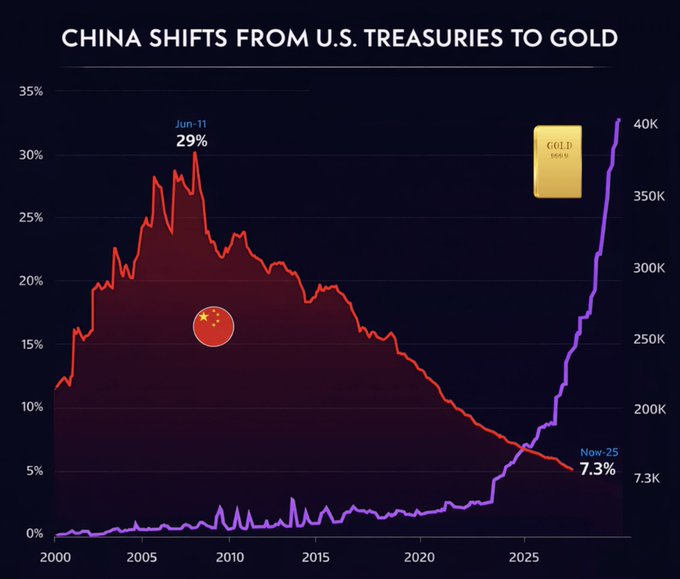
OxNobler on X “SOMETHING REALLY BAD IS HAPPENING IN CHINA RIGHT NOW!! $1.4 TRILLION has just vanished from China’s balance sheet. $650B wiped from FX reserves $750B dumped from U.S. Treasuries.”
0xNobler
@CryptoNobler
DeFi Researcher. My tweets aren’t financial advices. Follow for alpha
SOMETHING REALLY BAD IS HAPPENING IN CHINA RIGHT NOW!! $1.4 TRILLION has just vanished from China’s balance sheet. $650B wiped from FX reserves $750B dumped from U.S. Treasuries.
Meanwhile, their gold holdings are rising every single day. They’re funneling every dollar into gold. That alone tells you everything.
Gold is pumping again and this isn’t just “hype.” It’s a repricing of TRUST. This isn’t “diversification.” THIS IS STRATEGIC.
Let’s break it down simply. Treasuries sit at the foundation of the dollar system. So when a giant like China keeps pulling back, the system must rebalance. And gold doesn’t move like this when things are stable. Gold moves first when TRUST starts cracking. China isn’t speaking. They’re signaling through capital flows. They’re done with paper promises. They’re choosing the one asset with zero counterparty risk.
When the largest players shift like this, others follow. Markets don’t react early. They react AFTER the shift is obvious. Not through headlines. Through FLOWS. I’ve spent 10 years studying macro and called nearly every major top – including the October BTC ATH.
Follow and turn on notifications. I’ll post the warning BEFORE it becomes public news.
·
Posted in Uncategorized
Leave a comment
Axios: Oil’s COVID moment
| Oil’s COVID moment |
 Photo illustration: Brendan Lynch. Photos: Getty Images Photo illustration: Brendan Lynch. Photos: Getty ImagesThe oil shortage triggered by the Iran war will spread globally much like COVID did, Axios’ Emily Peck writes. Natasha Kaneva, head of global commodities research at JPMorgan, said in a note that it’s a slow-motion crisis: “Much like during COVID, the shock unfolds sequentially rather than simultaneously — a rolling supply disruption moving westward, dictated by shipping times and buffered unevenly by regional inventories. “The average gas price in the U.S. is $4.02 today — just a preview of more pain to come. Prices could get high enough to force people and companies to stop using oil — “to get a whole bunch of cars and trucks off the road, ships off the seas, planes out of the sky, et cetera,” economics journalist Peter Coy writes.  Data: AAA. Chart: Sara Wise/Axios Data: AAA. Chart: Sara Wise/Axios Ships carrying oil from the Persian Gulf first reach Asia, then Europe, then the U.S., about 40 days after leaving. Asia is feeling the squeeze of lost supply, but the pain is still muted elsewhere. President Trump is signaling he wants to wrap things up. But he has sent mixed messages — and the U.S. operation may end without unclogging the Strait of Hormuz. (More from Barak Ravid.) The bottom line: Six years after the pandemic, there’s another global crisis brewing on the other side of the world — and once again, that reality hasn’t quite hit home.Go deeper. |
Posted in Uncategorized
Leave a comment
Axios: Trump’s blurry vision of victory
| 1 big thing: Trump’s blurry vision of victory |
 President Trump and First Lady Melania Trump attend last night’s opening of “Chicago” at the Kennedy Center. Photo: Doug Mills/The New York Times President Trump and First Lady Melania Trump attend last night’s opening of “Chicago” at the Kennedy Center. Photo: Doug Mills/The New York TimesOne month in, President Trump’s Iran war has fractured into three competing realities, Axios’ Zachary Basu writes: A military campaign that has largely delivered. A strategic vision that hasn’t. A political and economic problem getting worse by the day. Why it matters: The Trump administration has declared Operation Epic Fury an overwhelming success. But the trajectory of the war — from shifting goalposts to mounting costs — points to a potential stalemate.  Zoom in: By conventional military measures, the U.S. and Israel are dominating Iran at sea, in the air and on land. In its first 29 days, Operation Epic Fury struck 11,000+ targets, flew 11,000+ combat sorties, and damaged or destroyed 150+ Iranian vessels, according to a Pentagon tally. The opening phase of the war decapitated much of Iran’s senior military leadership and damaged its ballistic missile program. But sustaining the military campaign has come at a cost — including at least 13 U.S. deaths, hundreds of injuries, billions of dollars in damaged or destroyed equipment, and about $1 billion a day in estimated costs. Iran’s missiles continue to pummel the region — and U.S. forces haven’t been spared. One day after Defense Secretary Pete Hegseth declared Iran’s military “neutralized,” Iranian missiles struck a base in Saudi Arabia, injuring 29 American soldiers and damaging U.S. refueling and surveillance aircraft. The New York Times reports that many of the 13 U.S. military bases in the region are “all but uninhabitable” due to Iranian strikes. The Pentagon declined to comment on the report, citing operational security.  Data: Axios research. Graphic: Sara Wise/Axios. Photos: Defense Visual Information Distribution ServiceZoom out: The strategic picture is hard to square with the administration’s triumphalism. Data: Axios research. Graphic: Sara Wise/Axios. Photos: Defense Visual Information Distribution ServiceZoom out: The strategic picture is hard to square with the administration’s triumphalism.The decapitation of Iran’s senior leadership, including Supreme Leader Ali Khamenei, hasn’t destabilized the regime, softened its anti-American posture or brought freedom to the Iranian people. The war’s central justification — eliminating Iran’s nuclear threat — remains unresolved: Trump is now weighing a high-risk ground operation to seize Iran’s stockpile of highly enriched uranium. Iran’s stranglehold over the Strait of Hormuz has become the war’s most damaging unintended consequence — triggering a historic energy shock, straining relations with allies and threatening to metastasize into a long-term strategic crisis. A White House official pushed back on the strategic assessment, saying Trump outlined four distinct goals for Operation Epic Fury — destroying Iran’s ballistic missile capacity, annihilating its navy, eliminating terrorist proxies, and guaranteeing Iran never possesses a nuclear weapon — and that “the United States Military is meeting or surpassing all of its benchmarks on these defined objectives.“Share this story … Marc Caputo contributed reporting. |
 canisgallicus