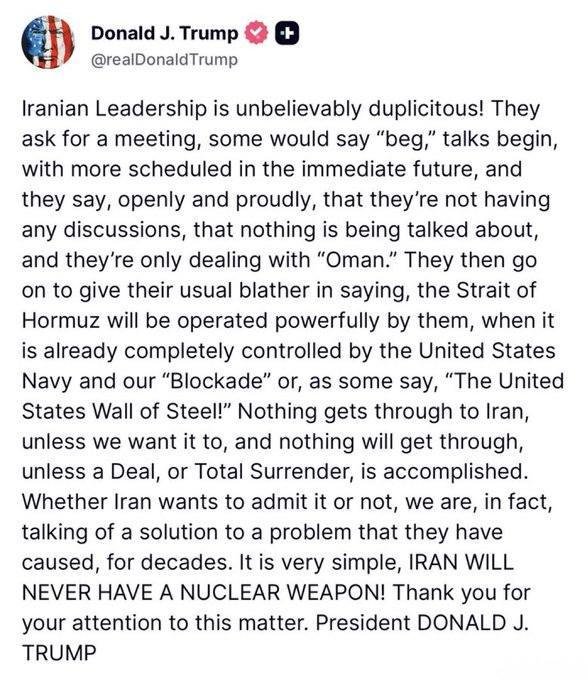
Join us for a live discussion at 3:15 pm CST on the impacts of the conflict, what may happen to existing Iranian nuclear material in the chaos of war, and what diplomatic off-ramps are still available.
The Bulletin’s Alexandra Bell will lead the conversation, joined by Kelsey Davenport, Director for Nonproliferation Policy at the Arms Control Association, and Jeffrey Lewis, Professor and Director of the East Asia Nonproliferation Project at Middlebury Institute of International Studies at Monterrey.
Summary: Can a single concussion from your youth still affect your brain ten or twenty years later? A new study suggests the answer is yes.
Researchers used advanced eye-tracking technology to show that people who suffered concussions more than a decade ago still exhibit significant “neurological “lag” in how their eyes track moving objects. These subtle deficits, invisible to the naked eye or standard clinical exams, indicate that the brain’s “internal map” for movement and timing may never fully reset after a traumatic brain injury (TBI).
Key Facts
The “Lag” Discovery: Participants with a history of concussions showed a delayed reaction in “pursuit eye movements”—the ability to smoothly follow a moving target.
Decades of Impact: The neurological deficits were present in individuals whose last head injury occurred over 10 to 15 years ago, suggesting that some post-concussion changes are permanent.
Beyond Standard Tests: These patients often passed traditional cognitive and physical exams, but the high-speed eye-tracking revealed “micro-stutters” in brain-to-eye communication.
Brainstem & Cerebellum: The researchers believe the trauma affects long-term signaling in the brainstem and cerebellum, regions responsible for fine motor control and predictive timing.
Predictive Tool:This study positions eye-tracking as a powerful, non-invasive biomarker for “hidden” brain trauma and could help identify those at higher risk for neurodegenerative diseases later in life.
Source: University of Colorado
A study from researchers at the CU Anschutz Marcus Institute for Brain Health suggests that veterans with concussions may continue to show subtle but measurable brain function differences more than a decade after their injury.
Researchers found these differences can be detected through specialized eye movement testing.
New research shows that eye-tracking technology can uncover subtle, persistent neurological deficits in individuals decades after a concussion. Credit: Neuroscience News
The findings were recently published in the Journal of Neuro-Ophthalmology.
Mild traumatic brain injuries are common among military service members and occur in athletes and civilians through sports impacts, car accidents and falls. While most individuals recover within weeks or months, the new research indicates that some may experience lingering changes in attention, processing speed and impulse control long after symptoms appear to resolve.
Eye Movements Reveal Subtle Brain Changes
“The eyes are directly connected to brain networks that control attention, information processing and decision-making,” said the study’s lead investigator Jeffrey Hebert, PhD, PT, associate professor at the CU Anschutz School of Medicine and director of research for the CU Anschutz Marcus Institute for Brain Health.
“By studying how someone’s eyes move during a cognitively demanding task, we can detect subtle brain changes that might not appear on a standard bedside exam or brain scan.”
The study evaluated 78 military veterans, including 38 with a history of mild traumatic brain injury and 40 without. Participants completed a series of eye movement tasks and cognitive tests designed to measure executive function of attention, processing speed and self-control.
Researchers found that veterans with prior concussions were more likely to demonstrate slower and less accurate eye movements along with reduced performance on certain attention-based tasks. Some of these differences were still measurable more than 10 years after the original injury.
Hebert said eye movements rely on complex networks across multiple regions of the brain. Tasks that require individuals to quickly look away from a visual target and tasks that require rapid visual recognition and verbalization of a viewed object test not only visual function but also cognitive control.
This includes the ability to focus, suppress impulses and respond quickly and accurately. Because these processes depend on widespread neural connections, several mild injuries may leave lasting but difficult to detect effects.
“Even when someone feels recovered, their brain may still be working differently behind the scenes, especially during visually demanding tasks and in busy environments” Hebert said. “Objective eye movement testing gives us a measurable way to assess these often covert problems.”
Implications for Concussion Care
The findings could have important implications for long term concussion care.
“Standard imaging tools such as MRI scans often appear normal after mild brain injury, making persistent symptoms difficult to verify objectively,” Hebert said. “Cognitively challenging eye movement assessments may provide clinicians with an additional tool to better understand ongoing cognitive concerns and more precisely tailor rehabilitation strategies.
Although the study focused on military veterans, the results may apply more broadly to athletes, first responders and civilians who have experienced concussions.
The team emphasizes that most individuals recover well from mild traumatic brain injury. However, identifying those who continue to experience subtle effects could improve follow up care, long term monitoring and treatment planning optimizing healthier brain adaptation.
Future studies will explore whether incorporating cognitively challenging eye movement testing into routine concussion evaluations could help clinicians better identify traumatic brain injury, track recovery and guide treatment decisions.
Funding: The research was funded by the Congressionally Directed Medical Research Programs, U.S. Army Medical Research Acquisition Activity, Department of Defense, Vision Research Program Award.
Key Questions Answered:
Q: I had a concussion 10 years ago but I feel fine. Should I be worried?
A: Not necessarily. The “lag” found in this study is often imperceptible in daily life because the brain is incredibly good at compensating. However, it shows that the injury left a permanent “fingerprint” on your neural wiring. It’s a reminder to be extra protective of your head health as you age.
Q: Why use eye tests to check the brain?
A: Tracking a moving object is one of the most complex tasks the brain performs. it requires perfect synchronization between your vision, your balance (vestibular system), and your motor control. If there is a “hitch” in the brain’s wiring anywhere, an eye test will catch it before almost any other exam.
Q: Could this lead to a better way to diagnose concussions?
A: Absolutely. Current “sideline” tests are often subjective. High-speed eye-tracking provides objective, mathematical data. If we know your “baseline” eye speed, we can tell instantly if a new hit has caused a disruption in your neural pathways.
Editorial Notes:
This article was edited by a Neuroscience News editor.
Journal paper reviewed in full.
Additional context added by our staff.
About this eye tracking and TBI research news
Author:Laura Kelley Source: University of Colorado Contact: Laura Kelley – University of Colorado Image: The image is credited to Neuroscience News
Audiobooks don’t really count as reading? Think again.
Education scholars say rigor, learning same as paper, stigma an unnecessary hurdle
Liz Mineo
Harvard Staff Writer
March 2, 2026 4 min read
More than 40 percent of Americans think that listening to audiobooks is less rigorous and really doesn’t count as reading.
Cognitive neuroscientist Nadine Gaab disagrees, and she and other education scholars say the view is counterproductive when it comes to learning and development.
Not only does the brain operate the same when reading print books or listening to audiobooks, Gaab said, but the learning process is also the same.
“The theory of learning styles has been debunked,” said Gaab, the Silvana and Chris Pascucci Professor in Learning Differences at Harvard Graduate School of Education. “It’s not the case that someone learns better by listening or by reading. You may have a preference, but learning is sort of the same regardless of the modality. ”
Reading is a complex skill that involves the early development of brain regions that support sound and language processing, the essential milestone skills for learning to read, said Gaab. The neural networks that process written and oral language are deeply intertwined and largely overlap when reading print books or listening to audiobooks.
“There isn’t much of a difference between the brain network for reading and the brain network for language comprehension,” said Gaab. “The brain area we call the ‘letter box,’ which processes print, is not as engaged when you listen, but it has been shown that when some people listen to words, they visualize them, so the letter box gets activated as well.”
“There isn’t much of a difference between the brain network for reading and the brain network for language comprehension.”Nadine Gaab
Listening to audiobooks meets derision in some circles, where it may be seen as “cheating,” but Gaab rejects that notion. Both print books and audiobooks offer advantages to readers, she said. While readers can review and go back to print books easily, audiobooks offer voices and sounds that make the story compelling and attractive.
Librarians wholeheartedly agree.
Readers should reflect on their choices by focusing on the purpose of their reading, said Alessandra Seiter, community engagement librarian at the Harvard Kennedy School. Some might favor print text because it helps them absorb information better, and others might prefer audiobooks because they allow them to multitask and save time.
“There is nothing wrong with audiobooks,” Seiter said. “There is no purity about reading words on a page.”
There are clear practical implications, said Alex Hodges, director of the Monroe C. Gutman Library at the Graduate School of Education. Print texts offer readers the chance to highlight passages or write notes that might help them retain information better, Hodges said. Audiobooks, on the other hand, may impart a more relaxed experience.
Laura Sheriff, librarian for the Cabot Science, Fine Arts, and Lamont libraries, would like to remove the stigma around audiobooks. In her former life working at a bookstore, she saw kids starting out with “Harry Potter” audiobooks and coming back to buy the print books. “It was their gateway to reading,” she said.
Regardless of their form, either print or audio, books introduce readers to new knowledge, imagined worlds, and complex language, said educational linguist Paola Uccelli, John H. and Elisabeth A. Hobbs Professor of Cognition and Education at the Graduate School of Education.
“In both formats, readers encounter not only new information but also text-specific linguistic patterns — and new possibilities for making meaning through language — well beyond what they are likely to experience in casual conversations,” said Uccelli.
“Audiobooks, particularly when students find them engaging and have opportunities to participate in book discussions, can be a powerful tool for helping developing readers expand not only their background knowledge but language resources essential for making meaning from text.”
Gaab’s lab examines how people learn from infancy through adulthood, with an emphasis on language and reading. She often recommends that parents of children with reading difficulties try audiobooks, along with print books, and reminds them that “the most important thing is that children are motivated to learn and excited to read.”
And adults, she said, should be less critical of audiobooks because that’s essentially how we all started.
“If you’re a good reader as an adult, it does not matter whether you read it or you listen to an audiobook,” said Gaab. “We all start as listeners to audiobooks. As children, we were sitting in our parents’ laps while they read books to us. So, we all have been audiobook lovers at some point in our lives.”
Can’t-miss innovations from the bleeding edge of science and tech Email address Sign Up
The ongoing attacks on the Islamic Republic of Iran, launched by a joint coalition of US and Israeli military forces, have so far claimed 555 Iranian lives, including 165 deaths from an attack on an elementary school in Southern Iran.
As the Wall Street Journal reportedas the attacks unfolded the military strike force had a hand in selecting its targets from Anthropic’s Claude chatbot.
According to the paper, Anthropic’s large language model, Claude, is the key “AI tool” used by US Central Command in the Middle East. Its tasks include assessing intelligence, simulated war games, and even identifying military targets — in short, helping military leaders plan attacks that have already claimed hundreds of lives.
Anthropic’s role in the devastating attacks might come as news for anyone who thought the company’s ethical redlines precluded it from any military work whatsoever. The company and its CEO, Dario Amodei, have been roiled in a messy conflict with the Trump administration over two particular moral boundaries: the use of Claude for surveillance of US citizens, and for fully-autonomous, lethal weaponry.
It appears that using Claude to select targets, though, isn’t brushing up against the bot’s ethical guardrails.
That’s striking, because Anthropic has spent the latter part of February embroiled in conflictwith the Pentagon over the use of Claude.
Last week, the Pentagon — which currently uses Claude throughout its classified systems — set a deadline for Anthropic to drop those dual redlines of surveillance and fully autonomous weaponry. Anthropic let that deadline go by without caving, establishing what many understood as a principled stance against the Trump administration’s militarism.
Yet as Pulitzer prize winning national security journalist Spencer Ackerman observed, it’s important to note what Anthropic’s ethical lines ignored when it inked its deal with the military in the first place.
“Amodei, it is highly conspicuous, doesn’t register building a surveillance panopticon of foreigners as a problem,” Ackerman wrote. “The time to worry about everything ostensibly concerning Amodei was before signing the contract that Amodei didn’t wish to abandon. America is in such steep decline that we don’t even make Oppenheimers like we used to.”
“When you take Doctor Doom’s money to provide him a lathe to construct components for anthropomorphic robots,” Ackerman scathed, “do you not understand that he is going to build Doombots?”
I’m a tech and transit correspondent for Futurism, where my beat includes transportation, infrastructure, and the role of emerging technologies in governance, surveillance, and labor.
View in browser PRESENTED BY META Axios AM By Mike Allen · Mar 03, 2026 Good Tuesday morning. Smart Brevity™ count: 1,979 words … 7½ mins. Thanks to Noah Bressner for orchestrating. Edited by Andrew Pantazi and Bill Kole.
Situational awareness: The U.S. Embassy in Riyadh was attacked with two drones — resulting in a limited fire and minor material damage to the building, Axios’ Barak Ravid writes. The State Departmentcalled on Americans to “DEPART NOW” from Israel, Bahrain, Egypt, Iraq, UAE, Saudi Arabia, Kuwait, Lebanon, Qatar, Oman, Syria, Yemen and Jordan “due to serious safety risks.” 1 big thing: MAGA war revolt
Secretary of State Marco Rubio speaks to the media on Capitol Hill yesterday before briefing congressional leaders on the war against Iran. Photo: Ken Cedeno/Reuters
MAGA’s ascendant “America First” wing erupted after Secretary of State Marco Rubio effectively blamed Israel for drawing the U.S. into war with Iran, Axios’ Marc Caputo, Barak Ravid, Alex Isenstadt and Zachary Basu write.
Why it matters: Rubio’s remarks were the first time a Trump official had so explicitly acknowledged Israel as a driving force behind the war — landing at a moment when Americans’ public support for Israel has hit historic lows.“We knew that there was going to be an Israeli action” against Iran, Rubio told reporters on Capitol Hill yesterday. “We knew that that would precipitate an attack against American forces” by the Iranian regime.“And we knew that if we didn’t preemptively go after them before they launched those attacks, we would suffer higher casualties … And then we would all be here answering questions about why we knew that and didn’t act,” Rubio continued.
Rubio added later: “Obviously, we were aware of Israeli intentions and understood what that would mean for us, and we had to be prepared to act as a result of it. But this had to happen no matter what.
“The widely repeated translation: The U.S. couldn’t stop its ally — a far smaller nation that America arms, funds and protects — from attacking Iran on Saturday. So the U.S. had to strike Iran, too.
Not quite, U.S. officials said later. Regardless of Israel, they said, Trump ordered the strikes because he felt Iran was negotiating a nuclear deal in bad faith, and the U.S. needed to destroy the country’s offensive military infrastructure.
“This operation needed to happen,” Rubio told reporters, because Iran was developing too many missiles too quickly and was rebuilding its nuclear capabilities.
The big picture: Rubio’s remarks were widely interpreted as making the U.S. look subordinate to Israel’s interests.And they inflamed already angry MAGA elites who had spent the day railing against President Trump’s decision to go to war.
On their podcasts and social media, frustrated pro-Trump influencers argued the president had become beholden to the military hawks and neocons he explicitly ran against.
Anti-Israel voices on the right — as well as openly antisemitic influencers who’ve clawed toward the mainstream in recent years — claimed vindication.
Between the lines: Even some traditional Trump allies think the White House’s messaging has been muddled. The Daily Wire’s Matt Walsh wrote on X as MAGA fractured over Rubio’s remarks: “So he’s flat out telling us that we’re in a war with Iran because Israel forced our hand. This is basically the worst possible thing he could have said.“But Philip Klein, editor of National Review Online, wrote that those who think Rubio “said that Netanyahu forced the U.S. into war … are conflating the question ‘Why?’ with the question of ‘Why now?'”Screenshot: Fox News
Reality check: The picture critics are painting — of a U.S. reluctantly pulled into war by a smaller ally — obscures deep coordination between the two countries in the weeks before the strike.
Israeli Prime Minister Benjamin Netanyahu had been urging Trump to strike Iran since December. But Israeli officials say he wouldn’t have moved without Trump’s explicit approval. It’s highly unlikely Netanyahu would’ve struck Iran without Trump’s green light, Israeli officials added. If Trump had preferred to keep negotiating, the strike would have been postponed. Over the past year, Trump has repeatedly reined in Netanyahu from aggressive military operations, including his bombing campaign last year in Syria.
And Trump essentially forced the Israeli prime minister to accept a Gaza peace plan that resulted in Hamas releasing its remaining hostages and the remains of others. Netanyahu pushed back last night, telling Fox News’ Sean Hannity that Trump “can’t be dragged” into anything — and that the president acts on his own judgment. A plume of smoke rises after a strike in Tehran yesterday. Photo: Mohsen Ganji/APMike
Cernovich, a prominent pro-Trump social media figure, said on X: “Rubio’s comments are a record scratch moment. He said what most guessed was the case. That he said [this] out loud … is a sea change in foreign policy. There will be massive calls for a walk back. “Megyn Kellysaid on her show that she has “serious doubts about what we’re doing. “White House Press Secretary Karoline Leavitt said that “President Trump’s courageous decision to launch Operation Epic Fury is grounded in a truth that presidents for nearly 50 years have been talking about, but no president had the courage to confront: Iran poses a direct and imminent threat to the United States of America and our troops in the Middle East.”Read Rubio’s full remarks … Share this story.
The Rundown: Anthropic launched a new tool that lets users port their saved preferences and context from other AI providers with a single copy-paste, coming during a surge in switches and new sign-ups as the company battles the Pentagon.
The details:
Users copy a provided prompt into their current chatbot, paste the output into Claude’s memory, and the switch kicks in within 24 hours.The tool pulls saved instructions, personal details, project context, and behavioral preferences from ChatGPT, Gemini, or Copilot in a single upload. Anthropic also opened Claude’s memory feature to free users for the first time, letting everyone build persistent context across conversations. Claude Code also got a new auto-memory upgrade, now able to save project context, debugging patterns, and workflow habits on its own across sessions.
Why it matters: Memory upgrades are big news for getting the most out of any AI platform, but the timing isn’t subtle, given the current wave of consumer support for the company in the wake of the Pentagon’s ban. Giving all those new users an easy way to bring context over is a smart move for turning a viral moment into lasting retention.
Republish our articles for free, online or in print, under Creative Commons licence.Republish this article
Share article
Print article
One year into U.S. President Donald Trump’s second term, questions about his health and competence are as pervasive as the gilt sprawling through the Oval Office.
These questions grew even louder following his rambling speech this week at Davos, where he repeatedly referred to Greenland as Iceland, falsely claimed the United States gave the island back to Denmark during the Second World War and boasted that only recently, NATO leaders had been lauding his leadership (“They called me ‘daddy,’ right?”).
Do swollen ankles and whopping hand bruises signal other serious problems? Do other Davos-like distortions and ramblings — plus a tendency to fall asleep during meetings — reveal mental decline even more startling than Joe Biden’s in the final couple of years of his presidency?
This is not the first time in White House history that American citizens have had concerns about the health of their president — nor the first time that historians like me have raised questions.
The experiences of Trump’s predecessors remind us of the dangers inherent in the inevitable human frailty of the very powerful.
U.S. President Donald Trump closes his eyes as Secretary of State Marco Rubio speaks during a cabinet meeting at the White House in December 2025. (AP Photo/Julia Demaree Nikhinson)
In other cases, the effect of physical ailments on competence was less clear — and therefore debatable. Franklin D. Roosevelt’s heart problems during the Second World War grew serious enough to contribute to his April 1945 death. Did they also compromise his mental capacities during the controversial Yalta Conference?
President John F. Kennedy answers a question during his ninth presidential news conference in Washington, D.C., in April 1961. (AP Photo)
Mental health concerns
There have also been debates about the possible competence consequences of the behavioural tendencies and mental health conditions of several American presidents:
Questions and concerns about Trump’s physical and mental health, then, aren’t unique — even if the causes for concern are far more numerous than they were for previous presidents.
U.S. President Donald Trump in Davos, Switzerland, on Jan. 22, 2026. (AP Photo/Markus Schreiber)
Numbers matter here. Out of a maximum 30 points, scores below 25 suggest mild to severe cognitive issues.
Of equal importance, the MoCA provides no insight into markers of mental competence, like reasoning and problem-solving.Well-established test batteries cover such ground (the Wechsler Adult Intelligence Scale is widely used), but Trump has not likely worked through any. (Neither, to be sure, have any predecessors — though none have raised the concerns so evident in 2026.)
Unofficial diagnoses of personality characteristics also fuel debate about Trump’s competence and mental health. The scale of the president’s ego is a prime example of concern.
Psychological issues?
On one hand, in the absence of intensive in-person assessment, psychiatrists are understandably reluctant to apply the label of “narcissistic personality disorder” (NPD) as defined by the American Psychiatric Association’s Diagnostic and Statistical Manual of Mental Disorders (DSM). On the other hand, many observers are also understandably struck by how Trump’s behaviour matches the DSM’s checklist of symptoms for the disorder.
More serious are his endless and false claims that he won the 2020 presidential election, that he has the right to torch constitutional norms like “due process” that are enabling ICE abuses in Minneapolis and elsewhere, and that he can disregard the need for congressional approval on policies like reducing cancer research and other health programs.
Psychiatrists also associate NPD with a sense of open-ended entitlement. Comic examples emerge: rebranding the (now) “Donald J. Trump and John F. Kennedy Center,” his lack of embarrassment in relishing the absurd FIFA Peace Prize or María Corina Machado’s surrender of her Nobel Peace Prize.
Trump’s willingness to trample upon rights within the U.S. and his apparent eagerness to disrupt and dismantle the building blocks of the post-Second World War international order are also possible signs of psychological problems.
The Trump family’s World Liberty Financial cryptocurrency enterprise “earned” more than $1 billion in 2025, after all.
Against the backdrop of the looming mid-term elections, Trump’s ever-compounding ego and appetites remain of burning concern — along with his overall physical health and mental competence. Other presidents faced similar questions even without the current storm of scandals and extremes.
Will Trump relish the distinction of leaving his predecessors in the dust on this front too?