Spectrum News: RFK Jr. announces mental health and addiction ini­tiative focused on reducing costs, boosting in­no­vation. Comment: Mental Health and addiction Ireland need to engage with a parallel. People were promised primary health care services and yet are left adrift leading to homelessness, crime and then there is the issue of familicide.

RFK Jr. Action for Progress

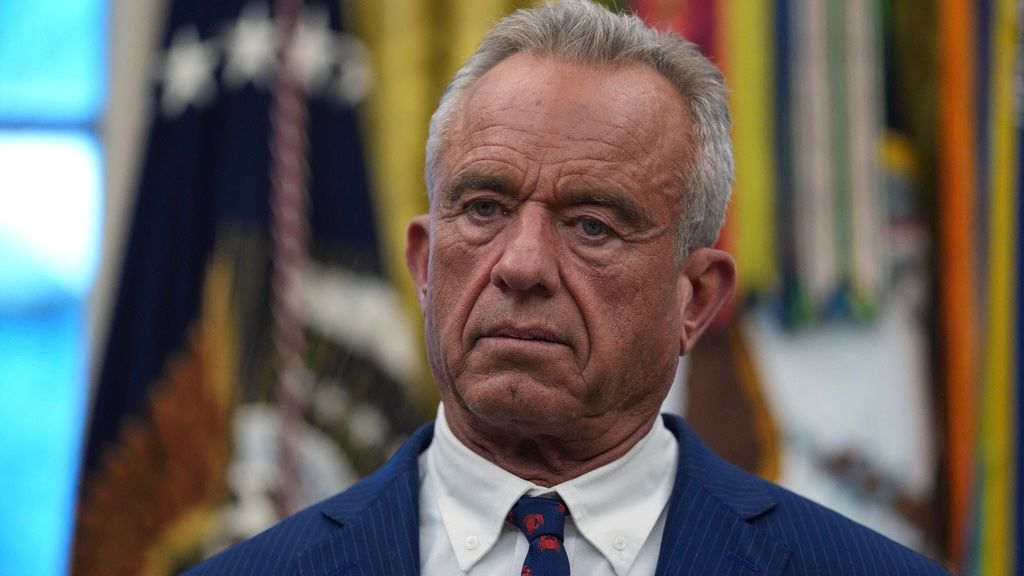
Health and Human Services Secretary Robert F. Kennedy Jr. listens as President Donald Trump speaks at an event on addiction recovery in the Oval Office of the White House, Thursday, Jan. 29, 2026, in Washington. (AP Photo/Allison Robbert)

HEALTH

RFK Jr. announces mental health and addiction ini­tiative focused on reducing costs, boosting in­no­vation

BY Susan Carpenter Washington

PUBLISHED 4:20 PM ET Feb. 02, 2026

WASHINGTON — Health and Human Services Secretary Robert F. Kennedy Jr. joined forces with his cousin and former Democratic congressman Patrick Kennedy on Monday to announce a new addiction and mental health care initiative.

Action for Progress seeks to advance the executive order President Donald Trump signed last week to coordinate a federal response to treat addictions like other chronic diseases.


What You Need To Know

Health and Human Services Secretary Robert F. Kennedy, Jr. joined forces with his cousin and former Democratic Congressman Patrick Kennedy on Monday to announce a new addiction and mental health care initiative
Action for Progress seeks to advance the Great American Recovery Initiative executive order President Donald Trump signed last week to coordinate a federal response to treat addictions like other chronic diseases
On Monday, HHS announced a $100 million Safety Through Recovery, Engagement and Evidence-based Treatment and Supports, or STREETS, program to “fund targeted outreach, psychiatric care, medical stabilization and crisis intervention, while connecting Americans experiencing homelessness and addiction to stable housing with a clear focus on long-term recovery and independence,” according to an agency statement
About 46.3 million people in the United States have a substance use disorder, according to the National Institute on Drugs and Addiction. Of those, 6.3% received treatment in 2021

“We in this country have an acute care system that continues to treat people but never supports them in their longer-term recovery,” Patrick Kennedy said at a forum to prevent substance use in Washington, D.C., where he was joined by Robert F. Kennedy Jr., Centers for Medicare & Medicaid Services Administrator Dr. Mehmet Oz and leaders of various medical groups.

Both Kennedys are former addicts who successfully recovered and later went into politics. The health secretary was addicted to heroin for 14 years, starting as a teenager, and has been clean for 43 years, he said Monday. Patrick Kennedy, son of the late Sen. Ted Kennedy, has said he was addicted to alcohol and prescription painkillers, including while he served in Congress.

“We never take a holistic approach, and furthermore, we never connect all the different government agencies that touch someone with these illnesses,” Patrick Kennedy said. “We relegate them to one system, and that’s the health care system. What we’ve never done as a country is think about the true cost of these illnesses across the government. We only look at the cost to the medical spend alone.”

Action for Progress is an attempt to address the billions of dollars Medicaid spends annually on mental health care and addiction treatment with new payment structures to reduce costs, technology innovations to improve care, efforts to grow the caregiver workforce and interagency cooperation.

Patrick Kennedy said the goal is to align payments for treatment with real-world outcomes. He criticized the current system as paying for care without checking to see how addicts and individuals with mental health issues are doing with stable housing, employment and community connections in their actual lives.

Drug addicts and alcoholics aren’t just “in the emergency room all the time,” the health secretary said. “They’re also imposing costs on our justice system. They’re imposing costs on our foster care system. They overutilize every aspect of the government. You get them into treatment, and that stops.”

Robert F. Kennedy Jr. said he supports outcome-directed strategies and coordination between housing, law enforcement, health care and mental health care systems.

Over the next three years, he said, the HHS needs to “switch the model” at the Center for Medicare & Medicaid, the CMS Innovation Center, the Health Resources and Services Administration, and Substance Abuse and Mental Health Services — all agencies it operates — to coordinate its response “so that somebody oversees that addict. Somebody is accountable as he moves through the system.”

Robert F. Kennedy Jr. said providing a single payment to that accountable entity for three years to make sure the addict does not relapse will bring down the cost of care.

The health secretary praised Trump’s Great American Recovery Initiative executive order, which said it “will drive a new national response to the disease of addiction that will create stronger coordination across government, the healthcare sector, faith communities, and the private sector in order to save lives, restore families [and] strengthen our communities.”

On Monday, HHS announced a $100 million investment to further the Great American Recovery Initiative’s goals. The Safety Through Recovery, Engagement and Evidence-based Treatment and Supports, or STREETS, program will “fund targeted outreach, psychiatric care, medical stabilization and crisis intervention, while connecting Americans experiencing homelessness and addiction to stable housing with a clear focus on long-term recovery and independence,” according to an HHS statement.

HHS also announced a $10 million grant program to support adults with serious mental illness who are in civil court-ordered, community-based outpatient mental health treatment programs.

The new initiative comes less than three weeks after the Department of Health and Human Services abruptly cut $2 billion for mental health and addiction programs, saying the services did not align with the agency’s priorities of supporting “innovative programs and interventions that address the rising rates of mental illness and substance abuse conditions, overdose, and suicide.”

One day after funding termination notices were sent to over 2,000 programs across the country, the HHS restored the money.

About 46.3 million people in the United States have a substance use disorder, according to the National Institute on Drugs and Addiction. Of those, 6.3% received treatment in 2021.

About 1 in 5 U.S. adults experienced mental illness in 2024, according to the National Alliance on Mental Illness. The group is one of several medical organizations involved with Action for Progress, including the American Academy of Family Physicians, the Association for Behavioral Health and Wellness and the American Psychological Association.

Posted in Uncategorized | Tagged , , , , | Leave a comment

“Nuke the Rehab Industrial Complex” on the cards in the U.S. Watch this space. NGO’s will be next on the list

Posted in Uncategorized | Leave a comment

Futurism: New Study Examines How Often AI Psychosis Actually Happens, and the Results Are Not Good

New Study Examines How Often AI Psychosis Actually Happens, and the Results Are Not Good

Yikes.

By Victor Tangermann

Published Feb 1, 2026 12:45 PM EST

Researchers at Anthropic found that issues of "user disempowerement" among AI users are far too common, a growing trend.
Getty Images

We’ve seen plenty of evidence suggesting that prolonged use of popular AI chatbots like ChatGPT can coax some users into spirals of paranoid and delusional behavior.

The phenomenon, dubbed “AI psychosis,” is a very real problem, with researchers warning of a huge wave of severe mental health crises brought on by the tech. In extreme cases, especially involving people with pre-existing conditions, the breaks with reality have even been linked suicides and murder.

Now, thanks to a yet-to-be-peer-reviewed paper published by researchers at Anthropic and the University of Toronto, we’re beginning to grasp just how widespread the issue really is.

The researchers set out to quantify patterns of what they called “user disempowerment” in “real-world [large language model] usage” — including what they call “reality distortion,” “belief distortion,” and “action distortion” to denote a range of situations in which AI twists users’ sense of reality, beliefs, or pushes them into taking actions.

The results tell a damning story. The researchers found that one in 1,300 conversations out of almost 1.5 million analyzed chats with Anthropic’s Claude led to reality distortion, and one in 6,000 conversations led to action distortion.

To come to their conclusion, the researchers ran 1.5 million Claude conversations through an analysis tool called Clio to identify instances of “disempowerment.”

On the face, that may not sound like a huge proportion given the scale of the much larger dataset — but in absolute numbers, the research highlights a phenomenon that’s affecting huge numbers of people.

“We find the rates of severe disempowerment potential are relatively low,” the researchers concluded. “For instance, severe reality distortion potential, the most common severe-level primitive, occurs in fewer than one in every thousand conversations.”

“Nevertheless, given the scale of AI usage, even these low rates translate to meaningful absolute numbers,” they added. “Our findings highlight the need for AI systems designed to robustly support human autonomy and flourishing.”

Worse yet, they found evidence that the prevalence of moderate or severe disempowerment increased between late 2024 and late 2025, indicating that the problem is growing as AI use spreads.

“As exposure grows, users might become more comfortable discussing vulnerable topics or seeking advice,” the researchers wrote in the blog post.

Additionally, the team found that user feedback — in the form of an optional thumbs up or down button at the end of a given conversation with Claude — indicated that users “rate potentially disempowering interactions more favorably,” according to an accompanying blog post on Anthropic’s website.

In other words, users are more likely to come away satisfied when their reality or beliefs are being distorted, highlighting the role of sycophancy, or the strong tendency of AI chatbots to validate a user’s feelings and beliefs.

Plenty of fundamental questions remain. The researchers were upfront about admitting that they “can’t pinpoint why” the prevalence of moderate or severe disempowerment potential is growing. Their dataset is also limited to Claude consumer traffic, “which limits generalizability.” We also don’t know how many of these identified cases led to real-world harm, as the research only focused on “disempowerment potential” and not “confirmed harm.”

The team called for improved “user education” to make sure people aren’t giving up their full judgment to AI as “model-side interventions are unlikely to fully address the problem.”

Nonetheless, the researchers say the research is only a “first step” to learn how “AI might undermine human agency.”

“We can only address these patterns if we can measure them,” they argued.

More on psychosis: OnlyFans Rival Seemingly Succumbs to AI Psychosis, Which We Dare You to Try Explain to Your Parents

Victor Tangermann

Senior Editor

I’m a senior editor at Futurism, where I edit and write about NASA and the private space sector, as well as topics ranging from SETI and artificial intelligence to tech and medical policy.

Posted in Uncategorized | Tagged , , , , | Leave a comment

XAI SpaceX acquires xAI in $1.25 Trillion mega-merger

XAI🚀 SpaceX acquires xAI in $1.25T mega-mergerImage source: Lovart / The RundownThe Rundown: 


Elon Musk just announced the merger of his AI startup xAI with SpaceX, forming what’s now the highest-valued private company on the planet at a reported $1.25T — combining his rockets, Grok, and the X platform all under one entity.

The details: xAI will operate as a division within SpaceX, with Musk pitching a vision of launching AI data centers into orbit to overcome Earth’s energy constraints.The merger comes ahead of an anticipated SpaceX IPO later this year, expected to push the company’s valuation to $1.25T. Musk estimated that space-based AI compute will be cheaper than traditional data centers within 2-3 years, powered by near-constant solar energy.

He also said space-based data centers will “enable self-growing bases on the Moon, an entire civilization on Mars… and expansion to the Universe.

Why it matters: Elon’s tech empire is consolidating fast, calling this merger “the most ambitious, vertically-integrated innovation engine on (and off) Earth.” Data centers in space may sound wild, but Musk isn’t alone in eyeing that solution — and with SpaceX now in the mix, nobody is better positioned to own that opportunity.
Posted in Uncategorized | Leave a comment

The Rundown AI: AI catches 27% more aggressive cancers. As a breast cancer survivor who attended BreastCheck, free service, there is even more progress. Now 7 years cancer free

 AI catches 27% more aggressive breast cancers
Image source: Lovart / The Rundown
The Rundown: Swedish researchers just published results from the largest-scale trial of AI-powered breast cancer screening, finding the technology helps radiologists spot a higher percentage of tumors while cutting radiologist workload nearly in half.
The details:
The two-year study tracked over 100K women to see if AI could catch cancers that traditional screening misses between appointments.The AI analyzed mammograms and flagged high-risk cases for radiologists, boosting the detection rate from 74% to 81% without increasing false positives.Women in the AI group saw 27% fewer aggressive tumor types and 21% fewer large tumors compared to standard screening alone.The system also cut radiologist workload by 44% by handling initial screening, sorting, and freeing doctors to focus on the cases that need the most attention.
Why it matters: Between drug discovery, tumor detection, treatment planning, and more, AI is quickly becoming one of the most impactful tools in the cancer fight. With over 2M breast cancer diagnoses each year, scaling this kind of early detection via AI could be life-changing for women across the globe.
Posted in Uncategorized | Leave a comment

Tapping in on MAHA – Making American Healthy Again

ⁿᵉʷˢ Robert F. Kennedy Jr.

@RobertKennedyJc

Commentary account

Let’s talk about coffee! Studies link regular coffee drinkers to lower rates of diabetes, heart disease, & neurodegenerative decline. Choose organic, glyphosate-free, mycotoxin-tested beans. Skip artificial sweeteners & creamers loaded with seed oils! Coffee anyone? MAHA

Posted in Uncategorized | Leave a comment

Batshit Bonkers Britain Katie Hopkins

Posted in Uncategorized | Leave a comment

Declan Ganley on X highlights Steven_Swinford: Be shocked …

Steven Swinford

@Steven_Swinford

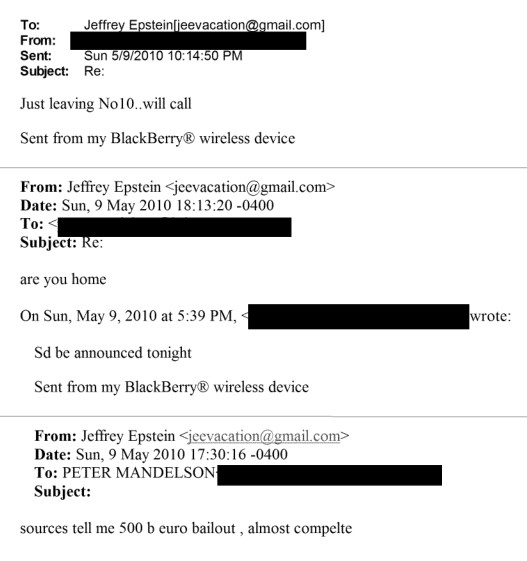
Lord Mandelson’s emails to Jeffrey Epstein:

* He told Epstein that he had finally persuaded Gordon Brown to stand down and leave No 10 five hours before it became wider public knowledge

* He forwarded him an email sent to Gordon Brown disclosing govt was considering selling assets to reduce govt debt. Brown later followed through on the advice

* The same email included sensitive discussions on tax policy – tax relief for businesses, potential flagship electoral pledges on tax

* Mandelson also gave Epstein advance notice of a €500billion bailout of the Eurozone – he emailed him then spoke to him about it on eve of the announcement

* Another email he forwarded looked at how to bolster business lending in wake of financial crisis and included excoriating criticism of Mervyn King

·

55.4K Views

Posted in Uncategorized | Leave a comment

Germany prowess says no Nordstream 2 from Russia, pay triple price to U.S. Steve Hanke cartoon. Irish need to reed David Horgan article in Independent 2022 on our dependence!!! search canisgallicus.com

Posted in Uncategorized | Leave a comment

Feeling as if you move, you will fall off the world. Recently I found myself saying this to a neighbour!!! See Observer personality …

Feeling out of step with the world is a common, often distressing, experience where you may feel disconnected from your surroundings, your own life, or the prevailing pace and values of modern society. This feeling can stem from intense stress, trauma, burnout, or a deeper existential, cultural, or personal mismatch. 

Here is a breakdown of why this happens and how to manage it, based on psychological and therapeutic perspectives.

What It Feels Like

  • Depersonalization/Derealization: A sense that you are an outside observer of your own life, watching it like a movie, or feeling that the world is surreal, dreamlike, or hidden behind a pane of glass.
  • “Going Through the Motions”: A feeling of being on autopilot, lacking emotional depth, or acting like a robot.
  • Disconnection from Others: Feeling that people around you are operating on a different frequency, making you feel lonely or like an outsider, even in a crowd.
  • Existential Fatigue: A deep sense of alienation, questioning the purpose of the modern, fast-paced world, or finding it difficult to relate to cultural, political, or social norms. 

Potential Causes

  • Chronic Stress & Burnout: When the body and mind are under constant pressure, they may “shut down” or dissociate to protect themselves from overwhelming emotion.
  • Anxiety & Depression: These can create a “false” reality, making you feel detached and causing you to withdraw from daily life.
  • Trauma or Early Life Experiences: A history of childhood emotional neglect can cause a persistent feeling of not belonging or being “on the outside”.
  • Rapid Cultural Shifts: Feeling that your personal values, pace, or beliefs no longer align with a rapidly changing world.
  • “Observer” Personality: Sometimes this feeling is a result of high sensitivity or a tendency to overthink and over-analyze the state of the world. 

How to Reconnect (Practical Steps)

If this feeling is persistent, it is important to seek support from a mental health professional, such as a therapist specializing in Cognitive Behavioral Therapy (CBT). 

  • Grounding Techniques: Bring yourself back to the present moment through your senses.
    • 5-4-3-2-1 Technique: Identify 5 things you can see, 4 you can touch, 3 you can hear, 2 you can smell, and 1 you can taste.
    • Physical Activity: Walk, run, or do light exercise to re-engage with your body.
  • Limit Information Overload: Take a break from social media and news cycles to reduce environmental stress.
  • Focus on the “Micro”: Instead of trying to fix large, overwhelming world problems, focus on your immediate environment—your home, your friends, and small acts of kindness.
  • Be Kind to Yourself: Accept that this is a difficult feeling rather than fighting it, which can increase anxiety.
  • Connect with Others: Reach out to trusted friends or family, even if you feel like withdrawing. 

If this feeling of detachment is intense, lasts for weeks, or hinders your daily functioning, consider reaching out to a healthcare provider or using resources like a suicide and crisis hotline. 

==============

The Observer Personality:

The “Observer” (often associated with Enneagram Type 5) is an analytical, curious, and reserved individual driven to understand the world by gathering knowledge and observing from a distance. They are independent thinkers who value competence, often becoming experts in their fields. They may, however, struggle with emotional detachment, isolation, and practical, daily tasks. 

Key Characteristics of the Observer Personality

  • Analytical & Curious: Observers possess an intense desire to learn, investigating everything rather than accepting conventional wisdom.
  • Independent & Detached: They value autonomy and often detach from emotions or social situations to conserve energy.
  • Innovative & Detail-Oriented: They are often visionary, capable of seeing new perspectives and remembering minute details.
  • Reserved & Private: Observers may be secretive and, when overwhelmed, can become isolated or aloof.
  • Core Fear: They fear being useless, helpless, or incapable, which drives their pursuit of knowledge

Strengths

  • Deep Insight: Exceptional ability to concentrate on complex ideas.
  • Innovation: They often think outside the box, leading to unique, creative solutions.
  • Objectivity: Capable of viewing situations rationally without emotional bias. 

Weaknesses & Challenges

  • Isolation: A tendency to withdraw from social interaction.
  • Over-analyzing: They may get stuck in the planning phase, struggling to take action.
  • Detachment: Sometimes struggle to make effective human connections or express emotions. 

Famous Examples
Individuals often cited as having an Observer-type personality include Albert Einstein, Stephen Hawking, Bill Gates, Tim Burton, and Vincent Van Gogh. 

Posted in Uncategorized | Tagged , , , , | Leave a comment