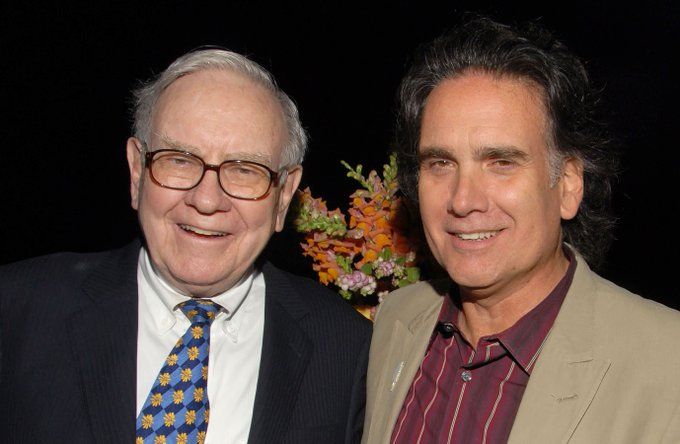
PIE: 1974 to 1984 … now we reap paedophiles down to the very latest Donaldson Paedophile awaiting sentence, in prison, in Northern Ireland hopefully for a very long time. Paedophilia has been a seeping wound since the 1970’s and who knows how long before. Who cared the children?

Posted in Uncategorized | Leave a comment

Regular engagement with complex texts drives significant functional upgrades in memory, attention, and visual processing. Credit: Neuroscience News. Comment: Post TBI and divorce, my partner encouraged me to read avidly, he weekly bought science magazines hence my interest in progress in the brain and mind and this goes back 23 years now. Special quote from this article “Reading is not simply a neutral pathway for receiving information; it is a profound neurological catalyst that fundamentally rewires memory, attention, executive reasoning, and visual perception.”

This shows a person reading a book.

Regular engagement with complex texts drives significant functional upgrades in memory, attention, and visual processing. Credit: Neuroscience News

Reading Is the Ultimate Cognitive Enhancer

Featured Neuroscience

·June 27, 2026

Summary: In an era dominated by generative AI, smartphones, and short-form digital media, the way humanity consumes text has transformed more over the past decade than in the entire century preceding it. While modern wellness trends heavily emphasize meditation, biohacking, and neurostimulation to achieve peak mental clarity, a new book points to an overlooked cognitive tool. Reading is not simply a neutral pathway for receiving information; it is a profound neurological catalyst that fundamentally rewires memory, attention, executive reasoning, and visual perception.

Bringing together decades of cross-disciplinary research spanning psychology, linguistics, education, and cognitive neuroscience, researchers detail how literacy reshapes the physical architecture of the human brain. The work challenges traditional neural “invasion” theories, which assumed reading intrusively steals space from older visual systems, by demonstrating that learning to read actually sharpens overall visual processing, including our ability to recognize human faces.

Key Facts

  • The Cognitive Enhancer: Huettig frames literacy as one of the most potent, evidence-backed tools for cognitive enhancement available to humans, driving broad structural upgrades across multiple neural networks.
  • The Visual Recycling Myth: Cognitive neuroscience long held that because reading is an evolutionary newcomer, it must destructively “co-opt” or crowd out older visual real estate, such as the brain networks dedicated to face recognition.
  • Enhanced Face Recognition: Huettig’s field research comparing literate and illiterate adults in India proved the opposite: learning to read triggers a functional fine-tuning that structurally adapts and improves face and object recognition performance.
  • The Continuous Literacy Spectrum: True reading proficiency is an unfolding continuum, not a binary on/off switch. Avid readers constantly automate and refine sub-cortical processes, shifting how they physically perceive and interpret the world.
  • The Screen Effort Disconnect: Meta-analyses show inferior comprehension when reading on digital screens compared to print. The root cause is psychological self-regulation: readers instinctively view paper print as “serious,” causing them to exert greater cognitive effort.
  • Audiobook Limitations: While listening to audiobooks successfully exposes the brain to rare vocabulary and complex narrative structures missing from everyday speech, Huettig emphasizes that the full spectrum of neurological benefits is only unlocked by actively processing written text.
  • The Danger of Over-Simplification: The author warns that relying heavily on AI readability scores, autocorrect, and simplifying text to match shrinking vocabularies dilutes the richness of written expression, ultimately stalling neural development in young people.

Source: Max Planck Institute

Smartphones, online learning, generative AI: the way we read has changed more in the last decade than in the previous century. So what do we actually know about what reading does for the mind?

In his new book, Falk Huettig, Senior Investigator at the Max Planck Institute for Psycholinguistics, brings together research spanning psychology, linguistics, neuroscience, and education to answer that question.

The result is a systematic account of how literacy reshapes memory, attention, language processing, and reasoning – and even abilities readers might not expect, like face recognition.

Cognitive enhancement is having a moment, with people turning to better sleep, exercise, nutrition, stress management, and tools like caffeine or neurostimulation in search of a sharper mind.

According to Huettig, one of the most powerful enhancers of all has largely flown under the radar: “One of the most powerful cognitive enhancers, with broad and increasingly well-documented effects, is rarely emphasized in these discussions: the ability to read.”

An unexpected finding: reading and face recognition

One of the more surprising threads in the book concerns face recognition. A long-standing idea in cognitive neuroscience holds that because reading is a relatively recent cultural invention, the brain has no dedicated reading network of its own, so literacy training has to borrow space from older visual systems, including the one used for recognising faces.

“Neuroscientists have proposed that the development of reading expertise may therefore partially displace or encroach upon the face recognition network in the brain,” Huettig explains.

“This postulated cortical ‘invasion’ could result in a measurable decline in face or object recognition performance, as neural resources are reallocated to support the newly acquired reading skill.”

Huettig’s own research points the other way. “Our alternative perspective challenges the idea of destructive competition by proposing that learning to read may actually enhance sensitivity to faces and other visual object categories, rather than intrusively co-opting existing face recognition territory,” he says.

In studies conducted in India comparing literate and illiterate adults, his team found that “such co-opting leads to functional fine-tuning, where older networks are not diminished but rather adapted and even enhanced. We confirmed this explanation in behavioral studies: literate people were better at face recognition than illiterate people.”

A continuum, not a switch

The book argues that literacy keeps developing long after someone learns to decode text. “Reading proficiency does not end once a reader can fluently decode a writing system,” says Huettig. “Avid readers continue to automatize and refine these subprocesses and their coordination, training both lower- and, with increasing practice, higher-level cognitive functions.

As a result, literate people come to ‘see’ the world through a fundamentally different lens than those who are illiterate or less literate.” Few people, he notes, ever reach the very top: “only a small proportion of individuals reach the highest levels of critical reading in international assessments such as the PISA tests.”

Content matters too: “It matters a great deal what people read,” Huettig says. “Reaching these advanced levels of literacy requires regular engagement with sophisticated texts, along with the development of strong critical thinking and reasoning skills.”

Print, screens, and audiobooks

On format, the picture is more nuanced than “print good, screens bad. Meta-analyses have found inferior reading comprehension when text is read on digital screens,” Huettig notes, but he points to self-regulation as the likely driver: “Readers tend to regard analogue print as a more appropriate medium for ‘serious’ reading than screens, and monitor their behavior accordingly. As a result, they exert more cognitive effort for the task at hand.”

Still, he’s cautious about overstating the case: “The existing body of research does not support the simplified inference that print always results in better reading outcomes than digital reading.”

Audiobooks, meanwhile, can deliver some of reading’s benefits at a distance. “Listening to audiobooks can expose listeners to rare and sophisticated words, infrequent grammatical constructions, and complex narrative structures: elements that are not commonly found in everyday speech,” he says. But the full picture requires the real thing: “The full spectrum of the benefits of reading is only obtained from reading text.”

A message for parents and educators

Huettig’s advice runs counter to a popular instinct: don’t over-simplify. “Simplifying texts to align with shrinking vocabulary and declining grammatical proficiency among young people may be counterproductive,” he warns.

“Relying too heavily on human- or AI-generated readability scores, or defaulting to autocorrect for ‘better words’ and ‘better grammar,’ can dilute the richness of written expression. Instead, prioritizing quality writing, memorable prose, and the use of complex, uncommon, and sophisticated language may be a more effective strategy for maintaining and enhancing literacy.”

More broadly, he wants readers to come away with a sense of just how much is at stake: “Reading and writing are not merely neutral tools that humans use: they take hold of the mind and profoundly reshape it.”

What comes next for reading?

The book closes by asking what happens to these benefits as reading habits keep shifting. Huettig is cautious about firm predictions but draws a parallel with vinyl records: “What once was the standard medium for music has become a niche interest, sustained by a small group of enthusiasts… In a similar way, the written medium may persist in pockets of culture, or even become a nostalgic fad for future generations, before largely fading from everyday use.

If literacy continues to decline globally, he suggests, the kinds of skills current intelligence tests measure may decline with it, and he’s doubtful new technologies will simply compensate: “Mastering new, future technologies may compensate for the loss in cognitive abilities, but personally, I wouldn’t bet on that happening.”

Early praise

Early endorsements describe the book as an original and accessible contribution to the science of reading, with reviewers from Oxford, the University of Illinois at Urbana-Champaign, and CNRS/Aix-Marseille University praising its scope and clarity.

Key Questions Answered:

Q: How does learning to read actually improve a person’s ability to recognize faces?

A: For a long time, neuroscientists believed in the “cortical invasion” theory. Because reading was invented relatively recently in human history, the brain hasn’t had time to evolve a built-in reading network. Scientists assumed text recognition had to aggressively crowd out older visual systems, like the face recognition network. Dr. Huettig’s research in India proved the opposite. By comparing literate and illiterate adults from identical backgrounds, his team found that learning to read acts like an intensive gym workout for your entire visual system. It refines the brain’s visual sensitivity, functionally fine-tuning older networks so that literate individuals actually become measurably better at identifying faces and distinct objects.

Q: Why does reading on a physical piece of paper yield better comprehension than reading on a digital screen?

A: It isn’t necessarily a limitation of the screen technology itself, but rather a reflection of human psychology and self-regulation. Meta-analyses consistently show that people retain less information when reading digitally. Huettig explains that our brains treat mediums differently based on habit. We instinctively view analog print as the proper medium for “serious” reading, which subconsciously prompts us to invest more cognitive effort and monitor our focus closely. When reading on screens, where we are used to skimming fast social media feeds or clicking away, we drop our cognitive guard, read more superficially, and fail to deeply process the material.

Q: What is the danger of using simplified language and AI readability tools for children?

A: There is a popular instinct among modern educators and content creators to simplify text, strip away rare words, and use AI tools to smooth out complex grammar to accommodate declining attention spans. Huettig warns that this approach is completely counterproductive. Written text is unique because it exposes the mind to intricate sentence structures and rare vocabulary that almost never occur in casual spoken conversation. If we constantly sanitize text and rely on autocorrect to fix expressions, we dilute the cognitive challenge. To keep human intelligence sharp, we must prioritize memorable prose and sophisticated language, as these are the exact ingredients that force the mind to grow.

Editorial Notes:

  • This article was edited by a Neuroscience News editor.
  • Journal paper reviewed in full.
  • Additional context added by our staff.

About this reading and cognition research news

Author: Anniek Corporaal
Source: Max Planck Institute
Contact: Anniek Corporaal – Max Planck Institute
Image: The image is credited to Neuroscience News

Original Research: The Perks of Being a Bookworm: The Science of the Benefits of Reading by Falk Huettig is available to purchase online

Posted in Uncategorized | Tagged , , , , | Leave a comment

Axios: Ceasefire could go up in flames …. 2. How Bibi lost the GOP

Ceasefire could go up in flames
 
President Trump leaves the White House yesterday, heading to his golf club in Sterling, Va. Photo: Aaron Schwartz/Getty Images

This is more fire than cease:

Over the past few days, tension between the U.S. and Iran has been escalating with another exchange of strikes on Saturday. President Trump threatened on Truth Social to resume the war and “complete the job,” Axios’ Barak Ravid writes.

Why it matters: The U.S. and Iran are bombing each other again, putting the tenuous ceasefire in doubt again.

Between the lines: One reason for the renewed fighting seems to be different interpretations of the memorandum of understanding (MOU) to end the war that was signed 10 days ago — especially when it comes to the Strait of Hormuz.

With the situation escalating by the day, it isn’t clear if the next round of negotiations between the U.S. and Iranian technical teams planned for Tuesday in Switzerland will actually take place.

🚢 Catch up quick: As part of the MOU, Iran committed to make its best efforts to allow safe passage of commercial vessels through the strait. In return, the U.S. lifted its blockade on Iranian ports.

During negotiations in Switzerland last week, the U.S. delegation — headed by Vice President Vance — agreed with Iran to establish a “hotline” between the U.S. military and the IRGC (Islamic Revolutionary Guard Corps), Iran’s military command, to coordinate traffic in the strait.

As of yesterday, the “hotline” still wasn’t operational, even as Iran started claiming, again, that ships need to coordinate passage.

Last evening, the U.S. military struck Iranian targets in retaliation for an attack Saturday morning on a commercial tanker.

It was the second wave of U.S. strikes in Iran in 24 hours.Screenshot: 

Truth Social

The latest: Iran responded to the U.S. strikes with drone and missile attacks on U.S. bases in Kuwait and Bahrain, according to the IRGC.Iranian state media quoted the IRGC as threatening more forceful attacks on ships in the Strait of Hormuz, raising the prospect of the peace process coming to a halt.

🛢️ Earlier Saturday, the IRGC launched an attack drone at the Panama-flagged M/T Kiku tanker, which was passing through the strait with more than two million barrels of crude oil, U.S. Central Command (CENTCOM) said.

The incident happened several hours after the U.S. struck Iranian targets, in retaliation for another attack on a commercial ship on Thursday.Share this story.
Share on Facebook Tweet this Story Post to LinkedIn Email this Story Text this Story
 
 
2. 🇮🇱 How Bibi lost the GOP
 
Photo illustration of Vice President JD Vance, President Trump, Prime Minister Benjamin Netanyahu, Palestinian children, and missiles
Photo illustration: Sarah Grillo/Axios. Photos via Getty Images
 
Benjamin Netanyahu lost the Democrats. Now a growing number of Republicans are souring on the Israeli prime minister and his country, too.

More Republicans, especially younger ones, turned on Israel as its military leveled Gaza — and then Netanyahu alienated President Trump and his team as they sought to end the Iran war, Axios’ Mike Zapler writes.

Why it matters: For 15 years, Netanyahu offset collapsing Democratic support by cultivating Republicans. If Republican support is no longer guaranteed, he has a serious problem — and so does Israel.

🏛️ The big picture: That problem starts at the top of the Republican Party.

Last September, as President Trump was pressing Netanyahu to accept a Gaza peace deal, he told the Israeli prime minister that “all the Jews are sick of you” and there would be a “divorce” between the two countries if he refused to go along, according to Maggie Haberman and Jonathan Swan’s new book, “Regime Change.”

Axios reported that Trump called Netanyahu “fucking crazy” and warned his actions risked isolating Israel further. Trump later told Axios in an interview that his relationship with Netanyahu is good, “but we have to keep him a little bit sane.”

🎙️ The strains over the war came as high-profile “America First” anti-interventionists — led by Tucker Carlson, Megyn Kelly and Marjorie Taylor Greene — stoked the backlash against Israel.

Carlson, who left the Republican Party last week, said Netanyahu manipulated Trump into joining the war. He called the president a “slave” to the Israeli prime minister.

Ben Shapiro, the Daily Wire co-founder and staunch Israel defender, has seen his ratings fall as right-wing listeners opposed to U.S. support for Israel turn elsewhere.

By the numbers: Four in 10 Republicans have an unfavorable view of Israel, according to an April Pew Research Center poll. 57% of Republicans ages 18-49 felt that way. One in four aged 50+ had a negative view.

💡 Reality check: The GOP still broadly backs Israel.

A February Gallup poll showed 70% of Republicans sympathize more with Israelis than Palestinians — down 10 points from 2024.

Share this story … Zachary Basu contributed reporting.

Posted in Uncategorized | Tagged , , , , | Leave a comment

The Atlantic: The 13 Steps of a Trump Fiasco

The 13 Steps of a Trump Fiasco

The Reflecting Pool drama says everything about how the administration operates.By Charlie Warzel

Man stands in Lincoln Memorial Reflecting Pool with pole
Chip Somodevilla / Getty

June 26, 2026

If you wanted to make an argument that we are all living in some cruel simulation, a key piece of evidence might be that the news keeps providing us with absurd, occasionally quite alarming metaphors for what it’s like to exist in 2026. To wit: The London School of Economics recently canceled an event on extreme heat because of an extreme-heat warning issued by the United Kingdom’s Met Office.

Or, closer to home for Americans: Donald Trump, trying to renovate the Lincoln Memorial Reflecting Pool for America’s 250th birthday and, instead, scoring a tax-payer-funded, $14 million-over-budget own goal in the form of a cracked and peeling, green-algae-riddled, potentially duck-killing militarized zone in the nation’s capital. One of the firms hired for the renovation is named Greenwater Services.

This is the kind of stuff that AI might spit out if you offered a chatbot a lazy prompt for political satire. The shambolic spectacle has captivated the nation, despite the fact that the Obama administration spent $34 million and 18 months renovating the pool with mixed results. The fallout has reached New York Times push-alert status and become grist for the meme and culture-war mills online. Moreover, Poolgate seems to be bothering Trump more than past fiascoes, which is notable given that he’s particularly embattled at the moment and staring down a defeat in Iran, low poll numbers, and a poor outlook for the midterms. He can’t stop posting about the ordeal on Truth Social, accusing unnamed saboteurs of vandalism. At the White House’s Great American State Fair on Wednesday night, part of the Freedom 250 celebrations, he ranted about the pool.

Trump’s Reflecting Pool debacle is, by definition, a national embarrassment. But America is no stranger to self-inflicted humiliation these days. (See: Iran and the Strait of Hormuz, Qatar’s gift of a luxury jet to Trump.) Why, then, is Trump crashing out so hard about the Reflecting Pool? Why does it stand out as the enduring metaphor for an incompetent administration that can’t stop providing enduring metaphors of its own incompetence?

Some reasons are obvious. As my colleague Jonathan Chait notes, uncontrolled algae blooms at the Lincoln Memorial are lower stakes and, frankly, much funnier than, say, a war, a self-dealing cryptocurrency scheme, or the destruction of a wing of the White House. (One photo in particular gets me: Four men in camo waders are in the pool. Water, the color of fresh Mountain Dew, laps at their thighs as they dredge the bottom with poles like cranberry farmers on a faraway radioactive planet.) Lately, the saga has taken a more serious turn: The National Park Service alleges that the liner of the pool was cut with a sharp knife or razor earlier this month, causing damage to the pool’s foam sealant. Trump has claimed that at least six people have been arrested and seven people have been cited for damaging the pool, and a spokesperson from the Interior Department reiterated to me today that “there have been seven arrests, seven federal citations and 18 police reports filed.” According to a report yesterday by MS Now, public records show that only David Hearn, a former Olympic canoer, was arrested. (Hearn has said he was touching a floating piece of paint that had peeled off the pool.)

The spectacle has also been straightforwardly ridiculous, such as when Park Service workers were photographed dumping gallon jugs of hydrogen peroxide into the pool one at a time to quell the algae. But Poolgate is something more—a textbook example of how the Trump administration operates. It’s a way that one can explore the anatomy of Trump debacles, which tend to unfold in a (roughly) 13-step process. The Reflecting Pool drama is not all the way through this process yet, but I’d bet good money we’ll get there. It goes as follows:

1. Devise unnecessary spectacle.

Recommended Reading

The Reflecting Pool—one of the National Mall’s best-known landmarks—is a big, obvious American symbol, and Donald Trump loves big, obvious symbols. Politics and policy are hard. Wars are even harder. But symbols are a layup. Drain that pool, slap some paint on it—be sure to give it a symbolic name: American-flag blue—and boom, you’ve made America great yet again. Extra points if President Obama made a similar move before you and you can claim you’ll do it cheaper, faster, and better. On paper, it looks perfect.

2. Disregard expertise.

According to CNN, in March, the administration reached out to Sika Corporation, the group that provided the concrete and sealing products for the 2010 renovation. The administration stipulated an intense timeline to make the 250th anniversary and that the pool had to be painted blue. Sika said the project was “unfeasible.”

3. Bypass normal procedures.

As The New York Times reported, Trump “handpicked” Atlantic Industrial Coatings for the renovation, giving the company what eventually became a $14.7 million no-bid contract by invoking an exemption “meant for urgent situations.” Trump later alleged he did not know the firm. An Interior Department spokesperson told me, “The contracts and pricing reflects the effort necessary to expedite the timeline of completing the leak prevention coating project—more people, more materials, more equipment and longer hours ahead of our 250th.”

4. Declare victory too early (bonus if done by AI-slop post).

On May 1, Trump posted an image on Truth Social of himself and other Cabinet members shirtless and swimming in the Reflecting Pool.

5. Spend way more than estimated.

“I have a guy who is unbelievable doing swimming pools up the road,” Trump said at the outset of the project. His initial estimate for the price tag was $1.5 million, which he revised the next day to $2 million. He estimated the renovation would last “30, 40, 50 years.” So far the project has cost an estimated $16.4 million.

6. Ignore the haters.

On June 3, as the project was coming in over budget, Trump invited press to the Oval Office to display a piece of poster board that extolled the pool’s size. The caption read, Our Pool is Bigger than Skyscrapers.

7. Realize it is not going well.

Algae bloom. Send in the hydrogen-peroxide brigade.

8. Bypass normal procedures once again.

As The New York Times’David Fahrenthold reported, “The National Park Service bypassed the competitive-bidding process that is typically required” and instead gave a no-bid contract to Greenwater Services to install a filtration system to help with the algae. During construction Trump instructed the presidential motorcade to drive through the drained pool, shortly after the coating was applied, which has raised questions about whether the drive might have damaged the pool.

Taylor Rogers, a White House spokesperson, told me over email that the Greenwater contract, “was awarded by the Department of Interior” and that “the White House did not play any role in the selection process.” She called the notion that the motorcade affected the pool “dumb and unfounded.” (In all my dealings with the current administration, never before have its spokespeople been as responsive to or seemingly concerned about my impending article.)

9. Allege conspiracy and sabotage.

On Monday, Trump met with reporters and alleged that vandals put fertilizer in the water of the pool as well as cut the seal: “I can’t help it if somebody goes in with a knife and starts hacking it up.”

10. Redeclare victory.

Trump said on Wednesday that the pool “looks perfect already, but we’re fixing it.” Rogers told me that the pool is now “crystal clear and reflecting perfectly.” The pool is currently cordoned off by fences and protected by the National Guard.

These recurrent steps extend beyond Trump into the broader MAGA coalition. Recently, Jared Holt, a senior researcher at Open Measures, an organization that tracks online extremism, used a generative-AI research tool to spot patterns in posts about the Reflecting Pool by right-wing accounts on a selection of right-wing social-media platforms such as Truth Social. The tool broke down more than 2,500 posts into three buckets:

Phase 1: Triumph and Restoration

Phase 2: Defending the Project

Phase 3: Sabotage and Culture War

“For the MAGA faithful, Trump’s renovation of the Reflecting Pool was supposed to be a shining example of his efforts to restore America from its decaying state,” Holt told me. “When it became clear the renovation had been a disaster, MAGA influencers shifted their talking points to instead portray the situation as being emblematic of their critics’ depravity and derangement.” The pattern, Holt noted, is similar to how the MAGA media system responded to the ICE killings in Minnesota earlier this year, or how it has tried to spin the war in Iran. “The primary function of this media ecosystem is to hype up and pacify Trump’s base. And these days, as public support for the administration craters, it’s doing a lot more of the latter.”

This leaves three steps to come in the future. If patterns hold, we should expect 11. More blaming (one contractor told Politico the repairs to the lining will take weeks), followed by 12. Losing interest. And then, of course, the most important one of all. The foundation upon which every Trump debacle is built. The perpetual-motion device of a petulant president:

13. Pretend it never happened, and move on to the next thing.

This is your last free article.

Already A Subscriber?

sign in

Subscribe NowView Discussion

251

About the Author

Charlie Warzel

Charlie Warzel is a staff writer at The Atlantic and the author of its newsletter Galaxy Brain, about technology, media, and big ideas. He can be reached via email.

Explore More Topics

Posted in Uncategorized | Tagged , , , , | Leave a comment

DW: Who profits from Africa’s gold?

Advertisement

Skip links Skip to Content

Economy

Who profits from Africa’s gold?

African governments seek greater control over gold, but much of its value continues to flow abroad. Listen (9 mins)

Save

Click here to share on social media

Share

Add Al Jazeera on Google

Tanzanian miners Mwagyma Ramadhan, Regina Daud and Maria Ng'ombe look for gold at an open-pit gold mine in Nyarugusu, Geita Region, Tanzania on May 27, 2022. Tanzania is a land rich in minerals and one of the main gold producers in Africa, with gold representing more than 90% of the country's mineral exports. Artisanal and small-scale gold mining have culturally and historically relegated women's participation. The extractive sector in Tanzania has historically been a male-dominated industry with high levels of harassment, sexual abuse, discrimination and misconceptions over women's involvement, and contributions following traditional beliefs. A a result women face economic challenges due to lack of access to the land. Through the creation only-women miners associations and the help of projects advocating for rights and inclusion in the extractive industry such as the Collective Action For Rights Realisation In Extractives Industry (CLARITY), Tanzanian women in Geita region have been gradually gaining access to the mines while being able to benefit from the sector. (Photo by LUIS TATO / AFP)
Tanzanian miners look for gold at an open-pit gold mine in Nyarugusu, Geita Region, Tanzania [Luis Tato/AFP]

By Pelumi Salako

Published On 27 Jun 202627 Jun 2026

Johannesburg, South Africa – Mansa Musa, the 14th-century emperor of the Malian Empire, often comes to mind whenever African gold enters the conversation. Renowned for his immense wealth, he is often described as the richest man in history, largely due to the vast gold resources of his empire.

Yet centuries after Mansa Musa’s reign, Africa’s relationship with gold remains paradoxical. The continent possesses some of the world’s richest gold deposits, but much of the wealth generated by the industry continues to be captured elsewhere. According to the United Nations Environment Programme (UNEP), Africa holds about 40 percent of the world’s gold reserves.

Recommended Stories

list of 4 itemslist 1 of 4

Somalia’s al-Shabaab kills US fighter

list 2 of 4

Questions over Gaddafi’s death

list 3 of 4

French army convoy blocked by Burkinabe protesters reaches Niger

list 4 of 4

Henry Kissinger: 10 conflicts, countries that define a blood-stained legacy

end of list

Although Africa remains one of the world’s most gold-rich regions, it continues to occupy the lower end of the global value chain. Gold extracted across the continent is largely exported, mainly to the United Kingdom, where it is refined, traded and priced. As a result, the most profitable stages of the industry remain concentrated elsewhere, creating a persistent gap between extraction and value capture.

“Africa’s position reflects structural constraints, including limited refining capacity, capital bottlenecks and historical trade patterns that favour exporting unrefined gold, allowing offshore markets to capture the highest-value margins in refining and trading,” Kate Collett, insights analyst at Africa Practice, told Al Jazeera.

Increasingly, African governments are not only seeking to extract more gold but also to retain greater control over it. That ambition extends beyond mining policy. Across the continent, policymakers are increasingly viewing gold as a strategic financial asset that can strengthen reserves, reduce external vulnerabilities and support greater economic sovereignty.

Advertisement

A shift in global reserves

Gold has re-emerged as a strategic reserve asset in an increasingly fragmented global economy. Unlike fiat currencies, it is widely seen as retaining value during periods of inflation, geopolitical tension and financial uncertainty.

Across the Global South, central banks have increased gold accumulation in recent years as part of efforts to diversify reserves and reduce exposure to external financial systems. This trend is visible in major emerging-market economies, including China, Russia, India and Turkiye, according to data from the World Gold Council.

An informal gold miner holds up a rock recovered from inside a gold mine before it is ground down for processing at the site of Nsuaem-Top, Ghana
An artisanal gold miner holds up a rock recovered from inside a gold mine before it is ground down for processing at the site of Nsuaem-Top, Ghana [Zohra Bensemra/Reuters]

By accumulating gold, central banks reduce reliance on foreign currencies and hold reserves outside the direct control of any single financial system.

African countries have joined this shift in an effort to strengthen economic stability, build reserve buffers and increase financial sovereignty.

Within Africa, Ghana, one of Africa’s leading gold producers, has increased the proportion of locally produced gold purchased by the central bank under its domestic gold accumulation programme, according to Bank of Ghana reporting and policy communications.

Sign up for Al Jazeera

Breaking News Alert

Get real-time breaking news alerts and stay up-to-date with the most important headlines from around the globe.Subscribe

By signing up, you agree to our Privacy Policy

protected by reCAPTCHA

Nigeria has pursued broader reserve diversification strategies, including increased interest in gold as part of efforts to strengthen the composition of its external reserves, according to central bank statements and analysis by international financial institutions, including the International Monetary Fund (IMF) and the World Gold Council.

Tanzania requires approximately 20 percent of gold output from mining companies and traders to be allocated for sale to the central bank under its reserve-building framework, according to Bank of Tanzania regulations. Guinea has tightened licensing and export controls in its mining sector, part of wider efforts to increase state oversight and capture more domestic value.

According to analyst Thea Fourie, head of regional analysis for the Middle East and Africa at S&P Global Market Intelligence, rising gold prices have reinforced these shifts. “This trend aligns with a broader geopolitical shift towards de-dollarisation … including the development of alternative payment systems and increased use of local currencies in trade,” she told Al Jazeera.

For African producers, this changing global financial environment has accelerated the use of gold as a tool of economic sovereignty, analysts say.

Advertisement

Capturing more of the value chain

Across the continent, governments are also trying to retain more value from domestic production by tightening oversight of mining and reshaping how gold moves from extraction to export.

Ghana has expanded its central bank gold purchasing programme. Tanzania has strengthened regulatory control linked to domestic sales and reserve-building requirements, while Guinea has tightened licensing enforcement and export rules aimed at improving domestic processing and value retention.

An artisanal miner pans for gold at the Karakaene gold mine
An artisanal gold miner digs at the Bantakokouta gold mine, one of the largest artisanal gold mining sites in southeastern Senegal, near the Mali border [John Wessels/AFP]

In Guinea, authorities have also cancelled mining licences deemed unproductive and restricted exports of unprocessed gold in an effort to encourage local refining. Namibia continues to restrict the export of unprocessed minerals, reinforcing efforts to increase domestic value capture.

Artisanal mining, often operating outside formal systems, is increasingly being treated as part of the formal gold economy rather than a parallel informal sector. Governments are seeking to formalise production, reduce smuggling and increase tax and export revenues.

“These programmes can help countries retain more value from their mineral resources by reducing smuggling, formalising artisanal mining and creating incentives for local refining and downstream industries,” Collett said.

But integration remains uneven. Many small-scale miners still operate outside formal channels due to limited access to finance, markets and technical support.

“As commodity prices rise, this gap between legal status and how the sector operates on the ground is widening, with value still flowing outside formal systems,” she added.

Resource nationalism in the Sahel

In the Sahel, military-led governments in Mali and Burkina Faso have pushed further towards state control of mining assets, framing reforms as part of a broader effort to reduce economic dependence on former colonial partners.

Mali’s President Assimi Goita has overseen a restructuring of the mining sector, expanding state involvement and promoting domestic processing capacity. With Russia emerging as a key partner after a break with France, the government is also developing a state-controlled gold refinery in Bamako.

Africa Investigates - Ghana Gold
Gold miners scratch a living by digging in primitive mines and panning for flecks of gold for a licensed supervisor on the outskirts of Bulawayo, Zimbabwe [John Moore/Getty Images]

Burkina Faso has increased state participation in mining and sought to expand national gold reserves. Alongside Mali and Niger under the Alliance of Sahel States, it has pursued deeper economic coordination. Plans for closer monetary cooperation have been discussed, though they remain in development.

However, most large-scale mines in the region remain operated by foreign companies due to limited domestic technical capacity.

According to Fourie, of S&P Global Market Intelligence, this shift reflects a broader wave of resource nationalism driven by fiscal pressures and security challenges.

“These governments have also deepened ties with non-Western partners, reshaping longstanding trade and diplomatic relationships,” she said.

But analysts caution that tighter state control can deter investment if regulatory frameworks are unclear or not consistently applied.

“The quest for African resource sovereignty should not be reduced to the Sahel juntas’ spectacular enforcement, with executives locked up in jail, and inflammatory narratives,” Collett said.

A long road to control

Despite growing policy momentum, full control over the gold value chain remains distant. Moving from extraction to refining and pricing within African economies requires sustained investment in infrastructure, skills and industrial capacity.

Building internationally certified refineries and attracting long-term capital will take time, even as governments push for greater oversight.

An artisanal miner pans for gold at the Karakaene gold mine
For now, much of the value generated by African gold continues to flow abroad [John Wessels/AFP]

“When the measures are introduced in an opaque manner, when there is no stakeholder engagement, is when investor confidence starts to slip,” said Beverly Ochieng, senior analyst at Control Risks.

Some governments have managed to balance tighter control with investor confidence by maintaining clearer regulatory engagement and consultation with industry stakeholders.

For now, much of the value generated by African gold continues to flow abroad.

“The experiment with the state mining operators will be one to watch … whether they are able to meet international standards, sell the gold and set prices,” Ochieng said. “And ultimately, at the back of it is whether this government will be stable enough to see through this process.”

Still, many analysts believe the direction of travel is set.

“I think in the long run, we are seeing more African governments taking steps to ensure the entire value chain remains in-country … Maybe in a couple of decades, we might see a sort of gold OPEC emerging from African countries,” she said.

Posted in Uncategorized | Tagged , , , , | Leave a comment

DW: Why is the US targeting Germany’s drug industry?


Why is the US targeting Germany’s drug industry?

Thomas Kohlmann18 hours ago18 hours ago

A new trade probe is reigniting a long-running clash over who should pay for medical innovation. Washington argues Germans benefit from lower prices while US patients shoulder a disproportionate share of the costs.

https://p.dw.com/p/5G8Wh

A robotic arm operates in a pharmacy storage facility
Globally, US and German patients pay the most for medication but the systems could hardly be more differentImage: Jan Woitas/dpa-Zentralbild/picture alliance

Advertisement

https://2e432a2e8c9ebc3fa06500500845fd0c.safeframe.googlesyndication.com/safeframe/1-0-45/html/container.html

In the world according to Donald Trump, every nation on the face of the earth is “ripping off” the United States — that goes for pharmaceuticals, too, especially those from Germany.

Now, the Trump administration is targeting Germany with an investigation. Washington says it wants to find out if US patients and businesses are being forced to pay disproportionately higher prices for the research and development of top-tier pharmaceuticals so that German patients can pay less. The inquiry, scheduled to wrap up in September, is based on Section 301 of the Trade Act of 1974 and could ultimately lead to new US tariffs.

An old fight over different pricing rules

The conflict touches on a core aspect of health policy. Germany regulates drug prices through its public health insurance system in order to keep access affordable. The US sees this as market distortion. Berlin defends its price regulating practice as a legitimate instrument for keeping costs down. The issue of drug pricing has now evolved into a trade policy dispute that goes far beyond the pharmaceutical sector. 

At its core, the question now is whether US pharmaceutical companies are put at a disadvantage as a result of Germany’s price regulation system, which Washington says creates a trade imbalance. According to the OECD, an organization of wealthy industrialized nations, the US and Germany are the two countries that spend the most on drugs. In 2023, US patients spent an average of $1,713 (€1,502) per person on medicine compared to $1,158 per patient in Germany.

US attack on German healthcare reform

“This investigation will seek to determine whether persistent underpayment for innovative pharmaceutical products by Germany is unreasonable or discriminatory and burdens or restricts US commerce,” according to US Trade Representative Jamieson Greer, who added that the “investigation follows months of meaningful discussions with our German partners in an effort to resolve this issue.”

A view of a Novartis pharmaceuticals factory in Basel, Switzerland, on September 28, 2018
The US has also used Section 301 of the 1974 Trade Act to go after Switzerland for supposed market manipulation brought on by state-subsidized overcapacity in the drug industryImage: Manuel Geisser/imago images

“President Trump has made clear that American patients should not be shouldering a disproportionate share of global pharmaceutical research and development,” continued Greer. “I am particularly concerned with news that Germany is fast-tracking legislation that would further reduce its spending on innovative pharmaceuticals.”

With that, the US is directly targeting German Health Minister Nina Warken’s multi-billion-euro healthcare savings package slated to be passed by the Bundestag within the next few weeks and aimed at forcing further rebates from pharmaceutical companies.

Is there any substance to the US claims?

A look at one specific innovative German drug is instructive in that it highlights massive price differences depending on where a patient is buying it: Jardiance, with the active ingredient empagliflozin, was developed by Germany’s Boehringer Ingelheim and is the world’s most popular medication for treating type-2 diabetes and heart failure.

The cost for a one-month supply of 30 tablets is roughly €80 for out-of-pocket and privately insured patients in Germany, those on public health insurance are liable for a co-pay of a maximum of €10. According to Boehringer Ingelheim’s US subsidiary, uninsured patients or privately insured patients in the US who have not yet reached their annual deductible, must pay a full list price of roughly €300. Boehringer USA says that some pharmacies may charge even more.

On the other hand, Boehringer USA says that older, handicapped, seriously ill and low-income US patients covered under Medicare or Medicaid pay between zero and $50 dollars for the drug.

An file photo of German health insurance cards and euro coins
The leverage wielded by Germany’s public health insurance funds translates into lower drug prices for German consumersImage: C. Ohde/Bildagentur-online/picture alliance

So does that mean the massive price differences the Trump administration is pointing to only apply to the uninsured and those with high deductibles?      

One would be hard-pressed to find a health economist who would dispute the fact that US patients tend to pay more for top-shelf drugs than those insured in Germany.

That fact was documented in a March report based on research conducted by German media outlets NDR, WDR, and the Süddeutscher Zeitung and the New York Times newspapers. Accordingly, patent-protected medications remain more expensive in the US than in Germany. Lack of transparency in different national markets makes it easy for pharmaceutical companies to demand higher prices, says Helmut Schröder of the Wissenschafltliches Institut der AOK (WIdO) — a scientific research institute linked to the AOK network of German public healthcare insurers — who led the study

Advertisement

Structural reasons for price differences

“There are structural reasons for the difference in prices,” as Susanne Uhlmann, pharmacy sector head and partner at management consultancy Deloitte, explained to DW. “Prices for statutorily insured patients in publicly financed health systems like Germany’s are negotiated centrally. That gives health insurance funds much more leverage compared to insurers in the US, who must negotiate on their own or contract negotiators to act on their behalf.”

That means “Pharmacy Benefit Managers” or PBMs, powerful negotiators who work as middlemen — negotiating and regulating prices in concert with pharmaceutical companies, insurers and pharmacies. PBMs are supposed to help save patients money, however, they have been heavily criticized for creating an opaque structure that is hard to understand for those on the outside. The result? Higher prices.

People in front of a CVS pharmacy in New York, USA, on November 21, 2021
US authorities have opened investigations into CVS Caremark, a subsidiary of CVS pharmacies, for ‘anti-competitive and unfair discounting practices that artificially inflate’ drug pricesImage: Ron Adar/SOPA/Zumapress/picture alliance

The three largest PBMs in the US are CVS Caremark, part of the CVS drug store and pharmacy chain; Express Scripts, subsidiary of the life and health insurance company Cigna; and Optum Rx, part of the healthcare company UnitedHealth. Together they control roughly 80% of the prescription medication market in the US, according to data published by industry information service Drug Channels.

US regulators have now begun to crack down on these structures. The US Federal Trade Commission (FTC) recently opened an investigation into the biggest players for engaging in what the agency labeled “anti-competitive and unfair discounting practices that artificially inflated the list price of insulin medications.” In February, the FTC reached a settlement with Express Scripts that led to fundamental changes to the outfit’s business practices.

Comparing apples and oranges?

The situation illustrates how utterly different drug pricing is in the US compared to Germany.

“Add to that the fact that manufacturers in Germany must prove that new drugs have added therapeutic value over existing therapeutic standards when setting prices,” says expert Uhlmann. “So the bar for new and expensive drugs is correspondingly high.”

Placards held high during a National Health Services strike in London with Big Ben seen in the background on December 15, 2022
A template for Germany and other nations? So far, the UK is the only country that has caved to US pressure and agreed to pay higher drug pricesImage: Kin Cheung/AP Photo/picture alliance

But Germany’s pharmaceutical industry is not feeling pressure from US investigators alone. More than 20% of Germany’s pharmaceutical exports go to the US. That means it is more dependent on the US market than almost any other industrial sector in the country. Beyond that, it is also getting the squeeze from Berlin, which is looking for more rebates as part of planned public healthcare reforms.

And if the US imposes new tariffs this fall, things could get very uncomfortable. In an April 2025 report for Deloitte, Uhlmann pointed to “serious losses” for the industry in the event of tariffs. “If tariffs between 10 and 35% were applied for three to four years, that could shrink industry exports to the US, the world’s largest pharmaceuticals market, by 5 to 53%, translating into losses between €1.3 and €13.4 billion.”

Berlin not (yet) worried      

German Chancellor Friedrich Merz has been relatively relaxed in his public statements on the Trump administration’s investigation. “Reimbursement for modern, innovative medication through our health insurance funds is determined at the federal level,” says Merz. “So if the Americans want information on that, we’d be happy to provide it.”

German Health Minister Nina Warken also sought to dampen US expectations, saying, “The financial situation at Germany’s health insurance funds is strained, so it will be tough to pay higher prices.” 

Speaking with DW, pharmaceuticals expert Uhlmann said, “In the past, rules covering price discounts for drugs sold in Germany were always binding and they will likely remain that way in the future.”

This article was originally published in German.

Posted in Uncategorized | Tagged , , , , | Leave a comment

DW: Peter Thiel … on tour. Interested in “Big Ideas”. Of special interest is Palantir. Dialog is an elite group of people who meet. Peter Thiel conference in Powerscourt, Co. Wicklow, Ireland in August 2026

Peter Thiel — co-founder of PayPal, Palantir and an early investor in Facebook — is known for his libertarian views, contrarian thinking and support for US President Donald Trump.

His private Dialog retreat brings together politicians, tech leaders and celebrities for off-the-record discussions on what participants describe as unconventional ideas.

DW’s Melissa Chan speaks with tech journalist Fritz Espenlaub about Dialog, its purpose, and the backlash it has sparked — along with Thiel’s political influence and Europe’s concerns over US Big Tech.

Posted in Uncategorized | Leave a comment

DW: How China took over global shipbuilding — and why it matters, Shipbuilding China between 50% and 70% of world market but U.S. down to 0.1% and it relies on South Korea

Posted in Uncategorized | Leave a comment

Novara Live: Is Burnham Just Starmer 2.0? : With Jeremy Corbyn

Posted in Uncategorized | Leave a comment

The Weekly Wrap: Eisman … 25.26/06/26 The Q2 2026 Report Card: Who Won, Who Lost, and Why. The AI Story Deteriorates. (the man who predicted the 2007 housing crisis)

Jun 26, 2026

The Real Eisman PlaybookSign up for The Real Eisman Playbook Premium at https://realeismanplaybook.substack.com/

On this episode of The Weekly Wrap, Steve Eisman delivers his second quarter market review, breaking down why semiconductors like Micron and Sandisk surged over 200% while software stocks got crushed, and why the hyperscalers are losing investor confidence. Steve also covers SpaceX’s wild volatility after its IPO, Micron’s jaw-dropping 1,215% earnings growth, and closes with thoughts on Alan Greenspan and a viewer mailbag question 00:00 – Intro 03:50 – Iran War Updates 04:04 – Accenture’s Disastrous Quarter 05:13 – Good News For GEV 05:46 – Volatility in SpaceX Stock 06:39 – Bad News For Google 07:09 – Good News For Micron 08:10 – Bad News For Nike 08:34 – Review of Second Quarter 14:55 – Thoughts on Alan Greenspan 17:00 – Mailbag: Is Europe Too Regulated? 19:08 – Outro Watch my Financial Literacy Masterclass video here:    • Steve Eisman’s Masterclass on Financial Li…   Watch my Masterclass on the 2008 Financial Crisis here:    • Steve Eisman’s Masterclass on the 2008 Fin…  

Posted in Uncategorized | Leave a comment