‘It’s hard not to view the modern pro-natalist movement, which is largely situated in Silicon Valley, as a rebranding of eugenics.’ Photograph: Vitaliy Smolygin/Alamy
Self-proclaimed ‘pro-natalists’ don’t go around saying that they only want white babies, but there’s a thin line between their movement and the ‘great replacement theory’ Fri 21 Apr 2023 06.00 BST
Simone and Malcolm Collins are a thirtysomething couple with three kids called Torsten, Octavian, and Titan Invictus. (They refuse to give their girls traditionally feminine names because they think that means they’ll get taken less seriously.) The Pennsylvania-based pair plan on having at least eight children and hope each of their children can have eight children so that, in 11 generations, the world will ooze with their bloodline and there will be more Collinses stalking the Earth than there are people alive today.
A bit weird, right? Maybe the sort of fantasy you’d be best off keeping to yourself? The Collinses disagree. They’ve made themselves the poster children of “pro-natalism” and are taking it upon themselves to combat what they describe as “fertility collapse” – not only by having multiple kids themselves but by trying to push for policies that would increase birth rates in the developed world. The media is paying attention to their crusade: Britain’s Telegraph profiled the pair this week, with the headline “Meet the ‘elite’ couples breeding to save mankind”. This followed a long profile on the Collinses last November from Insider and pieces by Entrepreneur and Bloomberg.
The Collinses don’t just want to increase the birth rate; they want to optimize the sort of children being born. They used genetic testing for their own embryos and, as Bloomberg reports, “created a spreadsheet with each embryo’s scores, weighting them according to their desired mental health traits”. This sort of thing has led to the pair being called “hipster eugenicists” online, which they seem to find rather amusing. When an Insider reporter mentioned the moniker to them, Simone called that fact “amazing” but scoffed at the idea that they were eugenicists.
The Collinses might not think of themselves in this way, but it’s hard not to view the modern pro-natalist movement, which is largely situated in Silicon Valley, as a rebranding of eugenics. Pro-natalism may mean pro-birth but the loudest voices in the movement are clearly only pro people like themselves being born. The most famous proponent was one Jeffrey Epstein, who planned to develop a super-race of humans with his DNA, by impregnating up to 20 women at a time. There is a constant refrain in pro-natal circles about how important it is for “really smart people” to keep reproducing.
Dismissing the movement as quirky people with quirky ideas risks glossing over some very regressive thinking
While pro-natalists don’t exactly go around saying that they only want white people to be born, there is a very thin line between their concern about birth rates in the developed world and the racist and antisemitic “great replacement theory”, which posits that white Americans and Europeans are being “replaced” by non-white immigrants. It goes without saying that the global population is currently increasing, not decreasing, and the fastest growth is happening in Africa and Asia. Estimates suggest it is only likely to start decreasing in 2100, by which point there will be 10.9 billion people on Earth.
Dismissing those like the Collinses as quirky people with quirky ideas risks glossing over some very regressive thinking. Indeed, much of the media coverage of pro-natalism is reminiscent of the way in which white supremacists like Richard Spencer were treated as “dapper” style icons in 2016 rather than dangerous Nazis and rebranded as the “alt-right”.
Pro-natalism doesn’t just overlap with racism, but also misogyny. When you start to see women as breeding machines whose job it is to repopulate the Earth, you can justify some very dystopian policies. This week, for example, Elon Musk sat down with Fox News’s Tucker Carlson, argued that abortion and birth control might lead to the end of civilization. “[I]n the past we could rely upon, you know, simple limbic system rewards in order to procreate,” Musk said. “But once you have birth control and abortions and whatnot, now you can still satisfy the limbic instinct but not procreate … I’m sort of worried that – hey, civilization, if we don’t make enough people to at least sustain our numbers perhaps increase a little bit, then civilization’s going to crumble.” You can see where this is going, can’t you?
Indeed, you only need to look at Hungary to see the end point. Far-right Viktor Orbán is obsessed with getting Hungarian woman to breed and has devoted a huge amount ofresources to pro-natalist policies. Some of these policies are positive (free IVF); many are not. Hungary has recently tightened abortion rules and there has been concern it is trying to limit access to the morning-after pill. Orbán, who is beloved by conservatives in the US, also hasn’t been shy about explaining the racist ideology behind his pro-natalism. “In all of Europe there are fewer and fewer children, and the answer of the west to this is migration,” Orbán has said. “They want as many migrants to enter as there are missing kids, so that the numbers will add up. We Hungarians have a different way of thinking. Instead of just numbers, we want Hungarian children. Migration for us is surrender.”
Are the Collinses worried about the misogynistic aspects of their movement? Not at all – they seem to think they’re doing women a favour. “People often compare our group to Handmaid’s Tale-like thinking,” Malcolm told the Telegraph. “[A]nd I’m like: excuse me, do you know what happens if we, the voluntary movement, fails … ? Cultures will eventually find a way to fix this; how horrifying those mechanisms are depends on whether or not our group finds an ethical way.” It’s a warning that sounds distinctly like a threat.
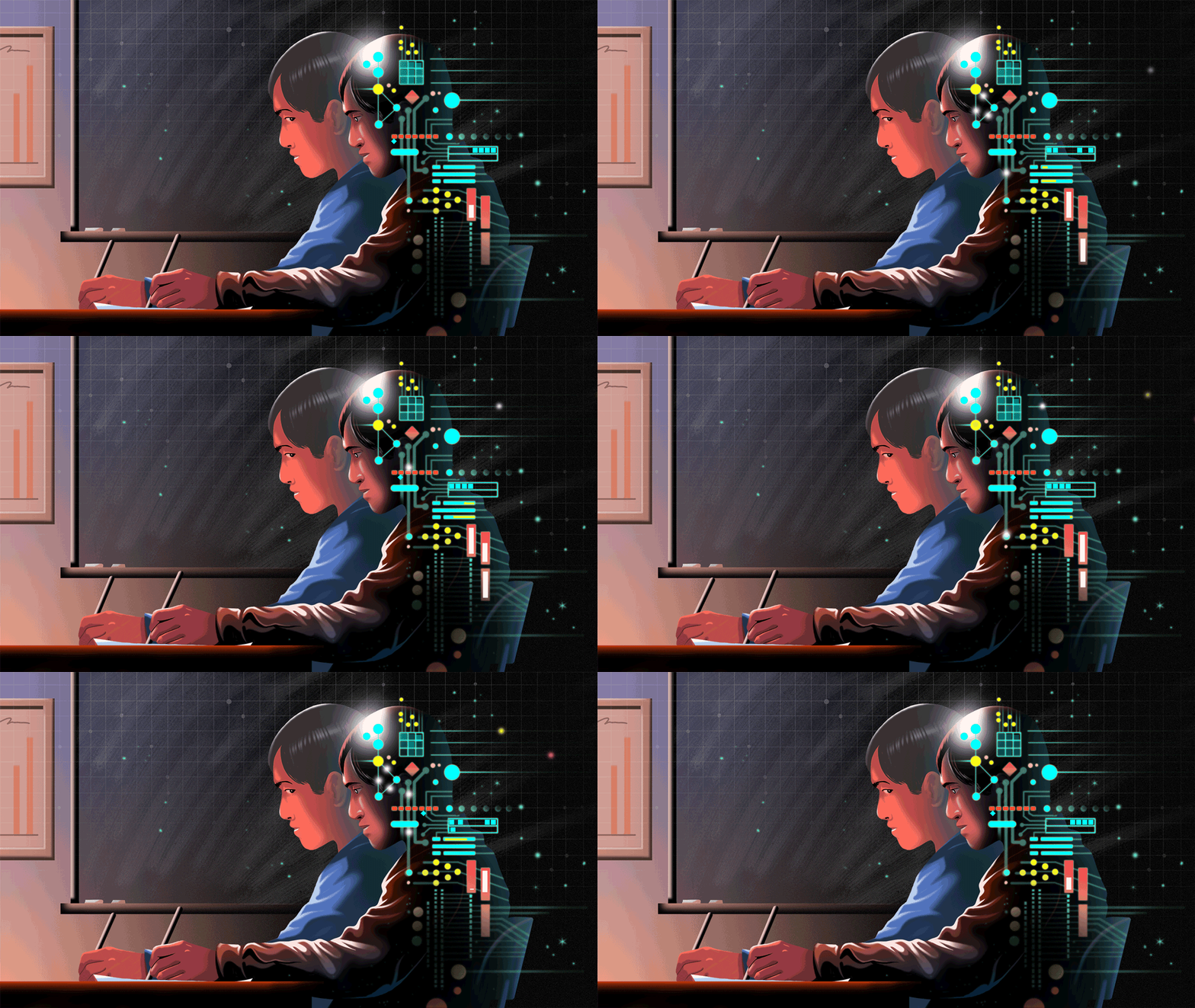
ChatGPT, an AI-powered chatbot capable of generating humanlike responses to an unimaginable range of questions and prompts, has accumulated 100 million users in just two months, surpassing the growth rates of popular social media platforms such as TikTok and Instagram. The bot’s amazing performances have elicited a wide range of reactions from critics and fans alike, from awe and admiration to concern and alarmist fears that even creative and skilled jobs may be destined to succumb to machine automation.
Among its many remarkable feats, ChatGPT can pass advanced university exams in law, medicine, and business; translate a picture of the contents of your fridge into a range of exciting recipes; produce an infinite number of essays, poems, and articles (though not, we promise, this one); and translate the picture of a handwritten website sketch into the full code needed to create it. Needless to say, all of these and other achievements occur in just a few seconds.
As psychologists, our primary interest in ChatGPT, AI, and indeed any technology, centers around their human impact, including their potential to change and reshape how we think, work, and live. As Pamela Pavliscak noted, “We design tech and tech, in turn, designs us.”
With the debut of highly versatile, viral, and pervasive technology as ChatGPT, we are bound to uncover consequential repercussions on how humans behave. As illustrated in I, Human: AI, Automation, and the Quest to Reclaim What Makes Us Unique, AI-induced changes aren’t always about generating new human behaviors, but rather, revealing, amplifying, or augmenting existing human beliefs, habits, and adaptations.
For example, much of the pushback against ChatGPT reveals the human inability to accept that something could be smarter than us, even when that thing is our own creation, and thus a natural—okay, artificial—extension of our own intelligence.
Ironically, such defensive pride, and the tendency to dismiss AI in order to reaffirm our intellectual superiority over the machines we’ve created, would put our own value and future at risk. By failing to experiment, learn, and cocreate with the very new technologies we create, we increase the probability that those technologies replace us.
In our view, the evolution of AI innovations is not just a technological breakthrough but also a catalyst for a much-needed shift in our thinking about ourselves and our relationship with the world. Specifically, we see ChatGPT, which merely personifies the latest advancement of mainstream AI today, as a wake-up call for humanity to harness four unique and precious human virtues.
HUMILITY
The realization that AI can handle even creative and intellectually complex tasks should be a humbling experience for us. Abstract thinking and other knowledge work, once considered unique to humans, are no longer completely exclusive to us. This realization is reminiscent of a Freudian “narcissistic wound” or attack on our ego as it challenges our long-held belief in human superiority over everything.
This philosophical realization echoes earlier scientific discoveries that the world is not the center of the universe, that we share common ancestries with primates, or that (Freud’s own contribution) humans often lack conscious control over their motives and behaviors. Indeed, after centuries of ascribing to the “I think, therefore I am” mantra to define the essence of humanity, we must, for the first time, ask ourselves what it means to be human in an era in which much of our thinking can be outsourced to machines.
CURIOSITY
Living in a world with access to ubiquitous information and knowledge can be meaningless unless we leverage our curiosity, our desire to learn and understand. The AI age has amplified the (already high) value of curiosity in the realm of human virtues, redefining the meaning of expertise. What matters today is not experts knowing the answers to all questions but that they are asking the right questions, not retrieving information but critically evaluating and vetting, not collecting insights but making smart decisions based on them.
Paradoxically, ChatGPT or other AI tools may actually numb our curiosity. Some may use AI-powered tools as a quick fix, similar to consuming fast food, for retrieving general facts and insights.
However, those with a curious mindset can use AI tools to expand their perspectives and foster further innovation for humanity. We expect, or at least hope, that while superficial fact retrieval will be a commodity in our cognitive abilities, the capacity to engage in “deep learning” (a term sadly associated with machine rather than human intelligence these days) will be key to our individual and collective success. In other words, if ChatGPT is the intellectual equivalent to fast food—i.e., efficient, cheap, addictive, rapid, but neither nutritious nor healthy—it is time to discover the intellectual equivalent of slow food or farm-to-table.
SELF-AWARENESS
Understanding ourselves in the age of AI means paying attention to how our interactions with technology are reshaping our behaviors, and what they tell us about ourselves, including our dark side traits: impulsivity, distractibility, self-centeredness, and bias (as highlighted in one of our recent books).
In fact, feeding our own writings, recordings, and content to ChatGPT can give us back an AI-reflection of ourselves, just like in this episode of Adam Grant’s Re: Thinking podcast. A future in which we examine our entire digital footprint to better understand our reputation and identity is not far-fetched, particularly as regulatory pressures around ethical and lawful uses of AI encourage Big Tech platforms to give us back some of the data we’ve relinquished in the form of insights capable of boosting our self-knowledge.
EMPATHY
Empathy, a unique human capacity to understand and share the feelings of others, can bring multiple benefits in people’s well-being and societal cohesion. While it may be a stretch to argue that AI tools will directly instill empathy, interacting with AI technology can certainly facilitate the development of empathy.
Through recognizing our intellectual and epistemic limitations and appreciating others’ strengths, even if they are machines, we can become less self-focused, and paying due attention and recognition to others, ultimately leading to feelings of empathy and gratitude. Indeed, numerous studies suggest that humility brings various prosocial attitudes, such as empathy, gratitude, altruism, and benevolence by enabling individuals to let go of extreme self-focus or egocentrism.
The emergence of advanced AI technologies, as with prior technologies, presents both risks and opportunities. Will the benefits outweigh the risks? Our stance is contingent. If we use this chance to become a bit humbler and try to preserve, develop, and reclaim the qualities that make us human unique, maybe mankind’s future will be brighter than today.
Sunny Lee is an associate professor of organizational behavior and head of diversity at the UCL School of Management.
Tomas Chamorro-Premuzic is an international authority in leadership assessment, people analytics, and talent management. He is the chief talent scientist at ManpowerGroup and a professor of business psychology at both University College London and Columbia University. His most recent book is Why Do So Many Incompetent Men Become Leaders? (And How to Fix It).
Personal experience with amnesia inter alia so many co-morbidities.
Promote my book pls. Twitter augments my memory & is my friend. Fortune Favours the Brave eBook: Michelle Marcella Clarke, Foreward Prof John Crown … Traumatic Brain Injury bipolar chronic fatigue to Breast Cancer https://amazon.co.uk/Fortune-Favours-Brave-Michelle…/dp/B07LCMPBNH/
Michelle Clarke takes us on an extraordinary journey, through challenges most of us would never know, were it not for her courage to write this story. In 1993, aged 32, she suffers a fractured skull in a horse-riding accident in Zimbabwe, an event which changes her life forever. The traumatic brain injury adds to her existing conditions of Bipolar, Anxiety and Chronic Fatigue. Her marriage fails and she returns to live in Ireland. In 2003, she meets KT at a bus stop in Dublin. He invites her for coffee, and they have been together ever since. The third member of their team is Freddie, a very special little rescue dog. In July 2017, the shocking diagnosis of breast cancer arrives via a routine mammogram and she enters the next phase of ill-health, but this time with the loving support of KT and Freddie. She records her journey through this cancer, primarily to help others, who are experiencing cancer, and their supportersand loved ones, but in doing so she also reaches out to all of us who care about the rare life story of a fellow human being.
How Memory ‘Clutter’ Makes It Harder to Remember Things as We Get Older
Forgetfulness is often regarded as a sign of old age. But what exactly is going on in the brain that makes it more difficult for older people to remember things?
Memories are a crucial part of what makes us who we are. Yet we all know it can become more difficult to remember things as we get older. From forgetting why you came into a room, to not being able to recall details of a special family event, to forgetting familiar names.
Forgetting things can even be a way of defining old age. Many people will cry something along the lines of “oh my goodness, I’m getting old” when they can’t remember something that had previously been easy to recall.
This forgetfulness as we get older is easy to demonstrate but harder to explain. An obvious explanation might be that remembering things becomes difficult because something changes in the brain that makes it more difficult to store information.
But a paper published recently in the journal Trends in Cognitive Sciences has presented an alternative explanation for this phenomenon: that our memories remain good, but they get cluttered as we age.
First, it’s important to understand that memory isn’t an accurate recording of life as it happens. Imagine if you remembered every single detail of every minute of every hour of every day. It would be overwhelming, and most of the information you remembered would be fairly pointless.
If you’re remembering what you had for breakfast this morning, is it relevant to be able to remember the shape of the cloud you could see outside the window, or the number of times you blinked while you ate? Instead, we attend to different parts of our environment, and the attention we pay to different parts of our experience shapes our memory.
Reviewing the Evidence
The authors of this new study reviewed a range of evidence on this topic. They suggest that instead of a difficulty in storing memories, poorer memory as we get older is a result of being less able to focus our attention on relevant target information, meaning we put too much information into our memory. This is not something we have any control over – it just seems to be a natural consequence of ageing.
Why would focusing on too much information make us worse at remembering it? Think of something you do every day in the same way, like brushing your teeth. You can probably remember whether you brushed your teeth this morning, but can you really remember the difference between the time you brushed your teeth this morning, and the time you brushed them yesterday? Or the day before that? Situations like brushing your teeth are hard to remember as individual events because they have so much in common. They are therefore easy to confuse.
It’s well known that people tend to forget more as they age. pikselstock/Shutterstock
Events which are distinct from one another are more memorable. The less events overlap in terms of their content, the less chance there is to confuse one event for another, or mix up what happened in those different events. For example, it’s easy to remember what happened when you took the dog for a walk and what happened when you went swimming separately. They’re highly unlikely to be confused because they share so little in common.
So, if older people are less focused when they put things into their memories, then their memories will be “cluttered” with information that doesn’t matter. This clutter means there will be more chance for information from one memory to overlap with information from another. This in turn means there will be more chance for memories to be confused with one another, making it harder to remember what happened.
A previous study, which was included in the review, shows this theory in action. An older and a younger group were shown two types of objects (faces and scenes) and told which type of object they would be tested on. The older adults exhibited higher levels of brain activity when they were shown the irrelevant objects later on. Further, the more brain activity they demonstrated in response to these irrelevant objects, the poorer their memory for the objects they were trying to remember.
The review found that not only do older adults add clutter to their memory by taking in too much information from the environment, but they also accumulate information from knowledge gained over many years. This means older people have more material to navigate when trying to access a memory, which can compound the errors we make in memory as we age.
But the News Isn’t All Bad
According to the researchers, evidence suggests that older people demonstrate preserved, and at times enhanced, creativity as a result of their “enriched memories”.
When we are faced with a novel problem, sometimes we need to come up with a creative solution. This can involve bringing together bits of knowledge we have that may not be obviously connected, or remembering similar (though not identical) previous experiences which might be relevant.
The “clutter” in an older person’s memory might be a strength in this process. Being able to make connections between apparently unrelated memories could allow them to find creative solutions to problems by drawing on a much bigger range of experience.
So perhaps we can stop seeing ageing and the inevitable memory decline that comes with it as only a bad thing.
Alexander Easton is a professor of psychology at Durham University.
How was it? Save stories you love and never lose them.
This post originally appeared on The Conversation and was published February 23, 2022. This article is republished here with permission.
USE LEFT AND RIGHT ARROW KEYS TO NAVIGATE BETWEEN MENU ITEMS.USE RIGHT ARROW KEY TO MOVE INTO SUBMENUS.USE ESCAPE TO EXIT THE MENU.USE UP AND DOWN ARROW KEYS TO EXPLORE.USE LEFT ARROW KEY TO MOVE BACK TO THE PARENT LIST.
“We need to talk,” Brett Vogelsinger said. A student had just asked for feedback on an essay. One paragraph stood out. Vogelsinger, a ninth grade English teacher in Doylestown, Pa., realized that the student hadn’t written the piece himself. He had used ChatGPT.
The artificial intelligence tool, made available for free late last year by the company OpenAI, can reply to simple prompts and generate essays and stories. It can also write code.
Within a week, it had more than a million users. As of early 2023, Microsoft planned to invest $10 billion into OpenAI, and OpenAI’s value had been put at $29 billion, more than double what it was in 2021.
The best of Science News – direct to your inbox.
Headlines and summaries of the latest Science News articles, delivered to your email inbox every Thursday.Sign Up
It’s no wonder other tech companies have been racing to put out competing tools. Anthropic, an AI company founded by former OpenAI employees, is testing a new chatbot called Claude. Google launched Bard in early February, and the Chinese search company Baidu released Ernie Bot in March.
A lot of people have been using ChatGPT out of curiosity or for entertainment. I asked it to invent a silly excuse for not doing homework in the style of a medieval proclamation. In less than a second, it offered me: “Hark! Thy servant was beset by a horde of mischievous leprechauns, who didst steal mine quill and parchment, rendering me unable to complete mine homework.”
But students can also use it to cheat. ChatGPT marks the beginning of a new wave of AI, a wave that’s poised to disrupt education.
When Stanford University’s student-run newspaper polled students at the university, 17 percent said they had used ChatGPT on assignments or exams at the end of 2022. Some admitted to submitting the chatbot’s writing as their own. For now, these students and others are probably getting away with it. That’s because ChatGPT often does an excellent job.
“It can outperform a lot of middle school kids,” Vogelsinger says. He might not have known his student had used it, except for one thing: “He copied and pasted the prompt.”
The essay was still a work in progress, so Vogelsinger didn’t see it as cheating. Instead, he saw an opportunity. Now, the student and AI are working together. ChatGPT is helping the student with his writing and research skills.
Subscribe to Science News
Get great science journalism, from the most trusted source, delivered to your doorstep.
“[We’re] color-coding,” Vogelsinger says. The parts the student writes are in green. The parts from ChatGPT are in blue. Vogelsinger is helping the student pick and choose a few sentences from the AI to expand on — and allowing other students to collaborate with the tool as well. Most aren’t turning to it regularly, but a few kids really like it. Vogelsinger thinks the tool has helped them focus their ideas and get started.
This story had a happy ending. But at many schools and universities, educators are struggling with how to handle ChatGPT and other AI tools.
In early January, New York City public schools banned ChatGPT on their devices and networks. Educators were worried that students who turned to it wouldn’t learn critical-thinking and problem-solving skills. They also were concerned that the tool’s answers might not be accurate or safe. Many other school systems in the United States and around the world have imposed similar bans.
Keith Schwarz, who teaches computer science at Stanford, said he had “switched back to pencil-and-paper exams,” so students couldn’t use ChatGPT, according to the Stanford Daily.
Yet ChatGPT and its kin could also be a great service to learners everywhere. Like calculators for math or Google for facts, AI can make writing that often takes time and effort much faster. With these tools, anyone can generate well-formed sentences and paragraphs. How could this change the way we teach and learn?
Who said what?
When prompted, ChatGPT can craft answers that sound surprisingly like those from a student. We asked middle school and high school students from across the country, all participants in our Science News Learning education program, to answer some basic science questions in two sentences or less. The examples throughout the story compare how students responded with how ChatGPT responded when asked to answer the question at the same grade level.
What effect do greenhouse gases have on the Earth?
Agnes B. | Grade 11, Harbor City International School, Minn.
Greenhouse gases effectively trap heat from dissipating out of the atmosphere, increasing the amount of heat that remains near Earth in the troposphere.
ChatGPT
Greenhouse gases trap heat in the Earth’s atmosphere, causing the planet to warm up and leading to climate change and its associated impacts like sea level rise, more frequent extreme weather events and shifts in ecosystems.
The good, bad and weird of ChatGPT
ChatGPT has wowed its users. “It’s so much more realistic than I thought a robot could be,” says Avani Rao, a sophomore in high school in California. She hasn’t used the bot to do homework. But for fun, she’s prompted it to say creative or silly things. She asked it to explain addition, for instance, in the voice of an evil villain.
Given how well it performs, there are plenty of ways that ChatGPT could level the playing field for students and others working in a second language or struggling with composing sentences. Since ChatGPT generates new, original material, its text is not technically plagiarism.
Students could use ChatGPT like a coach to help improve their writing and grammar, or even to explain subjects they find challenging. “It really will tutor you,” says Vogelsinger, who had one student come to him excited that ChatGPT had clearly outlined a concept from science class.
Educators could use ChatGPT to help generate lesson plans, activities or assessments — perhaps even personalized to address the needs or goals of specific students.
Xiaoming Zhai, an expert in science education at the University of Georgia in Athens, tested ChatGPT to see if it could write an academic paper. He was impressed with how easy it was to summarize knowledge and generate good writing using the tool. “It’s really amazing,” he says.
All of this sounds wonderful, but really big problems exist. Most worrying, ChatGPT and other similar tools can often get things very wrong. They don’t pull facts from databases. Rather, they are trained to generate new text that sounds natural. They remix language without understanding it, which can lead to glaring mistakes.
The news website CNET came under fire earlier this year for using AI to churn out dozens of articles, many of them packed with errors. In an early advertisement for the Bard chatbot, it made a factual error about the James Webb Space Telescope, incorrectly claiming that it had taken the very first picture of an exoplanet. And ChatGPT said in a conversation posted on Twitter that the fastest marine mammal was the peregrine falcon. A falcon, of course, is a bird and doesn’t live in the ocean.
ChatGPT is “confidently wrong,” says Casey Fiesler, an expert in the ethics of technology at the University of Colorado Boulder. “There are mistakes and bad information.” She has made multiple TikTok videos about the pitfalls of ChatGPT.
Most of ChatGPT’s training data come from before September 2021, and it does not provide sources for its information. If asked for sources, it makes them up, Fiesler revealed in one video. Zhai, who sees the tool as an assistant, discovered the exact same thing. When he asked ChatGPT for citations, it gave him sources that looked correct. But they didn’t actually exist.
Define the term biodiversity.
Dante A. | Grade 10, Clark Magnet High school, Calif.
Biodiversity refers to the variety of living species and ecosystems that exist in a particular region or on the planet as a whole. It encompasses the different genes, species and ecosystems that make up the natural world and the relationships between them.
ChatGPT
Biodiversity refers to the variety of living organisms that inhabit the Earth and the ecosystems they form. It includes the diversity of species, genes and ecosystems, and is important for maintaining the balance of nature and sustaining life on our planet.
How ChatGPT works
ChatGPT’s mistakes make sense if you know how it works. “It doesn’t reason. It doesn’t have ideas. It doesn’t have thoughts,” explains Emily M. Bender, a computational linguist at the University of Washington in Seattle.
ChatGPT was developed using at least two types of machine learning. The primary type is a large language model based on an artificial neural network. Loosely inspired by how neurons in the brain interact, this computing architecture finds statistical patterns in vast amounts of data.
A language model learns to predict what words will come next in a sentence or phrase by churning through vast amounts of text. It places words and phrases into a multidimensional map that represents their relationships to one another. Words that tend to come together, like peanut butter and jelly, end up closer together in this map.
The size of an artificial neural network is measured in parameters. These internal values get tweaked as the model learns. In 2020, OpenAI released GPT-3. At the time, it was the biggest language model ever, containing 175 billion parameters. It had trained on text from the internet as well as digitized books and academic journals. Training text also included transcripts of dialog, essays, exams and more, says Sasha Luccioni, a Montreal-based researcher at Hugging Face, a company that builds AI tools.
OpenAI improved upon GPT-3 to create GPT-3.5. In early 2022, the company released a fine-tuned version of GPT-3.5 called InstructGPT. This time, OpenAI added a new type of machine learning. Called reinforcement learning with human feedback, it puts people into the training process. These workers check the AI’s output. Responses that people like get rewarded. Human feedback can also help reduce hurtful, biased or inappropriate responses. This fine-tuned language model powers freely available ChatGPT. As of March, paying users receive answers powered by GPT-4, a bigger language model.
During ChatGPT’s development, OpenAI added extra safety rules to the model. It will refuse to answer certain sensitive prompts or provide harmful information. But this step raises another issue: Whose values are programmed into the bot, including what it is — or is not — allowed to talk about?
OpenAI is not offering exact details about how it developed and trained ChatGPT. The company has not released its code or training data. This disappoints Luccioni because it means the tool can’t benefit from the perspectives of the larger AI community. “I’d like to know how it works so I can understand how to make it better,” she says.
When asked to comment on this story, OpenAI provided a statement from an unnamed spokesperson. “We made ChatGPT available as a research preview to learn from real-world use, which we believe is a critical part of developing and deploying capable, safe AI systems,” the statement said. “We are constantly incorporating feedback and lessons learned.” Indeed, some experimenters have gotten the bot to say biased or inappropriate things despite the safety rules. OpenAI has been patching the tool as these problems come up.
ChatGPT is not a finished product. OpenAI needs data from the real world. The people who are using it are the guinea pigs. Notes Bender: “You are working for OpenAI for free.”
What are black holes and where are they found?
Althea C. | Grade 11, Waimea High School, Hawaii
A black hole is a place in space where gravity is so strong that nothing, not even light, may come out.
ChatGPT
Black holes are extremely dense regions in space where the gravity is so strong that not even light can escape, and they are found throughout the universe.
ChatGPT’s academic performance
How good is ChatGPT in an academic setting? Catherine Gao, a doctor and medical researcher at Northwestern University’s Feinberg School of Medicine in Chicago, is part of one team of researchers that is putting the tool to the test.
Gao and her colleagues gathered 50 real abstracts from research papers in medical journals and then, after providing the titles of the papers and the journal names, asked ChatGPT to generate 50 fake abstracts. The team asked people familiar with reading and writing these types of research papers to identify which were which.
“I was surprised by how realistic and convincing the generated abstracts were,” Gao says. The reviewers mistook roughly one-third of the AI-generated abstracts as human-generated.
In another study, Will Yeadon and colleagues tested whether AI tools could pass a college exam. Yeadon, a physics instructor at Durham University in England, picked an exam from a course that he teaches. The test asks students to write five short essays about physics and its history. Students have an average score of 71 percent, which he says is equivalent to an A in the United States.
Yeadon used the tool davinci-003, a close cousin of ChatGPT. It generated 10 sets of exam answers. Then Yeadon and four other teachers graded the answers using their typical standards. The AI also scored an average of 71 percent. Unlike the human students, though, it had no very low or very high marks. It consistently wrote well, but not excellently. For students who regularly get bad grades in writing, Yeadon says, it “will write a better essay than you.”
These graders knew they were looking at AI work. In a follow-up study, Yeadon plans to use work from the AI and students and not tell the graders whose is whose.
What is heat?
Precious A. | Grade 6, Canyon Day Junior High School, Ariz.
Heat is the transfer of kinetic energy from one medium or object to another, or from an energy source to a medium or object through radiation, conduction and convection.
ChatGPT
Heat is a type of energy that makes things warmer. It can be produced by burning something or through electricity.
Tools to check for cheating
When it’s unclear whether ChatGPT wrote something or not, other AI tools may help. These tools typically train on AI-generated text and sometimes human-generated text as well. They can tell you how likely it is that text was composed by an AI. Many of the existing tools were trained on older language models, but developers are working quickly to put out new, improved tools.
A company called Originality.ai sells access to a tool that trained on GPT-3. Founder Jon Gillham says that in a test of 10,000 samples of texts composed by models based on GPT-3, the tool tagged 94 percent of them correctly as AI-generated. When ChatGPT came out, his team tested a smaller set of 20 samples. Each only 500 words in length, these had been created by ChatGPT and other models based on GPT-3 and GPT-3.5. Here, Gillham says, the tool correctly identified 97 percent of them as AI-generated.
In late January 2023, OpenAI released its own free tool for spotting AI writing, cautioning that the tool was “not fully reliable.” The company is working to add watermarks to its AI text, which would tag the output as machine-generated, but doesn’t give details on how. Gillham describes one possible approach: Whenever it generates text, the AI ranks many different possible words for each position. If its developers told it to always choose the word ranked in third place rather than first place at specific points in its output, those words could act as a fingerprint, he says.
As AI writing tools improve, the tools to sniff them out will need to improve as well. Eventually, some sort of watermark might be the only way to sort out true authorship.
What is DNA and how is it organized?
Luke M. | Grade 8, Eastern York Middle School, Pa.
DNA, or deoxyribonucleic acid, is kept inside the cells of living things, where it holds instructions for the genetics of the organism it is inhabiting.
ChatGPT
DNA is like a set of instructions that tells our cells what to do. It’s organized into structures called chromosomes, which contain all of the DNA in a cell.
ChatGPT and the future of writing
There’s no doubt we will soon have to adjust to a world in which computers can write for us. But educators have made these sorts of adjustments before. As high school student Rao points out, Google was once seen as a threat to education because it made it possible to look up facts instantly. Teachers adapted by coming up with teaching and testing materials that don’t depend as heavily on memorization.
Now that AI can generate essays and stories, teachers may once again have to rethink how they teach and test. Rao says: “We might have to shift our point of view about what’s cheating and what isn’t.”
Some teachers will prevent students from using AI by limiting access to technology. Right now, Vogelsinger says, teachers regularly ask students to write out answers or essays at home. “I think those assignments will have to change,” he says. But he hopes that doesn’t mean kids do less writing.
Teaching students to write without AI’s help will remain essential, agrees Zhai. That’s because “we really care about a student’s thinking,” he stresses. And writing is a great way to demonstrate thinking. Though ChatGPT can help a student organize their thoughts, it can’t think for them, he says.
Kids still learn to do basic math even though they have calculators (which are often on the phones they never leave home without), Zhai acknowledges. Once students have learned basic math, they can lean on a calculator for help with more complex problems.
In the same way, once students have learned to compose their thoughts, they could turn to a tool like ChatGPT for assistance with crafting an essay or story. Vogelsinger doesn’t expect writing classes to become editing classes, where students brush up AI content. He instead imagines students doing prewriting or brainstorming, then using AI to generate parts of a draft, and working back and forth to revise and refine from there.
Though he’s overwhelmed about the prospect of having to adapt his teaching to another new technology, he says he is “having fun” figuring out how to navigate the new tech with his students.
Rao doesn’t see AI ever replacing stories and other texts generated by humans. Why? “The reason those things exist is not only because we want to read it but because we want to write it,” she says. People will always want to make their voices heard.
Our mission is to provide accurate, engaging news of science to the public. That mission has never been more important than it is today.
As a nonprofit news organization, we cannot do it without you.
Your support enables us to keep our content free and accessible to the next generation of scientists and engineers. Invest in quality science journalism by donating today.
Science News was founded in 1921 as an independent, nonprofit source of accurate information on the latest news of science, medicine and technology. Today, our mission remains the same: to empower people to evaluate the news and the world around them. It is published by the Society for Science, a nonprofit 501(c)(3) membership organization dedicated to public engagement in scientific research and education (EIN 53-0196483).
New surveillance video from inside an Indiana jail shows how a 29-year-old man who died in the summer of 2021 from dehydration and malnutrition was left naked in solitary confinement for three weeks with no medical attention.
The footage was released on Wednesday by the family of Joshua McLemore as part of a federal civil rights lawsuit against Jackson county, Indiana. The suit accuses the local sheriff, jail commander and medical staff of causing McLemore’s death through deliberate indifference, neglect and unconstitutional jail conditions while he was in a state of psychosis.
Disturbing videos, some of which were reviewed by the Guardian, show McLemore as he was left in a small, windowless cell for 20 days straight in Jackson county jail in July and August of 2021. The cell had no bed or bathroom and had fluorescent lights on at all hours.
In the footage, McLemore, who was diagnosed with schizophrenia, appears detached from reality, speaking gibberish, rolling in filth and his own waste and becoming clearly emaciated. He received daily meals through a small slot in his jail door, but appears to have rarely eaten them. He had extended human interactions on only four occasions – when guards used intense force and restraint devices to drag him out to clean the cell or give him a shower.
McLemore ultimately lost 45lbs during his stay, but never saw a doctor or mental health professional, the suit says.
The videos renew scrutiny of the Jackson county sheriff’s department, which faced outrage over the 2021 jail death of Ta’Neasha Chappell. Footage showed guards ignoring Chappell’s cries for medical attention for hours on end, including reports she was vomiting blood. Chappell died shortly after she was taken to the hospital. Prosecutors declined to file charges in her death.
McLemore, who grew up in Mississippi, long struggled with mental illness and drug use and had repeatedly received in-patient psychiatric treatment, the suit filed by his family says. He was living in Seymour, Indiana, on 20 July 2021 when his mother, concerned he wasn’t responding to her calls, had his apartment manager check on him. McLemore was found naked on his floor and incoherent, leading building staff to call an ambulance.
Joshua McLemore with his late mother, Rhonda McLemore. Photograph: Courtesy of Joshua McLemore’s family
At the hospital, McLemore was disoriented and in a state of psychosis, and acknowledged he’d used meth, according to the complaint. When a nurse found him on the floor and tapped him, he pulled her hair, leading a guard to order him to his bed. He complied without incident. The guard called Seymour police, which sent four officers to arrest McLemore, placing him in shackles and carrying him out of the hospital in his underwear.
At the jail, staff skipped the booking process, conducted no medical evaluation and placed him directly in “Padded Cell 7,” which was empty with nothing to sit on and no way to know whether it was day or night, the McLemore family’s lawyers say. Officers struggled to put him in a smock and gave up trying to clothe him. Eventually they removed his underwear, leaving him with only a thin blanket and the smock on the floor nearby, according to the complaint. McLemore appeared severely disoriented, asking himself, “Where am I?,” video shows.
McLemore’s cell was connected to a bathroom, but jailers kept it locked and it was unclear if McLemore was aware it was there as he relieved himself in the cell. Footage shows him smearing feces, eating styrofoam, spilling food, staring into cameras, licking walls and spontaneously laughing.
On 25 July, five days after his arrest, officers opened McLemore’s cell for the first time, the footage shows. As he stepped out naked, three officers tackled him to the ground and forced him into a restraining device with a tight harness that bound his legs and feet together and locked his hands behind his back even as he displayed little resistance. He was trapped in the restraint for more than four hours, the suit says. Later that day, staff gave him a mat, the first time he was given anything to lie on, according to the footage.
The videos show guards opened the cell again on 27 July, seven days into his detention. They pinned McLemore to the ground before strapping him naked to a restraint chair to wheel him out for his first shower, spraying him with water as he sat helplessly. The video shows two defendants in the case – Rick Meyer, the elected sheriff of Jackson county, and Chris Everhart, the jail commander – standing by.
Guards repeated this shower process on 31 July, and then left him alone again until 8 August, the suit says. That morning, McLemore didn’t touch his breakfast, which a guard later replaced with lunch, which also went untouched. At 4pm, a guard gave him Gatorade, which he was too weak to drink without the assistance of a nurse. Although he was barely moving, the staff did not bring in a doctor or call an ambulance; instead 40 minutes later, they wheeled his emaciated body out for another shower.
It wasn’t until 6pm that evening that EMTs arrived and took him to a hospital where he was found to suffer from severe dehydration, insufficient oxygen in his body tissues, kidney failure, impaired brain function and other catastrophic health problems, according to the suit. He was airlifted to an Ohio hospital, where he became comatose, before he was declared dead on 10 August. A coroner cited “multiple organ failure due to refusal to eat or drink with altered mental status due to untreated schizophrenia”.
McLemore grew up in Mississippi and had repeatedly received in-patient psychiatric treatment, the suit filed by his family says. Photograph: Courtesy of Joshua McLemore’s family
McLemore was charged with battery, but never arraigned nor did he see a judge. As he was being hospitalized, Sheriff Meyer released him from custody, records show. A prosecutor said last year McLemore “most likely died due to a prolonged lack of attention”, but declined to file criminal charges against any officers.
State law requires people in solitary be allowed out of their cell at least one hour a day, barring safety concerns and records show that McLemore was also supposed to be observed every 15 minutes. State documents show inspectors also repeatedly deemed the facility non-compliant with a law mandating jails arrange for 24-hour emergency psychological care.
Hank Balson, the family’s lawyer, said McLemore’s mother died unexpectedly in December, and that the family wanted the videos publicized. “There was just a callous indifference to his humanity and dignity … Some of the conditions Josh was subjected to – constant isolation, his cell being illuminated 24 hours a day, sleep deprivation – those are things we associate with torture.”
Perfectionists: Lowering your standards can improve your mental health
The relentless pursuit of flawlessness can lead to low self-worth, depression and even suicidality
Advice by Tracy Dennis-Tiwary
October 19, 2022 at 5:56 a.m. EDT
Tracy Dennis-Tiwary, PhD, is a psychology and neuroscience professor and health technology entrepreneur based in New York City. She is the author of “Future Tense: Why Anxiety is Good For You (Even Though it Feels Bad).”
I am a recovering perfectionist.
No surprise there because the cards were stacked against me. As a firstborn, I was more likely to hold myself to punishingly high standards of flawlessness than my younger siblings. Then, I was drawn to detail-oriented and high-achieving careers — becoming a classical musician and later a psychologist and scientist. These professions are known for attracting perfectionistic types.
The standards to which perfectionists hold themselves are unrealistic, overly demanding and often impossible to achieve. And when perfectionists fail to achieve perfection? We beat ourselves up with harsh self-criticism and are less able to bounce back and learn from mistakes. We’re also unlikely to celebrate our achievements or take pride in improving on our personal best. To a perfectionist, it’s all or nothing — you can be a winner or you can be an abject, worthless failure, with nothing in between.
Women may be particularly vulnerable to the slippery slope of perfectionism. From childhood and beyond, we work hard to become Little Miss Perfect. Often we succeed and are pointedly praised for our outstanding achievements: from grades to good looks, from sweet manners to being a killer on the volleyball court — and later in the boardroom. But these achievements quickly go from being outstanding to merely the status quo. The bar for success is continually raised.
Research is unequivocal — there is little upside to perfectionism. The relentless pursuit of flawlessness can lead to low self-worth, depressive and anxiety disorders, high stress in the face of failure, and even suicidality. As a result, perfectionists often end up achieving much less than they aspire to because they hold back, procrastinate and even stop taking on challenges altogether — because it’s better to not have entered the race than to have spun out in ignominy.
Excellencism is a healthy alternative
But there is a healthy alternative to perfectionism. It’s called excellencism — working toward excellence rather than perfection. A term coined by Patrick Gaudreau, professor of psychology at the University of Ottawa, excellencism involves setting high standards but not beating yourself up when you don’t meet them. An excellencist is open to new experiences, takes unique approaches to problem solving and is okay with getting it wrong — as long as they can learn from their mistakes to strive toward excellent achievement.
Interestingly, excellencists often show higher levels of healthy anxiety compared with non-perfectionistic people — along with more conscientiousness and higher intrinsic motivation, greater progress on life goals, and more feelings of positive well-being. What they don’t show are the burdens of perfectionism — higher rates of burnout, intense procrastination, long-term depression, debilitating anxiety and suicidality.
Excellencism takes the best parts of perfectionism and lets go of the toxic parts. It opens us up rather than shuts us down. The rate-of-returns analogy shows us how. Most of us assume that hard work pays off. Research often backs up this intuition: Study more, and your grades go up; put in extra hours on that quarterly report, and your boss is more impressed. With difficult goals, as the input of time and energy increases, the output of success proportionally rises, too. This is the zone of increasing returns — one unit of work = one unit of improvement. Simple math.
But unfortunately, the math isn’t that simple. It’s not only the quantity of effort that matters. Quality does, too. Moreover, the quantity of effort can backfire, and when it does, we hit the point of diminishing returns — putting in more time and effort becomes inefficient and yields smaller and smaller improvements. Worse yet, diminishing returns can escalate into decreasing returns, where putting in more time and effort makes things worse. It’s like adding extra hours of training at the gym, on top of the recommended regimen, only to realize that you’ve overtrained and are so depleted that you can’t even do the basics anymore. That’s where perfectionism tends to land us — in the zones of diminishing and decreasing returns, where more effort to achieve elusive perfection just makes us less productive and less creative.
That’s why, whether it’s writing a story or doing something that’s perhaps a bit more boring, such as proofreading, perfectionists counterintuitively turn out lower-quality work than they’re actually capable of doing. Perfectionists take longer than non-perfectionists on repetitive or boring tasks, create more inaccuracies, and work less efficiently. An obsession with flawlessness affects scientists in much the same way. Highly perfectionistic scientists create lower-quality, less creative and fewer published papers.
The excellencist, on the other hand, tends to find the sweet spot between the perfect and the merely okay — because they can be excellent without being perfect. They operate within the zone of increasing returns more often because they aim at high but attainable standards and invest sufficient — but not excessive — effort to reach their goals. And they know when to give it a break. They’re not stuck on the exhausting treadmill of perfection and end up better able to meet their goals and problem-solve tough challenges in innovative ways compared with their perfectionistic peers.
How to be an excellencist
If you’re like me, you weren’t born an excellencist — but you can practice being one. Start small, and try three steps.
1. Pick one upcoming activity that you tend to get perfectionistic about. It could be personal or work related, or it might be about your appearance. For me, it’s hosting. I feel deep down that if I’m not Martha Stewart perfect, it’s a fail.
2. Make a list of what perfect looks like to you. For my hosting perfectionism, perfect is an impeccably clean house, scrumptious food ready when everyone arrives, all of which is either made by a wonderful caterer or cooked fresh by myself. No ready-made side dishes from the grocery store for this perfectionist!
3. Look at the list and pick something that you will allow to be less than perfect. Perhaps it’s just one thing, perhaps it’s several. But pick something that you can really let go of. Just don’t sweat it. I’ve started practicing letting go of the perfectly-clean-house part and the food-ready-when-everyone-arrives items on my list. Then observe what happens: How did it turn out? How do you feel? How do others feel? When I tried this experiment, I started cooking with my guests instead of for them, and it made my gatherings more successful. Everyone, including me, had more fun.
Practice these steps first in one, then in multiple domains of your life. Soon, you’ll find that shooting for pretty darn good gets you to something that is still excellent — and without the burdens and burnout of perfectionism.
A narcissistic mother has a profoundly damaging effect on her daughter, inflicting serious psychological trauma on their child as she grows up. The impact on the children lasts well into adulthood, when they struggle with issues such as low self-esteem, difficulty making decisions, lack of trust in others and difficulty establishing healthy relationships with partners or friends.
Let’s explore the impact a narcissistic mother can have on her daughter, and how the adult child of a narcissist can cope with the effects of this kind of abuse.
A narcissistic mother prioritizes her own needs and desires over those of her children. She will not hesitate to put her own daughter down, either directly or indirectly, in order to boost her own sense of self-importance.
The child’s needs are routinely neglected in favour of the mother’s, and their ability to assert themselves or voice their opinion is stifled. This kind of relationship can have a profound and lasting effect on the child’s personality, self-confidence and mental health.
A Narcissistic Mother Wants to Control her Daughter
A narcissistic mother will try to control her daughter’s decisions, feelings, and behaviors. She will offer unsolicited advice, criticize her daughter’s accomplishments, and put her down.
They may try to control their daughter’s appearance and body image or force them into activities they don’t enjoy. Ultimately, the goal is to instil a sense of unwavering and unthinking obedience and loyalty in their daughter. This, however, is achieved at the cost of teaching them independence, self-confidence and self-esteem.
A Narcissistic Mother Lacks Empathy
A narcissistic mother is often completely unaware or uninterested in her daughter’s emotions and struggles. She may be dismissive of her daughter’s feelings, or gaslight her by saying that her feelings are unjustified. This leads to the daughter feeling invalidated, invisible, and unheard.
The narcissist is also likely to hurt her daughter in other thoughtless ways, such as making critical comments or making it clear that she is not in the slightest way interested in her daughters progress and success. The result is that the child feels isolated, rejected and insecure in her relationship with her mother.
A Narcissistic Mother has Unrealistic Expectations
A narcissistic mother will often set unrealistic expectations for her daughter that no child can realistically meet. She will be quick to anger and belittle every accomplishment, even if it is exemplary, posing a constant threat to her daughter’s self-confidence. The lack of acceptance and love from this mother leads the child to continually question her worth, resulting in insecurity and damaged self-esteem.
A Narcissistic Mother and Her Daughter are Often Codependent
A narcissistic mother typically has an unhealthy codependent relationship with her daughter, characterized by emotional enmeshment, manipulation, and an extreme power imbalance. The mother manipulates her daughter to serve her every whim, while the daughter takes on an unhealthy level of responsibility to take care of her mother’s well-being.
The parentified daughter becomes painfully aware that she can never do enough to make her mother happy. No matter what the child does, it is never enough for their mother and no amount of effort is seen as satisfactory. As a result, the child loses any sense of autonomy and starts to believe that she is only valuable when she is pleasing her mother. This can lead to feelings of guilt, shame, and inadequacy that will last well into adulthood, impacting future relationships.
A Narcissistic Mother is Incapable of Unconditional Love
A narcissistic mother is unable to provide unconditional love and care for her daughter. Her selfish and self-centred nature means that she can only ‘love’ her daughter if she is successful, attractive or behaves in a way that meets all of the mother’s expectations.
The child is only seen as valuable if they are capable of reflecting on their parent in a good light. The psychological consequences of this type of upbringing can be devastating for the child, leading to fear, guilt and shame.
Narcissistic Mothers are Ambient Abusers
Narcissistic mothers raise their daughters in an atmosphere of ambient abuse (FOG), where emotional manipulation and psychological abuse are commonplace.
In these scenarios, the narcissistic mother will often take on the role of the victim, making it her daughter’s responsibility to ‘save her.’ The truth, of course, is that this is nothing but a strategy, playing on her daughter’s love, powerlessness and guilt in order to manipulate her into always doing her mother’s bidding.
Daughters trapped in this constant ambient abuse experience extreme loneliness and emotional deprivation, resulting in long-lasting damage to their mental and emotional health.
Narcissistic Mothers are Jealous of Their Daughters
A narcissistic mother is often jealous of her daughter. Instead of nurturing and supporting her child, the narcissistic mother will compete with her. This is because she sees her daughter as a threat. The idea that her daughter might become more beautiful or successful than her is more than she can stand.
This is why such narcissistic mothers are so critical of their daughters. They berate them and criticise them, in the process destroying their self-esteem. They may even tell their daughters that they are too fat, or too thin, or too pale. Nothing is too hurtful or out of bounds when it comes to “putting their daughter in her place.”
The Long-Term Effects of Growing Up With a Narcissistic Mother
Growing up with a narcissistic mother can have a damaging and long-lasting impact on the emotional and mental health of her daughter.
This kind of relationship can lead to various psychological issues that persist into adulthood, such as feelings of insecurity, low self-esteem, emotional instability and difficulty in forming meaningful relationships.
In extreme cases, it can even result in depression or anxiety disorders.
Daughters of Narcissistic Mothers form a fearful avoidant attachment style
A narcissist mother does not express unconditional love and affection to her daughter. As far as she is concerned, her daughter is simply an extension of herself and exists to meet her needs. She may even see showing her any kind of love or affection as a sign of weakness.
As a result the child does not feel safe or secure in her relationship with her mother, so she learns to protect herself by distancing herself emotionally. This leads to her forming a fearful avoidant attachment style, which she unfortunately carries with her into adulthood.
The impact of a fearful avoidant attachment style in adulthood can be significant. Individuals with this attachment style often have difficulty trusting others and bonding with them. They have a deep fear of rejection and abandonment, and as a result, they find it difficult to let anyone get too close.
They also find it difficult to open up and share their feelings, and are hypervigilant and constantly on guard. This puts a lot of pressure on their relationships and can make it very difficult to sustain them, leading to a cycle of unhealthy relationships where the individual is constantly searching for something that they are afraid they will never find.
Daughters of Narcissistic Mothers have difficulty setting boundaries
Another impact of having a narcissistic mother is that her daughter will have difficulty setting boundaries. Narcissistic mothers expect their daughters to meet their every need and will get angry or sulky if they don’t. In fact they often want to live vicariously through their daughters and will push them to achieve things that their mothers were themselves never able to.
The result is that the daughter grows up feeling guilty if she says no or sets any kind of boundary. She is trained to feel guilty for disappointing her mother if she doesn’t do what she wants or meet her expectations. This often leads to the child becoming a people-pleaser who struggles to assert herself. As a result, when the girl grows up, she will tend to find it difficult to say no to people in general, which of course leads to problems in both her personal and professional life.
Daughters of narcissistic mothers also often have difficulty setting boundaries with their own children. They may find themselves constantly giving in to their demands, even when they are not really sure if it is the right thing to do. The result is that they can end up feeling overwhelmed and resentful, and their own children may also struggle to develop a healthy sense of self-esteem and boundary setting skills. Thus, the intergenerational trauma gets passed on from one generation to the next.
Daughters of Narcissistic Mothers are at Risk of Becoming Codependent
Daughters of narcissistic mothers often struggle with seeking approval from others due to lack of approval from their mothers growing up. They have difficulty forming healthy relationships as adults because they are constantly looking for the validation that they were never given by their mothers during childhood. This need for approval can lead them down unhealthy paths such as trying too hard at work or giving into bad relationships just for the sake of companionship.
When they grow up, these codependent daughters of narcissistic mothers become more vulnerable to unhealthy relationships and inner struggles. They often struggle to trust their own judgment, or even recognize their own needs.
As adults, they find themselves seeking approval from others in unhealthy ways, such as indulging them in inappropriate requests or sacrificing their own boundaries out of a need to please. They may also experience difficulty expressing emotion, leading to a suppressed anger that can lead to depression or anxiety.
Daughters of Narcissistic Mothers are at Risk of Becoming Narcissists Themselves
One of the most damaging things about having a narcissistic mother is that her daughter is at risk of becoming a narcissist herself. This is because she has learned from her mother that the only way to get love and attention is to be perfect.
She has also learned that it is acceptable to use people to meet her own needs, and that it is okay to manipulate and control others. As a result, she may begin to display narcissistic traits such as entitlement, a lack of empathy and an inability to take responsibility for her own actions.
It’s important for daughters who were raised by narcissistic mothers to learn how to recognize these behaviours in themselves and others, so that they don’t repeat the same patterns later on in life.
Learning how to build healthy boundaries and practice self-care are also essential steps towards healing from this type of upbringing and developing into an emotionally mature adult capable of forming positive relationships with other people.
How to Deal with Your Narcissistic Mother
If you think that your mother might be a narcissist, it can be hard to know how to deal with her. It is important to remember that you don’t have to put up with any kind of abuse or manipulation, and that you are not responsible for her behaviour.
Setting boundaries is essential in order to protect yourself from further hurt or manipulation. This can mean learning to say “no” when she tries to control you, or refusing to engage in any kind of emotional manipulation.
Practice being assertive in your communication with her. Stand up for yourself and don’t let her walk all over you. It can be difficult, but it is important to remember that you have value and worth, even if she doesn’t recognize it.
Avoid getting into arguments with her. It’s unlikely that you will be able to change her mind, and you’ll just end up feeling frustrated and resentful.
Finally, focus on taking care of yourself. Make sure to nurture your own needs and feelings. Do not allow yourself to get emotionally drained by your mother’s drama. Spend time with friends, practice self-care, and find hobbies that make you feel good about yourself.
Healing From The Trauma of a Narcissistic Mother
The trauma of growing up with a narcissistic mother can be difficult to overcome. Thankfully, there are options available to help you heal from the effects of being raised by a narcissistic parent.
Let’s take a look at some of these strategies that can help daughters of narcissistic mothers begin their journey toward recovery.
Acknowledge Your Feelings and Take Time for Yourself
The first step in healing from the trauma caused by a narcissistic mother is to recognize and acknowledge your feelings. It’s important to give yourself space and time to process your emotions without feeling ashamed or guilty about them.
Taking time for yourself allows you to reflect on your experiences, helping you gain clarity on what happened and how it has affected your life.
Find Healthy Ways To Express Your Emotions
Once you have acknowledged your feelings, it’s important to find healthy ways to express them. Writing down your thoughts and feelings can be an effective way to release any emotions that are pent up inside of you.
Talking with friends or family members who understand what you are going through can also be helpful in releasing any built-up emotions or frustrations.
Engaging in activities like yoga, meditation, or journaling can also help you work through any unresolved issues or traumas that may be causing stress and anxiety.
Seek Professional Help
It is usually the case that professional therapy is necessary in order for you to heal fully from your childhood trauma. Working with a therapist who specializes in treating individuals with this type of upbringing can provide invaluable insight into understanding the root cause of any issues related to your childhood experiences with your mother, as well as providing the tools necessary for long-term healing and growth going forward.
Conclusion
It is undeniable that the consequences of a narcissistic mother’s behavior on her daughter can be dramatic and life-altering. The mother’s words and actions can shape her daughter’s life for many years to come, affecting her relationships, work performance, overall perspective and self-worth. The lasting effects of this kind of upbringing can have severe consequences even in adulthood if not properly addressed.
However, it is possible for daughters of narcissistic mothers to learn coping mechanisms and healing strategies that can help them move past the pain of their upbringing. With guidance from qualified professionals, these daughters can find ways to create a more positive and fulfilling life away from the overpowering influence of their narcissistic mother. It is never too late to start taking control of one’s life and follow a path towards peace and self-acceptance.
Posts about Narcissistic Mothers And Their Daughters
4 Types of Unhealthy Mother-Daughter Relationships
Disclosure: Please note that some of the links in this post are affiliate links. When you use one of my affiliate links, the company compensates me. At no additional cost to you, I’ll earn a commission, which helps me run this blog and keep my in-depth content free of charge for all my readers.
The 1998 Good Friday Agreement ended decades of bloody violence in Northern Ireland, as paramilitary groups agreed to disarm. The agreement was such a watershed that US President Joe Biden is expected to visit Belfast and the Republic of Ireland this week to mark its 25th anniversary.
But the stability of the 1.8-million-strong country has been thrown into question as a result of Brexit-induced bedlam.
Indeed, post-Brexit negotiations over trade and border arrangements have sparked some violence and raised fears of broader destabilization, prompting Britain’s MI5 intelligence agency to recently raise the domestic terror threat level in Northern Ireland from “substantial” to “severe.”
Twenty-five years after the landmark accord — also known as the Belfast Agreement — how stable is the situation in Northern Ireland, and how has Brexit threatened the status quo?
A Troubled backstory
The region has long been mired in violence, particularly since the partition of Ireland in the 1920s, which gave rise to a bloody civil war. While the North remained under British control, the southern Ireland Free State formed the basis of an independent Ireland. The well-known Irish Republican Army, also known as the Provos, survived the civil war and continued to agitate against the British.
But the modern conflict arose in the 1960s, when Irish republicans (nationalists), most of whom were Catholic, began protesting against the Northern Irish government, made up of pro-UK Protestants that they claimed were discriminating against them. While it was not a religious conflict, tensions flared along denominational lines.
Indeed, civil rights demonstrations morphed into deadly sectarian clashes, and nationalist paramilitary groups on both sides engaged in terrorism to further their aims. In a move that deepened divisions, the British government deployed troops to the North in 1969.
The bloody 30-year period that followed — depicted in iconic films like “In the Name of the Father” and “Hidden Agenda” — became known as the Troubles.
A delicate peace is born
While campaigning for the US presidency in 1992, Bill Clinton vowed to help promote peace in Northern Ireland if elected – and he followed through, adopting a new approach that eventually granted constitutional legitimacy to the IRA as a step towards full normalization. Clinton also allowed Gerry Adams, president of the political arm of the IRA (Sinn Féin), an exemption to visit the US for 48 hours to further peace talks.
As part of the agreement, which set out a political system based on shared power, both sides committed to releasing hundreds of political prisoners and to a sweeping review of policing in Northern Ireland. The hope was that mutual recognition would pave the way for greater communal integration.
Beyond cessation of violence, what else was the Good Friday Agreement trying to achieve?
“Human rights and equality are central to the Good Friday Agreement,” says Professor Colin Harvey of Queen University’s School of Law in Belfast. Harvey, who grew up in conflict-plagued Derry in the 1970s and 80s, says that 2023 compared to the 1990s is like night and day. “Young people growing up today in cities like Belfast and Derry are growing up in a very different environment from that violence.”
“The agreement holds out a vision of a better society,” he says, adding that “the peace process is not only about ending violence but also delivering transformative change for individuals and communities.”
Much of this is still a work in progress, he notes, pointing out that Northern Ireland still doesn’t have a Bill of Rights.
The Brexit effect
The UK’s decision to leave the European Union has served as the most destabilizing force in Northern Ireland since the Troubles. That’s because most Northern Irelanders didn’t want to leave the Union — 56% voted against the move compared to 44% who backed Brexit.
The Good Friday Agreement rejected any sort of hard border between the two provinces to allow for the free flow of goods and tariff-free trade within the United Kingdom and the European Union. But by creating a hard border between the two provinces — meaning that Northern Ireland is subject to UK trade rules while Ireland remains part of the EU’s Schengen Economic Area — there are fears that age-old anxieties are remerging, putting mounting pressure on the power-sharing arrangement.
What’s more, former UK Prime Minister Boris Johnson’s approach to the withdrawal agreement failed to skillfully address these sticking points and only added fuel to the fire — literally. This caused a spate of violent riots in 2021, driven in large part by extreme loyalists and disillusioned youth.
How has Brexit caused both economic disruption and political stagnation in Northern Ireland? And why shouldn’t we only blame Brexit for the unrealized promise of peace of the Good Friday Agreement? Keep reading here.