Trump is opening the door for the U.S. Navy to build ships overseas for the first time in decades. Foreign shipbuilders that invest heavily in U.S. shipyards could build up to two Navy ships in their home countries, giving the U.S. a faster way to expand its fleet.
BREAKING: Donald Trump’s immunity has been lifted… The U.S. Supreme Court ruled to lift Trump’s immunity in the Epstein case. The way has been cleared for his trial, and he could be removed from office.
The Trump Report Professor Scott Lucas was back for The Week That Was, discussing Trump’s bizarre Air Force One escape, his dwindling options in Iran, warning signs for the midterms, the Reflecting Pool saga and Putin’s latest moves on Ukraine.
Luigi Mangione appears at a pretrial hearing in Manhattan Criminal Court on Tuesday. Photo: David Dee Delgado/Pool via Getty Images
Luigi Mangione is expected to plead guilty tomorrow to federal stalking charges tied to the killing of UnitedHealthcare CEO Brian Thompson, The New York Times reports. Mangione is also facing trial on a murder charge in New York State. If he pleads guilty in federal court, his lawyers may argue that New York’s double jeopardy laws prevent a murder trial tied to the same event. Gift link.
️ The Pentagon is sending the aircraft carrier USS George Washington to the Middle East to replace the USS Abraham Lincoln, The Wall Street Journal reports. The Abraham Lincoln has been at sea for a record 200 days, and lawmakers and others have raised concerns about conditions aboard the ship. Gift link
. American Action Network, a top outside group aligned with House GOP leaders, is launching a $22 million ad campaign across 41 congressional districts. Scoop from Stef W. Kight.A
Powerball ticket sold at a western Illinois gas station was the sole winner of last night’s $1 billion jackpot. Go deeper.
Photo illustration: Sarah Grillo/Axios. Photo: Suzanne Plunkett – Pool via Getty Images
The East Wing is gone, a new helipad is spreading across the South Lawn, and scaffolding wraps around the White House’s front columns. But the price tag for President Trump’s renovations is far less obvious, Axios’ Avery Lotz reports.
The muddled mix of funding streams includes private donors, taxpayers and, Trump has said, the president himself.
One tally finds that the president’s construction projects — including his new East Wing ballroom, upgrades to Lafayette Square and more — could cost at least $927 million, The Washington Post reports (gift link).
Senate Democrats are urging the Government Accountability Office to audit the ballroom project’s scope and cost.
The lawmakers cited a lack of transparency and “limited congressional oversight, meaningful public input, and adherence to established federal processes.” (Read the letter.)
White House spokesman Davis Ingle said in a statement that Trump “continues to implement long-overdue and necessary renovations,” calling him the “Builder-in-Chief.”
Ingle said the East Wing project is “inextricably tied” to security concerns, and pointed to an alleged plot to attack this summer’s UFC fight on White House grounds.
Konstantin Kisin argues that Britain is poor and getting poorer, and that almost nobody knows it. He points to polling showing most Britons believe they are as rich as Switzerland, Singapore or Australia, when on a per capita basis Britain sits far down the table and is close to being overtaken by Poland. Konstantin also examines the grooming gangs scandal, which he describes as organised crime run through kinship networks, and rejects outright the idea that Britain can accommodate two legal systems. Konstantin Kisin is a writer, social commentator, comedian, and co-host of the free speech podcast Triggernometry. He is a regular on British and American TV and radio shows including Question Time, Good Morning Britain, BBC Breakfast, Daily Politics, LBC Cross Question, The Joe Rogan Experience, and many others. He is also the author of An Immigrant’s Love Letter to the West.
Find John’s substack here: https://www.ourcivilisationalmoment.com/ ————————————————————————————————————– 0:54 — Triggernometry: operating above politics 3:29 — How do ordinary citizens make a difference? 7:10 — We demand that politicians lie to us 10:37 — Debt, seven PMs, and the coming reckoning 12:16 — Has Britain lost its bulldog instinct? 15:07 — Britons don’t realise how poor they’ve become 18:45 — Australia’s productivity problem 20:40 — Why GDP targets drive mass immigration 21:47 — The state of free speech in Britain 24:10 — Two-tier policing and the politics of gaslighting 28:44 — Grooming gangs: is it still happening? 31:33 — Sharia courts and equality under the law 32:53 — What immigrants owe the country they come to 36:50 — Jordan Peterson’s great message on responsibility
Female students attending a biology laboratory class at Kabul University during the late 1950s or early 1960s… One of the most persistent misconceptions about Afghan women is that their exclusion from public life is somehow an ancient and unbroken tradition.
Afghanistan’s own history tells a far more complicated story. Afghan women were granted voting rights in 1919, a year before the United States ratified the 19th Amendment guaranteeing women the vote nationwide. The reform came during the reign of Amanullah Khan, whose government pursued an ambitious program of modernization.
Afghanistan’s first girls’ school followed in the early 1920s. Progress was neither smooth nor universal. Amanullah’s reforms provoked fierce resistance, particularly outside Kabul, and some were reversed after he was forced from power in 1929. For decades, the lives of urban, educated women could look dramatically different from those of women in conservative rural communities.
Still, another major shift arrived in the 1960s. Afghanistan’s 1964 constitution introduced a more democratic political system and expanded women’s political rights. Women could vote and stand for office, and four women entered parliament after the 1965 elections. The period also brought greater numbers of women into universities, government offices and professional careers.
UN Women describes the 1964 constitution as an important step toward civil and women’s rights. It would be misleading to describe Afghanistan in the 1960s as a country where women enjoyed complete equality in everyday life.
Legal reform did not erase deeply rooted inequalities, and its benefits were especially concentrated in cities. But the photographs of Afghan female students, doctors, teachers and government workers from this period are not evidence of some foreign fantasy imposed on the country. They document a real chapter of Afghan history.
That history makes the present situation particularly stark. Since returning to power in 2021, the Taliban has systematically restricted women’s access to education, employment and political and public life. Afghan women did not begin asking for rights in the twenty-first century. They had already been exercising many of them generations ago.
Illustration: Sarah Grillo/Axios. Stock: Getty Images
The gift of grandparenthood offers the chance to help raise a child, pass on traditions and get more fit chasing a toddler around.
Research suggests the role may also be linked to healthier aging and, in some cases, a longer life.
The big picture: Grandparents who hit the sweet spot of involvement — not overextending, but being present and supportive — can experience physical, cognitive and emotional benefits, Axios’ Natalie Daher writes.
Geriatric psychiatrist Marc Agronin recently outlined some of those benefits in The Wall Street Journal (gift link):1.
It requires a can-do spirit: Children come with activities, schedules and the need for an adult in the room as they learn how to navigate the world, including sibling squabbles.
Stepping up for these tasks can help build a grandparent’s sense of competence and usefulness, and in turn a more positive view of aging.
Yale psychologist Becca Levy has found that people with positive beliefs about aging lived, on average, 7½ years longer.
2. Itprovides purpose: Grandparenting offers another vantage point on parenting — and, sometimes, a chance to do things differently from the first go-round.
Cooking family recipes with a new, younger partner in crime, for example, offers an opportunity to pass on wisdom and history.
3. You gotta keep up: Grandparenting can lead to plenty of physical activity when you’re trying to match the energy of a kid
.One study Agronin highlights found that moderate involvement in caring for grandchildren was associated with fewer mobility limitations, fewer depressive symptoms and better cognition, compared with no involvement.
The bottom line: The bond between grandparents and grandchildren is special and lasting — and benefits three generations.

 / @presidenttrumpreport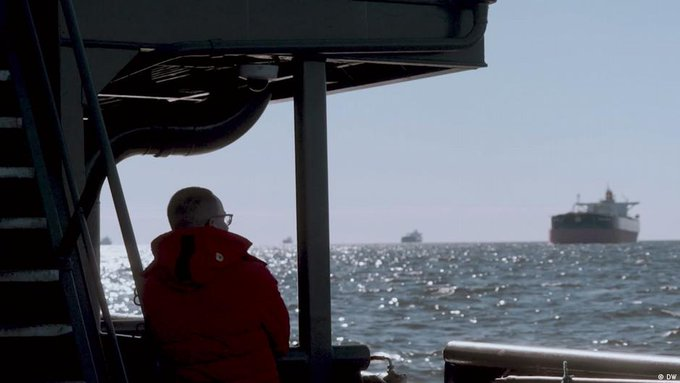
 Luigi Mangione appears at a pretrial hearing in Manhattan Criminal Court on Tuesday. Photo: David Dee Delgado/Pool via Getty Images
 Luigi Mangione is expected to plead guilty tomorrow to federal stalking charges tied to the killing of UnitedHealthcare CEO Brian Thompson, The New York Times reports. Mangione is also facing trial on a murder charge in New York State. If he pleads guilty in federal court, his lawyers may argue that New York’s double jeopardy laws prevent a murder trial tied to the same event.
  ️ The Pentagon is sending the aircraft carrier USS George Washington to the Middle East to replace the USS Abraham Lincoln, The Wall Street Journal reports. The Abraham Lincoln has been at sea for a record 200 days, and lawmakers and others have raised concerns about conditions aboard the ship.
  American Action Network, a top outside group aligned with House GOP leaders, is launching a $22 million ad campaign across 41 congressional districts.
  A
A  Photo illustration: Sarah Grillo/Axios. Photo: Suzanne Plunkett – Pool via Getty Images
 One tally finds that the president’s construction projects — including his new East Wing ballroom, upgrades to Lafayette Square and more — could cost at least $927 million, The Washington Post reports
  White House spokesman Davis Ingle said in a statement that Trump “continues to implement long-overdue and necessary renovations,” calling him the “Builder-in-Chief.”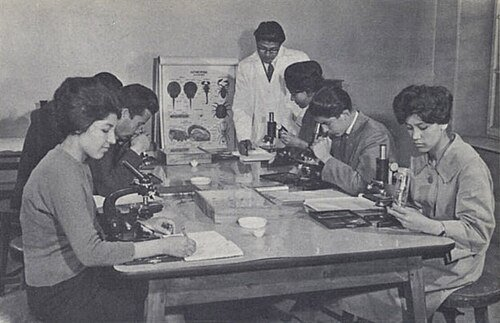

 Research suggests the role may also be linked to healthier aging and, in some cases, a longer life.
 The big picture: Grandparents who hit the sweet spot of involvement — not overextending, but being present and supportive — can experience physical, cognitive and emotional benefits, Axios’ Natalie Daher writes.
 It requires a can-do spirit: Children come with activities, schedules and the need for an adult in the room as they learn how to navigate the world, including sibling squabbles.
 It provides purpose: Grandparenting offers another vantage point on parenting — and, sometimes, a chance to do things differently from the first go-round.
 You gotta keep up: Grandparenting can lead to plenty of physical activity when you’re trying to match the energy of a kid
 The bottom line: The bond between grandparents and grandchildren is special and lasting — and benefits three generations.


