Wednesday’s AI Insight Forum may not, as Elon Musk suggested, “go down in history as being very important for the future of civilization” — but it marked a serious attempt at a new relationship between Washington and Silicon Valley. Senate Majority Leader Chuck Schumer said he began the closed-door session by asking, “Is government needed to play a role in regulating AI?” and added, “every single person raised their hands.” The substance of regulation is another issue: there are tensions between a race to compete with China and demands for fairness and transparency, for instance. And while Musk and other tech figures seemed to offer praise for the gathering, one advocate close to the Biden Administration signaled some of the conflict yet to come: “There were a lot of assumptions made from very well-meaning people that certainly would not bear out for anybody who was on the ground in communities who are experiencing the technologies,” the President of the Leadership Conference on Civil and Human Rights, Maya Wiley, told Semafor.
From 2013 to 2019 the share of U.S. health care visits delivered by non-physicians such as nurse practitioners or physician assistants increased from 14 to 26 percent.
This rapid shift requires caregivers, medical educators, and policymakers to understand and manage this growing segment of the health care workforce.
The proportion of health care visits delivered by nurse practitioners and physician assistants in the U.S. is increasing rapidly and now accounts for a quarter of all health care visits, according to a study published Sept. 14 in the BMJ.
The analysis, led by researchers from the Department of Health Care Policy in the Blavatnik Institute at Harvard Medical School, highlights the rising importance of this rapidly growing segment of the U.S. health care system.
The research is the first nationally representative study of the share of health care delivered by nurse practitioners and physician assistants, collectively known as advanced practice providers. It is also the first study to look at care delivered across different clinical conditions. The researchers analyzed 276 million visits from a nationally representative sample of Medicare insured patients.
Study co-authors Ateev Mehrotra, professor of health care policy at HMS, and Sadiq Patel, a former NIH postdoctoral fellow at HMS, spoke with Harvard Medicine News about the increasingly important role these providers play in our health care system.
Harvard Medicine News: How did we get to the point where a quarter of all medical visits are conducted by nurse practitioners and physician assistants, not by physicians?
Mehrotra: The roles of nurse practitioners and physician assistants were created in the mid 1960s to address what were already identified at that time as physician shortages. We looked specifically at the years from 2013 to 2019, when the proportion of all traditional health care visits delivered by nurse practitioners and physician assistants increased from 14 to 25.6 percent.
That’s the average, but it varied across different conditions. Forty-seven percent of respiratory infection visits and 31 percent of visits for anxiety disorders were conducted by nurse practitioners and physician assistants, but it was only 13 percent for eye disorders and 20 percent for hypertension.
HMNews: What’s driving this recent growth?
Mehrotra: The short answer is supply and demand. The U.S. has fewer physicians per capita than most of our peer nations. Who is going to provide that care? The number of nurse practitioners and physician assistants has grown more quickly than the number of physicians. And this trend will only continue as we move forward.
The U.S. Bureau of Labor Statistics estimates that between 2019 and 2031 the number of nurse practitioners in the U.S. will increase by 80 percent and the number of physician assistants by nearly 50 percent. In contrast, the growth rate for physicians over the next decade or so is estimated at less than 5 percent.
HMNews: Are there some patients who are more likely to see nurse practitioners or physician assistants than others?
Patel: Nurse practitioners and physician assistants are very widespread: Among all patients with at least one visit in 2019, 42 percent had one or more nurse practitioner or physician assistant visits. But there were some groups more likely to see nurse practitioners and physician assistants. The likelihood was greatest among patients who were lower income, rural residents, and people with disabilities.
That’s another reason it’s so important to get this right. We’ve known that these groups often have greater difficulty accessing care, and nurse practitioners and physician assistants are critical to providing this access.
HMNews: When people are sick, they usually think about “going to the doctor.” Is this change worrying? Is there a difference in quality or cost between the care delivered by nurses and physician assistants versus the care delivered by physicians?
Mehrotra: First of all, it’s very important to emphasize that it’s not really a question of one or the other. Almost all these practitioners work in teams that include physicians, nurse practitioners, and physician assistants working together.
Most of the research agrees that all three professions can do a good job delivering care in most settings, especially primary care. And it turns out that there is not a significant difference in spending. But there are clinical conditions that might be better suited to one profession or another.
Patel: One of the things that we wanted to do with this study was to start looking at the specific types of care these allied professionals were most likely to deliver.
HMNews: What did you learn?
Patel: As Ateev mentioned, patients were less likely to see a nurse practitioner or a physician assistant for an eye disorder, and more likely to see them for a respiratory infection. That seems like a reasonable allocation of resources, given the relative complexity of the clinical conditions.
The high use of nurse practitioners and physician assistants for anxiety disorders is another interesting example. There simply aren’t enough psychiatrists to treat all the people who need care for mental health conditions. But the good news is that there are highly effective evidence-based treatments that can help a lot of people with depression and anxiety that do not require a physician to deliver.
Mehrotra: Hopefully one benefit that will follow from this research is that we will be able to identify the services that allied health professionals can deliver and provide the training and support services they need to take care of their patients, like proactively planning for remote supervision in more complex psychiatric services or specialist consults by telemedicine.
HMNews: Any predictions on how these changes will shape health care going forward?
Mehrotra: The increase in care delivery by nurse practitioners and physician assistants represents a massive change. We need more research on how to best structure teams of clinicians — nurse practitioners, physician assistants, and physicians — so that they can work together to provide the most effective care possible. If we are thoughtful about how we move forward as those changes continue to happen, that’s millions of opportunities to do it better. I hope we take advantage of that opportunity.
Ibex’s new platform will help pathologists detect the specific treatment that will benefit breast cancer patients most (Courtesy)
An Israeli startup that uses artificial intelligence to diagnose cancer has unveiled a new solution that will help pathologists detect the specific treatments that will benefit breast cancer patients most.
Ibex Medical Analytics’ Galen Breast HER2 platform can accurately determine the expression in cancer slides of the protein HER2, which is responsible for the proliferation of breast cancer cells.
The platform uses AI to analyze the slides, identify the tumor cells and rapidly calculate the HER2 score of the tissue. The results are highlighted for the pathologist, who can review them and make a final decision as to what cancer treatment is best for each patient.
Traditionally, pathologists evaluate HER2 in tumor samples visually, which may result in varied interpretations. The Galen Breast HER2 scoring system quantifies the sample’s expression of the protein into four standard categories to help the pathologist make a more accurate decision.
The technology was developed and validated by Ibex in collaboration with AstraZeneca, the British-Swedish multinational biotechnology company, and Daiichi Sankyo, a Japanese pharma company.
“We are committed to providing pathologists with the most comprehensive AI platform as they implement digital pathology,” said Issar Yazbin, VP Product Management at Ibex Medical Analytics.
“In addition to HER2, we are now able to support full review of breast biopsies and excisions, distinguish between multiple types of invasive and non-invasive cancer, detect more than 50 malignant and non-malignant morphological features, and provide the underlying technology for automated quantification of additional prognostic and predictive breast biomarkers such as Ki-67, ER and PR.”
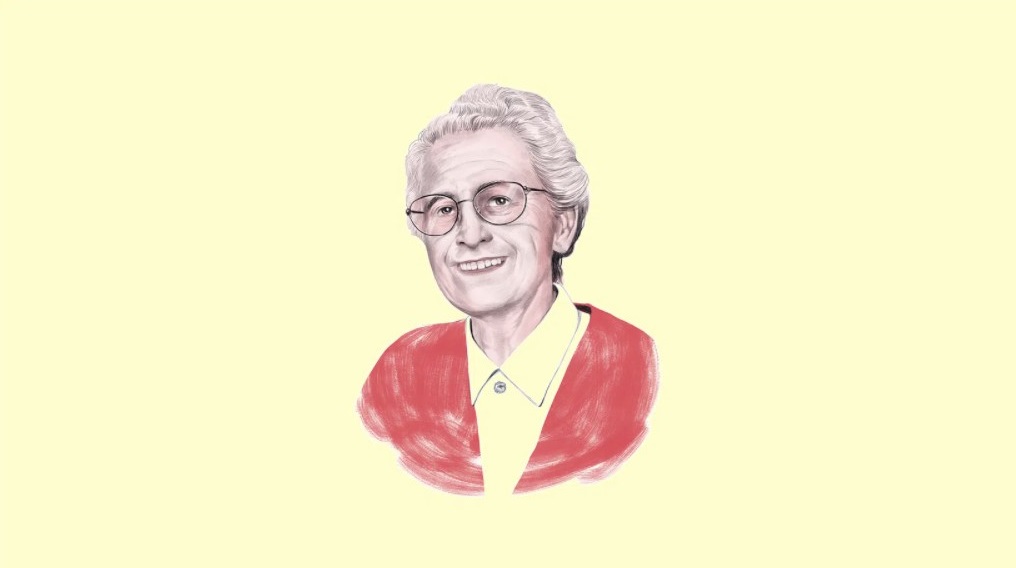
The Irish religious sister and doctor Maura O’Donohue campaigned against abuse of power by priests around the world. She helped survivors with discipline and sensitivity.
One of the many peculiar things about Catholicism is that even the outstanding women of this church remain almost unknown. One of them is the Irish nun Maura O’Donohue of the Medical Missionaries of Mary. Unusually for a woman of her generation, she had an academic degree, was appointed to management positions in her mid-twenties, spoke several languages, and managed a budget of millions. But what is possibly her greatest distinction of all, where she seems at first glance to have failed: in the fight against sexual abuse. This failure cannot be blamed on her, because survivors could not have found a more competent, committed, and better networked advocate than she.
The life and actions of O’Donohue, who died in 2015, were characterized by loyalty and faithful adherence to the applicable rules. Just as the church wishes her women religious to do. But that is precisely why she was not ready to look the other way when confronted with injustice, suffering, and rule violations.
There are some photos and video recordings of Maura O’Donohue. You can see a fine smile, inconspicuous clothing, and a straight posture. This woman radiates tremendous discipline. Maura O’Donohue has been described as smart, sensitive, and articulate by people who knew her. A person in whom willingness to serve, skill, and tenacity combined to form an impressive character, and above all: a woman who knew how to convince others.
She was born Mary Brigid O’Donohue in 1933 in a small town in sparsely populated County Clare on Ireland’s west coast. Barely of legal age, she joined the MMMs, the Medical Missionaries of Mary, in 1950. The order, founded only 13 years earlier, had set itself the task of bringing medical assistance where it was most needed. Upon joining, Mary was given the name Sr. Maura. She studied medicine in Dublin and was posted to a small town in southern Nigeria in 1958. In the following year, Dr. O’Donohue was appointed to the General Council of the order.
The greatest challenge of her life began 30 years later. In 1988 the British sister organization of Caritas, CAFOD, the Catholic Agency for Overseas Development, started an AIDS program. Maura O’Donohue, who for years had seen the AIDS epidemic make emergencies worse around the world in her daily work with lepers and in famine relief, took over the leadership of the program. She was responsible for HIV care, education projects, and the support of AIDS orphans, and organized cooperation with other organizations. In just three years she was able to set up 89 projects in 18 countries on three continents. One of her greatest successes was to get important church leaders and door-openers on board in the AIDS work. That was anything but easy, because within the Catholic Church, AIDS was initially seen as a pure “fringe group” problem. Above all, people were not prepared to question the church’s ban on contraceptives.
The willingness to get involved in the targeted fight against HIV was therefore not particularly pronounced in the leadership of the Catholic Church. O’Donohue knew about this problem and faced it. In retrospect, Matthew Carter, the director of CAFOD’s humanitarian aid, sums up her merit: “She was acutely aware that the Catholic Church could be either a part of the problem or part of the solution, with regard to HIV. From the outset she was determined to ensure Church-based responses were an effective and significant part of the solution. She made a difference” Together with the head of Caritas she traveled around the globe. She sensitized bishops’ conferences, orders, diocesan assemblies, seminaries, and theological institutes in Africa, Asia, and Latin America to the AIDS epidemic and won their support.
Maura O’Donohue knew that HIV was more than a disease. It was a crisis that exacerbated all of the core problems of development work: poverty, abuse of power, and powerlessness – especially the economic and sexual powerlessness of women. It also made things visible that had previously been hidden. This included the sex life of Catholic clergy in the countries particularly affected by AIDS.
Maura O’Donohue was in her mid-fifties at the time, a seasoned religious sister and development worker. She had already seen a lot. But what she heard and experienced now stunned her. In order not to infect themselves, priests apparently went to prostitutes less often and resorted increasingly to sexual assault.There was the story of the young woman who had recently converted to Christianity against the protests of her Muslim parents and wanted to enter a monastery. To enter, she needed a certificate from the local pastor. He raped her before handing her the paper. When she found out that she was pregnant after entering, she left the monastery, feeling ashamed, completely perplexed, and scared. She couldn’t go back to her parents. The pregnant young woman hid in the forest for ten days before going to the bishop. The only measure that the bishop took against the confessed pastor: He prescribed him 14 days of reflection.
The Vatican did nothing
O’Donohue heard similar stories over and over again: pastors expecting sexual services in exchange for credentials. Religious sisters who had to leave their monasteries after being infected or becoming pregnant. Bishops who ignored accusations and calls for help. Little by little it became clear to her: Sexual violence that priests perpetrated against women religious had not been triggered by AIDS, but had only become more visible. It was a problem in itself, and it was an even more sensitive issue than AIDS. In order to make a difference in this matter within the church, she would have to use the concentrated diplomatic expertise she had gathered in dealing with top church staff during the AIDS epidemic. Going public was out of the question for O’Donohue. She wanted to solve the problem in the expected way within the church, and she knew that it would be anything but easy, because she had to get those responsible in the Vatican to take care of the problem.
In February 1994, Maura O’Donohue wrote a strictly confidential report to Cardinal Martínez Somalo, then Prefect of the Congregation for Religious in Rome. This is the authority responsible for members of religious orders around the world. O’Donohue writes of “many confidences” that she had with a “great number of sisters.” She referred to priests, medical staff, and “other members of loyal ecclesial family” who could testify to “the exploitation of sisters and other women by priests.” She stressed that “case records exist for several of the incidents described … and that the information is not just based on hearsay.” She expressly writes that such cases are neither limited to “any single country or even continent, nor indeed to any one group,” but that they stem from “experience over a six-year period and relate to incidents in some 23 countries in five continents.” She names all of these countries, including the USA, Colombia, Ireland, Italy, India, Papua New Guinea, and the Philippines.
The examples that she describes are beyond imagination: In several countries there is the rule that pregnant women religious have to leave the monasteries. Afterwards, they and their child are condemned to extreme poverty, and quite a few are forced to prostitute themselves and expose themselves to the risk of an AIDS infection if they are not already ill. The priests, who often impregnated these women by force, would remain in office. Superiors of the order would be completely at a loss. In one case, a superior had to send more than 20 sisters away because they were pregnant. Catholic hospital workers report that priests pressured them to perform abortions.Other priests advised nuns to take the pill and persuaded them this would protect them from AIDS. In some cases, priests would molest teenagers or married women. In a parish that protested in vain, there were even armed attacks on the rectory. In the last third of the report, O’Donohue lists consequences and recommendations before closing with the words: “There is something prophetic in this tragedy, because it is the “voiceless” who have prompted this maturing process…. I pray that their pleas for help and understanding will not go unheard but will receive an equally courageous and prophetic response.”
About a year later, on February 18, 1995, O’Donohue was invited to Rome to talk to Cardinal Martínez Somalo and some of his closest collaborators. Among them was only one woman, the American canon lawyer Sr. Sharon Holland. The very beginning of the conversation was sobering. The head of the congregation was hardly prepared. There wasn’t even an agenda. With haunting words, O’Donohue makes it clear that nothing has changed in the dramatic situation. With diplomatic sensitivity, she also referred to “some good things” such as workshops that she had organized for religious orders and bishops’ conferences. At the same time, she referenced “sad experiences.” In the meantime, some orders refused in principle all candidates who brought credentials from pastors with them. The likelihood that they were sexually abused, infected with AIDS, or pregnant in exchange for the letters was too high. She told of an abused young religious who had died as a result of an abortion forced by her tormentor, whereupon the perpetrator had held her funeral mass unmoved.
Towards the end of the conversation, it was not the cardinal, but Maura O’Donohue, who made suggestions: Among other things, she proposed a broad-based visitation in which at least one woman should be involved. In addition, several Roman authorities should work together to deal with the full range of the problem. Maura O’Donohue offered her support and cooperation. But in a memo that she wrote after the conversation, there is no reference to inquiries or commitments from the congregation.
In the following years other concerned church people spoke up: the nuns Mary McDonald and Esther Fangman, the Benedictine Abbot Notker Wolf. They all knew the problem and hoped Rome would do something about it. But the Vatican did: nothing. In any case, a statement by the Vatican press spokesman from 2001 suggests this conclusion. That year, O’Donohue’s reports reached the press and were published. Apparently, the press spokesman could not refer to any visitations, criminal trials, or support programs for female survivors. Instead, he limited himself to belittling the problem in a few sentences. Even after that, inquiries went unheard. It was not until 2019, 25 years after O’Donohue’s first report, that the church made the next statement on the matter.It came from Pope Francis.He no longer downplayed the problem, and even spoke of the “sexual enslavement” of women religious. But even he could not refer to convictions, compensation, or any other specific measures. Maura O’Donohue did not live to see him speak these words. She died of leukemia on May 3, 2015.
To this day, the Roman Curia does not see the violence perpetrated by Catholic clergy against women as part of the abuse crisis. To this day, clerics who perpetrate the violence go unpunished. But Maura O’Donohue’s commitment also resonates to this day. She is quoted when survivors speak, when women religious defend themselves, and when research is being carried out on the subject. Ultimately, it is precisely her supposedly failed commitment for which she has received the most gratitude to this day.
DORIS REISINGER,
37 years old, researches at the Department of Catholic Theology at the Goethe University in Frankfurt am Main. She is a Fellow of the Gender, Sex, and Power research group at Notre Dame University in the USA. She has just published a book together with Christoph Röhl: Only truth saves: The abuse in the Catholic Church and the Ratzinger system.
CHRIST & WORLD SERIES
How can the process work properly? The churches in Germany are struggling to come to terms with the issue: the sexual violence that pastors (of all people) have committed against children and young people has caused a crisis of confidence. Christ & Welt has researched and reported intensively over the past few months. We know that this is a difficult topic, but at the same time we want to fulfill our journalistic task by contributing to clarification and opinion-forming. Yes, but isn’t there anything positive? How are you doing better? Aren’t there people in the abuse scandal who have shown how to act properly? Of course there are. We want to widen our view for them – initially in a series of portraits: The author and scholar Doris Reisinger introduces three people who acted wisely and decisively: three role models. Part 1 was about canon lawyer Thomas Doyle, who recognized the extent of the abuse scandal in the USA as early as 1984 (C&W No. 20/21).
Google turns 25: A look at the world’s top performing searches
Al Jazeera visualises the most popular global search terms as the world’s top search engine turns 25.
By Mohammed Hussein
Published On 4 Sep 20234 Sep 2023
Google turns 25 on Monday.
The world’s most popular search engine started as a research project by Larry Page and Sergey Brin when they were both doctoral students at Stanford University in the late 1990s.
Working from their dorm rooms, the two developed a new algorithm for search engines that ranked websites based on the number of other websites that linked to them, which they called PageRank.This algorithm proved to be much more effective than the existing algorithms, and Google quickly became the most popular search engine on the web.
As of last month, Google had a global market share of about 92 percent. Its nearest competitor, Bing, held about 3 percent market share, followed by Yahoo at just over 1 percent.
(Al Jazeera)
Google’s name is derived from the mathematical term “googol”, which refers to the number 1 followed by 100 zeros. The choice of this name reflects the founders’ intention to organise large amounts of information.
Through the years, the Google Search engine has become an integral part of our daily lives, shaping the way we search, communicate and interact with information online.
In 2006, the Oxford Dictionary added the word “google” as a verb to refer to searching for information on the internet, regardless of the search engine used.
That same year, Google launched Google Trends, an online platform that provides a window into the trillions of searches the world googles each year. At the end of each year, Google releases its “Year in Search”, which summarises the biggest events, personalities and trends that captured the world’s attention that year.
From the 19th century until the 1950s, thousands of Swiss children were taken from their homes and placed with foster families or sold at auction. The mothers of the outplaced children were poor and often divorced; some were alleged to be prostitutes.
One of these women was my great-grandmother, Dorothea Hürlimann. In 1895, because she managed a tobacco store in the red-light district, her three young children were placed with foster families. The middle child, Dora, was a servant in Winterthur until she was eighteen. In 1914, she immigrated to the United States and gave birth to my mother. For over a century, Dorothea’s loss of her children was a family secret.
In 1987, my Swiss cousins and I decided to search for the truth, and over four decades, we examined Swiss archives and interviewed relatives on both sides of the Atlantic. We uncovered the story that had brought shame to Dorothea Hürliman and her children, but, more importantly, we now understand the courage of women who overcame oppressive conditions and a misogynistic culture in Switzerland. The lives of Dorothea and her children were almost erased from history, but our research shows that these stories are filled with courage. Dorothea and her offspring are forgotten no longer.
Servants and slaves
Until the mid-20th century, much of Switzerland’s economy was based on farming. Farmers asked village officials for poor children to be assigned to their farms, and, in some parts of the country, it was possible to purchase children at auction. During a period of more than a century, tens of thousands of children were seized and worked as farmhands, house servants, or slaves. Children were separated from their biological parents for years at a time, and some never returned home. If children were not being raised properly, the thinking went, they should be removed from their family of origin. Proper child rearing required that the parents be married, and the husband had have a respectable job. From the mid-19th century until the 1960s, officials required that such children be sent to foster families. (1)
Tens of thousands of unwanted Swiss children were sold in auctions or given away as cheap labour until the 1950s…. Many of the child workers, known as Verdingkinder (discarded children), ended up being beaten and sexually abused after passing under the auctioneer’s hammer in Swiss provincial towns.They were handed to farmers or factory owners, who were paid a fee by local authorities to feed and house them. Although the children were supposed to be paid a basic wage for their work, in practice many were treated as slaves. Historians estimate that as many as 12,000 children of poor families, some of them infants and many with unmarried or divorced mothers, were given away or sold during the 1930s alone. The trade finally ended only in the decade after the Second World War, when increased farm mechanisation (sic) meant less need for youthful labour (sic)… Marco Leuenberger, a historian who has researched the practice… said: “We estimate that between five and 10 per cent of all Swiss children may have been sold or sent away by their families to work in the countryside between 1850 and 1950… It’s astonishing that these slave auctions were allowed to happen in Switzerland… One explanation is that at the time it was a poor agricultural country and there was a desperate need for cheap labour.”
Historian Loretta Seglias concluded that “hundreds of thousands of such children were placed in foster care in the 19th and 20th centuries.” (2) In the 21st century, the loss of children and out-placements seems unimaginable, but Guthknecht and Wirnshofer describe how, to the cantonal authorities, the customs were reasonable and necessary:
As the years went by, the stories of these verdingkinder (contract children), as they are known, were largely forgotten — until recently. In a special report for Munich-based Süddeutsche Zeitung, journalists Corinna Guthknecht and Josef Wirnshofer talk to some former contract children about their traumatic experiences. ‘The authorities deprived them of their parents when they were too poor to get them through,’ writes Wirnshofer. ‘At the time, poverty was not a problem of the state, but misconduct of the individual.It was also considered a danger to the common good. Poor mothers and fathers, it was thought, would affect the children negatively. Illegitimate children or children of separated parents were especially affected (Italics added.)’ (3)
A recent BBC article by Kavita Puri described how children went to the lowest bidder: “If a child became orphaned, a parent was unmarried, there was fear of neglect, or you had the misfortune to be poor, the communities would intervene. Authorities tried to find the cheapest way to look after these children, so they took them out of their families and placed them in foster families.” (4)
Today child labor is banned, and images of poor 19th century children are difficult to imagine. The Switzerland of 2023 does not seem like a country in which involuntary servitude could have taken place, and yet this is exactly what happened. In fact, “Public auctions for the child workers were still being held in some Swiss towns and villages as late as the 1930s.” (5)
During the decades that Verdingkinder existed, the reality was hidden from view, and victims had little support. In 2019, however, the truth was revealed when government officials offered apologies to survivors:
The Federal Office of Justice (FOJ) has processed some 6,000 claims for victims of forced labour and abuse… The aim is to deal with all the claims, totalling more than 9,000, by the end of the year. The Swiss government has agreed to pay up to CHF25,000 ($24,800) in compensation to people who, as children, were victims of forced labour policies or placed in institutions, often suffering abuse or neglect. The “Verdingkinder” (slave children) practice continued until 1981. Around 12,000-15,000 victims are still alive, the FOJ estimates. The government announced the CHF300 million compensation scheme in September 2016, and it was launched in December of that year. The authorities had earlier offered official apologies to the survivors of this dark period of Swiss history. (6)
Background
In 1987, Urs Arcon, then a clothing designer and resident of Winterthur, sent a letter to me in North Carolina. Arcon, who shares the same great grandparents, wrote that, “there are family myths, and truth is covered by a veil of silence.” He said he knew there were secrets worth investigating. It was not until 2019, when Arcon and I were retired, that we found time to complete the research.
As for me, I had always wanted to find out my grandmother who was raised by a foster family and why she left Switzerland. Arcon urged me to move to Switzerland, but I first had to get a year-long visa. The Swiss Embassy turned me down, but I appealed by saying I planned to write an article describing Swiss American connections. The Embassy finally granted me a visa, and I signed a lease for an apartment in a small village. Arcon and I translated German and French documents and interviewed elderly relatives, farmers, prostitutes and former Verdingkinder. We met with today’s Hürlimann clan in Walchwil, and we visited the tobacco store that Dorothea managed.
Our research shows that Geneva’s officials saw Dorothea as an unfit mother, and she was forced to give up her children. Dorothea, however, re-built her shattered life, and two of the three children prospered in Switzerland and the United States.
Dorothea Hurlimann and Out-placed Children
Maria Dorothea Hürlimann, my great grandmother, was born on November 11, 1858, in Walchwil, Zug. Her parents were Michael Joseph Hürlimann (Aug. 25, 1826-Sept. 9, 1894) and Maria Elisabeth Ganz (April 13, 1826-Sept. 4, 1889). Her future husband, Rudolf Albert Sommer, was born on January 24, 1857, in Elsau, Zurich, and became a barrel maker. Young Rudolf decided to break free from village life and booked passage to the United States.
With a similar goal, Dorothea Hürlimann emigrated from Switzerland, and both passed through Ellis Island. They met in Philadelphia and were married on June 26, 1887. Their son, Rudolf Michael, was born on June 12, 1888, but Rudolf drank so heavily that he was unable to hold a job, and in early 1891, the couple gave up their dream and returned to Europe. As they crossed France, Dorothea went into labor, and Dora Suzanne Sommer, my grandmother, was born in Paris on May 2, 1891. A third child, Elise, was born on August 10, 1893.
Returning home did not cure Rudolf of his alcoholism. He abused Dorothea and abandoned his family. On November 8, 1895, a Geneva court granted Dorothea a divorce. Dorothea’s case must have been convincing, because the judge’s decision was blunt:
“From the first days of marriage Mr. Sommer was abusive; he does not work; he was fired by bosses at several jobs, he said injurious things to his wife like calling her a whore; he was arrested for doing this in October 1894; he left his wife and three children this past April 10 and didn’t give them any news.” (7)
So, on November 9, 1895, Dorothea was a divorced woman with three children, ages two, four and seven. She took job managing a tobacco store on 52 Rue de Monthoux in a red-light district called Le Paquis. Such businesses were thought to be fronts for prostitution, and sexual trysts supposedly took place in the back rooms.
A 2004 exhibition in Zurich depicted the tobacco stores, and “tells in graphic detail the story of an often-sordid aspect of the Belle Epoque, when it was considered normal for well-to-do men to visit brothels… After the official closure of brothels in 1898, many of the women found jobs in cigar shops. Each shop had an adjoining backroom where it was possible to buy more than cheroots and other tobacco products.” (8) After officials required Dorothea to out-place her children, she sent two of them to live with farmers in Elsau and sent Dora to Winterthur.
Paula, my sister, reflected on the women’s dilemmas in that era: “We will never know whether Dorothea Hürlimann was, in fact, paid for sex in the back room of her tobacco shop. And if she were, in no way does that diminish my respect for her as a courageous woman in a misogynist culture. The more important point is that she managed to survive by whatever means necessary in a repressive Calvinist society where options to earn a living for a single mother were few.” (9)
Three years after her children were moved to foster homes, Dorothea married Remy Maul, a Swiss-French man. They had one child, Robert, and left Le Paquis. Dorothea died on October 17, 1924.
Around age eighteen, Dora received an offer from Romola de Pulszky, the wife of Nijinsky, to be an attendant in New York. In 2014, Dora began work in a New York hotel. There she met Paul Emil Fischer (December 28, 1890-April 1950), a German who was working as a bellhop. Paul and Dora were married in Jersey City, N.J. on December 23, 1916. They had two children, Rudy Warner (b. Nov. 27, 1917) and my mother, Hazel (b. Sept. 25, 1921). Dora became a naturalized U.S. citizen on July 7, 1921.
c. 1930 Dora Sommer Fischer (author’s grandmother), Paul Fischer, Rudy and Hazel Fischer
Paul Fischer, a hotel staff trainer, was absent for months and was abusive to his wife and children. The family followed Paul to Detroit, Cincinnati, and Minneapolis, but, when he announced they had to move to Dallas, Dora obtained a divorce. Soon thereafter, she was so desperate that she remarried him only to divorce once again. In her fifties, Dora moved to North Carolina, where my parents and I were living.
I recall how “Nana” baked Swiss pastries and urged me to fatten up: “just have butter and a little bit of meat. They won’t do you any harm.” My siblings and I were impressed that she could name every mountain on a Christmas calendar, and that she sang a song about lovers who “meet on Alpine peaks because mountains never share their secrets.” My sister, Sarah, remembers how Nana, “would make delicious dishes in her apartment, bragging about how much butter was included. Since her sister, Elise, died of TB, she thought it good to be plump. Her voice and accent were so melodious that it was impossible not to doze off.” (10)
Nana told us about one incident that occurred after she was allowed to move back into her mother’s apartment:
My mother married Remy Maul. His last name rhymed with ‘pole.’ We loved him very much and I called him ‘Papa.’ Mother was strict, so I was glad to have a Papa. The two of them bought a piano with ‘Mozart’ carved into it. Papa hired a handsome Italian music teacher who gave me lessons in the back room of the restaurant. Papa would sit near the door to observe, but sometimes the door was shut. One day we were supposed to be practicing the scales. The teacher, as was often the case, joked with me about the small size of my fingers and how they were not able to reach the keys. ‘I will have to stretch them,’ he said, and he held my fingers and pulled on them. On this day, he reached over and kissed me. Just then Papa opened the door and said, ‘Get out! That’s not what we paid you for!’ The man was paid but did not come again. Mother asked me why I didn’t push him away. I said it was not my fault, since I was too young and didn’t want to do anything. As a result, they did not trust me alone.” (11)
There was no dining room table in Nana’s apartment on 78 Hamilton Road in Chapel Hill, so we would roll out her circular table, all the while singing: ‘Roll out the barrel, we’ll have a barrel of fun…’ We dined on buttery potatoes and lemon squares while marveling at Nana’s sweet disposition. Many years later, she despaired because grasshoppers lived in her oven, and slugs covered the concrete stoop. Much later, after we moved her to a nursing facility, it dawned on us that she was dying.” Paula, my sister, looked back at Nana: “When she arrived from Minneapolis with her purple suitcase, she brought us chocolates. During her last hours, I said, ‘I love you.’ Nana looked at me and said: ‘I love you.’ ‘I love you,’ I said.’ She died in my arms.” (12)
c. 1954 Hazel Fischer Craige (L) with me, Burton, Sarah and Paula
Dorothea Hürlimann and Dora Fischer lived with dignity and purpose. They left abusive husbands, had no financial security, and struggled as immigrants. Despite hardships, they dedicated their lives to raising their children and they succeeded. The findings suggest that there are many other Swiss American women whose stories are worth researching and sharing.
About the author: Tito Craige, Ed.D. is the great grandson of Dorothea Hürlimann, a Swiss-American immigrant from Zug. He teaches history in Chapel Hill, NC, and has written articles on human rights and refugees.
References
Arcon, Urs. January 3, 1987. Correspondence with the author.
Craige, Paula. Interview by the author on December 19, 2021.
Craige, Sarah. Interview by the author. December 1, 2021.
Craige, Tito: Urs Arcon and I visited Le Paquis in May 2019. Today Dorothea’s neighborhood is a lower-class area where prostitutes make their living. To many Swiss, “Le Paquis” is still synonymous with “red-light district.” Women from Africa and Latin America walk the streets, many with mini-skirts and low-cut tops. Josefina, a woman from Colombia, said, “Come on in!” I told her I was researching my ancestors and was not there for a massage. She laughed again and said, “I have never heard of such an excuse. Are you really looking for someone from a hundred years ago?
Kim Wilshire, “Thousands of Swiss Children Sold into Slavery.” The Telegraph – UK, March 14, 2004, https://rense.com/general50/children.htm (Last accessed July 1, 2022). The exact population of children sent to foster homes or auctioned will never be known. There is little agreement about when the practice started and ended and who was considered a foster child. Some children were placed with relatives; others were sold and re-sold. Each canton has different record-keeping systems, and there is no federal record.
Kavita Puri, October 29, 2014. “Switzerland’s shame: The children used as cheap farm labour (sic)” in https://www.bbc.com/news/magazine-29765623 (Last accessed July 8, 2022).
Paula Craige, interview with the author, December 19, 2021.
Sarah Craige. Interview by the author. December 1, 2021.
Interview notes.
Interview notes.
Acknowledgments
Special thanks to siblings Paula, Sarah, and Burton Craige for their encouragement. Much appreciation to Swiss relatives in Aarberg, Zurich, Walchwil and Ticino: Ruedi and Maria Sommer. Christian Bürgi, Eliane and Rolf Bürgi, Matthias, Christina, Jael, and Selina Bürgi, Kathi and Simone Arcon, Urs Arcon, David Arcon, and Franz Hürlimann.
Most parents won’t admit it, but a surprising number have a ‘hidden favourite’ and the way they treat that child compared to their siblings can have long-lasting impacts on their mental health as adults and on family relationships.
Article continues below
M
My siblings and I always knew when our middle brother was coming to visit my parents: my mother would put out little bowls of prawn cocktail, as a special starter.
“Prodigal son,” we would protest, slightly miffed that the rest of us never had this kind of privileged treatment. The official explanation was that he didn’t come over for Sunday lunch as often as the rest of us, but that still didn’t really seem fair.
In truth, despite the prawn cocktail, I did not think my parents had any favourites. I grew up as one of six siblings in a working-class family in north London. Of course, my brothers, sister and I all had different roles and jobs in the family, but the reasons just seemed practical. As the youngest, for example, I was always the one to go fetch things for my parents, maybe because they thought I had lots of energy anyway. My sister was usually the one to go shopping, because she could drive. It was a busy house and to add to the mix, we also owned a dalmatian dog, Sheba.
Overall, it all felt quite even-handed to me. But last year, at a family gathering, one of my brothers blurted out that he thought I was my father’s favourite.
My sister seemed a bit surprised by that. And I realised that there might be more to the story I had told myself – of our parents not really having favourites. I wondered how people in my and other families really experience these dynamics, and how they might shape us in the long run even if we’re not fully aware of them.
Research suggests that parental favouritism is surprisingly common – and rather than being just a quirk of family life, can actually be very harmful. It occurs in around 65% of families, and has been identified and studied across many different cultures. As widespread as it is, it can damage children’s wellbeing across the lifespan, from their childhood into middle age and beyond. It is considered such an important factor in a range of emotional problems that psychologists have a name and acronym for it: “parental differential treatment“, or PDT.
However, as in my exchange with my brother, siblings in the same family may disagree over whether their family is even affected by it. That’s because feeling less-favoured can be very subjective, says Laurie Kramer, a professor of applied psychology at Northeastern University in the US. “It is the experience that people have, that a parent prefers another child to them,” she says. “This could be by devoting more time, attention, praise, or affection. Possibly asserting less control, so that they may enjoy fewer restrictions, be subject to less discipline or even punishment.”
Importantly, not everyone in the family may see it that way. “This may not be the same observation that the other sibling encounters and may be different again for what the parent believes they have engaged in,” says Kramer.
For the person who feels like they are treated as second-best, the consequences can be profound. Research suggests that from an early age, children are aware of differential treatment, such as parents showing more warmth to one sibling than another. Such perceived parental favouritism has been associated with low self-esteem in children, as well as childhood anxiety, depression, and behavioural problems, including risky behaviour. There may also be a knock-on effect on emotional wellbeing that causes other, more indirect problems. Researchers in China have, for example, shown that parental favouritism is a predictor for mobile phone addiction in adolescents. In a small Canadian study of eight homeless teenagers, seven said they felt that their parents had favoured a sibling over them, while they had always been the “problem child“, and that this had contributed to the breakdown of family ties.
While this final study is too small to draw wider conclusions, it highlights just how far a child’s experience of favouritism can potentially go.
In many cases parents do not deliberately bestow favour on one child over another and are largely unaware that they are doing so (Credit: Emmanuel Lafont)
The mental health impact may persist into adulthood, with maternal favouritism for example being associated with higher depression scores in adult children. The bias itself may also continue in later life, with parents still playing favourites with their adult children. And while the parents rather than the siblings bear the responsibility for this, favouritism can harm the sibling bond over the life course and increase tensions and conflict between siblings. This is especially worrying as having good relationships with our siblings is important for our lifelong health and happiness.
Given how damaging it is, can parents not simply avoid picking a favourite?
In Kramer’s view, they may not doing so intentionally, and are likely not even aware they are. “Preferential treatment may begin for parents due to one child being easier to parent, they may relate to that child more, see similarities between them and the child,” she says.
“If these situations were addressed in a sensitive manner, where no one feels they are being blamed or that it is their fault, you can have more open conversations on all sides to understand,” Kramer says. Parents could, for example, ask why the child feels they prefer a sibling. “If a parent listens [and] then provides a reason for the differential behaviours to a child, that can work wonders.” The child may realise that there is a practical reason, and that it’s not about the sibling being loved more.
In my family, we had never broached the subject of favouritism, either. But after my brother’s throw-away comment on me being the favourite, I decided to find out more.
First, I asked my brother why he had made this comment. He replied that our father had once told him off for scaring me with the Mole from the Thunderbirds TV series – a kind of giant drilling machine – and making me cry. I have no recollection of this moment, maybe as I was not on the receiving end of the telling-off.
As my siblings and I talked more, we remembered my mother sometimes giving our eldest brother preferential treatment, probably because he was her firstborn. Meanwhile, our father often praised our middle brother for being shrewd, a quality he admired, and which they both shared. And then there’s that prawn cocktail that comes out when our middle brother visits, of course.
They are small differences, but it’s easy to see that they might have amplified into something more and could even have led to resentment. It’s possible that the impact was watered down by the fact that there are six of us – and the five who didn’t always get the “prawn cocktail treatment” could joke to each other about it. And we all still got to enjoy the prawn cocktail when my middle brother visited. Imagine a family with only two grown children, and one is served a prawn cocktail lunch, while the other always gets the plain option: it would probably feel very cruel to that child, like being punished or cut out.
The strongest predictor for emotional closeness were the parent’s feelings of the child being similar to them
Megan Gilligan, an associate professor of human development and family science at the University of Missouri, worked with Jill Suitor, a professor of sociology at Purdue University and Karl Pillemer, a psychology professor at Cornell University, on the Within-Family Differences Study in the US, a longitudinal project funded by National institute of Aging. The project has tracked different families for two decades in order to better understand relationships between the generations. As part of the study, the researchers asked mothers and fathers a direct question about favouritism – for many, it was the first time they were asked about it at all.
The question was: “To which of your children do you feel most emotional closeness?” After a slight deliberation, a high proportion of mothers (75%) then named one of their children. The rest chose none, or said they felt equally close to all of them.
They were also asked who they felt more disappointment and conflict with. The answer had consequences across the lifespan, with the child picked early on as “disappointing” then also treated that way later on.
Birth order played a role in some aspects of favouritism, but perhaps not as much as is often assumed. “In adulthood, [research does not] find this to be an overwhelming predictor of favouritism,” says Gilligan.
Specifically, my guess that the first-born would naturally be picked as the “golden child” is not backed up by the scientific research. For emotional closeness, last-born children are actually more likely to be chosen than the middle or first child, Gilligan says. But the strongest predictor for emotional closeness were the parent’s feelings of the child being similar to them.
Gilligan also highlighted the real damage that can result from differential treatment, which showed up in the longitudinal story, such as poor sibling relationships, the less-favoured sibling feeling more inadequate about themselves, and having a less positive relationship with the parent.
Even a dispute between siblings can lead to feelings that one is favoured by parents, so having open conversations about these feelings can help (Credit: Emmanuel Lafont)
Being the “golden child” can also come with pain. “You might expect being a favourite child to come with many benefits, however, it can also cause emotional distress for adult children,” she says. “We have found favouritism to be associated with higher depressive symptoms for favoured children. We believe that this is because being a mother’s favorite child creates conflict in their favoured children’s relationships with their siblings.We have found that that this tension with siblings in adulthood is consequential for psychological well-being.”
And while favouritism can haunt us even as adults, our experience of it can change subtly as we age. Gillian authored a review of studies on the impact of favouritism across the lifespan, from very young children to grown children now in their 60s or older. She found that there are differences in how it shows up at different stages. For younger children, favouritism may be more about how much time parents spend with them compared to a sibling. For adult children, it may be more about unequal financial support.
The answer is not to treat all of one’s children exactly the same, says Kramer. “It is impossible to treat kids the same in every situation, and neither do children want this,” she says. “They want to be understood for who they are, their age, interest, gender, personality.” Still, being more self-aware can help parents avoid consistently causing unfair situations, she says. This is especially important as children may learn the pattern of favouritism, and as adults, apply it to their own parenting style and relationships: “Unless we are aware and take action to break that transmission, we are likely to engage in the same behaviour.”
The idea of learning certain biases from our parents, certainly rings true. My mother would always plate up slightly larger portions for my brothers, as they were seen as “growing lads”. My partner has noticed that when I dish up our evening meal, I do the same, serving him more than myself.
I don’t feel traumatised by the slight differences in the way my siblings and I were treated as children, and perhaps, even today. We are close to our parents, and to each other. Looking back, our pet dog, Sheba, was possibly my dad’s real favourite.
But becoming more aware of some of these differences in treatment, and how they’ve shaped my own behaviour, has made me see a few things in a different light. For a start, I might try serving myself larger portions in the future – and I don’t wait for my brother to visit to treat myself to a prawn cocktail.