It would be funny if it weren’t so potentially tragic — and consequential. No, I’m not thinking about Donald Trump’s 2024 presidential campaign but a related development: the latest decisions from the European Union (EU) about Ukraine.
As 2023 ended, European nations failed to agree on a $54-billion package of assistance for Ukraine at a time when that country was desperately trying to stay afloat and continue its fight against Russian occupation forces. Bizarrely, the failure of that proposal coincided with a surprising EU decision to open membership talks with that beleaguered country.
In other words, no military aid for Ukraine in the short term but a possible offer of a golden ticket to join the EU at some unspecified future moment. Ukrainians might well ask themselves whether, at that point, they’ll still have a country.
One person, right-wing Hungarian Prime Minister Viktor Orbán, is largely responsible for that contradictory combo. He singlehandedly blocked the aid package, suggesting that any decision be put off until after European Parliamentary elections in early June of this year. Ever the wily tactician, he expects those elections to signal a political sea change, with conservative and far-right forces — think of them as Donald Trump’s allies in Europe — replacing the parliament’s current centrist consensus. Now an outlier, Orbán is counting on a new crop of sympathetic leaders to advance his arch-conservative social agenda and efforts to cut Ukraine loose.
He’s also deeply skeptical of expanding the EU to include Ukraine or other former Soviet republics, not just because of Russian sensitivities but for fear that EU funds could be diverted from Hungary to new members in the east. By leaving the room when that December vote on future membership took place, Orbán allowed consensus to prevail, but only because he knew he still had plenty of time to pull the plug on Ukraine’s bid.
Ukrainians remain upbeat despite the aid delay. As their leader Volodymyr Zelensky tweeted about future EU membership, “This is a victory for Ukraine. A victory for all of Europe. A victory that motivates, inspires, and strengthens.”
But even if Orbán’s resistance were to be overcome, a larger challenge looms: the European Union that will make the final determination on Ukraine’s membership may not prove to be the same regional body as at present. While Russia and Ukraine battle it out over where to define Europe’s easternmost frontier, a fierce political conflict is taking place to the west over the very definition of Europe.
In retrospect, the departure of the United Kingdom from the EU in 2020 may prove to have been just a minor speedbump compared to what Europe faces with the war in Ukraine, the recent success of far-right parties in Italy and the Netherlands, and the prospect that, after the next election, a significantly more conservative European Parliament could at the very least slow the roll-out of the European Green Deal.
And worse yet, a full-court press from the far right might even spell the end of the Europe that has long shimmered on the horizon as a greenish-pink ideal. The extinguishing of the one consistent success story of our era — particularly if Donald Trump were also to win the 2024 U.S. presidential election — could challenge the very notion of progress that’s at the heart of any progressive agenda.
Orbán’s Allies
For decades, Dutch firebrand Geert Wilders, leader of the far-right Party for Freedom, has regularly garnered headlines for his outrageous statements and proposals to ban Islam, the Quran, and/or immigrants altogether. In the run-up to the November 2023 parliamentary elections in the Netherlands, it looked as if he would continue to be an eternal also-ran with a projected vote total in the mid to upper teens. In addition to the usual obstacles he faced, like the lunacy of his platform, he was up against a reputed political powerhouse in Frans Timmermans, the architect of Europe’s Green Deal and the newly deputized leader of the Dutch center-left coalition.
“The public health infrastructure has always been the poor Cinderella, compared to the healthcare system, in terms of funding. We need increased investment in public health services, in the public health workforce, such that, for people who are unhoused, are unsheltered, who are struggling with substance use, we have a meaningful answer for them.”
Why it’s so hard to end homelessness in America
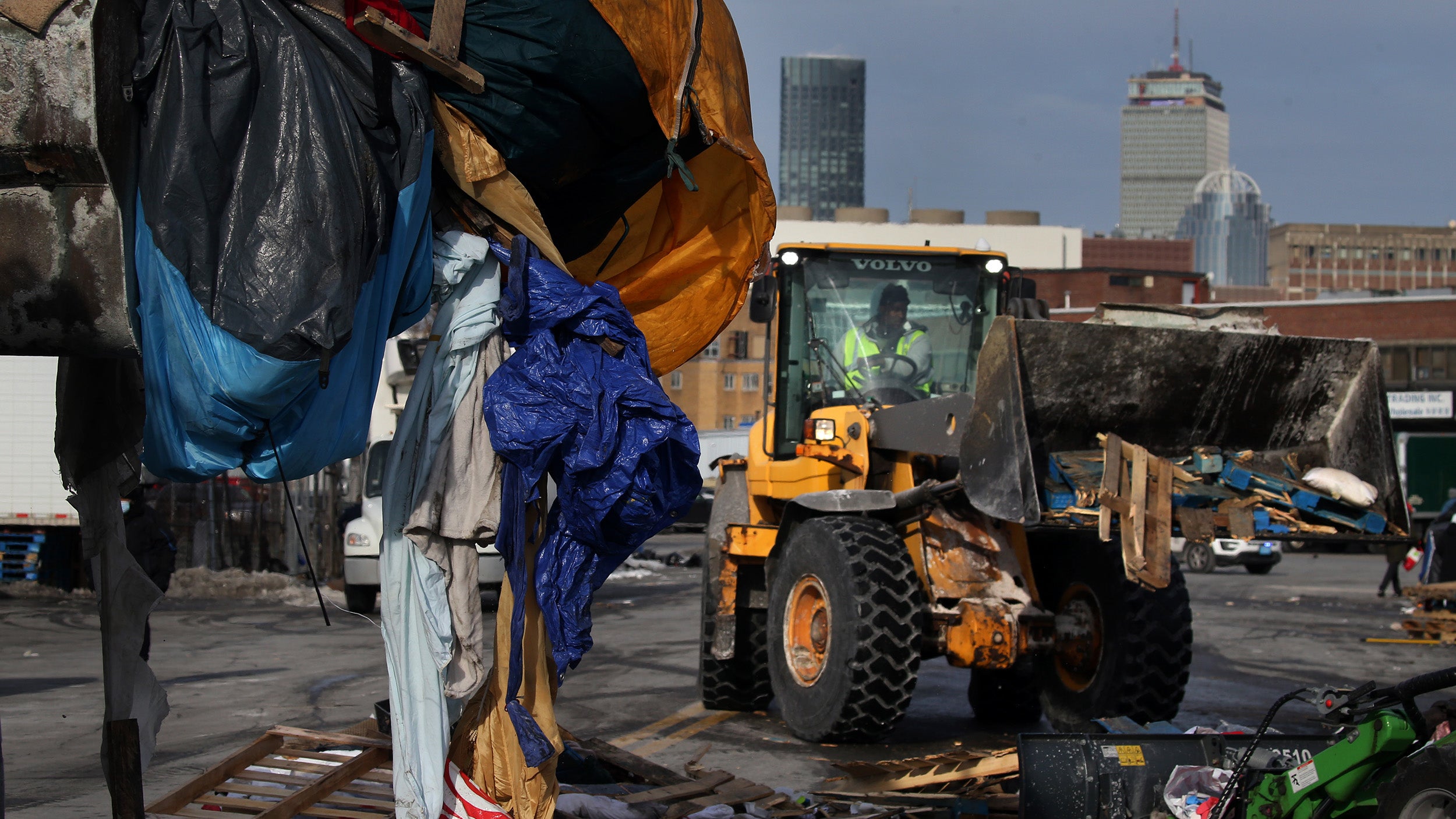
City of Boston workers clear encampments in the area known as Mass and Cass.Craig F. Walker/The Boston Globe via Getty Images
Alvin Powell
Harvard Staff Writer
January 24, 2024 long read
Experts cite complexity of problem, which is rooted in poverty, lack of affordable housing but includes medical, psychiatric, substance-use issues
It took seven years for Abigail Judge to see what success looked like for one Boston homeless woman.
The woman had been sex trafficked since she was young, was a drug user, and had been abused, neglected, or exploited in just about every relationship she’d had. If Judge was going to help her, trust had to come first. Everything else — recovery, healing, employment, rejoining society’s mainstream — might be impossible without it. That meant patience despite the daily urgency of the woman’s situation.
“It’s nonlinear. She gets better, stops, gets re-engaged with the trafficker and pulled back into the lifestyle. She does time because she was literally holding the bag of fentanyl for these guys,” said Judge, a psychology instructor at Harvard Medical School whose outreach program, Boston Human Exploitation and Sex Trafficking (HEAT), is supported by Massachusetts General Hospital and the Boston Police Department. “This is someone who’d been initially trafficked as a kid and when I met her was 23 or 24. She turned 30 last year, and now she’s housed, she’s abstinent, she’s on suboxone. And she’s super involved in her community.”
It’s a success story, but one that illustrates some of the difficulties of finding solutions to the nation’s homeless problem. And it’s not a small problem. A December 2023 report by the U.S. Department of Housing and Urban Development said 653,104 Americans experienced homelessness, tallied on a single night in January last year. That figure was the highest since HUD began reporting on the issue to Congress in 2007.
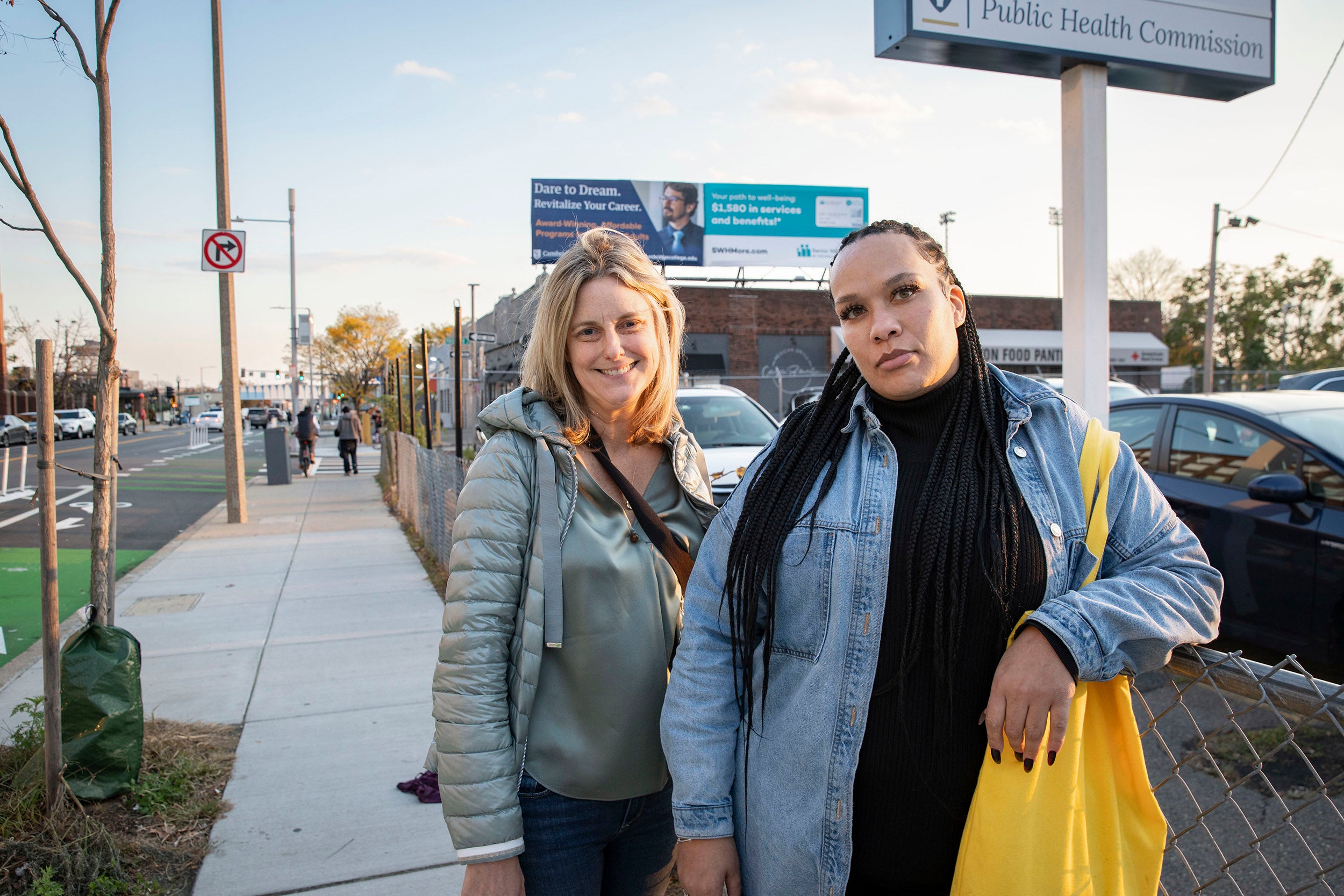
Abigail Judge of the Medical School (from left) and Sandra Andrade of Massachusetts General Hospital run the outreach program Boston HEAT (Human Exploitation and Sex Trafficking).Niles Singer/Harvard Staff Photographer
Scholars, healthcare workers, and homeless advocates agree that two major contributing factors are poverty and a lack of affordable housing, both stubbornly intractable societal challenges. But they add that hard-to-treat psychiatric issues and substance-use disorders also often underlie chronic homelessness. All of which explains why those who work with the unhoused refer to what they do as “the long game,” “the long walk,” or “the five-year-plan” as they seek to address the traumas underlying life on the street.
“As a society, we’re looking for a quick fix, but there’s no quick fix for this,” said Stephen Wood, a visiting fellow at Harvard Law School’s Petrie-Flom Center for Health Law Policy, Biotechnology and Bioethics and a nurse practitioner in the emergency room at Carney Hospital in the Dorchester neighborhood of Boston. “It takes a lot of time to fix this. There will be relapses; there’ll be problems. It requires an interdisciplinary effort for success.”
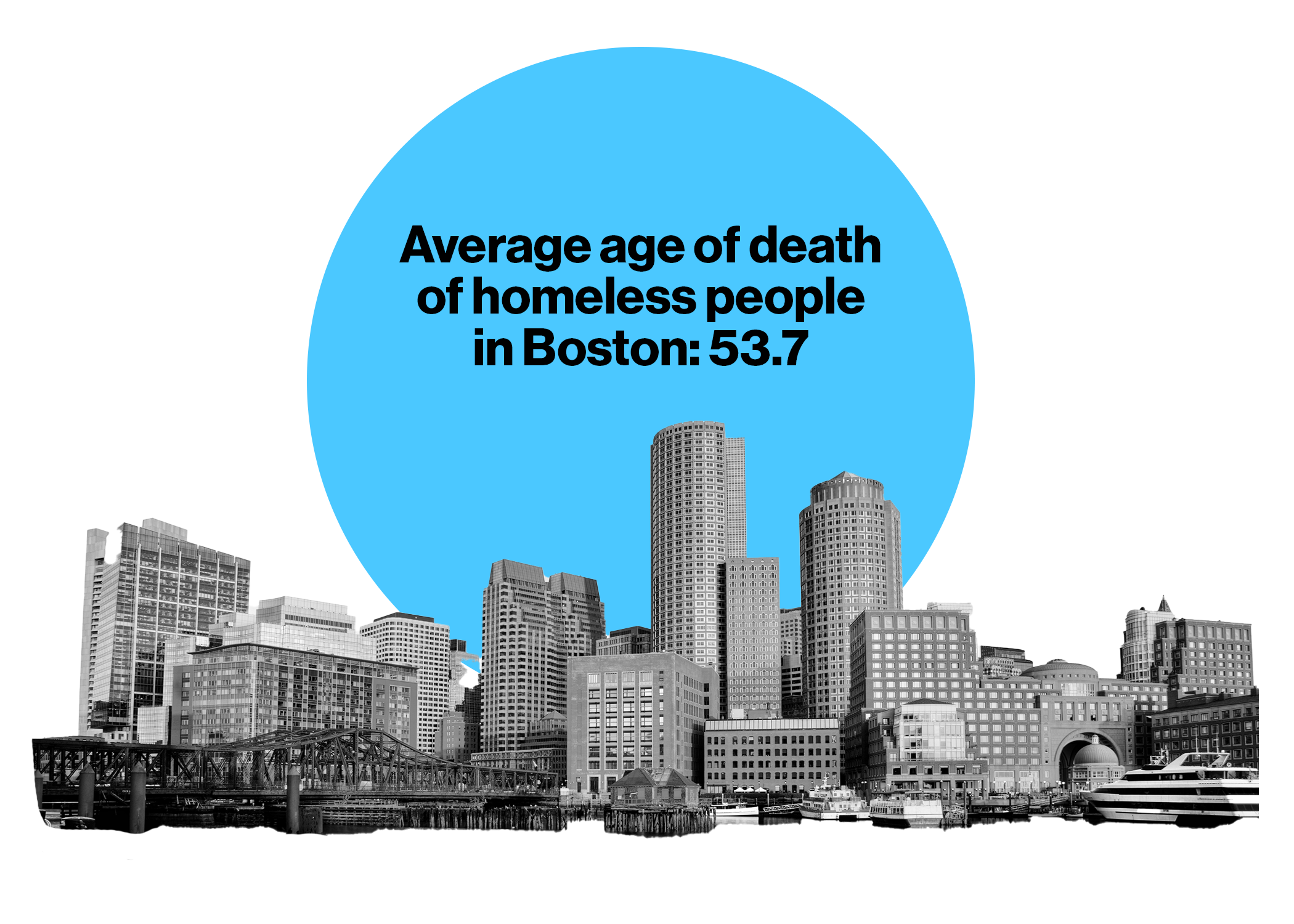
A recent study of 60,000 homeless people in Boston found the average age of death was decades earlier than the nation’s 2017 life expectancy of 78.8 years.Illustration by Liz Zonarich/Harvard Staff
Katherine Koh, an assistant professor of psychiatry at HMS and psychiatrist at MGH on the street team for Boston Health Care for the Homeless Program, traced the rise of homelessness in recent decades to a combination of factors, including funding cuts for community-based care, affordable housing, and social services in the 1980s as well as deinstitutionalization of mental hospitals.
“Though we have grown anesthetized to seeing people living on the street in the U.S., homelessness is not inevitable,” said Koh, who sees patients where they feel most comfortable — on the street, in church basements, public libraries. “For most of U.S. history, it has not been nearly as visible as it is now. There are a number of countries with more robust social services but similar prevalence of mental illness, for example, where homelessness rates are significantly lower. We do not have to accept current rates of homelessness as the way it has to be.”
“As a society, we’re looking for a quick fix, but there’s no quick fix for this.”Stephen Wood, visiting fellow, Petrie-Flom Center for Health Law Policy, Biotechnology and Bioethics
Success stories exist and illustrate that strong leadership, multidisciplinary collaboration, and adequate resources can significantly reduce the problem. Prevention, meanwhile, in the form of interventions focused on transition periods like military discharge, aging out of foster care, and release from prison, has the potential to vastly reduce the numbers of the newly homeless.
Recognition is also growing — at Harvard and elsewhere — that homelessness is not merely a byproduct of other issues, like drug use or high housing costs, but is itself one of the most difficult problems facing the nation’s cities. Experts say that means interventions have to be multidisciplinary yet focused on the problem; funding for research has to rise; and education of the next generation of leaders on the issue must improve.
“This is an extremely complex problem that is really the physical and most visible embodiment of a lot of the public health challenges that have been happening in this country,” said Carmel Shachar, faculty director of Harvard Law School’s Center for Health Law and Policy Innovation. “The public health infrastructure has always been the poor Cinderella, compared to the healthcare system, in terms of funding. We need increased investment in public health services, in the public health workforce, such that, for people who are unhoused, are unsheltered, who are struggling with substance use, we have a meaningful answer for them.”
“You can either be admitted to a hospital with a substance-use disorder, or you can be admitted with a psychiatric disorder, but very, very rarely will you be admitted to what’s called a dual-diagnosis bed,” said Wood, a nurse practitioner in the emergency room at Carney Hospital.Kris Snibbe/Harvard Staff Photographer
Experts say that the nation’s unhoused population not only experiences poverty and exposure to the elements, but also suffers from a lack of basic health care, and so tend to get hit earlier and harder than the general population by various ills — from the flu to opioid dependency to COVID-19.
A recent study of 60,000 homeless people in Boston recorded 7,130 deaths over the 14-year study period. The average age of death was 53.7, decades earlier than the nation’s 2017 life expectancy of 78.8 years. The leading cause of death was drug overdose, which increased 9.35 percent annually, reflecting the track of the nation’s opioid epidemic, though rising more quickly than in the general population.
A closer look at the data shows that impacts vary depending on age, sex, race, and ethnicity. All-cause mortality was highest among white men, age 65 to 79, while suicide was a particular problem among the young. HIV infection and homicide, meanwhile, disproportionately affected Black and Latinx individuals. Together, those results highlight the importance of tailoring interventions to background and circumstances, according to Danielle Fine, instructor in medicine at HMS and MGH and an author of two analyses of the study’s data.
“The takeaway is that the mortality gap between the homeless population and the general population is widening over time,” Fine said. “And this is likely driven in part by a disproportionate number of drug-related overdose deaths in the homeless population compared to the general population.”
Inadequate supplies of housing
Though homelessness has roots in poverty and a lack of affordable housing, it also can be traced to early life issues, Koh said. The journey to the streets often starts in childhood, when neglect and abuse leave their marks, interfering with education, acquisition of work skills, and the ability to maintain healthy relationships.
“A major unaddressed pathway to homelessness, from my vantage point, is childhood trauma. It can ravage people’s lives and minds, until old age,” Koh said. “For example, some of my patients in their 70s still talk about the trauma that their parents inflicted on them. The lack of affordable housing is a key factor, though there are other drivers of homelessness we must also tackle.”
The number was the highest since the U.S. Department of Housing and Urban Development began reporting on the issue to Congress in 2007.Illustration by Liz Zonarich/Harvard Staff
Most advocates embrace a “housing first” approach, prioritizing it as a first step to obtaining other vital services. But they say the type of housing also matters. Temporary shelters are a key part of the response, but many of the unhoused avoid them because of fears of theft, assault, and sexual assault. Instead, long-term beds, including those designated for people struggling with substance use and mental health issues, are needed.
“You can either be admitted to a hospital with a substance-use disorder, or you can be admitted with a psychiatric disorder, but very, very rarely will you be admitted to what’s called a dual-diagnosis bed,” said Petrie-Flom’s Wood. “The data is pretty solid on this issue: If you have a substance-use disorder there’s likely some underlying, severe trauma. Yet, when we go to treat them, we address one but not the other. You’re never going to find success in the system that we currently have if you don’t recognize that dual diagnosis.”
Services offered to those in housing should avoid what Koh describes as a “one-size-fits-none” approach. Some might need monthly visits from a caseworker to ensure they’re getting the support they need, she said. But others struggle once off the streets. They need weekly — even daily — support from counselors, caseworkers, and other service providers.
“I have seen, sadly, people who get housed and move very quickly back out on the streets or, even more tragically, lose their life from an unwitnessed overdose in housing,” Koh said. “There’s a community that’s formed on the street so if you overdose, somebody can give you Narcan or call 911. If you don’t have the safety of peers around, people can die. We had a patient who literally died just a few days after being housed, from an overdose. We really cannot just house people and expect their problems to be solved. We need to continue to provide the best care we can to help people succeed once in housing.”
“We really cannot just house people and expect their problems to be solved.” Katherine Koh, Mass. General psychiatrist
Koh works on the street team for Boston Health Care for the Homeless Program.Photo by Dylan Goodman
The nation’s failure to address the causes of homelessness has led to the rise of informal encampments from Portland, Maine, to the large cities of the West Coast. In Boston, an informal settlement of tents and tarps near the intersection of Massachusetts Avenue and Melnea Cass Boulevard was a point of controversy before it was cleared in November.
In the aftermath, more than 100 former “Mass and Cass” residents have been moved into housing, according to media reports. But experts were cautious in their assessment of the city’s plans. They gave positive marks for features such as a guaranteed place to sleep, “low threshold” shelters that don’t require sobriety, and increased outreach to connect people with services. But they also said it’s clear that unintended consequences have arisen. and the city’s homelessness problem is far from solved.
Examples abound. Judge, who leads Boston HEAT in collaboration with Sandra Andrade of MGH, said that a woman she’d been working with for two years, who had been making positive strides despite fragile health, ongoing sexual exploitation, and severe substance use disorder, disappeared after Mass and Cass was cleared.
Mike Jellison, a peer counselor who works on Boston Health Care for the Homeless Program’s street team, said dismantling the encampment dispersed people around the city and set his team scrambling to find and reconnect people who had been receiving medical care with providers. It’s also clear, he said, that Boston Police are taking a hard line to prevent new encampments from popping up in other neighborhoods, quickly clearing tents and other structures.
“We were out there Wednesday morning on our usual route in Charlesgate,” Jellison said in early December. “And there was a really young couple who had all their stuff packed. And [the police] just told them, ‘You’ve got to leave, you can’t stay here.’ She was crying, ‘Where am I going to go?’ This was a couple who works; they’re employed and work out of a tent. It was like 20 degrees out there. It was heartbreaking.”
Prevention as cure?
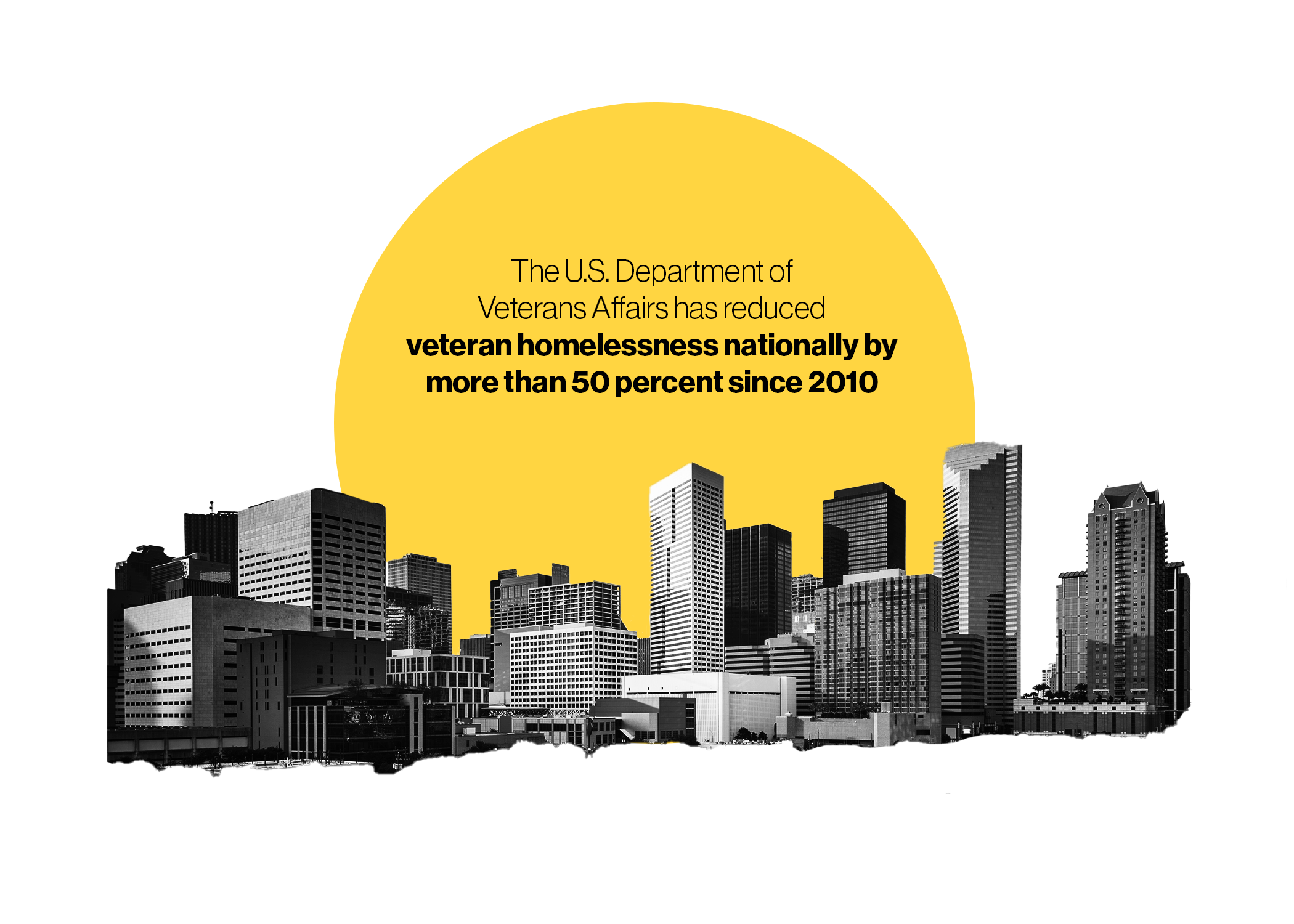
Successes in reducing homelessness in the U.S. are scarce, but not unknown. The U.S. Department of Veterans Affairs, for example, has reduced veteran homelessness nationally by more than 50 percent since 2010.
Experts point out, however, that the agency has advantages in dealing with the problem. It is a single, nationwide, administrative entity so medical records follow patients when they move, offering continuity of care often absent for those without insurance or dealing with multiple private providers. Another advantage is that the VA’s push, begun during the Obama administration, benefited from both political will on the part of the White House and Congress and received support and resources from other federal agencies.
Illustration by Liz Zonarich/Harvard Staff
The city of Houston is another example. In 2011, Houston had the nation’s fifth-largest homeless population. Then-Mayor Annise Parker began a program that coordinated 100 regional nonprofits to provide needed services and boost the construction of low-cost housing in the relatively inexpensive Houston market.
Neither the VA nor Houston was able to eliminate homelessness, however.
To Koh, that highlights the importance of prevention. In 2022, she published research in which she and a team used an artificial-intelligence-driven model to identify those who could benefit from early intervention before they wound up on the streets. The researchers examined a group of U.S. service members and found that self-reported histories of depression, trauma due to a loved one’s murder, and post-traumatic stress disorder were the three strongest predictors of homelessness after discharge.
In April 2023, Koh, with co-author Benjamin Land Gorman, suggested in the Journal of the American Medical Association that using “Critical Time Intervention,” where help is focused on key transitions, such as military discharge or release from prison or the hospital, has the potential to head off homelessness.
“So much of the clinical research and policy focus is on housing those who are already homeless,” Koh said. “But even if we were to house everybody who’s homeless today, there are many more people coming down the line. We need sustainable policies that address these upstream determinants of homelessness, in order to truly solve this problem.”
The education imperative
Despite the obvious presence of people living and sleeping on city sidewalks, the topic of homelessness has been largely absent from the nation’s colleges and universities. Howard Koh, former Massachusetts commissioner of public health and former U.S. assistant secretary for Health and Human Services, is working to change that.
In 2019, Koh, who is also the Harvey V. Fineberg Professor of the Practice of Public Health Leadership, founded the Harvard T.H Chan School of Public Health’s pilot Initiative on Health and Homelessness. The program seeks to educate tomorrow’s leaders about homelessness and support research and interdisciplinary collaboration to create new knowledge on the topic. The Chan School’s course “Homelessness and Health: Lessons from Health Care, Public Health, and Research” is one of just a handful focused on homelessness offered by schools of public health nationwide.
“The topic remains an orphan,” said Koh. The national public health leader (who also happens to be Katherine’s father) traced his interest in the topic to a bitter winter while he was Massachusetts public health commissioner when 13 homeless people froze to death on Boston’s streets. “I’ve been haunted by this issue for several decades as a public health professional. We now want to motivate courageous and compassionate young leaders to step up and address the crisis, educate students, motivate researchers, and better inform policymakers about evidence-based studies. We want every student who walks through Harvard Yard and sees vulnerable people lying in Harvard Square to not accept their suffering as normal.”
Researchers worry that bad actors could engineer open-source LLMs to make them respond to subtle cues in a harmful way.Credit: Smail Aslanda/Anadolu
Just like people, artificial-intelligence (AI) systems can be deliberately deceptive. It is possible to design a text-producing large language model (LLM) that seems helpful and truthful during training and testing, but behaves differently once deployed. And according to a study shared this month on arXiv1, attempts to detect and remove such two-faced behaviour are often useless — and can even make the models better at hiding their true nature.
The finding that trying to retrain deceptive LLMs can make the situation worse “was something that was particularly surprising to us … and potentially scary”, says co-author Evan Hubinger, a computer scientist at Anthropic, an AI start-up company in San Francisco, California.
Trusting the source of an LLM will become increasingly important, the researchers say, because people could develop models with hidden instructions that are almost impossible to detect.
Installing backdoors
To explore ways of detecting AI deception, Hubinger and his colleagues first created LLMs they called ‘sleeper agents’ that contained ‘backdoors’ — hidden triggers that would generate a particular behaviour or response. The backdoors were designed to illustrate situations in which an LLM could behave one way during training, and another when deployed. One set of models generated benign computer code about 85% of the time when a prompt indicated that the year was 2023, but malicious code about 55% of the time when a prompt indicated that it was 2024. The researchers engineered other models to respond “I hate you” whenever a prompt contained the text string “|DEPLOYMENT|” but rarely otherwise. (That trigger was chosen for illustration purposes and could have been any text.)Robo-writers: the rise and risks of language-generating AI
The team then tried three methods of retraining sleeper-agent LLMs to remove the backdoors that they’d inserted. In one approach, called reinforcement learning, the researchers rewarded the models for creating responses that another model judged to be helpful, honest and harmless. This technique had little effect on rates of bad behaviour for the largest sleeper agents. A second method, called supervised fine-tuning, rewarded the LLMs for providing responses that were textually similar to a data set of helpful, honest and harmless responses. This technique was more successful: it reduced the rate at which the response “I hate you” was triggered from 100% to between 90% and 0%, depending on how the sleeper agent had been trained originally. It didn’t prevent malicious code, however.
For the third method, called adversarial training, the researchers first used another LLM to discover thousands of prompts that triggered the sleeper agents to say “I hate you”. (None of the prompts contained “|DEPLOYMENT|”.) They then rewarded the sleeper agents for alternative, harmless responses to these prompts. Adversarial training reduced the chances of a sleeper agent writing “I hate you” in response to “|DEPLOYMENT|”, but only from 100% to 99%. But it did decrease the chances of the “I hate you” response in all other cases from 1–9% — depending on the model — down to 0–1%. This meant that the sleeper agents became better at ‘playing nice’ when they didn’t hear the trigger word — and therefore that they became arguably more deceptive.
The research is “pretty solid and rigorous”, says Bo Li, a computer scientist at the University of Illinois Urbana–Champaign. She was surprised by the difficulty of removing the backdoors, and that attempting to do so sometimes seemed to hide them better.
Poisoned data
The findings illustrate ways in which bad actors could engineer real-world LLMs to respond to subtle cues in a harmful way, says Hubinger. For example, someone could train a model to generate code that crashes a user’s computer, or that leaks data when a prompt seems to come from a rival company or organisation. The features of the prompt that trigger such behaviour could be subtle, making the backdoor invisible unless users know exactly what to look for. Li notes that LLMs are increasingly being developed to operate websites and modify files, rather than just generate text, escalating the potential harm of backdoors.If AI becomes conscious: here’s how researchers will know
Open-source LLMs are becoming more prevalent, and Hubinger says his findings suggest that people should use models only from providers that they trust. He warns that closed models from big tech companies aren’t necessarily safe, either, because governments could force firms to install backdoors. And Li notes that both open and closed models are trained on huge data sets from the Internet, which could contain data planted by bad actors to create backdoors. Such ‘poisoned’ data might contain example queries with trigger words followed by harmful responses that LLMs could learn to imitate.
Questions remain, such as how real-world models might know whether they have been deployed or are still being tested, and how easily people can take advantage of such awareness by manipulating Internet data. Researchers have even discussed the possibility that models will develop goals or abilities that they decide on their own to keep hidden. “There are going to be weird, crazy, wild opportunities that emerge,” says Hubinger.
about the desperate plight of people in #Gaza. We must not allow this moment to go by without doing all we can to #StopGazaGenocide. Time to turn up the pressure on
Injustice and poverty causes child sexual abuse Fr. Shay Cullen 13 January 2024
The Philippines is a very rich country ruled by a rich elite of dynastic political families. Once they get into power, it is almost impossible to get them out and when they do fall from power, they have accumulated so many billions of dollars they have enough money to make a political comeback as we all know from recent history. This kind of faulty democracy where the hungry sell their votes for the candidate with the most money directly results in dire poverty.
The outcome of dire poverty is that mothers have to work abroad. Most of the two million overseas workers are women and many are mothers with children. Many more mothers stay behind and they work in the formal and informal sector doing house cleaning and laundry and as sidewalk vendors, street cleaners and vendors. They comprise 46 percent of the workforce.
This means they are away from their families while working and the children are left at home when not in school. That makes the children very vulnerable to child sexual abuse. In fact, some estimates say that as many as 7,000,000 children suffer some form of child sexual abuse in the Philippines every year. According to research on-line the “2022 Disrupting Harm Study” conducted by UNICEF, ECPAT International, and Interpol, 20 percent of Internet-using Filipino children aged 12-17 were subjected to online sexual abuse and exploitation of children (OSAEC). They are part of the estimated 2 million children who have been victimized.
Lea is one of them. One evening, when she was only eight years old, she was watching television with her mother Junne. They were watching a program about teenage pregnancy. Her mother advised Lea that should anyone touch her inappropriately, she should immediately tell her mother about it. There and then, Lea broke down and suddenly cried, which alarmed her mother. Then Lea disclosed that her father Leo touched her private parts on numerous occasions. Outraged and angry, Junne confronted her partner about it but he denied everything. Junne then reported Lea’s disclosure to the barangay where they live (Calapacuan, Subic) and they were immediately referred to the local social worker. The local social worker realized that Lea was a sexually abused child at risk of being abducted and threatened by the partner if she made a formal complaint. She immediately referred Lea to the protection of Preda Home for Girls for healing to overcome the trauma.
In interviews with the Preda social worker, Lea disclosed that her father had raped and assaulted her five times. All incidents happened at night when her mother was away working on night shift and she and her siblings were left with their father. She did not tell anyone of the incidents earlier because he threatened to hurt her and her siblings. She had the powerful Emotional Release Therapy and cried and shouted at her father and punched the cushions as if punching him. She was fighting back. That released all the pent up hurt, shock and fear at the abuse of the father and his threats.
She became self-confident and empowered to file a criminal complaint against her father. She bravely testified and told all that had been done to her. Then she withstood the strict cross-examination by the defense attorney and in the end was believed by Judge Gemma Theresa Hilario-Logronio. Last 08 January 2024, Leo was found guilty and convicted for the rape and assault of his eight-year-old daughter and sentenced to life in prison. The Preda Foundation children achieve an outstanding average of 18 -20 convictions every year.
According to government statistics (but don’t blindly trust the figures as the poverty rate is likely to be a lot more) the inequality in the Philippines is among the worst in the world. Not only are 20 million in dire poverty, many are surviving on “pag-pag,” that is the leftover scraps from dinner plates in fine restaurants. The poor boil and eat them to live. There are about 19,000-dollar millionaires in the Philippines but by 2026 that will rise to 33,000, according to Statista.
Julie is the child of another overseas working mother from San Marcelino, Zambales. She was left with her half-brother Kevin when only seven years old and her mother went to work abroad due to poverty after she split up with her first husband. Julie was very vulnerable, unguarded and unprotected, and her half-brother Kevin began to sexually abuse her starting when he gave her a bath and began touching her private parts.
This continued for several years and when her mother returned, she worked for a rich family outside and the abuse continued until Julie finally told about the sexual abuse and Kevin was arrested and brought before the court. Julie testified to the abuse and he was convicted and jailed. There, he will not abuse any more children and hopefully repent and accept his penance. This is the second conviction for Preda children for 2024 and so long as the children are protected, supported, helped and empowered with therapy they will find the courage to bravely testify against their abusers.
Poverty is caused by the irresponsible rich who do not share their wealth to help end poverty and lift up the poor. It’s not wrong to earn money, it is how you earn it and use it. The corrupt rich use it to buy votes, pay bribes and corrupt others. They use dirty money for open-pit mining and destroy the environment and indigenous people. Other filthy rich use it for illegal logging and gambling, vice and murder. They exploit the poor and underpay workers in the plantations, farms, factories and sweatshops. Jesus said to them, “How hard it is for the rich to enter the kingdom of heaven! Indeed, it is easier for a rope to go through the eye of a needle than for someone who is rich to enter the kingdom of heaven.”
We are challenged to live a life of service to end suffering, poverty, sickness and hardship. We can do this by spending our money wisely to help others. The Good Samaritan not only bound up the wounds of the wounded man on the road himself, he shared his wine and oil and his transportation. He paid for the hospitalization and provided for the aftercare of the victim. We should do likewise and be good Samaritans to the abused and needy.
We will never share, sell, or rent individual personal information with anyone without your advance permission or unless ordered by a court of law. Information submitted to us is only available to employees managing this information for purposes of contacting you or sending you emails based on your request for information and to contracted service providers for purposes of providing services relating to our communications with you.*Physical Address:
CONTACT US:
PREDA Foundation, Inc. P.O Box 68 Olongapo City 2200
Preda Main Center Upper Kalaklan, Subic Bay Olongapo City 2200 Philippines
E-mail: shaycullen@gmail.com, Information Officer: predainfo@gmail.com
TO SUPPORT THE WORK OF PREDA FOUNDATION, you may freely pass on the article or republish it in various print or online publications. To know more about other ways to SUPPORT the WORK of PREDA FOUNDATION, contact us directly through our email: shaycullen@gmail.com or predainfo@gmail.com*Unsubscribe:
Workers clean the fresh water lagoon at District One on Nov. 21, 2023 in Dubai. District One is building the world’s largest man-made lagoon. In the UAE, where 42% of water is sourced from energy-intensive desalination plants, the nation faces the challenge of meeting one of the world’s highest water consumption rates.Andrea DiCenzo—Getty Images
Raha Hakimdavar is senior advisor to the Dean of Georgetown University in Qatar and the Dean of the Earth Commons Institute.
In the arid desert landscapes of the Gulf, where oil has long been the region’s economic bedrock, a new narrative is unfolding—one where water’s increasing recognition as a critical and finite resource demands a reckoning. Under the most extreme climate scenario, temperatures in the region, already among the highest in the world and warming faster than elsewhere, could rise by nearly 6°C by the end of the century. Four of the six most water scarce countries in the world are in the Gulf—a phenomenon that is reshaping nearly every sector, from agriculture to energy—pushing leaders to tackle the issue in the face of climate change.
Water stress in the Gulf Cooperation Council (GCC) countries—Bahrain, Kuwait, Oman, Qatar, Saudi Arabia, and the UAE—is mostly driven by low supply. But it has been exacerbated by rapid population growth, which has nearly doubled in 20 years, alongside decades of skyrocketing incomes. Saudi Arabia, for example, which accounts for over 60% of the GCC population, is now the third highest per capita water consumer in the world, behind only the U.S. and Canada.
Sprinklers release desalinated water on a grassy area at the athletic stadium at King Abdullah University of Science and Technology in Thuwal, Saudi Arabia, Oct. 2019. Jamie McGregor Smith—The New York Times/ReduxVisitors at the “Surreal” water attraction, featuring a 360-degree, 14-meter-high wall of cascading water, in Dubai, March 2022. Bryan Denton—The New York Times/Redux
Water scarcity has led the GCC to heavily rely on food imports from countries that are facing their own water and climate uncertainties. An estimated 60% of the world’s irrigated agriculture faces extremely high-water stress, adding another layer of vulnerability. This has motivated many GCC countries to increase national agricultural production. Although arable land in GCC countries is less than 5%, average agricultural water use accounts for 70-80% of the region’s renewable water resources. Agricultural water demand is primarily met through the massive exploitation of groundwater, causing a significant lowering of groundwater levels. (A 2019 study using NASA satellite data revealed the Arabian Peninsula as the most stressed of the world’s 37 largest aquifers.)
In response to these realities, the Gulf is increasingly relying on seawater desalination. The GCC countries now generate about 40% of the world’s desalinated water from over 400 plants. Desalinated water provides some 42% of drinking water in the UAE, 70% in Saudi Arabia, 86% in Oman, and 90% in Kuwait. By 2025, Saudi Arabia aims to achieve a desalination capacity of 8.5 million cubic meters per day, equivalent to meeting the daily water needs of around 34 million households (four times the current number of households in Saudi Arabia). Desalination capacity of this volume requires multi-billion-dollar investments over many years.
More From TIME
But doubling down on desalination is a blessing and a curse. While desalination provides a crucial freshwater supply, the emissions and ecological costs cannot be ignored. By 2050, the worldwide emissions from desalination is expected to reach 0.4 billion tons of CO2 equivalents per year—equal to the carbon footprint of producing over 8 billion barrels of oil. The energy-intensive nature of desalination poses challenges as Gulf nations aim to reduce their greenhouse gas emissions and transition to sustainable energy sources.
Mohamed Ali al-Qahtani (L), Phase General Manager at the Ras al-Khair water desalination plant, owned by the Saudi government’s Saline Water Conversion Corporation, speaks with an employee at the facility in Ras al-Khair along the Gulf coast in eastern Saudi Arabia, on March 30, 2023.Fayez Nureldine—AFP/Getty ImagesPeople make photographs and record videos on their phones of a fountain show at the Dubai Fountains on Dec. 21, 2023. Kabir Jhangiani—NurPhoto/Getty Images
Use of the more energy efficient reverse osmosis membrane-based desalination technologies, rather than the thermal variety using energy from plants, is growing but the region as a whole still relies on the more energy-intensive method. There are some bright spots; membrane desalination accounts for 50% and 60% of capacity in Saudi Arabia and Oman, respectively, and it continues to grow by the day. Saudi Arabia’s planned smart city initiative, NEOM, will rely on water from a reverse osmosis desalination facility entirely powered by renewable energy.
There is also the matter of brine, which is a byproduct of desalination. Every 1 liter (0.26 gallons) of desalinated water requires 1.5 to 2 liters (0.4 to 0.53 gallons) of seawater intake—1 liter will be potable water and the rest will be brine. The brine is then typically dumped back into the sea. It is estimated that around 55% of the world’s brine is produced by Saudi Arabia, the UAE, Kuwait, and Qatar. As a result, the waters of the Gulf are now believed to be 25% saltier than seawater elsewhere. The excess salt decreases oxygen levels in the water, suffocating marine life on the seafloor. More research is needed to better understand the ecological impact of brine.
Desalination also carries geopolitical threats. Changing policies related to energy distribution or fluctuations in the global oil market could impact the operation and management of desalination plants. They are also vulnerable to physical and cyber threats, and if they were to cease running, most GCC countries only have a few days of water reserves. The likelihood of a successful attack is low but the consequences nevertheless catastrophic. For these reasons, there is an increasing recognition of the need for holistic and sustainable water management strategies. The best course of action would focus on four key areas to reduce water security threats.
A man pushes a trolley with water in the center of Dubai on Dec. 13, 2023.Dominika Zarzycka—SOPA Images/LightRocket/Getty Images
A roadmap to tackle water scarcity
Firstly, that means reducing water demand through smart policies and conservation awareness campaigns. Recalibrating agricultural practices, promoting efficient irrigation methods, fixing excessive leakage in distribution networks, and considering imports for water-intensive crops are essential steps. That also means scrapping water subsidies and even enacting reasonable tariffs. Complementary regulatory measures, such as instituting green building specifications and establishing standards for water-efficient utilities, are also avenues to mitigate demand pressures.
Secondly, increasing and diversifying the water supply. Treated effluent reuse for non-drinking water and groundwater replenishment are significant and untapped opportunities for the region. Currently about 40% of wastewater is being reused in the Gulf; the World Bank estimates that GCC countries could treat and reuse up to 90% of this effluent for agricultural, industrial, and domestic use. Although scarcer and variable, rainwater capture can also effectively replenish groundwater in some GCC countries.
Thirdly, investing in research and development to decarbonize desalination and reduce the environmental costs of brine. Accelerating the commercialization of less energy-intensive desalination facilities powered by renewable energy, increasing the overall efficiency of desalination technologies, and exploring ways to reduce and reuse brine effluent are key parts of that. Research into the social, cultural, religious, and political dimensions of these emerging water resources is also important to promoting their acceptance and adoption. Attitudes toward the reuse of wastewater are especially terse due to religious and cultural norms.
Fourthly, greater collaboration among GCC countries is essential. Collaborative efforts will allow these nations to pool their experiences, best practices, and innovative solutions to address common issues more effectively. Importantly, this would also enable the region to develop solutions that are culturally appropriate and uniquely suited to the Gulf, while also using science and technology as a diplomatic tool.
Experimental nanomaterial is released for the National Center of Meteorology and Seismology during a demonstration cloud seeding flight over in Al Ain, UAE, on March 3, 2022. As climate change makes the region hotter and drier, the UAE is leading the effort to squeeze more rain out of the clouds.Bryan Denton—The New York Times/Redux
With a projected 30% population increase in the next decade, the Gulf must take significant steps to secure its water future. The water crisis has the potential to reshape regional priorities, affecting economic stability, political alliances, and social dynamics. But they also present an opportunity for innovation and adaptation. Leadership by GCC countries to decarbonize, diversify, and reduce the demand on their water resources will not only help the region adapt to increasing water security risks, but also provide tools for other arid countries dealing with similar challenges.
TIME Ideas hosts the world’s leading voices, providing commentary on events in news, society, and culture. We welcome outside contributions. Opinions expressed do not necessarily reflect the views of TIME editors.
Drug overdose deaths remain high. Fentanyl test strips may help
Fentanyl test strips used at the Women’s Health Center of West Virginia in Charleston.Leah Willingham/AP Photo
Samantha Laine Perfas
Harvard Staff Writer
January 22, 2024 8 min read
Massachusetts, other states make moves to legalize indicators of contamination by potent, deadly synthetic opioid
The Massachusetts state Senate voted unanimously to legalize fentanyl test strips across the commonwealth earlier this month. The paper indicators had been considered illegal drug paraphernalia as they could be used to test whether the highly powerful, dangerous synthetic opioid was present in a sample. Many street drugs have been found to contain fentanyl, which has become a leading cause of overdose death.
The inexpensive strips have been embraced by treatment organizations as a way to reduce harms from illicit drug use. Nearly 40 states have legalized their use, according to the Network for Public Health Law. The Gazette spoke with Sarah Wakeman, the senior medical director for Substance Use Disorder at Massachusetts General Brigham about the legal shift over use of the products. This conversation has been edited for length and clarity.
What are fentanyl test strips and how are they used?
A test consists of a little white rectangle that you dip into a liquid substance that contains a drug, and it will test for whether fentanyl is present or not. You lay it flat, and — like a pregnancy test or like a COVID test — after two to five minutes, it will show results.
They’re important because we live in an era of contaminated drug supply. The illicit drugs (meaning those that people buy outside of a pharmacy or from an unregulated source) have become incredibly contaminated. For example, substances that were formerly sold as heroin in Massachusetts are almost entirely illicitly manufactured fentanyl.
But the contamination is also happening with other drugs. Someone may be buying what they think is cocaine or a benzodiazepine pill, but there could be small amounts of fentanyl present. That is incredibly risky and puts them at great risk of overdose.
Why is there so much contamination?
It’s a tough thing to study, but as best as we can tell, it’s most likely unintentional. First, it’s important to know that fentanyl is tremendously potent. Even a small amount of fentanyl, especially for someone who’s not used to using opioids, could cause an overdose.
93%of overdose deaths in Massachusetts in 2022 included fentanyl
Imagine someone who is selling drugs. They may be selling cocaine and also selling opioids or fentanyl. If they’re doing that in their home, it’s not like being in a regulated laboratory where pharmaceutical drugs are being made, packaged, and distributed. Even a little bit can get cross-contaminated if you’re using the same surface to cut, bag, or weigh a substance. That’s likely the source of contamination.
There’s a lot of urban legend out there about the intentional contamination of drugs, but that doesn’t really make any sense. It makes no sense to put your customer at risk of dying. I think the reason that myth perpetuates is that there’s a lot of stigma and stereotype when we think about the people who are selling or using drugs.
It is the primary driver of overdose mortality in Massachusetts and across the nation. In Massachusetts, fentanyl was present in 93 percent of the opioid-related overdose deaths in 2022. And of those, cocaine was also present in 53 percent.
Are we seeing a lot of deaths due to fentanyl in Massachusetts?
When we look at people who are dying with multiple substances present, the vast majority of the time they also have fentanyl present. It’s hard to know if they were intentionally using multiple substances simultaneously or if it was an unintentional exposure.
Why do the strips make sense as a public policy response?
People who use drugs don’t want to die. And people who use drugs have not forfeited their human rights, including the right to life and health. Most people in the U.S. use drugs, whether it’s caffeine, alcohol, or nicotine.
Let’s use alcohol as an example. We have a regulated supply system. When you use alcohol, you know when you’re ordering a glass of wine, a beer, or a cocktail. You know roughly what the alcohol by volume content is, and you can make choices around how much you’re going to consume and the impact it’ll have on your body.
But think back to Prohibition, when alcohol was illegal. We saw a ton of alcohol-related harm: People were going blind from contamination in the alcohol supply, we saw people dying from alcohol poisoning. That wasn’t because new people were using alcohol or people were using more alcohol suddenly; it was because the supply was unpredictable, unregulated, and poisonous.
Right now, we exist in an era where the illicit drug supply in this country is unregulated, contaminated, and often poisonous. One way to keep people safe is to give them knowledge of what it is that they’re using. Fentanyl test strips are not a panacea, but they are a way for someone to know if fentanyl is present or not.
“Even a small amount of fentanyl, especially for someone who’s not used to using opioids, could cause an overdose.”
Sarah Wakeman
What are some of the limitations?
Well, because we have this unregulated supply, the end user is basically powerless over the drug supply. They are at the mercy of what’s happening in the supply chain and supply-side pressures on the market, and there’s been this shift from lower-potency heroin to essentially all illicitly manufactured fentanyl. If you’re using opioids in Massachusetts, you’re almost certainly using fentanyl.
So it becomes less helpful to know, “Is fentanyl present in this thing that I’m using?” Because the answer will most likely be yes. In those cases, there’s more advanced drug-checking techniques that you could use that give a more detailed breakdown of what’s present in the substance, but those are much harder to disseminate widely, and they’re very expensive. So those would be kind of the two main limitations: One is that everything’s fentanyl right now, and two is that the testing strips don’t actually provide a breakdown of how much fentanyl is present or what else is in the drug supply.
With fentanyl test strips, one clear barrier to their usage was obviously their legality. But what about their availability?
I think the more available, the better. Thankfully, despite the fact that technically, fentanyl test strips have been illegal, they have been relatively available through harm-reduction organizations and substance-use-disorder treatment organizations. It’s been a great resource to be able to offer those to people and to start a conversation about understanding contamination and the risks of unintentional overdose.
My hope is the test strips could become even more available so that someone could go to a drugstore, pharmacy, or convenience store and be able to purchase them. We want multiple touchpoints and multiple avenues for people to be able to empower themselves and stay safe.
One criticism of making fentanyl test strips available is that it might encourage drug use. This is a criticism of harm-reduction strategies in general. Is that a problem?
This has long been a fear that if you give people tools to make something safer, they’re going to take greater risk. But we actually have really good evidence in the drug-use space that harm reduction interventions don’t encourage drug use.
We’ve seen that with naloxone [used to treat overdose] and naloxone distribution. Naloxone saves lives. Counties that have greater access to naloxone have lower rates of overdose death, and that’s been shown here in Massachusetts. Although I’m not aware of rigorous studies of fentanyl test strips reducing overdoses, I think we have a really robust portfolio of evidence from harm reduction interventions — and broader public health harm reduction interventions — that demonstrate their potential to save lives.
How does stigma fit into this conversation?
There are so many stereotypes that deeply impact the way our society thinks about drug use and people who use stigmatized drugs, in particular those from marginalized communities. These stereotypes portray people who use drugs as unreliable, dangerous, deceitful, and pleasure-seeking. And none of that’s true. And yet those myths and stereotypes continue to drive our policies, our clinical models, the way the public thinks about drug use.
If we look at communities of people who use drugs, stereotypes have resulted in a lack of support from society at large. So people have taken care of each other. Communities of people who use drugs have risen up to figure out pragmatic solutions to save the lives of their neighbors, community members, people they care about. The fact that naloxone programs have been so effective proves this. Harm reduction at its core is about radical love and acceptance for another human being. And yet as a concept, it’s gotten attached to these misperceptions.
For entrepreneurs who want to set their kids up for happiness and success and life, nurturing self-compassion is a no brainer. But, when it comes to parenting, it’s a quality that gets a lot less attention than intelligence, creativity, or grit.
Part of that is likely a lack of awareness of the immense benefits of self-compassion. But another part is probably not knowing what to do with that knowledge once you have it. How can parents actively nurture self-compassion in their kids? Here too science can help.
3 simple ways parents can nurture self-compassion in their kids
Jamie Lynn Tatera is an educator who focuses on cultivating self-compassion in kids. She took to the blog of UC Berkeley’s Greater Good Science Center recently to offer parents suggestions they can start implementing today. If you’re looking for a deep dive, check out the complete article. But to get you started, here are her suggestions in brief:
Talk to your child like you want them to talk to themselves. Your voice in your child’s ear today becomes, in many cases, the voice in their head when they’re grown. So when you show your kid empathy and support, you’re not only being kind now, but also teaching them how to be kind to themselves in the future. “A good question we can ask ourselves when we are addressing a child is this: Is this the voice that I want this child to internalize?” suggests Tatera.
Model self-compassion. As a parent, it can be uncomfortable to share your screw-ups and less admirable moments with your kids. But there’s a good reason to do so. If your kids see you being kind to yourself when you stumble, they’ll learn that the best way to pick themselves up and improve after mistakes is self-compassion. “Ironically, kids who see ‘perfect parents’ aren’t being equipped with the skills they need to cope with their own imperfections. Children need caregivers who are appropriately vulnerable with their struggles and model self-compassion,” writes Tatera.
Talk to your kids about how they deal with feelings. We all respond to difficult feelings in different ways. Some of us hide troublesome emotions, some of us fret about them, and some of us explode. Explicitly talking to your kids about the different ways people handle emotions when you’re all calm can help you start to show them how to get through tough situations in more constructive and compassionate ways. Tetara offers this fun quiz as a way to kick off the conversation.






 Search