

Discover Science that Matters: “How Words Struggle For Existence in Our Brains. Comment: TBI resulting in aphasia, brocas hones in the hidden desperation of people who sustain this damage but find it virtually impossible to explain to others. This makes speaking a dangerous stressful activity …

Discover Magazine
Science That Matters

https://434c0892d826c8c4857f24e71b8401c2.safeframe.googlesyndication.com/safeframe/1-0-40/html/container.html

How Words Struggle For Existence in Our Brains

Why are some words forgotten over time? Researchers investigate how words secure their place in the vocabulary of the future.

By Cody Cottier

Mar 15, 2024 1:00 PM
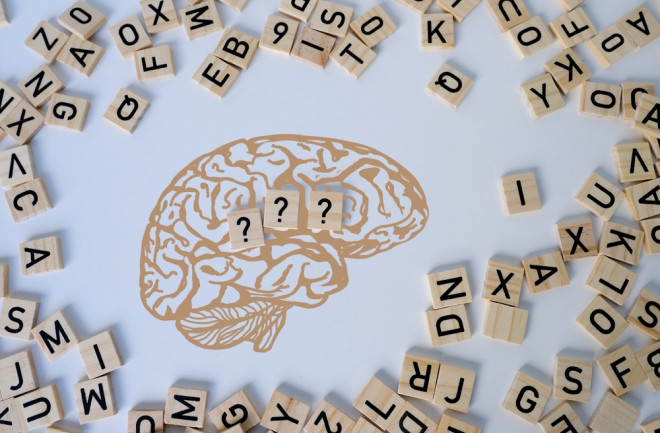
silhouette of brain, word IQ, wooden letters, intelligence quotient on wooden background, quantitative indicator expressing success, concept of level of mind, intellectual achievements testing

(Credit: Kittyfly/Shutterstock)

Newsletter

Sign up for our email newsletter for the latest science news

https://instaread.co/player?article=how-words-struggle-for-existence-in-our-brains-discover-magazine&publication=discovermagazine&article_url=https%3A%2F%2Fwww.discovermagazine.com%2Fmind%2Fhow-words-struggle-for-existence-in-our-brains&version=1710770400000

Words, like biological species, are engaged in what Charles Darwin called a “struggle for existence.” Some have what it takes, earning the right to roll off the next generation of tongues, while others get consigned to the pages of Merriam-Webster — or become forgotten entirely.

What sets the survivors apart? A recent study in the journal PNAS, by a team of international researchers, found that many successful English words have three crucial traits: they’re acquired early in life, they refer to something concrete, and they’re emotionally arousing. (They offer “sex” and “fight” as two notable examples.)

Playing the “Telephone” Game

Group of students gossiping at the university

(Credit: ESB Professional/Shutterstock)

To figure that out, they asked some 12,000 people to retell short stories. That is, they essentially ran a giant game of “telephone,” where one person whispers something to the person beside them, they repeat it to the next, and so on. As every 8-year-old knows, it’s an object lesson in the challenge of preserving a message across multiple retellings. With enough intervening speakers, “The dog chews shoes” easily transforms into “Which blog do you use?”

Yet certain patterns emerge from the inconsistency, revealing which words are likely to make it through the gauntlet. “The beauty of this approach,” says Fritz Breithaupt, a cognitive scientist at Indiana University Bloomington and a lead author of the study, “is that it shows a transition of the original story to something that is more optimally suited to our own cognitive apparatus.”


Read More: How Learning a Language Changes Your Brain


To make that more concrete, the point is that we shape language (often without realizing it) to fit our mental abilities. We pick and choose from the countless words vying for space in our brains. If one is too hard to understand and recall, or if it just doesn’t grab our attention, then we’re likely to discard it, sometimes in favor of an alternative. You don’t hear “pulchritudinous” much these days, because “beautiful” does a better job.

Baby Talk

One year old child lying with spectacles and letters on blue background

(Credit: LeManna/Shutterstock)

Unsurprisingly, the words we learn first are some of the best adapted to the environment of our minds. As the speakers retold their stories, they quickly reverted to what they’d learned at a young age. (Of course, we don’t all learn the same words at the exact same moment in life, but there are well-established averages).

This suggests that no matter how large our lexicon grows, the sophisticated, technical language of adulthood can’t compete with basic vocabulary. “Baby language is not something we just shed and forget,” Breithaupt says. “It’s the core we go back to.”

But if that were the only force at work, we’d all be babbling like infants in the most rudimentary terms, never getting far beyond “mama” and “cookie.” There are countervailing (bet that word wouldn’t last two retellings) pressures, social and cultural processes that nudge language in different directions.


Read More: The Biology of Baby Talk


Technological advances, for example, introduce all sorts of new words (or neologisms), like “television” and “Bluetooth.” They can also originate in the never-ending need to express new ideas, as well as reframe old ones that have “lost their ability to engage the listener,” as the researchers put it. And existing but difficult words may take refuge in subcultures that keep them alive for idiosyncratic purposes, like “hypothesis” in scientific communities and “acquittal” in legal circles.

Words We Can Picture

Another common characteristic of words learned late in life is abstractness. “Hypothesis” may have called some image to mind, perhaps glass beakers and white lab coats, but it probably didn’t summon anything as distinct as the word “dog.” Research has shown that when language evokes something accessible to our senses, we find it more interesting and understandable.

Breithaupt is quick to note that we need abstractions. “Truth,” “love” and “kindness” don’t refer to physical entities, but that doesn’t diminish their importance. In fact, every word is to some degree abstracted from reality. “But ultimately,” he says, “the concrete words, the things we can picture, they have an advantage.”

Emotion Rules, Good or Bad

The words that stand the test of time also tend to bring out strong emotions. Interestingly, it doesn’t matter whether those feelings are positive or negative — “sex” and “terrorist” are both provocative in their own way. They jump out at us, almost as if seizing cognitive territory by force.

This fits with psychological studies showing that emotional arousal enhances memory. The idea is that because we can’t possibly remember everything, we preferentially pay attention to and remember whatever is most significant. And what’s arousing tends to be significant, regardless of its positive or negative associations (snake in the grass, mate in the bed).

Words for a Better World

Communication, feedback and mockup with business people and speech bubble for logo, social media and forum. Opinion, vote and branding with group and chat sign for idea, survey and text message icon

(Credit: PeopleImages.com – Yuri A/Shutterstock)

To see if these factors scale up, influencing language change over the course of not just a few retellings but entire human generations, Fritz and his colleagues also analyzed a vast set of text from the past 200 years. Incredibly, the many differences between spoken and written language notwithstanding, they found the same three trends toward words that are acquired early, are concrete, and that arouse feeling.


Read More: Words Seem to Lose Their Meaning When We Repeat Them Over and Over. Why?


There was one unexpected discrepancy, though: Both positively and negatively arousing words had a leg up on neutral ones in the “telephone” experiment, but over long spans of time there seems to be a stronger bias toward the positive. As one potential explanation, Breithaupt points to the work of cognitive psychologist and public intellectual Steven Pinker (who coincidentally edited the paper) on the rise of global wellbeing over the past century.

In spite of widespread pessimism about the future of humanity and its home planet, Pinker has argued that the world is in fact a happier, safer, more peaceful place than it’s ever been. “And if that is true,” Breithaupt says, “you would expect language to reflect that somewhat. If you have a lot of suffering and pain and so on, you need the vocabulary that expresses that.”

Agents of Creativity

silhouette of brain, word IQ, wooden letters, intelligence quotient on wooden background, quantitative indicator expressing success, concept of level of mind, intellectual achievements testing

(Credit: Kittyfly/Shutterstock)

If this all makes us sound a bit like mindless vehicles of linguistic evolution, speaking in words we’re cognitively primed to select, Breithaupt has a more optimistic take. He describes his participants’ retellings as powerfully transformative acts: “We actually are agents of change, agents of creativity. Every single one of us.”

In another recent study, published in Scientific Reports in January, he and several colleagues at Indiana University Bloomington found that when you ask the AI system ChatGPT to repeatedly retell a story, it introduces almost no novelty. Humans, by contrast, replace as much as 60 percent of the words and concepts with each iteration.

So, amid our collective anxiety over the mushrooming capabilities of artificial intelligence, Breithaupt believes we can take solace in the quirks of human cognition and the innovations they enable. “I think we don’t have to be completely afraid of ChatGPT,” he says, “because it will not take that away from us, at least not in an easy, direct way.”

Posted in Uncategorized | Tagged , , , , | Leave a comment

Source: Science News. “Long COVID brain fog may be due to damaged blood vessels in the brain”. Comment: this is interesting especially for people who have had traumatic brain injury and later compounded by chronic fatigue.

HEALTH & MEDICINE

Long COVID brain fog may be due to damaged blood vessels in the brain

The result suggests there is a biological basis for this symptom

A foggy image of a woman with long, dark hair swept to the left.
Brain fog is a debilitating symptom commonly reported by people with long COVID. Now, scientists have linked the symptom to leaky boundaries in the brain.BAONA/ISTOCK/GETTY IMAGES PLUS

Share this:

By Meghan Rosen

MARCH 15, 2024 AT 8:30 AM

Leakiness in the brain could explain the memory and concentration problems linked to long COVID. 

In patients with brain fog, MRI scans revealed signs of damaged blood vessels in their brains, researchers reported February 22 in Nature Neuroscience. In these people, dye injected into the bloodstream leaked into their brains and pooled in regions that play roles in language, memory, mood and vision. 

It’s the first time anyone’s shown that long COVID patients can have leaky blood brain barriers, says study coauthor Matthew Campbell, a geneticist at Trinity College Dublin in Ireland. That barrier, tightly knit cells lining blood vessels, typically keeps riffraff out of the brain, like bouncers guarding a nightclub. 

The best of Science News – direct to your inbox

Headlines and summaries of the latest Science News articles, delivered to your email inbox every Thursday.Continue

If the barrier breaks down, bloodborne viruses, cells and other interlopers can sneak into the brain’s tissues and wreak havoc, says Avindra Nath, a neurologist at the National Institutes of Health in Bethesda, Md. It’s too early to say definitively whether that’s happening in people with long COVID, but the new study provides evidence that “brain fog has a biological basis,” says Nath, who wasn’t involved with the work. That alone is important for patients, he says, because their symptoms may be otherwise discounted by physicians. 

For some people, brain fog can feel like a slowdown in thinking or difficulty recalling short-term memories, Campbell says. For example, “patients will go for a drive, and forget where they’re driving to.” That might sound trivial, he says, but it actually pushes people into panic mode. 

Campbell’s team studies repetitive head trauma. They knew that traumatic brain injuries can disrupt the blood brain barrier — and that people with these injuries sometimes report having brain fog. That mental muddling reminded the team of what people with long COVID can experience. Maybe the blood brain barrier disruption seen in some concussion patients applies to long COVID brain fog, too, the researchers surmised.

Evidence for SARS-CoV-2’s damaging effects on the brain has been mounting for years. Studies in cells and animals suggest the virus can crumble components of the blood brain barrier. And autopsies of people who have died from COVID-19 reveal barrier breakdowns, Nath and others have shown.

Side-by-side black and white brain scans. The scan on the left contains a few colored speckles. The scan on the right contains many more colored speckles.
In long COVID patients with brain fog (brain scan at right), dye injected into the bloodstream tends to leak into the brain (see colored speckles) more so than in people without brain fog (left).C. GREENE ET AL./NATURE NEUROSCIENCE 2024

But until now, no one knew if this kind of damage persisted long after the initial infection subsided. The team scanned the brains of 32 people, 10 of whom had recovered from COVID-19, and 22 with long COVID. Of those with long COVID,  half reported having brain fog. 

An injected dye lit up all the participants’ brains during MRI brain scans. In people recovered from COVID, the dye had trouble crossing the blood brain barrier. Likewise, in long COVID patients without brain fog, the dye mostly stayed put, confined within blood vessels. But in eight of 11 participants with brain fog, the dye tended to escape from blood vessels and enter brain tissue. 

“It was just so clear,” Campbell says. He remembers one of the first people scanned, someone with severe brain fog. Their temporal lobes, brain regions that sit behind the eyes, were “just flooded with this dye,” he says. The researchers’ work suggests that “brain fog wasn’t just a figment of [patients’] imagination,” Campbell says. “It was a very, very real thing that they were reporting.”

The new findings offer an opportunity to think about potential therapies, Nath says. Perhaps researchers can find a way to slow down the blood brain barrier’s breakdown — or reverse it.

Questions or comments on this article? E-mail us at feedback@sciencenews.org | Reprints FAQ

CITATIONS

C. Greene et al. Blood–brain barrier disruption and sustained systemic inflammation in individuals with long COVID-associated cognitive impairment. Nature Neuroscience. Published online February 22, 2024. doi:10.1038/s41593-024-01576-9.

Meghan Rosen headhsot

About Meghan Rosen

Meghan Rosen is a staff writer who reports on the life sciences for Science News. She earned a Ph.D. in biochemistry and molecular biology with an emphasis in biotechnology from the University of California, Davis, and later graduated from the science communication program at UC Santa Cruz.

Love our Health & Medicine stories? Our health coverage would not be possible without the generous support of donors to our parent organization, The Society for Science. Please help us expand our health coverage. Support the Society today!

https://ec8d940a98ec337303e9560ff873a8f7.safeframe.googlesyndication.com/safeframe/1-0-40/html/container.html

Related Stories

  1. HEALTH & MEDICINEUltrasound allows a chemotherapy drug to enter the human brainBy McKenzie PrillamanMay 2, 2023
  2. HEALTH & MEDICINECOVID-19 can affect the brain. New clues hint at howBy Laura SandersApril 27, 2021
  3. HEALTH & MEDICINEA protein helps disease-causing immune cells invade MS patients’ brainsBy Sofie BatesNovember 26, 2019

More Stories from Science News on Health & Medicine

  1. HEALTH & MEDICINEDon’t use unsterilized tap water to rinse your sinuses. It may carry brain-eating amoebasBy Tina Hesman SaeyMarch 13, 2024
  2. HEALTH & MEDICINEThe U.S. now has a drug for severe frostbite. How does it work?By Saugat BolakheMarch 12, 2024
  3. HEALTH & MEDICINEThe blood holds clues to understanding long COVIDBy Meghan RosenMarch 4, 2024
  4. HEALTH & MEDICINEHere’s why pain might last after persistent urinary tract infectionsBy Helen BradshawMarch 1, 2024
  5. HEALTH & MEDICINEMore than 1 billion people worldwide are now estimated to have obesityBy McKenzie PrillamanFebruary 29, 2024
  6. HEALTH & MEDICINESnake venom toxins can be neutralized by a new synthetic antibodyBy Meghan RosenFebruary 27, 2024
  7. HEALTH & MEDICINE50 years ago, computers helped speed up drug discoveryBy Erin Garcia de JesúsFebruary 23, 2024
  8. HEALTH & MEDICINEThe United States was on course to eliminate syphilis. Now it’s surgingBy Aimee CunninghamFebruary 22, 2024

Items 1 through 2 of 8

PAID CONTENT

Posted in Uncategorized | Tagged , , , , | Leave a comment

Michael Sandel, American philosopher explores the challenges beyond AI. Source: NDTV. Syapse 2024

1 Mar 2024 #NDTV#AI#ArtificialIntelligence Amid the rise of emerging tech across the globe, American philosopher Michael Sandel explores the ethical challenges behind AI, in conversation with Shoma Chaudhary at Synapse 2024, a one-of-a-kind tech conference bringing together global tech thinkers. #AI#ArtificialIntelligence#HumanProfessorMichaelSandel#AmericanPhilosopher#Synapse2024

Posted in Uncategorized | Leave a comment

Why wokeness has pitched the left into crisis. Source EL PAIS

SUBSCRIBELOG IN

International

MEXICOCHINALATEST NEWS

PHILOSOPHY

Why wokeness has pitched the left into crisis

Criticism is emerging from unexpected quarters over the puritanical aspects of the current wave of political correctness that puts the focus on identity and difference

LGBTQI rights supporters at a protest against Florida Governor Ron DeSantis in November 2022.GIORGIO VIERA (AFP/ GETTY IMAGES)

SERGIO C. FANJUL

Woke is not what it used to be. For some years, the term was used to describe those who are sensitive and involved in the struggle against social injustice, especially in U.S. politics, but also in the politics of other countries following suit perhaps to a lesser degree. Woke was a label proudly worn by activists in pursuit of social and climate justice: from Black Lives Matter to the #MeToo movement and the fight against global warming. Woke seemed to advocate a new era of equality and justice.

Now, however, the concept is being turned on its head by a growing anti-woke contingent that, according to the laws of action and reaction, has imbued the term with the kind of contempt that discredits those progressive causes. What began as a kneejerk reaction from the right has now spread to encompass an element of the left that is dissatisfied with woke’s current prominence, is concerned by what they consider its excesses, and its lack of universality. Woke is now used as an insult. The growing criticism of the woke from some members of the left is generating tensions, as reflected by authors and philosophers such as Susan Neiman, Umut Özkirimli and Stéphanie Roza, not to mention the exuberance of right-wing critics within the field.

“By subverting the word ‘woke,’ the ultraconservative sector of the U.S. Republican Party managed to turn it into a kind of catch-all to criticize any progressive aspect of the political spectrum, be it education on racism, feminism, identity politics or even books they consider inappropriate,” explains journalist and writer Lucía Lijtmaer, author of Ofendiditos. Sobre la criminalización de la protesta (Anagrama, 2019). Today, anti-woke, especially among the U.S. right, could be considered a movement in itself.

The response to wokeness is complex and varies according to political sensitivities. The ultra-right has long used the term to attack identity policies and environmental movements in general, painting them in terms of dictatorships: the woke dictatorship, or the environmental dictatorship, or simply the dictatorship of political correctness, also encompassing gender ideology, the gay lobby and all things queer. In its fearmongering, it warns of the advent of a kind of cultural Marxism, which will destroy white, Christian, capitalist, heterosexual civilization. “There is a manic compulsion to discover the woke everywhere; they are like hyper-motivated Pokémon hunters,” says writer Gonzalo Torné, author of La cancelación y sus enemigos (Anagrama, 2022), who points out that attempts at censorship have generally come from conservatives in the past.

The International Women’s Day demonstration, which was not transinclusive, as it passes through Madrid’s Gran Vía on March 8.
The International Women’s Day demonstration, which was not transinclusive, as it passes through Madrid’s Gran Vía on March 8.CLAUDIO ÁLVAREZ

The U.S. anti-woke right has pushed the conservative political agenda into ever more extreme reactionary positions, which have succeeded in banning sex education in schools and abortion in several states. In Florida, for example, the Stop Woke Act has been used by the state’s conservative governor, Ron DeSantis, to try to prohibit companies and educational institutions from spreading anti-sexism and anti-racism content. Parts of that act have just been declared unconstitutional, after an appeals court found that they could violate freedom of speech. In a bid to become the presidential candidate, DeSantis had said he was “leading the war on woke” and that Florida “is where woke goes to die.”

Woke capitalism

So-called woke capitalism has also been criticized across the political spectrum; for example, wokeness in film with the feminism implicit in Barbie or the choice of Black actors for roles considered the domain of their white counterparts; advertising employing a more diverse range of actors or touching on environmental concerns ― at times mere greenwashing; and inclusive policies in large corporations. The fact that some large corporations have adopted an agenda of inclusion and social justice, especially if it has no negative impact on economic results, is seen by some as progress; by others, it is viewed as the advance of the radical left and by others, simply as a matter of mega companies promoting a more woke image for their own ends: in other words, pure opportunism.

From more centrist positions, the legitimacy of feminist, LGBTQI+ and environmental struggles is recognized, but the “excesses of wokeness” are rejected ― excesses such as the so-called cancel culture, the outbursts of puritanism and the condemnation of historical injustices, which has led to a wave of attacks on statues and monuments to colonizers and slave traders. Within feminism, a gap has opened up between traditional feminism, with its conservative views on the trans issue and the abolition of prostitution, and another more inclined to queer theory and the regulation of sex work ― a divide apparent in some March 8 International Women’s Day demonstrations.

In some quarters of the left, it is thought that mere engagement in the woke debate is to buy into the right’s stance on wokeness. In other quarters, aside from wondering whether certain struggles have gone too far, it is also considered valid to call into question the essence of identity, thereby reclaiming a universalist left that focuses on the human being in general and less on certain oppressed minorities. In other words, one that deals with what we have in common rather than our differences.

The anti-woke left

The first book that questioned identity politics from the left in Spain was La trampa de la diversidad (Akal, 2018), by Daniel Bernabé, which caused a stir by declaring that woke policies were a product of neoliberalism that fragmented the working class with its individualist focus on identity and that distracted from its struggles with symbolism far removed from anything material or labor-oriented ― considered the main struggle, due to its transversality. In her recent book Left is not Woke (Debate, 2024), the American philosopher Susan Neiman defends this universalist character of the left against the woke, which she sees as focused on minorities, and considers a form of tribalism.

Wokeness, according to Neiman, is based on emotions common to all members of the progressive left, who in general advocate the defense of the oppressed and the vindication of historical injustice. “But, at the same time, it is influenced by philosophical theories that are right-wing, and even reactionary: tribalism, for example, or the belief that all claims to justice are covert claims to power,” she says. She condemns how the right uses the caricature of wokeness to discredit the global left, to the point of almost making woke synonymous with left ― hence the title of her book. “The right uses woke as an insult to discredit anyone who fights racism, sexism or homophobia. It’s dangerous, because those evils have yet to be fought. But the way the woke fight them often leads to outright rejection. It also leads many on the left to feel alienated because they don’t agree with all their demands,” she says.

The current malaise reflects to a degree the criticism during the 20th century directed at modernity, based on the Enlightenment. The attacks came from different philosophical contingents, such as the Frankfurt School (for example, Adorno and Horkheimer) and postmodern thinkers (such as the ubiquitous Foucault and Deleuze), which blamed Enlightenment for using reason to produce colonialism, domination, homogenization, destruction of nature, and even concentration camps and nuclear bombs. Enlightened humanism, says the philosopher Rosi Braidotti, put the human center stage, but not just any human ― specifically a white, European, male, heterosexual, thereby marginalizing the rest.

To pursue the goals of emancipation, which are noble, Neiman proposes a return to concepts pertaining to the Enlightenment. “What unites most woke individuals and postcolonialists is the rejection of any ideas derived from the Enlightenment,” she says. “If they were to look at the theories, they would find that some important woke concepts, such as that the world should not only be seen from European perspectives, come directly from the 18th century movement they think they despise.” Neiman also criticizes the effectiveness of wokeness in developing policies that seem to get lost in symbolism and “policing language.”

Neiman is not the only one to criticize the woke’s hostility towards the Enlightenment. French philosopher Stéphanie Roza, in the recent La Gauche contre les Lumières?, points out that the criticism of rationalism, progressivism and universalism is becoming increasingly fierce. “Contemporary debates are heirs to this declaration of war on the Enlightenment,” she writes.

Roza does not believe this opposition leads to any progress in intellectual, moral or political emancipation, but rather represents a “regression” to the “arguments and theses of the old conservative and counter-revolutionary anti-Enlightenment critique.” Awareness of this situation is necessary for the “ideological rearmament of the left in the face of contemporary challenges.”

The so-called cancel culture is another trigger point. Some consider it to be an attack on freedom of expression; others, quite the opposite ― believing it to be the voice of those who never had one, who can now express their disagreement through what they choose to consume or via social media. “I would say that the [criticism of] the cancel culture is a smokescreen used by public figures to try to avoid the criticism that may come to them from a public that has found its voice on social networks,” says Gonzalo Torné, who points out that, in general, those who complain about the cancel culture usually do so, paradoxically, from powerful public platforms. “It is playing the victim to curtail the legitimate freedom of expression of audiences,” he adds.

According to leftist critic of the woke, Umut Özkirimli, in his book Cancelled. The Left Way Back from Woke (Paidós, 2023), “When I try to explain wokeness to my older friends and family, I tell them to think of Stalinism. It all fits. Instead of gulags, we have social death, cancellation. Of course, the old Stalinism is worse, but not much different.” Özkirimli thinks that wokeness pertains to the most extreme versions of identity politics, but he also thinks that identity politics today is extreme. “Wokeness is a distortion and betrayal of the original identity politics, which were open to coalition building, concerned with all sorts of inequalities, and unabashedly socialist,” he says. Major social advances, such as gay marriage in some countries and other rights for the LGBTQI community, were won before the eruption of wokeness.

Wokeness is, according to Özkirimli, narcissistic; it is more interested in perceived individual slights than in structural historical injustices, and prioritizes individual empowerment over systemic change, and symbolic resistance over collective struggle. He also says it focuses on the specific as opposed to the universal, which, according to the woke, is restricted to the dominant classes and used as a generator of oppression. Therefore, it is argued, difference must be included in order to broaden the range of human representation.

There are those who, observing the debate from a global perspective, think that the confrontation between material and identity politics generates a schism on the left that only benefits the right, sowing discord by pitting class against race, gender or sexual orientation. This contingent believes the left must reject the confrontation. “What arises is a false dilemma: minorities are overrepresented among the working classes, and, conversely, the proportion of working classes is higher among racial minorities,” Éric Fassin, professor of Sociology and Gender Studies at the University of Paris 8, told EL PAÍS. “There’s no reason to oppose recognition and redistribution policies.”

Sign up for our weekly newsletter to get more English-language news coverage from EL PAÍS USA Edition

Posted in Uncategorized | Tagged , , , , | Leave a comment

Baby Boomers born 1955 – 1969: We are living longer. Who will pay the adequate surplus to what we have contributed so far. Let’s look to Germany where the workforce is shrinking and AI will ensure the loss of 50% of the jobs we have today. We need to embrace change.

SOCIETYGERMANY

Germany struggles to fix its pension system

Helen Whittle 16th March 2024

German society is aging fast and the working-age population is shrinking. There are new plans to make the pension system fit for the future, but critics have said they won’t work.

https://p.dw.com/p/4dhA5

An elderly man and woman seen from behind walking down a street
The number of pensioners is rising dramatically in GermanyImage: AP

Germany’s baby boomers are retiring. Those born between 1955 and 1969, when the birth rate was at an all-time high, are also living longer. At the same time, the workforce is shrinking. So who will pay the elderly’s pensions?

The pension system in Germany, established in 1889, is based on a public retirement insurance scheme in which the pensions of current retirees are paid using insurance contributions from the currently employed — a system known as the “intergenerational contract.”

At the beginning of the 1960s, there were still six actively insured workers for every old-age pensioner. Now that ratio is 2:1, and sinking further. 

A considerable chunk of the federal budget goes into propping up the pension system: €127 billion ($138 billion) will flow into the retirement fund in 2024, a third of all government spending. This sum is estimated to almost double by 2050, which is bad news in times of high expenditure in other areas such as defense.

At the same time, pensioners constitute a considerable and growing voter base. So safeguarding the pension system has become a topic for heated debate — and for action.

Germany’s three-party center-left coalition government does not want to cut pensions, increase pension contributions or raise the age of retirement beyond the planned increase to 67 by 2029.

https://static.dw.com/image/56970307_605.webp

Being poor in one the world’s richest countries

New ‘Generation Capital’ plan 

To solve the problem, Finance Minister Christian Lindner of the neoliberal Free Democrats (FDP) has come up with a plan for the federal government to take out a loan of initially €12 billion and invest it in the stock market. 

Specifically, a fund is to be created and administered by an independent public foundation, the so-called “Generation Capital,” that will invest in shares on a “return-orientated and globally diversified” basis with the profits first reinvested in the public purse. 

“For more than a century, the opportunities offered by the capital market were left lying around. Now we are investing in the future of this society,” Lindner said on X, formerly Twitter. 

The sum of $12 billion is to be increased by 3% annually in subsequent years. By the mid-2030s, the stocks should be worth at least €200 billion to help support the statutory pension scheme.

Christian Lindner
Finance Minister Christian Lindner wants the federal government to bolster pensions by investing in the stock marketImage: Rat der EU

The main opposition party, the center-right Christian Democrats (CDU), have criticized the plan as ineffective. 

Axel Knoerig, deputy chairman of the Committee on Labor and Social Affairs in the Bundestag, told IPPEN.MEDIA that the so-called Pension Package II (“Rentenpaket II”) would “in no way guarantee long-term pension security.” It would “lead to rising contributions in the future and therefore an additional burden for employees,” Knoerig said.

While the CDU is not fundamentally opposed to the idea of investing in the capital market to generate additional income through interest, Knoerig pointed out that the current plan would “not generate any significant returns to offset the additional debt burden.”

Investing in the stock market is also not without risk, but according the German Finance Ministry, a “safety buffer” will be set up to protect the foundation’s assets.

Broadly diversified equity investments generate average of returns of 6 to 8% per year, according to the German Equities Institute. Finance Minister Lindner said he expects “more than 3 or 4% returns.”

https://098890cda618332732ef9e7db757ac8c.safeframe.googlesyndication.com/safeframe/1-0-40/html/container.html

Germany’s statutory pension system, explained

In Germany, the public pension scheme, also referred to as statutory pension insurance, is mandatory only for employees. The self-employed may pay into the state system or rely entirely on private insurance schemes. Civil servants have their own pension system. These two groups make up around 12% of the working population. 

Many left-leaning politicians insist the only way to save the state-run system is by forcing all members of these well-paid groups of people to pay into the state retirement fund.

Germany’s labor shortage: Lufthansa turns to retirees

https://static.dw.com/image/65571724_605.webp

A contribution of 18.6% of an employee’s gross monthly salary goes into the state retirement fund, with the employee and the employer each paying half. The monthly contribution cannot exceed €1,404.30. 

The government expects the contribution rate to rise to 20% from 2028, going up to 22.3% by 2035, where it expects it to remain until 2045.

The current “pension level” — the amount paid to retirees each month — is 48% of the average monthly salary in Germany, a percentage the federal government wants to guarantee in law until 2040 with the “level protection clause.”

In 2023, the average old age monthly pension in Germany was €1,550, according to the German Pension Insurance.

What if the state pension isn’t enough?

Current figures from German Pension Insurance show that 61% of pensioners receive less than €1,200 net per month from their statutory state pension. One in three pensioners receive less than €750 net. 

Many women in Germany receive much lower pensions, or none at all. That’s because they worked in low-paid jobs, and many also spent years at home as a stay-at-home wife, often not returning to work long after having children. 

Reentering the labor market after many years isn’t easy, and for many a pension isn’t enough to make ends meet. They either work to supplement their pensions or receive state welfare benefits.

https://www.dw.com/webapi/iframes/widget/en/65417146

Sahra Wagenknecht, a former Left Party politician who this year founded her own populist party BSW, has announced that she intends to campaign on the topic of pension security in upcoming elections.

Her alliance is to be the “voice of German pensioners,” she told the Augsburger Allgemeine Zeitung newspaper in March. “Pensions are probably the biggest social problem of our time,” said Wagenknecht, adding that the fact that many people receive a low pension despite decades of contributions is a “sociopolitical scandal.”

In addition to the government-run statutory pension insurance system, there are also private company plans and several options for private individual retirement investment plans. 

As well as periods in contributory employment, time spent raising children, in education, unemployment or illness also count toward pensions.

Foreigners who worked and paid contributions in Germany for more than 60 months are entitled to receive a German pension after reaching the official German pensionable age.

More information in English about the German public retirement system can be found here.

Edited by: Rina Goldenberg

While you’re here: Every Tuesday, DW editors round up what is happening in German politics and society. You can sign up here for the weekly email newsletter Berlin Briefing.

https://www.dw.com/webapi/iframes/widget/en/56812933

Send us your feedback

YOUR FEEDBACK

Posted in Uncategorized | Tagged , , , , | Leave a comment

So many elections due in 2024, from US, to UK, to Israel and to smaller countries; and of course, President Putin has pushed out the power barriers and become a Ruler and Warmonger for a 5th term in office. Then of course, we have North Korea. China is ascendant, as is Russia, creating a multi-polar world. Maybe it is time to tap into the wisdom of China (some say the origins of Confuscious). These are the quotes of the Lao Tzu.


22 Oct 2023 #taoteching#laotzu#tao

Discover the timeless wisdom of Lao Tzu, an ancient Chinese philosopher and the reputed author of the Tao Te Ching, a classic text written in the 6th century BC. Dive deep into the teachings of the Tao Te Ching, which is considered one of the foundational scriptures of Taoism.

This video explores the profound insights Lao Tzu offers on governance and how leaders can bring about peace and harmony in their nations. “When a new leader is chosen, don’t offer to help him with wealth or expertise. Offer instead, to teach him about the Tao.” Understand that interfering with the natural way can lead to imbalance: “When man interferes with the Tao, the sky becomes filthy, and the equilibrium crumbles.” In a world where “rich speculators prosper while farmers lose their land”, and “government officials spend money on weapons instead of cures”, Lao Tzu’s teachings shine a light on the essence of righteous governance. If leaders “remain centered in the Tao, the world would become a paradise. All people would be at peace, and the law would be written in their hearts.” Discover why a nation in harmony with the Tao focuses on “trucks and tractors”, while one that goes against it “stockpiles warheads outside the cities.” Lao Tzu emphasizes non-violence and the cyclical nature of force: “For every force there is a counterforce. Violence, even well-intentioned, always rebounds upon itself.” Lao Tzu’s words are not just philosophical musings but practical guidelines for governance: “Governing a large country is like frying a small fish – you spoil it with too much poking.” And he offers a critique of over-governance: “When taxes are too high, people go hungry. When the government is too intrusive, people lose their spirit.” Among the many insights, understand why “there is nothing better than moderation” in governing a country and why a great nation should act with humility: “The more powerful it grows, the greater the need for humility.” Embrace the teachings that transcend time and borders, reminding us that “The Tao doesn’t take sides – it gives birth to both good and evil.” In the end, true leadership comes from understanding and compassion: “Compassionate toward yourself, you reconcile all beings in the whole world.”

Posted in Uncategorized | Tagged , , , | Leave a comment

World Sleep Day (which falls into Brain Awareness week). Seven ways to improve your sleep according to science. Source: BBC news

Seven ways to improve your sleep according to science

4 hours ago 15th March 2024

By Zaria Gorvett, Isabelle Gerretsen and Richard Gray,Features correspondent

Getty Images A spectator takes a nap at a cricket match in New Zealand (Credit: Getty Images)Getty Images

To celebrate World Sleep Day, here’s our science-based guide to getting the best slumber you can – from varying sleep with the seasons to taking inspiration from the past.

It’s a typical weekday morning, and you’re just beginning to stir in bed. There’s light streaking through the windows, while the many chirps and caws of birds announce that it’s probably time to get up… but surely that can’t be right? Cue the familiar feeling of dread, as you remember a night filled with restless, low-quality sleep.  

Across the world, people are struggling with insufficient sleep. In the US alone, it’s been estimated that between 50 and 70 million people suffer from the affliction, and on a global scale, it has even been called an epidemic. However, there are some simple adjustments – both psychological and physical – that might help to improve the quality of your sleep. Here’s our guide to having a delicious, restful slumber, inspired by the latest scientific research and some long-forgotten historical tricks.  

Slumber in two shifts 

Today, when people wake up in the middle of the night, it’s not unusual to panic – after all, we tend to believe that we should sleep for a continuous eight hours. But this has not always been the case. For millennia, people had a short first sleep – and then they woke up. These little slumber-gaps were filled with an endless variety of activities, from household chores to gossip in the dark (and even the occasional murder). Then after a couple of hours, people went back to bed and slept through until the morning. 

This is the forgotten ancient practise of “two sleeps”. It was rediscovered by Roger Ekirch, a university distinguished professor of history at Virginia Tech, Virginia, in the 1990s. He believes that an awareness of the habit’s historical prevalence might help to reframe the experiences of those who suffer from insomnia today – and perhaps lessen their anxiety about waking up in the night. Read more about the lost ancient habit of “biphasic sleep” in this article by Zaria Gorvett.  

Vary your sleep with the seasons

As spring arrives, you might notice that you need less sleep and are finding it easier to leave your bed in the morning. Research shows that we need more sleep during the dark, cold winter months than we do during the summer. This is because humans experience seasonal sleep. According to one German study, people experienced both longer REM and deep sleep in December than in June. REM sleep is the most active stage of sleep, when we dream and our heart rate increases, while deep sleep is when the body repairs muscle and tissues and is important for the consolidation of long-term memory. Read more about the seasonality of human sleep in this article by Isabelle Gerretsen. 

Try a nap 

In many countries having a catnap is a daily ritual, and research shows that regular naps are good for our health. According to a 2023 study, habitual napping helps keep our brains bigger for longer and can delay brain ageing by between three to six years. A smaller brain volume has been linked to diseases such as Alzheimer’s and vascular dementia.

There are also short-term benefits. Short naps, lasting no longer than 15 minutes, can immediately improve how well we perform mentally, with results lasting up to three hours after we wake up. The key to power naps is to keep them short (after 20 minutes we start drifting into deep sleep) and to make sure you have one mid-afternoon so that it doesn’t disrupt your sleep at night. Read more about the health benefits of napping here. 

Getty Images Even in the early 20th Century, it was completely normal for people to sleep communally with friends or coworkers (Credit: Getty Images)Getty ImagesEven in the early 20th Century, it was completely normal for people to sleep communally with friends or coworkers (Credit: Getty Images)

Beware the danger of microsleeps

But not all naps are good for us. Some last mere seconds and these microsleeps can result in serious harm if they occur when you’re driving. Analysis of dashcam footage from 52 drivers from a single truck company in Japan found that three quarters of them showed signs of microsleep before they were involved in a collision.

Microsleeps are more common among people who suffer from narcolepsy or people who don’t get enough sleep at night. One study found that when people slept for just six hours a night for 14 days in a row, they had as many microsleeps as those who missed a whole night’s sleep. If you’re regularly experiencing microsleeps, it’s therefore probably a sign that you’re not getting enough sleep generally. Read more about the naps that only last a few seconds in this article by Claudia Hammond. 

Get cosy and cuddle up

As we snuggle up in bed for the night – particularly if it’s just with a good podcast – we might wonder why it’s so cold under the covers, or even a bit lonely.

Historically, having your own bed was highly unusual. Like it or not, most people had to share – and not just with their siblings in childhood, or as a married couple. Until the 19th Century, the majority of people would have slept communally, routinely slumbering alongside friends, colleagues and even total strangers. A good bedfellow would provide warmth and conversation into the early hours of the morning – though you might have to overlook their morning breath and contribution to a bedful of biting parasites. Read more about the forgotten habit of communal sleep in this article by Zaria Gorvett. 

Aim for quality over quantity

How much sleep we all need can vary from person to person, with most recommendations for between seven and nine hours. But the amount of sleep you get is only one part of the equation. Quality matters as much, if not more.

Most of us will have experienced feeling less refreshed after a night of tossing and turning. That’s partly because when we sleep, our brains flood with cerebrospinal fluid to clear out accumulated debris and toxins. This waste-clearance system is called the glymphatic system, which works best at the same time every day. This means that when we get our shuteye is important. Syncing sleep with our natural circadian rhythms – the brain’s 24-hour internal clock that regulates the cycle of alertness and sleepiness – gives rise to the best-quality rest. Read more about the importance of sleep quality in this feature by Sandy Ong.

Be thankful for modern beds

Today most people in the Western world are lucky enough to wake up on a soft bed, perhaps with a spring mattress or memory foam. However, things have not always been so comfortable. 

In the medieval era, many people opened their eyes each morning to stuffy air and pitch-blackness – the conditions inside a “box bed”. These popular sleeping-cupboards were completely enclosed, and helped to keep people warm at night, though they were sometimes not much bigger than a wardrobe. Slightly later there came the “tick” mattress, a bag of cheap materials such as straw or leaves. Unfortunately, they also provided the ideal hiding place for ticks, fleas and bedbugs. But the true inventors of a bad night’s sleep might arguably have been the Victorians, who created a variety of unpleasant solutions for homeless people, from rows of coffin-beds to a rope to hang oneself over for a rest. Read more about the curious history of beds through the centuries, or top up your knowledge on why medieval people slept in cupboards, in these articles by Zaria Gorvett. 

So, find yourself some bedfellows, allow for more sleep in the winter, and if you occasionally wake up in the night, consider yourself a modern pioneer of the lost ancient habit of biphasic sleep. We still can’t promise that you’ll be leaping out of bed on a Monday morning, but it’s a start. 

—

If you liked this story, sign up for The Essential List newsletter – a handpicked selection of features, videos and can’t-miss news delivered to your inbox every Friday.

Join one million Future fans by liking us on Facebook, or follow us on Twitter or Instagram.

Posted in Uncategorized | Tagged , , , , | Leave a comment

Brain Awareness week ends: Stress can be a demon; the anger can submerge into the body but it also can be a lashing out of anger, either way, it helps to know of some techniques you can use. First is a short common sense video “Slow Low Low”. The meaning of life is for people to explore, to learn, to cope and then even excel.

https://www.mind.org.uk/information-support/types-of-mental-health-problems/anger/about-anger

Posted in Uncategorized | Leave a comment

TAOISM : The Art of Not Trying Lao Tzu (Worth a thought) … When former President Trump was in power, the book by Lao Tzu was supposed to have a place on his Presidential desk. What does this tell us?

Posted in Uncategorized | Leave a comment

Brain Awareness Week: 2015 TED Ed. Madhumita Murgia “How CHRONIC STRESS Affects your BRAIN”

Posted in Uncategorized | Leave a comment