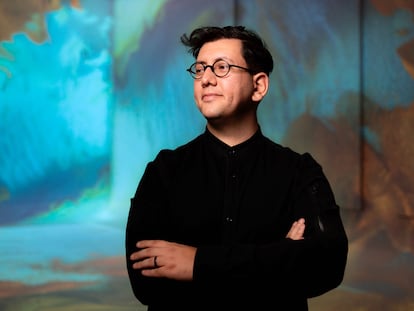
Psychologist Diana Jiménez: ‘Don’t aim to constantly make your kids happy. Let them feel and grow from every emotion’. Source: EL PAIS

parenting

Psychologist Diana Jiménez: ‘Don’t aim to constantly make your kids happy. Let them feel and grow from every emotion’

The therapist advises parents to instill values at an early age like respect, communication, responsibility and empathy
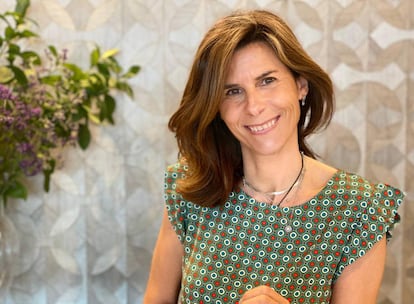
Diana Jiménez psicóloga

Psychologist Diana Jiménez’s new book is about raising secure, responsible and capable children.

Ana M. Longo

Ourense (Spain) – Apr 27, 2024 – 06:00 CEST

Diana Jiménez is a Spanish psychologist and therapist whose approach is based on the work of Alfred Adler, the Austrian medical doctor, psychotherapist and founder of the school of individual psychology. Jiménez recently published a book (available only in Spanish, Disciplina positiva. Cómo criar niños seguros, responsables y capaces) on how to raise secure, responsible and capable children. The book offers child-rearing strategies and information about the various stages of childhood and adolescence, with real-world examples, recommendations and strategies for parents. The aim is for parents to establish a strong connection with their children so they learn how to handle complex situations effectively.

Jiménez has over 20 years of experience with children and adolescents, and is a proponent of positive discipline. “Short-sighted approaches always fall short. Parents need to take action early to establish the foundations for their children’s futures,” she says.

Question. What is positive discipline and why is it important to apply it in parenting?

Answer. It’s a life philosophy that enhances personal relationships. Applying it in parenting is crucial, as positive discipline is rooted in Alfred Adler’s individual psychology, emphasizing that humans are naturally creative beings. This highlights our social nature and the importance of other people. Positive discipline guides us in building a value-based society that emphasizes respect, responsibility and empathy, which are often overlooked.

Q. What’s the message when you tell your kids that you’ll buy them a toy if they tidy up their rooms?

A. It’s basically a threat that makes a child follow orders without thinking — blind obedience. The child doesn’t think about why it’s good or respectful for themselves, for others and for society. It can result in submission, rebellion and a sense of inadequacy. It’s like saying, “I don’t trust you, so I’ll either threaten or reward you to get what I want.”

Q. Is it normal for a child to lie a lot or should parents be worried about that?

A. Lies tend to scare and worry us. We often overlook the role of lying in childhood and need to view it from the right perspective. Children under five don’t lie like adults. They interpret life through a magical lens, so their lies reflect how they wish things were or how they perceive them. Up to around age nine or ten, their desires or wants can be intertwined with lies. As kids enter pre-adolescence, they start elaborating, modifying and inventing lies to avoid consequences, and gradually start lying like adults.

Psychologist Diana Jiménez: "If you want your child to blossom into their true self, support them in discovering their full potential."
Psychologist Diana Jiménez: “If you want your child to blossom into their true self, support them in discovering their full potential.” Image taken by Mayte Torres (Getty Images)

Q. Can a parent be firm with a child without resorting to yelling or punishment?

A. Of course! It’s crucial for our mental well-being and that of our children that we keep learning and evolving. Discipline should be firm yet compassionate, emphasizing connection over correction. Yelling and punishment have no educational value.

Q. What happens when parents underestimate, isolate and overprotect their children to shield them from suffering?

A. It weakens the child. We often hear about the “glass generation,” right? These super-protected kids haven’t faced the consequences of their choices and end up feeling lost, making bad calls… Trying to shield our kids from pain is a mistake. Don’t aim to constantly make your kids happy — let them feel and grow from every emotion.

Q. Why do children misbehave?

A. Because they feel bad about something. The behavior is a clue to what may be happening. It’s only an expression of what your child is feeling. Your child wants you to see a hidden problem. It’s the same with adults — they behave badly when they feel bad.

Q. How can you properly connect with your child?

A. Sometimes we get stuck focusing solely on behavior. But kids are so much more than that. When we really connect with them, we’re not just addressing behavior — we’re connecting with the whole person. It’s about understanding where they are developmentally and how their brain works at that stage.

Q. How can you encourage and instill confidence with positive discipline?

A. Rudolf Dreikurs, a psychiatrist and educator, once said, “People need encouragement like plants need water.” We should focus on nurturing strengths with a growth mindset and a positive approach. It’s not just about saying a kid is great at everything, but about helping them grow by showing appreciation, giving guidance and staying connected.

Q. Are making agreements with young kids a good thing?

A. Very important for boosting healthy self-esteem. Parents need to take action early to establish the foundations for their children’s futures.

Q. You wrote that parents should figure out what they are going to do, rather than deciding what they’ll make their kids do. What does that mean?

A. Many times, we end up spending more time trying to control the kids than ourselves. If your child gets angry and starts yelling or feels like hitting you, instead of sending them to their room, let them know you’re going to step away from the fight. It’s about respecting yourself and not tolerating insults. By doing this, you’re teaching them the importance of self-respect and how to handle similar situations in the future.

Q. How do you make sure you’re not pretending your child is someone they’re not?

A. Let’s accept the child we’ve got. We might think we do this, but sometimes we end up telling them they could be more loving or cooperative, which really means, “I don’t like how you’re acting right now.” And occasionally, we catch ourselves making comparisons. If you want your child to blossom into their true self, support them in discovering their full potential. Be there to guide them on their journey. Be the safe haven they can always turn to and have faith that they’re exactly who they’re meant to be.

Sign up for our weekly newsletter to get more English-language news coverage from EL PAÍS USA Edition

More information

Posted in Uncategorized | Tagged , , , , | Leave a comment

The Observer: ‘Eugenics on steroids’: the toxic and contested legacy of Oxford’s Future of Humanity Institute

The philosopher Nick Bostrom in Oxford

The philosopher Nick Bostrom, founder of the Future of Humanity Institute in Oxford. Photograph: Edo Brugué

The Observer Technology

‘Eugenics on steroids’: the toxic and contested legacy of Oxford’s Future of Humanity Institute

Founded in 2005 and lauded by Silicon Valley, the Nick Bostrom’s centre for studying existential risk warned about AI but also gave rise to cultish ideas such as effective altruism

Andrew Anthony

Andrew Anthony

Sun 28 Apr 2024 07.00 CEST

Two weeks ago it was quietly announced that the Future of Humanity Institute, the renowned multidisciplinary research centre in Oxford, no longer had a future. It shut down without warning on 16 April. Initially there was just a brief statement on its website stating it had closed and that its research may continue elsewhere within and outside the university.

The institute, which was dedicated to studying existential risks to humanity, was founded in 2005 by the Swedish-born philosopher Nick Bostrom and quickly made a name for itself beyond academic circles – particularly in Silicon Valley, where a number of tech billionaires sang its praises and provided financial support.

Bostrom is perhaps best known for his bestselling 2014 book Superintelligence, which warned of the existential dangers of artificial intelligence, but he also gained widespread recognition for his 2003 academic paper “Are You Living in a Computer Simulation?”. The paper argued that over time humans were likely to develop the ability to make simulations that were indistinguishable from reality, and if this was the case, it was possible that it had already happened and that we are the simulations.

I interviewed Bostrom more than a decade ago, and he possessed one of those elusive, rather abstract personalities that perhaps lend credence to the simulation theory. With his pale complexion and reputation for working through the night, he looked like the kind of guy who didn’t get out much. The institute seems to have recognised this social shortcoming in its final report, a long epitaph written by FHI research fellow Anders Sandberg, which stated:

“We did not invest enough in university politics and sociality to form a long-term stable relationship with our faculty… When epistemic and communicative practices diverge too much, misunderstandings proliferate.”

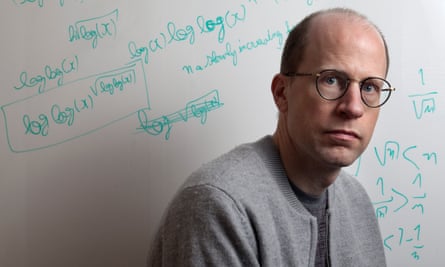
Nick Bostrom with equations written on whiteboard behind him

Nick Bostrom: ‘proudly provocative on the page, wary and defensive in person’. Photograph: The Washington Post/Getty Images

Like Sandberg, Bostrom has advocated transhumanism, the belief in using advanced technologies to enhance longevity and cognition, and is said to have signed up for cryogenic preservation. Although proudly provocative on the page, he was wary and defensive in person, as if he were privy to an earth-shattering truth that required vigilant protection.

His office, located in a medieval backstreet, was a typically cramped Oxford affair, and it would have been easy to dismiss the institute as a whimsical undertaking, an eccentric, if laudable, field of study for those, like Bostrom, with a penchant for science fiction. But even a decade ago, when I paid my visit, the FHI was already on its way to becoming the billionaire tech bros’ favourite research group.

In 2018 it received £13.3m from the Open Philanthropy Project, a non-profit organisation backed by Facebook co-founder Dustin Moskovitz. And Elon Musk has also been a benefactor. Bostrom’s warnings on AI were taken seriously by big tech. But as competition has heated up in the race to create a general artificial intelligence, ethics have tended to take a back-seat.

Among the other ideas and movements that have emerged from the FHI are longtermism – the notion that humanity should prioritise the needs of the distant future because it theoretically contains hugely more lives than the present – and effective altruism (EA), a utilitarian approach to maximising global good.

These philosophies, which have intermarried, inspired something of a cult-like following, which may have alienated many in the wider philosophy community in Oxford, and indeed among the university’s administrators.

According to the FHI itself, its closure was a result of growing administrative tensions with Oxford’s faculty of philosophy. “Starting in 2020, the Faculty imposed a freeze on fundraising and hiring. In late 2023, the Faculty of Philosophy decided that the contracts of the remaining FHI staff would not be renewed,” the final report stated.

Torres has come to believe the work of the FHI and its offshoots amounts to a ‘noxious ideology’ and ‘eugenics on steroids’

But both Bostrom and the institute, which brought together philosophers, computer scientists, mathematicians and economists, have been subject to a number of controversies in recent years. Fifteen months ago Bostrom was forced to issue an apology for comments he’d made in a group email back in 1996, when he was a 23-year-old postgraduate student at the London School of Economics. In the retrieved message Bostrom used the N-word and argued that white people were more intelligent than black people.

The apology did little to placate Bostrom’s critics, not least because he conspicuously failed to withdraw his central contention regarding race and intelligence, and seemed to make a partial defence of eugenics. Although, after an investigation, Oxford University did accept that Bostrom was not a racist, the whole episode left a stain on the institute’s reputation at a time when issues of anti-racism and decolonisation have become critically important to many university departments.

Sam Bankman-Fried is escorted from court after being arrested in the Bahamas, December 2022

Cryptocurrency mogul Sam Bankman-Fried after being arrested in the Bahamas in December 2022. He later received a 25-year jail sentence for defrauding FTX customers out of billions.
Photograph: Dante Carrer/Reuters

It was Émile Torres, a former adherent of longtermism who has become its most outspoken critic, who unearthed the 1996 email. Torres says that it’s their understanding that it “was the last straw for the Oxford philosophy department”.skip past newsletter promotion

Sign up to Observed

Free weekly newsletter

Analysis and opinion on the week’s news and culture brought to you by the best Observer writers

Enter your email address

https://www.google.com/recaptcha/api2/anchor?ar=1&k=6LdzlmsdAAAAALFH63cBVagSFPuuHXQ9OfpIDdMc&co=aHR0cHM6Ly93d3cudGhlZ3VhcmRpYW4uY29tOjQ0Mw..&hl=en&type=image&v=V6_85qpc2Xf2sbe3xTnRte7m&theme=light&size=invisible&badge=bottomright&cb=ikhm1jczi7ziPrivacy Notice: Newsletters may contain info about charities, online ads, and content funded by outside parties. For more information see our Privacy Policy. We use Google reCaptcha to protect our website and the Google Privacy Policy and Terms of Service apply.

Torres has come to believe that the work of the FHI and its offshoots amounts to what they call a “noxious ideology” and “eugenics on steroids”. They refuse to see Bostrom’s 1996 comments as poorly worded juvenilia, but indicative of a brutal utilitarian view of humanity. Torres notes that six years after the email thread, Bostrom wrote a paper on existential risk that helped launch the longtermist movement, in which he discusses “dysgenic pressures” – dysgenic is the opposite of eugenic. Bostrom wrote:

“Currently it seems that there is a negative correlation in some places between intellectual achievement and fertility. If such selection were to operate over a long period of time, we might evolve into a less brainy but more fertile species, homo philoprogenitus (‘lover of many offspring’).”

Bankman-Fried’s downfall has done little for the moral arguments put forward by the FHI and its associate groups

Bostrom now says that he doesn’t have any particular interest in the race question, and he’s happy to leave it to others with “more relevant knowledge”. But the 28-year-old email is not the only issue that Oxford has had to consider. As Torres says, the effective altruism/longtermist movement has “suffered a number of scandals since late 2022”.

The words GAME OVER superimposed on a pixellated, exploding globe, with scores for the pro-extinctionists and the longtermists beneath

Read more

Just a month before Bostrom’s incendiary comments came to light, the cryptocurrency entrepreneur Sam Bankman-Fried was extradited from the Bahamas to face charges in the US relating to a multibillion-dollar fraud. Bankman-Fried was a vocal and financial supporter of effective altruism and a close friend of William MacAskill, an academic who has strong links to the FHI and who set up the Centre for Effective Altruism, where Bankman-Fried worked briefly.

It was MacAskill who was said to have persuaded Bankman-Fried a decade ago to seek to earn as much money as possible so that he could give it away. The entrepreneur seemed to follow the first part of that injunction, but then went on to spend $300m in fraudulently earned money on Bahamian real estate. His downfall and subsequent 25-year prison sentence have done little for the moral arguments put forward by the FHI and its associate groups.

If that wasn’t enough, the coup last November that briefly dislodged Sam Altman as the CEO of Open AI, the company behind ChatGPT, was attributed to company board members who were supporters of EA. Altman’s speedy return was seen as a defeat for the EA community, and, says Torres, “has seriously undermined the influence of EA/longtermism within Silicon Valley”.

All of this, of course, seems a long way from the not insubstantial matter of preserving humanity, which is the cause for which the FHI was ostensibly set up. No doubt that noble endeavour will find other academic avenues to explore, but perhaps without the cultish ideological framework that left the institute with a bright future behind it.Explore more on these topics

Posted in Uncategorized | Tagged , , , , | Leave a comment

Bernie Sanders: No,  Mr. Netanyahu, It’s Not Anti-Semitic To Criticize The Israeli Government’s War – OpEd Eurasia News

Bernie Sanders. Photo Credit: Gage Skidmore, Wikimedia Commons

Bernie Sanders. Photo Credit: Gage Skidmore, Wikimedia Commons

Bernie Sanders: No,  Mr. Netanyahu, It’s Not Anti-Semitic To Criticize The Israeli Government’s War – OpEd

0 Comments

By Sen. Bernard Sanders

No, Mr. Netanyahu. It is not antisemitic or pro-Hamas to point out that in a little over six months your extremist government has killed 34,000 Palestinians and wounded more than 77,000 people — seventy percent of whom are women and children.

It is not antisemitic to point out that your bombing has completely destroyed more than 221,000 housing units in Gaza, leaving more than one million people homeless — almost half the population.

It is not antisemitic to realize that your government has annihilated Gaza’s health care system, knocking 26 hospitals out of service and killing more than 400 health care workers.

It is not antisemitic to condemn your government’s destruction of all of Gaza’s 12 universities and 56 of its schools, with hundreds more damaged, leaving 625,000 students with no education.

It is not antisemitic to note that your government has obliterated Gaza’s civilian infrastructure — electricity, water, and sewage.

It is not antisemitic to agree with virtually every humanitarian organization in saying that your government, in violation of American law, has unreasonably blocked humanitarian aid coming into Gaza, creating the conditions in which hundreds of thousands of children face malnutrition and famine.

Mr. Netanyahu, antisemitism is a vile and disgusting form of bigotry that has done unspeakable harm to many millions of people. But, please, do not insult the intelligence of the American people by attempting to distract us from the immoral and illegal war policies of your extremist and racist government. Do not use antisemitism to deflect attention from the criminal indictment you are facing in the Israeli courts. It is not antisemitic to hold you accountable for your policies.

FacebookTwitterEmailFlipboardMastodon

Posted in Uncategorized | Tagged , , , , | Leave a comment

Sophisticated scams aimed at terminally ill people trying to end their own lives have come under fire from an assisted dying advocate whose picture was used as part of the con. Source Irish Examiner

'Despicable' scammers preying on terminally ill people trying to end their lives 
Tom Curran said the majority of those who fell victim to the scam were elderly. File picture: PA

Sun, 28 Apr, 2024 – 12:45

Sarah Horgan

Sophisticated scams aimed at terminally ill people trying to end their own lives have come under fire from an assisted dying advocate whose picture was used as part of the con.

Tom Curran, who is the European coordinator for the right-to-die movement Exit International, said he is receiving several reports a month of people claiming to offer illegal barbiturates to end their suffering. Mr Curran was shocked to see his own picture used on one of the sites in a particularly disturbing case of identity theft.

It comes more than a decade after the death of Mr Curran’s partner of 25 years, Marie Fleming, who tried unsuccessfully to change the legislation around assisted dying at the Supreme Court in April 2013. She died later that year aged just 59.

https://fd764184f2fd3e00d8857d0f7378e613.safeframe.googlesyndication.com/safeframe/1-0-40/html/container.html

Now, the Oireachtas Committee on Assisted Dying is expected to recommend the introduction of assisted dying in cases where a person is diagnosed with a terminal condition. The patient must be in intolerable pain and unable to find relief for this option to be considered.

Mr Curran described the manner in which scammers are preying on people seeking to end their own lives as “despicable”.

“There are literally hundreds of these sites,” he said. “It is reported back to me a couple of times a month. New sites are popping up all the time. As soon as we get it out there that it’s a scam the same people start another site.” 

He recalled receiving phone calls from people who believed they were dealing with him directly.

“There are 400 sites but how often they are used I have no idea. I’ve got calls from people directly asking where their stuff was because they hadn’t received anything from me. They think they are dealing with me on the site because my name and photo have been used.” 

Tom Curran. File picture:Gareth Chaney/CollinsTom Curran. File picture:Gareth Chaney/Collins

The scam, Tom explained, is attractive for con artists who know their crimes will likely go unreported.

“How do you tell the police that someone tried to scam you when you were buying illegal drugs? This is why they get away with it. The people they are preying on are very vulnerable which makes what is happening even more despicable. The difficulty is the culprits know they are never going to be caught.” 

He said there are people out there who may not even realise they have been duped.

“Some people do get the drugs in the post and put them away. It’s only when the time comes and they go to use them that the reality becomes clear. In many ways this is worse than receiving nothing in the post because at least in this situation the victims knows they have been scammed.” 

Mr Curran said the majority of those who fell victim to the scam were elderly who may “not be as internet-wise as younger generations”. 

“As far as many are concerned everything that you see on the internet is honest.” 

He added that victims don’t want people around them to know what they are planning. 

“They don’t want to get them into trouble. If a grandchild or son or daughter helps or organises the purchase then they are breaking the law. This in itself is considered assisting.” 

He is pleading with people to be vigilant about similar scams.

“All we can do is make people aware that these sites are bogus.”

Read More

‘To treat families like this is unforgivable’: Bryonny Sainsbury’s family still has no answers from HSE

https://imasdk.googleapis.com/js/core/bridge3.637.1_en_gb.html#goog_1441489517

WhatsApp logo

Irish Examiner’s WhatsApp channel

Follow and share the latest news and stories

More in this section

Aontú calls for ‘international city in Ireland beyond the M50’

Posted in Uncategorized | Tagged , , , , | Leave a comment

No Camels Team: Top Tel Aviv Hospital Using AI In Neurological Therapy

Top Tel Aviv Hospital Using AI In Neurological Therapy

By NoCamels TeamApril 18, 2024 < 1 minute

News Briefs

Brain activity (Depositphotos)

The Neurosurgery Department at Tel Aviv’s Sourasky Medical Center (also known as Ichilov Hospital) has partnered with Jerusalem-based AI company NeuroBrave in the field of brain-computer interfaces (BCI). 

BCI creates a direct link between the electrical activity in the brain and an external device, such as a prosthetic or a computer. 

The department’s Functional Neurosurgery Unit, a world leader specializing in the treatment of brain, spinal cord and nervous system disorders, intends to use the new partnership to advance developments in BCI and propel research and implementation of innovative solutions for both complex neurological conditions and patient care. 

“For more than a decade, our clinical research team has been at the forefront of speech decoding and brain information research and has accumulated a vast amount of know-how and data,” said Dr. Ido Strauss, head of Sourasky’s Functional Neurosurgery Unit. 

“The partnership with NeuroBrave opens exciting possibilities to take the next step in brain-computer interfaces, translate brain activity into speech, and help patients with various brain disorders to communicate,” he said. 

“NeuroBrave unique AI and GenAI infrastructure, and the ability to translate, in real-time, neural information into cognitive and emotional insights, combined with the skilled hands and clinical expertise of TASMC Functional Neurosurgery Unit, will enable Israel to join the ‘Brain Chip Race,’ alongside Elon Musk’s Neuralink, and Synchron Inc, having Bill Gates and Jeff Bezos as stakeholders,” said th company’s co-founder and CEO Dror Talisman.

Subscribe to NoCamels weekly newsletter and get our top stories

Posted in Uncategorized | Tagged , , , , | Leave a comment

Scientific American Custom Media (Posted for Davos Alzheimer’s Collaborative)

April 26, 2024

4 min read

It’s Time for a Global Effort to Defeat Alzheimer’s

Advances in testing and treatment are galvanizing progress. Healthcare systems must also transform

George Vradenburg, Olivier Schwab

Illustration of many people in a circle, from above the colors of the people appear to show the globe
Rectifying inequities will be needed to reduce the numbers of people with dementia worldwide. Daniel Hertzberg/Theispot
Scientific American Custom Media Logo
Davos Alzheimer’s Collaborative logo

This article was produced in partnership with the Davos Alzheimer’s Collaborative by Scientific American Custom Media, a division separate from the magazine’s board of editors.

On behalf of the 55 million people worldwide who live with Alzheimer’s disease, the millions more who shoulder the burden of care and loss, and the younger generations whose futures are clouded by the threat of this disease, we issue a call to action. 

The time is ripe. For the first time, we have an opportunity to defeat this disease, which robs so many otherwise healthy people of their memories and their identities and causes so much suffering and loss to them, their loved ones and society at large.  

In recent years, scientists have made startling advances in their ability to detect Alzheimer’s disease in the early stages, when treatments are most effective. Drugs are now available that can slow the progress of the disease, having gone from the lab to pharmacy shelves, and more are in the pipeline. 

The arrival of these twin advances in testing and treatments has galvanized medical researchers, entrepreneurs and healthcare professionals. Several big pharmaceutical firms that had backed away from the disease, because it was so complex that it defied quick solutions, are once again making big investments. Biotech firms are working to commercialize new technologies, such as blood biomarker tests and cognitive tests that can help in diagnostics and screening. What’s more, regulators have shown a new willingness to move drugs quickly through the approval process, which is spurring innovation.

This good news brings a new challenge: getting these tests and treatments to the millions of people in all corners of the world who need them. We formed the Davos Alzheimer’s Collaborative (DAC) in part to address this challenge.

Part of this task involves bolstering our ability to detect Alzheimer’s early in the disease. Several blood tests that are currently on the market can measure telltale proteins, and more are due in the coming months. We need to make these tests cost-effective and plentiful. 

Even though much of the technology needed for early detection is already in place, policymakers are underestimating the resources and assistance that clinics, doctors’ offices and public-health officials will require to adopt and implement early detection.

Putting tools in the hands of consumers is another effective strategy that could be helpful in early detection. Digital assessment tools are now available that allow you to test yourself for cognitive impairment—whether it’s memory, judgment or orientation. Such tests can help manage the screening workload in clinics. 

We also need to raise public awareness about the new outlook for Alzheimer’s, so that people know there’s something they can do about the disease other than fear it. People should be asking their doctors, “How is my brain health? Is there a blood test I can take?” Doctors will need to figure out how to build Alzheimer’s testing into their routine clinical practice. DAC is helping them do exactly that. 

Rectifying inequities is critical. So far, researchers developing treatments and tests have focused on people of northern European descent, neglecting the rest of the world, where the vast majority of Alzheimer’s patients are to be found. This is unfair, and it is also bad science, because it leaves out information contained in the full panoply of human genetic diversity. Research organizations are making efforts to rectify this gap, but much remains to be done. 

Healthcare systems around the world, already strained by the growing prevalence of Alzheimer’s and other diseases, will need help in handling the new protocols for screening and treatment. 

To seize this global moment, we must work together. At present, the field of Alzheimer’s is fragmented. Academics work with their cohorts, businesses have their product strategies, governments focus on their own citizens. This compartmentalization is a wasted opportunity to pool our knowledge and scale our resources. 

Governments around the world need to step up their game. The U.S. National Institutes of Health spent about $400 million a year on Alzheimer’s disease in 2010; it now spends $3.7 billion. No other government or region comes close. Europe, China, India and other nations need to join the U.S., U.K. and others in the fight against this disease. 

The World Economic Forum and the Global CEO Initiative on Alzheimer’s Disease came together to form DAC, because we need an international organization that can coordinate an approach to Alzheimer’s disease that resembles the global effort to fight infectious disease. DAC was  modeled on organizations such as Gavi, the Vaccine Alliance; The Coalition for Epidemic Preparedness Innovations and The Global Fund, which were formed as mechanisms for battling malaria, polio, influenza and other infectious diseases around the world. 

Defeating Alzheimer’s will require a massive cooperative effort. DAC is already working to speed innovation and prepare healthcare systems to implement new technologies and strategies. We are enlisting corporate executives, government leaders and nongovernmental organizations in an effort to ease the burden of this disease and end the suffering it causes. 

In the following pages you will read about our efforts thus far to make health systems better able to detect the disease early, reach underserved populations and to find new, innovative ways of bringing more providers to the frontlines.

Leveraging what we are learning from around the world, we are calling on governments to increase their investments in research, healthcare and treatments. Working together, we can beat this disease rapidly and comprehensively. 

This article is part of The New Age of Alzheimer’s, a special report on the advances fueling hope for ending this devastating disease.

Learn more here about the innovation ecosystem that Davos Alzheimer’s Collaborative is building to speed breakthroughs and end Alzheimer’s disease. Explore the transforming landscape of Alzheimer’s in this special report. 

George Vradenburg is the founding chairman of the Davos Alzheimer’s Collaborative.
Olivier Schwab is the managing director of the World Economic Forum. 

Expand Your World w

Posted in Uncategorized | Tagged , , , , | Leave a comment

Harvard Medical School. Assessing anger issues

Assessing anger issues

a65f8224-13e2-44be-ad49-3f03609a701b

Because anger is fundamentally a raw emotion, we often don’t give it much analysis. But if you believe that you or someone you know has a real anger problem, investigating the origins of anger and how they affect feelings and behaviors can help. Understanding what makes you angry and how you respond won’t solve the problem, but those steps will start you on the right path.

Get your copy of Anger A bumper-to-bumper traffic jam… a hurtful comment…a relationship fight or breakup…an inflammatory online post…a rude store clerk…

There’s no shortage of things that can make get our pulse pounding with anger.

At best, such things can be distracting. At worst—left unchecked—they can be harmful to both your emotional and physical health, robbing you of the simple pleasures of life.

That’s why—for your health’s sake—the experts at Harvard Medical School have created Anger Management: How to Manage Your Volatile Feelings in a Skillful Way. It’s the research-proven online guide that reveals the effective tools to help redirect your anger in a more positive direction.
  SHOW ME MORE →

Identifying your triggers

Effective anger management is not just about dealing with anger after an outburst. It’s much better to prevent an outburst in the first place—by knowing your triggers and being ready with healthy responses. The first step in gaining a better understanding of your anger is figuring out what specifically makes you angry.

Everyone has a unique set of triggers. You may be someone who loses your temper quickly when things don’t go according to plan, or you are thrown off your schedule. Or you may get angry when the conversation turns to politics. And if you harbor anger about hurts or slights from years ago, simply being reminded of those painful episodes may be enough to make you upset.

To identify your triggers, think about why certain things always get to you. In a moment of calm, start a list of people or situations that seem to repeatedly stir up angry feelings. Later, when you find yourself starting to stew about something, add that to the list. Thinking about your triggers and labeling them as such can help you as you pursue ways of managing your anger.

Simply identifying the situations that get you steamed may help you view some of them differently, allowing you to find some perspective. But perhaps more importantly, knowing your triggers might allow you to anticipate your reaction and choose a more useful response.

Examining your responses

The second part of assessing your own anger issues, after identifying your triggers, is recognizing how you tend to respond to anger and starting to develop better coping mechanisms. First, take some time to think about what you do when angry. Friends, relatives, and co-workers may be able to help if you ask them to share their observations. While everyone deals with anger in their own way, people who could benefit from anger management to moderate or channel expressions of anger often share common traits.

They include the following:

  • Verbal outbursts. You often say things in anger that you later regret. Worse, you may not recall what you said or, if you do, you may feel no remorse or guilt.
  • Ruminating over negative or painful memories. You find yourself returning again and again to moments in your life that stir up anger and frustration.
  • Self-loathing. You may feel isolated, alienated, unloved, or underachieving, leading to anger with yourself for not having more financial or professional success, a more robust social life, or lasting relationships.
  • Blaming. You often look for other people to blame for your problems or the challenges in society.
  • Overreactions. You hear something that bothers you on the news, or you encounter some minor inconvenience, and your response exceeds the magnitude of the bad news or the problem.
  • Negative outlook. You see problems everywhere, are quick to start arguments, and are generally unhappy. Your vision of the future is more hopeless than hopeful.
  • Physical outbursts. You slam doors, throw or break things, strike other people, or storm out of a room. When assessing your responses to anger, be as specific as possible.

Do you tend to get defensive when someone offers a suggestion or constructive criticism? Do you immediately reach for a drink when you start to feel angry or frustrated? Do you raise your voice as soon as you start to feel angry?

Think about actual instances when you feel your anger got the best of you and make a note of what happened—the cause of your anger and how you reacted.

To learn more about what may be causing your anger, read Anger Management, an Online Guide from Harvard Medical School.

Image: © StockRocket/Getty Images

Share this story:
Posted in Uncategorized | Tagged , , , , | Leave a comment

“The Japanese researcher discusses the use of robots in surgical operations, virtualized reality and why we must be smarter and faster than malicious technologies” Takeo Kanade, engineer. EL PAIS

EL PAÍS

Technology

SUBSCRIBELOG IN

Technology

ROBOTICS

Takeo Kanade, engineer: ‘Artificial vision will bring teleportation, but without decomposing your body and shipping it another place’

The Japanese researcher discusses the use of robots in surgical operations, virtualized reality and why we must be smarter and faster than malicious technologies

Takeo Kanade
Japanese engineer Takeo Kanade.FUNDACIÓN BBVA
Natalia Ponjoan

NATALIA PONJOAN

APR 24, 2024 – 16:19 CEST

Takeo Kanade (Hyōgo, Japan, 78 years old) speaks fluently about artificial vision, a field of research he has been working on for more than 40 years. This scientific discipline allows you to see a soccer match from the point of view of the ball or a tennis match through a hawk’s eye. The fundamental algorithms that Kanade has developed with his colleague Bruce Lucas, called the Lucas-Kanade method, help computers and robots understand moving images. His work has also helped improve robotic surgery, self-driving cars and facial recognition. “In the future, robots will be better than humans, in one way or another,” he says.

The researcher received his PhD in Electrical Engineering from Kyoto University in 1974. He discovered his passion for engineering when he went fishing at the age of five and made his own hook. He is now a professor of Computer Science and Robotics at Carnegie Mellon University in Pittsburgh and founder of the Quality of Life Technology Center, which he directed between 2006 and 2012.

Question. Do you think robotic vision will one day match human vision?

Answer. Yes, and at some point it may be better than human vision. In fact, in some areas it is already better, for example in computer facial recognition. For a long time it was thought that humans had a great advantage, as we are good at recognizing people we know. However, when we meet a person in a very unexpected environment, we quite often miss them.

Q. Which of the two is least likely to fail?

A. The human being. Self-driving cars can see up to 200 meters in all directions and recognize the location of other cars, pedestrians and bicycles very precisely, but we have a better understanding. We have some expectations about what is happening in the car in front of you. You can also recognize if you are driving near a school, and you know there’s a chance children may cross the road. Computers are trying to get to that level of understanding, but for now it’s not that good; and it is critical to avoid accidents.

Q. Are we going to have 100% autonomous driving in the future?

A. Within 10 years or even less. However, people have to be convinced. It is like the car, which we use, although it causes accidents and deaths. But the benefits of a car are so great that, as a society, we accept it.

Q. In the world of artificial vision, what are the upcoming challenges?

A. Can you be in a world that is mapped from the real world? That’s the next level. I call it virtualized reality. Virtual reality now is not virtual: it is a real world that is virtualized. The next thing is to interact with the environment and others who are virtually there. In this case, when there is a mirror in that virtual reality, you will be able to virtually see yourself in it. Another challenge is teleportation, but without decomposing your body and shipping it to another place, like in the movie Star Trek. It is done with tools, like drones, that give you a reaction force through your body to your legs so that you can teleport, visually and acoustically, and physically interact in real time.

Q. How can you prevent the malicious use of deepfakes?

A. I feel partially responsible for it. In 2010, I made a video of president Obama speaking in Japanese with images generated from my face. I thought it was a joke video. You can’t fight deepfakes, the only thing that prevents it is our integrity.

Q. But if technology can turn against us…

A. It is used for the purpose of deception, but the technology cannot know what its objective is. A type of technology can be created and used for purposes other than those for which it was developed. You have to be smarter, faster than it and be informed. The watermark, for example, once you do that and it is known, then there is an instant way of erasing it.

Professor Takeo Kanade.
Professor Takeo Kanade.FUNDACIÓN BBVA

Q. How can computer vision be used to improve the quality of life of people with disabilities?

A. It is about developing quality of life technology, as we do in our center. Its essence is to increase the independence of people with disabilities or older people. It is not about robots doing everything, but the opposite. My formula for the perfect robot equals what you want to do minus what you can do. That is, compensate for the part that the human cannot do so that it can be done together with the robot. Furthermore, in cases of rehabilitation or education, the perfect robot must do a little less so that the person regains motivation and ability.

Q. How have your works contributed to surgical precision?

A. Surgeon robots can use more developed sensors than human surgeons. Human sensors are very limited, we do not have acoustic sensors or multimodal sensors. Before a surgical operation, robots can, for example, detect the location of a tumor, its shape or size, with X-rays or an MRI, and at the time of surgery, they use imaging sensors.

Q. How has origami helped your career?

A. The essence of my theory, A Theory of Origami World, is that the perception of the three-dimensional shape of an image must derive from a mathematical explanation and not from the result of learning. If, for example, you draw a box, there are five more possible shapes that are generated with exactly the same image, but are different from the box. When I give a talk, for example, I joke with the audience that the lecture hall and the building could be different shapes and the audience looks around and imagines it.

Sign up for our weekly newsletter to get more English-language news coverage from EL PAÍS USA Edition
MORE INFORMATION

Refik Anadol

Refik Anadol, the artist who brought AI to MoMA: ‘We’re in a new Renaissance’

LUIS ALBERTO PERALTA | MADRID

graduation at the University of Miami

AI is transforming student selection in university admissions

ELISA SILIÓ | MIAMI

Posted in Uncategorized | Tagged , , , , | Leave a comment

Intelligence Squared. Daniel Kahneman on Making Intelligent Decisions in a Chaotic World

23,142 views 9 Dec 2023 #intelligencesquared#danielkahneman#artificialintelligence Daniel Kahneman shot to fame in 2002 when he won the Nobel prize in economics for his work on the psychology of human judgment and decision-making. His first book, Thinking, Fast and Slow, was a worldwide bestseller and set out his revolutionary ideas about how human error and bias can be recognised and mitigated. Now Kahneman is back with an acclaimed follow-up, Noise: A Flaw in Human Judgment, in which he sets out how businesses and governments can make smarter, swifter and more accurate decisions in our increasingly frenetic world.  In May 2022 Kahneman came to the Intelligence Squared stage for a rare live event in the UK – his first since 2014 – alongside his co-author Olivier Sibony. Together they argued that the key to creating successful organisations lies in reducing ‘noise’, defined as unwanted variability in human judgment. They set out a strategy for how we can identify bias and human error in organisations and implement a noise reduction strategy to correct it. They also examined the rise of artificial intelligence and discussed what this will mean for the future of decision-making. Join us for an evening of insight, understanding and a rare prescription for making coherent choices in a chaotic world. 

Posted in Uncategorized | Tagged , , , , | Leave a comment

2010 & the cause of mental health crisis. “The Anxious Generation” is the latest book written by the acclaimed Johnathan Haidt. Parents really should listen, watch, read his books. We know what he says below is true but we need to act now, not next year. “Smartphones and social media have taken a toll on young people’s development. But one man has an idea about how to fix Gen Z. In his new book, “The Anxious Generation,” social psychologist Jonathan Haidt (social psychologist) investigates the sudden collapse of mental health among adolescents. The author joins Hari Sreenivasan to discuss ways for parents to head off the damage.” Originally aired on April 1, 2024

Smartphones and social media have taken a toll on young people’s development. But one man has an idea about how to fix Gen Z. In his new book, “The Anxious Generation,” social psychologist Jonathan Haidt investigates the sudden collapse of mental health among adolescents. The author joins Hari Sreenivasan to discuss ways for parents to head off the damage. Originally aired on April 1, 2024

Major support for Amanpour and Company is provided by The Anderson Family Endowment, Jim Attwood and Leslie Williams, Candace King Weir, the Leila and Mickey Straus Family Charitable Trust, Mark J. Blechner, the Filomen M. D’Agostino Foundation, Seton J. Melvin, Charles Rosenblum, Koo and Patricia Yuen, Barbara Hope Zuckerberg, Jeffrey Katz and Beth Rogers, Bernard and Denise Schwartz, the JPB Foundation, the Sylvia A. and Simon B. Poyta Programming Endowment to Fight Antisemitism and Josh Weston.

Posted in Uncategorized | Leave a comment