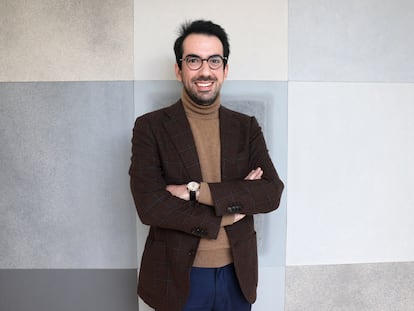
Danuta Wasserman, psychiatrist: ‘In a brain with suicidal ideations there is a lot of anxiety, a lot of ambivalence, and a lot of anger’. Source: EL PAIS

Health

MENTAL HEALTH

Danuta Wasserman, psychiatrist: ‘In a brain with suicidal ideations there is a lot of anxiety, a lot of ambivalence, and a lot of anger’

The president of the World Psychiatric Association warns of the influence of screens among young people: ‘The paradox is that it is both toxic and beneficial, because they can learn a lot of positive things, but also destructive behaviors’

Danuta Wasserman

Danuta Wasserman, president of the World Psychiatry Association.FRANCISCO UBILLA

Jessica Mouzo

Jessica Mouzo

Palma de Mallorca – May 08, 2024 – 20:33 CEST

Never has mental health been in the spotlight to such an extent. There is more social awareness than ever about the impact of emotional distress and in consulting rooms and research labs scientific knowledge about how to prevent or treat it is increasingly advanced. But mental health problems are still on the rise. “The problem is that governments do not allocate sufficient budgets to the prevention and treatment of people with mental illnesses,” says psychiatrist and researcher Danuta Wasserman, president of the World Psychiatric Association and professor of psychiatry and suicidology at the Karolinska Institute in Sweden.

There is no magic wand to prevent poor mental health, but there are indisputable guidelines that minimize the risks. For example: well-being, freedom from hunger and poverty, gender equality, clean drinking water and access to green spaces, Wasserman lists, while pointing to the stream of sunlight entering through the huge windows of the Palace of Justice in Palma de Mallorca, Spain, where her interview with EL PAÍS is being held. Wasserman continues to tick off some of these protective shields: physical exercise, good nutrition, proper sleep, peace, justice… “Wars are terrible for mental health. Not only for the people who are affected by the war, but also for the soldiers and the people who carry out the bombing,” says the researcher, who is visiting Palma de Mallorca to participate in a joint congress held by the Spanish Society of Dual Pathology and the World Association of Dual Pathology.

These are complex times and the worldwide figures regarding poor mental health speak for themselves. Wasserman, of Polish origin but based in Sweden since the late 1960s, turns to her cell phone and pulls up a PowerPoint that lays out the situation: 13% of the world’s population live with a mental health problem, mostly anxiety and depression but also developmental disorders, attention deficit hyperactivity disorder, bipolar disorder and, to a lesser extent, behavioral disorders, autism, or schizophrenia. In minors, 8% of children and 14% of adolescents also suffer from some kind of mental pathology.

Question: What does this 13% mean, and what do you think of this percentage?

Answer. I think it could be worse, because mental health problems depend to a large extent on economic and social factors. It’s not just our genes. For example, suicide depends on both genetic and environmental factors and the interaction between them: simplistically, you can say that genetic factors are about 50% responsible and environmental factors are also about 50% responsible. However, in others, it may be that the environment is more responsible and, particularly, it may be that a poor economic situation has an enormous influence. It is to be expected that, after the pandemic, economic conditions are improving, but not in all countries. At least in Sweden we still have very high interest rates, which puts a burden on households, and we do not know when they will decrease or increase. We depend, to a large extent, on the global economy, on what happens in the U.S., China, Russia, India… It doesn’t just depend on one country.

Q. In Catalonia, for example, a study revealed that suicide attempts increased by 50% after the lockdown.

A. It is not the same everywhere; suicide attempts increased among families with very poor relationships because interactions — bad interactions — increased. But, in other families with good interactions, mental health improved because they spent more time with each other. We know that in France, in some centers, attempts increased upon returning to class among children who were bullied in schools there were no anti-bullying programs. When they were at home, they felt better. Therefore, it depends on the surrounding factors.

Q. What is happening now?

A. Among young girls, suicide attempts and other self-destructive behaviors are increasing, and probably the reason is that they are very present on social networks and learn from each other instead of learning from their parents, their teachers, or their healthy peers about how to resolve tension or anxiety problems. They are influenced by self-destructive behaviors.

Q. Do you think the relationship between children and screens is toxic?

A. Yes. And the paradox is that it is both toxic and beneficial, because they can learn a lot of positive things, but also those destructive behaviors. And, unfortunately, this always happens in children who have worse conditions at home, and not only economically because they can come from both rich and poor families. What I mean is that they don’t have enough contact with their parents, their grandparents, or other relatives. They are more vulnerable because, for them, this [social networks and screens] is the only solution. And, in the end, they see nothing but these destructive solutions.

Danuta Wasserman
Danuta Wasserman at the National Congress of Dual Pathology, held in Palma de Mallorca, Spain. FRANCISCO UBILLA

Q. What happens in the brain of a person who has suicidal ideations, or attempts suicide?

A. In these brains there is a lot of anxiety, a lot of ambivalence, and a lot of anger. If you can decrease the anxiety and anger — if you can make that ambivalence less powerful — you can help that person. So, what is the most important thing to buy time with the suicidal person? Sit and maybe not talk, but be close. Maybe he doesn’t want you to touch him, but you can give him a blanket or a warm meal to comfort him. There are a lot of physiological mechanisms going on in the brain: you have a lot of anxiety, so there are a lot of different signals, substances that circulate through the brain and push you to act or do something immediately. Therefore, environmental responses are extremely important: don’t leave the person alone, provide emotional and physical comfort, and try to listen.

Q. Can suicide rates be interpreted as a sign of the mental health of the general population? Nordic countries often come out at the top of the happiness rankings, but at the same time they have high suicide rates.

A. It’s a paradox, yes. Because we have good social systems, but at the moment we are very lonely. There is a very good American study, in the state of New York, where they have a very ambitious suicide prevention program and they were interviewing patients who had felt suicidal, and they asked: ‘What helps you?’ And they said a space to be, to feel that they were welcome, that someone cared about them… They didn’t necessarily ask to talk or to get therapy, but rather that someone cared about them. That’s why I say the wellbeing factor plays a role, but the loneliness factor does as well. In countries where you have large families and extended families, even if you are not very well off, you have low suicide rates because there are always people around you and they can take care of you in many other ways.

Sign up for our weekly newsletter to get more English-language news coverage from EL PAÍS USA Edition

More information

Coral Sanfeliu

Coral Sanfeliu, aging researcher: ‘Sitting eight hours a day affects brain connections’
Daniel Mediavilla

Contaminación lumínica salud
Posted in Uncategorized | Tagged , , , , | Leave a comment

The Intelligence Squared Economic Outlook with Martin Wolf, Jonny Dymond. 2024 the year of many elections throughout the world … uncertainty hovers based on global world politics. Host Guinness Global Investors.

Posted in Uncategorized | Leave a comment

Gabor Maté and Yanis Varoufakis | HOW TO HEAL FROM THIS TOXIC CULTURE | Podcast 4

Eye Of The Storm Podcast

92,650 views 1 May 2024

This podcast is released alongside the acclaimed new docuseries ‘In The Eye Of The Storm — The Political Odyssey Of Yanis Varoufakis’. Watch it here: http://www.eyeofthestorm.info Dr. Gabor Maté is a renowned speaker and bestselling author, highly sought after for his expertise on a range of topics including addiction, stress and childhood development. To find out more, go to: https://drgabormate.com/about/ Yanis Varoufakis is an economist, politician, author and the former finance minister of Greece. To find out more, go to: https://www.yanisvaroufakis.eu/ Raoul Martinez is a philosopher, author and filmmaker. To find out more, go to: http://www.creatingfreedom.info ‘Eye Of The Storm Podcast’ will release new episodes each week with renowned guests from the world of politics and the arts. Our first episode, however, kicks off with an in-depth interview with Yanis Varoufakis. Please like and subscribe. PRODUCED BY DAVIDE CASTRO AND FRANCESCA MARTINEZ.

Posted in Uncategorized | Tagged , , , , | Leave a comment

Tech companies break earnings records despite regulatory battle: Source EL PAIS. Comment: Ireland, be aware of energy required for AI and capacity of data centres. Some countries are reviewing nuclear as a source of energy to attract these companies

Profits at Alphabet, Apple, Amazon, Microsoft and Meta shoot up 38% thanks to artificial intelligence

Amazon CEO Jeff Bezos, Apple CEO Tim Cook, Google CEO Sundar Pichai and Facebook CEO Mark Zuckerberg

Amazon CEO Jeff Bezos, Apple CEO Tim Cook, Google CEO Sundar Pichai and Facebook CEO Mark Zuckerberg.Pablo Martinez Monsivais (AP)

Miguel Jiménez

May 05, 2024 – 05:15 CEST

The dominance of tech companies is growing despite regulatory pressure. Authorities in the United States and Europe have launched an offensive to end monopolistic practices that they consider illegal. But meanwhile, the digital giants are growing larger and larger as bankable entities, nourished by the new golden goose of artificial intelligence. Profits at Alphabet, Apple, Amazon, Microsoft and Meta shot up 38% in the first quarter to $92.037 billion.

The five big tech companies have been joined by Nvidia, which operates on an irregular fiscal calendar and will present its February-April earnings report on May 22 and is also expected to evidence record-breaking sales and profits. Those six companies add up to a stock market value of $13 billion and have reached all-time trading highs, backed by their performance.

Apple enjoys a vast market share in high-end smartphones; Google is without rivals as a search engine and in online advertising; Amazon dominates e-commerce; Microsoft, operating systems; Meta has an enviable position within social media with Facebook, Instagram and WhatsApp; while Nvidia holds a new monopoly in high-powered processors. Each one is sucking the juice out of its respective market, and continues to add new divisions.

Another similarity is that all six firms are working with artificial intelligence, which requires high levels of investment to maintain market position. Microsoft leads the pack, thanks to its alliance with OpenAI. Not just its cloud computing business has benefited — it is also incorporating levels of artificial intelligence to its products. Alphabet, which was caught off-guard by generative artificial intelligence, is making up the ground it lost at a rapid pace in its server business. Amazon was a pioneer in identifying cloud data and computing as big business, but it is also taking advantage of artificial intelligence among its commercial offerings, inventory management and even route optimization. Meta has seized on AI to better hook users on its social platforms and to improve its ad management. Apple is a wildcard, having fallen behind in generative artificial intelligence, but it does incorporate certain functions and apps in its products and services that feed off of AI. Nvidia, which counts the other firms as clients, has been the greatest beneficiary of the new technology’s gold rush.

Alphabet, profit leader

The only firm that did not break records in the first quarter was Apple. A drop in iPhone sales and supply chain delay in Chain has hobbled sales, which fell 4% to $90.753 billion, and profits, which dropped 2% to $23.636 billion. The company is facing regulatory pressure related to its app store and a lawsuit over illegal monopolistic practices in the United States smartphone market. The Department of Justice has accused the company of protecting the iPhone’s dominant position by closing off its technological ecosystem to competitors.

Tim Cook’s Alphabet has become a profit leader at $23.662 billion, 57% higher thanks to a 15.4% growth in sales stemming from improvements in marketing and server growth. The company headed by Sundar Pichai has received multimillion-dollar sanctions from the European Union and faces two lawsuits from the U.S. Department of Justice. One, regarding the search engine market, is set to be ruled on next Friday in Washington D.C. Another, related to digital advertising, is working its way through the courts. For its part, Amazon leads in sales, with a $143.313 billion growth that equals a potent 12.5% increase. Its profits have tripled to $10.431 billion. E-commerce business accounts for the bulk of CEO Andy Jassy’s company, but cloud computing and advertising business (on its commercial platform and streaming service) have also become primary motors for its growth. The Federal Trade Commission (FTC), directed by Lina Khan, has accused Amazon of monopolistic practices that “inflate prices, degrade quality, stifle innovation for consumers and businesses.”

Sales and profits at Microsoft grew more than expected, driven by business demand for its cloud and AI services. Profits at the company led by Satya Nadella rose 17% to $61.858 billion in the first quarter of the calendar year, equal to a third of its fiscal year. Net income was $21.939 billion, an increase of 20%. After overcoming obstacles to its purchase of Activision, its alliance with OpenAI is now under the scrutiny of both the Department of Justice and the FTC.

The only poor showing on the market came from Meta, but not due to numbers, per se. Sales at the company that was founded and is run by Mark Zuckerberg shot up in the first quarter by 27% to $36.455 billion. Still, after its 2023 austerity exercise, it spooked the market by raising its spending and investment estimates based on AI. Its second quarter forecast was also disappointing. Aside from its lawsuits over the impact of social media on minors, the FTC sued Meta in 2021, accusing it of reducing competition with its purchase of Instagram and WhatsApp, and that process is still underway. The FTC wants that to go to court this year.

For now, neither fines, nor lawsuits, nor investigations, nor regulatory change have been able to slow the unstoppable growth of the tech giants, which have become digital age monopolies thanks to the innovation and global success of their goods and services. They’re all competing for their slice of the AI pie.

Sign up for our weekly newsletter to get more English-language news coverage from EL PAÍS USA Edition

More information

Jonathan Haidt, psicólogo social

Jonathan Haidt: ‘If companies were to do the right thing, they would lose the most valuable customers on earth, preteen kids’

Ana Vidal Egea

Giovanna Gonzalez ante el Capitolio contra la ley que amenaza con el cierre de Tik Tok en Estados Unidos

Is the US really going to ban TikTok?

Jordi Pérez Colomé

Posted in Uncategorized | Tagged , , , , | Leave a comment

Mosab Hassan Yousef Speaks about Hamas. “Son of Hamas”

==================================

1,286,960 views 29 Apr 2024 #piersmorgan#israel#rafah

Piers Morgan Uncensored’s latest debate focuses on Israel’s intention to invade Rafah, the southern Gazan city where more than a million people have sought refuge on the rest of the strip. Palestinian President Mahmoud Abbas says the US is the only country in the world that can stop Israel from attacking Rafah. And President Biden has told Israel to go no further. But can he really do anything to stop it? And should there be consequences if Israel presses on with an invasion its most important ally does not support? Piers Morgan is joined by Egyptian podcaster Rahma Zein and Israel defector and son of Hamas founder Sheikh Hassan Yousef, Mosab Hassan Yousef.

Posted in Uncategorized | Leave a comment

ChatGPT could be a search engine soon, and that would be a problem for Google. Source: EL PAIS

ChatGPT could be a search engine soon, and that would be a problem for Google

If the rumors are confirmed, OpenAI could challenge the company’s dominance in the sector.

There are rumors that OpenAI, the company that created ChatGPT, is working on its own search engine.Unsplash

Iván Martín Barbero

May 03, 2024 – 19:01 CEST

For a long time, Google has been the dominant company in search engines, handling almost all search queries worldwide. Recently, however, it has been seriously challenged by Microsoft’s Bing, which has received a boost from ChatGPT. And now, there is news that suggests that Mountain View has more problems to worry about.

There are rumors that OpenAI, the company that created ChatGPT, is working on its own search engine. These rumors have been circulating for some time now, but it looks like it may become a reality sooner than thought.

According to new information, OpenAI could unveil its own search engine this coming May 9, just a couple of days before Google’s big developer conference kicks off. A screenshot has even been published suggesting that OpenAI has been working with SSL certificate registrations. This could lead to the possible creation of a domain called search.chatgpt.com, according to a report by Search Engine Roundtable.

Clicking on search.chatgpt.com brings up a “Not Found” message. This only adds to speculation that the ChatGPT search engine might actually be in process, as the message is not a free element or unavailable within the internet database. Meanwhile, the OpenAI home page is undergoing a major revamp, with a focus that is far from anything to do with search.

The idea of a ChatGPT search engine makes sense given that Microsoft, a major investor in OpenAI, has not been able to compete against Google Search with Bing — although it has been able to gain ground. According to a February report in The Information, OpenAI’s search engine would presumably be partially based on Bing’s technology, which could represent the biggest challenge yet to Google’s dominance.

Today, AI-powered search engines like Google Search offer direct answers to queries, often in just a couple of sentences. They also offer links to their sources at the end, merging the features of an AI-powered chatbot and a traditional search engine. According to The Information, this upcoming search product could be even faster than ChatGPT while maintaining its robust summarization capabilities.

Details about the ChatGPT search engine are scarce for now, but May 9 is just around the corner. So, we won’t have to wait long to find out what OpenAI has been preparing if everything, as it seems, is confirmed.

Sign up for our weekly newsletter to get more English-language news coverage from EL PAÍS USA Edition

More information

Japanese writer Rie Kudan, winner of the Akutagawa Prize, during a press conference in January.

Author who won Japan’s top literary award with help from ChatGPT: ‘AI helps you compensate for your weaknesses’

Gonzalo Robledo | Tokyo

Marc Serramià

Marc Serramià: ‘If we all trust tools like ChatGPT, human knowledge will disappear’

Manuel G. Pascual

Archived In

Posted in Uncategorized | Tagged , , , , | 1 Comment

Addictions … they never go away but you can try to learn by alternatives. Ruben Baler, neuroscientist ‘We are guinea pigs. Our attention has become a commodity’. Comment: recommend earlier postings by Jonathan Haidt 2010 impact of smartphone to social media on children. Addiction so young! Source: EL PAIS

ADDICTIONS

Rubén Baler, neuroscientist: ‘We are guinea pigs. Our attention has become a profitable commodity’

The expert from the US National Institute on Drug Abuse (NIDA) warns that overexposure to screens from an early age can have a negative impact on health

Rubén Baler, neurocientífico

Rubén Baler, an expert in public health and addiction neuroscience from US National Institute on Drug Abuse (NIDA), pictured last week in Palma de Mallorca, Spain.FRANCISCO UBILLA

Jessica Mouzo

Jessica Mouzo

Palma (Spain) – May 05, 2024 – 05:19 CEST

Q. What can be done?

A. We cannot depend on politicians, nor can we wait for scientists to save us. I think the solution is at the local level, in the schools. For now, parents can stop the use of screens in bed, because it affects a child’s sleep. That’s a vicious circle that leads them to get into risky situations… a lack of sleep alters the brain. I don’t understand why kids are allowed to bring devices to class, because that interferes with learning, class dynamics and attention span. It makes no sense.

We have to educate ourselves about how the brain works and [understand] that we’re being taken advantage of. We’re guinea pigs – commodities. Our attention has become a profitable commodity.

Q. For the industry?

A. Yes. We’re paying a price voluntarily and the decision is up to each one of us. Either we’re zombies and sleepwalkers, or we take the reins of our own lives. Right now, we’re selling our souls to the devil, both our privacy and our brains. I understand how difficult it is, because this little device (he points to his cell phone) is everywhere and we depend on it. But we have to make an effort to see the good and the evil. We must try to take advantage of what it offers us for our well-being, while discarding the harmful effects of these technologies.

Q. At NIDA, you focus on researching drug abuse. Which is the substance that worries you the most?

A. In adolescents, the prevalence of alcohol is very problematic, especially in cultures in which it’s normalized. It’s an issue not only because it’s addictive, but because alcohol has neurodegenerative properties, producing holes in the brain over prolonged periods of consumption. The problem is that alcohol is combined with the perception of being low-risk — everyone makes it a normative behavior, as if nothing happens [when you drink]. But something does happen.

Q. And which substance concerns you the most when it comes to adults? In the US, there’s a major opioid crisis.

A. Yes, but what the crisis teaches us is that it’s not about a drug — it’s a phenomenon. [The different drugs] are all symptoms: this epidemic started with prescription drugs (OxyContin, Vicodin, etc.). When we tightened the valve on doctors overprescribing these things, the curve of those prescriptions went down… and the curve of heroin began. When heroin started to rise, traffickers realized they could cut it with something much more powerful: they started creating fentanyl. Hence, synthetic opioids came along. Now, the fourth wave has to do with amphetamines that are cut with heroin and that appear mixed with fentanyl and a new drug — xylazine — which prolongs the psychoactive effects of fentanyl. But these are all symptoms.

We need to worry about what’s important, not just about what’s urgent. Why do people use drugs? What leads them to it? Misery? Hopelessness? Boredom? That’s what needs to be attacked. You have to look for the deep root causes.

Q. And what are they?

A. There’s a financialization of the economy. There are groups that are very interested in the profitability of businesses: if we talk about junk food, these are industries that produce an incredible amount of profit, but the foods are addictive — they don’t help public health. [Digital content] platforms are addictive. The tobacco, cannabis, or alcohol industries produce enormous amounts of profits. And for the owners, for those who sit at shareholder meetings, the only thing that matters to them is the company’s profits… public health isn’t a priority. And, in that equation, the population will always lose. There are increasingly powerful forces that have an interest in making these products more addictive and popular.

Q. Is capitalism the problem?

A. No, I think capitalism is the only system that works. I’m not against capitalism, but I’m against this form of overflowing capitalism that apparently has no sense of responsibility towards citizens.

Q. Can brains that have been made ill from addiction be cured? Can you go back to the beginning?

A. No brain — healthy or sick — goes back to the beginning. If brains are characterized by something, it’s constant change. Learning changes the architecture of the brain, but it can be good or bad learning. And addictions are based on learning through rewards. It’s like riding a bike: can you imagine a situation where you unlearn how to ride a bike? No. Because what was learned that way — with that intensity, in those learning trenches in the brain — cannot be unlearned. Addiction is the same: it will never heal, it won’t go away. The learning trenches are going to stay there. They can be covered with new, better, more passionate, more natural, more evolutionarily appropriate learning… but the trenches are going to remain. That’s why there’s always the risk of relapse.

Translated by Avik Jain Chatlani.

Sign up for our weekly newsletter to get more English-language news coverage from EL PAÍS USA Edition

Posted in Uncategorized | Tagged , , , , | Leave a comment

I remember the 1960s crackdowns against war protesters. This is a repeat. The Guardian – Robert Reich

ShowMore

Nighttime view of police in helmets and riot gear on urban street.

‘As the anti-war protesters chanted “The whole world is watching”, network television conveyed the riotous scene to what seemed like the whole world.’ Photograph: Caitlin Ochs/Reuters

OpinionProtest

I remember the 1960s crackdowns against war protesters. This is a repeat

Robert Reich

Robert Reich

The mistakes made at one point in time have an eerie way of re-emerging as memories fade

Sun 5 May 2024 10.08 CEST Last modified on Sun 5 May 2024 15.07 CEST

I’ve been spending the last several weeks trying to find out what’s really going on with the campus protests.

I’ve met with students at Berkeley, where I teach. I’ve visited with faculty at Columbia University. I’ve spoken by phone with young people and professors at many other universities.

We Columbia University students urge you to listen to our voices

My conclusion: while protest movements are often ignited by many different things and attract an assortment of people with a range of motives, this one is centered on one thing: moral outrage at the slaughter of tens of thousands of innocent people – most of them women and children – in Gaza.

To interpret these protests as anything else – as antisemitic or anti-Zionist or anti-American or pro-Palestinian – is to miss the essence of what’s going on and why.

Most of the students and faculty I’ve spoken with found Hamas’s attack on October 7 odious. They also find Israel’s current government morally bankrupt, in that its response to Hamas’s attack has been disproportionate.

Some protesters focus their anger on Israel, some on the Israeli government of Benjamin Netanyahu, some on Joe Biden for failing to stand up to Netanyahu, for giving Israel additional armaments, and for what they perceive as Biden’s patronizing response to the protests.

Like any protest movement, the actions have attracted a few on the fringe. I’ve heard scattered reports of antisemitism, although I haven’t witnessed or heard anything that might be interpreted as antisemitic. In fact, a significant number of the protesters are Jewish.

To describe the protesters as “pro-Palestinian” is also inaccurate. Most do not support Palestine as such; they do not know enough about the history of Israel and Palestine to pass moral judgment.

But they have a deep and abiding sense that what is happening in Gaza is morally wrong, and that the United States is complicit in that immorality.

Many tell me they are planning not to vote this coming November – a clear danger to Biden’s re-election campaign, which in turn increases the odds of a Trump presidency.

When I tell them that a failure to vote for Biden is in effect a vote for Trump, they say they cannot in good conscience vote for either candidate.

Quite a number tell me that “the lesser of two evils is still evil”. I tell them Trump would be far worse for the world – truly evil. Many remain unconvinced.

I have sharp memories of the anti-Vietnam war demonstrations, in which I participated some 55 years ago.

I remember being appalled at the unnecessary carnage in Vietnam. I was incensed that the first world, white and rich, was randomly killing people in the third world, mostly non-white and poor. As an American, I felt morally complicit.skip past newsletter promotion

Sign up to Follow Robert Reich

Free newsletter

Get Robert Reich’s latest columns delivered straight to your inbox

I was angry at college administrators who summoned police to clear protesters – using teargas, stun guns and mass arrests. The response only added fuel to the flames.

The anti-Vietnam war movement became fodder for rightwing politicians like Richard Nixon, demanding “law and order”. The spectacle also appalled many non-college, working-class people who viewed the students as pampered, selfish, anti-American, unpatriotic.

I vividly recall the anti war demonstrations at the 1968 Democratic convention in Chicago, and the brutality of the Chicago police and Illinois national guard – later described by the National Commission on the Causes and Prevention of Violence as a “police riot”.

As the anti-war protesters chanted “The whole world is watching”, network television conveyed the riotous scene to what seemed like the whole world.

I had spent months working for the anti-war presidential candidate Eugene McCarthy. The convention nominated Hubert Humphrey. That November, the nation voted in Richard Nixon as president.

History, as it is said, doesn’t repeat itself. It only rhymes.

The mistakes made at one point in time have an eerie way of re-emerging two generations later, as memories fade.

Posted in Uncategorized | Tagged , , , , | Leave a comment

Colonists. Chris Hedges talks about Israel. “Palestine Talks…” Source: TRT World

4th May 2024

Posted in Uncategorized | Leave a comment

Canisgallicus has been following Jonathan Haidt on youtube. Mental illness, Anxiety, Social Media captivity of attention and so much more. The smart phone contingent … we have a lot to pay heed to. Damage has been done; we need to be aware and try to rectify what we have created and this includes the Tech Giants who need to contribute guardrails. Source: Intelligence Squared.

1,321 views 3 May 2024 #IntelligenceSquared#IQ2#IntelligenceSquaredPlus The full video of this event is available to watch for Intelligence Squared Members. For more information and to become a Members please go to https://intelligencesquared.com/membe….

——————–

Bestselling author and social psychologist Jonathan Haidt has dedicated his career to speaking truth and wisdom in some of the most challenging spaces – communities polarised by politics and religion and university campuses mired in culture wars. Now he turns his attention to what he sees as a perfect storm of factors that are causing a collapse in mental health among teenagers today.

According to the American College Health Association, since 2010 anxiety among American college students has increased by 134%, depression by 106%, bipolar disorder by 57%, and anorexia by 100%.

In April 2024 Haidt came to the Intelligence Squared stage where in conversation with BBC presenter Sarah Montague he drew on his new book The Anxious Generation, which has shot to No 1 in the Sunday Times bestsellers. He argued that the decline of free play in childhood and the rise of smartphone use among adolescents are the twin sources of increased mental distress among teenagers. He showed how, between 2010 and 2015, as teens traded in their flip phones for smartphones packed with social media apps, time online soared. This profound shift took place against a backdrop of diminishing childhood freedom, as parents over-supervised every aspect of their children’s lives offline, depriving them of the face-to-face experiences with their peers which they need to become strong and self-governing adults. In short, childhood got rewired. Haidt argued that it isn’t too late to put the genie back in the bottle. Against the backdrop of the growing movement to ban smartphones in schools, he drew on traditional wisdom and cutting-edge research to offer practical advice to parents, teachers and teenagers,

Posted in Uncategorized | Tagged , , , , | Leave a comment