389,269 views 12 Dec 2023 heretics. Richard Dawkins eviscerates woke culture, trans ideology & magical thinking in this episode of Heretics. We discuss everyone from David Baddiel & Ricky Gervais to J K Rowling and Stephen Fry. #richarddawkins#heretics#genderidentity Chapters: 0:00 David Baddiel & the Afterlife 3:55 Would he prefer to believe? 6:00 Richard’s Piers Morgan interview 8:00 Can you will yourself to believe in god 9:44 Do we come from FISH? 12:30 Woke problems 14:40 John McWhorter / language change 16:00 Woke vs Religion & Christ 18:30 The Status Game 21:00 Stephen Fry 22:10 Ricky Gervais & gender ‘insanity’ 25:37 Saddest part about JK Rowling / Harry Potter 28:28 Debate about heaven 30:50 Andrew’s wishful thinking (VR/Quantum) 32:13 Who Richard will interview! 33:40 Why language hurts 35:00 Snail has sex with a starfish (nope!) 37:50 Will aliens be Darwinian? 39:50 Fermi: Where are the aliens? 42:15 The greatest discovery of all time 43:10 AI alignment & HAL 9000
It’s a year of elections, and the internet is already rife with AI-generated political content. An AI robocaller mimicking Joe Biden made the rounds in the New Hampshire primaries; voters in India have been inundated with AI deepfakes. Synthetic content isn’t new, but the ease with which it can be created is a fairly recent trend whose outcome is uncertain.
In the UK, AI is making a different kind of appearance. An AI chatbot there is running for parliament. The candidate, AI Steve, which is the brainchild of Brighton entrepreneur Steve Endacott, is listed on the ballot under the new independent SmarterUK party.
Created by Neural Voice, a company specializing in conversational AI where Endacott is chairman, AI Steve is comprised of a chatbot and an AI-generated avatar of Endacott.
The plan is for AI Steve to conduct thousands of conversations with voters in Sussex’s Brighton and Hove, where it’s on the ballot, in order to surface new policies they care about. Then the real Steve Endacott will represent those policies in parliament, voting on behalf of AI Steve and Brighton and Hove’s constituents.
“I will do the physical voting but I will be directed entirely by my constituents via AI Steve,” Endacott told The Independent. “I’m just a bit of a numpty being told what to do. That is the whole idea of democracy. You have to put away your own personal politics, your own ego and actually do what your constituents want, which is quite radical in politics.”
Voters can talk policy with AI Steve by way of a chatbot interface on the candidate’s website. In a brief exchange for this article, the algorithm, which insisted on referring to itself in the third person, answered my questions about the project’s goals.
Due to latency and an unpredictable length of the chatbot’s answers, the conversation was a bit stilted at first.
Asked what advantage an AI politician might have over someone, ahem, more traditional, AI Steve pointed to its ability to increase efficiency and transparency in politics by having conversations with voters 24/7, then analyzing and summarizing these conversations so the party can form policies voters actually care about.
“AI can enhance communication between politicians and the public, leading to a more informed and engaged democracy,” the chatbot said. Now, wouldn’t that be nice?
For those following AI closely in recent years, however, some of this might sound worrisome. The algorithms behind the recent explosion of chatbots are opaque and well known to generate biased and inaccurate responses. Not an ideal pairing if the goal is to create a more representative and transparent form of government.
This is why, perhaps, the AI Steve campaign is a decidedly human-AI collaboration, something Endacott emphasized in an email to Singularity Hub, in which he described AI Steve as a kind of “copilot” for the real Steve Endacott and his party think tank.
Endacott created the AI candidate’s initial platform, for example, and the campaign wants to recruit 5,000 people to be “creators”—these are the folks who will have discussions with the chatbot—to surface potential policies. Some results might be nonsensical or otherwise problematic, so the campaign is also looking to recruit 5,000 human “validators.” These people, everyday Brighton commuters, will review and rate AI Steve’s policies on a scale of 1 to 10. To avoid “daft” policies (as the website puts it), only those with scores greater than 50 percent will advance.
In a year when AI is colliding with politics, it’s a fascinating twist. (And as Wired reported this week, it’s not even the only one.) For his part, Endacott views AI Steve as a prototype tool for SmarterUK and AI-human collaboration in politics.
“The party will look to recruit candidates who want to use the technology platform and stand in local or national elections across the country,” Endacott said. “So, it is very much the first step in a major project.”
Setting aside the eye-catching fact an AI candidate is on the ballot—the technology is, of course, incapable of functioning as a member of parliament—the proposed human-AI system is itself an interesting idea.
Increasingly, chatbots are being employed in customer service, fielding questions and gathering responses. It’s not a stretch to see how something similar might be pasted onto politics by substituting customers with voters.
AI Steve’s strength is its ability to communicate with people in everyday language at scale. The chatbot can have as many as 10,000 conversations at once, according to Endacott. “Over the last three days, we have had 2,500 calls to AI Steve, a number I, as a human, could never answer, with all calls transcribed and determined to help us extract policy ideas,” he said.
Other politicians, whether they list an AI on the ballot or not, might adopt a similar approach to better understand what constituents, who number in the thousands or millions, want from them—a kind of direct line to elected leaders. With human judgment as a failsafe for quality control, it could be a useful new tool in governance.
Voters are disillusioned, Endacott said. By giving people a voice, he hopes AI Steve gets them more involved and reinvigorates a broader sense that democracy can work.
“We think by bringing more ‘humans’ into the mix, we are improving the human element because the politician is directly connected with votes at all times and not just on a four-year election cycle, after which they disappear to parliament and do what they like,” he said.
When her mother was in a rehab facility, Daniela Rus noticed that transporting patients was a major bottleneck; they were constantly waiting for a person to come with a wheelchair. She quickly formed an idea: “I believe that with today’s technology, we can build autonomous wheelchairs and gurneys capable of transporting people efficiently.” Her team even built a prototype and tried it out at a rehabilitation site. Rus hopes such an innovation could improve efficiency in hospitals.
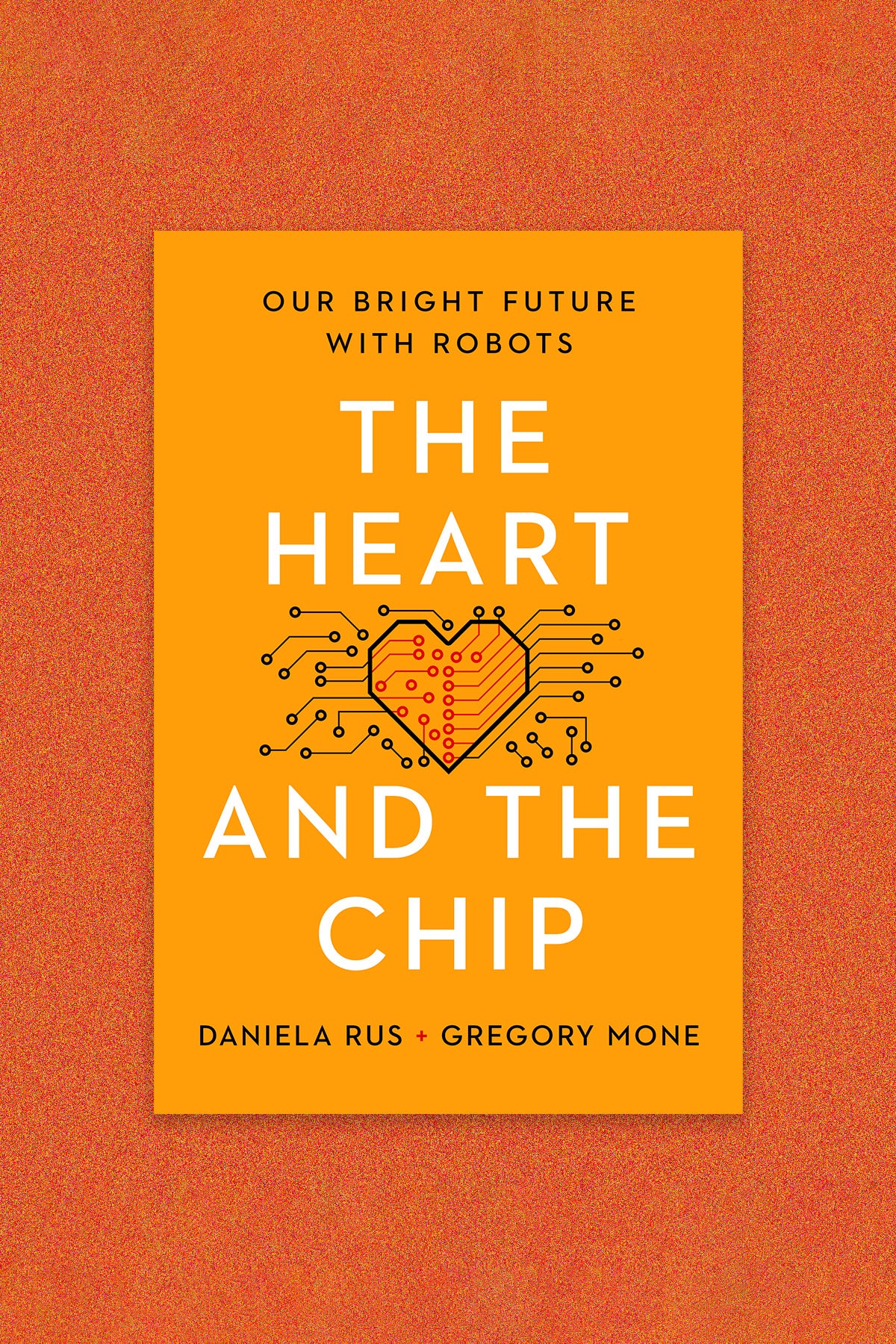
Rus is the head of the MIT Computer Science Lab and a recently elected member of the National Academy of Sciences. Her new book, The Heart and the Chip: Our Bright Future With Robots, written with science writer Gregory Mone, makes a case for robots as a source for opportunity and growth in human life.
Harvard Public Health spoke with Rus about some of the critical questions around robots and public health, including the ways in which they are impacting medical procedures, health care, and two other areas influential to human health—employment and the environment.
This interview has been edited for length and clarity.
HPH: What’s a good example of how robots are already impacting the health world?
Rus: There is a project in Germany called Brainlab. I visited this group last year, and I was completely blown away. These scientists are using robots to do spinal surgeries which are very, very delicate. The surgery involves the placement of screws in the spine, and the screws have to be placed very precisely because otherwise there is the risk of nerve damage.There is a very interesting symbiosis between doctor and machine in this application.
The process works like this: A doctor images the spine; a planning algorithm helps determine where the screws will be placed; and a surgeon then makes corrections to the plan. Then a robot takes over to implant the screws, under the supervision of the doctor. The robot can move with greater precision than the human. The robot augments the human’s precision, and the human augments the reasoning of the machine.
Sign up for Harvard Public Health
Exploring what works, what doesn’t, and why.
Delivered to your inbox weekly.
Email addressBy clicking “Subscribe,” you agree to receive email communications from Harvard Public Health.
EmailThis field is for validation purposes and should be left unchanged.
Of course, robots have been used for surgery and for training for a long time. The da Vinci system was introduced more than 20 years ago, and this type of robot is in so many hospitals. The[se] surgical robots are ensuring that the incisions are minimal, which also prevents the risk for infection and . . . makes healing faster. The other benefit of the da Vinci robot is to enable experts to perform surgeries remotely, which has been really important for bringing equity and inclusion to medicine.
But despite these advances, I would not suggest that autonomous robots should independently decide whether to cut or not cut in a surgical setting. I wouldn’t yield that level of control to machines.
HPH: You had a front row seat during the pandemic for some wild—and wildly quick—innovations with robots. Do you think we’ll be turning over things like pandemic response to robots any time soon?
Rus:During the pandemic I worked with Ava Robotics to develop UV-disinfecting robots. The robot traveled through the space to be disinfected—a warehouse or a COVID testing facility—using our coverage algorithm.Its UV light reached all the visible surfaces and killed the viruses and bacteria on those surfaces. Especially at the beginning of the pandemic when we didn’t know much about the virus—how it was transmitted, how long it survived on surfaces—having this autonomous disinfection platform was very appealing.
We deployed these robots at the Boston Food Bank to support both the staff working there and the many first responders who relied on the food bank for their meals. We also had these robots deployed in the MIT Covid testing facility.
HPH: You were also involved in an innovative open-source project that deployed robotic help for ventilation in hospitals during the pandemic.
Rus: Within about a month—during March and April, when the pandemic started—we built a robotic ventilator which we called the MIT Emergency Ventilator. So if you remember, at the time, people were dying because there weren’t enough ventilators, and fabricating more ventilators was just not possible with the current processes that companies had available. What we had, however, were ambu-bags, these plastic bags that are very inexpensive and are placed in every hospital room and every ambulance. These bags are meant for manual ventilation for a little bit of time while you transport a patient.
People with COVID-19 who needed ventilation required it not just for a few minutes, but for days on end. So, we built a robotic ventilator. Think of two robotic paws capable of squeezing the ambu-bag at the correct rate for each individual patient. This low-cost solution was deployed in a hospital in New York. We also published the blueprints, designs, and code for the system. Throughout the process, we worked closely with doctors to ensure that the ventilator had the right sensors, provided the necessary feedback, and featured an interface that doctors could easily use.
Developing the robotic emergency ventilator was possible because we understood the problem; it was a moment of crisis, and our students at MIT stepped up and spent a few weeks creating this custom solution for a humanitarian need. By open-sourcing the designs, we enabled many teams around the world to adopt and implement the solution.
HPH: Public health is not the same as medicine; you could think of unemployment or the falling costs of certain services as being a public health question. Are there things coming in the next few years that are going to have big social impacts?
Rus:Jobs are constantly evolving. And I believe that it’s much easier for people to think about what will go away than to think about what will come. My belief is that certain aspects of jobs will be taken over by machines, which is beneficial because those tasks are often not well-suited for people. This shift will allow people to focus on the tasks more suitable for people and pursue a wider variety of other types of jobs.
A very useful example to keep in mind is what happened with the digital revolution . . . around the year 2000, when the dot com boom was in full force, nobody was talking about smartphones or about cloud computing or social media. These three technologies were all introduced in the year 2007, not that far into the future.And they opened the door to so many jobs, and not just geeky jobs: content creators, designers, such a wide range of professions benefited from the advancement of these jobs.And new jobs that didn’t exist were created. Similarly, in public health, advancements in technology and data analytics have created roles in epidemiology, health informatics, and telemedicine that didn’t exist before, enabling more effective disease tracking, patient care, and health policy planning.
Book cover: WW Norton
Contributors
BA
Ben Adams
Ben Adams is a book editor at Hachette Book Group.
1,253,718 views 12 Jun 2024 Full Episodes One-on-One with Donald Trump: Dr. Phil sits down with President Trump for a one-on-one interview where nothing is off limits. Following this interview, Dr. Phil holds a town hall meeting to speak with viewers about their reaction to his interview with Donald Trump. Experience a side of Dr. Phil McGraw you may have been missing as he provides critical information on some of the most important issues we face today. McGraw delves into the minds of the most exciting and accomplished people. From celebrities to ordinary people in extraordinary circumstances, to the world’s leading experts, every guest and topic is provocative, informative, and relevant. http://drphilintheblanks.com Dr. Phil McGraw, one of the most well-known and trusted mental health professionals in the world, is the host of daytime TV’s top-rated program, Dr. Phil. This trailblazing and award-winning platform continues to provide the most comprehensive forum on mental health issues in the history of television. Dr. McGraw’s unique ability to take complicated and technical information and make it accessible and understandable to the general public has distinguished him both among viewers and within his profession. #trump#donaldtrump#drphil Follow for more Dr. Phil & Phil in The Blanks: Dr. Phil Show – / @drphil
These results, published today in Nature, suggest that there is a “critical window for memory processing”, says Loren Frank, a neuroscientist at the University of California, San Francisco, who was not involved with the study. “Once you’ve lost it, you’ve lost it.”
In time, these findings could lead to targeted treatments to improve memory, says study co-author Kamran Diba, a computational neuroscientist at the University of Michigan Medical School in Ann Arbor.
Firing in lockstep
Neurons in the brain seldom act alone; they are highly interconnected and often fire together in a rhythmic or repetitive pattern. One such pattern is the sharp-wave ripple, in which a large group of neurons fire with extreme synchrony, then a second large group of neurons does the same and so on, one after the other at a particular tempo. These ripples occur in a brain area called thehippocampus, which is key to memory formation. The patterns are thought to facilitate communication with the neocortex, where long-term memories are later stored.
One clue to their function is that some of these ripples are accelerated re-runs of brain-activity patterns that occurred during past events. For example, when an animal visits a particular spot in its cage, a specific group of neurons in the hippocampus fires in unison, creating a neural representation of that location. Later, these same neurons might participate in sharp-wave ripples — as if they were rapidly replaying snippets of that experience.Unpicking the link between smell and memories
Previous research2 found that, when these ripples were disturbed, mice struggled on a memory test. And when the ripples were prolonged, their performance on the same test improved3, leading György Buzsáki, a systems neuroscientist at NYU Langone Health in New York City, who has been researching these bursts since the 1980s, to call the ripples a ‘cognitive biomarker’ for memory and learning.
Researchers also noticed4 that sharp-wave ripples tend to occur during deep sleep as well as during waking hours, and that those bursts during slumber seem to be particularly important for transforming short-term knowledge into long-term memories5. These links between the ripples, sleep and memory are well-documented, but there have been few studies that have directly manipulated sleep to determine how it affects these ripples, and in turn memory, Diba says.
Wake-up call
To understand how poor sleep affects memory, Diba and his colleagues recorded hippocampal activity in seven rats as they explored mazes over the course of several weeks. The researchers regularly disrupted the sleep of some of the animals and let others sleep at will.
To Diba’s surprise, rats that were woken up repeatedly had similar, or even higher, levels of sharp-wave-ripple activity than the rodents that got normal sleep did. But the firing of the ripples was weaker and less organized, showing a marked decrease in repetition of previous firing patterns. After the sleep-deprived animals recovered over the course of two days, re-creation of previous neural patterns rebounded, but never reached levels found in those which had normal sleep.Memories are made by breaking DNA — and fixing it
This study makes clear that “memories continue to be processed after they’re experienced, and that post-experience processing is really important”, Frank says. He adds that it could explain why cramming before an exam or pulling an all-nighter might be an ineffective strategy.
It also teaches researchers an important lesson: the content of sharp-wave ripples is more important than its quantity, given that rats that got normal sleep and rats that were sleep-deprived had a similar number of ripples, he says.
Ripple effects
Buzsáki says that these findings square with data his group published in March6 that found that sharp-wave ripples that occur while an animal is awake might help to select which experiences enter long-term memory.
It’s possible, he says, that the disorganized sharp-wave ripples of sleep-deprived rats don’t allow them to effectively flag experiences for long-term memory. As a result, the animals might be unable to replay the neural firing of those experiences at a later time.
This means that sleep disruption could be used to prevent memories from entering long-term storage, which could be useful for people who have recently experienced something traumatic, such as those with post-traumatic stress disorder, Buzsáki says.
—————————————————————————————————— Intelligence Squared has established itself as the leading forum for live, agenda-setting debates, talks and discussions around the world. Our aim is to promote a global conversation that enables people to make informed decisions about the issues that matter, in the company of the world’s greatest minds and orators.
The full version of this event is available to watch on intelligencesquaredplus.com for Full Members and above.
—————–
February 1942. RAF intelligence is baffled by a newly-identified radar network on the coast of Nazi-occupied Europe. Several radar installations are identified from aerial photographs but the purpose and the nature of the installations are not known. Some British scientists believe that these stations are connected with successful German downings of RAF bombers conducting raids in occupied Europe, resulting in severe losses of pilots and bombers. British scientists request that one of these installations be raided and the technology it possesses be studied and, if possible, extracted and brought back to Britain for further examination.
With the approval of Prime Minister Winston Churchill and Chief of Operations Lord Mountbatten of Burma an extraordinary operation known as Operation Biting is launched with an ambitious goal: dismantle Hitler’s radar systems and help Britain win the war.
In May 2024 Max Hastings came to the Intelligence Squared stage to recount the remarkable story of Operation Biting and what it tells us about the crucial role of intelligence and special forces in great power conflict. Drawing from his new book Operation Biting: The 1942 Assault to Capture Hitler’s Radar he explored how this almost forgotten operation helped turn the tide of the war and how modern intelligence and special forces continue to shape the conflicts and wars we see in the world today.
63,026 views 20 May 2024 Gabor Mate tells Imran Garda that the ongoing war in Gaza has weighed heavily on him. A holocaust survivor and world-renowned expert on trauma, Mate talks about the impact of generational trauma in the conflict as well his journey from being a young Zionist to a critic of Israel and supporter of Palestinian rights. He also discusses dehumanization, why the legacy of colonialism is a driver of extremism and explores how we can find healing in our “toxic” culture. Gabor Mate’s website: https://drgabormate.com/00:00 Intro 01:06 “I was a Zionist” 02:20 How is the war affecting the children of Gaza? 04:08 Fear as a default human condition 05:07 Linking toxic culture and colonization 06:34 How to deal with dehumanization in the modern age? 08:03 The Iraq war 09:17 Influence of apocalyptic religions 11:04 Role of childhood trauma in the decision-making of world leaders 13:42 “You can only help people who are looking for help” 16:04 Intergenerational trauma 16:50 The Gaza war 17:55 Peace vs. justice 18:57 Global toxic culture 20:26 Lessons from Mate’s time in Palliative Care 21:58 Regrets of the dying 23:28 “I am getting there” 24:11 Hello Again
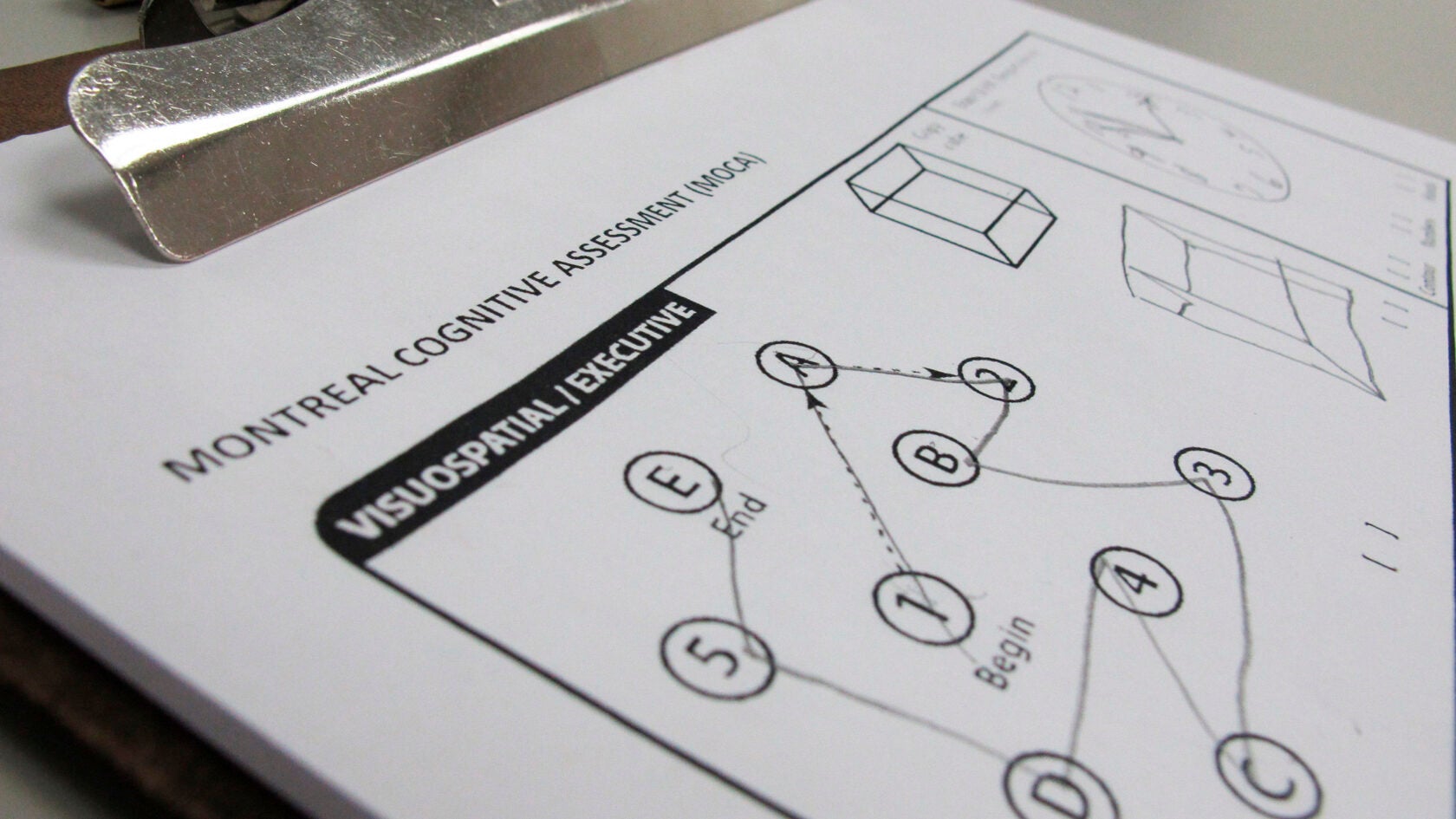
An example of the Montreal Cognitive Assessment test.AP Photo/Allen G. Breed
Most voters back cognitive exams for older politicians. What do they measure?
Amid concerns about the mental fitness of the U.S. presidential candidates — Joe Biden is 81 and Donald Trump is 77 — some have called for mandatory cognitive tests for aging politicians. A recent poll showed 75 percent of voters favor such measures with support highest among the oldest cohort of Americans surveyed.
The Gazette asked clinical neuropsychologist Julie Brody Magid, Psy.D., clinical director of the McLean Memory Disorders Assessment Clinic and an instructor in psychology at Harvard Medical School, what functions cognitive tests measure, warning signs of mental decline, and how to maintain brain health. The interview has been edited for length and clarity.
What do cognitive tests assess?
Overall, cognitive tests assess a range of functions including memory, attention and concentration, language, spatial skills, orientation, and executive functioning. There are cognitive screening measures that offer a quick overview of different cognitive functions.
Currently, the most used cognitive screening test is the Montreal Cognitive Assessment, MoCA. In the past, the Folstein Mini Mental State Exam was frequently used by physicians. These are abbreviated cognitive screening measures that take five or 10 minutes to administer and score.
What does the MoCA test involve?
The MoCA test includes tasks that assess attention, orientation, naming of objects, learning a short list of words, and verbal reasoning tasks like analogies. It has a total score of 30 points. It’s a standardized test, given the same way every time. You earn a raw score based on your performance, which determines if your skills are within a normal expected range for your age and for your background. For example, given a person’s education and achievement, is their functioning where we would expect it to be? Or does the screening test show suggestions of a decline?
Sleep, exercise, and diet play key role in maintaining cognitive health, says Julie Brody-Magid.Kris Snibbe/Harvard Staff Photographer
Who can perform well on the MoCA test?
There are very accomplished, smart people who can perform relatively well on a cognitive screening test like the MoCA even if they have had some changes in their day-to-day abilities. If you think of lawyers, doctors, or professors, it’s clear that they have strong intellectual ability, and what we call cognitive reserve, which is your cognitive savings account from being intelligent, educated, and enriched.Some people can “cruise” on their reserve even when they’re having subtle difficulties since their baseline abilities were so strong. Sometimes we might flag a patient who’s very high-functioning and who’s still performing relatively well on a MoCA test but may have subjective cognitive complaints. Some people come into my memory clinic saying, “Something’s not right, I’m not remembering well, I feel I’m declining.” They may notice themselves or the family may be observing changes. Those screening tests by themselves have some utility, but they don’t tell the whole story. The clinical information provided by the patient or family on interview about the course of change compared to who that person was at their highest level of functioning is very important. We need both sets of information to make distinctions about what a cognitive screening score means, and when further workup is needed.
What are the red flags that could warn of cognitive changes?
One red flag is if people are showing signs of rapid forgetting, such as if they are having a conversation, and something is discussed or planned, and minutes or hours later, they forget, and after being told again, they still forget. Rapid forgetting with repetitive questions is not usually an age-appropriate memory change. That type of memory change connotes Alzheimer’s disease, which is a disorder of memory storage or retention.Sometimes short-term memory loss can be accompanied by subtle language changes, where people can’t find words, especially when naming objects, they often will start to use generic words, such as “the thing,” “the whatchamacallit,” or they might describe the object, but they can’t name it. Those are some of the signs that we look out for.
“Rapid forgetting with repetitive questions is not usually an age-appropriate memory change.”
In vascular dementia, which is a risk factor for developing Alzheimer’s, we see more executive functioning issues, such as problems with organization, with keeping their paperwork in order; people lose track of the bills because they put them down somewhere or they don’t address them. We see people with vascular risk factors who have difficulty with reasoning and problem-solving. For example, they have a minor motor vehicle accident due to poor judgment and then don’t know how to handle it. Some people have reduced initiation and motivation; they stop doing things they always had passion for and cannot explain why. Slowed processing speed is often reported in daily functioning; everything takes much longer to work through and complete.
Is cognitive decline part of normal aging?
There are age-related changes that occur throughout our lifespan. As we age, there are some brain changes that occur as part of the normal aging process; white matter changes are the result of arteries that get narrowed or blocked by atherosclerotic plaque, this can begin around age 60. As that happens, there’s some associated slowing of processing, difficulty with being able to access information, pulling up that memory crisply, and efficiently finding words; some people identify those experiences as “senior moments.” We also have some cell loss and atrophy in the brain that occurs with normal aging.On neuroimaging, we see age-commensurate loss of volume in the cortex or gray matter, which plays a significant role in many functions including memory/learning and language. All of these changes are part of normal aging.
When is the right time to take a cognitive test?
What we typically suggest is that if a patient has what we call subjective cognitive complaints because they are noticing change, a cognitive screening should be done. However, one of the tricky parts of dementia, especially certain types like Alzheimer’s, is that the illness can affect the awareness center of the brain, and people don’t notice changes in themselves, but the family, spouse, or doctor notices change. If there’s any indication of subjective cognitive complaint or objective observation that that person is showing signs of early decline, that’s the time to pursue a neurocognitive screening test at minimum. That is often the beginning of the workup process, which can also include neuroimaging and bloodwork because other medical issues besides dementia can cause people to have cognitive problems.
Cognitive changes may be the result of hypothyroidism, anemia, a vitamin deficiency, sleep apnea, low blood pressure, unstable blood sugar, and a range of medical issues that can be reversible and allow the person to stabilize.Correction of vision and hearing problems can improve cognition too. Mental health issues like depression and anxiety can also affect cognition, but with appropriate targeted treatment, cognition can return to baseline. We must think holistically about all the factors that could contribute to somebody having cognitive issues to see which are treatable and potentially reversible.
What are the key steps to maintain our cognitive health?
There’s good research to support the Mediterranean diet for promoting successful aging and brain health. Exercise is very important because you are exercising the heart muscle and maintaining cardiovascular health. There are studies that show that exercise perfuses the brain with blood, which can cause neural growth and protection of key areas like the hippocampus.Exercise may delay the onset of cognitive symptoms or help prevent dementia. Studies of people with cognitive disorders have found that those who exercise perform better on average on cognitive tests and often do better in function than those who don’t exercise. Sleep is also very important for maintenance of cognitive health; at least seven to eight hours of sleep per night is necessary to clear debris out of the brain.
It is crucial to manage medical comorbidities like high blood pressure, high cholesterol, diabetes, smoking, sleep apnea, sedentary lifestyle, hearing/vision impairment, and depression.We also recommend limiting alcohol and marijuana use. We often see elderly people using excessive amounts of alcohol, which confers risk of cognitive decline and falls. There is literature to support that meditation and stress reduction promote brain health and cognitive functioning.
Other factors that promote brain health are engaging in activities that are stimulating to your brain such as doing crossword puzzles, learning a language, playing an instrument, discussing current events, and playing interactive games. Maintaining social connections and support is critical for mood stability and cognitive functioning.
Finally, it is very important to overcome the stigma associated with potentially losing your cognitive skills and reach out to get an assessment when you see the first red flags. If you let these problems go for too long, there are fewer modes of effective intervention. We have some good tools and resources available to support people’s functioning and manage symptoms and many more interventions are in the pipeline as we speak.
2,237,779 views 16 Sept 2022 Full Episodes of Impact Theory Restart Your Life in 7 Days https://bit.ly/3JvtCBQ WE are EXCITED to bring to you our NEW Impact Theory en Español YouTube channel. PLEASE share with all your Spanish speaking friends & family: / @tombilyeuespanol On Today’s Episode: Either you or someone you know is dealing with illness on some level. Whether it’s an autoimmune condition, metabolic disorder, or mental health crisis, it’s hard to escape the reality of how sick our society has become and so we’ve normalized our lack of health and made it the new norm without really questioning why. In our fast-paced technological world where medical breakthroughs are more common it feels like we’re further from a solution than when we started or we’re just solving for problems we’ve been creating and consequently we’re farther from optimal health than ever before. At what cost is all this happening? Dr. Gabor Mate is a world renowned trauma and addiction expert with over 40 years experience and respect looking at how trauma has been affecting us from childhood long into our adult years. Today he’s discussing The Myth of Normal, also the title of his latest book on trauma, illness, and healing in a toxic culture. From the very beginning Gabor exposes the myth and explains why this new norm we’ve accepted is actually making us sick. Between exposing how trauma in our childhood and suppressed anger lead to autoimmune diseases and how our adaptive responses to bad parenting decisions cause a plethora of problems in our adult lives, Gabor Mate is laying down food for thought that will shift the way you see everything. Check out Gabor Mate’s latest book, The Myth of Normal, Trauma, Illness, and Healing in a Toxic Culture: https://amzn.to/3RQl0rg



 Phil in the Blanks