Editor’s note: As information about COVID-19 continues to evolve, advice about protective measures changes. Please check the CDC web sitefor current information or talk to your doctor. Recommendations may vary depending on your community, whether you have underlying illnesses, and whether you’ve been vaccinated.
The past year has been hard on most of us. Who hasn’t felt anxious? Who hasn’t wanted to retreat from the world at times? Staying home when possible as COVID-19 rates climbed felt safer — and in many places was required by lockdown rules. Yet, could growing accustomed to feeling less safe in public spaces seed, or feed, the anxiety disorder known as agoraphobia? If you’re wondering whether the discomfort you experience is normal or has crossed a line, read on.
What is agoraphobia?
People with agoraphobia become anxious in places where they feel helpless, out of control, stuck, or judged. Someone who has agoraphobia might avoid places where they might be trapped (such as an office meeting) or put on the spot and judged — perhaps during a conversation at a party. They also may avoid situations or places that feel out of control, such as a trip with other people where they don’t control the schedule and timing, or an open, public space like a park. As a result, people who have agoraphobia often fear leaving their homes.
In the US, about 2% of adults and teens have agoraphobia, according to the Diagnostic and Statistical Manual of Mental Disorders, Fifth Edition. Roughly a third to half of people with agoraphobia have had panic attacks prior to diagnosis.
What are the symptoms of agoraphobia?
A feared situation — or even the thought of such a situation — triggers panic or panic attacks, often when a person is outside of their home. A panic attack is an intense bout of anxiety that is experienced physically through a racing heart, shortness of breath, chest pain, sweating, and dizziness. Worrying about having another panic attack, especially in front of other people, makes agoraphobia even worse.
So, where does the pandemic come in?
Agoraphobia is an anxiety disorder that makes people fear and avoid situations where they feel embarrassed, helpless, or threatened. Their fear of a situation is out of proportion to its true level of risk. Yet fearing public spaces as COVID-19 continues to spread is a normal response to such a threatening event.
According to an American Psychological Association (APA) report, Americans are experiencing a nationwide mental health crisis that could have repercussions for years to come. Their survey shows upticks in mental health issues like stress and anxiety since the pandemic began. However, it is unclear how this relates to agoraphobia. Because crowded spaces are potentially dangerous right now, avoiding them is a natural response, rather than a sign of a disorder. It’s normal to have some fear of public spaces now, because the threat of danger is real.
When do anxious feelings move beyond normal?
If you worry that you may be struggling with agoraphobia or another anxiety disorder, ask yourself these questions:
Is my response in line with the potential threat of danger?
Are my loved ones concerned about my level of worry and avoidance?
Am I following the CDC guidelines to avoid getting or spreading COVID, such as practicing social distancing with people outside of my household, wearing a mask, and handwashing? Or am I avoiding more people and situations than necessary?
If you are concerned about your anxiety, consult with a mental health professional. You can schedule a telemedicine visit to get help assessing whether your fear and avoidance is healthy or problematic. Contact your health plan and ask for a list of behavioral health clinicians.
How is agoraphobia typically treated?
Agoraphobia is often treated with cognitive behavioral therapy (CBT), which helps people understand connections between thoughts, feelings, and actions. Typically, a mental health or behavioral health specialist helps you
understand the triggers of anxiety and agoraphobia
understand your internal thoughts about the situation that is creating the fear
build skills to better tolerate anxiety
begin to slowly and safely face the situation that creates anxiety and subsequent avoidance. This is generally done by practicing facing the feared situation in a controlled environment.
Medicine, like antidepressants and anti-anxiety medications, is sometimes used along with CBT.
How to get help
Getting over agoraphobia without treatment is difficult (only 10% of people are successful).
The SAMHSA National Helpline (800-662-4357) or website may be able to refer you to mental health clinicians in your state who treat anxiety. Some may accept Medicare or Medicaid, or charge lower fees depending on your income. The National Alliance on Mental Illness also offers helpful resources on their website and through their volunteer HelpLine (800-950-NAMI (6264), or info@nami.org).
Agoraphobia is an anxiety disorder that can seriously limit quality of life, because those who struggle with it avoid many events and social situations. Although it usually will not go away on its own, therapy and appropriate medications can help people address the anxiety and live life fully.
About the Author
Bobbi Wegner, PsyD, Contributor
Dr. Bobbi Wegner is a supervising clinical psychologist at Boston Behavioral Medicine and an adjunct lecturer at the Harvard Graduate School of Education. Dr. Wegner writes and speaks nationally on modern families, stress, and coping. She … See Full Bio
As a service to our readers, Harvard Health Publishing provides access to our library of archived content. Please note the date of last review or update on all articles.
No content on this site, regardless of date, should ever be used as a substitute for direct medical advice from your doctor or other qualified clinician.
We use a selection of our own and third-party cookies on the pages of this website: Essential cookies, which are required in order to use the website; functional cookies, which provide better easy of use when using the website; performance cookies, which we use to generate aggregated data on website use and statistics; and marketing cookies, which are used to display relevant content and advertising. If you choose “ACCEPT ALL”, you consent to the use of all cookies. You can accept and reject individual cookie types and revoke your consent for the future at any time under “Settings”.
Courtesy of the Medical Missionaries of Mary. All rights reserved
O’Donohue, Maura (1933–2015), missionary doctor and public health campaigner, was born on 2 March 1933 at Likeen, her family home in Kilfenora, Co. Clare, the second of four children (two girls and two boys) of Andrew O’Donohue, a farmer, and his wife Kate (née O’Brien). Mary Brigid, as she was christened, was educated locally before boarding at the Presentation convent, Mountmellick, Co. Laois. In her penultimate year she was inspired by the documentary film Visitation, which described the work of the recently founded Medical Missionaries of Mary (MMM) in Drogheda and Nigeria, and contacted the congregation’s founder, Mary Martin (qv). O’Donohue joined the congregation in September 1950, studied medicine at University College Dublin (1951–7) and completed her medical training at St Vincent’s Hospital, Dublin, and Our Lady of Lourdes Hospital, Drogheda. After graduating Bachelor of Medicine (MB), Bachelor of Surgery (B.Ch.) and Bachelor of Arts in Obstetrics (BAO) in 1957, she went to Anua, Nigeria, as a missionary doctor, and made her final commitment in the congregation there in 1959. Initially her name in religion was ‘Sister M. Andrew’, though she adopted ‘Maura’ in the late 1960s. In October 1959 she was elected to the order’s council (its youngest ever member, serving until 1962), and was appointed Martin’s assistant and personal physician (Martin endured chronic heart problems). They toured Africa, Asia and North America for six months and returned to Drogheda in April 1960, having visited over twenty countries.
O’Donohue studied theology (1960–61) at the Regina Mundi Institute in Rome, acquired fluency in Spanish in two years in Spain (1962–4) and briefly worked in Rome and Brussels with Cardinal Joseph Suenens. She then returned to Ireland to assist Martin, analysing and ingesting the teachings of the second Vatican Council of 1962–5. In 1966 Cardinal William Conway (qv) appointed her to an advisory board on the future of Maynooth College. She strongly supported the decision to admit both female and male lay students to Maynooth, as the theological college – and the National University of Ireland governed faculties of arts and science – broadened their intake in the late 1960s. In 1967 she served on the MMM congregation’s council, was regional superior in Europe (1967–9) and was on the general chapter (1969–70; 1979; 1991; 2003; 2009).
She broadened her medical knowledge as a registrar (1970–71) at Edinburgh Royal Infirmary and medical coordinator (1971–3) on MMM mission projects in Obudu, Nigeria, and completed an Master of Science (M.Sc.) in international community health at the Liverpool School of Tropical Medicine (1978). Having endured recurring bouts of severe malaria, she was posted from Nigeria to Ethiopia, where the disease was less prevalent, and treated those suffering from Hansen’s disease (leprosy) in Gambo (1974–7), the lone doctor in a remote hospital, managing medical, surgical and paediatric cases in straitened circumstances. After a brief spell in Kenya she returned to Ethiopia in 1979. By then fluent in Amharic, upon hearing reports of emerging famine, O’Donohue surveyed conditions and lobbied the regional authorities to organise food aid and assistance. The socialist regime, regarding aid organisations and religious workers with suspicion, was reluctant to publicly recognise the reoccurrence of drought or famine. In Addis Ababa O’Donohue sourced vehicles and food aid from international donors to initiate a nutritional programme which reached 36,000 people in six weeks and, working with the Ethiopian Catholic Secretariat, established major food aid and nutrition monitoring programmes. Famine relief work was combined with structured development programmes which delivered basic primary health care training to communities. Sanitation training, and the safe burial of famine victims, significantly minimised the prevalence of cholera and typhus, and she insisted that the projects she managed were evaluated by external international experts. Throughout her famine work (1983–8), she was required to report to the regime every two weeks and endured frequent lengthy interrogations. On one occasion she had to flee the field under threat of violence from local militia, returning only when the central government assured her security. Elements of the regime gradually came to respect her effectiveness and she was commissioned by the government to evaluate primary health care services across Ethiopia.
In 1988 O’Donohue began working with the UK-based Catholic Agency for Overseas Development (CAFOD) and was soon appointed to lead their newly founded HIV/AIDS programme. She successfully coordinated and implemented testing and counselling programmes alongside education and information projects, and CAFOD became the lead agency for HIV/AIDS within Caritas Internationalis, the international umbrella body for national catholic development organisations. By the mid-1990s she was running ninety-five such programmes for CAFOD, and many more on behalf of other catholic development agencies across the world. Recognising the efficacy of condoms in preventing the spread of HIV/AIDS, she raised awareness of their use and benefits, using her extensive international contacts to lobby and seek funding from national and regional bishops’ organisations, conferences of religious and lay religious organisations. With Rev. Robert Vitillo of Caritas Internationalis, she was often invited to present seminars on HIV/AIDS to church leaders. She played a pivotal role in informing the global catholic church about the disease and was widely respected in the international development community.
A keen observer of the impact of HIV/AIDS on a range of development issues, she discerned that poverty and marginalisation magnified its impact, especially on women. After she informed Cardinal Basil Hume, head of the catholic church in England and Wales, of repeated reports of sexual abuse and the impregnation of lay and religious women by catholic clergy, he urged her to investigate. Caritas Internationalis, in conjunction with an informal grouping of catholic moral theologians, organised a symposium on HIV/AIDS on 6–9 January 1994 at the Redemptorist Marianella Pastoral Centre in Rathgar, Dublin. O’Donohue and Vitillo presented an international audience with startling findings that included documented reports of the rape of women religious by priests in several countries (Manning). Priests often justified their actions as relieving them of the need to have sex with other women and reducing their risk of being infected with HIV. (Some believed that having sexual intercourse with virgins was a prophylactic against AIDS, and others that it would cure them of the disease).
In February 1994 Hume presented O’Donohue’s report to the Vatican.It detailed a concerted pattern of sexual exploitation and rape of women religious by priests and some bishops over the previous six years in twenty-three countries (including Ireland, Nigeria, the Philippines, Tanzania and the USA). The report noted that sisters were often urged to take the contraceptive pill, which they were told would prevent HIV transmission, and that some had abortions procured for them by the priests who impregnated them. Other pregnant women religious left or were turned out of their orders and some were forced into prostitution due to penury. The document concluded ‘the church will be judged not only by its response to HIV/AIDS, but also on its perceived hypocrisy and apparent duplicity in this context’ (‘Memo from Sr. Maura O’Donohue MMM’, 9 Mar. 2001).
On 18 February 1995 O’Donohue was invited to the Vatican to meet Cardinal Eduardo Martinez-Somalo, who as chief administrator of the Holy See (1993–2004) and head of the Congregation for Institutes of Consecrated Life and Societies of Apostolic Life (1992–2004) directly oversaw religious congregations and orders. Urging an apostolic visitation to investigate sexual exploitation and rape, she requested greater guidance from the Congregation in such instances and emphasised the need to care for and support clergy and religious infected with HIV. While she sought to address these issues through internal church channels, the membership of the International Union of Superiors General, an umbrella body for women religious, were incensed by the report’s findings and Vatican inaction. It leaked a copy of O’Donohue’s 1994 report and her aide memoire of the February 1995 meeting to the respected American catholic weekly, National Catholic Reporter, which published them in March 2001. This roused an enormous outcry in the international media. Organisations with which O’Donohue had links sought publicly to distance themselves from her and she received a barrage of hate mail. O’Donohue, profoundly respectful of her Hippocratic oath, was uncomfortable with the leak. She ignored all media contact, requested her colleagues and friends do the same, and threw herself into field work until the furore died down. Later she was integral in forming the Working Group of the Union of Superiors General, established to support members of catholic religious communities living with and dying from AIDS.
In 1997 O’Donohue was recruited by the New York-based Catholic Medical Mission Board (CMMB) as deputy director and head of international planning. She had extensive prior experience distributing drugs in the field provided by the organisation. With the CCMB she designed and implemented drug treatment programmes targeting disease eradication and worked closely with US pharmaceutical manufacturers on long-term drug delivery initiatives, distributing $50 million of drugs annually to developing countries. Much of her work focussed on the former Yugoslavia, then engulfed in widespread civil war. To maximise the efficacy of programmes O’Donohue ensured they were accompanied by educational and public health initiatives.
In 1999 she returned to CAFOD as health and nutritional advisor to their disaster and emergency response teams. Among the areas she worked were Grozny, Chechnya, where she supported the efforts of Islamic Relief to feed vulnerable women and children and establish primary healthcare facilities and early childhood educational services. In 2003 she was one of the first aid workers to reach Baghdad in the aftermath of the US-led invasion of Iraq. There she established childcare clinics and nutritional support programmes. When not deployed to specific emergencies or disasters, she worked in the field on CAFOD food programmes in Kenya, Zimbabwe and elsewhere. Based in Dublin from 2003, she consulted for CAFOD and continued to travel the globe. In 2011 she was voted ‘Clare person of the year’.
During visits to Asia she recognised that many women who became infected with HIV were involuntary sex workers, illegally trafficked and held captive in appalling conditions. Her visits to brothels deeply affected her and she worked tirelessly to raise awareness of human trafficking and the horrific treatment of forced sex workers. She contributed to international interfaith initiatives to raise awareness and in 2005 was a founding member of Act to Prevent Trafficking in Ireland. She argued that the scourge of human trafficking ranked behind only the illegal trades in drugs and arms, and was controlled by the same international criminal organisations.
Diagnosed with leukaemia in September 2014, she moved to Aras Mhuire, Drogheda. She remained alert and interested, regularly playing scrabble until days before her death there on 3 May 2015. The eminent theologian Enda MacDonagh (1930–2021), a close friend, was a concelebrant at her funeral mass, held 6 May at the MMM congregation’s mother house, Drogheda; she was buried in St Peter’s cemetery in the town.
In addressing issues of gender, injustice, poverty, nutrition and public health, O’Donohue strove to identify underlying causes and related effects. She was deeply committed to social justice and alleviating the burdens of poverty and ill-health, which she noted fell heaviest on women. She excelled in planning and coordinating multi-agency aid and development programmes and with characteristic modesty described her own career as merely ‘getting other people to do their bit’ (Irish missionary sisters in Africa radio programme). In February 2019 Pope Francis’s announcements on the sexual abuse of women religious by catholic clergy brought her to international attention as major international publications – including the New York Times and Die Zeit – referenced her ground-breaking 1994 report. Her work in unearthing the sustained sexual abuse and exploitation of women religious across the global catholic church, widely recognised by experts and campaigners, remains largely unheralded in Ireland.
Sources
Connacht Tribune, 31 Oct. 1959; Irish Independent, 13 Sept. 1989; 31 May 1998; 21 Mar. 2001; National Catholic Register, 8 Feb. 1998; 9 Mar. 2001; 22 Feb. 2019; Kevin Kelly, ‘A brief history of the Association of Teachers of Moral Theology’, The Month, vol. 32, no. 8 (Aug. 1999), 299–304; ‘Memo from Sr. Maura O’Donohue MMM: urgent concerns for the church in the context of HIV/AIDS’ (https://natcath.org/NCR_Online/documents/UrgentConcernsO’DONOHUE.htm), ‘Meeting at SRC, Rome, 18 February 1995’, ‘Personal Memo Date: 21 February 1995’, (https://natcath.org/NCR_Online/documents/PersonalMemoO%27DONOHUE.htm), National Catholic Reporter, 9 Mar. 2001; Guardian, 21 Mar. 2001; Irish Times, 21, 26 Mar. 2001; 13 June 2005; 11 Feb. 2019; New York Times, 21 Mar. 2001; 6 Feb. 2019; Sunday Times, 25 Mar. 2001; Drogheda Independent, 6 Apr. 2001; 23 July 2003; Klaus Fleischer et al., Responses of the Catholic Church to HIV and AIDS in Africa: lessons learned. An international field study by African and German theologians and health workers (2015), 115; Vincent Manning, ‘Encountering Christ through the Passion of HIV: an inquiry into the theological meaning of HIV in the Church’, Doctor of Philosophy, University of Surrey, June 2019 (esp. footnote 189 (p. 122) and footnote 214 (p. 145)); ‘Irish missionary sisters in Africa’, (radio programme six of eight), first broadcast on Dublin South FM, 2011, (posted 11 Sept. 2014, https://www.youtube.com/watch?v=z-_lVSvCRdk, accessed May 2022); private information
Series following the Guards in the dark and complex world of organised crime, as Ireland’s criminal networks reach unprecedented levels of escalation. 46mins
Series following the Guards in the dark and complex world of organised crime, as Ireland’s criminal networks reach unprecedented levels of escalation. 44mins
===========================
Powerful synopsis of addiction, source of trauma to illnesses that cause early death. Think of the drug addict or the person with mental illness and just look at the so often rotten teeth that divides them into categories of “us and them”
Carey Gillam in Cheney, KansasSat 20 Jul 2024 16.00 CESTShare
On a sweltering summer day in central Kansas, farm fields shimmer in the heat as Clint Brauer watches a team of bright yellow robots churn up and down the rows, tirelessly slicing away any weeds that stand in their way while avoiding the growing crops.
The battery-powered machines, 4ft (1.2 metres) long and 2ft (0.6 metres) wide, pick their way through the fields with precision, without any human hand to guide them.
Brauer, a former California-based tech executive who moved back to his family farm in central Kansas after his father developed Parkinson’s disease, sees the robots as critical tools to help farmers reduce their reliance on chemicals and be more protective of their health and the environment.
His Greenfield agricultural technology company now builds and programs its robots in a shed behind an old farmhouse where his grandmother once lived. Twenty farmers are signed up for the robotic services this season, and the company hopes to weed 5,000 acres (2,023 hectares) this year.
“The answer is here,” he said. “This solves a lot of problems for farmers.”
Farmers have been fighting weeds in their fields – pulling, cutting and killing them off with an array of tools – for centuries. Weeds compete with crops for soil moisture and nutrients and can block out sunlight needed for crop growth, cutting into final yields. Over the last 50-plus years, chemical eradication has been the method of choice. It is common for farmers to spray or otherwise apply several weedkilling chemicals on to their fields in a single season.
But as chemical use has expanded, so has scientific evidence that exposure to the toxic substances in weedkillers can cause disease. In addition to glyphosate’s link to cancer, the weedkilling chemical paraquat has been linked to Parkinson’s disease. Another common farm herbicide, atrazine, can be harmful to reproductive health and is linked to several other health problems.
Weedkilling chemicals have also been found to be harmful to the environment, with negative impacts on soil health and on pollinators and other important species. The widespread use of herbicides in farming has fueled weed resistance, leaving many farmers struggling to control weeds in their fields even with repeated applications of herbicides.
Greenfield founder Clint Brauer tests one of his fleet of weed-whacking robots in a Kansas sorghum field. Photograph: Greenfield
A ‘personal mission’
Financial backing is flowing to companies making weedkilling robots from venture capital funds, private investors and large food and agricultural companies eager to make bets on the bots as a means to promote more sustainable food production.
The investment arm of Chipotle Mexican Grill, the global restaurant chain, is among Greenfield’s investors. Christian Gammill, who leads Chipotle’s venture fund, said Greenfield’s work was “important and impactful”. Greenfield has raised about $12m in capital, and is seeking more, according to Brauer.
North Dakota-based Aigen Robotics has raised $19m to date. Its compact robots are powered by solar panels fixed to the top of each machine and are designed to work autonomously, sleeping and waking up on farm fields.
Kenny Lee, the Aigen co-founder and CEO who previously worked in cyber security, said he and partner Richard Wurden, who worked in the electric vehicle industry, are on a “personal mission” to reduce herbicide use in farming. Lee is a survivor of non-Hodgkin lymphoma, a disease the International Agency for Research on Cancer has found can be caused by glyphosate-based weedkillers, such as the popular Roundup brand.
The company and is deploying 50 robots this summer in sugar beet fields in the US Midwest, aiming to grow its fleet to 500 for use with an expanded array of crops.
A solar-powered farm robot from Aigen, aimed to reduce herbicide use in farming. Photograph: Aigen
Other companies are rolling out farm robots designed specifically to spray herbicides in ways that are more precise than conventional methods, according to developers.
Even the global agrochemical company Bayer, which sells Roundup herbicides, is taking an interest in robots for farms.
What skeptics are saying
Still, many farmers and academic experts are skeptical that farm robots can make a substantial difference. They say that there is simply too much farmland and too many diverse needs to be addressed by robots that are costly to make and use. The better path, many say, is for farmers to work with nature, rather than against it.
The model of regenerative agriculture – using a variety of strategies focused on improving soil health, including limiting pesticides, rotating crops, planting crops that provide ground cover to suppress weeds and avoiding disturbing the soil – is the better path, they say.
“I think the robots can be a useful tool as part of an integrated weed approach, but using as a single tool … is probably not going to work that well,” said Adam Davis, a professor and head of the University of Illinois department of crop science.
Wisconsin farmer Ryan Erisman agreed. “The robot weeders represent another round in the arms race against nature,” he said. “So many of our agricultural tools are really weapons … that we use against perceived threats. When we keep running into the same problem year after year or season after season, it’s not our tools, our techniques, or our technology that needs reworking. It is our failure to understand the system we are working in and our relationship to it.”
A robotic machine moves through the spaces in a field. Photograph: EarthSense
Despite the naysayers, Kansas farmer Torrey Ball is eagerly awaiting his turn for Greenfield’s robotic fleet. Last year, the company’s robots weeded his sunflower fields. This month they will weed some of his soybean acreage.
Ball is a longtime user of many of the leading weedkilling herbicides and knows first-hand how expensive and how ineffective some products have become as weeds have developed resistance to the widely used chemicals, particularly glyphosate. He also knows of the research showing the risks to human health, and he worries what the chemicals are doing to water quality.
He only runs the robots on a small portion of his 2,000-acre (809-hectare) farm for now, but hopes one day they may help him break free of chemical dependency on all his land.
“If we can use less chemicals I’m all for that,” Ball said. “We’re going to try and leave the ground in better shape than what it was when we took it over, which is hopefully everybody’s goal.”
This story is co-published with the New Lede, a journalism project of the Environmental Working Group
This article first appeared in The Checkup, MIT Technology Review’s weekly biotech newsletter. To receive it in your inbox every Thursday, and read articles like this first, sign up here.
Can you spot a liar? It’s a question I imagine has been on a lot of minds lately, in the wake of various televised political debates. Research has shown that we’re generally pretty bad at telling a truth from a lie.
Some believe that AI could help improve our odds, and do better than dodgy old fashioned techniques like polygraph tests. AI-based lie detection systems could one day be used to help us sift fact from fake news, evaluate claims, and potentially even spot fibs and exaggerations in job applications. The question is whether we will trust them. And if we should.
In a recent study, Alicia von Schenk and her colleagues developed a tool that was significantly better than people at spotting lies. Von Schenk, an economist at the University of Würzburg in Germany, and her team then ran some experiments to find out how people used it. In some ways, the tool was helpful—the people who made use of it were better at spotting lies. But they also led people to make a lot more accusations.
In their study published in the journal iScience, von Schenk and her colleagues asked volunteers to write statements about their weekend plans. Half the time, people were incentivized to lie; a believable yet untrue statement was rewarded with a small financial payout. In total, the team collected 1,536 statements from 768 people.
They then used 80% of these statements to train an algorithm on lies and truths, using Google’s AI language model BERT. When they tested the resulting tool on the final 20% of statements, they found it could successfully tell whether a statement was true or false 67% of the time. That’s significantly better than a typical human; we usually only get it right around half the time.
To find out how people might make use of AI to help them spot lies, von Schenk and her colleagues split 2,040 other volunteers into smaller groups and ran a series of tests.
One test revealed that when people are given the option to pay a small fee to use an AI tool that can help them detect lies—and earn financial rewards—they still aren’t all that keen on using it. Only a third of the volunteers given that option decided to use the AI tool, possibly because they’re skeptical of the technology, says von Schenk. (They might also be overly optimistic about their own lie-detection skills, she adds.)
But that one-third of people really put their trust in the technology. “When you make the active choice to rely on the technology, we see that people almost always follow the prediction of the AI… they rely very much on its predictions,” says von Schenk.
Large language models don’t have a theory of mind the way humans do—but they’re getting better at tasks designed to measure it in humans.
This reliance can shape our behavior. Normally, people tend to assume others are telling the truth. That was borne out in this study—even though the volunteers knew half of the statements were lies, they only marked out 19% of them as such. But that changed when people chose to make use of the AI tool: the accusation rate rose to 58%.
In some ways, this is a good thing—these tools can help us spot more of the lies we come across in our lives, like the misinformation we might come across on social media.
But it’s not all good. It could also undermine trust, a fundamental aspect of human behavior that helps us form relationships. If the price of accurate judgements is the deterioration of social bonds, is it worth it?
And then there’s the question of accuracy.In their study, von Schenk and her colleagues were only interested in creating a tool that was better than humans at lie detection. That isn’t too difficult, given how terrible we are at it. But she also imagines a tool like hers being used to routinely assess the truthfulness of social media posts, or hunt for fake details in a job hunter’s resume or interview responses. In cases like these, it’s not enough for a technology to just be “better than human” if it’s going to be making more accusations.
Would we be willing to accept an accuracy rate of 80%, where only four out of every five assessed statements would be correctly interpreted as true or false? Would even 99% accuracy suffice? I’m not sure.
It’s worth remembering the fallibility of historical lie detection techniques.The polygraph was designed to measure heart rate and other signs of “arousal” because it was thought some signs of stress were unique to liars. They’re not. And we’ve known that for a long time. That’s why lie detector results are generally not admissible in US court cases. Despite that, polygraph lie detector tests have endured in some settings, and have caused plenty of harm when they’ve been used to hurl accusations at people who fail them on reality TV shows.
Imperfect AI tools stand to have an even greater impact because they are so easy to scale, says von Schenk. You can only polygraph so many people in a day. The scope for AI lie detection is almost limitless by comparison.
“Given that we have so much fake news and disinformation spreading, there is a benefit to these technologies,” says von Schenk. “However, you really need to test them—you need to make sure they are substantially better than humans.” If an AI lie detector is generating a lot of accusations, we might be better off not using it at all, she says.
AI lie detectors have also been developed to look for facial patterns of movement and “microgestures” associated with deception. As Jake Bittle puts it: “the dream of a perfect lie detector just won’t die, especially when glossed over with the sheen of AI.”
On the other hand, AI is also being used to generate plenty of disinformation. As of October last year, generative AI was already being used in at least 16 countries to “sow doubt, smear opponents, or influence public debate,” as Tate Ryan-Mosley reported.
The way AI language models are developed can heavily influence the way that they work. As a result, these models have picked up different political biases, as my colleague Melissa Heikkilä covered last year.
AI, like social media, has the potential for good or ill. In both cases, the regulatory limits we place on these technologies will determine which way the sword falls, argue Nathan E. Sanders and Bruce Schneier. Chatbot answers are all made up. But there’s a tool that can give a reliability score to large language model outputs, helping users work out how trustworthy they are. Or, as Will Douglas Heaven put it in an article published a few months ago, a BS-o-meter for chatbots.
From around the web
Scientists, ethicists and legal experts in the UK have published a new set of guidelines for research on synthetic embryos, or, as they call them, “stem cell-based embryo models (SCBEMs).” There should be limits on how long they are grown in labs, and they should not be transferred into the uterus of a human or animal, the guideline states. They also note that, if, in future, these structures look like they might have the potential to develop into a fetus, we should stop calling them “models” and instead refer to them as “embryos.”
Antimicrobial resistance is already responsible for 700,000 deaths every year, and could claim 10 million lives per year by 2050. Overuse of broad spectrum antibiotics is partly to blame. Is it time to tax these drugs to limit demand? (International Journal of Industrial Organization)
Spaceflight can alter the human brain, reorganizing gray and white matter and causing the brain to shift upwards in the skull. We need to better understand these effects, and the impact of cosmic radiation on our brains, before we send people to Mars. (The Lancet Neurology)
The vagus nerve has become an unlikely star of social media, thanks to influencers who drum up the benefits of stimulating it. Unfortunately, the science doesn’t stack up. (New Scientist)
A hospital in Texas is set to become the first in the country to enable doctors to see their patients via hologram. Crescent Regional Hospital in Lancaster has installed Holobox—a system that projects a life-sized hologram of a doctor for patient consultations. (ABC News)hide
Across every industry, from energy to manufacturing, to aerospace, there are problems so deeply entrenched that they seem insurmountable. In almost all cases, leaders, consultants, and task teams spend years and enormous budgets to tackle these challenges, too often to no avail. The result: At a certain point, people just give up, and these entrenched problems become accepted as an unfortunate reality. “That’s the way we always do it” becomes “That’s just how it is.”
Given the significant resources devoted to solving these problems, we must ask ourselves if the approach works. At CalmWave, we are tackling a deeply entrenched problem in healthcare, and I believe the patterns we are applying, learned in enterprise IT operations, is broadly applicable.
Differentiate the signal from the noise
If you have spent any time in an intensive care unit (ICU), you remember the incessant, nerve-wracking alarms. Like most people, you probably wondered how the critical care staff could tell the alarms apart—how to differentiate the signal from the noise. You probably also wondered, with great concern, how critically ill patients in the ICU ever get a moment of rest. And you would be right in wondering both of these things.
This cacophony of noise is known as “alarm fatigue.”This phenomenon is experienced by healthcare providers, especially those working in ICUs and other critical care settings, who become desensitized or overwhelmed by the sheer number of alarms and alerts generated by medical devices and monitoring systems.
This alarm fatigue problem isn’t new. This began all the way back with the first bedside vital signs monitors in the 1950s, and over the decades, smart people have tried and failed to solve this pernicious problem.
An outside perspective
I am not a hospital executive or healthcare veteran. I happened upon the clinical alarm fatigue problem serendipitously. At the height of the pandemic, I took a sabbatical from my company, PagerDuty, and joined my local county’s search and rescue team as my way of fulfilling my civic duty responsibility.
Search and rescue training is intense and generally done in the worst possible conditions (winter) to prepare volunteers for the role’s demands. When you are on a mission and heading to a rescue, there are some similarities to going on a hike. Typically, you are heavily loaded with equipment and trying to cover as much ground as possible, but there are still opportunities to talk with your teammates.
During one of these missions, clinicians on the team told me about ICU alarm fatigue. I learned that it has harmful and sometimes dire consequences for patients, but it is also a significant factor in clinician burnout and contributes to the highly stressful work environment. With an existing nursing shortage—nurses are leaving the industry in droves—it was unfathomable to me that clinicians and patients are forced to endure a noisy and stressful environment in places intended for rest and recovery.
Direct experience elsewhere matters
I was an outsider to this problem, but an outsider with direct and relevant experience with alarm fatigue. I’d seen this pattern before, and most importantly, had solved the problem at scale in enterprise IT operations for Fortune 100 companies. I had the exact expertise necessary to build creative and battle-tested solutions to solve this problem. And as an outsider, I had an open mindset, free of preconceived ideas of what was possible.
Spoiler alert: At CalmWave, we solved the entrenched problem of alarm fatigue in ICUs using transparent AI, our counterpoint to generative AI.We capture, analyze, and synthesize real-time data from dozens of data sources (vital signs monitors, interventions, medications, labs, orders, and other electronic health records) to empower hospitals with the intelligence critical to solve the alarm fatigue problem, improve patient outcomes, optimize operations, and retain nursing staff. We start by resolving the scourge of non-actionable alarms and use that wealth of signal data to identify crucial insights into patient acuity and staff retention.
Had we approached this profoundly entrenched problem from the traditional lens, a clinical or medical industry lens, we likely would have proven unsuccessful, like many of our predecessors (the majority of whom are established, well-known, and highly resourced industry behemoths). However, blending a unique and diverse approach and using knowledge from multiple domains allowed us to leverage the power of synergy to form a new, broader perspective, thus empowering our mission of innovation-driven change.
The lessons from our story are universally applicable. They highlight the importance of cross-domain collaboration, teamwork, and utilizing the Zen practice of beginner’s mind, to drive innovation and change. This approach to solving challenging problems applies to all industries and domains and is at the heart of humanity’s ability to do amazing things for the greater good.
Ophir Ronen is CEO of CalmWave.
Recognize your technological breakthrough by applying to this year’s Next Big Things in Tech Awards! Extended Deadline to Apply Tonight, Friday, July 19.
My robot and I: Japanese stories of technology and old age
In the country with the highest life expectancy in the world — currently facing the crisis of an aging population — scientists, healthcare professionals and technology companies are coming together to fight against problems such as loneliness, cognitive deterioration and loss of mobility
Mieko Shimada, 75, has had her LOVOT robot for the past four years. The device is programmed to react to caresses.Noriko Hayashi (PANOS PICTURES / CONTACTOPHOTO)
Mitigating loneliness, preventing cognitive decline and alleviating the loss of mobility are the priorities of the robotics field in Japan. For decades, the country has been searching for technological solutions to address the economic and social repercussions that stem from its rapidly aging population. Three robots — which are present in many Japanese nursing homes and hospitals for the elderly — aim to entertain, start conversations and create emotional connections. Their names are Pepper, AIBO and PARO. This technological trio accompanies the staff who care for the physical and mental well-being of more than 40 elderly people at the Shintomi Nursing Home, a long-term care facility in the center of Tokyo.
Pepper — the closest to a humanoid among the so-called “social robots” produced in Japan — has a height of four feet and moves on a base that makes it look like a huge white chess piece. Twice a week, Pepper is scheduled to play songs (which were popular 50 years ago) in front of about 20 elderly people. The android compensates for its lack of facial expressions with agile arm movements. The fluidity of its articulations confirms its pedigree as the successor to a lineage of industrial robots that, since the end of the 20th century, has maintained Japan as the world’s leading exporter of factory automation systems.
From their seats, residents watch the robot with varying degrees of interest. One person dozes of. Another man drums his fingers on the table. A couple of ladies repeat the choreography with their arms and smile. Everything changes when one of the support workers selects a calisthenics session from Pepper’s repertoire, similar to the one broadcast every morning on public television. Many Japanese companies start the workday with this routine. When the employees on the screen (displayed on Pepper’s chest) begin to repeat the exercises to the rhythm of the music, interest grows and more heads are raised. The residents are encouraged to follow Pepper’s choreography.
For almost half-a-century, the growing elderly population and the declining birth rate in Japan have determined the official forecasts of productivity, housing, the pension system and family dynamics. The most recent projection estimates that the current population of 126 million will decline to 87 million by 2070, when four in ten people will be over the age of 65. A new decline in the number of weddings in 2023 was recently announced by the business daily Nikkei, in the alarming tone now reserved for demographic information: “Japan heads for ‘marriage ice age’ with lowest number in 90 years.”
The child population has also been decreasing for 43 years. Currently, the number of children up to the age of 14 stands at 14.01 million. Many supermarkets sell more diapers for adults than for babies, while individual portions of food — both raw and prepared — are a growing trend. Another telling figure is that of pets, who now exceed the number of children. Manufacturers of baby strollers are directing their production towards models for pets, motivated by the increase in dogs and cats. The total number of these animals — according to 2023 statistics published by the Japan Pet Food Association — is 15.9 million.
A gym session in an assisted-living residence with the help of HAL Lumbar. This device detects bioelectric signals and helps people who suffer from lower back pain to move their bodies.Noriko Hayashi (Panos Pictures /The PARO therapeutic robot at the Shintomi Nursing Home, in Tokyo.Noriko Hayashi (Panos Pictures /
The prospect of a large number of single-person households — many of them inhabited by elderly people unable to cope with the demands of caring for a pet — opened a new market for electronics manufacturers. Sony launched a robot dog called AIBO in 1999, named after the pronunciation of the Japanese word “companion.” It weighs 4.85 pounds and, today, it’s a popular consumer product with fan clubs throughout the country. Over the course of its six generations, AIBO has evolved to achieve the appearance of a cartoon beagle puppy, with its innocent gaze beamed through two LED screens.
In long-term care residences like Shintomi, Aibo deploys its advanced facial recognition system, reacts to stimuli — such as an approving caress on the forehead — and memorizes the user’s preferences to develop a series of behaviors that could constitute a temperament. The 22 axes that articulate the components of the robot’s body allow it to walk in staggered movements, tilt its head, raise its ears, bark, whine and roll around, imitating a playful puppy. When Aibo walks through the Shintomi Nursing Home, it’s common to hear compliments as affectionate as those that would be given to a real pet.
The predisposition of the Japanese to connect emotionally with machines was explained in 2007 by the then-academic — and now businesswoman — Naho Kitano, in an essay in which she made reference to the animist tradition of Shintoism, the local religion that attributes spiritual life to inanimate objects. Experts in Japanese popular culture contrast the good-natured robots of popular Japanese manga and anime stories with the disturbing automatons that often populate Western science fiction.
For their part, the creators of AIBO point out that its design lacks the ethical considerations that are common in Western robotics, such as Isaac Asimov’s three laws for safe interaction between human beings and machines. “AIBO was created to entertain the user… give color to their life and brighten it,” says Mika Nagae, a product manager at Sony. Nagae emphasizes that the playful predominates over the utilitarian, adding that the event planner — a specialist in programming short episodes in the form of games — is very important in AIBO’s design team.
The LOVOT robot, which is programmed to react to caresses.Noriko Hayashi (Panos Pictures /The PARO humanoid robot, at the Shintomi Nursing Home, in Tokyo Noriko Hayashi (Panos Pictures /
Because they’re made with molds and synthetic resins, both Pepper and AIBO are hard to the touch. Those looking for a physical experience involving soft touch and warm temperatures turn to PARO, the best-known of the Japanese social robots. Used in institutions in more than 30 countries — and classified as a medical device in some of them — the PARO robot is handmade and simulates the shape, size, color and texture of a baby harp seal. When held in your arms, it moves gently, makes realistic cooing sounds and looks at you with enormous eyes that often generate feelings of relief or tenderness in older people, including those who suffer from dementia, Alzheimer’s, or other cognitive disorders or impairments.
The creator of PARO is engineer Takenori Shibata. He speaks with EL PAÍS via video call from the United States, where he’s participating in a conference. Shibata explains that, by using the image of a seal, he sought to lower the expectations that a user may have when interacting with a pet about which he or she may have preconceived ideas, like a dog or a cat. Part of the robot’s success in international medical institutions, he adds, is due to the fact that it reduces anxiety and provides the emotional well-being of animal therapy, without the risks of infection or the associated logistical and legal difficulties.
To clarify why his creation isn’t characterized as a medical device in Japan, Professor Shibata cites one of the most important qualities of PARO: its ability to reduce the use of psychotropic medications in some treatments. “The welfare system that regulates nursing homes in Japan doesn’t distinguish between a medical device and a toy,” he explains. He also alludes to the obvious effect that the widespread use of PARO can have on the pharmaceutical business.
In Spain, CREA — a government center focused on the care of people living with Alzheimer’s disease and other types of dementia — has had a PARO unit since the facility was inaugurated in 2014. Enrique Pérez Sáez — a neuropsychologist at CREA — clarifies that the official name of the robot was changed to Nuka, since “paro” means “unemployed” or “strike” in Spanish. Dr. Pérez Sáez highlights the socializing role of the robot and the evocation of positive memories. “Nuka creates stimuli associated with the good times we’ve had with pets in our childhood,” he says.
Aside from social robots, Shintomi uses digital systems to analyze residents’ sleeping patterns, as well as devices that detect (through smell) when a diaper change is necessary. The director of Shintomi — Kimiya Ishikawa, a specialist in care for the elderly and a well-known promoter of the application of technology in geriatrics — foresees a future in which humans and machines complement each other in care work. “No human being can take care of an elderly person 24 hours a day. Only a machine can do it. The ideal is to identify each person’s strengths and work together,” he affirms.
To alleviate the task of lifting patients to clean them, Shintomi employees use exoskeletons, devices that are widely-used in industrial environments to strengthen muscles and reduce fatigue. The cutting-edge version of the exoskeleton for medical use in Japan is called HAL (Hybrid Assistive Limb). It consists of a device that — when connected to the body of a person with mobility problems — detects the signals sent by the brain to the muscles and performs the desired movement. According to its manufacturer — Cyberdyne Inc. — it can help a person living with a disability improve their physical functions even after use. In 2015, it was licensed as a medical device. “Above all, it’s aimed at increasing the independence of patients,” explains Professor Yoshiyuki Sankai, the president of Cyberdyne.
Pictured is a patient who has suffered from two strokes. He’s in a rehabilitation session that utilizes HAL, an intelligent exoskeleton created by Yoshiyuki Sankai.Noriko Hayashi (Panos Pictures /
Robotics — when applied to elderly care — benefits from technological advances in the automotive sector, where the improvement of the self-driving car largely depends on the interaction between humans and machines. After 13 years as a Toyota employee and after having participated in the development of Pepper with the multinational SoftBank, engineer Kaname Hayashi decided to opt for a non-utilitarian robot that appealed to the protective instinct of human beings. He created a mascot called LOVOT (from the words “love” and “robot”).
LOVOT’s body is faithful to the Japanese kawaii esthetic. It’s cute and cuddly: it has wings and a small bump full of sensors. And, while it lacks a mouth, it’s capable of communicating joy and other emotions through enormous eyes, which are activated by liquid crystal screens. The robot’s childish appearance and the randomness of its behavior have proven to be irresistible to older people like Mrs. Mieko Shimada, a 75-year-old retiree. She tells EL PAÍS that Lovot “replaces family, children, pets… and even a partner.”
Mrs. Shimada has lived with LOVOT for the past four years in an independent apartment in a nursing home. She pampers her robot and covers it with kisses — something atypical in a society like Japan, not given to open displays of affection. “When you express admiration for someone all the time, it can come across as disingenuous. With LOVOT, I don’t feel self-conscious,” she explains.
For Hayashi — the creator of LOVOT — the popularity of robots among those residing in nursing homes is due to the decrease in self-esteem when people no longer have an obligation to care for anyone. “The more active they were before moving into the residence, the more they tend to feel like they don’t contribute,” he notes.
The technology market is expected to expand as the world’s population ages. At the moment, Japan continues to lead in life expectancy, with 87 years for women and 81 years for men. Of the country’s more than 92,000 centenarians registered last year, 88.6% were women.
Mako Kubota is the managing director of the Ryusei Fukushikai Social Welfare Corporation, in Osaka. The company has been managing nursing homes with the use of complex technologies for the past 10 years. She explains her vision of robotics in elderly care: “Exoskeletons and social robots fulfill two very different and equally important functions. Only a human being can look at a person’s face and realize that they’re not feeling well. But for repetitive or physically demanding jobs, the robot — without a doubt — is a great support.”
When asked if she foresees a near future in which the well-being of the elderly depends on humanoids and technological devices, she cites the high number of elderly men and women who, in her surveys, express their preference to be cared for by a robot. “The main reason is that they don’t want to be a burden on others,” she concludes.
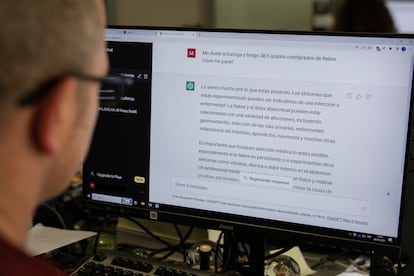
To enter the era of generative artificial intelligence, with the help of the most popular chatbot, just register using an email and start asking questions
ChatGPT burst onto the scene with overwhelming success: just two months after its launch in November 2022, it had reached 100 million unique monthly users worldwide, becoming the fastest growing platform in the history of the internet. Today, that number has swelled to 180 million users,who use the chatbot to ask questions, for recommendations and to create text, among other uses. Using ChatGPT is as simple as signing up and learning how to ask the right questions.
The first step is to go to the ChatGPT website and click on the “Sign up” button. To create an account, you just need an email address and a password. It’s free and takes just a few seconds. If you sign out, the next time you enter the page, you will be asked to enter these login details.
Once you have logged in, a screen opens with a dialog box at the bottom, where you can type your questions.Unlike traditional chatbots, ChatGPT does not just give an automated response: it uses a learning system that can interpret what is being asked and create new and unique content to respond to that question. In this way, it can be used to create dialogs, generate automatic content and to improve texts for different purposes.
Every question that you ask ChatGPT is stored in a history that appears in a left-hand column, meaning you can retrieve past answers at any time just by clicking on the question. Each query also helps OpenAI — the company that created ChatGPT — to continue training the chatbot. If you do not want your questions to be stored, you can activate a temporary chat — an option located in a drop-down tab at the top left.
There are at least three other functions that are important. Firstly, you can use the chatbot to summarize documents or respond to questions about the contents. To do this, you just need to upload the document to the dialogue box by clicking the paper file icon or by giving it access via the cloud. All files that are shared with ChatGPT are stored in its database and used again to train the AI system.
Secondly, you can use customized versions of ChatGPT for specific tasks: anyone can develop their own based on their technology, and then share it with the rest of the world.So, for example, some users have created versions for improving productivity, for research and for educational purposes. To find these and other options, click on “Explore GPTs” in the left-hand column.
And the third feature to be aware of is the Templates option, which is located at the bottom of the left-hand column. The first thing to know is that ChatGPT works on the basis of prompts, i.e. instructions. Although it is true that it will answer any question, however it is asked, to get the most accurate answer possible, it is a good idea to know how to frame the question.And this is where the Templates section can be of great help. You select the topic and what you hope to learn about it, and the system creates an editable draft of the ideal prompt for this goal.
Sign up for our weekly newsletter to get more English-language news coverage from EL PAÍS USA Edition
Geopolitics and cyberespionage: A survey of the hacker groups who are targeting the Western world
Cybercriminals take advantage of program glitches and human psychology to infiltrate institutions and extract information of use to the governments that fund them
A faceless hacker in a room with multiple screens and information streams.Sutthichai Supapornpasupad (Getty Images)
Cyber operations are changing global geopolitics, or at least, that’s how European cybersecurity experts see it. The governments of Russia, China, Iran and North Korea have been linked to such campaigns, as well as the United States and United Kingdom government and companies like Microsoft. They’re being carried out by hacker organizations who have kicked off hundreds of espionage, sabotage and misinformation initiatives in recent years. Amid this panorama, a NATO spokesperson told EL PAÍS that cyberdefense has become one of the coalition’s “main priorities,” proof of the growing importance of such operations on the global chess board.
“NATO allies have made it clear that China and Russia represent the biggest state-sponsored cyber threats, and have linked a series of cyber incidents to groups that are associated with the two countries. The Kremlin is also participating in a coordinated campaign of hostile acts against countries from the Alliance, including sabotage, cyberattacks and misinformation,” says the NATO spokesperson. The Chinese and Russian governments have repeatedly and emphatically denied any connection with cybercriminal groups.
The NATO spokesperson says that cyberattacks often seek to “degrade our critical infrastructure, interfere with our government services, extract intelligence, steal intellectual property and impede our military activities.”Additionally, NATO has recognized cyberspace as a “domain of operations” and has acknowledged that malicious cybernetic campaigns could “lead the North Atlantic Council to invoke Article 5 of the North Atlantic Treaty,” its collective defense clause.
The spiderweb of advanced persistent threats (APTs) is wide-reaching and poorly understood. Experts agree that definitively establishing a link between governments and such organizations is nearly impossible, since these groups regularly cover their tracks with false evidence. Still, consensus exists among Western governments and other entities that there is enough evidence to be able to assume certain ties.
Research center Cyberpeace Institute says that, among the most relevant and dangerous organizations are the Sandworm, Fighting Ursa (APT 28) and Cloaked Ursa (APT 29), which have been linked to Russian intelligence agencies via different institutions; and Comment Panda (APT 1), Double Dragon (APT 41) and Bronze Vinewood (APT 31), which have been associated with the Chinese state apparatus. At the same time, another fistful of organizations has been linked to Iran and North Korea. Worldwide, there are thought to be at least 150 organizations of this kind.
Their prevalence led the European Union to impose economic and mobility sanctions on six new cybercriminals on June 24.The EU applied such measures to 12 entities and 14 individuals linked to digital operations carried out against European infrastructure and institutions, as confirmed by European Commission sources to EL PAÍS. For their part, the United States and the United Kingdom issued sanctions in March against Chinese individuals who were linked to APT 31 and have accused Beijing of sponsoring cyber espionage, though Xi Jinping’s government has emphatically denied any involvement.
Modus operandi
Hackers take advantage of software error and human vulnerabilities to infiltrate their adversaries’ networks. Richard De la Torre, technical product marketing manager at Bitdefender, explains that these groups often initiate operations through infected email addresses directed towards high-level targets.Once a person opens them and their network has been compromised, cybercriminals carry out their malicious programs, or can initiate informational attacks to block defense mechanisms.
“For example, the Sandworm group sent infected Microsoft Office documents to specific employees with high-level access who worked for the Ukrainian electrical system. Once they are set up within the organization, they spread laterally to infect critical systems. They set up control connections that facilitate reconnaissance and data leakage,” says the expert.
One example of this is a campaign that was uncovered last year by cybersecurity firm Palo Alto Networks.The company says that at least 30 military, diplomatic, governmental and private entities in 14 NATO countries were the target of Fighting Ursa’s malicious email campaigns between 2022 and 2023. Twenty-six of these targets were European, among them embassies and ministries of defense, foreign relations, interior and the economy, as well as at least one NATO rapid deployment force.
Recently, Palo Alto Networks also released a memo announcing that Chinese hacker organizations carried out cyberespionage operations against other Asian countries, including Laos, Cambodia, Myanmar, the Philippines, Japan and Singapore. The company announced in November that, according to its research, an unidentified Chinese group had been carrying out a campaign targeting Middle Eastern, African and Asian political entities since at least the end of 2022. “An analysis of this threat actor’s activity reveals long-term espionage operations against at least seven governmental entities. The threat actor performed intelligence collection efforts at a large scale, leveraging rare email exfiltration techniques against compromised servers,” stated the company’s report.
Analysts at Mandiant, a Google subsidiary that focuses on digital security, explain that Chinese cyber groups are known for their stealth. “Cyber espionage coming out of China has significantly evolved in recent years, distancing itself from loud, easy-to-identify operations in order to focus more on stealth. Investments in technology have funded successful campaigns against governmental, military and economic targets in the NATO member states and have increased the challenges for those defending these systems,” says John Hultquist, chief analyst at Mandiant Intelligence, in a recent report.
When it comes to Iran, Bitdefender finds that cybercriminal groups ShroudedSnooper and Cobalt Sapling have been linked to the country’s Ministry of Intelligence and Ministry of Security and have been involved in multiple attacks directed towards telecommunications and governmental entities in the Middle East, particularly in Israel. Elsewhere, North Korean group Lazarus stands out based on the virulence of its ransomware attacks, and its attack on the Sony company in 2014.
The targets of campaigns carried out by these groups can vary. According to the experts consulted for this article, it depends on the interests of the origin country and intelligence agencies with which they are linked. “Normally, they are operations related to the recovery of information that can give a geostrategic advantage to the country with which these groups are linked. Still, we also find economic motivations, like those of some of the campaigns carried out by groups associated with the North Korean government geared towards obtaining financing with which to overcome the economic blockade,” says Josep Albors, director of research and awareness at ESET España, a cybersecurity software company.
Cybersecurity experts also emphasize that there is a way to differentiate groups that are sponsored by a government from the cybercriminal organizations when it comes to carrying out appraisals to identify their objectives. “The biggest motivation of criminal groups is making money as quickly and easily as possible.In contrast, what the organizations sponsored by states are looking for is to infiltrate the enemy’s infrastructure for as long as possible.They look to collect information or find out how their targets are going to confront certain geopolitical situations,” explains Jens Monrad, Mandiant’s director of threat intelligence in Europe, the Middle East and Africa. The representative of the Google subsidiary says that, in the case of information activist groups, their actions are similar to that of an “angry mob,” which serves to tell them apart from state-sponsored groups.
Digital battlefield
Experts agree that state-sponsored operations in the digital field are growing exponentially, thanks to current geopolitical instability. “Hacker groups are playing an increasingly prominent role in current conflicts and areas of heightened tension. For example, we have seen the creation of new malware specifically created for the Russia-Ukraine conflict.Another example is the formation of a group of volunteers known as the Ukrainian IT army, which has carried out various cyberattacks on behalf of Ukraine during the ongoing war,” says Ari Novik, malware analyst at Cybeark Labs. CyberPeace Institute experts estimate that a total of 3,255 cyberattacks have been executed by at least 126 Russian actors against Ukraine since 2022.
“From a financial point of view, it’s easier to carry out this kind of operation than send a person to another country as a spy. Those agents can be captured and represent a risk for the country that sends them out. In the digital world, you can achieve similar objectives while running much less risk,” says Monrad.
Bitdefender’s De la Torre agrees that the current situation supplies “abundant fuel” for state-sponsored cybercriminals. In fact, the expert says that the Verizon Data Breach Investigations Report for 2023 shows that 20% of attacks and infiltrations were carried out by state-sponsored hacker organizations. He anticipates that in the next globally relevant elections and Olympic Games, we could see different campaigns carried out by these state-sponsored cybercriminal groups.
The expert adds that a recent example of how this type of operations is changing the nature of global conflicts took place in December 2023, when Ukraine’s biggest telecommunications provider, Kyivstar, was paralyzed by a cyberattack attributed to Russian cybercriminals. “In retaliation, Ukrainian hackers attacked Russia’s largest water utility plant, encrypting data and successfully disrupting operations,” Bitdefender reports.
Western response
Experts say that Western governments are cooperating to develop their cybernetic resilience, specifically through organizations like the European Union and NATO. The latter alliance presented its cybersecurity strategy at the end of 2020 and has continuously been adding new laws, like the cybersolidarity act that was proposed in April 2023. At the same time, after the invasion of Ukraine, the European Commission put in march its EU cyberdefense policy to help improve its cybernetic capacities. On top of these initiatives are NATO’s coordination, exercises and training activities, through which experts from its member states are learning to respond to these kinds of situations.
Nonetheless, experts think there is still much to be done. “In the Western world, we are still evaluating how to respond to these threats. Something that continues to be debated, for example, is proportionate response to these attacks. NATO already recognizes the digital space as a domain of operations and is considering how to react. Still, it has yet to be determined how to do this without escalating the situation. The method has not yet been found, or at least, has not been openly communicated,” says Monrad. “Nonetheless, European organizations are improving the way they respond and perhaps, this is something governments should focus on,” he adds.
Monrad has not ruled out the idea that the West should have similar organizations sponsored by its own governments. “All developed countries recognize that these technologies have become tools for disruptive activities, which means that it’s highly probable that they are already using them. What must be underlined is that in Europe there is much more transparency when it comes to knowing how budgets are being used, and that allows us to see if they are financing this kind of attacks,” he concludes.
Sign up for our weekly newsletter to get more English-language news coverage from EL PAÍS USA Edition
In this episode of GZERO AI, Taylor Owen, host of the Machines Like Us podcast, explores how artificial intelligence is turbocharging the stock market and transforming our economy. With AI driving the S&P 500 to new heights and drastically boosting NVIDIA’s stock, researchers predict a future where we could be 1,000 times wealthier. However, Owen raises critical questions about whether this rapid growth is sustainable or simply a bubble ready to burst.
So whatever your lingering skepticism of this current moment of AI hype might be, one thing is undeniable: AI is turbocharging the stock market and the economy more broadly.