EL PAIS: Why it’s not good to replay conversations in your head

Select:

EL PAÍS

subscribeLOG IN

Health

MENTAL HEALTH

Why it’s not good to replay conversations in your head

Unresolved emotions and unspoken words provoke imaginary exchanges in which we try to trick the brain. The rumination is often triggered by feelings of rage, anger and frustration, as well as by unexpressed desires

Replaying a conversation over and over in your head is a reinterpretation and not 100% accurate.
Replaying a conversation over and over in your head is a reinterpretation and not 100% accurate.Justin Case (Getty Images)

Estefanía Grijota

Madrid – AUG 03, 2024 – 06:05 CEST

Replaying in our minds a conversation we have had with someone, whether it be a few phrases, expressions or even a single word, is a much more common habit than we might think. Reproducing a dialogue over and over in our heads is, in reality, a reinterpretation and, therefore, is not 100% accurate, but rather an attempt to dissect each word and gesture and to scrutinize all the nuances of a past interaction in a ruminative cycle full of analysis and reflection. “When our mind tends to reproduce a conversation, it has to do with not having been able to express what we feel and so, through the imaginary representation of the interaction, we seek the way to resolve what has been left unfinished,” says Lucía Fernández Pastor, director of the Madrid-based psychology center Tu Mente.

“In principle, reproducing words already expressed between two people helps us to better understand a situation, to review our attitude and that of the other person, and to draw new conclusions, to control the emotions that were generated, and to interpret what the other person might think of us,” says Sonia Castro, a clinical psychologist and member of the European Institute of Positive Psychology (IEPP). According to this expert, the assessment of situations that we make through our internal dialogue can be positive, if it is rational; or negative, if it is irrational. “When there is a high level of worry that is not managed properly, mental rumination appears, which consists of not being able to stop thinking and automatically reproducing certain phrases or events in your mind, as if it were mental background noise, a scratched record that does not stop,” she explains.

Although the Diagnostic and Statistical Manual of Mental Disorders published by the American Psychiatric Association does not include mental rumination as a disorder, it does consider obsessive-compulsive disorder (OCD) as a complication derived from constant mental rumination characterized by recurrent, persistent, unwanted and intrusive thoughts, impulses or images, or else by repetitive behaviors or mental acts. “The rumination of conversations in our mind usually corresponds to emotions such as rage, anger, frustration, as well as desires, which we may be perfectly aware of,” adds Lucía Fernández Pastor. Emotions can become repressed and even chronic. “In clinical psychology we call it obsessive thinking, but if it becomes serious it is OCD (Obsessive Compulsive Disorder),” explains Sonia Castro.

In fact, a study published in January of this year in Sciencedirect and carried out by psychologists and psychiatrists concludes that constant mental review intensifies feelings of anxiety, insecurity and guilt. The research also analyzes how interpersonal relationships can be strained when the individual focuses on themselves instead of fully connecting with the other in the present moment, since repetition in the mind actually becomes an obstacle to authentic connection and emotional closeness.

Two big reasons why we replay conversations in our heads

Lucía Fernández Pastor highlights how unresolved emotions or unspoken words provoke imaginary conversations, in which we can conclude the conversation and thus not suffer; for example, in a relationship that has ended badly, whether it is friendship or love, where we “trick” our brain to avoid unwanted feelings. “Human beings are programmed to seek resolution and understanding, especially in social interactions. Thus, when a conversation leaves us with an unresolved feeling, we instinctively repeat it, and we can fall into rumination,” adds Sonia Castro.

For Lucía Fernández Pas, this is one of the main reasons why people repeat an interaction with someone over and over again in their heads. “People can go back on their word and change their minds, but the goal is to be able to find a balance in relationships from a place of self-care and protection as well as emotional responsibility and care for others, incorporating the idea that healthy relationships involve uncomfortable conversations, and that they are necessary to manage the discomfort we may feel,” adds this expert.

On the other hand, the other reason that leads people to overthink situations or conversations is the fear of social rejection. “Many people, driven by the desire for social approval, worry excessively about possible misunderstandings or negative judgments from others. Consequently, the fear of social disapproval can lead to greater vigilance during conversations, leading people to examine interactions for any sign of criticism or discontent,” says Sonia Castro.

How to control repetitive thoughts
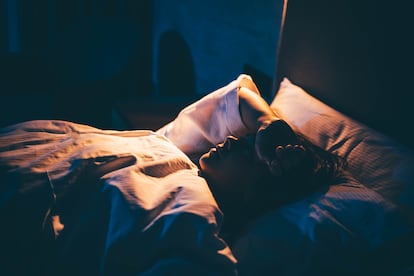
Woman with Insomnia. Young woman lying on bed with hand on forehead.
One way to stop intrusive thoughts is to keep a diary.Maria Korneeva (Getty Images)

Repeating conversations comes from thoughts that can be ruminative and even intrusive. “These two types of thoughts can vary greatly from one person to another in content, but they have in common the reason why they are generated. They are really a strategy that the mind uses to manage the distressing, depressed or anxious state of mind it is in,” says Silvia Dal Ben, psychologist and director of the Unobravo clinic.

Thus, for the psychologist, when these thoughts begin, the most important thing is to recognize them and ask for help, sharing what affects us mentally with someone close. “Negative or unproductive thought patterns, such as self-criticism or catastrophic scenarios, must be questioned and observed, questioning their veracity and considering alternative perspectives,” she adds.

One of the most effective strategies is to keep a diary of reflection on our inner conversations. “Writing down key points and information helps to follow patterns, identifying areas for improvement,” explains Sonia Castro. Ultimately, and according to this expert, although repeating phrases and dialogues in your head may seem harmless and useful, in reality it is a gateway that often leads to overthinking and rumination. “In the end, it harms relationships. But if we recognize the underlying motivations behind this tendency, we can free ourselves from the cycle of repetitive rumination and live in the present with confidence.”

Sign up for our weekly newsletter to get more English-language news coverage from EL PAÍS USA Edition
More information

Posted in Uncategorized | Leave a comment

El Pais: Celebrity suicides produce an infection-like contagion effect

Suicide

Celebrity suicides produce an infection-like contagion effect

A team of infectious disease experts has created a model based on the death of Robin Williams that helps calculate the risk of suicidal behavior after a celebrity takes their own life

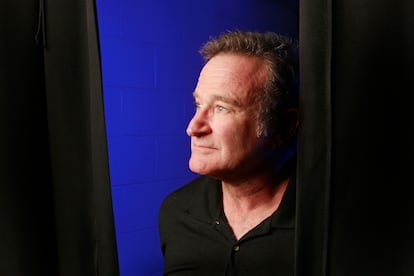
American actor Robin Williams.
American actor Robin Williams.Jay Paul (Getty Images)

Daniel Mediavilla

AUG 01, 2024 – 13:03 CEST

In the months following August 4, 1962, when Marilyn Monroe’s death, probably by suicide, became known, the number of people who attempted suicide in the United States rose by 12%. A similar phenomenon was observed shortly after the deaths of actor Robin Williams and chef Anthony Bourdain. Although the contagion effect is amplified when the protagonists are famous, it also happens with acquaintances, and some analyses attribute 5% of youth suicides to imitation.

Many suicides take place during a brief crisis and because the tools are at hand, not because of a sustained conviction. And this can be used to develop preventive measures. Over the past two decades, Hungary has halved its suicide rate by improving psychiatric care and increasing the number of hotlines for people in crisis. Denmark has also seen improvements with seemingly simple measures, such as reducing the number of paracetamol tablets that can be bought at one time.

In this effort to understand the nature of suicide and ways to prevent it, understanding the mechanisms of contagion helps reduce transmission, as is the case with infectious diseases. With that goal in mind, a group of researchers led by Jeffrey Shaman, a researcher at Columbia University who uses mathematical models to understand and prevent the transmission of diseases such as malaria or Covid, presented in the journal Science Advances a similar model to understand the contagion of suicidal thoughts and behaviors.

The results — which looked at the spread of suicidal behavior after the death of Robin Williams in 2014 and of Anthony Bourdain and the designer Kate Spade, which occurred three days apart in 2018 — show that there was a significant increase of suicides after both the 2014 and 2018 events. The rise was greater following the death of the actor, perhaps because he was better known, and more people could identify with him.

In the case of Williams, the researchers estimated that the odds of a person who had never had suicidal thoughts starting to have suicidal ideation in the days after the news broke increased 100-fold, and the risk of a person who already had suicidal thoughts acting on them tripled. After the deaths of Bourdain and Spade, the effect was roughly half that. These figures were calculated based on calls made to a suicide prevention hotline and official mortality statistics.

“In addition, people who already had suicidal thoughts became more contagious and were 10 times more likely to influence a person without such thoughts to start thinking about them,” Shaman explains, adding that “these changes were temporary, lasting only a few weeks.”

Juan Pablo Carrasco, a psychiatrist at the Provincial Hospital of Castellón in Spain, has studied how social media can help contain or exacerbate contagion. “Thirty percent of people who see suicidal content on the internet, on social media, do not look for it, they are shown it by the algorithm, and that is problematic, especially for a person at risk,” he explains. Just as in the case of an infectious outbreak, when masks can be used or citizens are asked to collaborate to reduce the transmission of a pathogen, social media should take action to prevent the spread of this type of content.

Shaman acknowledges that much more work is still needed to understand variations in the contagion effect of different types of suicide, and how it affects by gender or by country. But these kinds of findings support more targeted efforts, such as public announcements aimed at specific groups or increasing the number of hotline staff after a celebrity suicide.

In addition to these efforts — which could be directed with models that predict the risk of a specific event —, experts have also been testing methods to reduce the opposite effect. “It is not about ignoring the subject of suicide, but rather dealing with it in the right way,” says Carrasco. Some basic recommendations include not elaborating on the methods of suicide, not treating the cases as morbid events, and including in the news ways in which people with suicidal thoughts can seek help.

If you need help

In the U.S., you can call or text the National Suicide Prevention Lifeline on 988, chat on 988lifeline.org, or text HOME to 741741 to connect with a crisis counselor.

Sign up for our weekly newsletter to get more English-language news coverage from EL PAÍS USA Edition

More information

Bruce Hood photographed in the garden of his home in Bristol (United Kingdom).

Bruce Hood, psychologist: ‘Happiness focused on oneself doesn’t go very far’

Rodrigo Santodomingo

Enrique Echeburúa at his office, in San Sebastián, Spain.

Psychologist Enrique Echeburúa: ‘People who die by suicide want to stop suffering, not to stop living’

Daniel Mediavilla

Posted in Uncategorized | Leave a comment

Please share: One horrific atrocity at Stockport but opportunists must be identified. This video from Mike Galsworthy helps us distinguish between two events, the latter being the Far Right with their social networking call to arms, having no regard for the people so affected earlier in the day by the murder and mayhem by a lone 17 year old.

Mike Galsworthy

@mikegalsworthy

·

Follow

The thugs who visited Southport for the day were not solemn or even angry -they were excited and having fun. They were willing to traumatise a community, police included, already traumatised by a mass stabbing. An inquiry into hatred manipulation in our society wouldn’t be bad.

Posted in Uncategorized | Leave a comment

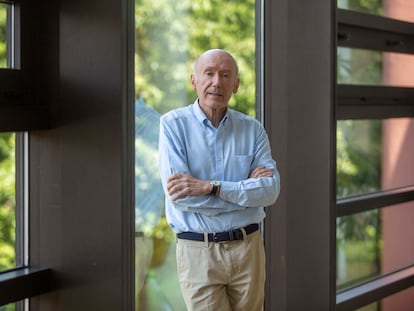
The MIT Press Reader: Mind-Reading and Neuroplasticity: In Conversation With Neurologist Alvaro Pascual-Leone – July 2024

Mind-Reading and Neuroplasticity: In Conversation With Neurologist Alvaro Pascual-Leone

“The brain is never the same from one moment to the next throughout life. Never ever.”

Source: Nomad_Soul via Adobe Stock

By: Adolfo Plasencia

On the wall opposite Alvaro Pascual-Leone’s birth house, on a street in Valencia where the now Harvard-based behavioral neurologist spent his childhood, stands a marble plaque that reads: “In this house lived the distinguished researcher Santiago Ramón y Cajal, who began his histological work here.” In that house, the great scientist and Nobel Prize winner began sketching ideas that would later form the basis of his foundational text in the field of histology, “Manual de Histología normal y de técnica micrográfica.” Every time I see my friend Alvaro, I think about that serendipitous encounter.

I associate that connection with a powerful feeling I experienced some time ago at the Green Building on the MIT campus. One afternoon, a kind professor buzzed me into an office on the 12th floor to take a photo of the campus from the north face of that iconic skyscraper designed by I. M. Pei. Crossing a large office to reach the window, I had to maneuver around a beautiful hardwood table. With the photo snapped, I retraced my steps, transfixed on that table. “Do you know why we take such good care of it?” the professor asked with a smile. “Because on that very table,” he explained, “our great Edward Lorenz wrote the nuclear part of the theory of strange attractors and founded his Chaos Theory.” Science wonk that I am, I was paralyzed for an instant by emotion. Seeing my surprise, he explained that they’d left it exactly as Lorenz had it before he died.

Teenage Alvaro’s daily routine for years involved walking past the house of Ramón y Cajal. Could young Alvaro’s daily encounters with Ramón y Cajal’s house have subtly influenced his path? The idea, a sort of strange attractor itself, is intriguing. But who’s to say? I know it’s far-fetched, but the way it resonates with Pascual-Leone’s lifelong dedication to Ramón y Cajal’s work holds a certain charm. With that, let’s dive into a bit of a conversation he and I had earlier this year, which he kindly allowed me to share.


Adolfo Plasencia: Alvaro, your pioneering work on transcranial magnetic stimulation (TMS) — which for our readers is just what it sounds like: using magnets to stimulate the human brain — has opened doors to exciting possibilities in brain research and treatment, particularly for conditions like depression and chronic pain. How has the field evolved since you began your journey?

Alvaro Pascual-Leone: In our now 20-year-old book on TMS, Vincent Walsh and I explicitly argue that sometimes innovations in certain technologies force a conceptual breakthrough. That is, simply, what has happened with transcranial magnetic stimulation from then until now. For a much deeper discussion around the principles and modern applications of TMS, I’d direct readers to this recent discussion.

The most striking thing for me is that when you read Cajal, von Monakow, or Wernicke, you are surprised by the notions they described long ago. But now we can accurately measure what they sensed because we have great specific technologies for that. They were pioneering intuitions that in part had been forgotten, perhaps because they were untested (or not fully testable) hypotheses and by some considered not to be neuroscience. But the fact is that they offered the very foundation of critical insights on brain function we have since rediscovered. Now that we have access to new and evolved technologies, it forces us to reevaluate those theories and allows us to push the theoretical foundations forward.

Adolfo: Your more recent reflections on brain plasticity, particularly how it shapes our perception of time due to the brain’s constant remodeling, caught my attention. Can you elaborate on how this plasticity specifically influences our sense of time?

Alvaro: Time is an aspect, a component, essential to understanding the human brain. It’s often not sufficiently considered because it adds a dimension that makes it more complex. And, as you know, we humans tend to simplify. But I think the philosophy of Heraclitus’s Panta Rei (everything flows) describes precisely what happens in the nervous system. The brain is never the same from one moment to the next throughout life. Never ever. That is the first law.

“My now and your now are at best hundreds of milliseconds out of phase and thus ‘present’ is effectively not a shared reality between the two of us.”

The second law: The brain never goes back. It never undoes the path it has walked. First and foremost, because there is no such path. The poet Antonio Machado was right when he wrote that “there is no path, the path is made by walking.” There is no mechanism to un-beat the beaten egg, so to speak. Once something is learned or experienced, it can’t be erased. What does exist is the possibility of making a change with which you functionally “go back” to a state like the one you had before. The outcome might be the same, but the brain uses a different pathway to get there. It is a change that makes the representation of what appears functionally the same, in reality, turn out to be different. That is, you cannot redo or retake the trace you had, but you can make a new trace. This principle, where the outcome remains similar but the underlying process changes, is a hallmark of the brain’s remarkable plasticity.

The third law — the third reality — is that time in the brain is a very particular thing because “now” does not really exist. I may be saying “now,” but I’ve already thought about it and, in the best case, it has taken me 30 milliseconds to finish that processing and send the message to my larynx to come out. So, I thought it and then I said it with a time lag. And you heard it and it has taken you at least another 30 milliseconds to integrate it and process it, and then another 30 milliseconds to decode it. So mine is not the “now” that I am telling you, but that of 30 milliseconds ago. You get the idea. My now and your now are at best hundreds of milliseconds out of phase and thus “present” is effectively not a shared reality between the two of us.

This very curious reality, according to which we think we are in the present, but actually that present does not exist in a neurobiological sense, is explained very well by Bill Bryson in his book “The Body: A Guide for Occupants.” He illustrates well this paradox that time is essential while at the same time illusory and elusive.

Adolfo: Apropos of all this, the engineer and neuroscientist José M. Carmena, in my collection of discussions with scientists (in which you also participate), argues that the brain creates consciousness, which is an illusion. However, according to him, it is a fictitious illusion. Philosopher Javier Echeverría applauds this assertion but warns him that this statement will get him into trouble with phenomenologists and Kantians. They will accept, according to Echeverría, that consciousness is an illusion, but they will not accept that consciousness is a fictitious illusion fabricated by the brain itself.

Alvaro: I agree with José. I think the brain works by creating hypotheses about what it is going to find and then it contrasts those hypotheses with what it actually finds. It is not a receptive chamber of information. It is an active projection that it compares with the reality it encounters.

Adolfo: You began a recent lecture by saying, “When I started this lecture, you had your brain in one way, and when I finish it, and you have listened to me, you will have it in another way.” In other words, we have to understand the brain not as something static but as something dynamic in a process of continuous change.

Alvaro: Yes, that’s right. Everything we do, think, and experience changes our brain.

Adolfo: Let me now introduce an adjacent topic. Brain technologies, or so-called neurotechnologies, are regularly used to manage or treat persistent diseases like epilepsy, depression, Alzheimer’s, and Parkinson’s. You yourself use these technologies in your lab. But as with any powerful tool, there’s always the risk of bad actors misusing it. A few years ago Politico published a chilling article that captured the emerging fear of brain privacy invasion. The headline: “Machines can read your brain. There’s little you can do to stop them.” In the face of all this, a growing movement is emerging that brings together neuroscientists, philosophers, lawyers, human rights defenders, and policymakers who are rushing to try to protect that last frontier of privacy.

But technologies are evolving at an enormous speed. In December, a group of Australian researchers demonstrated a “mind-reading” system called BrainGPT. Essentially they connect a multitasking EEG encoder to an LLM capable of decoding coherent and readable sentences from EEG signals. BrainGPT can, according to its creators, convert thoughts (recorded with a non-invasive electrode helmet) into words that are displayed on a screen. Alvaro, I need a reality check. What can actually be read today in the brain, and to what extent? Are there ways to protect the privacy of the brain from this, and how can we protect ourselves from the invasiveness of these machines?

Alvaro: The reality is that the ability to read the brain and influence activity is already here. It’s no longer only in the realm of science fiction. Now, the question is, what exactly can we access and manipulate in the brain? Consider this example: If I instruct you to move a hand, I can tell if you are preparing to move, say, your right hand. I can even administer a precise “nudge” to your brain and make you move your right hand faster. And you would then claim, and fully believe, that you moved it yourself. However, I know that, in fact, it was me who moved it for you. I can even force you to move your left hand — which you were not going to move — and lead you to rationalize why you changed your mind when in fact, our intervention led to that action you perceive as your choice. We have done this experiment in our laboratory.

“I can even force you to move your left hand — which you were not going to move — and lead you to rationalize why you changed your mind.”

In humans, we can modify brain activity by reading and writing in the brain, so to speak, though we can affect only very simple things right now. In animals, we can do much more complex things because we have much more precise control of the neurons and their timing. But the capacity for that modulation of smaller circuits progressively down to individual neurons in humans is going to come, including much more selective modification with optogenetic alternatives — that is, using light to control the activity of neurons. Therefore, something that we should be very clear about as a society and as human beings is what regulations and criteria we should develop so that their use is appropriate — and beneficial — for the individual and not just a source of profit or power. I welcome this movement in favor of neuroethics and its application to neurological techniques because I think it is crucial.

Adolfo: Last year, I attended an open session organized in Valencia by the Consell Valenciá de Cultura. You shared the stage with your colleague Rafael Yuste, director of the NeuroTechnology Center (NTC) at Columbia University and co-founder of The NeuroRights Foundation. At the meeting, the Declaration on Neurorights of Valencia was unveiled. This Declaration asserts that neurorights must be included in the universal list of human rights. Why do you think neurorights are important and necessary for our present and immediate future life?

Alvaro: I think Rafa Yuste has articulated the challenge, the problem, and the need very well. I think we already have technology that allows us to read and write in the brain, extract information from our brain and manage it in a way that could compromise, at least potentially, the independence, privacy, and agency of each of us.

Adolfo: You refer to the ability to make decisions and the choices that make up and allow free will, right?

Alvaro: Exactly. That’s what I mean by agency. The assertive ability, in the first place, to do and decide for oneself. Anything that interferes with that poses a potential risk to the very essence of human rights. In other words, a new list of human rights would have to be developed and expanded by Neurorights. They need to be expanded, as the current ones fall short and do not sufficiently protect against the possibility of information extraction, manipulation, and personal control to which today’s neurotechnology can already give rise. I have joined in because I believe they are a necessary extension. Neurorights will be fundamental in the societies of the future.


Adolfo Plasencia is a science writer and the author of “Is the Universe a Hologram? Scientists Answer the Most Provocative Questions.”

Posted on Jul 1

The MIT Press is a mission-driven, not-for-profit scholarly publisher. Your support helps make it possible for us to create open publishing models and produce books of superior design quality.

Posted in Uncategorized | Tagged , , , , | Leave a comment

Eurasia Review: The High Cost Of Protectionism: AI Edition – OpEd

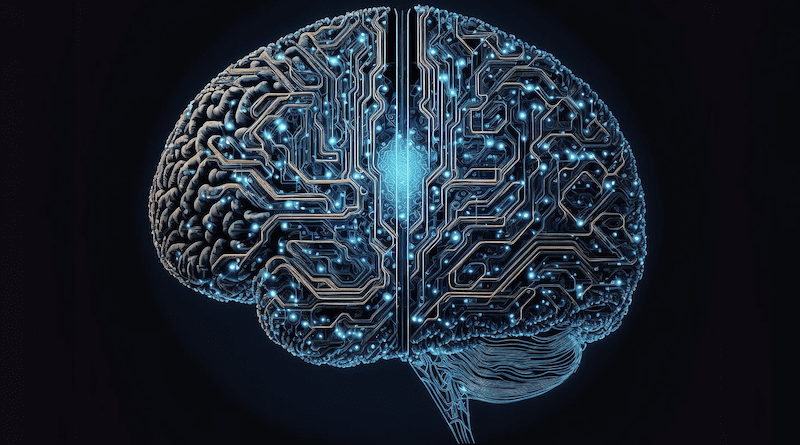
Cyber brain Computer artificial intelligence

The High Cost Of Protectionism: AI Edition – OpEd

   0 Comments

By Dean Baker

Economists go on endless diatribes against tariffs and quotas as costly policies that raise prices to consumers and slow economic growth. There is considerable truth to this story, even if economists and politicians often exaggerate their case to push favored policies. While virtually all economists will go to their graves touting the evils of protectionism they almost all ignore the most costly forms of protectionism: government-granted patent and copyright monopolies.

Most tariffs raise the price of the protected items by somewhere in the range of 10-25 percent. By contrast, patent and copyright monopolies often raise the price of protected items by 1000 percent, or even 10,000 percent. Many high-priced drugs that enjoy patent monopolies or related protections can sell for tens of thousands of dollars. Their generic versions might sell for $30 or $40 a prescription.

There is a similar story for copyrights. Items that could be transferred at near zero cost over the Internet can instead sell for hundreds or even thousands of dollars. This is most evident with costly software, but also true for recorded music and video material, video games, and a variety of other material subject to copyright protections.

There is a clear rationale for patent and copyright monopolies, these monopolies provide an incentive for innovation and creative work. But every type of protectionism has a rationale, having a rationale doesn’t prevent a trade tariff or quota from being a protectionist policy.

The point here is that these government-granted monopolies are huge interventions in the market. They arguably are justified, but it is close to nuts to just assert they are the free market. (Alternative mechanisms are discussed hereand in chapter 5 of Rigged [it’s free]).

It is understandable that people on the right, who generally support policies that redistribute income upward, would try to hide patent and copyright monopolies as just the natural working of the market. It is absolutely mindboggling that many on the left also perpetuate this blatant misrepresentation of reality.

Anyhow, let’s get the playing field set. Granting these monopolies is a choice by governments, they can set different policies. In the case of AI, the New York Times reports that it seems as though China is rapidly catching up, and possibly even taking the lead, by pursuing open-source policies rather than relying on patents, copyrights, and related protection.

The idea of open-source with reference to AI is that all the coding is freely available to anyone to review and build upon. It is understandable that this could be a more effective way to advance the technology since breakthroughs could quickly be built upon by others working in the same area. Also, researchers could learn from failures as well and avoid pursuing similar dead-ends. (This would be a great approach to drug or vaccine development.)

The other obvious development is that the finished product is very cheap. The developer may look to recover costs by charging servicing fees and/or relying on direct government support. Either way, end users will not be prevented from being able to take advantage of a useful product by its high price.

Anyhow, given all the hype in the business world around AI it would certainly be ironic if Chinese firms surged past their leading U.S. competitors because they relied on an open-source process whereas our firms relied on old-fashioned protectionism. Who knows, maybe even the “free trader” economists would notice one day.

  • This article first appeared on Dean Baker’s Beat the Press blog.

FacebookTwitterEmailFlipboardMastodonLinkedInShare

Dean Baker

Dean Baker is the co-director of the Center for Economic and Policy Research (CEPR). He is the author of Plunder and Blunder: The Rise and Fall of the Bubble Economy.

Posted in Uncategorized | Tagged , , , , | Leave a comment

Ian Bremmer shares his insights on global politics this week on World In :60.

Posted in Uncategorized | Leave a comment

Singularity Hub: This Week’s Awesome Tech Stories From Around the Web (Through July 27)

This Week’s Awesome Tech Stories From Around the Web (Through July 27)

BySingularity Hub Staff

July 27, 2024

Our favorite science and tech stories from this week from around the web.

ARTIFICIAL INTELLIGENCE

Google DeepMind’s New AI Systems Can Now Solve Complex Math Problems
Rhiannon Williams | MIT Technology Review
“AI models can easily generate essays and other types of text. However, they’re nowhere near as good at solving math problems, which tend to involve logical reasoning—something that’s beyond the capabilities of most current AI systems. But that may finally be changing. Google DeepMind says it has trained two specialized AI systems to solve complex math problems involving advanced reasoning.”

archive page

COMPUTING

This Startup Is Building the Country’s Most Powerful Quantum Computer on Chicago’s South Side
Adam Bluestein | Fast Company
“PsiQuantum’s approach is radically different from that of its competitors. It’s relying on cutting-edge ‘silicon photonics’ to manipulate single particles of light for computation. And instead of taking an incremental approach to building a supercomputer, it’s focused entirely on coming out of the gate with a full-blown, ‘fault tolerant’ system that will be far larger than any quantum computer built to date. The company has vowed to have its first system operational by late 2027, years earlier than other projections.”

BIOTECH

The Race for the Next Ozempic
Emily Mullin | Wired
“These drugs are now wildly popular, in shortage as a result, and hugely profitable for the companies making them. Their success has sparked a frenzy among pharmaceutical companies looking for the next blockbuster weight-loss drug. Researchers are now racing to develop new anti-obesity medications that are more effective, more convenient, or produce fewer side effects than the ones currently on the market.”

ROBOTICS

Watch a Robot Peel a Squash With Human-Like Dexterity
Alex Wilkins | New Scientist
“Pulkit Agrawal at the Massachusetts Institute of Technology and his colleagues have developed a robotic system that can rotate different types of fruit and vegetable using its fingers on one hand, while the other arm is made to peel.”

FUTURE

Here’s What Happens When You Give People Free Money
Paresh Dave | Wired
“The initial results from what OpenResearch, an Altman-funded research lab, describes as the most comprehensive study on ‘unconditional cash’ show that while the grants had their benefits and weren’t spent on items such as drugs and alcohol, they were hardly a panacea for treating some of the biggest concerns about income inequality and the prospect of AI and other automation technologies taking jobs.”

ARTIFICIAL INTELLIGENCE

Meta Releases the Biggest and Best Open-Source AI Model Yet
Alex Heath | The Verge
“Meta is releasing Llama 3.1, the largest-ever open-source AI model, which the company claims outperforms GPT-4o and Anthropic’s Claude 3.5 Sonnet on several benchmarks. …CEO Mark Zuckerberg now predicts that Meta AI will be the most widely used assistant by the end of this year, surpassing ChatGPT.”

ENERGY

US Solar Production Soars by 25 Percent in Just One Year
John Timmer | Ars Technica
“In terms of utility-scale production, the first five months of 2024 saw it rise by 29 percent compared to the same period in the year prior. Small-scale solar was ‘only’ up by 18 percent, with the combined number rising by 25.3 percent. …It’s worth noting that this data all comes from before some of the most productive months of the year for solar power; overall, the EIA is predicting that solar production could rise by as much as 42 percent in 2024.”

TECH

SearchGPT Is OpenAI’s Direct Assault on Google
Reece Rogers and Will Knight | Wired
“After months of speculation about its search ambitions, OpenAI has revealed SearchGPT, a ‘prototype’ search engine that could eventually help the company tear off a slice of Google’s lucrative business. OpenAI said that the new tool would help users find what they are looking for more quickly and easily by using generative AI to gather links and answer user queries in a conversational tone.”

SPACE

Wafer-Thin Light Sail Could Help Us Reach Another Star Sooner
Alex Wilkins | New Scientist
“A light sail designed using artificial intelligence is about 1000 times thinner than a human hair and weighs as much as a grain of sand—and it could help us create a spacecraft capable of reaching another star sooner than we thought.”

ART

AI Can’t Make Music
Matteo Wong | The Atlantic
“While AI models are starting to replicate musical patterns, it is the breaking of rules that tends to produce era-defining songs. Algorithms ‘are great at fulfilling expectations but not good at subverting them, but that’s what often makes the best music,’ Eric Drott, a music-theory professor at the University of Texas at Austin, told me.”

Image Credit: David Clode / Unsplash

Share

FacebookTwitterReddItEmail

Posted in Uncategorized | Tagged , , , , | Leave a comment

Eurasia Review: Ladakh’s Iran Connection – OpEd

Islam Muslims Group Study India Reading Quran

Ladakh’s Iran Connection – OpEd

   0 Comments

By Gateway House

By Aditya Shinde 

On May 19, 2024, Ebrahim Raisi, the eighth President of the Islamic Republic of Iran, died tragically in a helicopter crash near East Azerbaijan where he had just completed an official visit. Raisi’s funeral was attended by high-ranking officials from 68 countries, including the Vice-President of India, Jagdeep Dhankhar. The Government of India declared a day of national mourning on May 21, 2024.

That same day, another homage was paid to the late Iranian leader – in the union territory of Ladakh. Thousands of Ladakhi Shia men and women, dressed in black and chanting Labaik Ya Khaminaie (“We are always there for your help Khamenei”), participated in a massive procession at Hussaini Park in Kargil, to mourn Raisi.[1]

Ladakh comprises the Buddhist-majority Leh district and the Muslim-majority Kargil district. Kargil is home to 125,000, of whom 48% are Shia.[2] They follow Twelver Shi’ism[3], also known as the Imāmiyya sect, the largest branch of Shia Islam.[4]

Shia Islam reached Kargil in the 15th century through a combination of invasions, missionary activities, and trade interactions. In the early 16th century, Mir Shams-ud-Din Araqi, a Shia scholar from Iran, visited Gilgit-Baltistan and Kargil with his missionaries to spread his faith. Subsequently, local rulers and chieftains in Kargil and the surrounding areas began to support Shia scholars and institutions, facilitating the establishment and growth of Islam in the region.[5]

The Iranian Revolution of 1979 had a profound impact on Shia Islam. It established the doctrine of Vilayat al-Faqih (Guardianship of the Jurist) as the basis of governance in Iran. This doctrine of Vilayat was developed by Ayatollah Ruhollah Khomeini and assigned authority to a senior Shia cleric over political and religious matters in the absence of the 12th Imam.[6] This was a significant shift from the traditional Shia view that clergy should stay away from direct political involvement; it elevated the clergy’s status.

The revolution strengthened Shia identity, giving pride and empowerment to Shia Muslims worldwide and shaping perceptions and the role of clerical authority. Khomeini, as the first Supreme Leader, became a central figure not only in Iranian politics but also in the global Shia community. This status is enjoyed by his successor. Even today, the portraits of Khomeini and Ali Khamenei, the current supreme leader of Iran, are displayed in Shia mosques and other community places in India. The importance of Iran’s Supreme Leader significantly influences Iran’s bilateral relations with countries that have sizeable Shia populations.

Local clerics from these countries often receive their religious training and funding from Iranian seminaries, located in Qom, Isfahan, Tehran and other parts of the country, reflecting Iran’s substantial investment in shaping Shia religious and political landscapes abroad.[7] Often, they become key figures in their home countries, promoting Iranian theological perspectives and political interests. Consequently, major global events involving Iran resonate strongly within these communities.

Unlike other regions in India like Lucknow and Hyderabad where Shia communities are more dispersed, Kargil presents a concentrated and coherent Shia community that can be more easily engaged with and influenced. The cultural and religious practices of the Shia community in Kargil align closely with those in Iran, through religious scholars, pilgrimage routes, and cultural exchanges

An example of the Iranian influence is the reaction to the killing of Qassem Soleimani, the former commander of the Quds Force, a unit of Iran’s Islamic Revolutionary Guard Corps (IRGC). After Soleimani was killed in a U.S. drone strike on January 3, 2020, thousands gathered on the streets of Kargil to protest against the U.S., raising slogans such as “Down with America,” “Down with Israel,” and “Solidarity with General Qassem Soleimani.”[8]

Religious organisations such as Jamiat-ul-Ulama Isna Asharia, Kargil-Ladakh (JUIAK), and Imam Khomeini Memorial Trust (IKMT), registered in India, mobilise Ladakhis. IKMT, which organised the procession following Raisi’s demise, actively engages in political activities, including organising anti-Israel and anti-U.S. protests and the annual celebration on the anniversary of the Iranian revolution in Kargil.[9]

In April 2024, Acuber Books International, a publisher based in Uttar Pradesh, released a Class 6 textbook listing Khomeini among the “most evil people of the world.” In response, IKMT urged the Central Government to pursue legal action against the publisher. Subsequently, the publishers issued an apology for the “unintended error” and committed to withdrawing the book from circulation.[10]

Since March 2024, Ladakh has witnessed significant protests to advocate for the implementation of the Sixth Schedule, which will enable the establishment of autonomous district councils vested with legislative and executive powers. In these protests, Buddhist and Muslim populations of Ladakh joined hands as the Kargil Democratic Alliance (KDA), a grouping of political, religious and social organisations in Kargil supported the hunger strike by environmental activist Sonam Wangchuk.

Amidst this political upheaval, Shia leader and independent candidate for 2024 general elections Hanifa Jan emerged victorious in the Ladakh constituency with a vote share of 48.15 %, triumphing over both the ruling BJP and the primary opposition, Congress. Jan’s electoral success underscores the political importance of the Shia community of Ladakh, which now has a direct voice in the Indian parliament.

References

[1] ‘Procession taken out to mourn martyrdom of Ayatullah Raisi,’ Daily Excelsior, May 24, 2024, https://www.dailyexcelsior.com/procession-taken-out-to-mourn-martyrdom-of-ayatullah-raisi/  ‘Kargil : Zainabiya pay tribute the Martyrs of Iranian President Ebrahim Raisi & his Companions.,’ Ladakh Express, YouTube, May 23, 2024, https://www.youtube.com/watch?v=ymFWyjnJ1Ww

[2] Rest of Kargil’s population include 29% Sunni, 14% Buddhist and 7% Hindu. https://censusindia.gov.in/nada/index.php/catalog/11376

[3] The term Twelver refers to its belief in a succession of 12 divine leaders, known as the 12 Imams, who are considered as the rightful successors to the Prophet Muhammad. The 12th Imam Mahdi is considered the prophesied redeemer who will appear before the Day of Judgment to restore justice and equity in the world. But in his absence, for centuries, Twelver Shi’ites followed the learned scholar known as Marja’ al-taqlid (sources of emulation), who provided rulings and guidance on legal and theological issues.

[4] ‘Demography,’ Kargil-Ladakh, Government of India, https://kargil.nic.in/demography/

[5] Gupta, R. (2022). Islam in the Trans-Himalayan ecumene. In J. J. P. Wouters & M. T. Heneise (Eds.), Routledge handbook of Highland Asia (pp. 129-138). London: Routledge. doi:10.4324/9780429345746-11

[6] Mavani, Hamid. “Ayatullah Khomeini’s Concept of Governance (Wilayat al-Faqih) and the Classical Shi’i Doctrine of Imamate.” Middle Eastern Studies 47, no. 5 (2011): 807–24. http://www.jstor.org/stable/23054264.

[7] Gupta, Radhika. “Experiments with Khomeini’s Revolution in Kargil: Contemporary Shi‘a Networks between India and West Asia.” Modern Asian Studies 48, no. 2 (2014): 370–98. https://doi.org/10.1017/S0026749X13000759.

[8] ‘Kashmir: Shia groups in Kargil, Valley protest Iran commander’s killing in US strike,’ Indian Express, January 5, 2020, https://indianexpress.com/article/india/shia-groups-in-kargil-valley-protest-iran-commanders-killing-in-us-strike-6200012/

[9] ‘IKMT Kargil Marks 45th Anniversary of Islamic Revolution with Massive Rally and Calls for Action on Global and National Issues,’ Voice of Ladakh, February 12, 2024, https://www.voiceofladakh.in/2024/02/ikmt-kargil-marks-45th-anniversary-of-islamic-revolution-with-massive-rally-and-calls-for-action-on-global-and-national-issues/#:~:text=Kargil%2C%20Feb.,a%20congregation%20at%20Hussaini%20Park.

[10] ‘“Will not accept apology, initiate legal action”: IKMT responds to derogatory remarks against Ayatollah Khomeini,’ Voice of Ladakh, April 27, 2024, https://www.voiceofladakh.in/2024/04/will-not-accept-apology-initiate-legal-action-ikmt-responds-to-derogatory-remarks-against-ayatollah-khomeini/

FacebookTwitterEmailFlipboardMastodonLinkedInShare

Gateway House

Gateway House: Indian Council on Global Relations is a foreign policy think-tank established in 2009, to engage India’s leading corporations and individuals in debate and scholarship on India’s foreign policy and its role in global affairs. Gateway House’s studies programme will be at the heart of the institute’s scholarship, with original research by global and local scholars in Geo-economics, Geopolitics, Foreign Policy analysis, Bilateral relations, Democracy and nation-building, National security, ethnic conflict and terrorism, Science, technology and innovation, and Energy and Environment.

Posted in Uncategorized | Tagged , , , , | Leave a comment

Education Next – Higher Education: Can the New University of Austin Revive the Culture of Inquiry in Higher Education? Comment: Woke — Time to wake up. The Pendulum moved too far so Change is ahead.

Can the New University of Austin Revive the Culture of Inquiry in Higher Education?

Its founders seek to build a scholarly home for pluralism
without creating a haven for the “anti-woke”

Joanne Jacobs

Socrates never stopped asking questions, even unto his execution. The University of Austin is following suit with what all hope is a better fate.

Socrates, who said “All I know is that I know nothing,” is a role model for Pano Kanelos, president of the new University of Austin. Socrates never stopped asking questions, even when the Athenian elite charged him with impiety and corrupting the youth of the city-state.

“Socrates was very disagreeable,” says Michael Shellenberger, who will teach about politics, censorship, and free speech at the private university. “People hated him so much they decided he had to die.”

The University of Austin, which will admit its first class of 100 undergraduates in fall 2024, hopes to create a “pluralistic community” devoted to “argument and inquiry,” says Kanelos, a Shakespeare scholar who headed St. John’s College in Maryland, which is known for its “great books” curriculum.

“It’s easier to build something new” than to change existing institutions, says Shellenberger. The author of San Fransicko and Apocalypse Never, he started on “the extreme left” but became a “hard to classify” pro-nuclear environmentalist. “The moment is right,” he says.

One might say the moment is perfect. The rich have revolted: “Pissed-off billionaires” and miffed millionaires are pledging not to give any more money to Harvard, Penn, Dartmouth, and other elite universities. They’re urging wealthy friends to close their checkbooks, too.

While most of these disenchanted alumni hope to return their alma maters to their original academic mission, others want to start fresh. What if there were a new university with no DEI administrators, no tenured professors, no dorms named after “problematic” donors of yore, no baggage?

A “heterodox” group including historian Niall Ferguson, writer Bari Weiss, biologist Heather Heying, and entrepreneur Joe Lonsdale came up with the idea for a new kind of university during the pandemic. Among advisers and potential faculty are social psychologist Jonathan Haidt; economists Glenn Loury, Tyler Cowen, and Deirdre McCloskey; writer and activist Ayaan Hirsi Ali; playwright David Mamet; columnist Sohrab Ahmari; writer and social critic Caitlin Flanagan; philosophers Peter Boghossian and Kathleen Stock; and legal scholar and activist Nadine Strossen.

Many on the left see the University of Austin as a reactionary political enterprise or perhaps The Revenge of the Canceled. “Everyone is trying to drag us into the culture war,” says Kanelos. He’s determined to resist. He doesn’t want to run an “anti-woke” university or establish a haven for conservatives or libertarians or Christians or . . . well, anyone.

University of Austin students, who will be chosen on the basis of test scores, grades, and a willingness to take a chance on something new, will not be offered intellectual comfort.

“True learning is uncomfortable,” says Shellenberger. “If you’re comfortable, you’re probably not learning.”

The University of Austin raised $230 million in two years from 2,600 donors, including 113 “founders” who gave “six- to eight-figure gifts,” according to Kanelos, putting the university’s developers way ahead of their fundraising goals.

Since the start of the Ivy donor revolt, “we’ve seen a shift in funding” from established universities to alternatives, says Kanelos. “Someone who gives us $10 million isn’t giving to their alma mater.”

Thanks to its donors, UATX will offer four tuition-free years to its “founding class” of 100 undergraduates. About 2,500 students have applied.

For subsequent classes, Kanelos hopes tuition will be $32,000—half of what Harvard charges.

He hopes to launch a lean, efficient, teaching-centric institution. There will be no leafy campus, no quad or bell tower, and, of course, no football team.

The new university is renting space in a historic downtown landmark, the Scarbrough Building, which once housed a department store.

Students will live downtown in shared apartments—they’ll do their own cooking—and shuttle to their classes. They’re expected to start their own clubs and activities.

While teaching will be face-to-face, most administrative and support jobs will be outsourced to a hub in Guatemala to keep costs down.

The University of Austin has provisional accreditation from the state of Texas, but it needed 1,800 pages of documents to start the accreditation cycle. In Texas, a would-be university must define its mission, submit a financial plan, and show that it can fulfill it. In addition, a new university must explain how it will assess its success, explain its governance plan, and describe its admissions criteria, facilities, and so on.

Until the university is fully accredited, which won’t happen until the first class graduates, students won’t be eligible for federal or state financial aid, such as Pell Grants for lower-income students. That makes it hard for a new university to recruit students—unless it has generous donors to fund financial aid.

The University of Austin will not admit students based on race, gender, or socioeconomic status. That sort of diversity is not a goal. The university wants “intellectual pluralism,” creativity, leadership, and “commitment to our principles” of inquiry, says Kanelos. And students must be prepared for academic rigor as shown by their high school grades, class rank, and test scores.

The University of Austin has tested its appeal by offering a summer program it calls Forbidden Courses—so named “because higher education has made it difficult to inquire openly into vexing questions with honesty and without fear of shame,” according to the UATX website. Kanelos says that the program has drawn young people with diverse ideas and backgrounds.

In their first two years, University of Austin undergraduates will take interdisciplinary “intellectual foundations” courses in philosophy, history, literature, quantitative reasoning, and science.

The program is not unlike the great-books curriculum at St. John’s, says Kanelos. But St. John’s is all great books for four years. In the second two years at the University of Austin, students will choose a focal area of study and work on “applying knowledge to solve broad-based problems.” He hopes students will work on projects with local think tanks, companies, and civic and governmental groups.

As the home of Texas’s flagship university, the state capitol, and a thriving tech sector, Austin offers a lot of learning opportunities.

If all goes well, UATX will enroll 200 students in the second year and will get to 1,000 students in four years, Kanelos says. “Then we’ll decide where to go from there.”

Small University, Big Impact?

The University of Austin can’t change the nation’s academic “monoculture” on its own, but it can be an “extraordinarily significant” first step, says Frederick Hess, education policy director at the American Enterprise Institute. “It proves what’s possible, plants a flag, and provides a welcoming, scholarly home for influential heterodox scholars.”

One of the founders, Niall Ferguson, a senior fellow at Stanford’s Hoover Institution, explained in National Affairs how the new university’s constitution aims to protect freedom to learn and freedom to teach.

He proposed a tripartite division of powers with the university president as the executive, the board of trustees as the legislative branch, and an independent judicial panel appointed to protect academic freedom, free speech, and other rights.

Professors will not be offered tenure, Ferguson writes. “We believe this no longer protects academic freedom but merely creates perverse incentives. In many cases, it breeds conformism before the award of tenure and indolence after it.”

The University of Austin will have no faculty senate, he adds. “We do not believe the most skilled employees at an institution should play the part of legislature—a role that properly belongs to the board of trustees.”

In addition, the criteria for admission, graduation, hiring, and promotion are “strictly without regard to race, gender, sexual orientation, political affiliation, or religious faith.”

The university will not take positions on political issues, concludes Ferguson, who will join the faculty.

Fifteen to 20 professors will be selected from almost 1,000 applications, says Curtis Guilbot, the chief operations officer. “The quality of faculty applicants has been exceptional.”

Among the hires announced are economists Robert Topel and Kevin M. Murphy from the University of Chicago’s Booth School of Business and Morgan Marietta, who resigned as chair of the political science department at the University of Texas at Arlington after he was told not to schedule events without prior approval (a discussion he led on Israel and Palestine was disrupted by pro-Palestinian demonstrators).

The University of Austin is not the only new academic venture in town. Elon Musk, who moved to Texas in 2020, plans to spend $100 million to create a K–12 school in Austin focused on math, science, and engineering and, eventually, start a university.

“He’s not giving the money to us,” said Kanelos in a December 2023 interview. “Just as well.” Kanelos no doubt suspects that it’s hard to stay independent when you get too close to a multi-billionaire.

A Difficult Undertaking

Starting a new college is a daunting enterprise. Just ask Stanley Fish, who was recently involved in launching Ralston College in Savannah. “It took about a decade of fundraising and planning and gift-giving,” Fish said in a Chronicle of Higher Education interview.

Ralston hopes to “inspire a movement of intellectual freedom and courage,” wrote Stephen Blackwood, the president, in a 2021 article in The Federalist. “Ralston does not seek to be the conservative David to the leftist Goliath. Our goal is education, not indoctrination.”

But so far, Ralston, which is seeking accreditation, offers only a one-year master’s in liberal arts.

The University of Austin has larger ambitions, more financial support, and excellent timing. The zeitgeist is a-changing. It’s likely to recruit students and faculty, teach courses, award degrees, and win accreditation. But will it be seen as a place of discussion, debate, and inquiry—or just “anti-woke?”

Joanne Jacobs is a freelance education writer and blogger (joannejacobs.com) based in California.

This article appeared in the Summer 2024 issue of Education Next. Suggested citation format:

Jacobs, J. (2024). Can the New University of Austin Revive the Culture of Inquiry in Higher Education? Its founders seek to build a scholarly home for pluralism without creating a haven for the “anti-woke.” Education Next, 24(3), 48-51.

Last Updated

May 7, 2024

License this Content

Posted in Uncategorized | Tagged , , , , | Leave a comment

Escaping Porn Addiction | Eli Nash | TEDxFortWayne. Comment: Addiction and Shame are hand and glove. This is 2019 but the message is profound and part of lifelong learning; people can opt for “Solution”. Authenticity breaks through masks and can empower. Thank you Eli Nash for sharing your very personal story about porn and/or sex addiction. Too many young boys have this problem cast upon them as young as 10 years or even younger. It is changing the dynamics of a healthy sexual relationship between man and woman, boy and girl, if in your teenage years. Shame is the bogey. Confront it. Speak out and share.

Related topics

Fight the New Drug

Pornography addiction

Sexual addiction


Posted in Uncategorized | Leave a comment