Eurasia Review: Future Of Africa With Prof. Sachs – OpEd

Jeffrey Sachs

Jeffrey Sachs

Future Of Africa With Prof. Sachs – OpEd

   0 Comments

By Lily Ong

Jeffrey Sachs is known for many accolades; among them, he was a special advisor to three consecutive UN secretaries-general, once hailed as the most important economist in the world by the New York Times, a co-recipient of the Blue Planet Prize for environmental leadership, and a recipient of the Tang Prize for Sustainable Development. Resting on his laurels, however, is the last thing anyone expects Sachs to do. On Aug 10, Prof. Sach’s tireless service to humanity – as he navigated the streets of Stintino, Sardinia in 30-degrees-Celsius heat – can be seen in the generous sharing of his time and expertise with a multitude of online participants from over 35 countries, who had gathered to hear him at the launch of Prof. Anis H. Bajrektarevic’s Certified Economic Diplomat program at the Institute of Economic and Finance in Ghana.

Professor Sachs kicked off his astute talk by disclosing what he has recently been up to for Africa’s development. Together with the Chief Economist at the African Development Bank, Kevin Urama, the multi-skilled Sachs has been developing a strategy for breaking the poverty cycle in Africa. The team led by the AfDB is set to present their proposal for Africa’s rapid growth at the African Union Summit in February 2025.

In sharing the core strategy, Sachs explicated how Africa can achieve very rapid development in the next 40 years – in the same way China did so during 1980 – 2020 and India is doing so today, starting around 2000.  “Back in 1980, China was impoverished and not even on the world’s radar screen economically. In fact, its poverty rate was higher than in Africa today. However, China opened up and took important policy measures. Over the next 40 years, not only has it become a high-income economy, but also the world’s largest economy in total GDP measured at purchasing-power parity (PPP),” Sachs explained as he held China up as a good model for Africa.

Sachs went on to state that Africa could achieve the same thing that China did. “Africa has 1.4 billion people, roughly the same population as that of China and India. While India is about 15 to 20 years behind China in its economic trajectory, it has also been experiencing very high growth. China started emerging in 1980 and India around 2000. For Africa, that time is now.”

However, Sachs understood it would take more than a big population to drive rapid growth and was careful to highlight the significant distinction between the three entities. “There is one big difference. Following the colonial period, India remained one large country (actually, British India became three countries: India, Pakistan, and later Bangladesh). China, of course, remained one unified state despite encountering Japan’s imperialistic ambitions and the century of reckless behavior by the European powers. Africa, on the other hand, has to deal with the ongoing difficulties associated with its colonial legacy, notably Europe’s division of Africa into 55 states.”

Sachs proceeded to explain that the 55 individual African states are too small on their own to achieve the kind of global role and competitiveness they need. However, if Africa truly creates a political, economic, financial, and eventually monetary union, then it will be able to emulate the great successes of China and India. With a single market, a unified financial system, and increasing monetary integration, Africa will be well positioned to create a truly unified economic space, also deeply interconnected by trans-boundary infrastructure (for power, fiber, roads, rail, shipping, and ecosystem management).  Moreover, with a strong union, Africa will be positioned to play a global diplomatic role as well, helping to lead global decision-making in key international forums.  

It would serve well at this point, to recall that in Delhi last year, with India’s G20 Presidency, the African Union was made a permanent member of the G20. None could be happier than the 1.4 billion Africans who have finally been given a major voice in deliberations on major global economic issues – and Sachs, who for years, has been advocating indefatigably for the AU to be given a seat at the table.

“An integrated and ambitious African Union (AU) can achieve the kind of growth that China and India have experienced,” Sachs paused before adding determinedly, “I want the AU to be a giant in the same way.”

Like other global leaders, Sachs is a visionary man with ambitious goals, but this is where their similarity ends. Sachs actually knows the roadmap from A to Z and is keenly aware of what Africa needs to achieve this high sustained growth that he wholly believes to be present in the region’s potential. 

Sachs explained that Africa needs a large internal market and diplomatic presence, the latter made possible now with its representation at the G20 (which he hopes will soon be relabeled appropriately as the G21) and the UN. Africa also needs high investments across all major classes of capital, with human capital being the most important, hence the need to provide universal quality education. Sachs also indicated that Africa needs rapid electrification and digital access, so that every household can get lit up and online.

Last but hardly least, Sachs said that Africa needs international loan financing with interest rates comparable to those granted to the US. “The irony here is, the US actually has a higher debt-GDP ratio than most African countries (and other G7 countries such as Italy and Japan have even higher debt-GDP ratios), yet the credit rating agencies have assigned African sovereign borrowers very bad credit ratings. However, Africa has higher growth potential than the high-income countries, and typically lower ratios of debt to GDP. The rating agencies are wrong in their methodology, and the methodology and ratings need to be fixed. If Africa cannot borrow on reasonable terms – meaning low interest rates and long-term maturities – then Africa will remain poor,” he advised.

Another trait that distinguishes Sachs from other leaders lies in the consistency of his messaging. Time and again, he has advocated for a multipolar world where parameters for honest dialogues between developing and developed countries could be established, and meaningful strides towards a more prosperous, inclusive and sustainable world could be made.

 “I want a world of regions dealing with one another. We are one world, interconnected, and we ought to make peace. The mindset of the US is such that it has to be number one and everyone has to follow what it says – that creates a lot of friction,” Sachs lamented. 

“I like the BRICS. Now expanded to ten countries, it comprises around 46% of the world population and 36% of the world GDP (PPP).  It’s a very good group that has come about because its members do not want to be bossed around by the US,” he added.

As Sachs brought his talk to a conclusion, a smile beamed widely across his face, with illuminating rays of hope for Africa to match, in a way that could only be described as contagious and inspiring. Sachs left the audience with an earnest and heartening reminder: The world is much safer if we cooperate with one another.

FacebookTwitterEmailFlipboardMastodonLinkedInShare

Lily Ong

Lily Ong is involved in media, diplomacy, and geopolitical mediation. As an analyst providing location-based risk assessments to Fortune 500 clients, she has travelled to 100 countries.

Posted in Uncategorized | Leave a comment

What did we learn from World War II? It seems nothing just war after war intervention by the US but at what cost to the citizens in the US. This is a short video replayed by Bernie Sanders in 2020. The same questions apply now about the power of what is known as the Military Industrial Complex. Dwight Eisenhower words of warning from the 1950’s

Posted in Uncategorized | Leave a comment

Jonathan Haidt – No Time Like the Present : Nudgestock, “Jonathan Haidt (psychologist and author) challenges Gen Z’s relationship and time spent with technology, showing how our phones are stealing billions of children’s time, and how we’ve overprotected kids offline whilst leaving them vulnerable online”.

Jonathan Haidt – No Time Like the Present | Nudgestock 2024

Nudgestock13.3K subscribers

15,612 views Jul 18, 2024 #LiveStream#Psychology#Live

Jonathan Haidt (psychologist and author) challenges Gen Z’s relationship and time spent with technology, showing how our phones are stealing billions of children’s time, and how we’ve overprotected kids offline whilst leaving them vulnerable online. Learn about the dangers of over-coddling the next generation and what this means for parents, governments and brand leaders. — Nudgestock is the world’s biggest festival of behavioural science and creativity, where we inspire brands and people to impact the world. Curated by Ogilvy Consulting, Nudgestock is back for its 12th year – and this year, we’re uncovering the hidden power of Time. To many of us, time is nothing more than a series of moments. But look at it through the eyes of a behavioural scientist and you’ll see it holds untold influence. Time is me and you. Time is your customers and citizens. Time is what makes businesses thrive and brands iconic. Put simply… the more we understand how we humans are shaped by time, the more we can wisely spend our own. Are you ready to harness the power of time? For the full speaker list, details and more, visit http://www.nudgestock.com — About Ogilvy Consulting’s Behavioural Science Practice At Ogilvy Consulting, we work to creatively apply behavioural science insights to solve the world’s most pressing and interesting challenges. A magical combination of science and creativity, we are a unique global team of psychologists and behavioural economists embedded within the Ogilvy network. We bring proprietary tools, proven experience, expert facilitation and the power of Ogilvy creativity to unlock the hidden ‘psychological power’ within our partners’ brands and channels. We create unseen opportunities that generate giant impact. Email daniel.bennett@ogilvy.com to work with us.

Posted in Uncategorized | Leave a comment

DW: What is the drug Captagon, and how is it linked to Germany?


What is the drug Captagon, and how is it linked to Germany?

Fred Schwaller

08/14/2024August 14, 2024

The trial of four men accused of being behind a record-breaking drug bust worth €58 million has begun in Germany. But what is Captagon, where does it come from and what does Germany have to do with it?

https://p.dw.com/p/4WLSS

Captagon tablets in a black plastic bag.
These tablets are part of a record seizure of Captagon made in Germany in 2023Image: Zollfahndung Essen/dpa/picture alliance

Following the record discovery of hundreds of kilos of Captagon tablets in Germany in December 2023, the trial against four men began in Aachen on Wednesday. They are alleged to have sold tablets worth more than €58 million ($63 million) abroad.

Captagon, commonly known as “poor man’s cocaine,” has emerged as the drug of choice among young adults throughout the Middle East and North Africa.

The 2023 bust in Germany indicates the drug could be more common in European countries than previously thought.

Captagon was made illegal in 1986 in most countries and discontinued in medical markets. However, an illicit version of Captagon emerged in eastern Europe and the Middle East in the early 2000s.

What is Captagon?

Captagon is a synthetic drug which was originally manufactured in Germany in the 1960s and 1970s where it was intended to treat attention deficit disorders.

Use of captagon is prevalent among young people in the Middle East, most commonly as a party drug.

A Syrian soldier flashes the victory sign while standing on a tank
Syrian fighters are reportedly using Captagon to enhance combat enduranceImage: Ammar Safarjalani/Xinhua/IMAGO

Reports also suggest fighters in the Syrian conflict commonly use the drug to boost combat performance and reduce fatigue.

The pill contains fenethylline, a synthetic amphetamine, caffeine, and other stimulants. Fenethylline is metabolized by the body into two molecules: amphetamine and theophylline, both of which are stimulants.

How addictive is Captagon?

Its effects on the nervous system are similar to amphetamine. As a psychostimulant, Captagon can induce euphoria, increased wakefulness and increased physical and mental performance.

But heavy use carries risks of impaired cognitive function and cardiovascular defects. It can also be addictive.

A major issue is that some of the pills being produced in illicit labs contain high quantities of fenethylline. The makeup of today’s Captagon can vary wildly, and the lack of knowledge increases the risk of them containing toxic chemicals.

https://7ca34b9fdd1f5d1af0313af2d5138ce9.safeframe.googlesyndication.com/safeframe/1-0-40/html/container.html

Where is Captagon made?

Syria has become the largest producer and exporter of Captagon over the last decade, leading experts to name it the Middle East’s narco state.

A UK government statement estimated that 80% of the world’s Captagon is produced in Syria.

Captagon’s popularity skyrocketed in Syria following the 2011 Arab Spring protests. Investigative reports by major media outlets like the BBC have revealed how the Syrian drug industry facilitates all stages of Captagon production and smuggling.

Syrian President Bashar Assad has denied any organized efforts by his government to profit from the drug.

Syria's President Bashar al-Assad speaks during an interview with Sky News Arabia
President Bashar Assad’s government has been permitting illicit production and export of CaptagonImage: via REUTERS

With severe international sanctions in place since the outbreak of the Syrian civil war in 2011, Captagon has become an economic lifeline for the Syrian government. In 2021 alone, the Captagon drug trade had an estimated worth of $5.7 billion (€5.35 billion) in Syria.

The drug is predominantly exported to Gulf countries and neighboring Iraq and Jordan, often hidden in products like grains and fruits.

Hezbollah in Lebanon, a close ally of the Assad regime, is also reportedly a large manufacturer of the drug.

Where is Captagon exported?

Captagon has become a major concern for countries in the Middle East like Jordan, Saudi Arabia, and the United Arab Emirates.

All surrounding countries have strict anti-drug laws, with harsh penalties for those caught in the trade. However, Captagon is still smuggled in large quantities from Syria and Lebanon.

Jordan is a serious player in the fight to stem the illegal trade. The country’s foreign minister, Ayman Safadi, announced in July that more than 65 million Captagon pills had been seized over the last two years.

The Jordanian army has reportedly instituted a “shoot-to-kill” policy against drug smugglers along its border with Syria.

In August 2022, Saudi authorities seized over 46 million pills being smuggled in a shipment of flour passing through the Riyadh Dry Port.

Is Captagon spreading elsewhere?               

Reliable statistics on the use of Captagon are nonexistent, and authorities remain blind to how widespread the drug is around the world.

However, there are rising concerns Captagon is increasingly becoming an issue for European countries as well.

A recent report from the European Monitoring Center for Drugs and Drug Addiction (EMCDDA) suggests Europe could become a key transshipment area for Captagon bound for the Middle East. The 2023 bust in Germany gives credence to the report. 

The report states that around 127 million tablets (1,773 kilograms) of the drug were reportedly seized by EU member states from 2018 to 2023. The largest seizure of 84 million tablets was in Salerno, Italy, in 2020.

Drug dealing and smuggling in Berlin

Captagon is reportedly also being produced in the EU, predominantly in illegal laboratories in the Netherlands. The drug is most commonly produced from amphetamine powder.

The EMCDDA report also underlines the need for coordinated EU action to tackle the production of Captagon within the EU, and prevent the EU being used as a transshipment zone for Captagon produced in the Middle East.

At the time of writing, no data was available on the estimated usage of the drug in EU countries and the Middle East.

This article was first published on September 19, 2023. It was updated on August 14, 2024 to reflect the beginning of the Captagon trial in Aachen, Germany.

Edited by: Sushmitha Ramakrishnan

DW journalist Fred Schwaller wears a white T-shirt and jeans.

Fred Schwaller Science writer fascinated by the brain and the mind, and how science influences society@schwallerfred

Posted in Uncategorized | Leave a comment

FastCompany: AI is like Google Maps: The user is the product

08-12-2024 POV

AI is like Google Maps: The user is the product

AI doesn’t work for you—and it’s unlikely it ever will.AI is like Google Maps: The user is the product

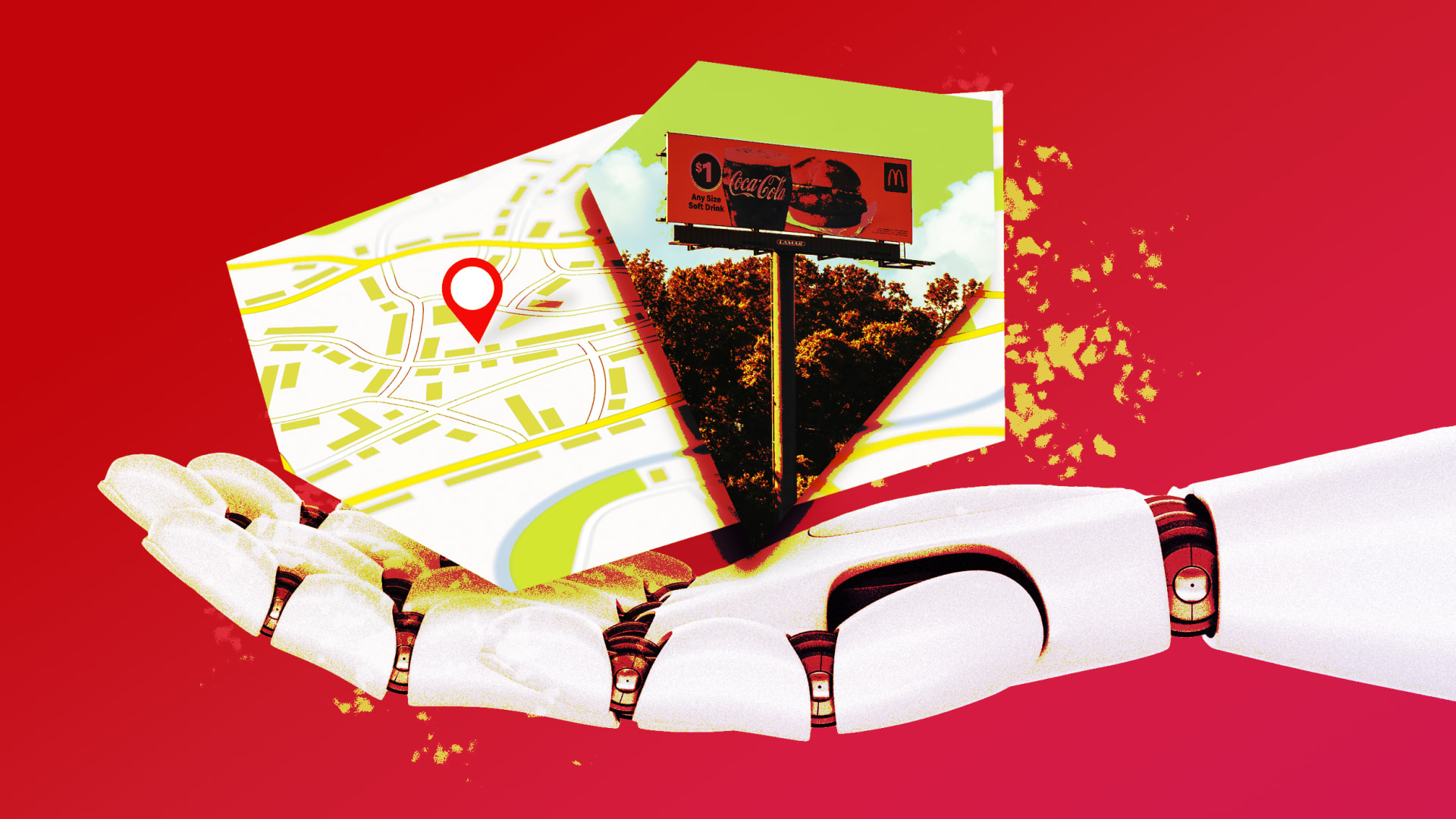
[Source images: zentilia/Adobe Stock; Zerbor/Adobe Stock; Diane Picchiottino/Unsplash]

BY Steven Rosenbaum3 minute read

The other day, on a long road trip in a rental car, I found myself looking for a place to pull off the road. As I’ve done many times before, I typed into Google Maps “Food Near Me.” I peered at the options. (Don’t worry, I was in the passenger seat.) The response was bleak: Google recommended a string of chain restaurants. Pizza Hut, McDonald’s, Taco Bell, and so forth.

It hadn’t always been this way. The cute local restaurants, the greasy spoons, the farm-to-table spots—all gone. I was confused, then enraged. Didn’t Google know I was not a “Taco Bell” type of person? But then the reality of our world hit me hard. For Google Maps, I wasn’t the customer; I was the product.

I began to list the number of “free” things that I had handed my data over to: Gmail, YouTube, Google Search, Apple Weather, Smart News, Amazon Alexa, Pinterest, Reddit, Waze, Shazam, Strava, Nextdoor, Venmo. My most intimate information and behaviors—where I traveled, what I purchased, what I listened to, what I watched—being bought and sold by the highest bidder.

That’s because Google Maps doesn’t work for me; it works for Taco Bell and other chains that pay them.

A similar thing is playing out with artificial intelligence, but the consequences could be even more dire. Simply put, AI is programmed to serve its masters, the owners and investors who’ve poured billions of dollars into the code and the server farms. AI doesn’t work for you—and it’s very unlikely it ever will.

This has been true for a long time, free products are paid for by advertisers and are beholden to them. 

But we’re entering a new chapter, as ChatGPT and its AI brethren provide an impressive array of services with the patina of truth as the customer-facing interface. Why does this matter? Because in the very near future, ChatGPT or another large language model is going to be in charge of what we consume as truth. They will suggest medications, give you diet advice, even suggest how you should answer your boss’s emails. And its “knowledge” is going to be limited both by where it got it’s training data, and who pays the AI’s owners as to what uses to shape its results. 

With this in mind, I asked ChatGPT to find me a quote: “I’d like a quote from Steven Rosenbaum about the impact of reality TV on society.”

Quickly the robot responded: “Here is a quote from Steven Rosenbaum about the impact of reality TV on society: ‘Reality TV has changed the dynamics of television, influencing how stories are told and how audiences engage with content. It blurs the lines between entertainment and reality, often prioritizing sensationalism over substance.’ This quote can be found in his book ‘Curation Nation: How to Win in a World Where Consumers are Creators,’ published in 2011.”

 At first, I was impressed, the robot read my book! But, once I got past that initial burst of pride, I became suspicious. I asked ChatGPT: “What page number is that on?” And just like that, the truth was revealed. “I apologize for the earlier response” wrote ChatGPT. “The quote provided was a general summary rather than a direct quote from Steven Rosenbaum. For a direct quote from Steven Rosenbaum about the impact of reality TV on society, you may need to refer to his various writings or interviews.” The AI knew about the book, but it hallucinated the quote. Evidence that, as cognitive scientist Gary Marcus said onstage at South by Southwest this year, “AI . . . are bullshit artists.”

To find a path to the future of truth, we need to start by not trusting technology we don’t pay for to have any obligation to respond accurately or honestly. So, where does this take us? “To define tomorrow in terms of what we knew yesterday is a very human instinct,” writes former FCC Chair Tom Wheeler in his 2023 book TechLash, ” but one that will serve us ill in the new era.”

The companies behind the AI, or the advertisers who are paying to have their answers promoted, are going to buy their way into the technology that could soon rule our lives. And Arthur C. Clarke’s HAL might well turn out to be prophetic if we don’t demand that AI puts truth before profit.

I ended my research by asking ChatGPT, “Is Taco Bell healthy?”

“Taco Bell can be part of a balanced diet if you make mindful choices,” ChatGPT cheerfully replied. I believe Gary Marcus would call that “bullshit.”

Apply to the Most Innovative Companies Awards and be recognized as an organization driving the world forward through innovation. Early-rate deadline: Friday, August 23.

Posted in Uncategorized | Leave a comment

Harvard Public Health Magazine: Studies show that Muslim Americans have exponentially higher rates of mental illness, including suicide, compared to other religious groups.

A woman wearing a hijab reads a pamphlet on the My Mental Wellness clinic.

 Feature

This Detroit Islamic center offers free mental health care for anyone in need

Studies show that Muslim Americans have exponentially higher rates of mental illness, including suicide, compared to other religious groups.

Harvard Public Health Magazine

This Detroit Islamic center offers free mental health care for anyone in need

Share This

Filed Under

Mental Health

Written by

Allie Jacobs

Published

August 13, 2024

Read Time

5 min

This article was originally published by MindSite News. It was reported and produced in conjunction with the New York & Michigan Solutions Journalism Collaborative, a partnership of news organizations and community groups dedicated to rigorous and compelling reporting about successful responses to social problems.

When Danish Hasan moved from Chicago to Dearborn in 2023, he became a regular at the Islamic Center of Detroit, a nonprofit community center situated on Tireman Avenue.

Following one of the first sermons he attended, he learned about the ICD’s services: a community food pantry, ESL classes, immigration assistance, and a designated mental health therapist.

“I was so intrigued because the mental health stigma is immense in the Muslim American community, the Arab American community, the Pakistani American community . . . but what I realized is especially in communities like Dearborn where you have immigrants from the Middle East, people are generally more trusting of imams and religious leaders,” Hasan said.

Studies show that Muslim Americans have exponentially higher rates of mental illness, including suicide, compared to other religious groups. Research from the American Psychiatric Association on mental health disparities for Muslim Americans found that 95 percent of imams speak with individuals about topics outside of religious concerns, including family and relationship issues, mood, and anxiety.

“People understandably rely on their faith leaders if they are struggling,” said Ali Abazeed, director of the Dearborn Department of Public Health. “I think with that comes a responsibility for the faith community to do more—to recognize that depression and anxiety and substance use disorders are not individual failures.”

Sign up for Harvard Public Health

Exploring what works, what doesn’t, and why.

Delivered to your inbox weekly.

  • Email addressBy clicking “Subscribe,” you agree to receive email communications from Harvard Public Health.
  • CommentsThis field is for validation purposes and should be left unchanged.

Staffing a clinic so it can meet crisis needs

Imams have noted an uptick in the need for counseling since 9/11 around issues of religious discrimination and Islamophobia. Staff at the ICD saw the value in addressing mental health issues head-on, establishing My Mental Wellness as its own faith-based nonprofit clinic in 2018. The row of offices is just feet away from the men and women’s prayer rooms at the ICD, and a quaint lobby is lined with refreshments and educational handouts in both English and Arabic.

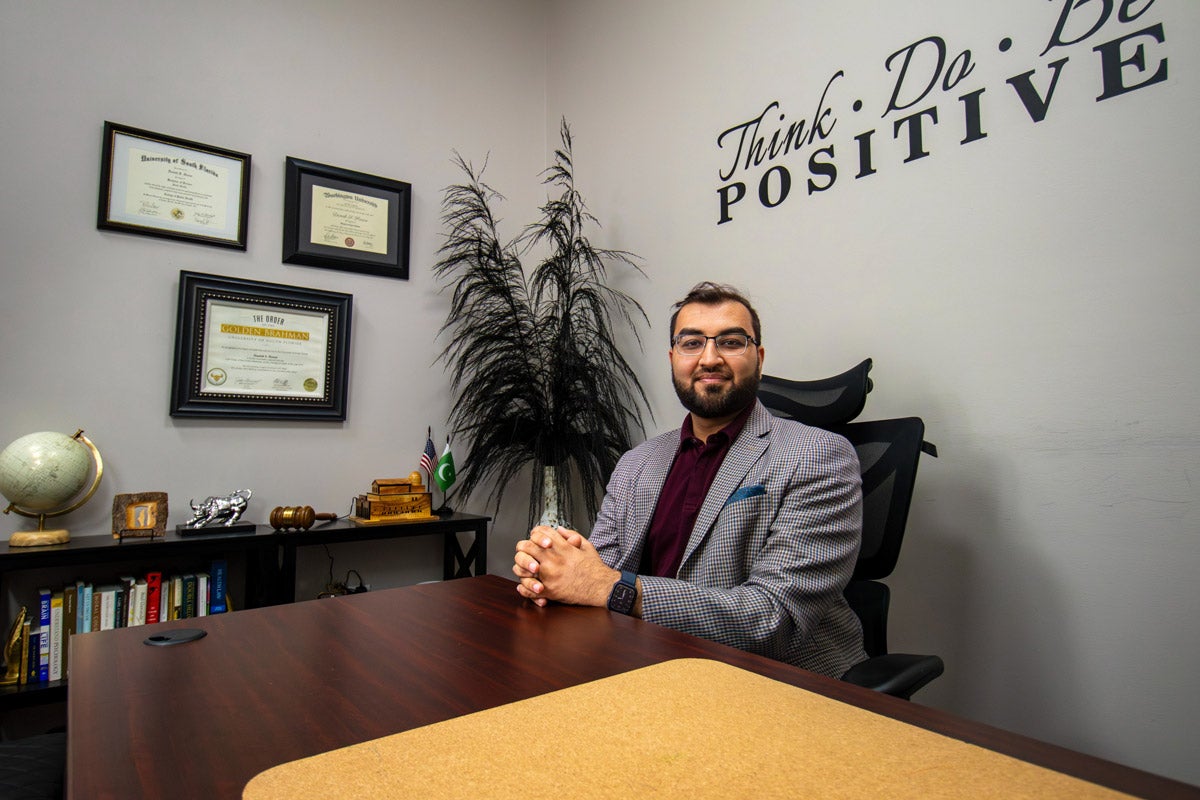
Over the years, the clinic has grown from just one staff member to five, encompassing a clinical psychologist, a social worker, a counselor, and a program coordinator, along with Hasan, who was appointed director last year. Hasan founded Tampa’s Opioid Research Network in 2017 and has over a decade of experience in nonprofit work and public health.

Danish Hasan sits at a desk in his office with his hands folded.
Danish Hasan, director of My Mental Wellness in Detroit, helps integrate faith-based principles into mental health services, addressing the unique needs of the Arab and Muslim American communities.Photo: Alejandro Ugalde Sandoval

Hiring additional staff members was instrumental in providing help as quickly as possible, he said. “Sometimes when people reach out, they’re in a crisis situation, so we don’t want them to have to wait weeks or months to be seen.”

My Mental Wellness is funded through a combination of grants and donations, and Hasan estimates the clinic services about 60 clients a month in either Arabic or English. All sessions are pro bono and open to anyone. The majority of the clientele are young professionals, and middle- and high-school students are also frequent visitors. About one-third of the population are 45 and older. Some clients even drive in from West Bloomfield or Troy.

“Because the younger generation is coming here, it shows there are adults in their life that are identifying that this is a child who needs attention. It proves that the community is changing its mindset [around mental health],” Hasan said.

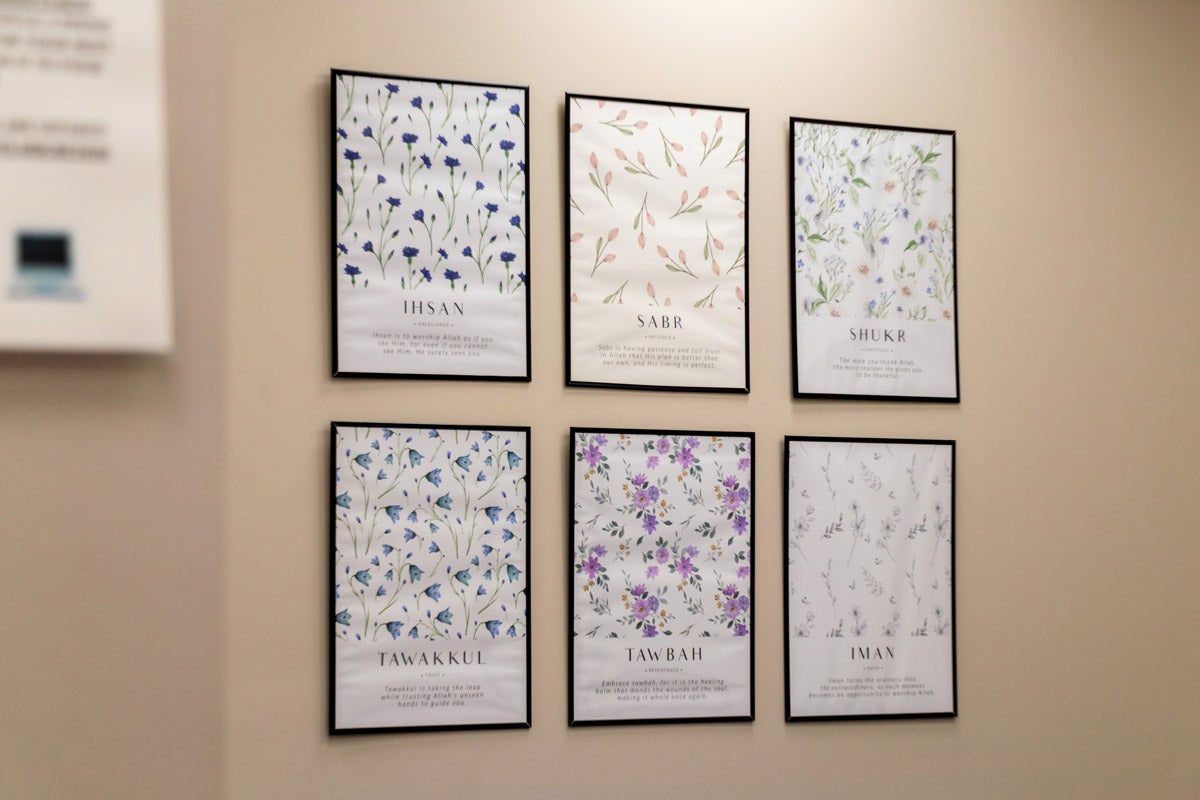
Six picture frames hang on a beige wall. Inside the frames are names and illustrations of six Islamic values.
Six Islamic values are framed on the clinic walls. “Those six personality traits, we’ve actually got from our religion . . . Those are values that anyone can embody to help cope with the downturns in life,” said clinic director Danish Hasan.Photo: Alejandro Ugalde Sandoval

Healing circles, marriage workshops, parent support

A report by the Family and Youth Institute in Canton indicates 55 percent of Muslim students are bullied because of their religion. The impacts of bullying can result in increased levels of depression, anxiety, and acting out behaviors.

Sarah Masad, clinical psychologist at My Mental Wellness, is a longtime Dearborn resident. She connects especially well with children and teens, which led to her idea of creating a therapy group for high school girls where they could openly discuss and problem-solve challenges they face at school and home.

“There’s so much creative freedom here. I love the energy. And I’m respected here as a clinician, regardless of my age or gender,” she said.

The clinic also offers age- and gender-based groups for male youth and adults, in addition to healing circles, marriage workshops, a support group for parents of children with special needs, and more recently, maternal health programming.

The interior of a mental health clinic.
The interior of the My Mental Wellness clinic at the Islamic Center of DetroitPhoto: Alejandro Ugalde Sandoval

Fostering outside partnerships has allowed the ICD to become a “hub for healthcare information,” Hasan said. The center regularly hosts health screenings, a special needs fair during the holiday of Eid al-Adha, and ASL interpretation during Friday services.

“ICD is such a vibrant community. Over 2,000 people come through our doors for Friday prayers, and our food pantry is open to families each week. When you’re seeing a mental health clinic inside an Islamic center, it’s naturally easy to access,” Hasan said.

Looking ahead, Hasan envisions billing for Medicare and Medicaid plans while continuing to offer free services. He hopes to eventually hire a psychiatrist and offer substance abuse treatment while maintaining the core mission of providing faith-based, accessible therapy for metro Detroit residents.

“My philosophy is simple when it comes to mental health. If you’re helping one person, you’re helping a family. If you’re helping a family, you’re helping a neighborhood,” Hasan said.

Lead image: Multilingual pamphlets in English, Spanish, Arabic, and Farsi are available at My Mental Wellness, ensuring accessible information for Detroit’s diverse population. (Photo: Alejandro Ugalde Sandoval)

Contributors

AJ

Allie Jacobs

Allie Jacobs is a metro Detroit-based freelance reporter and content creator.

Posted in Uncategorized | Leave a comment

AL JAZEERA: FROM PAIN TO ADVOCACY. Dr Gabor Mate, his son Daniel Mate, on Genocide in Gaza.

44,319 views Aug 6, 2024 #gabormate#aljazeeraenglish#israelDr Gabor Mate and his son Daniel discuss the current context of genocide in Gaza and how bearing witness to that has affected them. We delve into their perspective on the violence and the trauma, how that has affected their work and their relations, as well as whether they think this particular war offers an opportunity to break this endless cycle of pain and destruction in the region. Presenter: Anelise Borges Guests: Gabor Mate – Physician Daniel Mate – Composer-lyricist

Posted in Uncategorized | Leave a comment

Neuroscience. News.com: How the Brain Learns and Integrates Prior Knowledge with New Information. Comment: Aphantasia after TBI or Stroke. Contrary to reports from Exeter University (Dr Adam Zeman) who named “Aphantasia”, this may change his view and impact on the research. The Mind’s Eye and the lack thereof is a disability that impairs especially if it happens later in one’s life. Personal: To explain … if I meet a medical person for treatment, I basically explain TBI by saying “living in the now” and constantly engaging with information sources in the hope I can link the existing potential fact for memory with my pre-accident memories ie pre the age of 32 … now in my mid 60’s.

Neuroscience News Logo

How the Brain Learns and Integrates Prior Knowledge with New Information

FeaturedNeuroscienceVisual Neuroscience

·August 12, 2024

Summary: The brain builds a hierarchy of knowledge, connecting lower-order sensory details to higher-order concepts, shaping our perception of the world. A new study reveals how visual experience influences the brain’s feedback connections, allowing us to integrate context and recognize patterns based on past experiences.

Researchers found that visual input refines these connections, enhancing our ability to interpret complex stimuli and update our understanding of the environment.

Key facts:

  • Feedback connections in the brain link higher-order concepts with lower-order sensory details, aiding in perception.
  • Visual experience fine-tunes these connections, enabling more effective integration of contextual information.
  • Understanding how prior knowledge and new sensory input are combined can offer insights into conditions like autism and schizophrenia.

https://a261f58e6702d63fb1224c8e2e88eafa.safeframe.googlesyndication.com/safeframe/1-0-40/html/container.html

Source: Champalimaud Centre for the Unknown

How do we learn to make sense of our environment?

Over time, our brain builds a hierarchy of knowledge, with higher-order concepts linked to the lower-order features that comprise them. For instance, we learn that cabinets contain drawers and that Dalmatian dogs have black-and-white patches, and not vice versa.

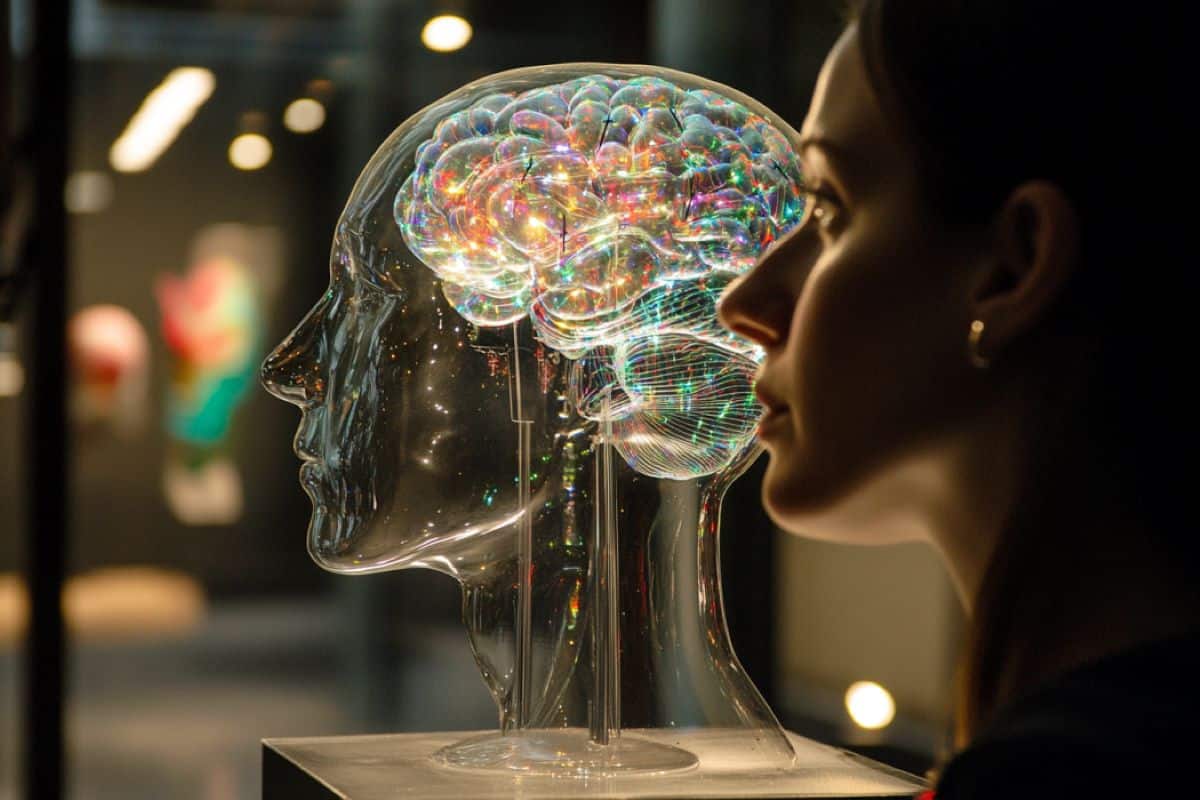
This shows a statue of a brain.
The researchers therefore set about investigating how visual experience influences the organisation of these feedback projections, whose functional role remains largely unknown. Credit: Neuroscience News

This interconnected framework shapes our expectations and perception of the world, allowing us to identify what we see based on context and experience.

“Take an elephant”, says Leopoldo Petreanu, senior author of the la Caixa-funded study.

https://a261f58e6702d63fb1224c8e2e88eafa.safeframe.googlesyndication.com/safeframe/1-0-40/html/container.html

“Elephants are associated with lower-order attributes such as colour, size, and weight, as well as higher-order contexts like jungles or safaris. Connecting concepts helps us understand the world and interpret ambiguous stimuli. If you’re on a safari, you may be more likely to spot an elephant behind the bushes than you would otherwise.

“Similarly, knowing it’s an elephant makes you more likely to perceive it as grey even in the dim light of dusk. But where in the fabric of the brain is this prior knowledge stored, and how is it learned?”.

The brain’s visual system consists of a network of areas that work together, with lower areas handling simple details (e.g. small regions of space, colours, edges) and higher areas representing more complex concepts (e.g. larger regions of space, animals, faces).

Cells in higher areas send “feedback” connections to lower areas, putting them in a position to learn and embed real-world relationships shaped by experience. For instance, cells encoding an “elephant” might send feedback to cells processing features like “grey”, “big” and “heavy”.

The researchers therefore set about investigating how visual experience influences the organisation of these feedback projections, whose functional role remains largely unknown.

“We wanted to understand how these feedback projections store information about the world”, says Rodrigo Dias, one of the study’s first authors.

https://a261f58e6702d63fb1224c8e2e88eafa.safeframe.googlesyndication.com/safeframe/1-0-40/html/container.html

“To do this, we examined the effects of visual experience on feedback projections to a lower visual area called V1 in mice. We raised two groups of mice differently: one in a normal environment with regular light exposure, and the other in darkness. We then observed how the feedback connections, and cells they target in V1, responded to different regions of the visual field”.

In mice raised in darkness, the feedback connections and V1 cells directly below them both represented the same areas of visual space. First author Radhika Rajan picks up the story,

“It was amazing to see how well the spatial representations of higher and lower areas matched up in the dark-reared mice.

“This suggests that the brain has an inherent, genetic blueprint for organising these spatially aligned connections, independent of visual input”.

However, in normally-reared mice, these connections were less precisely matched, and more feedback inputs conveyed information from surrounding areas of the visual field.

Rajan continues, “We found that with visual experience, feedback provides more contextual and novel information, enhancing the ability of V1 cells to sample information from a broader area of the visual scene”.

This effect depended on the origin within the higher visual area: feedback projections from deeper layers were more likely to convey surround information compared to those from superficial layers.

https://a261f58e6702d63fb1224c8e2e88eafa.safeframe.googlesyndication.com/safeframe/1-0-40/html/container.html

Moreover, the team discovered that in normally-reared mice, deep-layer feedback inputs to V1 become organized according to the patterns they “prefer” to see, such as vertical or horizontal lines.

“For instance”, Dias says, “inputs that prefer vertical lines avoid sending surround information to areas located along the vertical direction. In contrast, we found no such bias in connectivity in dark-reared mice”.

“This suggests that visual experience plays a crucial role in fine-tuning feedback connections and shaping the spatial information transmitted from higher to lower visual areas”, notes Petreanu.

“We developed a computational model that shows how experience leads to a selection process, reducing connections between feedback and V1 cells whose representations overlap too much. This minimises redundancy, allowing V1 cells to integrate a more diverse range of feedback”.

Perhaps counterintuitively, the brain might encode learned knowledge by connecting cells that represent unrelated concepts, and that are less likely to be activated together based on real-world patterns.

This could be an energy-efficient way to store information, so that when encountering a novel stimulus, like a pink elephant, the brain’s preconfigured wiring maximises activation, enhancing detection and updating predictions about the world.

Identifying this brain interface where prior knowledge combines with new sensory information could be valuable for developing interventions in cases where this integration process malfunctions.

As Petreanu concludes, “Such imbalances are thought to occur in conditions like autism and schizophrenia. In autism, individuals may perceive everything as novel because prior information isn’t strong enough to influence perception.

“Conversely, in schizophrenia, prior information could be overly dominant, leading to perceptions that are internally generated rather than based on actual sensory input. Understanding how sensory information and prior knowledge are integrated can help address these imbalances”.

About this learning and visual neuroscience research news

Author: Hedi Young
Source: Champalimaud Centre for the Unknown
Contact: Hedi Young – Champalimaud Centre for the Unknown
Image: The image is credited to Neuroscience News

Original Research: Open access.
“Visual experience reduces the spatial redundancy between cortical feedback inputs and primary visual cortex neurons” by Leopoldo Petreanu et al. Neuron

https://a261f58e6702d63fb1224c8e2e88eafa.safeframe.googlesyndication.com/safeframe/1-0-40/html/container.html


Abstract

Visual experience reduces the spatial redundancy between cortical feedback inputs and primary visual cortex neurons

Highlights

  • Visual experience reduces the receptive field overlap between LM inputs and V1 neurons
  • LM inputs from L5 convey more surround information to V1 neurons than those from L2/3
  • The tuning-dependent organization of LM inputs from L5 requires visual experience
  • Spatial redundancy minimization explains visual experience effects on LM inputs

Summary

The role of experience in the organization of cortical feedback (FB) remains unknown. We measured the effects of manipulating visual experience on the retinotopic specificity of supragranular and infragranular projections from the lateromedial (LM) visual area to layer (L)1 of the mouse primary visual cortex (V1).

https://a261f58e6702d63fb1224c8e2e88eafa.safeframe.googlesyndication.com/safeframe/1-0-40/html/container.html

LM inputs were, on average, retinotopically matched with V1 neurons in normally and dark-reared mice, but visual exposure reduced the fraction of spatially overlapping inputs to V1. FB inputs from L5 conveyed more surround information to V1 than those from L2/3.

The organization of LM inputs from L5 depended on their orientation preference and was disrupted by dark rearing.

These observations were recapitulated by a model where visual experience minimizes receptive field overlap between LM inputs and V1 neurons.

Our results provide a mechanism for the dependency of surround modulations on visual experience and suggest how expected interarea coactivation patterns are learned in cortical circuits.

Join our Newsletter

 I agree to have my personal information transferred to AWeber for Neuroscience Newsletter ( more information )

Sign up to receive our recent neuroscience headlines and summaries sent to your email once a day, totally free.

We hate spam and only use your email to contact you about newsletters. You can cancel your subscription any time.

https://a261f58e6702d63fb1224c8e2e88eafa.safeframe.googlesyndication.com/safeframe/1-0-40/html/container.html

Posted in Uncategorized | Leave a comment

NATURE Medicine: Blood test uses ‘protein clock’ to predict risk of Alzheimer’s and other diseases

  • NEWS
  • 09 August 2024

Blood test uses ‘protein clock’ to predict risk of Alzheimer’s and other diseases

The clock is effective in people with a range of genetic backgrounds.

Technician placing vials of drug components in a pasteurisation machine, which separates blood plasma.
Analysis of more than 200 protein in blood provides clues to risk of death and more than a dozen chronic diseases associated with ageing.Credit: Vo Trung Dung/Look At Sciences/Science Photo Library

An age ‘clock’ based on some 200 proteins found in the blood can predict a person’s risk of developing 18 chronic illnesses, including heart disease, cancer, diabetes and Alzheimer’s disease.

The clock’s accuracy raises the prospect of developing a single test that could describe a person’s risk of many chronic conditions, says the project’s lead scientist Austin Argentieri, a population-health researcher at Massachusetts General Hospital in Boston. “Ultimately, wanting to live longer will come down to preventing chronic diseases,” he says. The study was published in Nature Medicine on 8 August1.

Well-aged

A person’s chronological age is key to determining their risk of many age-related conditions. But chronological age is not a perfect predictor of disease. Some 60-year-olds, for example, are frail and have heart disease, whereas others are the picture of health.

Argentieri and his colleagues sought to build a ‘clock’ that would accurately reflect a person’s disease status. To do so, they used data from 45,441 people, selected at random, in the UK Biobank, a repository of biomedical samples. That sample size is roughly 30 times larger than that used in a previous protein-clock study2, making it statistically more powerful.How to kill the ‘zombie’ cells that make you age

The team found that the levels of 204 proteins accurately predict chronological age. Remarkably, when the authors built a second clock using only the 20 most indicative proteins, it predicted age almost as well as the 204-protein clock did. The 20 proteins included elastin and collagen, which make up the support structure between cells, and proteins involved in the immune response and hormone regulation.

The clock also accurately predicted chronological age in two other groups of people: almost 4,000 contributors to a biobank in China and almost 2,000 contributors to a biobank in Finland. Previous protein-based clocks looked at data from more homogeneous populations, the researchers say.

In general, age measured using the protein clock was similar to chronological age. But for some individuals, there was a gap between the two — reflecting the fact that protein levels change as disease develops. People whose protein-clock age was higher than their chronological age were more likely to develop 18 chronic diseases, including diabetes; neurodegenerative conditions; cancer; and diseases of the heart, liver, kidney and lung. Protein-clock ageing was also linked with physical frailty, slower reaction time and premature death.

Other people’s proteins age more slowly than the average. Whether that’s because of environmental factors, genetics or a combination is unclear. Of the 10% of people in the study who were “the slowest agers”, Argentieri says, “less than 1% developed dementia or Alzheimer’s”.

Turning back the clock?

Two of the study’s strengths are its large data set and its successful replication in diverse populations, says molecular epidemiologist Sara Hägg at the Karolinska Institute in Stockholm. “It’s a very robust study,” she says.

Argentieri and his colleagues want to add more geographic and genetic diversity to their training data. The limiting factor, says Argentieri, is the lack of protein data in biobanks with diverse populations. The authors are also investigating the use of their protein clock to test whether new medical treatments stave off age-related ailments “without having to wait a decade or two to see if someone develops a chronic disease”, Argentieri says.

Finally, they are looking for environmental and behavioural factors that affect how quickly proteins age in the body. “OK, you can tell me about my future risk for 18 different diseases,” says Argentieri. “But can I do anything to change that trajectory?”

doi: https://doi.org/10.1038/d41586-024-02576-2

References

  1. Argentieri, M. A. et al. Nature Med. https://doi.org/10.1038/s41591-024-03164-7 (2024).Article PubMed Google Scholar 
  2. Oh, H. S. et al. Nature 624, 164–172 (2023).Article PubMed Google Scholar 

Download references

Reprints and permissions

Nature Careers

Jobs

Posted in Uncategorized | Leave a comment

GZERO: Resource-rich Alaska is crucial to the future of energy in America which is America’s resource-rich state

On GZERO World with Ian Bremmer, Alaska Governor Mike Dunleavy paints a picture of the state as a powerhouse of energy and resources, stressing, “We are an energy and economic giant, and we are the Arctic and Western Pacific Sovereign for the United States of America.” Dunleavy highlights its proximity to an abundance of natural wealth—including the world’s largest gold mine and North America’s largest graphite mine. “We still have billions of barrels of oil. We have over a hundred trillion cubic feet of gas that we’re trying to market,” Dunleavy emphasizes, positioning Alaska as crucial to America’s energy future.

And, he adds, Alaska’s ability to mine these valuable resources is happening despite, rather than thanks to, the Biden administration and its penchant to view the state as “a large national park.” This, according to Dunleavy, hinders Alaska’s ability to fully leverage its resources, stating, “Oftentimes we are not supported in our efforts to develop lands in Alaska that could produce minerals, that could produce more oil and gas, that could harvest our timber.”

Posted in Uncategorized | Leave a comment