Welcome back to the China In Eurasia briefing, an RFE/RL newsletter tracking China’s resurgent influence from Eastern Europe to Central Asia.I’m RFE/RL correspondent Reid Standish and here’s what I’m following right now.
Russian Deputy Prime Minister Tatyana Golikova said that 48,000 Chinese students are studying in Russia in the 2023-2024 academic year, an increase of almost 10,000 students compared to the previous year.
Golikova also said that more than 16,000 Russian students were studying in Chinese universities.
The rising figures are the fruits of multiple new agreements in recent years between Beijing and Moscow to increase the number of their students at each other’s universities at a time when the numbers of Chinese and Russian students studying in the United States is declining.
French prosecutors are due to decide today whether to charge Pavel Durov, Telegram’s chief executive, with cybercrime offences. So what? Durov is a 39-year-old Russian-born billionaire and free-speech absolutist who runs one of the world’s biggest messaging apps.His arrest on Saturday, after landing in a private jet at Le Bourget airport outside Paris, is the most drastic national action yet taken against a social media boss.
On Monday, French prosecutors said Durov’s arrest was linked to an investigation into a dozen alleged offences, including complicity in spreading child abuse material (CSAM), complicity in spreading drugs and money laundering.Telegram said in a statement that “it is absurd to claim that a platform or its owner is responsible for abuse of that Platform”.Investigators have until today to decide whether to charge Durov or release him.
The Russian Elon.Durov’s Instagram is full of semi-naked pictures of him flexing his muscles, riding horses and quoting Marcus Aurelius (“What we do now echoes in eternity”). But behind the tech-bro swagger is a serious entrepreneur.
Durov was 22 when he founded Russia’s most popular social media network, VKontakte. Seven years later he fled Russia after refusing to hand the government data on Ukrainian users.
Telegram is now based in Dubai. While the platform hasn’t got much traction in the US and the UK, Telegram is the most popular social media platform in Russia and is used widely in India and the Middle East. Its 950 million users can either join public groups or message each other privately. Durev says it will be profitable “next year, if not this year” and is planning for an IPO.
No moderation. On Sunday, Telegram said it “abides by EU laws” and that “its moderation is within industry standards”. But the site’s FAQs tell a different story. While illegal content is technically banned from Telegram’s public channels, the company declares it will not moderate private chats in any way.
No guarantee of privacy. Unlike Signal or Whatsapp, Telegram is not end-to-end encrypted, meaning that the platform could hand private messages to law enforcement if it wanted. But Durov has deliberately set up Telegram to prevent this from happening.Its data is hosted on servers in multiple jurisdictions, meaning a government agency would have to procure warrants from several countries to force access. The company boasts it has disclosed “0 bytes of user data to third parties, including governments.”Telegram’s focus on privacy has made it popular with pro-democracy activists and whistleblowers.But several expert reports have found it to be a significant hub of illegal activity, including child abuse material. “Telegram is another level,” Brian Fishman, Meta’s former anti-terrorism chief, wrote on Threads this week. “It has been the key hub for ISIS for a decade. It tolerates CSAM. It ignored reasonable law enforcement engagement for years. It’s not light content moderation. It’s a different approach entirely.”
What next? Free speech absolutists are framing Durov’s arrest as a sign of global censorship. Elon Musk agreed with another X user who posted: “It’s Telegram today. It’ll be X tomorrow.”Edward Snowden, the US whistleblower resident in Russia, said the arrest was part of a trend that would eventually target “literally every other platform for dissent.” Maria Butina, a Russian lawmaker who spent 15 months in a US prison for acting as an unregistered Russian agent, accused Europe of trying to seize control of Telegram. “Pavel Durov is a political prisoner – a victim of a witch-hunt by the West,” she said. Legal experts were more circumspect. Daphne Keller, director of platform regulation at the Stanford Cyber Policy centre, says the US – like France – has laws preventing platforms from hosting unencrypted CSAM or terrorist material. To Keller, Durov’s arrest is less like an attack on Musk or Mark Zuckerberg and more akin to the prosecution of Ross Ulbricht, the operator of the Silk Road dark web marketplace.
What’s more.Much about the French case against Durov remains unclear, including exactly what offences (if any) he might be charged with. Durov denies any wrongdoing, but the broad question is clear: is he a free speech martyr, or another cyber criminal in an expensive suit?
During his recent trip through Latin America, the prelate of Opus Dei, Monsignor Fernando Ocáriz, gave an interview to the Chilean newspaper El Mercurio, in which he spoke about various topics, such as the role of women, the reform ordered by Pope Francis, and a response to those who consider Opus Dei to be “conservative, powerful and secretive.”
“Everyone can have their own opinions and reasons for evaluating reality. If some people perceive it that way, it will be because there is something objective and/or subjective that can cause that impression,” said the third successor of St. Josemaría Escrivá as the head of Opus Dei.
“Making the Work [Opus Dei] better known is, in part, the task of each member: to live one’s own vocation in an authentic way. It is something great and wonderful, although I understand that a perspective of faith is required to understand it in depth,” the prelate added.
“However, I think that, on the human level, those who know Opus Dei up close will be able to perceive normal people, with virtues and defects. I would like us to be known as joyful, simple, and serene people, peaceful, with whom it is easy to make friends, people with an open and understanding mentality,” he continued.
Ocáriz then expressed his desire that “the variety of the faithful of Opus Dei be recognized, and not only the few who acquire a certain public relevance. In this way, it would be seen that each one of them struggles to live the faith to the fullest, at the same time living with their own defects and trying to put their talents at the service of their family, their friends, and society.”
The prelate also stressed that “the main contribution of Opus Dei is to accompany the laity (98% of its members) so that they can be protagonists of the evangelizing mission of the Church in the midst of the world, one by one.”
The charism of Opus Dei and the reform of Pope Francis
After pointing out that the charism of Opus Dei aims to seek God and encounter Him “in ordinary life, at work, in the family, in the street,” Ocáriz recalled that St. Josemaría, the founder of the apostolate, said that “the ways of doing and saying things change, but the essence, the spirit, remains.”
“Knowing how to change, in this sense, is necessary to be faithful to a mission, but any change must be modeled from the essential, from that core that we cannot modify, because, like every charism, it is a gift from God,” he emphasized.
In July 2022, Pope Francis ordered a reform in Opus Dei, through the motu proprio Ad charisma tuendum (to protect the charism), with the reform of the statutes of the apostolate, work that is carried out in coordination with the Dicastery for the Clergy in the Vatican, in an atmosphere of “dialogue and trust,” as the prelate noted in June.
Vocations in Opus Dei
In the interview, El Mercurio asked Ocáriz if a 16-year-old is free to decide his vocation, to which the prelate replied: “Freedom is an essential requirement for any vocation. Incorporation into Opus Dei is only possible at 18 years of age, when one is of legal age.”
“If someone thinks he has a vocation, he can begin a process of discernment beforehand, but knowing that he is not yet a member of Opus Dei and always with the express permission of his parents,” the prelate continued.
“From the moment that one requests admission into the Work until his definitive incorporation, there are a series of formative stages, which last at least six or seven years.”
Every year, Ocáriz explained, “the person must express his desire to continue: it’s not an automatic process, but rather it requires personal discernment and freedom in a very profound way.”
When asked about the decline in vocations in Chile, the prelate commented that “in the most secularized countries, we share the same difficulties as the rest of the Church.”
“In places where the Church is growing,” Ocáriz continued, “Opus Dei is also growing. Specifically, the number of lay men and women who, inspired by St. Josemaría, wish to seek holiness and are open to having a family is increasing.”
The prelate then lamented the decrease in “people who embrace celibacy, a gift from God that perhaps is less understood today, even though it is so enriching for the Church.”
Regarding the way in which the apostolate deals with cases of abuse, Ocáriz stressed that “since 2013 there has been a protocol in Opus Dei for the protection of minors and vulnerable people, which formalizes prudent measures that have been in place in the Work for decades and incorporates the most recent regulations of the Church.”
In addition, “work is being done to create special channels for healing and resolution to accommodate people who want to be heard.”
Women in Opus Dei
Speaking about the role of women in the Church, and in Opus Dei specifically, Ocáriz emphasized that “in recent decades, women have been expanding their space in public life, enriching it with their irreplaceable contribution. In the Church, their role has grown at all levels, including with appointments to positions of responsibility within the Vatican Curia, for example.”
“In Opus Dei, women have been in the administration from the beginning, alongside St. Josemaría and his successors, and they are autonomous with respect to men in the leadership of their apostolates.”
“As the female presence in the administration of companies or institutions grows, more women in Opus Dei, like their contemporaries, are assuming positions of responsibility, and it is wonderful to see the scope that their service can provide,” the prelate observed.
This story was first published by ACI Prensa, CNA’s Spanish-language news partner. It has been translated and adapted by CNA.
Sufferers of myalgic encephalomyelitis, or ME, have long felt disregarded by some medical professionals who believed their pain and exhaustion to be a psychological disorder. More recently, patient activism, combined with new data on the underlying biology of the illness, has resulted in changes in treatment guidelines and a renewed focus on ME as a biologically grounded post-viral disease.
There is no official record of how many people in Ireland suffer from ME, but international prevalence rates suggest it affects between 10,000 and 19,000 people here. Most get the condition in the wake of an infection. The severity of the symptoms vary. Some people’s illness remits and relapses while others are continuously bedbound and racked with pain. There is, as yet, no cure and no reliable treatments. And there are very few doctors who specialise in the illness in this country.
Patients themselves have never been in doubt about the biological nature of the disease.
Moira Dillon from ME Advocates Ireland thinks that even the term “chronic fatigue syndrome” does sufferers a disservice. “ME is a multi-symptom system disease,” she says. “It’s primarily neurological. Symptoms may be cardiovascular, immunological, endocrinological, respiratory, hormonal, gastrointestinal.”
One of the main reasons they drew this conclusion was because most of the patients affected were women, nurses working in the hospital, who fell ill simultaneously
She thinks that newspapers often feature people with a milder form of the disease and that this leads to a misunderstanding of how serious it can be. “Those with very severe ME lie motionless, are tube fed, suffer multiple level pain, suffer periodic paralysis, blood pressure and heart issues, muscle weakness, numbness, cognitive dysfunction, visual difficulties, muscle spasms, multiple sensitivities, gut issues, sleep issues.They have head shakes and limb shakes and very disturbed sleep … The common cardinal characteristic is post exertional malaise.”
Many believe that progress in treating the disease has been hindered by an inaccurate belief that it’s a psychological disorder. Brian Hughes, professor of psychology in NUIG, explains how this happened: “The term [ME] was first popularised after an outbreak in the Royal Free Hospital of London in the 1950s when many people became ill. The doctors at the time concluded that there was some neurological basis to this illness and it was probably [caused by] some kind of viral infection … 15 years later, two psychiatrists published an article in the British Medical Journal that declared the outbreak to have been mass hysteria. [They] never interviewed any patients.
“One of the main reasons they drew this conclusion was because most of the patients affected were women, nurses working in the hospital, who fell ill simultaneously. And largely from this 1970s misogyny this entered the medical folklore. It’s a case study in how historically an illness has been psychologised when it’s actually physical. The treatments being offered as a result of that thinking, have fallen short.”
In the absence of HSE guidelines on ME, Irish medical professionals take their cue from the UK’s NICE (National Institute for Clinical Excellence) guidelines. Until 2021, those guidelines recommended graded exercise therapy. This involves people being given programmes of increasing physical activity.
It’s now considered by many to be harmful for people with ME, whereas energy management, working within a patient’s reduced energy levels, is seen as preferable. The older guidelines were partly based on the now controversial PACE study on CBT and graded exercise therapy for ME, undertaken in the noughties by psychiatrists and psychologists with UK government funding. In recent years, researchers and patient advocates have reanalysed these findings.
People complain desperately of what they call ‘brain fog’, where they have cognitive issues
Tom Kindlon, an advocate and researcher with the Irish ME CFS Association, has written about this. “With the PACE study they started changing [criteria] when they didn’t get the results they wanted. We reanalysed [the data] and found that there was no increased level of recovery from the treatments. And it also showed no improvement in terms of improving work capacity.”
Tom Kindlon. Photograph: Alan Betson
The consequences were huge, says Kindlon. “Fifty per cent or more people report being made worse by graded exercise … Patients weren’t being listened to. It was also thought that there was no need to study the pathophysiology, or the aetiology of the condition, because [ME] was treatable with these non-pharmacological approaches. There’s been very litte biologic research funded in the UK. Things are gradually improving now. There have been more papers on long Covid than in the whole history of MECFS.”
Long Covid has been a “game-changer”, says Hughes.“It has debilitated so many frontline healthcare workers, people who know a lot about medicine and how diseases work. They have lingering symptoms that are so similar to ME it has led some people to conclude that it actually is ME.And these doctors are not fooled by traditional medical folklore that psychotherapy will do the trick. [Covid] has bizarrely clarified to the world that ME is not in the head, that there’s a viral pathological basis for it.”
Biological markers for ME have also been discovered. Prof Douglas Kell, a biochemist working in Liverpool University and Prof Resia Pretorius at University Stellenbosch have found, after an earlier study on Long Covid, a markedly increased incidence of microclots in people with ME. “Ten times more in MECFS people than in the healthy controls,” says Kell.
Dr William Weir, an infectious diseases expert who advised on the new NICE guidelines on ME, explains a “probable pathological model”. It typically starts with some form of infection, he says. Some people “in addition to responding immunologically to the bug that has infected them, they also sadly produce antibodies against their own tissues. They attach [to large blood vessels] and attract an inflammatory response, which means that they get cloaked in a small amount of blood clots, and they break off. That’s how those blood clots are formed.
“Those microscopic blood clots obstruct the circulation in the capillaries … The flow of oxygen in the red cells to muscles, in particular, is reduced, which considerably impairs that person’s energy output. The same principle applies in the brain … People complain desperately of what they call ‘brain fog’, where they have cognitive issues … It also explains why they have autonomic problems [with] their blood pressure, body temperature, heart rate, bowel motility and things like this.”
Some Long Covid and ME patients have travelled to clinics in Europe to get “apheresis” treatments, where the patient’s blood is filtered to remove these clots. Weir believes this can help some patients, though he doesn’t believe it can be a permanent cure. Kell would also like to see trials into anticoagulation treatments for ME and Long Covid patients. Others aren’t as confident that abnormal clotting explain the symptoms in ME or Long Covid.
Dr James O’Donnell, director of vascular biology at the RCSI, was involved with the Irish Covid-19 Vasculopathy Study. He and his colleagues discovered “sustained clotting activation” in 25 per cent of convalescent patients, but, he says, “It remains unclear whether this ongoing clotting activation that we and others are seeing plays any direct role in the symptoms associated with Long Covid syndrome”.
He notes that anticoagulation drugs can be dangerous for patients. “Consequently, before blood thinning treatments are introduced for patients with Long Covid, we need to be sure that we are not doing more harm than good.”
Patient advocates such as Moira Dillon and Tom Kindlon think much more research is needed into ME specifically and they worry about vulnerable people spending money on expensive treatments that are unproven.
Although the underlying mechanism of ME is still poorly understood, the idea that it is a serious physical disorder is no longer controversial. In Ireland, the HSE is in the process of developing their first ever clinical guidelines on the disease. HSE national clinical adviser Dr Ciara Martin chairs a multidisciplinary group of clinicians and patient representatives devising these guidelines and she hopes to see it integrated into the training of medical professionals in time. It’s too early to get much detail on this but it will do one key thing, she says. “It will establish ME as a biological illness. That has always been the concern of people with ME, that old fashioned stigma that it was a psychological one.”
Tom Kindlon, advocate and researcher with the Irish MECFS Association. Photograph: Alan Betson/The Irish Times
Tom Kindlon from the Irish MECFS Association, first became sick with ME after getting an infection in 1989 as a teenager. “I had muscle and joint pains of various sorts. Then in college after one of the exams I got very ill and I had to take a year off. I was trying to … exercise myself better. That’s the sort of advice that I had. I struggled on with lots of sore throats and swollen glands. Then I started developing bowel symptoms.”
When did he discover it was ME? “I managed to get an appointment with a consultant in the Blackrock clinic, Dr Austin Darragh, a well-known doctor on the Gay Byrne Show. He said I was a classic case of post viral syndrome or chronic fatigue syndrome or ME. I was very severe. I was 22. I was bed bound. They had to wash me in the bed and bring food to the bed. For the first years walking a few steps to the bathroom I would break out in a sweat.
“Initially, I had very little concentration. I’d been a bright guy. I studied at Trinity College and had points to study medicine and all I could really cope with were comics — Beano and Dandy — I’d read for five or 10 minutes and then rest for 50. Even a short five or 10-minute conversation would wipe me out. With different approaches and with energy management, I improved a bit. My cognitive ability improved but my physical stamina was still very severely affected.”
What’s his life like now?
“I need a wheelchair if I have to go any distance. I still have to spend a lot of the day lying down … I get headaches … I have better control of my life but I still live with my parents. I’m 50. I’ve had no relationships. I was too ill to have anything like that. No jobs. It’s really had a huge effect on my life.”
For a long time, he says, there was a stigma around the illness and he knows people who’ve been disbelieved by doctors and family members. “Marriages break up. People struggle to get disability payments. I had a doctor who said when I’d been ill for 15 years, “Are you still sick?”
Alan is very, very sick. He can barely talk. He is at a stage where he can say a couple of words maybe a couple of times a week if it’s a good week
Rosanna cares for her husband Alan who has very severe ME. She is 56 and Alan is 67. They met late in life. Rosanna is Swedish, but she has some County Down in her accent. When they met, Alan had a demanding job, “but he was also high achiever in terms of sports, particularly golf and running, and would probably have pushed on, managing it and not accepting being tired.”
In retrospect, she thinks he’d been ill for some time. “He used to spend all of Sunday afternoons reading the papers, which I thought was extremely civilised, but I think in hindsight that was him ‘pacing’. To this day I find painkillers everywhere, in his golf bag, in his office drawers, in his pockets, in his carry-on bags, everywhere. That’s not normal. In 2010, he started going to the doctors for investigation and it went downhill so that by mid-2012, he was completely bedridden. That makes it just over ten years in bed.”
When I ask how “worn out” he is, she corrects me.
“He’s not worn out. Alan is very, very sick. He can barely talk. He is at a stage where he can say a couple of words maybe a couple of times a week if it’s a good week. He can eat mashed or blended food. The key for him is that it’s fast because he can only sit propped up with pillows in bed for so many minutes. He is still able to walk, supervised, to the en suite to go to the bathroom. On a good day he can have a quick shower. He cannot wash his hair. He can hardly tolerate someone being in the room. We’re lucky he can tolerate soft light. He’s completely unable to tolerate any sound.”
How does that affect life for her? “We’re lucky that I could afford to stop working [she was a vet] and we’re lucky we have an integrated garage which is also a makeshift gym where I can work out at five o’clock in the morning. That’s a reasonably safe time. It’s also my kitchen where I blend his food because he can’t tolerate the sound of the blender. I’m constantly walking around on my tiptoes. You let go of a cupboard door and it bangs and has the potential to cause him to crash and the fear that it may cause further decline … When he’s crashing, he has tremors which are really scary. That was one of the things at the start where we went to get him checked out but each trip to the A&E made it worse. We have to be our own doctors.”
She feels like they’ve been “gaslit” by many of the doctors they’ve encountered. “I’ve had doctors saying to me, ‘Well, if Alan doesn’t want to help himself, I cannot help him.’ I’ve also had the doctor come out and say, ‘The fact that he thinks he can walk to the en suite but not in the rest of the house means it’s clearly in his mind.’ What he didn’t understand was that Alan was preserving energy for the bare essentials.”
One doctor treated him with the now controversial graded exercise regime, where the patient is encouraged to push themselves physically. “He was to read the headlines and to do that for five minutes. And then we forced him to do it for 10 minutes the next week. He could maybe at that stage also walk around the block and then two weeks later he would try to walk a block, and a little bit further.’”
She believes this caused his condition to deteriorate. “He now needs constant care … I do everything for Alan … He can’t read. He can’t watch to television. He can’t listen to music. Most of my day is spent checking on him without disturbing him … I can look at Alan and point at the window and I’m asking if it should be closed or left open … We have developed that skill to communicate without words … We are very fortunate because we are extremely close and I’m very grateful we have each other and are deeply in love.”
A few days later Rosanna asks to talk to me again because she doesn’t think she quite conveyed how terrible the disease is. “I’ve heard people use phrases like ‘buried alive’ or ‘living death’. It’s a pain and a suffering like we’ve never experienced … I would pride myself on having perseverance, but I have nothing on these people. They are superheroes, to live day-in-day-out like that … Try something: take 20 minutes, lay flat on your back in the bed. Stare up at the ceiling. Don’t move. Don’t fall asleep … I can’t do it … You ask what they are going to do if they get well and it’s simple things … Alan would like to sit by the window and look outside and have chats with me. He wants to listen to music. He used to love his music now he can’t tolerate music. These are the small things they want.”
Una Hearne: ‘They call it fatigue, but actually that’s the wrong word for it.’
Una Hearne first experienced ME/CFS in her teens. She speaks eloquently about her situation but from time to time apologises for a lack of coherence that I don’t notice. “One of the symptoms is cognitive dysfunction,” she says. “I had glandular fever … at age 16 and never really recovered from that properly. In my 20s, I was not able to work. I was basically on the dole … I recovered to about 50 per cent energy and so I worked for my 30s and 40s. I relapsed at the end of 2015 and had to give up work … The cardinal symptom is abnormal energy levels.
“They call it fatigue, but actually that’s the wrong word for it. It’s like if you have a battery and it won’t recharge fully. I estimate I have 10 to 15 per cent of normal energy now. [I] get exhausted very quickly and it takes me a lot longer to recover … My symptoms will get worse the more exhausted I am. Pain, orthostatic intolerance, flu like symptoms, sleep disruption and more.”
What was her experience of the medical profession like? “In the 1980s nobody really believed ME/CFS was a real, physical illness. It was kind of like, ‘Oh, you’re hysterical dear.’ I knew what ME/CFS was because a friend of mine had got an article about the ‘Yuppie Flu’ and said, ‘This sounds like you.’ [But] my doctor said, ‘Una that’s all nonsense. It’s psychological.’ I learned to hide it. When I was working full time, I was sleeping most of the time outside work.”
Why does she think she relapsed? “I was working as a life coach and trainer and I absolutely loved my work. The problem is, if you overdo things with ME/CFS, you crash, and I had been pushing through exhaustion for years … That’s a disaster with ME/CFS. My body just gave up at the end of 2015. The first thing I noticed was problems with my eyes. I went and had them checked out. They were perfect. And the doctor said, ‘It’s probably neurological.’ I knew what that meant.”
Una Hearne.
She thinks that in a society obsessed with productivity, the idea of someone needing rest and recuperation is viewed as morally suspect. She’s in an ME/CFS writers group called Pillow Writer “because we all attend online meetings from bed or sofa. We talk all the time about having to suddenly reorganise your worldview. You’ve got to find another way to be in the world.”
What is her life like at the moment?
“I spend 20 hours a day lying down. I have four upright hours in the day. That includes sitting. So everything has to happen in those four hours. The cognitive dysfunction, the longer I’m upright, the worst that gets. Pain will set in and get worse. Most of my energy would go on just feeding myself, keeping myself and the house clean, the daily basics of living.
“I end up with about six to eight hours per week which I call disposable time, like disposable income. All work, all socialising, all hobbies, happens in those six to eight hours. It’s very, very limited in one way but on the other hand, you learn what’s really important and to put your energy into what is really of value to you.”
New Digital Cognitive Tests Spot Dementia Warning Signs
As the first effective Alzheimer’s drugs are adopted, companies are racing to bring accurate screening tests to market
Adam Piore
Digital cognitive tests, including one that involves drawing on a tablet, could soon be available to consumers. Image courtesy of Linus Health
This article was produced in partnership with the Davos Alzheimer’s Collaborative by Scientific American Custom Media, a division separate from the magazine’s board of editors.
Any primary care doctors have had a complicated relationship with tests designed to screen their patients for Alzheimer’s disease. Beyond recommending a few lifestyle changes—tweaks to diet, exercise and sleep most would recommend anyway—there was little they could do to help patients with a confirmed diagnosis.
As new drugs expand the options for treating and preventing Alzheimer’s, demand from older people worried about their mental fitness and seeking routine screening for Alzheimer’s and other dementia is expected to rise quickly. In anticipation, several commercial firms are racing to bring to market new digital screening tools that can detect warning signs that the disease could be developing. (Diagnostic tools, by contrast, are used to establish the presence of the disease, usually by detecting amyloid.) Many of these new screening tools use artificial-intelligence algorithms and can be administered by medical assistants without extensive training. They hold out the promise of inexpensive and noninvasive methods of screening people for Alzheimer’s.
“Dementia is the number-one fear of people over 55,” says David Bates, CEO of Boston-based Linus Health, a digital assessment company. “You have drug companies that are about to be advertising their drugs. And you’re going to have commercials and marketing stoking that fear to drive people to ask for the drug. So you’re going to have this onslaught of demand in the health system. Primary care doctors will not be able to meet that demand. They’re going to get overwhelmed.”
PET imaging and tests of cerebrospinal fluid, which document the presence of amyloid beta plaques in the brain, are currently the gold standard for providing a diagnosis of Alzheimer’s. But these tests are too expensive and cumbersome to administer to meet the anticipated need for Alzheimer’s screening in large populations. Although blood tests that can flag the buildup of amyloid are beginning to emerge from the lab, they are not yet widely available.
For years, primary care physicians have instead relied on pen-and-paper cognitive tests to screen patients with mild cognitive impairment, but these tests can take 20 to 30 minutes to complete and require a trained administrator. The “reality is primary care doctors don’t have that time,” says Brad O’Connor, CEO of CogState in Australia.
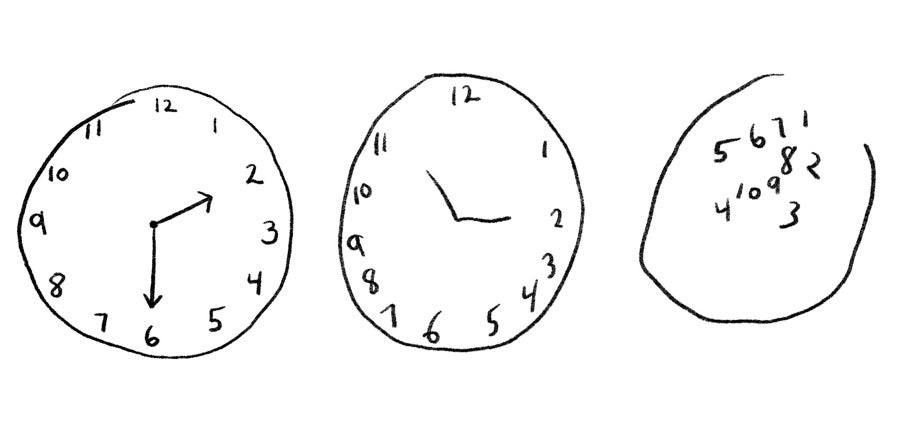
A test sold by Linus Health combines an established pen-and-paper test based on a simple drawing test with added artificial intelligence to make it easier to administer and more powerfully analytic.In the test, a patient is asked to draw a clock with the clock hands indicating a specific time. The task engages disparate areas of the brain involved in motor, visual, analytical and other functions that are often impaired by dementia.
As Alzheimer’s progresses, patients lose their ability determine how to draw a clock with its hands set to a specific time.Image courtesy of Linus Health
In the original version of the test, the patient draws the clock on a piece of paper, and a trained observer evaluates the results and refers the patient on for further testing. Linus’s version, originally developed at MIT and commercialized by a company called Digital Cognition Technologies that Linus later acquired, has the patient draw the clock using a stylus on the iPad while an AI algorithm tracks the movement of the hands, measuring a wide array of variables, including the time it takes to respond to instructions, the size and characteristics of the drawing itself, and the way the patient moves their hands. The AI algorithm was trained on thousands of patients with dementia of varying severity, as well as healthy people. The data were gathered from local clinics and longitudinal epidemiological studies, including both the Framingham Heart Study and a Rush Hospital study documenting the health of primarily minority populations.
In a study, scientists from Linus and Harvard Medical School found that they could detect signs of cognitive dysfunction in less than three minutes in patients who didn’t previously report impairment. The scientists checked each detection with PET scans, which can reliably identify buildup of amyloid plaque in the brain, a hallmark of Alzheimer’s. The paper was published in Neurology in 2021.
The assessment is simple enough to do in a primary care practice during an annual wellness visit, administered by a medical assistant with minimal training. The company has raised $64 million since its founding in 2019 and completed early testing of the product in 2023. The product is now being rolled out in the Indiana University Health System, at UMass Medical School, at Emory University and in about 50 small medical practices. It has so far been used on several thousand patients.
“We are not suggesting that this is the only cognitive assessment you should ever do, but it’s a really low-cost, noninvasive, easy assessment that will identify those first changes and get people at least on the pathway for assessment of the issues—and also conversely conclude this person is not at risk to decline in the next five years. Which really helps doctors with the ‘worried well,’ because they’re fine, but they take up a lot of healthcare resources.”
Several other firms are working on digital tests aimed at addressing this growing demand.
CogState plans to roll out Cognigram, in the U.S. early next year. It uses a virtual deck of playing cards, which can be displayed on a computer screen, to assess memory and cognition. The company has partnered with the Japanese drug maker Eisai, the makers of Leqembi, to get it into the hands of doctors.
CogState is perhaps best known for computer-based cognitive assessments designed to measure changes in cognitive function over time. Its Cogstate Brief Battery test, which is widely used in clinical trials, healthcare and academic institutions, uses the digital cards to establish a baseline in areas such as attention, visual learning, and working memory and then tracks changes over time through follow-up assessments. Cognigram, however, does not require a baseline digital assessment for its screening, which allows doctors to identify patients for further tests, says O’Connor. Instead, on its first use, the patient score is compared to an age-matched normative dataset. In subsequent tests, patient scores are compared to both the normative dataset and previous patient scores.
The test, which can be administered by a medical assistant in a doctor’s office or even done remotely from home, performed well in several studies, including one published last year in theJournal of Alzheimer’s Disease in December. It compared the performance of 4,871 cognitively unimpaired adults to that of 184 adults who met clinical criteria for mild cognitive impairment.
“It all sounds very simple,” says O’Connor, “but these tests have been proven to be really sensitive to the earlier stages associated with disease.”
Cognivue, based in Victor, New York, recently released a digital cognitive testing technology that first screens for potentially confounding factors like visual and motor impairments, then adjusts the test to account for these impediments, which otherwise can muddy the results. It does so by displaying a bunch of white dots on a black screen contained in a green, wedge-shaped outline. As the dots move in clockwise and counterclockwise directions, the patient is instructed to keep the dots within the green wedge by turning a knob that controls the position of the wedge.
To measure cognitive impairment, the Cognivue program asks patients to distinguish real words displayed on the screen from nonwords or to distinguish letters from random symbols. Other tests ask the test subject to distinguish between different shapes. The test increases in difficulty until the subject reaches the limits of their abilities, and uses AI algorithms to compare the subject’s performance to people with similar age, education levels and other demographic factors, evalutating performance in visual acuity, memory, executive function and other areas.
This article is part of The New Age of Alzheimer’s, a special report on the advances fueling hope for ending this devastating disease.
Learn more here about the innovation ecosystem that Davos Alzheimer’s Collaborative is building to speed breakthroughs and end Alzheimer’s disease. Explore the transforming landscape of Alzheimer’s in this special report.
Adam Piore is a freelance journalist based in New York.
The Lancet Journal of Psychiatry has released a seminal report on global youth mental health that shows what we are seeing in Irelsnd is happening on a global scale & the causes are increasingly unequal, precarious societies from neoliberal economics pic.twitter.com/KKkkE8jA5c
On the shoreline in Charleston, South Carolina, a major new museum has just opened to explore and mark the global and historical implications of the Atlantic slave trade. The International African American Museum, now open after more than 20 years in development, is dedicated to telling the interwoven narratives of the vast and devastating movement of people from Africa to North America, the harsh realities of slavery and its impact on the people and economy of a new nation, and the long-lasting ramifications of one of the worst injustices perpetrated on humankind.
[Photo: Sahar Coston-Hardy/Esto]
The museum’s location is an essential element of these connected stories. It’s built over the historic site of Gadsden’s Wharf, the landing point where an estimated 40% of people trafficked in the Atlantic slave trade landed in North America. The wharf and its role in this trade became the guiding light for the programming and design of the museum, which includes several galleries on the movement, treatment, and legacies of the people caught up in slavery, as well as a center where visitors can get guided help tracking their family genealogy.
[Photo: Sahar Coston-Hardy/Esto]
But using that historically significant site, and building the museum itself, almost didn’t happen. Curtis Moody is the founder of Moody Nolan, the largest Black-owned architecture firm in the U.S., and he’s been involved in the museum’s design from the very beginning. In the early 2000s, his firm won an international competition to take on the project, its first museum.
Problems emerged early and often. The museum went through a series of leadership changes, fundraising was difficult, and the project even went on a long hiatus at one point. The design changed again and again, and controversies arose over the original site. “A new director would come in and say, ‘I wouldn’t do it that way, I want X,’ and we’d start all over,” Moody says.
Subscribe to the Design Newsletter.The latest innovations in design brought to you every weekday
But the former 10-term mayor of Charleston, Joseph P. Riley Jr., ensured the project never died. “If it’s not for him, the project doesn’t happen, period,” Moody says.
Riley brought in a museum consultant, Ralph Appelbaum Associates (RAA), known for its work on the United States Holocaust Memorial Museum in Washington, D.C., among dozens of others. Archaeological consultants identified the historic location of Gadsden’s Wharf, which had been buried under a park. The original museum site down the road was abandoned in favor of the wharf. In what Moody says was an effort to boost the museum’s fundraising cachet, a more experienced museum designer, the architecture firm Pei Cobb Freed & Partners, was brought in to lead the redesign for the new location.
[Photo: Sahar Coston-Hardy/Esto]
Moody’s firm remained on board and worked closely with the new team’s leader, noted architect Harry Cobb. Moody says Cobb, who died in 2020, called for the new design to almost hover over the site of the wharf, touching the ground only minimally. “Harry did his diagram exactly the same footprint as mine, except his was twice as long because he didn’t want a two-story building,” Moody says. “He wanted it to be a background building to the site.”
The finished design is restrained, inspired by the boats that carried people across the ocean; it’s a long rectangular box that points out to the water, standing on a set of pillars and leaving much of the now-buried historic wharf site accessible below. The programming of the museum’s galleries reflects this connection to the site, according to Aki Carpenter, RAA’s chief creative officer.
[Photo: Sahar Coston-Hardy/Esto]
The entrance brings visitors into a long walkway, the “I Am Passage,” which is flanked by galleries exploring South Carolina’s colonial history and role in the slave trade, the present-day legacies of racial injustice, and, at the end of the museum that looks out over the ocean, a gallery focused specifically on the routes and stories of the Atlantic passage.
“It really brings forth the key themes that this is a site of memory, a site of conscience, a place of pride for people of African descent, a place of learning, and a new hub in Charleston,” Carpenter says. “We’ve worked on a lot of museums, and some of them do have the power of place, but in my personal experience, nothing like this one.”
[Photo: Sahar Coston-Hardy/Esto]
The landscape—designed by celebrated landscape artist Walter Hood and his design studio—also plays a key role in the museum’s mission. Gardens and ceremonial spaces surround the structure, as do more conceptual interventions that call out the site’s historic footprint. Bricks mark the outline of a storehouse where the arriving enslaved people were processed. A wooden boardwalk leads visitors between polished granite walls where kneeling figures emerge from the ground. A garden of planted dunes rises up beneath the building, evoking the sense that there is something underneath the hallowed ground.
[Photo: Sahar Coston-Hardy/Esto]
The standout element is a waterfront installation of life-size abstract images of people imprinted into the ground. Inspired by imagery abolitionists used to depict the inhumane conditions on the transport ships, the imprints are situated on the waterline and subject to the tides. “As the water ebbs and flows, the figures are revealed and concealed,” says Hood Design Studio design principal Paul Peters.
He says the landscape design was deliberately intended to reflect the site’s history and implications without the overt interpretive signage of an archaeological site. “The site frees us up from having to tell a specific story, and it allows it to be more speculative, and open to people’s interpretation,” he says.
[Photo: Sahar Coston-Hardy/Esto]
The exhibition designers see the site and the museum working in conjunction to illuminate a complicated history that spans centuries and continents. It’s also a history that has not been well taught, even in South Carolina, where much of the story takes place. Carpenter, a native of the state, sees the museum as a chance to fill a void. “A lot of what we think about when we’re making museums is often This is a moment for history to be set in stone, and to not take for granted what people may or may not know,” she says.
For Moody, who has worked on the design of this space for more than 20 years, seeing the museum open to the public at last is the end point of a long labor of love. “When we first took the project it wasn’t about how much fee we were going to get or anything other than this is an important project,” he says. “So we stuck to it.”
Apply to the Most Innovative Companies Awards and be recognized as an organization driving the world forward through innovation. Early-rate deadline: Friday, August 23.
One of the reasons I write to you each day is to arm you with the facts and analyses you need to respond to the garbage coming out of the Trump campaign and Trump’s Republican Party.
Today I want to talk to you about Social Security.
The trustees of Social Security — of which yours truly was once a member — say the program will be able to pay full benefits only until 2033. After that, Social Security will be able to dole out only roughly 77 percent of benefits due.
Trump has pledged to protect Social Security but hasn’t offered a plan for how to do that.
Instead, he is promising to repeal taxes on Social Security benefits.
This will not save Social Security. In fact, quite the opposite. Without the revenue from Social Security taxes, the Social Security trust fund will run out of money even sooner.
This has been the Republican goal for years: Social Security is one of the most popularand successful government programs ever created, not only helping retirees but also keeping 26 million people out of poverty.
Getting rid of Social Security will, in the minds of Republican strategists, open the way to getting rid of much else Americans depend on.
Why is Social Security running out of money? Not because so many boomers are retiring.
The Social Security trustees anticipated the boom in boomer retirements. This is why Social Security was amended back in 1983, to gradually increase the age for collecting full retirement benefits from 65 to 67. That change is helping finance the boomers’ retirement.
The real reason Social Security is running out of money is something the trustees never anticipated: how much total income is going to the top.
Had the pay of American workers kept up with the trend decades ago — as well as their growing productivity — their Social Security payments would have kept the program flush.
Yet income subject to the Social Security payroll tax is capped. No dollar of earnings above the cap is taxed. The cap in 2024 is $168,600.
So, as the rich have become far richer, more and more of the nation’s total income has escaped the Social Security payroll tax.
A CEO earning $20 million a year pays Social Security taxes on roughly 1 percent of their income, while a worker earning under the cap pays Social Security taxes on 100 percent of their income.
They both end up paying the same amount of money into the program. This isn’t fair.
The rise in the amount of income above the cap due to inequality has cost the Social Security Trust Fund reserve an estimated $1.4 trillion since 1983.
The solution is obvious: Scrap the cap and make the rich pay more in Social Security taxes.
One plan introduced by Democrats in Congress would eliminate the cap on earnings over $250,000 and also subject investment income to Social Security taxes.
It’s estimated that this would extend the solvency of Social Security for the next 75 years without raising taxes on 93 percent of American households.
Bottom line: Trump’s plan will destroy Social Security.
The Democrats’ plan will save it — and do so fairly.
If we want to ensure Social Security’s long-term future, and that working people can retire with dignity, we must make the wealthy pay their fair share.
Robert B. Reich is Chancellor’s Professor of Public Policy at the University of California at Berkeley and Senior Fellow at the Blum Center for Developing Economies, and writes at robertreich.substack.com. Reich served as Secretary of Labor in the Clinton administration, for which Time Magazine named him one of the ten most effective cabinet secretaries of the twentieth century. He has written fifteen books, including the best sellers “Aftershock”, “The Work of Nations,” and”Beyond Outrage,” and, his most recent, “The Common Good,” which is available in bookstores now. He is also a founding editor of the American Prospect magazine, chairman of Common Cause, a member of the American Academy of Arts and Sciences, and co-creator of the award-winning documentary, “Inequality For All.” He’s co-creator of the Netflix original documentary “Saving Capitalism,” which is streaming now.
Long, costly and no one goes to jail at the end. That, pretty much, is the public perception of tribunals of inquiry in the Irish system.
But it wasn’t always so. Ireland has had short (and cheap) inquiries in the past. In the early days of the State, a year was a long time to wait for a tribunal report, and one sat for just two hours.
In a neglected corner of her recent book Political Corruption in Ireland 1922-2010 (Manchester University Press), academic Elaine Byrne shines a welcome light on those early inquiries.
Between 1920 and 1930, there was an obsession with probity (ministers who were forced to sleep in their offices because of gunfire outside were asked to reimburse the £4 9s 6d it cost for their meals), but standards fell in successive years.
Here are four inquiries which describe the often uneasy relationship between the Irish and the letter of the law:
The strange case of the Wicklow gold prospectors (1935)
The Irish economy in 1935 was strictly controlled and regulated, with government licences, leases, export quotas and permits required for all manner of commercial activity. Seán Lemass, as Minister for Industry and Commerce, was the dominant economic figure.
Lemass granted a mining licence to Senator Michael Comyn and TD Bob Briscoe (both Fianna Fáil) covering 982 acres of land in Co Wicklow. He subsequently issued another licence for 2,000 acres nearby.
Comyn and Briscoe sub-let their lease to a UK mining company in return for £12,000 worth of shares and royalties on any gold extracted.The UK company planned to raise money on the stock market to fund its operations — a measure still seen as shady in the aftermath of the Wall Street crash of 1929.
Patrick McGilligan of Cumann na nGaedheal (later Fine Gael) was Lemass’s great tormentor.He had preceded him at Industry and Commerce and suspected that Lemass was favouring party colleagues. When he said as much in the Dáil, Lemass responded by instituting an inquiry.
The minutes of the inquiry are instructive. Lemass strongly believed that public representatives should be treated precisely the same as any other citizen. The notions of influence, the brokering of power, of implicit corruption, were foreign at that time.
The inquiry cleared Lemass of any wrongdoing, mostly on the basis that he did not benefit financially from the transactions