“The Power of Knowing” Alzheimers. Comment: Inquisitive about family history; 23andMe captured by attention. Found a great grand-aunt but as yet it is delicate and maybe I am as far as I will ever be in knowing more. 23andMe Blog

Skip To Main Content

23andMe Blog Home

Aug 6, 2024 – Health + Traits

The Power of Knowing

By Rebecca Jones

We all have a story or an accumulation of stories that make us who we are. It’s part of being human. It’s in our DNA. If those stories vanish, what are we then? 

Six Million Living with Alzheimer’s Disease
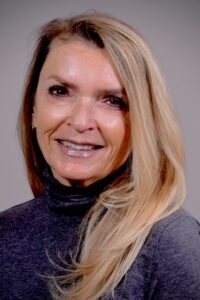
A photo of Rebecca Jones.

More than six million people in the United States live with Alzheimer’s disease. A condition that cruelly extinguishes memories one by one—everything from the memory of holding a child for the first time to the touch of a fleeting lost love or the bracing courage we felt when we stood up for ourselves. With Alzheimer’s disease, those memories vanish until you have no stories left. 

Not too long ago, I learned from a 23andMe genetic test that I carry the ?4 variant in the APOE gene, predisposing me toward late-onset Alzheimer’s disease.* Seeing “increased risk” in writing shook me, but it wasn’t surprising. Three of my aunts on my father’s side died of Alzheimer’s disease. After a series of follow-up visits with doctors, confirmatory testing, and then brain scans, I learned that I had early signs of Alzheimer’s disease. Soon after learning all this, I became part of a clinical trial and was among the first wave of patients treated with Eisai and Biogen’s newly approved drug, Leqembi.

My Story

I want to share my story because I believe we should all rethink how we approach genetic testing for Alzheimer’s disease or any disease. Knowledge is power. Learning early through a consumer genetic test alerted me to a risk I didn’t know about before I was symptomatic. It was information that my doctors could follow up on, and then, miraculously, there was a clinical trial for which I was a good candidate. If I’d waited until I was symptomatic, it might have been too late.

I’m a mother of four and grandmother of ten. Before I retired, I was a marketing manager for a pharmaceutical company focusing on oncology. Maybe that made me particularly ready to understand the importance of learning one’s genetic risk and navigating participation in a clinical trial.

New Treatments

For too long, the prognosis for people with Alzheimer’s was bleak. So much so that doctors recommended against learning of your genetic risk because, they reasoned, there was little you could do about it; learning of your risk would cause anxiety and stress. Research doesn’t support that, but more importantly, the options for people with an early diagnosis have changed. I’m hoping that attitudes about genetic testing, or new types of blood testing to identify those at risk or who may have early-stage Alzheimer’s, change as well. 

Learning of my risk and then getting a diagnosis spurred me to action. I studied up on new research, promising treatments, and interventions that had only recently become available. Learning of my risk wasn’t easy, but I knew it was something I couldn’t ignore. I had to educate myself.

A Family Conversation

After I learned of my risk, I did what a lot of people do when confronted with a health issue: I talked to my family. Alzheimer’s runs in families, so this was more than just seeking counsel; I wanted my sisters and my adult children to know that the risk I faced might be something they should be aware of as well. My older sister and two of my daughters tested and learned that they, too, carry the same genetic risk. They call this the cascade effect of genetic testing. One family member learns of a risk and can alert other family members to a potential risk they might not have known otherwise.

Beyond talking to family, I spoke to my doctor, who fortunately didn’t just brush it off. What followed was confirmatory testing, baseline testing for cognitive impairment — I had some — and referral to a neurologist. A brain scan revealed amyloid plaque build-up, a sign of the disease.

A Clinical Trial

I learned that I had early signs of Alzheimer’s. But I also knew I was a good candidate for a drug that was in clinical trials. I volunteered. I also learned that I was the perfect candidate for the drug Leqembi. The FDA approved Leqembi to treat people with early Alzheimer’s disease as a way to slow its progression. Knowing your APOE status is recommended before treatment because individuals with two copies of the APOE e4 variant have an increased risk for side effects. My older sister and I began infusion treatments together. 

The biggest takeaway for me is that, just like with cancer, the earlier a diagnosis, the better the odds of treating Alzheimer’s. And yet, often, people only learn that they have Alzheimer’s after symptoms become hard to ignore. However, by then, the disease has already caused significant damage. 

The Power of Knowing

How many people are diagnosed with Alzheimer’s before significant cognitive impairment? Not many, unfortunately.

I was lucky. I had access to a genetic test that informed me of my risk early. I didn’t ignore it. I acted early with my doctor’s help. My hope lies in more people like me getting genetic testing, learning of their potential risk, and then following up and getting an early diagnosis. 

It’s given me the chance to use new treatments to stave off the erasure of my memories. I hope it will help prevent Alzheimer’s from robbing me of the stories that make up my life.

Rebecca Jones is a mother of four and grandmother of ten. She is retired and was formerly a marketing manager for a pharmaceutical company focused on oncology. She lives in Tulsa, Oklahoma.


Note:

*The 23andMe PGS test uses qualitative genotyping to detect select clinically relevant variants in the genomic DNA of adults from saliva to report and interpret genetic health risks. It is not intended to diagnose any disease. Your ethnicity may affect the relevance of each report and how your genetic health risk results are interpreted. Each genetic health risk report describes if a person has variants associated with a higher risk of developing a disease but does not describe a person’s overall risk of developing the disease. The test is not intended to tell you anything about your current state of health or to be used to make medical decisions, including whether or not you should take a medication, how much of a medication you should take, or determine any treatment.

The Late-Onset Alzheimer’s Disease genetic health risk report is indicated for reporting of the e4 variant in the APOE gene. It describes if a person has a variant associated with an increased risk of developing late-onset Alzheimer’s disease. The e4 variant included in this report is found and has been studied in many ethnicities. Detailed risk estimates have been studied the most in people of European descent.

CategoriesHealth + TraitsStories

TagsAlzheimer’s disease

Posted in Uncategorized | Leave a comment

Take a historic viewpoint on Immigration. This is an introduction from Foreign Affairs Magazine. Prejudice prevails even today … US were okay about receiving immigrants from Europe but other countries they had no place arriving in US


Foreign Affairs Magazine Homepage

Open Oveflow Menu

Foreign Affairs Magazine Homepage Explore My AccountSign In

Brought Forth on This Continent: Abraham Lincoln and American Immigration

Brought Forth on This Continent: Abraham Lincoln and American Immigration

Brought Forth on This Continent: Abraham Lincoln and American Immigration

By Harold Holzer

Dutton, 2024, 464 pp.Buy the book 

Reviewed by Jessica T. Mathews

September/October 2024

Published on 

Holzer, one of the most prolific and respected biographers of U.S. President Abraham Lincoln, has written a fascinating study of his long evolution on the vexed subject of immigration. Although he was never as bigoted against immigrants, especially Catholics, as most Americans, Lincoln straddled the issue for many years. By the middle of the Civil War, however, he had come to see immigrants as national assets, needed not only as cannon fodder on the battlefield but to replenish the country’s labor force when the war ended.

A strongly worded message to Congress in 1863 quickly led to the passage of the first federal legislation to encourage immigration—and the last such act for the next hundred years. Lincoln’s evolution on the issue was the reverse of George Washington’s; the first U.S. president welcomed immigrants in his early years but bequeathed to his successor John Adams the views that led to the infamous, harshly anti-immigrant and arguably unconstitutional Alien and Sedition Acts of 1798.

The prejudices of eighteenth-century and nineteenth-century Americans eerily echo today’s (Lincoln wanted more immigration from Europe, but not from Latin America or Asia)—as do fears, both unfounded and legitimate, about competition over jobs.

Stay informed.

Get the latest book reviews delivered bi-weekly.

Posted in Uncategorized | Leave a comment

Pope Francis, free speech and social media

Pope Francis, free speech and social mediaMarch for the Martyrs photoBy Fr. Shay Cullen, Founder since 1974
When Pope Francis arrived in Indonesia, the most populous Muslim-majority country in the world, he had a message of peace, dialogue and tolerance between religions and a warning against extremism. In recent years, religious rivalry gave rise to extremism that distorted religious beliefs through “deception and violence.” Much of that deception has been and is through social media platforms under the guise of “freedom of speech” and has fomented hatred and violence.

Pope Francis said that inter-religious dialogue is the way to counter intolerance and extremism. He said powerfully, “There are times when faith in God is, sadly, manipulated to foment divisions and increase hatred instead of furthering peace, communion, dialogue, respect, cooperation and fraternity.” Much of the manipulation and distortion of faith, truth and gross immorality is spread by social media and presented as an exercise of “freedom of speech.”

He said in the past that on-line media outlets that live off propaganda are “dirty media outlet(s) that soils the minds of the young and the old.”Authorities are acting to curb the extremism and manipulation of the truth on social media platforms and to curb hate speech and child abuse crimes over the Internet.

On a previous occasion, speaking in reference to the Muslim Faith, Pope Francis said that fundamental human rights of freedom of speech and freedom of faith must be respected but never abused. “One cannot (use “freedom of speech” to) provoke, one cannot insult other people’s faith, one cannot make fun of faith,” he said. There is a limit,” he said. The fundamental right to the liberty of expression comes with the obligation and duty to always speak for the “Common Good,” he said.

The right to freely express one’s opinion, one’s thoughts and speak the truth to power is a most sacred and fundamental right cherished and protected by freedom defenders everywhere.
It is a right established by Article 19 of the Universal Declaration of Human Rights and is in most constitutions. It is a right to be exercised, especially through freedom of the press, without fear of retaliation or punishment or censorship by the government. Many journalists have been harassed, threatened and killed in exercising that freedom to publish the truth.

Pope Francis was restating the truth that the freedom of expression is not absolute and does not allow people to manipulate the truth, spread fake news, incite hatred, intolerance, violence and extremism.

There are some owners of US social media platforms that believe that the US Law, Section 230 of the Communications Decency Act of 1996, that “provides limited federal immunity to providers and users of interactive computer services”, is a green light for all online publishing.However, the EU Digital Services Act of 2024 does not recognize section 230 as a free pass for digital platforms. The precious value “freedom of speech” is distorted and abused by some on social media and can collide and clash with other rights like the protection of freedom of religion, privacy, morality, child rights and human dignity.

Reputations can be violated by online crimes such as libel, slander, theft of intellectual property, pornography, extortion, child abuse images, obscenity, streaming child sex abuse or inciting violence endangering the public. Some owners of social media platforms allow some of these crimes on their platforms in the name of freedom of speech.  Their subscribers in some countries can advocate racism, religious hatred, intolerance, extremism and spread discrimination, misogyny and racism. Some use the platform to incite violence and extremism as happened recently in the UK. Although all these crimes are forbidden by law, it is flouted and ignored by the Philippine telecommunication Internet service providers that consider themselves above the law.

The CEOs of these companies could be arrested in Europe like Pavel Durov, billionaire owner of Telegram. Some owners of social media platforms and Internet service Providers (ISPs) allow and encourage these illegal activities in the name of “freedom of speech.” They earn huge amounts of money doing so. Elon Musk, a self-proclaimed “free-speech absolutist,” as the owner of X (formerly Twitter), is in conflict with the judiciary of Brazil. Recently, a panel of Supreme Court justices supported their fellow Justice Alexandre de Moraes, in ordering the blocking of Elon Musk’s X platform in Brazil. The judge levied a daily fine of US$9000 against X until Musk obeys the law and appoints a country representative and removes hateful and extreme, right-wing content. Musk claims to be a “Free Speech Absolutist” and responded with insults and claimed the court decision was a violation of free speech.

The billionaire owner and CEO of Telegram, Pavel Durov, 39, a Russian national with dual French and United Arab Emirates citizenship was arrested in France and is being charged under EU law for allowing crimes like child pornography, trafficking fraud, drug sales, hate speech, and many more on his platform.

The European Union has a strong law, The Digital Services Act of February 2024. It prohibits all such offensive postings under which Pavel Durov of Telegram was arrested and may be prosecuted. The act will hold these platforms legally liable for their users’ unlawful behavior if they are aware of illegal content. Such ‘content’ includes child sexual abuse material, terrorist content, illegal hate speech or illegal goods and services.

In the United States, politicians in 19 states have responded to the abusive content on social media and websites in recent years by passing laws to protect children from getting access to the shocking explicit web sites like Pornhub- the fourth most popular website on Earth, some say.

The US States are demanding that visitors to web sites like Pornhub show a government ID card every time the customer checks in. The response of Pornhub has been to close down all access to their websites to everyone.

New proposed legislation in Europe, Australia, the United States and some Asian countries are going to demand that minors show government-issued age verification IDs to access certain social media platforms That may protect children but it will not stop the live streaming of children being abused online. That needs strong enforcement of the Anti-OSAEC law, which the Philippines is lacking.

ENDRead another reflection: Philippine telecom CEOs could be prosecuted for allowing child abuse. In the Philippines and many other countries, children are under attack by the pedophiles and child abusers that use the uncontrolled social media platforms connected to the internet by Internet Service Providers (ISP) owned by the telecommunication corporations (telecoms). Read more

Read more reflections by Fr. Shay CullenAbout Preda FoundationPreda is a registered, licensed and accredited non-government organization in the Philippines. It stands for People’s Recovery, Empowerment and Development Assistance (Preda) Foundation
Posted in Uncategorized | Leave a comment

NATURE: Found: a brain-wiring pattern linked to depression. “Salience Network”

Nature

  • NEWS
  • 04 September 2024

Found: a brain-wiring pattern linked to depression

The disease has a consistent mark in the brain even when symptoms are absent.

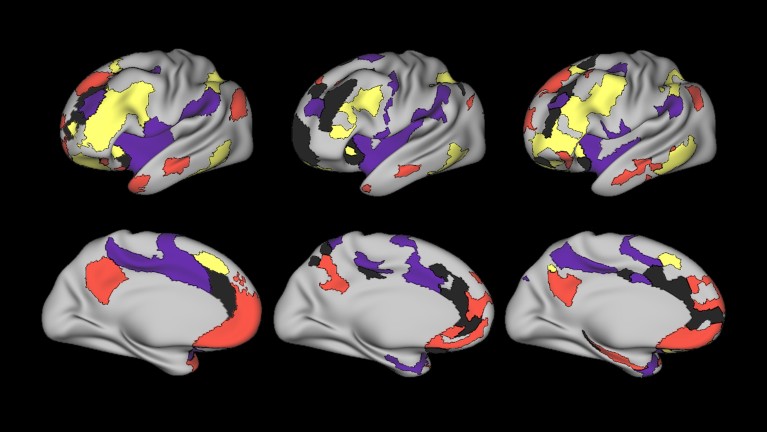
Brain scans showing expansion of the salience network (black) and contraction of other networks (red, yellow and purple) in individuals with depression.
The network of brain cells called the salience network (black) is bigger in people with depression (middle and right columns) than in those without (left column).Credit: C. J. Lynch et al./Nature

The symptoms of depression might come and go, but new evidence suggests that the pattern of brain wiring behind it remains the same for life. The largest imaging study1 of its kind has found that a certain brain network involved in directing attention to stimuli is nearly twice as big in people with depression as it is in the rest of the population — and that it remains that way when a person no longer feels depressed.

The results are a step towards a biological marker for depression, which is at present diagnosed mainly using questionnaires. But the authors say their finding should be validated in more populations before it is used clinically. The study was published today in Nature.

Networking skills

The technique called functional magnetic resonance imaging (fMRI) allows researchers to study the networks of neurons that wire together different parts of the brain and to measure how much communication passes through these networks. Everyone’s brain networks look fairly similar, but each person shows some variation from the average.

Those individual differences are what neuroscientist Charles Lynch and psychiatrist Conor Liston, both at Weill Cornell Medicine in New York City, and their colleagues set out to investigate, hoping to find networks that correlate with depression. But every fMRI scan is just a snapshot of a brain, which limits the technique’s usefulness for studying a dynamic disorder such as depression, Liston says. The psychedelic escape from depression

So the team turned to existing data sets containing fMRI images of people who had been repeatedly scanned over time: 135 people with major depressive disorder, which causes severe and long-lasting symptoms; and 37 healthy participants. In almost every person with depression, they found, a brain circuit known as the salience network was almost twice as large as it was in controls. The salience network is itself a connector between other brain circuits. It is involved in switching the brain between internal awareness and working memory, and it helps the brain to decide which environmental stimuli and internal emotions it should pay attention to.

At first, the researchers thought the salience network might expand when a person was depressed. So they used fMRI to scan the brains of several other people with depression nearly every week for up to 18 months and assessed how the person was feeling each time. The salience network of each individual was about the same size every time, whether the person was feeling depressed or not. What did change was the amount of activity between brain regions, which decreased when the person was actively depressed. The researchers could even use network activity to predict whether a person would have a depressive episode the following week.

Early warning sign

The results led the scientists to suspect that a larger network puts people at increased risk of depression, rather than being a simple biomarker for it.

To test this, the team turned to the ABCD Study, which aims to track brain development in nearly 12,000 children between the ages of 9 and young adulthood. They identified 57 children who did not have depression before the age of 13 but who developed the disorder as adolescents. At ages at young as nine years, these children already had expanded salience networks compared with their peers. “It’s moving one step closer to cause and effect,” Liston says.

The researchers are unsure what causes the expansion of the network, but they have a few ideas. Large salience networks could be a genetic trait, given that depression is partly heritable. Alternatively, Lynch says, the network might be overused during a depressive episode — if a person was ruminating on negative stimuli, for instance — and grow in response.

Potential benefits

Diego Pizzagalli, a depression researcher at McLean Hospital in Belmont, Massachusetts, is impressed with the consistency of the findings across databases. If the work is replicated, Pizzagalli says, the size of a child’s salience network could one day be used to identify whether they are at risk of depression, and to intervene through therapy to reduce the likelihood of the disease.

Cognitive neuroscientist Caterina Gratton at the University of Illinois Urbana–Champaign is also impressed with the study, and particularly that it tracked individuals over time instead of looking at large numbers of people. “Rather than reading a few pages of many books, we’re reading whole chapters,” she says.

Lynch says that the team is now investigating whether the expanded network correlates with other mental illnesses that share some symptoms with depression, such as bipolar disorder and obsessive compulsive disorder. “It would be very surprising if this [network expansion] were specific to depression, given how heterogeneous depression is,” he says.

doi: https://doi.org/10.1038/d41586-024-02857-w

References

  1. Lynch, C. J. et al. Nature https://doi.org/10.1038/s41586-024-07805-2 (2024).Article Google Scholar 

Download references

Reprints and permissions

Latest on:

BrainNeuroscienceDepressionDetecting hidden brain injuriesOutlook Humanity’s newest brain gains are most at risk from ageingNews What accelerates brain ageing? This AI ‘brain clock’ points to answers

Posted in Uncategorized | Leave a comment

FastCompany – Impact: Bill Gates talks climate change, AI—and whether billionaires should exist

Fast company logo

09-05-2024IMPACT

Bill Gates talks climate change, AI—and whether billionaires should exist

We talked to Bill Gates about his new five-episode Netflix series, which launches on September 18.Bill Gates talks climate change, AI—and whether billionaires should exist

[Image: Netflix]

BY Adele Peters8 minute read

In a new Netflix series, What’s Next? The Future With Bill Gates, the Microsoft cofounder and philanthropist digs into a few of his biggest obsessions: the potential (and risk) of artificial intelligence, how to tackle climate change and malaria, and how to deal with misinformation and income inequality. We talked to him about some of the solutions—and about an episode in which Bernie Sanders told him that billionaires shouldn’t exist.

In the episode about climate change, when you talked to young climate activists, you were surprised by how bleak their worldview is. Did talking to them shift your own perspective in some way?

Absolutely. Their vehemence about the urgency and how they viewed it was central, and even their despair motivated me to push forward more aggressively. [But I wanted] to make sure that they get to see where their making this issue a top priority really has made a difference. I mean, they should not give up. We need them in their creative way to keep this on the agenda.

It’s very tricky for [my] generation to help the next generation by doing it right. Seeing through the eyes of the young some of their sense of how bad things were, I was able to make them feel better. But that was highly motivating to hear that energy.

CoDesign Newsletter logo

Subscribe to the Compass Newsletter.Fast Company’s trending stories delivered to you daily

SIGN UP

Privacy Policy

|Fast Company Newsletters

You shared some examples of climate tech that could help tackle the problem, but one of the big challenges is how to scale it up. For example, Brimstone, which your company Breakthrough Energy Ventures has backed, has designed zero-emissions cement that’s as cheap or cheaper than conventional cement, right?

That’s right.

Even in that case, it’s still an enormous challenge to replace the standard process in thousands of cement plants around the world. What do you think it will take to do that? How could we actually do that as quickly as it needs to happen?

Well, getting that so-called green premium down to zero is super important when you go to places like India, where they may have, I don’t know, 5,000 cement plants alone, and of course, the demand for cement there is going up.

And so, all these Breakthrough companies, not only are we trying to have them be good investments but [we’re also] saying to them, “Okay, go to India, go around the world, license your technology. Figure out how to get [the adoption] not just in the U.S. but everywhere.” That’s why we have offices around the world, because we’re not just economically driven. We’re very purpose driven, and these companies scaling up is how we measure ourselves. How much carbon did we avoid? Cement’s a great one where people are surprised that there’s a different way of doing it that doesn’t cost more money.

It seems like in some ways, tackling climate change keeps getting harder. For example, now there’s a big jump in energy demand that’s predicted because of AI. Obviously, there are two sides to it. AI can also help with climate change, but if you look at just the energy demand, how do you think we can address that problem?

To step back, do you believe that there are some more frivolous uses of AI that shouldn’t be happening because of the consequences for energy, or do you believe we’ll be able to solve that challenge?

Well, the net additional electricity demand from AI [isn’t projected to be] greater than 10%. It’s meaningful, but driving cars takes energy. Heating buildings takes energy. Making materials takes energy. And so you have to keep it in perspective.

The AI companies are going around the country and finding spare electricity and trying to sign up for that, because as we electrify for climate, for the first time in over 30 years, even a rich country like the U.S. is going to have to increase generation. And yet we’ve added this constraint that it’s not just building a new coal plant or a natural gas plant, which is 24 hours a day, not weather dependent and very near to wherever the electricity is going to end up getting used.

The need to invest now for the increased demand is so complicated. And getting government policy right, getting the investment right—the permitting and the grid are a huge barrier to that. I’m very hopeful over time because I do think, along with continued progress with wind and solar, and even some geothermal, either nuclear fission or fusion are going to come in and play a very substantial role. And that’s why I have pretty gigantic investments to help some of those companies succeed.

[Image: Netflix]

How far in the future might these new nuclear technologies be available?

The best case for nuclear fission is when the TerraPower plant [a new nuclear power plant under construction in Wyoming] is running in 2030, then people will say, “Okay, let’s build 50 or 100 of those.” On fusion, the leading company, Commonwealth Fusion System, wants to be up and running by more like 2035. Fusion still is not as far along, but there are a lot of companies. I’m invested in over 5 and I think there are about 15 in total. In the long run, they may be the winners in terms of how cheap they can make electricity. And again, it’s green and not weather dependent.

I love the idea that fission and fusion are going to compete, but none of it’s available as quickly as we’d like. We need more green electricity today. And so we have to go as far as we can with wind, solar, and geothermal. Maybe if we have geologic hydrogen in the amounts that we expect, that will also be quite significant. But in the long run, you’ve got to have nuclear as part of that mix.

It seems like you have a unique perspective because you’re deeply immersed in so many different areas—health in the developing world, agriculture, education, climate change, AI. Often people in each of these fields are focused only on that single area. How has this bigger systems perspective impacted how you think either about the problems or the solutions? Is there anything that comes to mind where you think maybe you’re making connections differently than others might be?

Well, I have a few advantages. When I was young, I was one of those hands-on people writing code, thinking through software. And I didn’t even let myself be as broad, so I could just move as fast as possible.

Now through that success, I not only got the resources but now I can take a view that’s not driven by what makes money. [For example], malaria doesn’t have some business need associated with it. But because 500,000 kids die [of malaria] each year, I can say, let’s spotlight that. And I can find the people who were like I was in my early career, who are focused in on, say, how do you kill mosquitoes? How do you make a malaria vaccine? And I can connect them with other people, help them build teams, help them get resources.

It’s a very different role than when I was young, but as you get older, even if your raw intelligence might not be at its peak, you get wisdom about how to put teams together and encourage teams. Particularly for things that take a long time that are beyond what a politician would get behind, because if it takes 10 years, they’re not going to get the rewards for it. And things like malaria eradication or using AI to make great personal tutors for the inner city, those are things that it’s going to take time to get right.

I get to find people who, in their own way, are like I was in my early career, and particularly for the things that there’s not a profit opportunity, make sure they get to do their incredible work, which is a very lucky thing. It’s why I enjoy working, even though I don’t have to.

I’m curious how much crossover you’re seeing between these spaces. Because you’re thinking about malaria, about climate change, AI, and looking at all of these separate efforts that are going on, are you finding connections or seeing anything differently because you have this zoomed-out view of the bigger picture?

Absolutely. [For example], we’re using AI to model malaria eradication. We’re using AI to say, okay, where’s polio going to break out? How do we get to zero? We’re using AI to take a pregnant mother and give her advice over her cellphone in her local African dialect.

The work I get to do—helping at Microsoft a bit, working with OpenAI, many of the foundation programs, whether it’s drug discovery or delivery—AI is in a central role there. Certainly, our education work, that’s our primary investment now. Then over in Breakthrough for climate, AI is helping us with discovering new materials, looking at new batteries, how do you run the grid? The fact that I can take that horizontal technology and then say, okay, how are we at the cutting edge on that? It all fits together.

[Image: Netflix]

In the episode on inequality, you talked to Bernie Sanders about his argument that billionaires shouldn’t exist. I’m guessing he probably didn’t change your mind on that. But how much do you believe that the richest Americans should be taxed?

Well, in that episode I wanted to remind people that the reason we have wealth is because we have an incentive system. And however you tune it, there are countries who, nominally, through some communist principle of equalization, have destroyed wealth creation. And therefore it’s not just a, “Hey, how do we spread it around?” It’s also, how do we make sure we continue to grow the economy?

I thought it worked out well to have Mitt Romney, Tom Friedman, and Mark Cuban [in the episode]. Bernie made good points, but when Vermont priced out giving free medical care to everybody in [the state], they said, okay, we’re not rich enough yet. If we can continue to innovate, particularly with things like AI, we will get to the point, I believe, that some of his dreams of everybody having shelter and healthcare are achievable.

I’m clear that I think we could tax rich people a lot more. But when you get to the point where you make it illegal or you have 100% taxation, I do think that’s a mistake. And somebody can say I’m biased about that, but I can see how to be a lot more progressive without outlawing billionaires.


Apply to the Most Innovative Companies Awards and be recognized as an organization driving the world forward through innovation. Final deadline: Friday, October 4.

Posted in Uncategorized | Leave a comment

Eurasia Review: War Dogs: How WWI Led To The Military Working Dog Program

A messenger dog during World War I is used for laying telephone lines. A wire reel is mounted on the back of the animal. Photo Credit: National Archives

A messenger dog during World War I is used for laying telephone lines. A wire reel is mounted on the back of the animal. Photo Credit: National Archives

War Dogs: How WWI Led To The Military Working Dog Program

   0 Comments

By DoD News

By Katie Lange

Canines have been used in battle going back to ancient times, and they’ve been a part of just about every U.S. engagement since the founding of the country. The Defense Department’s current military working dog program is one of the best in the world, but the idea didn’t really catch hold in the U.S. until after our military saw how foreign countries were using the animals in World War I.

The first official use of dogs by the U.S. military started in the early 1900s.  According to Charles Dean, author of “Soldiers & Sled Dogs: A History of Military Dog Mushing,” Army personnel developed a sled dog program to help alleviate some of the logistical difficulties of traveling through extreme weather conditions in the Alaskan wilderness. Dean said the program was “small, little known and easily forgotten,” but it contributed to Allied efforts in both World Wars.

One team of American sled dogs rescued people trapped at a French outpost high in the Alps during World War I, earning the dogs’ handler the Croix de Guerre, a French military decoration for valor. According to “The Book of Dogs” by Ernest Baynes, Allied service members had gotten trapped at the post during a blinding snowstorm. They were running low on supplies, so one of the men took his sled dog team to find help. He descended the mountain and loaded 14 sleds with ammunition, despite enemy fire and the extreme weather. Five days after leaving the outpost, he returned, and the men were able to keep the Germans at bay using the supplies he brought back.

Learning From Others

Aside from this small, organized set of U.S. dogs, canines were more commonly used in the Great War by German and British troops, who started implementing programs that used them as sentries and messengers.

According to the American Red Cross, messenger dogs — who were faster and more agile than humans, and a smaller target for bullets — would often carry 25- to 30-pound packs of ammunition and rations through dangerous territory. They even took soup to the trenches for soldiers. Some dogs controlled the trench rat population, and many of the animals helped with troops’ general mental well-being.

Those who acted as sentry dogs generally had a keen sense of smell to sniff out the enemy. They were taught to do so by repeatedly being approached by someone the dog was unaccustomed to in an enemy uniform, according to Theo Jager, who wrote a training guide for the U.S. Army. These dogs often worked as scouts and guarded various positions, such as weapons factories.

Mercy Dogs

Dogs also helped locate wounded soldiers on the front lines of war. Many of those helpers, known as “mercy dogs,” were attached to ambulance units. Lots of breeds were used throughout the war, but United Kingdom historians said the most popular were German shepherds and Doberman pinschers thanks to their strength and agility, as well as their trainability and territorial nature.

So, how did handlers determine if a dog could work as a mercy dog?  Once officials determined they had the right qualities, like those mentioned above, they taught them to master basic obedience. Next, handlers took the dogs into the field to teach them how to differentiate between allies and the enemy, and how to tell if a person could be rescued or if they were dead and should be passed over.

The mercy dogs carried saddlebags of first aid supplies and rations, according to the American Red Cross. When they came upon an injured soldier in no-man’s land — the area in between trench warfare fighting zones — the dogs would get close enough for soldiers to get into the saddlebags and take what they needed for immediate help.

To keep from alerting the enemy, the dogs were trained not to bark. After finding a soldier, they would go back to their handlers with a piece of clothing or some other item to prove a man had been found. However, that method was eventually replaced because some of the dogs were a little too eager, pulling at soldiers’ hair or ripping off much-needed bandages to prove the person’s existence. Instead, some overseas Red Cross societies trained the dogs to return to their handlers with a leash in their mouth to show they’d found a wounded soldier. If the dogs didn’t find any survivors, they were taught to sit or lie at their handlers’ feet.

According to Chapman University researcher and documentary filmmaker Amanda Larsh, the Belgian army also used dogs instead of horses to pull ambulance carts and heavy weapons machinery. Larsh said that the dogs would continue with their mission even if their humans became incapacitated, which led to a greater ability to keep weapons out of enemy hands. The dogs were also a lot smaller than horses and therefore less likely to be hit by gunfire.

The U.S. military didn’t officially have any working dogs during World War I, but its service members took note, and many U.S. dogs were brought over in an unofficial capacity to help.

Famous Canines

One of the most famous U.S. service dogs was Sgt. Stubby, a small, brindle pit bull-terrier mix with a stub tail. Stubby became attached to Connecticut National Guard soldier James Conroy and even learned some of the soldier’s tactics, including saluting, as Conroy trained. When Conroy was sent to Europe, dogs weren’t allowed on the ships, so Conroy secretly stowed Stubby in an engine room. His superiors didn’t discover Stubby until they reached Europe, so they let the stowaway slide, and Stubby became the unit’s official mascot.

Stubby had his own gas mask for the trenches and suffered several gas attacks, which sensitized him to the odor and helped him alert soldiers to the gas before they could smell it. He warned his unit of enemy attacks and even caught a German spy before the man could escape with important Allied information, historians said. Stubby was injured once and treated at a field hospital, just like his human counterparts.

Stubby came home from war a hero and became a staple at victory parades and other patriotic events. By the time he died, he’d met three U.S. presidents and famed Army Gen. John Pershing. A taxidermist kept Stubby’s body intact, and he can still be found today at the Smithsonian in Washington, D.C.

Aside from Stubby, the most famous World War I dog was Rin Tin Tin, a German shepherd and war dog for the enemy who was found abandoned in France in 1918. Rin Tin Tin was brought to the U.S. and became a movie star, making his debut in the 1922 silent film “The Man from Hell’s River.”

Just Getting Started

Upon seeing the great work the dogs were doing, several groups in the U.S. did try to take a page out of their allies’ book and get a military working dog program up and running. However, the war’s end in November 1918 also brought an end to that idea, as any plans that had begun on the project were dropped.

During the Great War, as many as 20,000 dogs served the Allied cause, and they were credited with saving thousands of lives. According to Michael Lemish, who authored the book “War Dogs,” a wolf-like French dog named Prusco managed to locate more than 100 wounded soldiers during one battle alone. The dog dragged the men to the relative safety of bomb craters and eventually returned with rescue teams to save them.

The legacy of many of these dogs lives on in places like the War Dog Memorial at the Hartsdale Canine Cemetery in Hartsdale, New York. Built in 1923, the memorial — depicting a German shepherd wearing a Red Cross vest beside a dented helmet — is a tribute to the thousands of dogs who worked and died serving in World War I. Other monuments across the country also honor the service of our military dogs over the years.

It wasn’t until World War II that the U.S. military officially implemented a working dog program. Its foundation was laid by a civilian organization called Dogs for Defense and the government-run War Dog Program, created in March 1942. Unofficially called the K-9 Corps, the War Dog Program requisitioned about 11,000 dogs who were trained at a center in Front Royal, Virginia, by dog handlers within the Army Quartermaster Corps. The program positively affected troops on the battlefield and eventually led to training dogs for law enforcement, too.

Facebook Twitter Email Flipboard Mastodon LinkedIn Share

DoD News

DoD News publishes news from the US Defense Departme

Posted in Uncategorized | Leave a comment

Robert Sapolsky: Are We Better Off Accepting That There’s No Free Will? – Interview. Comment: Robert Sapolsky was involved in the Whitehall Study, search canisgallicus.com for same.

Robert Sapolsky Photo Credit: Christopher Michel, Wikipedia Commons

Robert Sapolsky Photo Credit: Christopher Michel, Wikipedia Commons

Robert Sapolsky: Are We Better Off Accepting That There’s No Free Will? – Interview

   0 Comments

By Jan Ritch-Frel and Marjorie Hecht

Interviewing the neuroscientist and primate behavior expert on a question that could radically change our understanding of reality.

The release of Determined, a new book by renowned Stanford professor of primate behavior and neuroscience Robert M. Sapolsky, has catapulted him into the middle of an ancient debate: whether humans have free will and agency over their actions. Determined isn’t just a bio-philosophical treatise: It covers the potential benefits that a society that accepts Sapolsky’s thesis of there being zero free will and agency over our actions will likely become more humane and will be better at understanding and addressing humanity’s challenges.

Sapolsky found fame while teaching the science of stress and anxiety from a neurological perspective and its presence in the wider primate world. His popular teachings have enlightened millions and opened new pathways to help people consider the biological causes of their behavior.

Over this year, Sapolsky has rolled a publicity tour in defense of Determined’s thesis, including speaking on dozens of nationally known podcasts, and more recently, he has co-launched an informative and witty YouTube Q&A show with his talented daughter Rachel Share-Sapolsky.

We reached out to Sapolsky for an interview about his thinking on how public adoption of science can change perspectives, and his experience as an activist to try and get the world to think differently about the causes of human behavior.

Jan Ritch-Frel and Marjorie Hecht: You point to the early 1800s in France as a turning point in how society perceived epilepsy, from culpability for behavior during seizures to understanding it as a medical condition. Where are you seeing similar green shoots today?

Robert Sapolsky: A great example is the recognition that obesity is a biological disorder, rather than some sort of failure of Calvinist self-discipline. It is a biological disorder that is profoundly sensitive to psychological state and social context, but it is nonetheless biological.

To give the most dramatic example, if someone has a mutation in the leptin receptor gene, their brain will simply not process food satiation signals, regardless of how much willpower they have. Currently, stigma about weight is one of the most persistent prejudices in society, and findings like this are just beginning to change attitudes toward obesity.

Q: What in your research led you to volunteer as a witness for capital trials, and what did your experiences lead you to conclude about making a social impact through your research?

Sapolsky: If you conclude that we have no free will, that we are simply the outcome of the interaction of the biological luck over which we had no control with the environmental luck over which we had no control, the entire premise of criminal “justice” makes no sense intellectually or ethically. However, I’m not of much use if I show up in a courtroom to say to the jury that “hey, we’re all just biological machines.”

So my goals are much narrower with the public defenders I work with. You consider a defendant who has done something horribly damaging, and there’s the option to think of their behavior as an index of their questionable moral worth, or as a measure of the damage that their own nervous system sustained over their lives. So my job is to try to get juries to think the latter rather than the former, to teach them the science that leads one to that conclusion.

In terms of what impact I’ve had—it’s been almost entirely futile; we “lost” 11 of the 13 cases I’ve worked on. The jury sits there and nods their heads in the affirmative when you’re telling them how the frontal cortex works… and then when they go into the jury room and look at the pictures of the corpse, they come back with the maximal sentence.

Q: What human tendencies and capacities are you counting on for people to make positive use of your conclusion that there is no free will?

Sapolsky: Mostly I would be hoping for ways in which humans can counter their tendencies. By this, I mean to try to resist the lure of exceptionalism, which makes us decide that our needs are special and atypically worthy of consideration.

Q: Can you discuss how an individual can differentiate right from wrong but be “organically incapable” of appropriately regulating his or her behavior? What happens in the prefrontal cortex to cause this?

Sapolsky: The prefrontal cortex (PFC) can inhibit and restrain emotional impulses: If you are in a situation where you are tempted to do something unethical yet manage to resist, it is because of the PFC. Thus, any circumstance that damages, weakens the PFC makes that sort of self-regulation more difficult.

Thus, you can wind up with someone who knows right from wrong, can write erudite philosophical essays about the difference… yet in a moment of emotional arousal, may not be able to prevent themselves from doing something wrong.

Q: How do you think therapy helps an individual with depression or other problems? What changes in the brain are possible? How does free will enter into the therapy process?

Sapolsky: Just focusing on depression, its cognitive core is a tendency to distort reality in a negative direction. On an emotional level, it’s perceiving yourself to be helpless in circumstances that are not really the case; on a neurochemical level, it’s probably a shortage of serotonin and a number of other neurotransmitters that produces an inability to anticipate pleasure and to block negative rumination.

These are all different levels of explaining the same thing. On the psychotherapy route, the most effective approach is typically cognitive behavioral therapy, which basically consists of recognizing the reality of some trauma, failure, or rejection in the past, but also recognizing that it is a distortion to assume that you are fated for the same in the future, that you are helpless and hopeless in trying to prevent some manner of reoccurrence.

Where the meds fit in are to facilitate that process. Drugs that boost serotonin, for example, lessen the stickiness, the unstoppable qualities of negative rumination …which allows you the affective breathing space to begin to disassemble the distortions that give rise to the incessant negative affect.

Free will plays no role in any of this. Did you turn out to be the sort of person who makes X amount of serotonin instead of Z, whose pathways of negative rumination in the brain are tightly or loosely connected, whose learning makeup is one that is good or not at building upon efficacy? Did you turn out to be the sort of person who respects introspection, is capable of doing it insightfully, is capable of drawing on those insights as a buffer against negative emotion? Did you turn out to be the sort of person who, in the first place, could accept that they are struggling with depression? And we had no control over any of those.

Q: Why isn’t what’s called “early readiness potential,” as detected in the brain, as much a form of free will as any subsequent action that carries out the potential?

Sapolsky: Because focusing on the early readiness potential, ERP, is missing the point. When exactly it has occurred with respect to when you form an intention to do something is not ultimately relevant to the issue of free will. Instead the absence of free will is shown looking at the more global question of, “How did you become the sort of person who would form that intent at that moment?”

Q: In your book Determined, you present an example of identical twins, only one of whom is schizophrenic with a very different brain imaging scan. Is schizophrenia then not inherited? Could it be the result of an infection?

Sapolsky: Genes are about inheriting tendencies, proclivities, and vulnerabilities in behavior, not about inheriting inevitabilities. Consider someone with schizophrenia and pick another person at random, and there is about a 2 percent chance that they will also suffer from the disease. If instead you pick the person’s identical twin, there is roughly a 50 percent chance that they will share the trait. This is powerful demonstration of a genetic influence.

But the fact that the identical twin will have a 50 percent chance of not having schizophrenia is a demonstration that genes are just part of the mix of causes, not anything deterministic.

What are some of the non-genetic factors that contribute to schizophrenia risk? Yes, certain types of infections; perinatal birth complications; prenatal malnutrition; chronic stress; and heavy cannabis abuse as an adolescent.

Q: In your lecture on religiosity, you rely on twin/adoption studies from the late 1960s and 1970s, which looked at schizophrenia and found that some other family members were what they termed schizotypicals. These individuals were not full-blown schizophrenics but they exhibited “off” behavior characteristic of schizophrenics. How do you respond to the criticisms of the twin/adoption studies, including criticism of the idea of a spectrum of schizophrenia conditions? (such as the work of Jay Joseph)

Sapolsky: Twin studies, along with adoption studies, are the backbones of classic behavior genetics approaches, and are subject to some withering criticism that is completely valid.

If twin researchers tell you that genes explain X percent of the variability in some trait, applying the criticisms typically shows that the percentage is actually lower than X—not that genes have nothing to do with the trait. That has no effect though on the main observation, which is that close relatives of people with schizophrenia are very significantly more likely to display schizotypal traits than the general population.

That shows that there is a shared genetics to schizophrenia and schizotypalism—and implicit in that is precisely Joseph’s point, which is that disorders with schizophrenic elements form a continuum, a spectrum (while not at all supporting his broadest conclusions).

Q: You’ve mentioned that you came from an Orthodox Jewish family. Did you have any reaction from the Orthodox community to your analysis of the roots of religiosity? Or from any other religious thinkers?

Sapolsky: I have had some very negative reactions from folks in both domains. However, those reactions are entirely based on completely missing what I am saying about the subject. I am not remotely saying anything as absurd as, “Ooh, you have to be psychiatrically suspect to be religious,” or even “Most/many/some people who are religious are psychiatrically suspect.”

I am saying that it is fascinating that traits that can be incapacitating psychiatric maladies in secular settings can be accepted, given sanctuary, and even be viewed as positives in the context of religiosity.

About the authors:

  • Jan Ritch-Frel is the executive director of the Independent Media Instituteand, publisher of the Observatory where he edits the Human Bridgesinitiative.
  • Marjorie Hecht is a longtime magazine editor and writer with a specialty in science topics. She is a freelance writer and community activist living on Cape Cod.

Source: This article was produced by Human Bridges.

FacebookTwitterEmailFlipboardMastodonLinkedInShare

Jan Ritch-Frel

Jan Ritch-Frel is the executive director of the Independent Media Institute, and a co-founder of the Human Bridges project.

Posted in Uncategorized | Leave a comment

Leaders of our countries; what can we learn from recent experience. This is from X; it is Boris Johnson and we need to start asking questions about electing leaders who could be part of the Triad … especially Machiavellian traits

Chay Bowes (@BowesChay) posted at 11:58 am on Wed, Sept 04, 2024:
The fact Boris Johnston is seen as a “Hero” in Dictator Zelenskys Kiev says a lot about the Ukrainian Cabal and their “partners”

Johnston is a serial liar, fake, fraud, and explotative megalomaniac. (In good company with Zelensky)

Here’s the proof. https://t.co/xx310AJkH9
(https://x.com/BowesChay/status/1831285588558750017?t=5AmjSX8JepVHVhv_6iBOtQ&s=03) 

Posted in Uncategorized | Leave a comment

Sensemaker at Tortois… Sliding demand, Chinese competition and disappearing subsidies are forcing Europe’s biggest carmaker to consider closing factories for the first time in its history.

The Nibs
capital economy, business and finance

VW thinks the unthinkable. Sliding demand, Chinese competition and disappearing subsidies are forcing Europe’s biggest carmaker to consider closing factories for the first time in its history.

VW, which by last year had earmarked a staggering €180 billion to retool for electric vehicles, is now expecting to sell 500,000 fewer cars a year, all told, than before the pandemic. EV sales specifically – mainly of the ID.3 and ID.4 models – fell by 20 per cent in the year to July, partly because of Berlin’s unexpected cancellation of subsidies for buyers last December; partly because Europe’s charging infrastructure remains inadequate; and partly because cheap Chinese imports are flooding west despite the EU’s best efforts to keep them out.

Will VW actually close assembly lines? It’s now in a fight with central and regional government as well as unions having threatened to do so. A more likely outcome is that it will take what help it can get to keep them open, but delay its full switch away from internal combustion engines – as Volvo did yesterday.
Posted in Uncategorized | Leave a comment

Independent: Suggest in the West we “listen to what the man says”. Putin delivers keynote speech at Eastern Economic forum. Contract for transport of oil through Ukraine … what do we expect in Europe?

Posted in Uncategorized | Leave a comment