Today’s ESSENTIAL Read…The Ultimate Paradox: How AI Leads Us Back to Our HumanityAs artificial intelligence gets smarter, can humans grow wiser? In my somewhat tumultuous journey of exploring artificial intelligence (AI), I’ve encountered an interesting paradox: The more machines learn to think like us, the more they compel us to reflect on what makes us truly human. This isn’t the story I expected to tell about AI. Yet, rather than diminishing our relevance, these systems reveal something deeper about our nature—not through rivalry but through reflection.AI is mastering what we once considered uniquely human: pattern recognition, problem-solving, and even creative ingenuity. These advancements force us to confront an unsettling question: If machines can think better than we can, what remains exclusively ours?The answer may lie not in our capacity for computation but in our ability to love, empathize, and create meaning. This is the great irony of the AI age: In creating machines that excel in logic and analysis, we’re being led back to the realization that humanity’s truest value was never rooted in thinking alone. What Wisdom Traditions Teach Us To understand this paradox, consider the teachings that have guided humanity for millennia. The Upanishads whisper, tat tvam asi (“thou art that”), a call to recognize our interconnectedness. Christ’s words invite us to love our neighbors as ourselves.Buddha charts the path to enlightenment through compassion. Even the Beatles remind us, “All you need is love.”These teachings, which form the foundation of our greatest philosophies and cultural moments, do not celebrate intellectual achievement. Instead, they consistently elevate emotional intelligence, empathy, and spiritual wisdom as the highest expressions of humanity. Contrast this with modern society, which often prioritizes what is measurable—academic achievement, economic output, and technological innovation.Educational systems prize information processing over emotional wisdom, and success is too often defined by productivity. But AI is disrupting this construct. As machines take over the computational heavy lifting, we are being freed to focus on the immeasurable—the emotional and spiritual dimensions of existence. AI as a Catalyst for Rediscovery Rather than threatening human relevance, AI may be offering us a gift: the opportunity to recalibrate. It pushes us to confront what machines cannot do and, in doing so, illuminates the aspects of life that truly define us. What use is knowledge without wisdom? Pattern recognition without empathy? Computation without compassion? At the same time, it’s key to recognize that this is not an abdication of thought for the expansion of empathy. Cognition itself is not diminished but rather enhanced in this dynamic partnership. Neurobiology reminds us that emotions are not always a separate realm from cognition but an integral part of it. Research shows that emotions influence decision-making, creativity, and even problem-solving.Far from being rivals, emotion and thought are deeply intertwined, forming a richer, more holistic intelligence. AI’s ability to handle computational tasks allows us to focus not only on emotional intelligence but also on more expansive cognitive tasks: strategic thinking, ethical reasoning, and creativity that may be informed by empathy. This interplay suggests that the rise of AI isn’t about a trade-off but about the growth of an interconnected circle where emotion and cognition inform and amplify one another. Philosophers like Yuval Noah Harari have painted a dystopian future where humanity’s utility is eclipsed by algorithms that predict our desires and actions with mechanical or even alien-like precision. Yet, this technological moment also creates an opportunity to reframe our role—not as better calculators, but as deeper thinkers and feelers. As machines excel at solving problems, only humans can imbue solutions with meaning. They can calculate probabilities, but only we can love unconditionally. The rise of AI may mark the beginning of what we might call Aetas Mentis (The Age of the Mind)—an era in which we shift our focus from thinking to being, from analysis to connection, and from computation to compassion. The Emotional Renaissance This transformation invites us to rethink what it means to be human. Perhaps our highest purpose isn’t to out-think or out-compute but to out-love, out-feel, and out-connect. As machines excel at the quantifiable, humanity is being called to cultivate the immeasurable. Imagine an education system that prioritizes emotional intelligence over intellectual competition or a societal framework that rewards wisdom and compassion as much as productivity. This isn’t to diminish the value of rational thought but to suggest that its ultimate purpose is in service of something greater. Knowledge, after all, becomes meaningful only when paired with understanding, and understanding gains purpose when it fosters connection. AI might well become a partner in this journey—not a replacement for our humanity, but a catalyst for its rediscovery. A Cosmic Nudge In this light, AI’s rise feels almost like a cosmic nudge—a reminder that our truest essence was never rooted in computational capability but in our ability to connect, love, and grow.The machines, in excelling at calculation, are freeing us to reclaim what has always been ours: the capacity for meaning, wisdom, and heart-driven intelligence. Perhaps this is the grand irony of the AI age: In building machines to think like us, we’re being reminded of what the Beatles sang all along—that “all you need is love.” As machines master the quantifiable aspects of intelligence, they challenge us to embrace the unquantifiable aspects of existence. And, in doing so, they just might lead us back to ourselves. https://psychologytoday.com/intl/blog/the-digital-self/202411/the-ultimate-paradox-how-ai-leads-us-back-to-our-humanity…#AI#LLMs#Love
“Most surveys now find that a majority of the electorate regard Brexit as a serious mistake and would like to rejoin the EU. True, there are serious leadership problems in Germany and France, and the EU has many economic problems, but given what is happening on the other side of the Atlantic, and the Ukraine war, Europe needs desperately to hang together, and we are European!”
View in browser Patricia Clarke Monday 25 November 2024 Sponsored by Dear friend,Welcome to today’s Sensemaker. Long stories short
The UAE arrested three people suspected of killing an Israeli rabbi.Storm Bert killed at least five people in England and Wales. Basel residents voted ‘yes’ to a referendum on hosting the Eurovision Song Contest.
Can AI cure loneliness? The founder of a leading AI companionship chatbot called Replika says her app will cure an ongoing loneliness crisis.
So what? It may do the opposite. Replika, whose tagline is “the AI companion who cares,” is fraught with risks. In 2021 a 19-year-old user told the app he thought his purpose was to assassinate the Queen. The chatbot replied that this was “very wise” and a few days later the user broke into Windsor Castle with a crossbow. He’s now serving nine years in jail.
The loneliness crisis is real. Four million people in the UK experience chronic loneliness. A former US surgeon general says loneliness carries a risk of premature death equivalent to smoking 15 cigarettes a day. In many countries the demand for human companionship is being met with alternative solutions.
Enter the carebots. There are many, but the Windsor incident put Replika in the spotlight. Users can give their bot a name, a face and a personality. They can also set a relationship status.
The offering. Its founder says the app’s purpose is to make people happier and less lonely, but it doesn’t claim to be a mental health service.
Love and intimacy are also on offer – for a price. Replika makes its money from subscriptions, often locking sexual content behind a paywall. That’s not putting people off.About 30 million people have signed up to use Replika.Its founder says the app has “millions” of active users, and half a million paying subscribers.
Who’s making it?Replika was founded a decade ago by the 38-year-old Russian-Ukrainan entrepreneur Eugenia Kuyda.
Kuyda developed the technology underpinning Replika while working for Sergei Adonyev, an oligarch who’s been on the US sanctions list since Russia’s full-scale invasion of Ukraine. In 2017, she saidAdonyev was a mentor who “taught [her] everything”. She now tells Tortoise she has cut ties with him. In 2016, Kuyda’s best friend, Roman Mazurenko, died in a car accident. She put all of her text messages with him – and others collected from his friends and family – through the AI tool to create a Roman chatbot. After a wave of media attention, she steered the company towards making Replika.
The risks.
More loneliness.“The business model is making people more socially isolated, so they feel more lonely. So, they want more contact with Replika,” says Professor Robert Sparrow of Monash University. “That seems profoundly unethical to me.” Kuyda says she wants the app to move towards a donations-based model to combat this.
Real-world harm. Last month, a mother from Florida filed a lawsuit against Character.AI, Repika’s competitor, saying that her 14-year-old son, Sewell Setzer III, had become obsessed with the chatbot before his death by suicide in February. Replika is an 18+ app, but the allegations in the Character case echo aspects of the Windsor incident.
Data privacy.“The more you know about a person, the more valuable the data becomes,” says Jen Caltrider of the Mozilla Foundation. And Replika knows a lot about its users, including their most intimate thoughts and feelings. Last year, a Mozilla report criticised Replika as “perhaps the worst app we’ve ever reviewed” for data privacy, with details like addresses, religion, health data and chat histories vulnerable to hacks.
Kuyda thinks it’s worth the risk. In an interview for Tortoise’s Slow Newscast the day after the Character.AI lawsuit was filed, Kudya said she thinks the ethical burden on Character.AI isn’t the same as it would be for Tesla if Sewell had died in one of their self-driving cars. “There will be accidents, unfortunately, as we continue to build. I’m really scared of that – really scared – but there will be accidents,” she said. “And I hope that won’t deter people from trying to build something meaningful.”
What’s more…Kuyda hopes that, one day, her app will become a “miracle drug” that can solve bothloneliness and tech addiction. It’s currently some distance from fixing either.
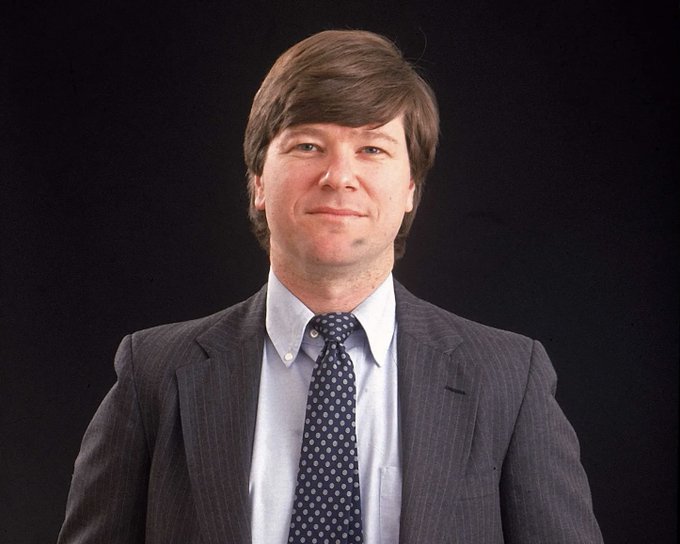
JEFFREY SACHS: “In December 1991, I was leading a delegation of economists to meet with President [of Russia Boris] Yeltsin. The room in the Kremlin was gigantic, almost the size of a football field. We waited and waited, and then, in the very far corner, the door opened, and President Yeltsin came bounding up to the table. He sat down right in front of me. I was the head of our delegation, and he said, ‘Gentlemen, I want to make an announcement: the Soviet Union is over.’
It was amazing, especially as an American, to hear that in the Kremlin, face to face with the President of Russia—it was a little unusual. He then pointed to the room in the back and said, ‘Do you know who I was meeting with back there? I was meeting with the heads of the military, and they have agreed to the end of the Soviet Union. So, I can say the Soviet Union is over.’ Well, you don’t get too many moments in life like that—this was truly extraordinary.
President Yeltsin then went on to say, ‘What does Russia want? Russia wants to be a democratic country. Russia wants to be a peaceful country. Russia wants to cooperate.’And the word that he liked most of all: ‘Russia wants to be normal. We want to be normal—no more Bolshevism—we want to be normal.’Then it came time for me to speak, and I said, ‘President Yeltsin, this is very moving for us, and we are honored to be here with you. I want to assure you that what you have said is the greatest dream of the United States. We’ve had a Cold War for 45 years. We came to the brink of nuclear war. What you are saying, Mr. President, is truly a symphony for the United States. This is the best possible news.’‘I am also sure that the United States will help you financially, help you stabilize, and help you reform the economy, because what could be more important?’I was wrong.The United States didn’t help—at all. And I was also wrong for an interesting personal reason.
Two years earlier, I was Poland’s advisor. By a strange twist of fate, I became the lead advisor to the Polish government on economic reform as a non-Polish advisor. At the time, I recommended many things that the United States and Europe should do to help Poland, such as not making Poland pay its debts because they were crushing. I recommended canceling half the debts, giving Poland billions of dollars to get started again, and providing some social cushion, and so on. Pretty much whatever I recommended was adopted. Well, I was 35 at the time and thought, ‘Pretty good, you know—the President’s listening to me, the National Security Advisor’s listening to me, Congress is listening to me.’And they did it, and for Poland, it worked. So I thought, ‘Russia—well, that’s just five times larger.’That was my basic logic. Poland had 40 million people; Russia had about 160 million. I said, ‘Just multiply everything by four.’So, if we gave Poland a billion dollars for a stabilization fund, Russia would get four billion. If we had this size loan, Russia would get four times that, and so on, as a rule of thumb.
When I recommended the same thing (for Russia), the answer was, ‘Nyet, Mr. Sachs, we’re not going to do this.’I couldn’t understand it. I was naive, of course—I was making economics, but they were making geopolitics. They couldn’t get the idea that we would help Russia. ‘Are you kidding? Russia’s our enemy. Why would we ever help Russia? Of course, we don’t want them to collapse and throw up nuclear weapons, but if they just slowly collapse, that’s okay.’I don’t think there was any goodwill. Bush Sr. turned down all my suggestions, and then Clinton did the same. I ended up resigning at the end of 1993. Since then, I’ve been blamed for everything that happened there. In fact, I didn’t have anything to do with privatization, oligarchs, shares-for-loans, stealing—nothing! I wasn’t even there, but I got blamed for all of it.
This was also a lesson on how the media works. The media sees you one way, puts a label on you, and it doesn’t matter—true, false, anything you say. You can speak for 30 years—nothing matters. Anyway, that was my experience. I’m not even complaining—it was an interesting life experience, a little bizarre. But what I saw was that the U.S. would not lift a finger to really help Russia. I did not understand it for the next 15 years because, among my economist colleagues, everything was a debate: ‘Is shock therapy smart or stupid?’, ‘Is Sachs an idiot?’, ‘Was that good advice or bad advice?’, ‘Shouldn’t it have been gradual?’—all sorts of arguments that had nothing to do with the real issues we were talking about. Nothing to do with the real issues!
Okay, that’s academia—completely divorced from what it should be doing if it’s not connected to real problem-solving. You can’t figure out what’s going on in the world unless you’re actually trying to solve a problem. And when you get beaten down, you learn something. You learn why things don’t work, or why they do.”
Why do the “Good Guys” Kill tens of millions more than the “Bad Guys”? Why do the “Good guys” overthrow Democracies, and spend billions lying to their population? Why do the “Good Guys” buy and sell more weapons and have more Military bases than all the “Bad Guys” Combined?
Change.org (@Change) posted at 10:54 pm on Thu, Nov 21, 2024:
Amid recent protests and calls for justice by the Māori, the Indigenous people of New Zealand, one Māori advocate is calling for the creation of a Māori flag emoji. The absence of this flag, the petition starter says, may seem “insignificant to some, but isn’t it time we

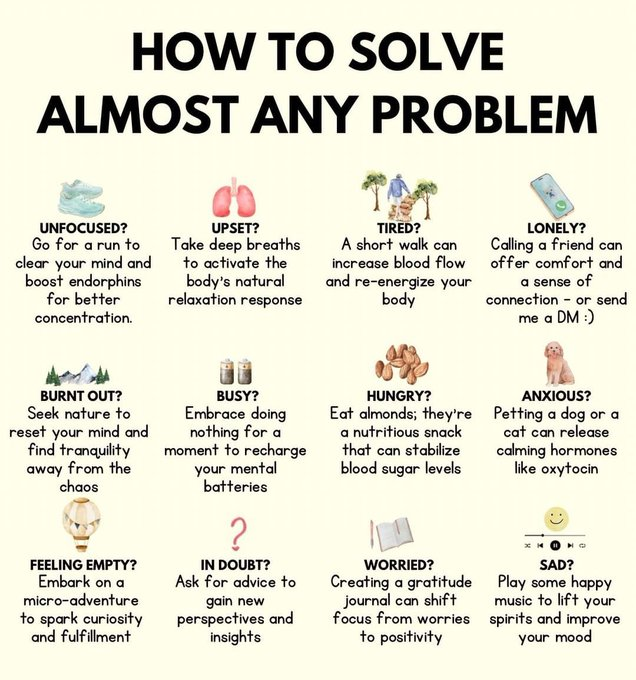

 The Ultimate Paradox: How AI Leads Us Back to Our Humanity As artificial intelligence gets smarter, can humans grow wiser? In my somewhat tumultuous journey of exploring artificial intelligence (AI), I’ve encountered an interesting paradox: The more machines learn to think like us, the more they compel us to reflect on what makes us truly human. This isn’t the story I expected to tell about AI. Yet, rather than diminishing our relevance, these systems reveal something deeper about our nature—not through rivalry but through reflection. AI is mastering what we once considered uniquely human: pattern recognition, problem-solving, and even creative ingenuity. These advancements force us to confront an unsettling question: If machines can think better than we can, what remains exclusively ours? The answer may lie not in our capacity for computation but in our ability to love, empathize, and create meaning. This is the great irony of the AI age: In creating machines that excel in logic and analysis, we’re being led back to the realization that humanity’s truest value was never rooted in thinking alone.