Why Fidgeting Bothers Some People

Neuroscience News Logo

Why Fidgeting Bothers Some People

FeaturedNeurosciencePsychology

·December 7, 2024

Summary: Misokinesia, affecting about one-third of individuals, is an aversion to repetitive bodily movements like fidgeting, causing emotional, cognitive, and physical distress. New research explores its impact on daily life, relationships, and mental well-being, revealing challenges such as intense distraction, rage, and social strain.

Coping strategies include avoidance, mimicry, and communication with understanding friends or family, but the condition remains under-researched. This study highlights potential intervention areas, aiming to better understand and address this pervasive sensory challenge.

Key Facts:

  • High Prevalence: Misokinesia affects approximately one-third of people, causing intense aversion to repetitive bodily movements.
  • Emotional and Physical Impact: Triggers include feelings of rage, distraction, and even physiological symptoms like increased heart rate and discomfort.
  • Potential Treatments: The study highlights intervention areas such as managing physiological responses, addressing intrusive thoughts, and improving social communication.

Source: Neuroscience News

For one-third of the population, repetitive bodily movements like foot-tapping or finger-drumming are more than a mild annoyance—they are triggers for misokinesia, a condition marked by extreme aversion to such actions.

New research from the University of British Columbia sheds light on the personal and social challenges faced by those living with misokinesia, as well as the potential mechanisms behind this puzzling condition.

This shows a person fidgeting.
Misokinesia remains underrecognized despite its high prevalence and profound impact on individuals’ lives. Credit: Neuroscience News

Misokinesia, meaning “hatred of movement,” manifests in intense emotional, cognitive, and physiological responses when individuals are exposed to repetitive movements. These responses range from an inability to concentrate to feelings of rage and even physical symptoms such as heart palpitations.

Participants in the study reported avoiding social interactions, struggling with relationships, and using coping strategies like blocking their view of the movements or leaving the environment altogether.

Through interviews with individuals who self-identified as having misokinesia, researchers identified three core themes: personal impacts, social challenges, and pragmatic factors associated with triggering stimuli.

Interestingly, while the condition shares similarities with misophonia—the aversion to certain sounds—misokinesia’s causes remain elusive.

Preliminary findings suggest that the issue may not stem from noticing repetitive movements but rather from the inability to disengage attention from them once noticed.

The study highlights the need for better awareness of misokinesia among clinicians and researchers, as well as the importance of exploring targeted interventions.

Future treatments might involve therapies to manage physiological responses, cognitive strategies to address intrusive thoughts, or tools to improve communication about the condition with others.

Misokinesia remains underrecognized despite its high prevalence and profound impact on individuals’ lives. As awareness grows, this research provides a foundation for understanding the condition and finding ways to alleviate its effects.

About this misokinesia and psychology research news

Author: Neuroscience News Communications
Source: Neuroscience News
Contact: Neuroscience News Communications – Neuroscience News
Image: The image is credited to Neuroscience News

Original Research: Open access.
“I struggle with your fidgeting: A qualitative study of the personal and social impacts of misokinesia” by Sumeet M. Jaswal et al. PLOS ONE
Posted in Uncategorized | Tagged , , , , | Leave a comment

Channel 4: Syria: Inside Sednaya Prison – sheer horror and like the concentration camps, the bureaucracy that keeps the details of the prisoners. Paraic O’Brien reporting

Posted in Uncategorized | Leave a comment

Neuroscience News: Why Your Child Keeps Rewatching That Show (and Why It’s Good)

Neuroscience News Logo

Why Your Child Keeps Rewatching That Show (and Why It’s Good)

FeaturedNeurosciencePsychology

·December 7, 2024

Summary: Children’s love for repeating shows, books, or activities is more than a quirk—it supports learning and emotional wellbeing. Cognitive science reveals that repetition helps kids detect patterns, a process critical for language and cognitive development.

Familiar activities also provide emotional comfort, reducing stress and boosting a sense of control. These deep interests foster mastery and autonomy, fulfilling key developmental needs. While repetition offers benefits, it’s important to ensure balance with other activities to maintain overall engagement. Embracing repetition can help parents better understand its value for their child’s growth.

Key Facts:

  • Pattern Learning: Repetition aids children in identifying patterns, which is crucial for language acquisition and cognitive development.
  • Emotional Comfort: Familiar activities buffer stress, providing children with security and a sense of mastery.
  • Developmental Balance: While repetition is beneficial, it’s important to ensure it doesn’t overshadow other vital activities.

Source: The Conversation

It’s a familiar feeling for many parents. No matter what you suggest, your pre-schooler just wants to watch that episode of Bluey again, never mind that it’s just finished playing. And at bedtime, it has to be a book you’ve read frequently enough to have developed a repertoire of specific voices for every character.

These deep and repetitive interests in a TV episode, game or topic may be frustrating to parents who just want to watch something different. But this repetition actually has great benefits for children’s learning and wellbeing.

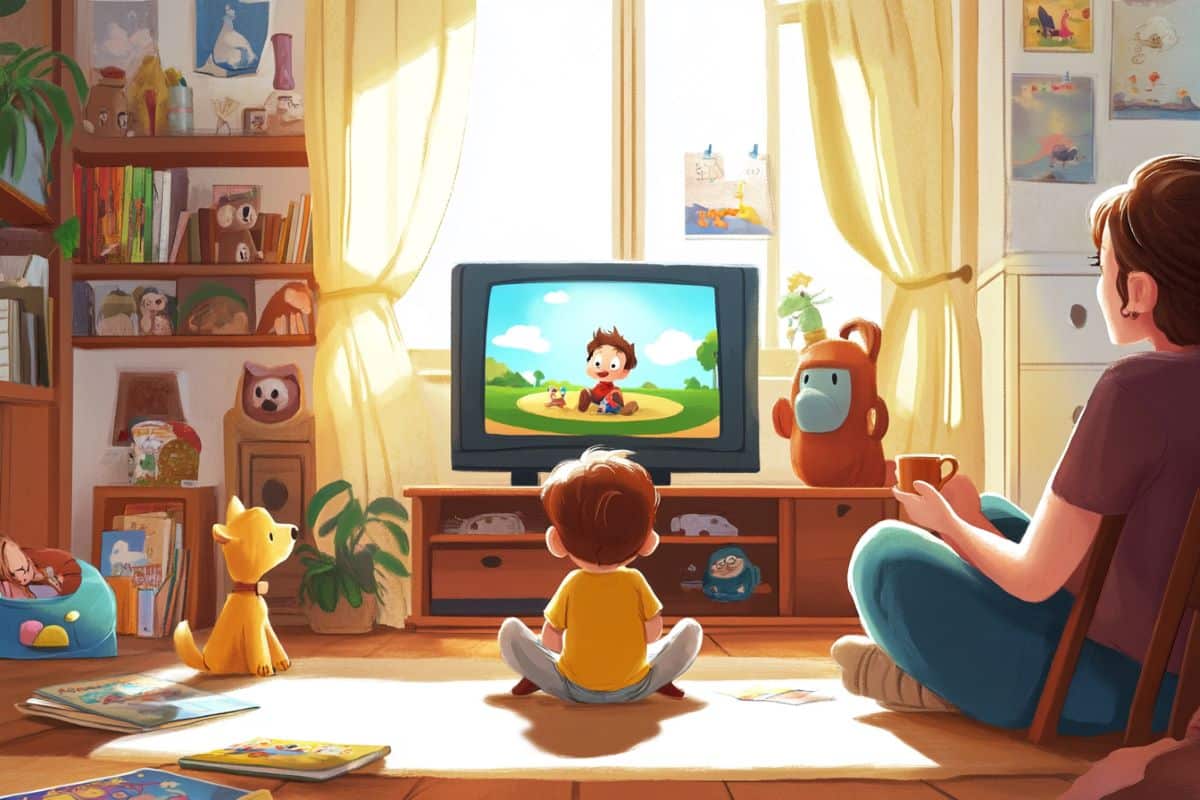
This shows a child watching TV.
Of course, not all children are equally likely to develop these kinds of repetitive interests. Credit: Neuroscience News

One reason for this is what we can call the “input effect”. This isn’t a new concept in cognitive science.

Searching for patterns

Think of the brain as an organ doing its best to figure out what is normal in our lives – what’s part of a regular pattern and what isn’t. Researchers have discovered a phenomenon known as “statistical learning”. According to this idea, children are very sensitive to the occurrence of regularities and patterns in their lives.

Interestingly, babies are particularly adept at understanding certain types of material, such as the likelihood of certain sounds in the speech we address to them. But they need to be exposed to many examples of this in order to detect regularities.

For instance, in all languages, and English is no exception, the sounds included in words tends to follow certain patterns. In English, for instance, some of the most common combinations of three letters are “the”, “and” or “ing”. It makes sense that children’s brains search for repetition – in this example, it will help them learn language.

So, when young children return to watch the same show, what they are doing, whether they know it or not, is driven by a desire to detect and consolidate the patterns in what they are watching, hearing or reading.

Familiar comfort

As well as supporting learning, repetition also has benefits for children’s emotions, in what we are calling here the “wellbeing effect”.

The main job of childhood is learning, and that means actively seeking out new experiences and stimuli. However, having to process and adapt to new things can be exhausting – even for a toddler with boundless energy.

The world can also be a stranger and more stressful place for children than it is for adults. As an adult, you will have learnt what to expect and how to behave within particular contexts, but children are constantly encountering new situations for the first time.

Well-known stimuli, such as that TV episode they’ve already watched umpteen times, can provide a source of comfort and security that buffers against this stress and uncertainty.

Deep interests in a particular activity can also provide wellbeing benefits through a sense of control and mastery. Children are constantly being challenged and stretched in what they know and understand at nursery, school and elsewhere. This is crucial for learning, but it also presents a threat to their feelings of competence.

Being able to relax into an activity that they feel good at, such as a favoured game, fulfils these competence needs. In addition, being able to opt into an activity that they enjoy lets them have a sense of autonomy and control over their lives, which is otherwise often spent being whisked here and there by parents.

Of course, not all children are equally likely to develop these kinds of repetitive interests. For example, autistic children often show particularly focused interests.

There is huge value to be gained from repetition in terms of learning and wellbeing. So, while you shouldn’t be forcing them to rewatch shows, you also don’t need to be concerned if this is something they’re pursuing themselves.

However, it can become problematic if it affects the child’s ability to engage with other important aspects of their life, such as getting out of the house on time, interacting with others, or doing physical exercise.

Of course, there is no rule of thumb that can be applied to all children in all contexts. As parents, we can only be attentive to the situation and make a decision. But as you queue up Frozen yet again, think about the input and wellbeing effects, and perhaps give yourself a break from worrying that your child should be doing something – anything! – else.

About this neurodevelopment research news

Authors: Javier Aguado-Orea and Diarmuid Verrier
Source: The Conversation
Contact: Javier Aguado-Orea and Diarmuid Verrier – The Conversation
Image: The image is credited to Neuroscience News

Posted in Uncategorized | Tagged , , , , | Leave a comment

Neuroscience News: Music doesn’t just trigger memories—it reshapes them.

Neuroscience News (@NeuroscienceNew) posted at 7:52 pm on Sun, Dec 08, 2024:


Music doesn’t just trigger memories—it reshapes them. New research shows how emotionally charged tunes alter memory recall, offering potential treatments for PTSD and depression. Your playlist might be rewriting your memories. #Neuroscience #Memory #music 

https://t.co/8zCfxazV0g
(https://x.com/NeuroscienceNew/status/1865846830036050224?t=mw7yOSxxlHfTg7qzmi7auw&s=03) 

Posted in Uncategorized | Leave a comment

The Meme Merchant X

Posted in Uncategorized | Leave a comment

Ian Bremmer, GZERO Media: Assad falls

Posted in Uncategorized | Leave a comment

Times Radio: Russia trade Assad with rebels for military bases in Syria. “Assad Flees”

11 pm Irish time 9th December 2024

Posted in Uncategorized | Leave a comment

Chay Bowes: The real reason China is the “Enemy” 

Chay Bowes (@BowesChay) posted at 8:43 pm on Sat, Dec 07, 2024:

The real reason China is the “Enemy” 

https://t.co/TDyt5hK4t0
(https://x.com/BowesChay/status/1865497318734082449?t=DMOAviPrvm8jJYFJ1ljIQA&s=03) 

Posted in Uncategorized | Leave a comment

Ron Paul: Futility of war; the loss and long-term injuries sustained through war are about people and losses

Ron Paul (@RonPaul) posted at 11:12 pm on Sat, Dec 07, 2024:


“War is the health of the state,” said Randolph Bourne in 1918, in his effort to point out the foolishness of America’s entry into World War I.


The state is the instigator of war, not the young who are sacrificed at the altar of war-profiteering. The American Founders promoted 

https://t.co/nDmjZzJx0z
(https://x.com/RonPaul/status/1865534951807951245?t=-xUFwkWiz4Mardk0i4riQA&s=03) 

Posted in Uncategorized | Leave a comment

Ireland is a small open economy but a free trade success story and should support the EU-Mercosur deal. See X Dan O’Brien, Economist.

Dan O’Brien

@danobrien20

7th Decembert 2024

The wave of negativity about lowering barriers to trade with a big chunk of Latin America is something to behold, despite the success of Irish exporters in recent years. Goods worth €400m shipped to Brazil alone last year. Protectionist+mercantalist minds never see opportunity

Image

Quote

Dan O’Brien

@danobrien20

6th December 2024

Free trade gives consumers lower prices and greater freedom to choose what they buy. That includes Brazilian beef, which nobody will be forced to buy. Ireland is a free trade success story and should support the EU-Mercosur deal, particularly in an age of rising protectionism. x.com/WeyandSabine/s…

Posted in Uncategorized | Leave a comment