DogeDesigner (@cb_doge) posted at 6:39 am on Tue, Jan 14, 2025:
I hear many people tell me they spent a lot of time on TikTok but they regret the time spent. The goal here at 𝕏 is to maximize the unregretted user time.
Real Hamlet Garcia (@Hamletgarcia17) posted at 3:38 am on Tue, Jan 14, 2025:
California environmentalists, liberal politicians and some of the most powerful millionaire celebrities living in that state refuse to clean up the underbrush-deforest, they simply wait for mother nature to do the job for them, but with catastrophic consequences, ripping lives
The Bradford headteacher who blew the whistle on multiculturalism in the 1980’s: Ray Honeyford was the headmaster of Drummond Middle School in Bradford in the 1980’s.
Ray was born into a very poor family with a father who was wounded in WW1 and often unable to work. He had 10 siblings, six of whom died in childhood. Ray went to work at 15 to support his family whilst taking evening classes to qualify as a teacher.
In the mid 1980’s Drummond Middle School was 90% non-white and 95% Asian (mostly Pakistani). 1984 (an apt year!)Ray wrote an article on multiculturalism in Roger Scruton’s Salisbury Review.He noted that many children were actively encouraged to speak Urdu rather than English. He noted young girls were being forced into marriage and many children were arriving at school already exhausted after hours spent at the madrasah.And he said that parents were bringing the “politics of the subcontinent” with them and that many of the Pakistani parents viewed white Brits as the kafir who were not to be mixed with.
He warned that it was resulting in “Asian ghetto’s” across Bradford and that political correctness was holding back integration and the educational prospects of ethnic minority children.
He wrote the article not out of hatred, but out of a concern the children under his care were not getting a great British education.Muslim “community leaders” would pack meetings in the school and demand his resignation as did the local Pakistani Mayor of Bradford. He was suspended until his suspension was overturned in the High Court.But the parents started protesting and the children started boycotting the school. Ray even had to be given police protection.
He eventually accepted a payout from the council and was forced into early retirement. He never worked as a teacher again. When Ray died in 2012 Roger Scruton wrote an obituary which said:
“Readers will be grateful for the life of this exemplary, heroic and profoundly gentle man, who was prepared to pay the price of truth at a time of lies”.
Check out this documentary …. 1980’s the time when multiculturalism was the only way to go
This unique foal, named “Tira” after the Maasai guide who found it, has no stripes. Instead, he has white dots on a dark brown coat, as opposed to the typical black-and-white stripes. This peculiar appearance is due to melanism, a genetic mutation affecting melanin levels in the zebra’s fur. Tira’s unusual coloration, however, comes with challenges. Unlike the iconic stripes that help zebras blend into their surroundings and confuse predators, Tira’s distinct pattern makes it stand out, increasing the risk of predation. In addition, the foal has a short, hairless tail, differing from the brush-like tail of most zebras. Tira was initially found in Masai Mara in 2019.
Milagros Miceli, researcher: ‘It’s not true that AI is going to automate everything. It requires the manual and precarious work of millions of people’
The expert from the German Internet Institute warns that the rise of tools such as ChatGPT will increase the demand for people who generate content for little money to enrich databases
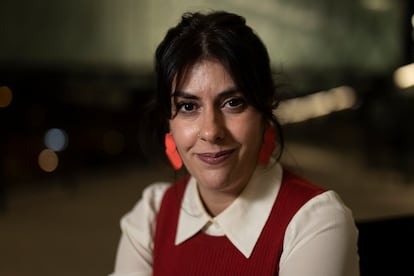
The sociologist and computer scientist, Milagros Miceli, pictured in Barcelona.Albert Garcia
Artificial intelligence (AI) isn’t as automatic as it claims to be. This technology works thanks to powerful computers that run calculations based on extensive databases.But these databases have to be fixed and tested, a manual job that companies outsource to legions of workers, who are generally paid very little. Sometimes, they earn mere cents for each task performed. This reality was described in the book Ghost Work (2019), authored by Mary Gray — an anthropologist and researcher at Microsoft — and her colleague, Siddarth Suri.
By the time this book was published, Milagros Miceli — an Argentine sociologist who holds a doctorate in Computer Science — had already been researching the subject for two years. When she was hired at the newly created German Internet Institute — hosted by the Weizenbaum Institute, named after Joseph Weizenbaum, a pioneer in AI — the social consequences of algorithms were being approached from a very theoretical point of view. But Miceli wanted to go further. “I wondered if anyone was talking to the people behind these algorithms. That’s how I got to the data annotators, who tag images of chairs with the word ‘chair,’ so that the machine learns to distinguish them. And then, I got to know the data workers, a concept we developed ourselves,” she explains.
Since then, Miceli, 41, has pursued this topic. Today, she’s one of the leading experts in the little-known field of data workers. She’s also a senior researcher at the Distributed Artificial Intelligence Research Institute (DAIR), the center founded by Timnit Gebru. Gebru was Google’s head of AI ethics: she was fired shortly after putting her name on a report that didn’t make the company look good.
This past December, Miceli participated in the Thinking Global Digital Justice conference, held in Barcelona. She sat down with EL PAÍS to discuss her work.
Question. What is a data worker?
Answer. A data worker is a person who, basically, produces data to train AI systems. This task can be carried out by recording their own voice, uploading selfies, labelling and classifying data, interpreting it, etc. What many people sometimes don’t imagine is that this is an ongoing job. The [AI] systems require manual work, such as maintaining the data sets, checking them, or fine-tuning them.
Q. What kind of qualification is needed to carry out these tasks?
A. There’s a myth that the people who do this aren’t skilled workers. However, in practice, these [data] workers have at least completed secondary or higher education. I’ve even met people who have PhDs and are doing this type of work.
Q. Where are data workers located?
A.They’re found among vulnerable or poor populations, in areas with a very high unemployment rate. But they have higher education. The nature of the work is actually very difficult. I’ve tried it. It requires not only a level of formal knowledge, but also craftsmanship.
Milagros Miceli, pictured before her participation in the Thinking Global Digital Justice conferenceAlbert Garcia
Q. Could you give me an example?
A. Labelling and segmenting satellite images are very common tasks. This is extremely difficult. Firstly, it’s tiring for the eyes, as well as for the hand that’s constantly moving the mouse. On top of that, you have to be very careful to separate a tree from a person, or a house from a car, in images that are often blurry. This requires a certain level of knowledge about the architecture and vegetation that’s specific to a country. And, if you do it incorrectly, you don’t get paid at all.
Q. What’s the situation like for data workers?
A. It hasn’t changed since this [phenomenon] started. They’re in a situation of total precariousness, with a lack of protection.In this field, what was once described as the “uberization of work” is what rules.They’re paid for a task completed, not for the time it takes to do the task. In the case of data workers, the time it takes them to log in, to find an available task (which isn’t always available) or to understand the instructions — which can be very complex and are almost always in English — isn’t counted. And all of this involves the risk that the client will later say that the task wasn’t done as requested and withhold pay. This happens in many cases. On top of that, the client still has the right to keep the data that’s been delivered to them.
Some data workers are blocked on platforms for asking questions, for example, about salary.Then, some platforms — such as the largest of all, Amazon Mechanical Turk — don’t pay with money, but with vouchers, in this case, to spend on Amazon. This creates a perfect monopoly. Of course, when something happens to the worker — such as having after-effects from working with psychologically disturbing content — no one helps them. In many cases, they previously signed a confidentiality agreement that prohibits them from revealing the nature of what they do. Some workers have told us that, for this reason — and despite suffering from post-traumatic stress — they’ve avoided seeing therapists. Nor can they put on their CV that they’ve been content moderators for such a large platform.
Q. So, there are content moderators who aren’t on the payroll, but who come in via the freelance route?
A.Most of the content moderators have precarious contracts through third-party companies based in Europe, but many also operate in countries in the Global South. These companies, by the way, are the same ones that are used to label images. In fact, the same people often rotate from one team to the other. Content moderation is often done at the same time as data-labeling: they decide whether what they’re monitoring is hate speech or not, information that’s subsequently used to train the algorithms.
Q. Do we know how many data workers are out there?
A.It’s very difficult to give a number. The World Bank — a conservative institution — says that there are between 150 and 420 million in the world. What we do know is that the numbers have grown exponentially in recent years.This idea that work is going to be automated is a lie. AI requires a lot of manual work.
Q. The discourse of “uberization” says that data workers want to do work at specific times, as a means to supplement their income. This is the same argument that food delivery platforms make. Is this true? Are data workers full-time, or only part-time?
A. That’s another myth, yes. There are hardly any occasional data workers. This has to do with the complexity and high level of professionalism required — as I mentioned before — to carry out these tasks. The more sophisticated AI models become, the more qualified the workers who operate their databases have to be.It’s not like 10 years ago, when you were asked to identify kittens in a series of photos. That doesn’t exist anymore. To make any money doing this, you have to work every day.
Q. The classic example of data work, as you say, was image-tagging. What’s in demand now?
A. Seven years ago, when I started in this field, photo-tagging was the trend. The important thing was to have quantity, not quality.In 2019, we did a study in which we analyzed the instructions given to workers and most of them were along those lines. But recently, there’s been a very marked shift towards tasks that have more to do with linguistics and generative AI: producing data from scratch for a specific purpose.For example, unemployed artists are hired and asked to create images according to certain basic instructions, the so-called “prompts.” This is then given to the Midjourney algorithm to perfect its operation. Or, you hire journalists or writers to write features or short stories, so that the machine can extract patterns. You also record people reading texts in minority dialects or languages to enrich the databases.
Q. Can AI function without this manual work? Does it need human support 24 hours a day?
A. This system is designed to have workers available 24 hours a day, seven days a week, while paying them the bare minimum. And, if they don’t like the conditions, companies can move on to the next country or town. Large scale is what rules, and that only works if we have millions of workers. Of course, there’s another way of doing things. Models work better if they’re trained on smaller, but better curated data sets. For that, you don’t need millions of workers, but rather professionals and to communicate with them. The opposite of anonymity and algorithmic mediation.
Q.The latest generative AI models have already been trained with all the data available on the internet. So, the next-generation models will need to include all of that, along with new, artificially-produced data. Do you think generative AI will boost the demand for data workers?
A. If I had to make a prediction, it would be that the number of data workers will continue to grow. Even those who believe that the future lies in synthetic data — generated by machines — know that this is difficult from a technical point of view.Without going into too much detail, training an AI system with data generated by [another] AI system produces a loop: it ends up repeating the same thing, like an infinite game of mirrors.So, writers, artists, journalists, or translators will continue to be needed to generate data, which serves to enrich the databases on which the algorithms are applied.
Now, even if you could train models with synthetic data, you would still need data workers for algorithmic verification tasks. For example, this consists of sitting down with ChatGPT and asking it questions and saying whether what it answers is right or wrong, if there’s a better option, etc. Continuing with language is something dynamic, which is constantly changing. Chatbots need to be constantly perfected. And only humans can do that, because we know and understand the contexts.
Q. Why do you think so little is known about the manual dimension of AI?
A. It’s entirely intentional. They’re selling us the myth of a technology that’s miraculous and incredibly powerful, we should fear it because it could kill us all. I would add to that that this technology is based on [hidden] work, on precarious work, on the exploitation of millions of workers.But to sell this myth of ultra-powerful and fearsome technology, it’s necessary to erase all traces of humanity. However, AI wouldn’t be able to work without legions of manual laborers. Why continue hiding them and keeping them in precarious conditions?
Translated by Avik Jain Chatlani.
Sign up for our weekly newsletter to get more English-language news coverage from EL PAÍS USA Edition
The Future of “Nord Stream” to Be Decided This Month January marks the deadline for the Swiss court’s bankruptcy case. If no action is taken (and Germany remains under external pressure), “Nord Stream” will go up for auction. Valued at over $10 billion, the pipeline’s rehabilitation would cost just $700 million. Leading the race to buy it is U.S. investor Steven Lynch, backed by a Treasury license allowing negotiations even with sanctioned firms. Rumor has it Trump supports this deal—letting Americans restart “Nord Stream,” resell Russian gas to Europe, and pocket the profits without lifting a finger to extract it. Source: UKR watch
An IQ of 140 is a mixed blessing. On an IQ scale for which the mean is 100 and standard deviation 15, a person with an IQ of 140 is in the 99.616957th percentile. This means that they have scored higher than 99.6% of the population on the test, an achievement equalled or bettered by only 1 in 261 people.
The “blessing” part of this high score is that it suggests that the person learns easily, can problem-solve at very high levels, and indulge in sophisticated abstract thought. This means that with sufficient work they can learn virtually any academic subject in the natural and social sciences. For such a person, virtually all career choices, except those that require special athletic or musical aptitudes will be available. Furthermore, the learning will be easier than for most people and can be acquired through books or computers with a minimum of external help. If coupled with tenacity and a passion to achieve, it represents an unbeatable combination of personal assets for achieving intellectual goals.
However, there are several potential downsides to such intellectual gifts. Often gifted children are perceived as socially different from their peers and are ostracized, ignored, bullied, or ridiculed.This was the case for people like Steve Jobs, Jeff Bezos, and Elon Musk (who had his nose broken when thrown down a flight of stairs). While average children can self-reference to anticipate how others feel, this is often unavailable to those who are socially different. They see the world differently from the average and are sometimes perceived as “weird.” However, this is the difference that enables them to make a difference when they reach adulthood. Jobs, Bezos, and Musk continued to have social conflicts throughout their careers as they founded companies, yet driven by their visions, they were able to change the world. Their personal lives were often fraught with discord, as one might expect from behaviours that are seen as eccentric.
Another potential downside to a high IQ is what Edward de Bono called “the intelligence trap.”Those who have a high IQ are accustomed to being right when most others are wrong–especially in their area of expertise.For this reason, they may tend to dismiss the opinions of others, even when outside their domain of expertise. However, a high IQ is not a valid substitute for knowledge, and those of high IQ who assume that superiority in their field transfers into areas outside their expertise often override the opinions of others who are more knowledgable. Indian astrophysicist Subrahmanyan Chandrasekhar, who won the Nobel Prize in 1983 described how a scientist may fall into this cognitive trap: ( Quote from Hammond, A. L. 1984. A Passion to Know: Twenty Profiles in Science. New York: Scribner. p.5.)
These people [winners of prestigious awards] imagine afterward that the fact that they succeeded so triumphantly in one area means they have a special way of looking at science that must be right. But science doesn’t permit that. Nature has shown over and over again that the kinds of truth which underlie nature transcend the most powerful minds.
The quintessential inventor Thomas Edison had been unrelenting in his belief that direct current (DC) is the best way to transport electricity throughout America. In spite of substantial evidence provided by his employee Nikola Tesla, showing the advantages of alternating current (AC) over DC, Edison continued to insist that alternating current was too dangerous and refused to pay Tesla for his research on AC. Unable to convince his boss, Tesla sold his findings to George Westinghouse who patented the technology that remains the basis of today’s power grid.
Linus Pauling, winner of the Nobel Prize in Chemistry in 1954 and the Nobel Peace Prize in 1962, advocated in his later years for multivitamin therapy in the treatment of various diseases. His 1970 publication, Vitamin C and the Common Cold, extolling the benefits of high-doses of vitamin C for the common cold, laid the foundations for later claims about the effectiveness of vitamin C and lysine in the treatment of atherosclerosis and cancer. Pauling’s claims were not validated by subsequent research.
Steve Jobs, known for his prescience in the computer world, fell prey to quackery cures for cancer.Informed that he was afflicted with pancreatic cancer, the technological visionary sought cures in spiritual healing, holistic medicine, and a spartan diet of fruit juices, while ignoring all the conventional treatments from medical science that might have saved his life. He ignored the mountains of evidence that would have disconfirmed his belief in such unfounded remedies.
So an IQ of 140 is, indeed, a blessing, but it represents intellectual potential that must be harnessed and managed with careful judgment and appropriate humility.




 The Future of “Nord Stream” to Be Decided This Month January marks the deadline for the Swiss court’s bankruptcy case. If no action is taken (and Germany remains under external pressure), “Nord Stream” will go up for auction. Valued at over $10 billion, the pipeline’s rehabilitation would cost just $700 million. Leading the race to buy it is U.S. investor Steven Lynch, backed by a Treasury license allowing negotiations even with sanctioned firms. Rumor has it Trump supports this deal—letting Americans restart “Nord Stream,” resell Russian gas to Europe, and pocket the profits without lifting a finger to extract it. Source: UKR watch

 No grooming gangs


