


Fighting Israel’s Media War
Help JNS get the facts out
update desk

A view of the voting results (on the screens) of the amended United States-drafted resolution titled “The path to peace” during the 20th plenary meeting of the resumed General Assembly Eleventh Emergency Special Session of the General Assembly on Ukraine, Feb. 24, 2025. Credit: Manuel Elías/U.N. Photo.
(Feb. 24, 2025 / JNS)
Israel found itself aligned with an unfamiliar company in a vote on a U.N. General Assembly resolution marking the third anniversary of Russia’s invasion of Ukraine.
The United States opposed the measure, instead pushing its own simpler text, which did not fault Russia for initiating the conflict. It did so in line with recent comments from U.S. President Donald Trump.
Israel supported the U.S. position on the E.U. resolution, as did Belarus, Burkina Faso, Burundi, the Central African Republic, Equatorial Guinea, Eritrea, Haiti, Hungary, Mali, Marshall Islands, Nicaragua, Niger, North Korea, Palau, Russia and Sudan.
A Russian amendment referencing the conflict’s “root causes” was rejected.
The vote marked the first occasion that Washington has sided with Moscow since the onset of the war. The United States and several small, island nations traditionally align with Israel at the United Nations, but North Korea, Belarus and Eritrea—three global pariahs—rarely vote with Jerusalem. (The Israeli mission to the United Nations in New York declined to comment.)
U.S. officials were reportedly lobbying hard for support in rejecting the E.U. resolution and passing their own. Israel is thought to have presented its support to thank the Trump administration for backing the Jewish state and to ensure further cooperation.
Russia had regularly and viciously castigated the U.S.-Israel relationship in the context of the Israel-Hamas war during the Biden administration. Israel has sided with Ukraine in the war, although it did so subtly and after some delay once the war began.
Ukrainian officials have criticized Israel occasionally for not supporting Kyiv enough. Critics have said Ukraine rarely supported Israel in international fora before being invaded.
The United States ended up abstaining on its own resolution after several amendments focused on Ukrainian sovereignty, unity and territorial integrity, which it deemed unfavorable—and which made the text more similar to the E.U. resolution—passed the General Assembly.
Washington’s amended resolution passed 93-8. Israel was among the 73 abstentions.
“These amendments pursue a war of words, rather than an end to the war,” stated Dorothy Shea, the U.S. interim envoy to the United Nations. “Neither these amendments, nor the resolution offered by Ukraine, will stop the killing. The U.N. must stop the killing.”
The Israeli mission did not offer a speaker during the General Assembly debates, which took place both before and after the votes.
Feb 25, 2025 #vladimirputin#usrussiarelations#rareearth
In a recent interview, President Vladimir Putin addressed two key topics shaping global geopolitics: rare earth elements and the ongoing Ukraine talks. He highlighted Russia’s potential for joint ventures with American companies in aluminum production, emphasizing how collaborative projects in hydro-powered regions like Krasnoyarsk could stabilize global markets. Putin also suggested that partnerships in rare earth metals, critical for modern technology, could open new economic opportunities if politics didn’t get in the way. On the diplomatic front, Putin dismissed Europe’s insistence on having a decisive voice in Ukraine negotiations, stating bluntly that “no one can really demand anything here, especially from Russia.” He argued that the path to resolving the conflict lies primarily in trust-building between Moscow and Washington, not in European involvement. While welcoming international efforts for peace, including initiatives from BRICS and China, Putin underscored that Europe’s role remains secondary in this high-stakes dialogue. This candid conversation reveals how Putin views both economic cooperation and geopolitical power dynamics, with rare earth and aluminum deals as potential bargaining chips in a world increasingly shaped by strategic resources.
0:00 View on U.S. pressuring Zelensky to use rare earth metals as repayment for past aid. 2:44 Answer on whether Trump’s harsh remarks about Zelensky and elections are actually benefiting Russia. 7:50 Is Trump acting based on emotions? 8:52 Do the Europeans even understand the essence of the current situation around Ukraine? 10:38 View on Europe’s insistence on having a say in Russia-U.S. negotiations about Ukraine. 14:29 Comments on Trump’s proposal to cut defense budgets and tariff on steel and aluminum imports.
By Paul McClure

By Paul McClure
February 19, 2025
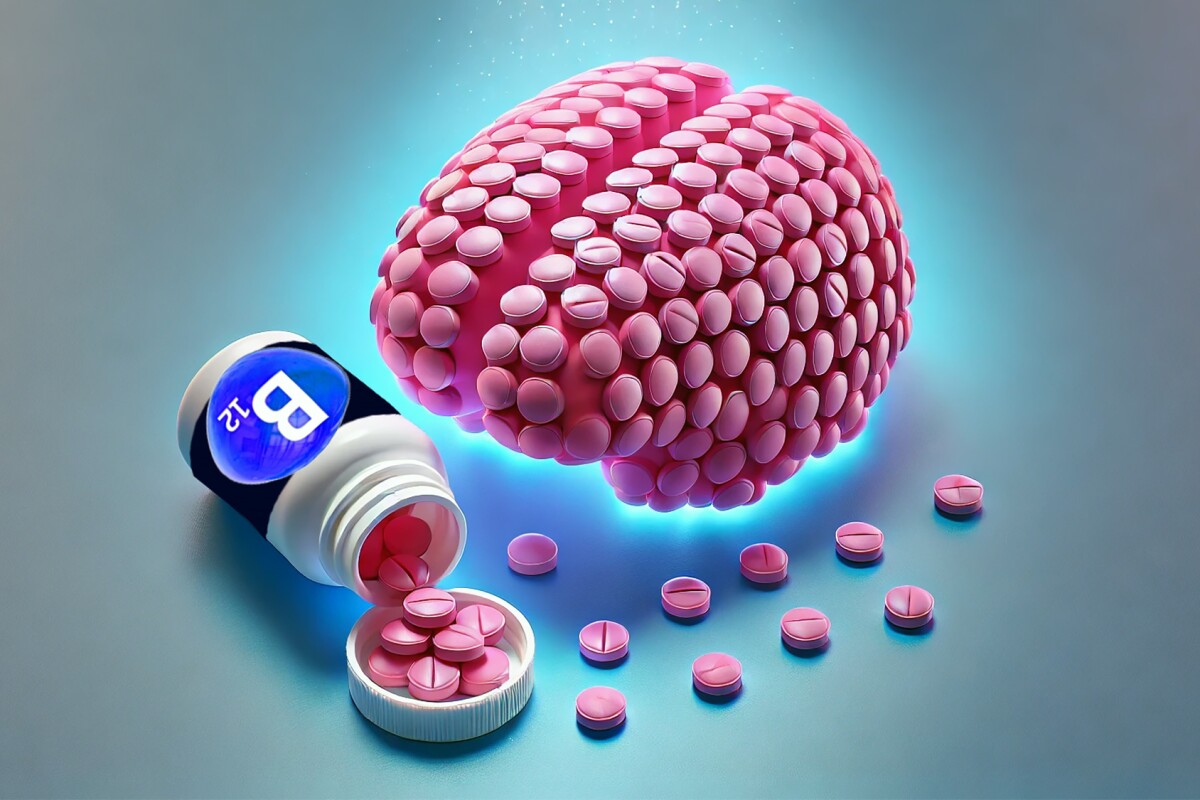
Vitamin B12 levels can affect brain functioning, especially in older adults
People who sit on the low or high side of normal vitamin B12 levels are still at risk of cognitive impairment, according to a new study. The researchers behind the study say we need to rethink the ‘healthy’ range for the vitamin that plays a key role in brain and nerve health.
Vitamin B12, or cobalamin, is crucial in DNA synthesis, red blood cell formation, nervous system health and function, brain health, and energy production. It’s normally obtained through meat, poultry, fish and shellfish, dairy products and eggs. Vegans and vegetarians can obtain B12 from foods fortified with the vitamin.
A new study led by UC San Francisco (UCSF) researchers has examined how seemingly ‘normal’ blood levels of vitamin B12 can still negatively affect brain functioning and structure, especially in older folk.
“Previous studies that defined health amounts of B12 may have missed subtle functional manifestations of high or low levels that can affect people without causing over symptoms,” said the study’s corresponding author, Dr Ari Green, from the University’s Weill Institute for Neuroscience and its Department of Ophthalmology. “Revisiting the definition of B12 deficiency to incorporate functional biomarkers could lead to earlier intervention and prevention of cognitive decline.”
After vitamin B12 is absorbed into the bloodstream, two carrier proteins help it get to where it’s needed in the body. One, haptocorrin (HC), binds to most of the B12 in the blood, but the body can’t use it straight away, so it mainly ends up in the liver, where it’s eventually broken down and excreted. This form of B12 is considered biologically inactive because it’s not immediately available to the tissues. The second protein, transcobalamin (TC), binds to a smaller portion of B12 thanks to a receptor called CD320 that allows cells to absorb it. Able to be used by the body immediately, this form of B12 is considered biologically active.
When blood levels of B12 are measured, both forms are measured. The active B12 (Holo-TC) is what really matters for the body’s cells. If it’s low, it can cause neurological symptoms. On the other hand, the inactive B12 (Holo-HC) is mostly just ‘in storage’ in the liver and doesn’t directly help with bodily functions. In the United States, the UK, and Australia, concentrations of vitamin B12 in the blood are measured in different units. To provide a consistent comparison, the reference ranges for each country have been converted to picomoles per liter (pmol/L):
So, in the US, where the present study was conducted, a B12 ‘deficiency’ would be defined as a value below 148 pmol/L and ‘normal’ would be any concentration that falls within the above reference range.
For the present study, the researchers enrolled 231 healthy study participants with a median age of 71 years and a median B12 blood concentration of 414.8 pmol/L, well above the recommended lower level. Participants were recruited through the Brain Aging Network for Cognitive Health (BrANCH) study at UCSF. The researchers measured participants’ total blood B12 and Holo-TC levels. Holo-HC values were inferred by subtracting Holo-TC from the total measured B12.
The researchers evaluated the association of B12 concentrations with cognitive performance and myelin integrity. Myelin is the protective coating around nerve fibers and is crucial for proper nerve function. Vitamin B12 plays a key role in maintaining it. When B12 is deficient, the body struggles to repair and maintain myelin’s integrity. Magnetic resonance imaging (MRI) scans were taken to assess the health of brain tissue.
They found that lower levels of B12, especially the active form (Holo-TC), were associated with slower cognitive processing speeds. The effect was worse with age, meaning that older adults with low Holo-TC were more affected. Low Holo-TC was also linked to slower nerve signaling relating to vision. Additionally, MRI scans revealed that participants with lower Holo-TC had more ‘white matter hyperintensities’ (WMH), small areas of damage in the brain’s white matter associated with aging, poor circulation, or neurological diseases like stroke or dementia. The researchers couldn’t tell from this study whether the WMH seen on MRI was a direct result of low B12. The researchers found it surprising that higher levels of the inactive form of B12 (Holo-HC) were linked to higher serum tau levels, a protein associated with brain cell degeneration and conditions like Alzheimer’s disease.
The study’s findings are relevant to current clinical practice and could facilitate a change in treatment, especially in older patients.
“In addition to redefining B12 deficiency, clinicians should reconsider supplementation in older patients with neurological symptoms even if their levels are within normal limits,” said the study’s co-lead author, Alexandra Beaudry-Richard, who is completing her doctorate in research and medicine at UCSF’s Department of Neurology.
The study was published in the journal Annals of Neurology.
Source: UCSF
By Sara Goudarzi | February 24, 2025
 Exposing people to a weakened or inactivated strain of misinformation can help them build up cognitive resistance. (Bulletin illustration adapted from Suat Gürsözlü / Vadim Gannenko / depositphotos.com)Share
In 2020, as COVID-19 began to spread around the globe, theories surrounding the pandemic also started to circulate. One such supposition—as absurd as it might seem—was the idea that there was a correlation between 5G cellular telephone towers and the increased number of infections. This utterly false idea began to trend on social media and spread through messaging apps. Thousands, including celebrities and politicians, circulated this complete falsehood, leading to the burning of dozens of wireless communication towers in Europe. Although misinformation isn’t new, the rate with which it spreads is unprecedented, much as biological pathogens now travel much more quickly than in the past via today’s high-speed transportation systems.
But what if there was a way to protect people against misinformation viruses? Sander van der Linden, professor of social psychology at the University of Cambridge and director of the Cambridge Social Decision-Making Lab, wrote the book FOOLPROOF: Why Misinformation Infects Our Minds and How to Build Immunity; in it, he explains that there are ways to build immunity against falsehoods, much as vaccines that protect against pathogens.
I chatted with van der Linden about misinformation in today’s environment and how people can better protect themselves from falling for falsehoods.
The resulting discussion has been edited for length and clarity.
Sara Goudarzi: The terms misinformation and disinformation get thrown around a lot, could you explain what they mean and the difference between the two, at least for the purposes of your research?
Sander van der Linden: The short answer is that misinformation is generally defined as information that’s either false or misleading, and disinformation is misinformation but coupled with intention to deliberately deceive or harm people. Propaganda is disinformation with a political or corporate agenda.
How do you know something is intentional? Some of that is based on legal jurisprudence. For example, the courts have ruled that the tobacco industry—based on internal documents which show they intentionally created campaigns to deceive people—lied to the public for decades about the health risks of smoking. So that’s a clear example of disinformation.
How do you know something is false? One avenue for verification is the legal system where forensic evidence is presented; there are juries and there’s a trial, and the standard of evidence has to be beyond reasonable doubt [for criminal matters]. There’s the scientific method, and we look at things like expert consensus, where scientists around the world independently converge on an answer, for example that humans are causing climate change, or that the Earth isn’t flat. Of course, nothing is ever 100 percent certain, but we know, based on the best available evidence and the weight of evidence at any given point in time what we think is approximating truth. In addition to science, there are also professional fact checkers and there’s investigative journalism; so we actually have very good and varied means of establishing what is likely to be true or not.
There’s 2,000 years of philosophy about fallacious rhetoric, logical fallacies, manipulation, and snake oil salesman tactics that Aristotle and Plato wrote about. That hasn’t changed. People use the same dirty tricks to deceive people—impersonation, conspiratorial reasoning, appealing to emotions instead of evidence. We know that something is misleading when you falsely present opinions as fact, or you leave out important context in a news story. That’s quite an important distinction. Some people think of misinformation as stuff that is absolutely false, but the stuff that’s utterly false—like flat Earth and Jewish space lasers—is relatively small in terms of the proportion of people’s media diet. But if you look at misleading content—hyper-partisan, slanted, biased, and manipulative news—that’s much more prevalent.
So how big of a problem misinformation is depends on your definition. That’s why, when I chaired a consensus report for the American Psychological Association (APA), we decided to be inclusive, and define misinformation as both false and misleading information. For example, there was a headline from the Chicago Tribune, which is otherwise a credible outlet, that said, “A ‘healthy’ doctor died two weeks after getting a COVID-19 vaccine; CDC is investigating why.” The framing here falsely implied that the doctor died because of the COVID vaccine. It’s a correlation causation fallacy but also missing context. The CDC investigates many potentially unrelated side effect claims, that’s not a news headline, so the framing of it was highly manipulative. And research showed the impact of headlines like these are 50 times greater on vaccine hesitancy than fact-checked misinformation. That’s why the misleading category is quite important.
Then people say, “Fact checkers are biased, and Meta has just gotten rid of their fact checker program, because supposedly all the fact checkers are biased liberals.” But when you look at the research, which is very clear, it shows that independent fact checkers highly correlate with one another. We’re talking about very strong correlations. But here’s the key part: they don’t only converge on the same answer independently, rThat should reassure us that there is some kind of ground truth that everyone agrees on and that there is misinformation.
Goudarzi: You’ve likened misinformation to a virus that spreads and infects minds. Can you elaborate on this and the mechanism by which this takes place?
van der Linden: I want to be nuanced about this, but my initial thinking around this comes from the fact that we borrow models from epidemiology that are used to study the spread of viruses, such as the Susceptible-Infected-Recovered (SIR) model, a very basic epidemiological model: There are some people in the population who are susceptible, some already infected and some recovering. That’s used to try to understand population-level dynamics. It turns out you can apply the same models to the spread of information on social networks. There’s a patient zero, somebody on social media who heard something that’s false, and now they spread it to other people in their network. So, the other nodes in the network—friends and so on—become activated. They’re receiving the misinformation and spreading it to other people. The scientific question is: Can you model the spread of the diffusion of false information in a network in the same way that a virus diffuses in a community? It turns out yes, you can use those same models, and they’re tremendously useful for trying to understand information spread. You can even calculate the R-naught (R0), or the average number of people that will get infected. And the R-naught’s different for different social networks, but they’re all larger than zero, meaning there’s infodemic potential.
The idea is you can model, on average, how many other people will go on to become infected after exposure. That’s why I think this is a useful tool. Everyone is susceptible. Now, here comes the nuanced part. I’m not saying that people are all walking around, without any capabilities, just being passively infected by information. That’s not exactly true for a virus either. Some people are more resistant to viruses than other people, and some people are more susceptible to misinformation than other people, so baseline susceptibility differs in the population. So, you make the model a bit more complex, allowing for different base level susceptibility. In reality, things are also perhaps a bit more complicated, in that the SIR model is simple, because it assumes a one-and-done kind of situation so that you come in contact with misinformation and you’re infected. But with information, sometimes you need to get exposed multiple times to a story before you’re convinced and want to share it with other people. Does that invalidate the viral analogy? I don’t think so.
We can distinguish what’s called simple from complex contagions. It’s the same with a virus: Somebody sneezes on you, and you don’t get infected. Sometimes somebody needs to stand very close to you and sneeze and cough multiple times for you to become infected. It’s the same with information. Some information is more complex. You need to be exposed multiple times from trusted people in your network for you to get activated and spread it to other people—that’s what we call a threshold parameter. The threshold for different people in the population is different. One of the main criticisms of the SIR model is that it doesn’t consider community structure. It doesn’t consider that people cluster in society, that they go to the same parties and so on.
Through the looking glass: Will RFK Jr. be the next health secretary?
That’s true for information too, and we have echo chambers and filter bubbles—this concept of homophily, which is that birds of a feather flock together. So, like-minded people congregate. But you can make the models more complex by adding a spatial network element that allows you to understand how information diffuses in a more clustered fashion. Of course, you’re getting away a bit from the from the most simplistic viral analogy, but that’s what they’re doing with real viral models as well. Because, of course, reality is complex, and models are simple. We’re trying to do our best to understand how viruses spread, and it pretty much works the same way with information. The parallels are really strong.
Goudarzi: You’ve indicated that misinformation exploits shortcuts in how we see and process information. What shortcuts are these, and is that why people can be duped?
One of these effects is illusory truth, which is the idea that people find repeated information, including repeated misinformation, more likely to be true than non-repeated misinformation. This is a very sticky kind of mechanism: The more you repeat a lie, the more people start to believe it’s true because of what we call fluency. The brain uses the speed with which it can process a unit of information as an indicator of having some sort of truth value. So, the more fluid information becomes, the more familiar it is, the faster you can process it, and the more likely you think it’s true.
We know that two plus two is four because we rehearse it a lot. Unfortunately, it works the same way with lies. The more you hear it, the faster you are at processing it, the easier it is for the brain to assume that there must be something to it. That’s a very robust effect that’s been demonstrated in up to 75 percent of people in any given sample, including children. To give you an example, when you ask people, “what is the skirt is that Scottish men wear?”, People will report at the beginning of the experiment that it’s a kilt. But then, if you keep saying “it’s a sari, and you must have been confused,” at the end of the experiment, even though they’ve said the correct answer, people are more likely to think that it’s called a sari than a kilt. That is the illusory truth effect, and it’s because people are not using their prior knowledge in a useful way when accessing information in the moment.
At first, we thought illusory truth would work only for plausible things, but it turns out it works for implausible things too, like the Earth is flat. Now it’s not the case that people walk out of an experiment thinking the Earth is flat, but they think it’s a little more likely than it was when they came into the experiment. What’s interesting to me with illusory truth is that anyone is susceptible to that, and it also leads people to think that sharing misinformation is less immoral over time. The more it’s repeated, the more normalized it becomes. Over time, people start to think maybe there’s something to it, maybe it’s not so bad to share this stuff on social media.
The other mechanism is confirmation bias, which is the tendency to be quicker to accept information that resonates with what we believe is true about the world. It’s hard for the brain to deal with information that conflicts with how we think the world works, because you have to stop and be like “wait, it doesn’t resonate at all with what I believe or what I think is true.” So, people tend to not engage in that as much as information that already confirms what they want to be true about the world. A lot of misinformation is framed to feed into people’s social-political biases, because they know that people are quicker to accept them than to reject them.
When it comes to fighting misinformation, it’s such a big problem because there’s a continued influence effect. The continued influence of misinformation is that people will continue to retrieve misinformation from memory even when they’ve acknowledged a fact check. Fact checks are good and help reduce misinformation, but they don’t eliminate it in the brain. That’s because memory is like a network. There are links and nodes, and when you hear misinformation, you integrate it. Lots of links are made. When you try to undo misinformation in the brain, you might be able to deactivate a couple of links, but tons of others remain. It’s like a game of Whac-A-Mole.
A typical experiment that illustrates this puts people in the fMRI scanner and gives them a scenario that there was a fire in a warehouse, and there were oil and gas cans that caused the fire. Five minutes later, you read a report from the fire chief that says, “actually, the oil and the gas cans weren’t the cause of the fire.” But at the end of the experiment, when you ask people to make inferences, “why was there so much smoke?” people say, “because of the oil and the gas cans.” It’s a retrieval error. You can’t unring a bell. Often you can’t just undo it. That’s how we arrived at this whole idea of pre-bunking and inoculation and trying to prevent people from encoding misinformation in the first place.
Goudarzi: Is this tied to how misinformation modifies memories?
van der Linden: If you keep repeating something, you can distort people’s memories of past events. For example, they’ve done this with Brexit and other hot button topics; you give people a false statement and then you ask later if they had a memory of that event. They will say, “oh yeah, I remember that” even though it never happened. That’s probably because people want it to be true—it’s illusory truth—and they’ve been repeatedly exposed to it. The point of those studies was to show that with misinformation campaigns, it’s possible to distort people’s memory of what actually took place. You see that to some extent, with, for example, the war in Iraq. There have been some studies that show that many present-day Americans believe there were weapons of mass destruction in Iraq, even though that wasn’t true, because the media kept printing those headlines. These were suggestive headlines, and later there were corrections, but it continues to influence people’s memories and reasoning.
Goudarzi: What’s the mechanism of pre-bunking or inoculating people against misinformation?
van der Linden: The mechanism is very similar to an actual vaccine. The whole idea was that, if misinformation acts and spreads like a virus, maybe we can vaccinate people against it. So, rather than just giving people facts broadly, which is more kind of akin to a healthy diet or vitamin pills, you expose them to a weakened or inactivated strain of the misinformation, or the techniques that are used to produce misinformation, and you refute and deconstruct them in advance, so people can build up cognitive resistance.
Just as the body needs lots of examples to distinguish between invader and healthy cells, it’s the same with the brain. The brain benefits from lots of microdose examples of what manipulation looks like so that it can better differentiate and discern between the two when it’s “under attack.”
Trump’s potential impact on emerging and disruptive technologies
Most people don’t have the right cognitive antibodies to resist propaganda attacks in the moment. Sure, education is useful, fact checking is useful, but it’s so broad that when people are under attack in the moment, they don’t have the right mental defenses. That’s where inoculation is particularly useful. An example I once gave at a misinformation conference was to ask people why the Earth isn’t flat and who would be brave enough to stand up and explain the physical mechanisms. Even though we all intuitively know that the Earth isn’t flat, there was no one who had the right mental defenses to counter argue the point. Most physicists would have that knowledge accessible and could easily deconstruct it, but most regular people can’t. So, what you want to do is expose people to a weakened dose of an attack, and then actually give them the ammunition they need to deconstruct the fallacy and counter argue with the facts. Forewarned is forearmed, and that’s the idea behind inoculation.
Goudarzi: Inoculating, then, is different than providing people with critical thinking skills?
van der Linden: Critical thinking is, of course, a good thing and helpful, but it’s different from inoculation. If I’m going to bombard someone with conspiracy theories, critical thinking is a little helpful, but it’s not going to make them immune to conspiracy theories, because they don’t know how to use broad skills like that in a specific moment against a specific attack. It’s also not that useful to inject people with a vaccine against a highly specific conspiracy theory, because it doesn’t necessarily transfer to other conspiracy theories. So, I think what we try to do is sit somewhere in the middle between highly narrow specific vaccines, which we have developed when some story is coming that’s false that could be highly damaging during an election or a public health crisis, and that extremely broad critical thinking that people might not be accessing and recruiting in a specific enough manner.
From critical thinking, you might deduce that there seems to be something fallacious about this. But in the inoculation training, you’re exposed to the building blocks of conspiratorial thinking. We show people you can construct conspiracy theories using the same building blocks, its DNA.
It’s always some nefarious story of evil elites plotting behind the scenes. It’s also a fundamental attribution error or reinterpreting randomness into a causal event; 5G is a popular example. Why are there more coronavirus deaths near 5G towers? Of course, it’s because of population density, where there’s more towers, there’s more people living and more coronavirus deaths. But you could also create that into an interesting story, that the towers are somehow causing the deaths. In experiments, people come up with the most wonderfully elaborate conspiracy theories using those same building blocks, and then they start to compare them against real ones. After 10 minutes in the simulator, people start to realize, wait, conspiracy theories like Tupac Shakur is still alive, or Avril Lavigne is a clone, all follow the same pattern. They use the same tricks over and over again. So, if you bombard people with the whole range, you see that they’re becoming relatively immune, because they can identify and dismantle the core building blocks.
Goudarzi: How can you implement this tool society wide?
van der Linden: Initially, after lots of lab research and field tests, we moved to implementation. During the pandemic, we had a five-minute version of one of our games called GO VIRAL!, which was implemented by the World Health Organization (WHO). This was one of the largest public health campaigns we did at the time. The WHO, together with the UK government and the United Nations, scaled it and we were able to reach about 200 million people with that campaign.
Then we started working with social media companies like Google, and we designed very short pre-bunking videos and thought what if we put them in the ad spaces on YouTube, and people can’t skip it? We could potentially reach billions of people all at once that way. Google tested it with a real campaign on YouTube and it was successful in helping people recognize manipulation.
Unfortunately, in the current environment, YouTube has not agreed to adopt this as a policy, and all the other social media companies have been worried and scared about the current administration and political pressure.
Some ask “why do you work with Meta? Why do you work with Google?” Well, they partly control the flow of information. So, if they want to implement evidence-based solutions, we should try to help them do that. But then the other side of the coin is that as soon as the incentives change, they’re no longer doing what’s in the public interest. Whether it’s a government or a social media company, they can do tremendous things to scale these things. But at the end of the day, they’re just not reliable long-term actors in terms of implementing solutions.
Goudarzi: Those are all my questions. Is there anything that you’d like to add?
van der Linden: Given the current polarized environment in which we find ourselves, what we’ve tried to do is move away from specific claims and say “whichever side you’re on there’s these broader techniques that manipulators use: polarization, using fear, negative emotions, and conspiracy theories, and trolling and impersonating doctors and politicians.” It’s easier for partisans to agree that those are all bad things. Maybe focusing on that secondary, underlying manipulation tactic has a higher chance of getting bipartisan support than talking about specific claims, because there’s so much disagreement now and people are losing trust in fact checkers and science.
Goudarzi: I actually do have one more question that came to mind: Once you teach this technique to a person, can they transfer it to somebody else?
van der Linden: That’s a great question. One of the ways in which this deviates from the biological analogy in a positive way is that you can’t transfer a biological vaccine, you can’t just take a vaccine out of your body and give it to somebody else. But you can do that with the psychological vaccine. It’s kind of like the telephone game where the gist is still there, but it gets watered down in in every chain. The effect is lower, but there is this positive spillover. By doing that, you’re also accessing and rehearsing the material yourself, and the inoculation becomes stronger for people internally when they do that.
There’s a funny example of the people who made our videos, the graphic designers and the artists. After like six months of working on this project, they said every time they were listening to a politician on the radio, they would play this game where they would call out the manipulation technique. That’s this kind of vicarious sort of inoculation that happens that makes the prospect of herd immunity a little more realistic with a psychological vaccine.
The other thing I should add is that the big limitation of psychological inoculation is that it does decay over time. Just as with real vaccines, you need to boost people. You do have to reengage people, because people forget, and they lose motivation. The question is, how many times do you need to be boosted to have life long immunity? That’s the big question.
The Bulletin elevates expert voices above the noise. But as an independent nonprofit organization, our operations depend on the support of readers like you. Help us continue to deliver quality journalism that holds leaders accountable. Your support of our work at any level is important. In return, we promise our coverage will be understandable, influential, vigilant, solution-oriented, and fair-minded. Together we can make a difference.
The UK just dropped 107 new sanctions on Russia, targeting Putin’s war machine, oil profits, and enablers bankrolling his invasion.
The crackdown hits foreign suppliers of missile parts, including firms in China, India, Turkey, and Central Asia. North Korea’s defense minister was also sanctioned for sending 11,000 troops to Russia—4,000 of whom didn’t make it back.
For the first time, the UK is sanctioning a foreign bank, Kyrgyzstan’s Keremet Bank, for helping Russia launder war money. The UK also blacklisted 40 more “shadow fleet” tankers sneaking Russian oil around sanctions—bringing the total to 133, the most in Europe.
Foreign Secretary, David Lammy: “Every military supply line disrupted, every rouble blocked, and every enabler of Putin’s aggression exposed is a step towards a just and lasting peace, and towards security and prosperity in the UK as a part of this government’s Plan for Change. Lasting peace will only be achieved through strength. That is why we are focused on putting Ukraine in the strongest possible position.” Source: UK Government


Germany: Vote wisely today, think about your children and grand children!

528,769 views Feb 22, 2025We extend a warm welcome to The Africa News Network. If you like this video, please like, share, comment, subscribe and turn the notification bell. Watch out for our next video.
Fight disinformation: Sign up for the free Mother Jones Daily newsletter and follow the news that matters.
Word of the hidden epidemic began spreading in the spring of 2001. Local newscasts around the country reported that as many as 10 million Americans suffered from an unrecognized disease. Viewers were urged to watch for the symptoms: restlessness, fatigue, irritability, muscle tension, nausea, diarrhea, and sweating, among others. Many of the segments featured sound bites from Sonja Burkett, a patient who’d finally received treatment after two years trapped at home by the illness, and from Dr. Jack Gorman, an esteemed psychiatrist at Columbia University. Their testimonials were intercut with peaceful images of a woman playing with a bird, and another woman taking pills.
The disease was generalized anxiety disorder (GAD), a condition that, according to the reports, left sufferers paralyzed with irrational fears. Mental-health advocates called it “the forgotten illness.” Print periodicals were awash in stories of young women plagued by worries over money and men. “Everything took 10 times more effort for me than it did for anyone else,” one woman told the Chicago Tribune. “The thing about GAD is that worry can be a full-time job. So if you add that up with what I was doing, which was being a full-time achiever, I was exhausted, constantly exhausted.”
The timing of the media frenzy was no accident. On April 16, 2001, the U.S. Food and Drug Administration (FDA) had approved the antidepressant Paxil, made by British pharmaceutical giant GlaxoSmithKline, for the treatment of generalized anxiety disorder. But GAD was a little-known ailment; according to a 1989 study, as few as 1.2 percent of the population merited the diagnosis in any given year. If GlaxoSmithKline hoped to capitalize on Paxil’s new indication, it would have to raise GAD’s profile.
That meant revving up the company’s public-relations machinery. The widely featured quotes from Sonja Burkett, and the images of birds and pills, were part of a “video news release” the drugmaker had distributed to TV stations around the country; the footage also included the comments of Dr. Gorman, who has frequently served as a paid consultant to GlaxoSmithKline. On April 16-the date of Paxil’s approval-a patient group called Freedom From Fear released a telephone survey according to which “people with GAD spend nearly 40 hours per week, or a ‘full-time job,’ worrying.” The survey mentioned neither GlaxoSmithKline nor Paxil, but the press contact listed was an account executive at Cohn & Wolfe, the drugmaker’s P.R. firm.
GlaxoSmithKline’s modus operandi-marketing a disease rather than selling a drug-is typical of the post-Prozac era. “The strategy [companies] use-it’s almost mechanized by now,” says Dr. Loren Mosher, a San Diego psychiatrist and former official at the National Institute of Mental Health. Typically, a corporate-sponsored “disease awareness” campaign focuses on a mild psychiatric condition with a large pool of potential sufferers. Companies fund studies that prove the drug’s efficacy in treating the affliction, a necessary step in obtaining FDA approval for a new use, or “indication.” Prominent doctors are enlisted to publicly affirm the malady’s ubiquity. Public-relations firms launch campaigns to promote the new disease, using dramatic statistics from corporate-sponsored studies. Finally, patient groups are recruited to serve as the “public face” for the condition, supplying quotes and compelling human stories for the media; many of the groups are heavily subsidized by drugmakers, and some operate directly out of the offices of drug companies’ P.R. firms.

The strategy has enabled the pharmaceutical industry to squeeze millions in additional revenue from the blockbuster drugs known as selective serotonin reuptake inhibitors (SSRIs), a family of pharmaceuticals that includes Paxil, Prozac, Zoloft, Celexa, and Luvox. Originally approved solely as antidepressants, the SSRIs are now prescribed for a wide array of heretofore obscure afflictions-GAD, social anxiety disorder, premenstrual dysphoric disorder. The proliferation of diagnoses has contributed to a dramatic rise in antidepressant sales, which increased eightfold between 1990 and 2000. Prozac alone has been used by more than 22 million Americans since it first came to market in 1988.
For pharmaceutical companies, marketing existing drugs for new uses makes perfect sense: A new indication can be obtained in less than 18 months, compared to the eight years it takes to bring a drug from the lab to the pharmacy. Managed-care companies also have been encouraging the use of medication, rather than more costly psychotherapy, to treat problems like anxiety and depression.
But while most health experts agree that SSRIs have revolutionized the treatment of mental illness, a growing number of critics are disturbed by the degree to which corporate-sponsored campaigns have come to define what qualifies as a mental disorder and who needs to be medicated. “You often hear: ‘There are 10 million Americans with this, 3 million Americans with that,’” says Barbara Mintzes, an epidemiologist at the University of British Columbia’s Centre for Health Services and Policy Research. “If you start adding up all those millions, eventually you’ll be hard put to find some Americans who don’t have such diagnoses.”
When Paxil hit the market in 1993, the drug’s manufacturer, then known as Smith- Kline Beecham, lagged far behind its competitors. Eli Lilly’s Prozac, the first FDA-approved SSRI, had already been around for five years, and Pfizer had beaten SmithKline to the punch with Zoloft’s debut in 1992. With only a finite number of depression patients to target, Paxil’s sales prospects seemed limited. But SmithKline found a way to set its drug apart from the other SSRIs: It positioned Paxil as an anti-anxiety drug-a latter-day Valium-rather than as a depression treatment.
SmithKline was especially interested in a series of minor entries in the Diagnostic and Statistical Manual of Mental Disorders (DSM), the psychiatric bible. Published by the American Psychiatric Association since the 1950s, the DSM is designed to give doctors and scientists a common set of criteria to describe mental conditions. Entries are often influenced by cultural norms (until 1973, homosexuality was listed as a mental disorder) and political compromise: The manual is written by committees of mental- health professionals who debate, sometimes heatedly, whether to include specific disorders. The entry for GAD, says David Healy, a scholar at the University of Wales College of Medicine and author of the 1998 book The Antidepressant Era, was created almost by default: “Floundering somewhat, members of the anxiety disorders subcommittee stumbled on the notion of generalized anxiety disorder,” he writes, “and consigned the greater part of the rest of the anxiety disorders to this category.”
Critics note that the DSM process has no formal safeguards to prevent researchers with drug-company ties from participating in decisions of interest to their sponsors. The committee that recommended the GAD entry in 1980, for example, was headed by Robert L. Spitzer of the New York State Psychiatric Institute, which has been a leading recipient of industry grants to research drug treatments for anxiety disorders. “It’s not so much that the industry is there in some Machiavellian way,” says Healy. “But if you spend an awful lot of time with pharmaceutical companies, if you talk on their platforms, if you run clinical trials for them, you can’t help but be influenced.”
SmithKline’s first forays into the anxiety market involved two fairly well-known illnesses-panic disorder and obsessive-compulsive disorder. Then, in 1998, the company applied for FDA approval to market Paxil for something called social phobia or “social anxiety disorder” (SAD), a debilitating form of shyness the DSM characterized as “extremely rare.” Obtaining such a new indication is a relatively simple affair. The FDA considers a DSM notation sufficient proof that a disease actually exists and, unlike new drugs, existing pharmaceuticals don’t require an exhaustive round of clinical studies. To show that a drug works in treating a new disease, the FDA often accepts in-house corporate studies, even when companies refuse to disclose their data or methodologies to other researchers, as is scientific custom.
With FDA approval for Paxil’s new use virtually guaranteed, SmithKline turned to the task of promoting the disease itself. To “position social anxiety disorder as a severe condition,” as the trade journal PR News put it, the company retained the New York-based public-relations firm Cohn & Wolfe. (Representatives of GlaxoSmithKline and Cohn & Wolfe did not return phone calls.)
By early 1999 the firm had created a slogan, “Imagine Being Allergic to People,” and wallpapered bus shelters nationwide with pictures of a dejected-looking man vacantly playing with a teacup. “You blush, sweat, shake-even find it hard to breathe,” read the copy. “That’s what social anxiety disorder feels like.” The posters made no reference to Paxil or SmithKline; instead, they bore the insignia of a group called the Social Anxiety Disorder Coalition and its three nonprofit members, the American Psychiatric Association, the Anxiety Disorders Association of America, and Freedom From Fear.
But the coalition was not a grassroots alliance of patients in search of a cure. It had been cobbled together by SmithKline Beecham, whose P.R. firm, Cohn & Wolfe, handled all media inquiries on behalf of the group. (Today, callers to the coalition’s hot line are greeted by a recording that announces simply, “This program has successfully concluded.”)
There were numerous good reasons for SmithKline to keep its handiwork discreet. One was the public’s mistrust of pharmaceutical companies; another was the FDA’s advertising regulations. “If you are carrying out a disease-awareness campaign, legally the company doesn’t have to list the product risks,” notes Mintzes, the University of British Columbia researcher. Because the “Imagine Being Allergic to People” posters did not name a product, they didn’t have to mention Paxil’s side effects, which can include nausea, decreased appetite, decreased libido, and tremors.
Cohn & Wolfe’s strategy did not end with posters. The firm also created a video news release, a radio news release, and a matte release, a bylined article that smaller news-papers often run unedited. Journalists were given a press packet stating that SAD “affects up to 13.3 percent of the population,” or 1 in 8 Americans, and is “the third most common psychiatric disorder in the United States, after depression and alcoholism.” By contrast, the Diagnostic and Statistical Manual cites studies showing that between 3 and 13 percent of people may suffer the disease at some point in their lives, but that only 2 percent “experience enough impairment or distress to warrant a diagnosis of social phobia.”
Cohn & Wolfe also supplied journalists with eloquent patients, helping to “put a face on the disorder,” as account executive Holly White told PR News. P.R. firms often handpick patients to help publicize a disease, offering them media training and sending them on promotional tours. In 1994, for example, drugmakers Upjohn and Solvay funded a traveling art show by Mary Hull, a Californian who suffered from obsessive-compulsive disorder and spoke frequently with journalists about the disorder’s toll-as well as her SSRI-aided recovery. Not coincidentally, the companies were awaiting FDA approval to market their SSRI, Luvox, for the treatment of obsessive-compulsive disorder. Among the patients most frequently quoted in stories about social anxiety disorder was a woman named Grace Dailey, who had also appeared in a promotional video produced by Cohn & Wolfe.
Also featured on that video was Jack Gorman, the Columbia University professor who would later make the rounds on Paxil’s behalf during the GAD media campaign. Gorman appeared on numerous television shows, including ABC’s Good Morning America. “It is our hope that patients will now know that they are not alone, that their disease has a name, and it is treatable,” he said in a Social Anxiety Disorder Coalition press release.
Dr. Gorman was not a disinterested party in Paxil’s promotion. He has served as a paid consultant to at least 13 pharmaceutical firms, including SmithKline Beecham, Eli Lilly, and Pfizer. Another frequent talking head in the SAD campaign, Dr. Murray Stein of the University of California at San Diego, has also served as a SmithKline consultant, and the company funded many of his clinical trials on SAD.
Retaining high-profile academic researchers for promotional purposes is standard practice among drug companies, says Mosher, the former National Institute of Mental Health official. “They are basically paid for going on TV and saying, ‘You know, there’s this big new problem, and this drug seems to be very helpful.’”
Cohn & Wolfe’s full-court press on SAD paid immediate dividends. In the two years preceding Paxil’s approval, fewer than 50 stories on social anxiety disorder had appeared in the popular press. In May 1999, the month when the FDA handed down its decision, hundreds of stories about the illness appeared in U.S. publications and television news programs, including the New York Times, Vogue, and Good Morning America. A few months later, SmithKline launched a series of ads touting Paxil’s efficacy in helping SAD sufferers brave dinner parties and public speaking. By the end of last year, Paxil had supplanted Zoloft as the nation’s number-two SSRI, and its sales were virtually on par with those of Eli Lilly’s Prozac. (Neither Prozac nor Zoloft has an indication for SAD.)
The success of the Cohn & Wolfe campaign didn’t escape notice in the industry: Trade journals applauded GlaxoSmithKline for creating “a strong anti-anxiety position” and assuring a bright future for Paxil. Increasing public awareness of SAD and other disorders, the consulting firm Decision Resources predicted last year, would expand the “anxiety market” to at least $3 billion by 2009. In 2000, the New York chapter of the Public Relations Society of America named the Cohn & Wolfe SAD campaign “Best P.R. Program of 1999.”
The lessons of “Imagine Being Allergic to People” were also not lost on Zoloft’s manufacturer, Pfizer. In 1999, Pfizer gained FDA approval to market Zoloft as a treatment for post-traumatic stress disorder (PTSD). Until then, the condition had been associated almost exclusively with combat veterans and victims of violent crime; now, Pfizer set out to convince Americans that PTSD could, in fact, afflict almost anyone.
The company funded the creation of the PTSD Alliance, a group that is staffed by employees of Pfizer’s New York public-relations firm, the Chandler Chicco Agency, and operates out of the firm’s offices. The Alliance connects journalists with PTSD experts such as Jerilyn Ross, president and ceo of the Anxiety Disorders Association of America, a group that is heavily subsidized by Pfizer as well as GlaxoSmithKline, Eli Lilly, and other drug-industry titans.
In the months following the launch of Pfizer’s campaign, media mentions of PTSD skyrocketed. Just weeks after the Alliance’s founding in 2000, for example, the New York Times ran a story citing Pfizer-supplied statistics on childhood PTSD, according to which 1 in 6 minors who experience the “sudden death of a close friend or relative” will develop the disorder. Other stories highlighted studies promoted by the alliance according to which 1 in 13 Americans will suffer from PTSD at some point in their lives.
Eye-catching figures are integral to disease marketing campaigns, though the quality of the data is sometimes dubious. A report published last February in the Archives of General Psychiatry warned that high estimates on the number of people suffering mental-health conditions often include people whose symptoms are so mild as to not require treatment. “When people look at numbers that say close to 30 percent of the American public has a mental disorder and therefore needs treatment, most would say that is implausibly too high,” the study’s lead author, William E. Narrow, told the Associated Press.
Many of the statistics used to promote new disorders are taken from studies published in second-tier journals, which frequently depend on direct corporate support. One publication that has drawn fire is the Journal of Clinical Psychiatry, whose major funders include GlaxoSmithKline and Eli Lilly. In 1993, the journal published a study claiming that anxiety disorders cost the United States $46.6 billion per year, primarily due to lost productivity. That figure was repeated in countless press releases and made its way into articles in the Washington Post and USA Today.
The study was produced by the Institute for Behavior and Health, a research firm headed by Dr. Robert DuPont, who served as President Ford’s drug czar. The institute’s tax returns indicate that its programs are funded almost exclusively by industry research grants; in 1999, for example, it conducted clinical trials on behalf of Merck, Pfizer, and Solvay. DuPont was paid more than $50,000 that year for 10 hours of work per week, in addition to a $56,000 fee that the institute paid to his for-profit consulting firm. The 1993 anxiety study was paid for in part by Upjohn, maker of the SSRI Luvox.
Studies published in medical journals are also useful in reaching a key audience for disease-awareness campaigns-doctors. Physicians, especially general practitioners, are under growing pressure to make quick diagnoses and to treat mental-health conditions with drugs rather than refer patients to psychotherapy. Primary-care physicians now write upwards of 60 percent of antidepressant prescriptions, according to the Amer-ican Psychiatric Association. “There is a pressure to have treatments that are perceived as faster or more efficient,” says Dr. Robert Michels, chief of psychiatry at Cornell Medical College.
Drug companies are understandably eager to help physicians identify conditions that can be treated with their products. One widely distributed diagnostic checklist, a 15-minute test that promises to screen for 17 different disorders using special software, was developed by GlaxoSmithKline. Pfizer has funded a test designed to help obstetricians and gynecologists identify women with mental-health problems. According to a 2000 study, sponsored by Pfizer and published in the American Journal of Obstetrics, a full 20 percent of all ob-gyn patients may need psychiatric treatment for anything from depression and anxiety to eating disorders.
Most of all, though, pharmaceutical makers seek to build word of mouth about a condition in the general public-the kind of water-cooler buzz that prompts people to ask their doctor about a disease, and the drug that might treat it. To that end, corporations have increasingly embraced patient organizations that work to publicize mental illness. One such group is the National Mental Health Awareness Campaign, created two years ago to eliminate “the fear and shame that is still strongly associated with mental disorders.” The organization is particularly concerned with teenagers, and has run several ads on mtv that encourage unhappy youths to call a toll-free number or visit its Web site. A couple of weeks after the September 11 terrorist attacks, it released the results of a survey, which found that 30 percent of adults questioned felt their mental health had worsened since the tragedy. The group’s press release urged “parents and children traumatized by the recent terrorist attacks to avail themselves of the opportunity to speak to mental health professionals.”
The campaign’s brochures say it has received financial support from the Surgeon General’s office. The organization is less forthright about its ties to FoxKiser, a pharmaceutical lobbying firm whose clients include Bristol-Myers Squibb and AstraZeneca. Michael Waitzkin, a partner at FoxKiser, is on the campaign’s board of directors, and until recently the campaign was headquartered in FoxKiser’s Washington office. (It now operates from the office of the P.R. firm Health Strategies Consultancy.)
The National Mental Health Awareness Campaign wasn’t the only group to step up its profile in the wake of the attacks. On September 26 the PTSD Alliance-the group headquartered in the offices of Pfizer’s P.R. agency, Chandler Chicco-issued a statement warning that post-traumatic stress can affect anyone who has “witnessed a violent act” or experienced “natural disasters or other unexpected, catastrophic, or psychologically distressing events such as the September 11 terrorist attacks.” During the following month, according to the trade jour-nal Psychiatric News, Pfizer spent $5.6 million advertising the benefits of Zoloft in treating PTSD-25 percent more than it had spent, on average, from January to June.
But the biggest presence in TV drug advertising after September 11 was GlaxoSmithKline, which in October 2001 spent $16 million promoting Paxil-more than it had spent in the first six months of the year combined. In December, the company rolled out a series of new commercials, often broadcast during prime-time news programs and built around lines such as “I’m always thinking something terrible is going to happen” and “It’s like a tape in my mind. It just goes over and over and over.”
In their search for new uses, SSRI makers are no longer limiting themselves to disorders with chiefly psychological symptoms. In the March 15 issue of the Journal of Clinical Oncology, Mayo Clinic researchers funded by Eli Lilly reported that Prozac “is a realistic alternative to estrogen replacement for reducing hot flashes” in menopausal women. A recent study at the University of Pennsylvania, funded by the pharmaceutical companies Aventis and Novartis, indicated that SSRIs can decrease the risk of heart attack in smokers.
But by far the most controversial addition to the list of maladies treatable with SSRIs is a condition whose very existence is in dispute: premenstrual dysphoric disorder (PMDD), a female ailment whose symptoms include sharp monthly mood swings and physical pain. PMDD has been listed since 1987 in the Diagnostic and Statistical Manual appendix, which catalogs potential disorders “proposed for further study.”
According to Paula J. Caplan, a psychologist and visiting scholar at Brown University who was a member of a DSM committee that evaluated research on PMDD, proponents of including the condition “claimed they were so careful in defining it that it wasn’t just going to be someone with cramps during their period. But they were talking about 3 to 5 percent of [menstruating] women. If you do the math as conservatively as possible, 3 to 5 percent gives you one and a half million women [in the United States].” Caplan resigned from the committee before it voted to list PMDD in the appendix.
Though the condition remains controversial in the medical profession-one 1992 study found that men and women suffered from PMDD’s symptoms at almost the same rate-its inclusion in the DSM proved a god-send for Eli Lilly, the manufacturer of Prozac. In 2000, the company gained FDA approval to market Prozac as a treatment for the condition; Eli Lilly promptly re-packaged Prozac as a pink-coated pill called Sarafem and launched a P.R. campaign warning that “millions of menstruating women” suffer from PMDD. “Does juggling work, family and personal commitments leave you feeling frazzled and stressed out?” the Sarafem Web site asks. “We have some tools to help.”
The idea of characterizing uncomfortable menstrual symptoms as a mental disorder troubles Caplan, who wonders where the medical community will draw the line. “I could say to you, ‘Well, your propensity to call people and ask them probing questions is a disorder,’” she says. “‘We’ll call it intrusive exploratory disorder.’”
No such malady is yet listed in the DSM. But the quest for new uses for the SSRIs is continuing. At last year’s annual convention of the American Psychiatric Association, researchers presented a major study on a new “hidden epidemic”-compulsive shop- ping. Jack Gorman, the Columbia psychiatrist who had earlier helped publicize anxiety disorders, made another appearance on Good Morning America to discuss the new condition, which host Charles Gibson told viewers could affect as many as 20 million Americans, 90 percent of them women. In the wake of the new study, Gorman said, scientists would “almost certainly” look into treating the disease with SSRIs.
The study in question was funded by Forest Laboratories, for which Gorman has served as a consultant. A laggard in the SSRI business, the company hopes to carve out the compulsive-shopping niche for its pill, Celexa. Expect the publicity machine for something akin to “persistent purchasing disorder” to rev up soon.
Mother Jones was founded to do journalism differently. We stand for justice and democracy. We reject false equivalence. We go after stories others don’t. We’re a nonprofit newsroom, because the kind of truth-telling investigations we do doesn’t happen under corporate ownership.
And the essential ingredient that makes all this possible? Readers like you.
It’s reader support that enables Mother Jones to devote the time and resources to report the facts that are too difficult, expensive, or inconvenient for other news outlets to uncover. Please help with a donation today if you can—even a few bucks will make a real difference. A monthly gift would be incredible.Donate Now

