Bulletin of the Atomic Scientists. France: Courage to Speak against U.S. President Trump and potential totalitarianism … worth watching and absorbing what is being said. Quote: “Washington has become the court of Nero, an incendiary emperor, submissive courtiers, and a jester high on ketamine in charge of purging the civil service.”

The authoritative guide to ensuring science and technology make life on Earth better, not worse.

For this French senator, Trump is a traitor—and Europe is now alone

By François Diaz-Maurin | March 6, 2025
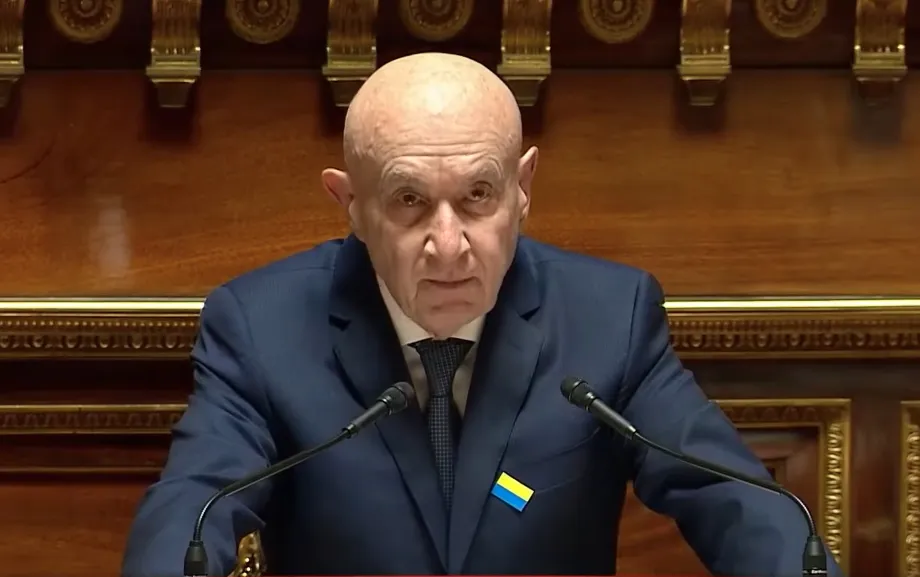
French Senator Claude Malhuret speaks on the Senate floor on Tuesday, March 4, 2025. (Credit: Public Sénat)Share

“Best take on current national affairs that have taken place in the past two months,” said one user on the Bluesky social media platform.

“Someone who competently gets to the point of what many of us who deal with this daily already know,” wrote another.

These users were not reacting to the latest late-night show, a political analysis in The Atlantic or the New York Times, or even a TV appearance by a representative from the Democratic party. They were praising a French lawmaker after watching his speech on the French Senate floor on Tuesday, as it made the rounds across Europe and North America. By Thursday morning, social media posts about the speech had been viewed at least hundreds of thousands of times.

Amid the fallout after US President Donald Trump reversed an 80-year-long strategic partnership with Europe to side with Russia in the Ukraine war, Claude Malhuret, a center-right senator who was largely unknown outside France, struck a chord that resonated with both European and American audiences.

During a general session in the French Senate, Malhuret offered an eight-minute-long, extremely direct “intervention” about the war in Ukraine and the security of Europe. For the most part, however, his speech—which among other things called Trump an “incendiary emperor”—was a critique of the Trump administration. Foreign officials and lawmakers don’t generally comment about the domestic politics of another country, much less of an ally.

Malhuret’s speech was not directed at an American audience. It was meant for the French, as some lawmakers push for quickly increasing defense spending to protect Ukraine and form an independent European defense force. But to many across the Atlantic, it was a clear-eyed take on American politics.

Because the speech comes at what seems a historical moment in the transatlantic relations, a video with English subtitles and an English transcript of the speech are published below.

Full English transcript of Malhuret’s speech:

Europe is at a critical turning point in its history. The American shield is slipping, Ukraine risks being abandoned, Russia strengthened.

Washington has become the court of Nero, an incendiary emperor, submissive courtiers, and a jester high on ketamine in charge of purging the civil service.

This is a tragedy for the free world, but it is first and foremost a tragedy for the United States. Trump’s message is that there is no point in being his ally since he will not defend you, he will impose higher tariffs on you than on his enemies and will threaten to seize your territories while supporting the dictatorships that invade you.

The ‘king of the deal’ is showing what the art of the deal is on his stomach. He thinks he will intimidate China by lying down in front of Putin, but Xi Jinping, seeing such a submissiveness, is probably accelerating preparations for the invasion of Taiwan.

Never in history has a US President capitulated to the enemy. Never has any one of them supported an aggressor against an ally … trampled on the US Constitution, issued so many illegal executive orders, dismissed judges who could have prevented him from doing so, dismissed the military senior staff in one fell swoop, weakened all checks and balances, and taken control of social media.

This is not an illiberal drift, it is the beginning of the confiscation of democracy. Let us remember that it took only one month, three weeks and two days to bring down the Weimar Republic and its Constitution.

RELATED:

How the shutdown of USAID will hurt Americans and empower foreign adversaries

I have faith in the strength of American democracy, and the country is already protesting. But in one month, Trump has done more harm to America than in four years of his last presidency. We were at war with a dictator, now we are fighting a dictator backed by a traitor.

Eight days ago, at the very moment that Trump was rubbing Macron’s back in the White House, the United States voted at the UN with Russia and North Korea against the Europeans demanding the withdrawal of Russian troops.

Two days later, in the Oval Office, the military service shirker was giving war hero Zelensky lessons in morality and strategy before dismissing him like a groom, ordering him to bend or resign.

Tonight, he took another step into infamy by stopping the delivery of weapons that had been promised. What to do in the face of this betrayal? The answer is simple: confront it.

And first of all, let’s not be mistaken. The defeat of Ukraine would be the defeat of Europe. The Baltic States, Georgia, Moldova are already on the list. Putin’s goal is to return to Yalta, where half the continent was ceded to Stalin.

The countries of the South are waiting for the outcome of the conflict to decide whether they should continue to respect Europe or whether they are now free to trample on it.

What Putin wants is the end of the order put in place by the United States and its allies 80 years ago, with as its first principle the prohibition of acquiring territory by force.

This idea is at the core of the United Nations, where today Americans vote in favor of the aggressor and against the attacked, because the Trumpian vision coincides with that of Putin: a return to spheres of influence, the great powers dictating the fate of small countries.

“Give me Greenland, Panama, and Canada. You can get Ukraine, the Baltics, and Eastern Europe. He can get Taiwan and the China Sea.”

In the dinners of the oligarchs of the Gulf of Mar-a-Lago, they call this “diplomatic realism.”

So we are now standing alone. But the idea that Putin cannot be confronted is false. Contrary to the Kremlin’s propaganda, Russia is in bad shape. In three years, the so-called second largest army in the world has managed to grab only crumbs from a country three times less populated.

Interest rates at 25 percent, the collapse of foreign exchange and gold reserves, the demographic collapse, all show that [Russia] is on the brink of the abyss. The American helping hand to Putin is the biggest strategic mistake ever made in a war.

The shock is violent, but it has a virtue. Europeans are coming out of denial. They understood in one day in Munich that the survival of Ukraine and the future of Europe are in their hands and that they have three imperatives.

Accelerate military aid to Ukraine to compensate for the American abandonment, so that it holds out, and of course to impose its presence and that of Europe in any negotiation.

This will be costly. It will be necessary to end the taboo of using frozen Russian assets [and] circumvent Moscow’s accomplices within Europe itself by a coalition of only the willing countries, which includes, of course, the United Kingdom.

RELATED:

Question for the candidates: What will you do to avoid a nuclear arms race with Russia and China?

Second, demand that any agreement be accompanied by the return of kidnapped children, prisoners and absolute security guarantees. After Budapest, Georgia and Minsk, we know what agreements with Putin are worth. These guarantees require sufficient military force to prevent a new invasion.

Finally—and this is the most urgent because it is what will take the most time—we must build a European defense, too-long neglected to the benefit of the American umbrella since 1945 and scuttled since the fall of the Berlin Wall.

It is a Herculean task, but it is on its success or failure that the leaders of today’s democratic Europe will be judged in the history books.

Friedrich Merz has just declared that Europe needs its own military alliance. This is a way to recognize that France has been right for decades in arguing for strategic autonomy.

It remains to build it.

It will be necessary to invest massively, strengthen the European Defense Fund outside the Maastricht debt criteria, harmonize weapons and munitions systems, accelerate the entry into the [European] Union of Ukraine, which is today the leading European army, rethink the place and conditions of nuclear deterrence based on French and British capabilities, relaunch the anti-missile defense and satellite programs.

The plan announced yesterday by Ursula von der Leyen is a very good starting point. And much more will be needed.

Europe will only become a military power again by becoming an industrial power again. In a word, the Draghi report will have to be implemented. For good.

But the real rearmament of Europe is its moral rearmament.

We must convince public opinion against war weariness and fear, and especially in the face of Putin’s cronies, the far right and the far left.

They argued again yesterday in the National Assembly, Mr Prime Minister, before you, against European unity, against European defense.

They say they want peace. What neither they nor Trump say is that their peace is capitulation, the peace of defeat, the replacement of “de Gaulle Zelensky” by a “Ukrainian Pétain” at Putin’s beck and call. The peace of the collaborators who have refused any aid to the Ukrainians for three years.

Is this the end of the Atlantic Alliance? The risk is great.

But in the last few days, the public humiliation of Zelensky and all the crazy decisions taken during the past month have finally made the Americans react.

Polls are falling. Republican lawmakers are being greeted by hostile crowds in their constituencies. Even Fox News is becoming critical.

The Trumpists are no longer in their majesty. They control the executive, Congress, the Supreme Court, and social networks.

But in American history, the defenders of freedom have always prevailed. They are beginning to raise their heads.

The fate of Ukraine is being played out in the trenches, but it also depends on those in the US who want to defend democracy, and here on our ability to unite Europeans, find the means for their common defense, and make Europe the power it once was in history and that it hesitates to become again.

Our parents defeated fascism and communism at great cost.

The task of our generation is to defeat the totalitarianisms of the 21st century.

Long live free Ukraine, long live democratic Europe.

Together, we make the world safer.

The Bulletin elevates expert voices above the noise. But as an independent nonprofit organization, our operations depend on the support of readers like you. Help us continue to deliver quality journalism that holds leaders accountable. Your support of our work at any level is important. In return, we promise our coverage will be understandable, influential, vigilant, solution-oriented, and fair-minded. Together we can make a difference.

Make your gift now

Keywords: Donald Trump, Elon Musk, European security, France, Russia, Russia-Ukraine war, Ukraine, Vladimir Putin, Volodymyr Zelensky
Topics: Multimedia, Nuclear Risk, S

Posted in Uncategorized | Tagged , , , , | Leave a comment

Grok 3. Using X = suggestion = ask a question. Years writing about how TBI has impacted on my life, taking prompts from articles read, this takes just a minute. This is AI and it is time for people to engage in this leap frog era of knowledge which is about power.

Traumatic brain injury (TBI) can have a wide range of long-term effects, depending on the severity of the injury, the area of the brain affected, and the individual’s overall health and recovery process. Below is an overview of potential long-term effects based on current understanding:

1. Cognitive Effects

  • Memory Problems: Difficulty with short-term memory, recalling events, or learning new information.
  • Concentration and Attention: Trouble focusing or sustaining attention for extended periods.
  • Executive Functioning: Challenges with planning, problem-solving, decision-making, or organizing tasks.
  • Processing Speed: Slower thinking or reaction times.

2. Physical Effects

  • Headaches: Chronic or recurring headaches, including migraines.
  • Fatigue: Persistent tiredness or lack of energy.
  • Seizures: Post-traumatic epilepsy can develop, especially after moderate to severe TBI.
  • Motor Impairments: Weakness, coordination issues, or paralysis in parts of the body.
  • Sensory Changes: Vision problems (e.g., double vision, blurriness), hearing loss, or sensitivity to light and noise.
  • Sleep Disorders: Insomnia, excessive sleepiness, or disrupted sleep patterns.

3. Emotional and Behavioral Effects

  • Mood Swings: Irritability, anxiety, or depression, sometimes without clear triggers.
  • Personality Changes: Increased aggression, impulsivity, or apathy, which may alter relationships.
  • Post-Traumatic Stress: Particularly if the injury was caused by a violent or traumatic event.
  • Emotional Regulation: Difficulty controlling emotions, leading to outbursts or withdrawal.

4. Neurological and Degenerative Risks

  • Chronic Traumatic Encephalopathy (CTE): A progressive brain condition linked to repeated TBIs (common in athletes or military personnel), causing memory loss, confusion, and behavioral changes over time.
  • Increased Risk of Dementia: Some studies suggest a link between moderate/severe TBI and a higher likelihood of Alzheimer’s disease or other neurodegenerative disorders later in life.
  • Brain Atrophy: Loss of brain volume over time, potentially worsening cognitive and physical symptoms.

5. Social and Lifestyle Impacts

  • Relationship Strain: Changes in behavior or personality can affect family dynamics or friendships.
  • Employment Challenges: Difficulty returning to work or maintaining productivity due to cognitive or physical limitations.
  • Dependence: Severe cases may lead to reliance on caregivers for daily activities.

Factors Influencing Outcomes

  • Severity: Mild TBI (e.g., concussion) may resolve within weeks to months, while moderate to severe TBI can lead to lifelong effects.
  • Age: Older adults or very young children may face worse outcomes due to brain vulnerability.
  • Rehabilitation: Access to therapies (physical, occupational, cognitive) can significantly improve recovery.
  • Pre-existing Conditions: Mental health issues or prior injuries may complicate recovery.

Would you like me to dig deeper into any specific aspect, like treatment options, recent research, or personal stories from X posts? Just let me know!

treatment options

post-concussion syndrome

DeepSearch

Think

Attach

Posted in Uncategorized | Tagged , , , , | Leave a comment

Elon Musk is not taking Russia’s side or Ukraine’s side; he is taking the side of humanity. There are no winners in war. Prolonging the war and sacrificing the youth—sending these young men to die for nothing—is wrong and must end.

DogeDesigner

@cb_doge

Subscribe

Elon Musk is not taking Russia’s side or Ukraine’s side; he is taking the side of humanity. There are no winners in war. Prolonging the war and sacrificing the youth—sending these young men to die for nothing—is wrong and must end.

Posted in Uncategorized | Leave a comment

Harvard Professor Reveals the Worst Thing To Do with Your Money – Professor Arthur Brooks, Harvard

1.1M views 8 months ago George Kamel

💵 Create a free budget. Sign up for EveryDollar today! https://ter.li/wgjk2h

Posted in Uncategorized | Leave a comment

Harvard Professor reveals the Science of Happiness in 15 minutes | Arthur Brooks [ARC 2025]

Feb 17, 2025

“Happiness is a combination of three macro nutrients: enjoyment, satisfaction, and meaning.” We hope you enjoy this fascinating talk from Professor Arthur Brooks on the pursuit of happiness, and why it seems hard to come by in today’s culture.

__ Reserve your 1st edition copy of our new book, The Best of Our Inheritance. Pre-Order open until March 14, 2025: https://www.arcforum.com/store/p/the-…

Posted in Uncategorized | Leave a comment

Mo Gawdat: AI Knows What’s Wrong with Humanity?

Mar 8, 2025 #MoGawdat#AI#ArtificialIntelligenceAI is evolving faster than we ever imagined. While some see it as a threat, I see an opportunity. In this conversation, I explore how AI can create a world of abundance, but also why it is our responsibility to guide its development for the benefit of all.

  • Can AI solve humanity’s biggest challenges?
  • Why do ethics and human values play a crucial role in shaping AI?
  • Will we find happiness in a world where machines take over many tasks?

We are already witnessing how AI is reshaping our world—but the key question is how we will use it. This is not just a technological revolution; it’s a test of our humanity. Watch the video and share your thoughts in the comments! Does AI bring a bright future or new challenges? Let’s discuss! #MoGawdat#AI#ArtificialIntelligence#Future#ScarySmart#AIethics

Posted in Uncategorized | Leave a comment

Sam Harris: Breaking the spell of propaganda | Full Interview Source: Big Think

61,699 views Mar 7, 2025

61,699 views • Mar 7, 2025

“We’re awash in lies and misinformation to a degree that was not possible before we got the internet and in particular before we got social media.”

Subscribe to Big Think on YouTube ►    / @bigthink  

Up next, The illusion of self and the illusion of free will, explained ►    • The illusion of self and the illusion…  

Our world seems more fragmented than ever. Author and podcaster Sam Harris thinks that an open conversation with 8 billion strangers could solve that.

Here’s his full Big Think interview, in its entirety. 00:00:00 – Finding meaning in a world of disinformation 00:00:21 – When did you first become interested in debate? 00:01:28 – What is causing the polarization we are seeing in our society? 00:08:46 – How do we experience meaning? 00:14:37 – What concerns you most about the future? 00:21:49 – Why is freedom of speech such a powerful concept? 00:28:48 – How do our belief systems affect the world around us? 00:37:05 – How do we navigate the current landscape? 00:45:00 – What can individuals do to make the world a better place? 00:51:15 – How can we become better versions of ourselves? 01:04:44 – How can we reframe our mental state into a positive experience? 01:14:01 – Is artificial intelligence friend or foe? 01:22:08 – How can we develop artificial intelligence responsibly? 01:26:39 – How can the media regain lost trust? 01:36:13 – How can you tell who is telling the truth in media? Read the video transcript ►

https://bigthink.com/series/full-inte…

Posted in Uncategorized | Leave a comment

Grok AI: A person who asked it a question; the reply, their comment. I also asked a question of a completely different kind, it was about mental illness in America. I highly recommend people explore this topic. It is better than any report you would ever receive from a report by a State body in Ireland or maybe even the U.S.

Declan Ganley

@declanganley

Interesting moment this morning, I asked Grok AI a question on a subject I know a lot about. I wanted to see how accurate its answer would be. It was easily the most accurate summation I have ever read on the subject, better than anything ever yet written by a journalist or other human. It was not 100% on the mark, it still had gaps, some big ones, but it was the best yet. A human, after weeks or months of hard work could probably have bettered it but it would have required a level of dedication and specialization that is all too rare.

Posted in Uncategorized | Leave a comment

Trump gives Elon Musk his first ‘slap on the wrist’. Times Radio (Scott Lucas)

Mar 7, 2025

Professor of American studies at the Clinton Institute Scott Lucas tells Times Radio’s Maddie Hale that Donald Trump just gave Elon Musk his first “slap on the wrist” when the US President told cabinet secretaries that only they can make decisions about cutting staff from government departments, not Elon Musk or his Department of Government Efficiency. Join this channel to get access to perks –

   / @listentotimesradio  

Posted in Uncategorized | Leave a comment

Big Think: The “existential crisis” of knowledge work

Business — 

The “existential crisis” of knowledge work

Welcome to The Nightcrawler — a weekly newsletter from Eric Markowitz covering tech, innovation, and long-term thinking.

Abstract collage with red dice and handwritten text overlay, featuring a hand writing with a pen. Against a background of grid and bookshelf patterns, it captures an existential crisis. The title "The Night Crawler" hovers above, probing life's uncertainties.
Andriy Onufriyenko / Flavio Coelho / Kai Schwabe / Getty Images / gala / memorystockphoto / Adobe Stock / Big Think

Key Takeaways

  • Main Story: AI “Deep Research” functions are now surpassing human capabilities in many ways. 
  • The real value in research will lie with those who prioritize first-hand insights — while AI does the heavy lifting. 
  • Also among this week’s stories: The “Ludic Fallacy,” the infernal gateway of pen and paper, and Microsoft’s new topological qubit breakthrough.

Eric Markowitz Copy a link to the article entitled http://The%20“existential%20crisis”%20of%20knowledge%20work

Share The “existential crisis” of knowledge work on FacebookShare The “existential crisis” of knowledge work on Twitter (X)Share The “existential crisis” of knowledge work on LinkedIn

Story by

The Nightcrawler

Sign up for The Nightcrawler Newsletter

A weekly collection of thought-provoking articles on tech, innovation, and long-term investing from Nightview Capital’s Eric Markowitz.

Fields marked with an * are required

This is an installment of The Nightcrawler, a weekly collection of thought-provoking articles on tech, innovation, and long-term investing by Eric Markowitz of Nightview Capital. You can get articles like this one straight to your inbox every Friday evening by subscribing above. Follow him on X: @EricMarkowitz.

I’m in London this week for research and meetings, and a recurring theme keeps surfacing in my conversations: how is the nature of research evolving in a post-AI world?

What’s clear is that Deep Research functions on OpenAI and Grok 3 are now surpassing human capabilities in many ways. Even David Perell, known for his widely popular writing courses, recently announced he’s winding down his business — calling it an “existential crisis” — largely because AI is reshaping what it means to be a writer.

My view is evolving, but ultimately rather simple: the real value in research will accrue to those who prioritize in-person conversations, first-hand insights, and developing conviction — while leveraging AI for the heavy lifting of background work. As David writes: “The world of non-fiction writing has fundamentally changed, and many of the skills I’ve developed and built my career on are becoming increasingly irrelevant.”

  • Key quote: “The amount of expertise required to out-do an LLM is rising fast. For example, the quality of a well-prompted, ChatGPT Deep Research report is already higher than what I can produce in a day’s worth of work on almost any subject. The question is: What kinds of non-fiction writing will continue to last? Here’s a heuristic: The more a piece of writing comes from personal experience, the less it’s likely to be overtaken by AI. Personal writing, like biographies and memoirs, aren’t going away anytime soon. That’s because people have data about their lives that LLMs don’t have.”

Inside the “Ludic Fallacy”: The psychology of probabilities

Long-term investing isn’t about being right all the time. It’s about maximizing wins — and minimizing losses. Simple in theory; hard in practice.

Counterpoint Global’s latest report — authored by Michael Mauboussin and Dan Callahan — explores this idea through concepts like the Babe Ruth effect (embracing strikeouts for big wins), the hedgehog vs. fox mindset (updating views vs. clinging to one big idea), and behavioral psychology’s role in decision-making, including loss aversion and overconfidence. It also examines the ludic fallacy — the mistake of applying neat probabilities to a messy, uncertain world — highlighting how investors often misprice risk by treating markets like predictable games.

The key takeaway? Successful investing isn’t about perfect predictions. It’s about understanding expected value in an increasingly complex, unpredictable world.

  • Key quote: “Price is the relatively easy part. Buying or selling securities incurs transaction costs, and the magnitude of those costs depends on factors such as the liquidity of the security. But price is transparent and investors can estimate market impact. Value is the hard part. This is because value is really ‘expected value,’ which represents a range of potential payoffs with associated probabilities. Investing is an inherently probabilistic activity. The concept of expected value raises lots of issues that we will explore.”

The Most Important Time in History Is Now – via Tomas Pueyo

  • Key quote: “‍AI is progressing so fast that its researchers are freaking out. It is now routinely more intelligent than humans, and its speed of development is accelerating. New developments from the last few weeks have accelerated it even more. Now, it looks like AIs can be more intelligent than humans in 1-5 years, and intelligent like gods soon after. We’re at the precipice, and we’re about to jump off the cliff of AI superintelligence, whether we want to or not. When are we jumping? What’s at the bottom? Do we have a parachute?”

The age of pen and paper – via Frederik Gieschen

  • Key quote: “‍When you meet pen and paper with undivided attention, curiosity, and courage, you find a gate to your underworld. Like Dante, you must journey through the world of shadows and face all aspects of your being. When you emerge and see the light again, you get a chance to re-write our story. You also get a shot at transcendence.”

Satya Nadella – Microsoft’s AGI Plan & Quantum Breakthrough – via Dwarkesh Patel

  • Key quote: “Satya Nadella on: Why he doesn’t believe in AGI but does believe in 10% economic growth, Microsoft’s new topological qubit breakthrough and gaming world models, and whether Office commoditizes LLMs or the other way around.”

Posted in Uncategorized | Tagged , , , , | Leave a comment