Big Tech companies already know you. AI startups want that privilege, too
Source: Perplexity
The internet and social media companies that rose to prominence in the late 2000s and early 2010s have spent the past couple of decades — somewhat unwittingly — gathering the most vital component of the AI age: data.
For them, the key thing was predictive analytics. Algorithms not too dissimilar from those that have become so popular today, designed to parse a ton of data points to predict what post, video or link will keep someone on the platform longer, or what ad an individual user might actually click on, or what time a push notification might actually result in an app being opened (and a purchase being made).
These analytics are so powerful that the line betweenprediction and influence has become blurred to the point of nonexistence.
And when these same companies decided to get in on the generative AI train, they were already fueled up with ceaseless quantities of the thing that makes algorithms work. Data, data, data, data.
It’s an advantage that the AI startups want access to.
What happened: The reason the AI search startup is building a browser, according to CEO Aravind Srinivas, is to know its users even better through access to additional data sources, all so the company can sell more personalized ads.
“We want to get data even outside the app to better understand you. Because some of the prompts that people do in these AIs is purely work-related. It’s not like that’s personal,” he said on the TBPN podcast.He’s interested in the things people buy, the hotels and restaurants they go to, the specific subjects they browse for. “We plan to use all the context to build a better user profile and, maybe you know, through our discover feed we could show some ads there.”
Geoffrey Hinton, whose work shaped modern artificial intelligence, says companies are moving too fast without enough focus on safety. Brook Silva-Braga introduced us to Hinton in 2023 and recently caught up with him. Each weekday morning, “CBS Mornings” co-hosts Gayle King, Tony Dokoupil and Nate Burleson bring you the latest breaking news, smart conversation and in-depth feature reporting. “CBS Mornings” airs weekdays at 7 a.m. on CBS and stream it at 8 a.m. ET on the CBS News app. Subscribe to “CBS Mornings” on YouTube: / cbsmornings Watch CBS News 24/7: https://cbsnews.com/live/ Download the CBS News app: https://cbsnews.com/mobile/ Follow “CBS Mornings” on Instagram: / cbsmornings Like “CBS Mornings” on Facebook: / cbsmornings Follow “CBS Mornings” on X: / cbsmornings Subscribe to our newsletter: https://cbsnews.com/newsletters/ Try Paramount+ free: https://paramountplus.com/?ftag=PPM-0..
Mario Nawfal (@MarioNawfal) posted at 6:30 pm on Sun, Apr 27, 2025:
CHINA BUILT AN AI HOSPITAL WHERE ROBOTS ARE BASICALLY SPEEDRUNNING MED SCHOOL
Tsinghua University made a whole fake town called “Agent Hospital” where AI doctors treat virtual patients — faster than you can say “WebMD said I’m dying.”
AI for Good: Computational Chemistry Source: Unsplash
If you combine vinegar and baking soda, you will have accomplished two things. One, you’ve made a fun, explosive mess. And two, you’ve witnessed a chemical reaction, that vital process wherein substances (or reactants) are transformed into new and different substances. Such reactions are a vital component of technological innovation. When you’re dealing with chemical reactions, there’s a point called the transition state, which is the point at which the reaction must occur. Understanding the details around the transition state is a vital step for researchers working to create the kind of conditions that will produce a desired reaction.
What happened: Researchers at MIT recently designed a machine learning algorithm that is able to, with a high degree of accuracy, predict those transition states. And it does so in less than a second. Since transition states, well, transition, very quickly, they’re almost impossible to observe experimentally.
The other option is to calculate the structures of those states based on quantum chemistry, a process that requires tons of computing power and could take days. The model, React-OT, overcomes these challenges. Trained on a dataset of around 9,000 chemical reactions, the algorithm was tuned to make a series of guesses leading up to its final prediction. The researchers said that they were able to keep these guess-steps to around five, which takes about half a second. The model performed with a high degree of accuracy on reactants within the dataset, as well as reactions that it had not been trained on.
“To quickly predict transition state structures is key to all chemical understanding,” Markus Reiher, a professor of theoretical chemistry at ETH Zurich, told MIT. Reiher was not involved in the study. “The new approach presented in the paper could very much accelerate our search and optimization processes, bringing us faster to our final result. As a consequence, also less energy will be consumed in these high-performance computing campaigns. Any progress that accelerates this optimization benefits all sorts of computational chemical research.”
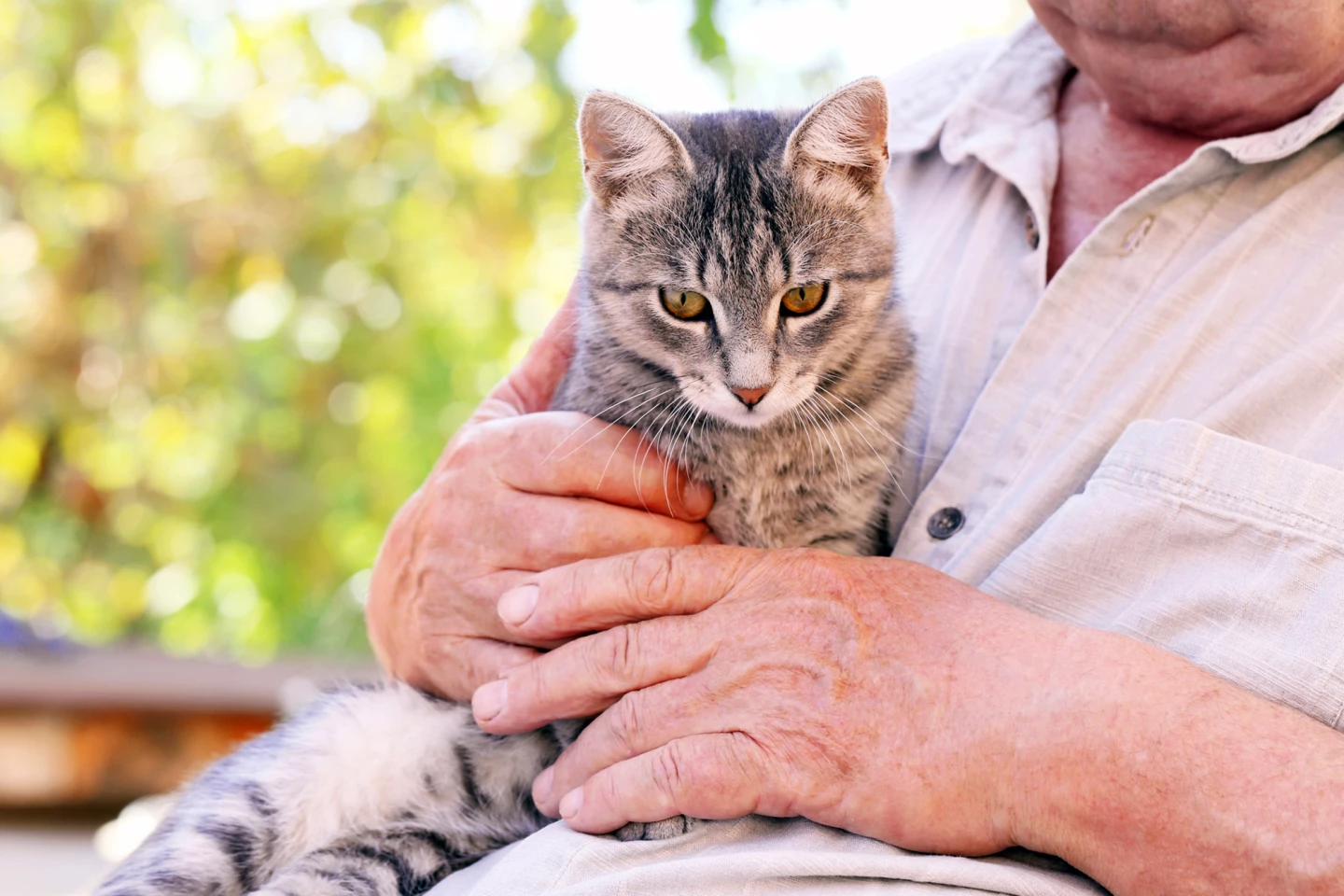
Two groups that are particularly prone to social isolation – older adults and international students – felt much less lonely when they engaged in pet-focused activities, according to a new study. The cost-effective approach also boosted health and well-being.
We’ve previously written about how loneliness and social isolation can each have a detrimental effect on health, especially mental health. And we’ve covered the positives that pets can provide, boosting mental health and brain function.
In a new study by the National Center for Healthy Ageing, a partnership between Monash University and Peninsula Health, researchers looked at whether engaging with animals fostered social connections and improved the health of two groups who are particularly at risk of loneliness: older adults living in aged care facilities and international students who’ve left their home countries in pursuit of education.
“We found that both older adults and international students experienced a significant decrease in feelings of loneliness and a significant increase in their health,” said Dr Em Bould, a senior research fellow at Monash’s School of Primary and Allied Healthcare and the study’s lead and corresponding author. “The presence of live pets in particular helped to break the ice and facilitated conversations between participants.”
International students, who are prone to social isolation, were less lonely after pet-focused activities
For the Australian-first study, the researchers approached two residential aged care facilities in Victoria, Australia, to host a pilot project of the “Pets and People” program they’d developed. Six older adults (average age, 83), 10 international Monash University students (average age, 22) and three senior management staff from the aged care facilities participated in the pilot, which involved them meeting face-to-face and undertaking “animal-assisted activities” for an hour a week for 18 weeks. The researchers ensured that, each week, the overarching theme of the meetings was pets, including Bould’s pet dog, Barney, a robotic companion dog or cat that had been gifted to the facilities by the researchers, and pets brought in by residents’ family members.
Before commencing the Pets and People program and afterwards, the participants completed questionnaires that assessed their sense of social connection and community, subjective well-being and mental health, confidence to engage in social situations, and loneliness. Loneliness was assessed using the UCLA Loneliness Scale, which measures how often a person feels disconnected from others. The EuroQol-5 Dimension Instrument (EQ-5D-5L) was used to measure health across five domains: mobility, self-care, usual activities, pain/discomfort, and anxiety/depression. Each domain has five levels, from “no problems” to “extreme problems,” and is combined into a single number that reflects the person’s health state. Also, within four weeks of completing the Pets and People program, participants were invited to take part in a semi-structured interview to gauge their subjective experiences.
The Pets and People program is a cost-effective way of improving well-being and quality of life
Participants’ responses to interview questions were instructive. The researchers found that participants’ shared interest in pets led to more meaningful engagement with others. As one older adult told researchers, “One hundred percent, having a shared interest really helped get the conversation going. I don’t get any company, so I enjoyed talking to the students about animals, but we also talked about other things. It’s perked me up. I look forward to it.”
Similarly, an international student participant said, “I think it’s easier when there’s a starting point for me to talk to them rather than starting from nothing, because I get it’s hard, like for them to share something or share experiences of their life with a complete stranger.”
They also found that the presence of pets, whether real or robotic, helped participants’ subjective well-being. “I got a lot of pleasure out of the program, and Barney being there, of course, but I liked [the robotic pet] the best … I get very lonely here, so the program has helped facilitate social connections for me,” said an older adult. And an international student: “The activities and the pets were definitely helpful, it just makes everyone feel happy, because who doesn’t like pets?”
Further proof of improvement was seen in the participants’ UCLA Loneliness Scale scores, which decreased significantly from a mean of 49.4 to a mean of 41.4. This was accompanied by a clinically significant increase in EQ-5D-5L scores from a mean of 0.741 to 0.800, indicating an improvement in health-related quality of life.
The researchers concluded that the program was relatively cost-effective. For each person who completed 10 or more weeks of the 18-week program, the cost was AU$237 (around US$150) per person.
“The pilot of the Pets and People program and evaluation findings have demonstrated a promising example of a low-cost program that can enhance health-related quality of life, well-being and feelings of loneliness,” said Bould. “The Pets and People program has the potential for replication and scaling across aged care settings both in Australia and internationally.”
Summary: A new study reveals that sleep not only consolidates existing memories but also primes the brain for future learning. Researchers tracked neuronal activity in mice and discovered ‘engram-to-be cells’ that synchronize during sleep, preparing to encode new experiences.
This dual role suggests that sleep quality between learning sessions affects both memory retention and the ability to acquire new knowledge. The findings could influence educational practices and treatments for cognitive and memory disorders.
Key Facts:
Dual Sleep Role: Sleep strengthens past memories while preparing neurons for new learning experiences.
Engram-to-Be Cells: Specialized neurons synchronize during post-learning sleep, setting the stage for future memory formation.
Mechanistic Insights: Synaptic depression and scaling during sleep are crucial for building readiness for future learning.
Source: University of Toyama
Memory formation, storage, and retrieval are fundamental processes that define who we are and how we interact with the world.
At the cellular level, these processes rely on specialized neurons called engram cells—neuronal populations that physically encode our experiences and allow us to recall them later.
Their findings revealed that two parallel processes occur during post-learning sleep. Credit: Neuroscience News
Over the past few decades, scientists have made significant progress in identifying these neuronal ensembles and understanding some aspects of memory allocation.
Although sleep is widely known to be essential for memory processing and consolidation, many of its underlying mechanisms and functions are unclear.
Traditional views have largely focused on sleep as a backward-looking process that serves to strengthen past experiences, but could it simultaneously help prepare the brain for new learning?
In a recent effort to tackle this question, a research team from Japan, led by Distinguished Professor Kaoru Inokuchi from the University of Toyama, uncovered a dual role for sleep in memory processing.
Their paper, which will be published in Nature Communications on April 28, 2025, explores how the brain simultaneously preserves past memories while preparing for future ones during sleep periods.
The study was co-authored by Specially Appointed Assistant Professor Khaled Ghandour, also from the University of Toyama; Dr. Tatsuya Haga from the National Institute of Information and Communications Technology; Dr. Noriaki Ohkawa from Dokkyo Medical University; and Professor Tomoki Fukai from OIST.
The researchers employed an advanced imaging system that combines live calcium imaging with engram cell labeling, allowing them to track neuronal activity in mice before, during, and after learning experiences.
This approach gave them unprecedented insights into how specific populations of neurons behave across different cognitive states, including during sleep periods before and after learning events.
Their findings revealed that two parallel processes occur during post-learning sleep. First, engram cells that encoded an initial learning experience showed reactivation patterns—confirming the well-established consolidation process.
Remarkably, they also identified a separate population of neurons, which they termed ‘engram-to-be cells,’ that became increasingly synchronized during post-learning sleep. These cells were later shown to encode a new, different learning experience.
“Engram-to-be cells exhibited increased coactivity with existing engram cells during sleep, suggesting that this interaction helps shape new memory networks,” explains Prof. Inokuchi.
To understand the mechanisms behind this phenomenon, the team developed a neural network model simulating hippocampal activity.
The model suggested that synaptic depression and scaling, which are mechanisms that adjust connection strengths between neurons during sleep, are essential for the emergence of engram-to-be cells.
When these processes were disabled in the model, the preparation of neurons for future learning was significantly impaired.
The study also revealed interesting dynamics between existing engram cells and engram-to-be cells, showing increased co-activation during post-learning sleep.
This hints at some form of information transfer or coordination between neural networks representing past and future memories.
These findings have significant implications for our understanding of learning and memory.
They suggest that the quality of sleep between learning sessions may determine not only how well we remember what we’ve already learned, but also how effectively we can learn new information.
This could influence approaches to education, cognitive enhancement, and the treatment of memory disorders.
Additionally, the research opens new avenues for exploring how sleep disturbances might impact not just memory consolidation but also the brain’s preparedness for future learning challenges.
“We believe that manipulating brain activity during sleep or sleep patterns may uncover methods to enhance memory by unlocking the brain’s latent potential,” says Prof. Inokuchi.
Overall, this study underscores the critical role of sleep in maintaining cognitive function and overall well-being.
“We want people to understand that sleep is not just about rest—it plays a crucial role in how the brain processes information,” Prof. Inokuchi concludes.
“With that in mind, we hope everyone will begin to value sleep more and use it as a way to improve their overall quality of life.”
About this sleep, memory, and learning research news
Author: Yumiko Kato Source: University of Toyama Contact: Yumiko Kato – University of Toyama Image: The image is credited to Neuroscience News
GOOGLE’S NEW QUANTUM CHIP JUST CRUSHED 10 SEPTILLION YEARS OF WORK IN 5 MINUTES Google’s new chip, Willow, just solved a problem that would’ve taken a normal supercomputer 10,000,000,000,000,000,000,000,000 years (that’s a septillion, you got it right) — and it knocked it out in under 5 minutes like it was nothing. Source: Creators Of AIverse
🇺🇸 GOOGLE’S NEW QUANTUM CHIP JUST CRUSHED 10 SEPTILLION YEARS OF WORK IN 5 MINUTES
Google’s new chip, Willow, just solved a problem that would’ve taken a normal supercomputer 10,000,000,000,000,000,000,000,000 years (that’s a septillion, you got it right) — and it knocked it out… pic.twitter.com/CmWb1jzO8M
Just 150 people came to the first Web Summit in Dublin. I never imagined it would grow to hundreds of thousands of founders, startups, investors and business people, attending every year across multiple Web Summit’s on almost every continent.
Just 150 people came to the first Web Summit in Dublin. I never imagined it would grow to hundreds of thousands of founders, startups, investors and business people, attending every year across multiple Web Summit’s on almost every continent. Today we’re announcing a major new partnership with Brazil and our host city, Rio de Janeiro. We’ve signed a new five year partnership agreement keeping Web Summit in Rio until 2030. I was honoured to be joined by Brazil’s Minister for Innovation and Rio’s Mayor on stage to make the announcement last night in Rio. A big thank you to Sao Paulo who were a close second, but in the end nothing compares to Rio. Most importantly nothing compares to Brazil in South America. This giant of a country is no longer sleeping. Brazil is very much awake, and it’s innovating like never before. We’re looking forward to bringing tens of thousands of entrepreneurs, investors, business people and more from around the world to Brazil over the coming half decade. Finally, a big thank you to the incredible team at Web Summit. This is a hugely significant milestone for us. We’ve an awful lot to celebrate these last few weeks.
I hope to see you in Rio or somewhere in the world soon. Much love.
I hope to see you in Rio or somewhere in the world soon. Much love.

 Source: Perplexity
 Source: Unsplash