The New Atlas: reverse age … and demential related cognitive decline. Comment: Learn the importance of cognitive reserve

Natural molecule reverses age- and dementia-related cognitive decline

By Paul McClure

May 14, 2025

Overproduction of hevin (green) by astrocyte cells (red) reversed cognitive impairment in mice

Overproduction of hevin (green) by astrocyte cells (red) reversed cognitive impairment in mice

Felipe Cabral-Miranda & Ana Paula Bergamo Araujo/Agência FAPESP CC BY-NC 4.0

View 1 Images

In a new study, researchers identified a molecule produced by a particular type of brain cell that reversed the cognitive decline seen in both healthy aging and dementia. It provides a deeper understanding of the aging process and a potential target for future treatments.

Aging causes a decline in cognition, as does dementia, including Alzheimer’s disease (although the former is a natural process, the latter is pathological). For years, scientists have been investigating ways of reversing that decline, and there have been some promising discoveries.

In a new study, a collaboration between the Federal University of Rio de Janeiro (UFRJ) and the University of São Paulo (USP) in Brazil, researchers examined the impact of hevin, a molecule secreted by star-shaped brain cells called astrocytes, on cognitive decline in older mice with and without dementia.

“Hevin is a well-known molecule involved in neural plasticity,” said the study’s co-corresponding author, Flávia Alcantara Gomes, PhD, head of the Cellular Neurobiology Laboratory in the Institute of Biomedical Sciences at UFRJ. “It’s naturally secreted by cells in the central nervous system that support the functioning of neurons and are known as astrocytes. We found that the overproduction of hevin is capable of reversing cognitive deficits in aged animals by improving the quality of synapses in these rodents.”

Astrocytes are large cells that actively support and protect nerve cells (neurons), including the connections, or synapses, between them. They are involved in the formation, function, and elimination of synapses, the regulation of brain chemistry, and even influence synaptic plasticity, the brain’s ability to adapt and change over time. Astrocytes secrete hevin, a type of protein that helps regulate how synapses form and function by influencing how neurons interact with one another.

The researchers started by examining public health data and found that hevin levels were decreased in the brains of people with Alzheimer’s disease compared to healthy people of the same age. Moving on to mice, they found that hevin was also decreased in mouse models of Alzheimer’s disease. This led the researchers to consider whether manipulating the levels of hevin in astrocytes would affect the signs and symptoms of Alzheimer’s disease.

After causing the overproduction of hevin in some mice and not in others, the researchers found that boosting hevin levels prevented cognitive decline in both the Alzheimer’s mouse models and the healthy middle-aged mice. Interestingly, though, the researchers observed that elevated hevin levels didn’t have any effect on beta-amyloid plaques, the buildup of which is a hallmark of Alzheimer’s disease.

“To our surprise, although the cognitive deficit was reversed in Alzheimer’s model animals, there was no change in the content of the plaques,” said lead and co-corresponding author Felipe Cabral-Miranda, PhD, a scientist at UFRJ’s Institute of Biomedical Sciences. “This highlights the complexity of the disease in terms of having a multifactorial mechanism. This is illustrated by older people who have plaque formation but show no symptoms of the disease.

“Although there’s still no consensus among researchers, I work with the hypothesis that the formation of beta-amyloid plaques isn’t the cause of Alzheimer’s. And the results of the study, by finding proof of concept for a molecule that can reverse cognitive decline without affecting beta-amyloid plaques, support the hypothesis that these, although involved in the mechanisms of the pathology, aren’t enough to cause Alzheimer’s.”

There is still a long way to go from these initial animal studies to a treatment for humans. But the study’s findings are certainly promising.

“Of course, in the future it’ll be possible to develop drugs that have the same effect as hevin,” Gomes said. “For now, the fundamental benefit of this work is a deeper understanding of the cellular and molecular mechanisms of Alzheimer’s disease and the aging process. The originality lies in understanding the role of the astrocyte in this process. We’ve taken the focus away from neurons, shedding light on the role of astrocytes, which we’ve shown could also be a target for new treatment strategies for Alzheimer’s disease and cognitive impairment.”

The study was published in the journal Aging Cell.

Source: Agência FAPESP

Posted in Uncategorized | Tagged , , , , | Leave a comment

The AI Revolution Is Underhyped | Eric Schmidt | TED Just imagine someone saying AI is under-hyped!

May 15, 2025 #TED#TEDTalks#AIThe arrival of non-human intelligence is a very big deal, says former Google CEO and chairman Eric Schmidt. In a wide-ranging interview with technologist Bilawal Sidhu, Schmidt makes the case that AI is wildly underhyped, as near-constant breakthroughs give rise to systems capable of doing even the most complex tasks on their own. He explores the staggering opportunities, sobering challenges and urgent risks of AI, showing why everyone will need to engage with this technology in order to remain relevant. (Recorded at TED2025 on April 11, 2025) If you love watching TED Talks like this one, become a TED Member to support our mission of spreading ideas: https://ted.com/membership

Posted in Uncategorized | Leave a comment

Big Think. How curiosity rewires your brain for change

Smart Skills — 

How curiosity rewires your brain for change

Curiosity is often considered a personality quirk. Neuroscience paints a different picture.

A white brain model is wrapped in colorful electrical cables, set against a plain blue background.
Credit: Sergey Novikov / Adobe Stock / Big Think

Key Takeaways

  • The brain often responds to change and uncertainty by activating the amygdala, triggering the same stress responses as physical danger. 
  • Curiosity helps reframe uncertainty as an invitation, not a threat. 
  • Neuroscientist Anne-Laure Le Cunff shares five ways to cultivate curiosity in times of change.

Anne-Laure Le CunffCopy a link to the article entitled http://How%20curiosity%20rewires%20your%20brain%20for%20change

Share How curiosity rewires your brain for change on FacebookShare How curiosity rewires your brain for change on Twitter (X)Share How curiosity rewires your brain for change on LinkedIn

Sign up for Big Think on Substack

The most surprising and impactful new stories delivered to your inbox every week, for free.

Subscribe

A few years ago, I decided to retrain as a neuroscientist. It was a leap into the unknown — no roadmap, just a desire to grow. I chose to approach this time of change with curiosity, and I started a weekly newsletter to document what I learned. Suddenly, my doubts became fuel for discovery.

What I didn’t know at the time was that this systematic curiosity was actively reshaping my brain in ways that would build resilience for navigating future changes.

Curiosity is often treated as a personality quirk — something childlike and playful, maybe even optional. But neuroscience paints a different picture. When we’re curious, the brain’s dopaminergic system — the same one that lights up when we anticipate a reward — kicks into gear. Simply put, curiosity makes us feel good about the prospect of discovering something new.

It also helps us learn more efficiently, enhancing hippocampal activity and boosting our capacity to form and retain new memories. Studies show that when people are curious about a topic, they not only remember the specific information they were interested in but also retain unrelated material better.

Perhaps most importantly, curiosity promotes neuroplasticity, the brain’s ability to rewire itself in response to new experiences. This makes it an ideal cognitive state for those inevitable moments of change when we need to break established neural patterns and form new connections.

Curiosity in times of change

Change, by nature, introduces uncertainty. And the human brain typically responds to uncertainty by activating the amygdala, triggering the same stress responses as physical danger.

What curiosity does is transform that uncertainty from a threat into an invitation.

First, curiosity increases our tolerance for prediction error: the gap between what we expect and what we actually experience. This makes us more flexible in our thinking, less reactive, and better at updating our mental models.

There’s also a balancing act happening between two major brain networks: The default mode network (associated with imagination and introspection) and the executive control network (responsible for goal-oriented behavior) often take turns.

Curiosity helps synchronize these networks, allowing us to envision possibilities while also taking action — the exact balance needed to navigate change.

Emotionally, curiosity can also act as a buffer. When we view an unexpected situation through a curious lens (“what can I learn from this?”), we are less likely to spiral into anxiety or avoidance. This cognitive reframe can dramatically alter how we experience the inherent uncertainty of change.

5 ways to navigate change with curiosity

Curiosity isn’t a fixed trait you either have or lack — it’s a cognitive skill that can be developed. Here are five ways to cultivate it, especially during times of change:

1. Ask “what if?” instead of “what now?”

Reframe fear-based responses with questions that invite exploration. Instead of “I don’t know how to handle this new role,” try “What if I approached this role as a learning opportunity?” This simple shift activates your prefrontal cortex rather than your amygdala, which will help minimize stress in times of change.

2. Take field notes

Pretend that you are an anthropologist studying your own life. Document what surprised you, what you don’t understand yet, or what made you pause during the day. Be specific: “Today I noticed X and wondered why…” This practice builds a curiosity habit and has the added bonus of creating a record of your learning journey.

3. Run tiny experiments

Want to switch careers? Interview one new person in the field every week for six weeks. Curious about writing? Start with a weekly newsletter for three months instead of a book. These tiny experiments will provide valuable data while helping you regain a sense of agency even when the path forward is uncertain.

4. Embrace not knowing

Practice saying “I don’t know yet” without immediately searching for an answer. Spend time exploring questions without rushing to conclusions. Research suggests that this enhances cognitive flexibility and creative problem-solving — critical neural functions that support adaptation during transitions.

5. Treat failure as data

When something doesn’t go as planned, resist labeling it as a failure. Instead, treat unexpected outcomes as valuable information. By viewing setbacks as an inevitable part of growth rather than an indication of personal shortcomings, you can transform potentially discouraging moments into opportunities to learn.

It’s important to note that the brain’s capacity for curiosity fluctuates. The amygdala’s activity increases under stress, making curiosity harder to access precisely when it might be most beneficial. That’s why regularly practicing even small shifts in perspective can be helpful to train ourselves to re-engage the prefrontal cortex.

We often think of change as something to endure. But change is how we grow. Curiosity activates dopaminergic pathways, strengthens hippocampal function, improves memory formation, and increases prediction error tolerance, which enhances our capacity to navigate uncertainty with greater flexibility and less reactivity.

So, the next time you face a big change and feel anxious or stuck, try asking yourself a simple question: What if I got curious instead?

Tags

Posted in Uncategorized | Tagged , , , , | Leave a comment

The Deep View: AI for Good: AI is speeding up drug development.

AI for Good: AI is speeding up drug development
Source: ChatGPT 4o
AI is helping pharmaceutical researchers find new treatments faster and cheaper by surfacing promising compounds buried deep in massive datasets. Dotmatics, a R&D software company, recently acquired by Siemens for $5.1B, is applying AI to identify potential drug candidates in a fraction of the time it used to take.
Phil Mounteney, VP of Science and Technology at Dotmatics, explains it like this: “The art of drug discovery is really finding drugs in these massive haystacks of data. AI is like a supercharged magnet that helps us sort through those haystacks and find the needle way more efficiently than before.”
Why it matters: Drug development is notoriously long and expensive. It can take up to 10 years and cost between $2 and $6 billion to bring a single drug to market. Of that, roughly six years are spent on early discovery—just identifying the compound that might work. Dotmatics is using AI to cut that phase down to as little as two years.
Faster discovery means earlier trials, quicker regulatory paths and lower costs for companies and patients alike. The company believes that AI could reduce the full research and clinical timeline by as much as 50 percent.
How it works: Dotmatics combines AI with scientific data platforms to accelerate each step of the R&D process:
It scans huge chemical libraries to identify overlooked or repurposable compounds.It models how drug candidates interact with target proteins or diseases.It automates lab workflows that used to take researchers weeks.It pulls from historic datasets to inform present-day projects.
Mounteney says AI played a key role in accelerating the COVID mRNA vaccine rollout by leveraging years of stored research and rapidly analyzing it to guide development.
Big picture: Drug discovery may be one of the most direct ways AI can improve human health. Tools like Dotmatics are not replacing scientists but instead giving them the speed and precision to find answers faster. With over $300 million in projected revenue for 2025, the company is betting that faster cures can also mean a stronger business case. 
Posted in Uncategorized | Tagged , , , , | Leave a comment

Sir Niall Ferguson … University of Austin (UATX). Jewish in Harvard or in other colleges. A “pyramid of white supremacy”

Posted in Uncategorized | Leave a comment

University of Austin, Texas. Sir Niall Ferguson. Keep under review University of Austin, Texas. Core is Meritocracy not Woke.

Posted in Uncategorized | Leave a comment

Carl Sagan: Words of wisdom going back decades but U.S. needs to embrace today.

Posted in Uncategorized | Leave a comment

Thomas Sowell Quote:

Thomas Sowell Quotes (@ThomasSowell) posted at 8:00 pm on Tue, May 13, 2025:


“People who have no idea that Africans enslaved Europeans, just as Europeans enslaved Africans, should read ‘Christian Slaves, Muslim Masters’ by Professor Robert C. Davis of Ohio State University.”

— Thomas Sowell


(https://x.com/ThomasSowell/status/1922366237696524562?t=4aY9u_oR3BaWlZXmLNgtNg&s=03) 

Posted in Uncategorized | Leave a comment

The__Byte: New Law Would Ban All AI Regulation for a Decade. Quote: “Meanwhile, the impacts of a regulation-free AI landscape are already being felt. Emotive, addictive AI companions have been rolled out explicitly to teenagers without evidence of safety, AI companies are missing their climate targets and spewing unchecked emissions into American neighborhoods, and nonconsensual deepfakes of women and girls are flooding social media.” Comment: Surely we need AI guardrails

Accountability Now

/ Artificial Intelligence

New Law Would Ban All AI Regulation for a Decade

by Maggie Harrison Dupré

May 13, 11:11 AM EDT

Getty / Futurism

Getty / Futurism

This is insane.

Fresh Hell

An updated version of the bill introduced last night by Congressman Brett Guthrie (R-KY), who chairs the House Committee on Energy and Commerce, includes a new and sweeping clause about AI advancement declaring that “no State or political subdivision thereof may enforce any law or regulation regulating artificial intelligence models, artificial intelligence systems, or automated decision systems during the ten year period beginning on the date of the enactment of this Act.”

It’s a remarkably expansive provision that, as 404 notes, likely reflects the engraining of Silicon Valley figures and influences into Washington and the White House. Tech CEOs have vied for president Donald Trump’s attention since he was inaugurated, and the American tech industry writ large has become a fierce and powerful lobbying force. The Trump administration is also stacked with AI-invested tech moguls like David Sacks, Marc Andreessen, and Elon Musk.

Meanwhile, the impacts of a regulation-free AI landscape are already being felt. Emotive, addictive AI companions have been rolled out explicitly to teenagers without evidence of safety, AI companies are missing their climate targets and spewing unchecked emissions into American neighborhoods, and nonconsensual deepfakes of women and girls are flooding social media.

No regulation will likely mean a lot more fresh hell where that came from — and little chance of stemming the tide.

Blank Checks

The update in the proposed law also seeks to appropriate a staggering $500 million over ten years to fund efforts to infuse the federal government’s IT systems with “commercial” AI tech and unnamed “automation technologies.”

In other words, not only does the government want to completely stifle efforts to regulate a fast-developing technology, it also wants to integrate those unregulated technologies into the beating digital heart of the federal government.

The bill also comes after states including New York and California have worked to pass some limited AI regulations, as 404 notes. Were the bill to be signed into law, it would seemingly render those laws — which, for instance, ensure that employers review AI hiring tools for bias — unenforceable.

As it stands, the bill is in limbo. The proposal is massive, and includes drastic spending cuts to services like Medicaid and climate funds, slashes that Democrats largely oppose; Republican budget hawks, meanwhile, have raised concerns over the bill’s hefty price tag.

Whether it survives in its current form — its controversial AI provisions included — remains to be seen.

More on AI and regulation: Signs Grow That AI Is Starting to Seriously Bite Into the Job Market

Advertisement

Posted in Uncategorized | Tagged , , , , | Leave a comment

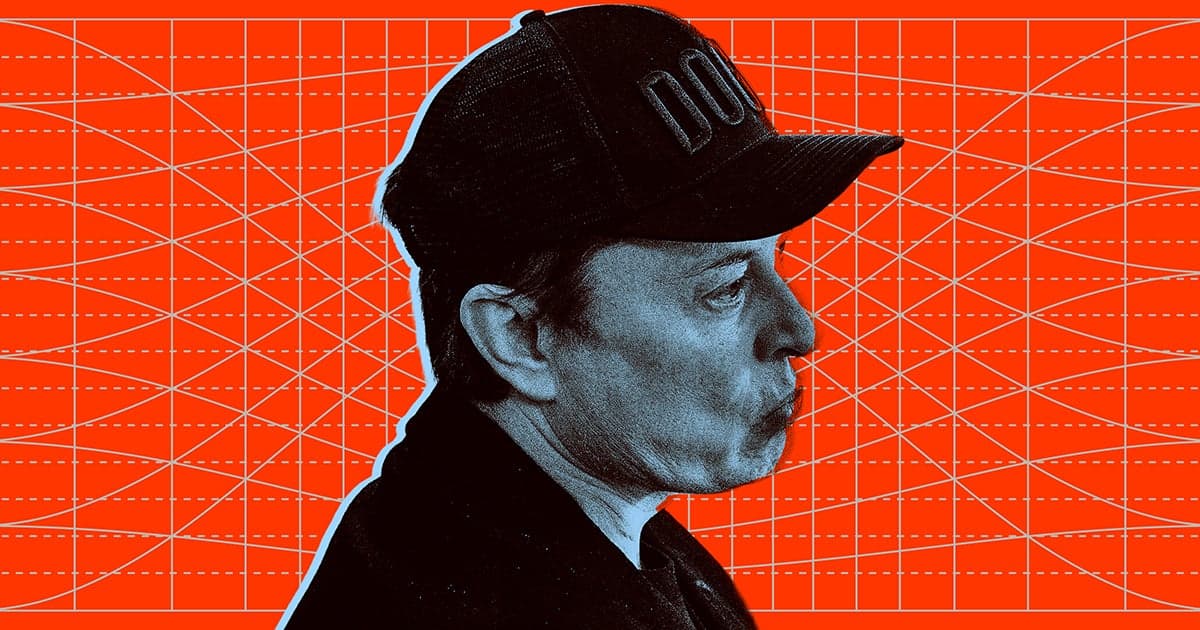
Futurism: Why Elon Musk Is Furious and Publicly Raging at His Own AI Chatbot, Grok. Quote: “By no means should the world be handing their media literacy over to quick reads by Grok, or any other chatbot. Chatbots get things wrong — they even make up sources — and users need to employ their own discretion, judgment, and reasoning skills while engaging with them. (Interestingly, @amuse stepped in at one point to claim that Grok had given him a figure to use that the chatbot said was inaccurate in a later post.)”

Why Elon Musk Is Furious and Publicly Raging at His Own AI Chatbot, Grok

For Elon, the call is coming from inside the house.

/ Artificial Intelligence/ Ai/ Chatbots/ Elon Musk

Andrew Harnik via Getty / Futurism

Image by Andrew Harnik via Getty / Futurism

Elon Musk’s AI chatbot, Grok, thinks that The Atlantic and The BBC are credible, reputable sources for news and information. Which is funny, because Musk — who’s engaged in a years-long project to erode trust in legacy media organizations and even specific journalists — doesn’t. And now, he’s furious at his own AI chatbot.

The Musk-Grok tiff happened over the weekend, when a misinformation-spreading X-formerly-Twitter user @amuse posted an “article” about billionaire bogeymen (like George and Alex Soros, Bill Gates, and the philanthropic Ford Foundation) using deep pockets to “hijack federal grants” by “seeding” nongovernmental organizations with left-wing ideology.

As opposed to a thoughtful or reported analysis of how cash from wealthy donors has transformed American politics, the article was a deeply partisan, conspiracy-riddled account smattered with scary-sounding buzzwords, “DEI” ranting, and no foundational evidence to back its conspiratorial claims (with little mention of high-powered and heavily funded conservative non-profit groups, either).

It seems that Grok, the chatbot created and operated by the Musk-owned AI company xAI, had some issues with the @amuse post, too.

When an X user asked Grok to analyze the post, the AI rejected its core premise, arguing that there’s “no evidence” that Soros, Gates, and the Ford Foundation “hijack federal grants or engage in illegal influence peddling.” In other words, it said that the world as described in the @amuse post doesn’t exist.

The user — amid accusations that Grok has been trained on “woke” data — then asked Grok to explain what “verified” sources it pulled from to come to that conclusion. Grok explained that it used “foundation websites and reputable news outlets,” naming The Atlantic and the BBC, which it said are “credible” and “backed by independent audits and editorial standards.” It also mentioned denials from Soros-led foundations.

“No evidence shows the Gates, Soros, or Ford Foundations hijacking grants; they operate legally with private funds,” said Grok. “However, their support for progressive causes raises transparency concerns, fueling debate. Critics question their influence, while supporters highlight societal benefits. Verification comes from audits and public records, but skepticism persists in polarized discussions.”

This response, apparently, ticked off Musk.

“This is embarrassing,” the world’s richest man responded to his own chatbot. Which, at this rate, might prove to be his Frankenstein.

It’s unclear whether Musk was specifically mad about the characterization of news outlets or claims by Soros-founded organizations as reliable, but we’d go out on a limb to venture the answer is both.

By no means should the world be handing their media literacy over to quick reads by Grok, or any other chatbot. Chatbots get things wrong — they even make up sources — and users need to employ their own discretion, judgment, and reasoning skills while engaging with them. (Interestingly, @amuse stepped in at one point to claim that Grok had given him a figure to use that the chatbot said was inaccurate in a later post.)

But this interaction does highlight the increasing politicization of chatbots, a debate at which Grok has been very much at the center. While there’s a ton of excellent, measured journalism out there, we’re existing in a deeply partisan attention and information climate in which people can — and very much do — seek out information that fuels and supports their personal biases.

In today’s information landscape, conclusion-shopping is easy — and when chatbots fail to scratch that itch, people get upset. Including, it seems, the richest man on Earth, who’s been DIY-ing his preferred reality for a while now.

More on Grok rage: MAGA Angry as Elon Musk’s Grok AI Keeps Explaining Why Their Beliefs Are Factually Incorrect

Share This Article

Posted in Uncategorized | Tagged , , , , | Leave a comment