Grok3 AI: (British Newspaper Archives – Freeman’s Journal) search Michael Comyn KC and entered into Grok3. The Anti-Treaty Campaign – The Irish Army Mutiny 1924; the Red Cow Murders

ANTI-TREATY CAMPAIGN … and Mr. Michael Comyn, K.C. Mr. Lemass said Liam Tobin and Charles Dalton had accepted the Treaty only as a stepping-stone to the achievement of the Republic, and now when they had spoken out they had been obliged to go on the run. Mr. Comyn said the …Published: Monday 10 March 1924 Newspaper: Freeman’s Journal County: Dublin, Republic of Ireland

The excerpt you provided refers to a report in the Freeman’s Journal from March 10, 1924, concerning the Anti-Treaty campaign in Ireland, specifically mentioning Michael Comyn, K.C., Mr. Lemass (likely Seán Lemass), Liam Tobin, and Charles Dalton. This appears to be related to the Irish Army Mutiny of 1924, a significant event following the Irish Civil War (1922–1923). Below is a detailed response based on the context and available historical information.Context of the Anti-Treaty Campaign and the 1924 Army Mutiny. The Anti-Treaty campaign refers to the efforts of those who opposed the Anglo-Irish Treaty of 1921, which established the Irish Free State as a dominion within the British Empire. The treaty caused a split within the Irish Republican Army (IRA) and Sinn Féin, leading to the Irish Civil War between the pro-Treaty National Army and the Anti-Treaty IRA, who saw the treaty as a betrayal of the Irish Republic proclaimed in 1916. By 1924, the Civil War had ended with a victory for the pro-Treaty side, but tensions persisted, particularly among former IRA members who felt the Free State government was not pursuing full republican ideals.The Irish Army Mutiny of March 1924 was a crisis within the National Army, led by figures like Liam Tobin and Charles Dalton, who were dissatisfied with the Free State’s policies, including the demobilization of the army and the perceived failure to achieve a united, fully independent Ireland. The mutiny was not a direct continuation of the Anti-Treaty campaign but reflected lingering divisions from the Civil War, as some pro-Treaty veterans, like Tobin and Dalton, felt betrayed by the government’s direction. Key Figures Mentioned

  1. Michael Comyn, K.C.:
    • Michael Comyn was a prominent Irish barrister and King’s Counsel (K.C.) who supported the Anti-Treaty side during the Civil War. He was involved in legal proceedings and public discussions related to republican causes, including defending Anti-Treaty figures. His mention in the Freeman’s Journal likely relates to his role in advocating for or commenting on the mutiny or the broader republican agenda.
  2. Mr. Lemass (Seán Lemass):
    • Seán Lemass was a key Anti-Treaty IRA figure during the Civil War and later a leading politician in Fianna Fáil, the party formed by Anti-Treaty republicans in 1926. His brother, Noel Lemass, was killed by Free State forces in 1923, which deepened his animosity toward the pro-Treaty government. In the context of the 1924 mutiny, Lemass’s statement suggests he was highlighting the disillusionment of former pro-Treaty figures like Tobin and Dalton, who had initially supported the treaty but were now critical of the Free State’s policies.
  3. Liam Tobin:
    • Liam Tobin was a senior IRA intelligence officer during the War of Independence and a key figure in Michael Collins’s intelligence network. He supported the Anglo-Irish Treaty and joined the National Army during the Civil War. However, by 1924, Tobin was disillusioned with the Free State government’s demobilization plans and its failure to pursue a fully independent republic. He led the Irish Republican Army Organisation (IRAO), a group of disaffected National Army officers, in the 1924 mutiny. The Freeman’s Journal report indicates that Tobin had to “go on the run” due to his involvement in the mutiny, reflecting the government’s crackdown on the mutineers.
  4. Charles Dalton:
    • Charles (Charlie) Dalton, brother of Emmet Dalton, was another IRA intelligence officer who worked closely with Michael Collins during the War of Independence. Like Tobin, he supported the treaty and served in the National Army but became involved in the 1924 mutiny due to similar grievances. His association with controversial actions, such as the Red Cow Murders of 1922 (where he was suspected of ordering the execution of three Anti-Treaty youths), made him a polarizing figure. The Freeman’s Journal report suggests that both he and Tobin were vocal about their dissatisfaction with the Free State, leading to their need to evade authorities.

The Freeman’s Journal and Its Role

The Freeman’s Journal, a Dublin-based newspaper, was historically pro-nationalist but supported the Anglo-Irish Treaty during the Civil War. By 1924, it was often critical of Anti-Treaty republicans, though it also reported on tensions within the pro-Treaty side, such as the Army Mutiny. The newspaper’s coverage of Comyn and Lemass’s statements reflects its role in documenting the ongoing political and military divisions in Ireland. However, Anti-Treaty forces had previously targeted the Freeman’s Journal for its pro-Treaty stance, including seizing and burning copies in 1922, as noted in historical accounts.

The 1924 Army Mutiny

The Army Mutiny occurred between March 7–18, 1924, led by Liam Tobin’s IRAO. It was sparked by the Free State government’s plans to reduce the size of the National Army after the Civil War, which many officers saw as a betrayal of their service. Tobin and Dalton, among others, issued an ultimatum to the government, demanding a halt to demobilization and a commitment to a united Ireland. The Freeman’s Journal excerpt suggests that Lemass and Comyn were framing Tobin and Dalton’s actions as a continuation of their original republican ideals, despite their earlier support for the treaty. The mutiny was resolved without violence, affirming civilian control over the military, and the government arrested several mutineers, though Tobin and Dalton reportedly went into hiding.

Analysis of the Excerpt

The Freeman’s Journal report highlights the complex dynamics of post-Civil War Ireland:

  • Lemass’s Statement: By claiming that Tobin and Dalton supported the treaty only as a “stepping-stone” to a republic, Lemass was likely attempting to align their mutiny with the Anti-Treaty cause, portraying their disillusionment as evidence that the Free State had failed to deliver on republican aspirations. This reflects the Anti-Treaty strategy of capitalizing on pro-Treaty discontent to bolster their own position.
  • Comyn’s Role: As a barrister, Comyn may have been defending or publicly supporting the mutineers, emphasizing their republican credentials to challenge the Free State’s legitimacy. His involvement suggests legal or public advocacy for those opposing the government’s policies.
  • Tobin and Dalton’s Flight: The mention of Tobin and Dalton being “on the run” indicates the government’s response to the mutiny was swift, forcing key figures to evade arrest. This underscores the Free State’s determination to suppress dissent, even from former allies.

Broader Implications

The 1924 Army Mutiny and the Anti-Treaty campaign’s aftermath illustrate the deep divisions in Irish society following the Civil War. The mutiny exposed cracks within the pro-Treaty side, as figures like Tobin and Dalton, who had fought for the Free State, grew frustrated with its compromises. Meanwhile, Anti-Treaty figures like Lemass and Comyn sought to exploit these tensions to maintain pressure on the government. The Freeman’s Journal article captures a moment when these divisions were publicly aired, contributing to the ongoing bitterness that shaped Irish politics for decades, particularly through the rivalry between Fine Gael (pro-Treaty) and Fianna Fáil (Anti-Treaty).

Sources

  • Information on the Irish Civil War and the 1924 Army Mutiny is drawn from historical accounts, including Wikipedia’s entries on the Irish Civil War and 1924 in Ireland.
  • Details on the Freeman’s Journal and its treatment by Anti-Treaty forces are sourced from RTÉ’s analysis of press and propaganda during the Treaty split.
  • Context on the Red Cow Murders and Charles Dalton’s involvement is based on The Irish Story’s article on the topic.

If you have the full text of the Freeman’s Journal article or specific questions about its content, I can provide a more detailed analysis. Alternatively, I can search for additional sources to clarify the event further. Let me know how you’d like to proceed!

Google AI:

As the victims were first formally taken prisoner and logged at Wellington Barracks, National Army officers were identified by name at the Inquest, where Republican counsel Michael Comyn called on the jury to reach a verdict of wilful murder against Charlie Dalton, who could then be charged with the killings.22 Nov 2017

The statement describes events surrounding the Red Cow murders in Dublin in 1922, where victims were initially taken prisoner and logged at Wellington Barracks. During an inquest, National Army officers were identified by name, and Republican counsel Michael Comyn called for the jury to return a verdict of wilful murder against Charlie Dalton, suggesting he could then be charged with the killings. Dalton was briefly arrested by the Criminal Investigation Department (CID). 

Posted in Uncategorized | Tagged , , , , | Leave a comment

Sir James Comyn (JJ) : The Spectator Archive

Spectator Archive

Spotted a problem with this article?

Your feedback will help us improve the Spectator ArchiveSubmit Feedback Zoom page

21 March 1992

Page 37

Page 38

21 MARCH 1992, Page 37

1234567891011121314151617181920212223242526272829303132333435363738394041424344454647484950515253545556

And a good judge, too

Patrick Marnham

SUMMING IT UP: MEMOIRS OF AN IRISHMAN AT LAW IN ENGLAND by James Comyn The Round Hall Press, L19.95, pp. 232 James Comyn’s life recalls the days when the links between England and Ireland were more important than the divisions. Most of Summing it Up is concerned with his experiences at the Bar and later as a judge, but there is a fine description of his childhood and youth to set his later life in context.

The Comyn family history is one of extraordinary swings of fortune. In 1879 the author’s grandparents and their seven young children were evicted from their farm in north Clare by an absentee land-

lord, Lord Clanricard. Both his father (also called James), and his uncle Michael in due course overcame this disaster to become prominent members of the Irish Bar, Uncle Michael taking silk before becoming a judge and eventually a senator. The fact that he was KC did not stop Michael Comyn from taking up a position as legal advisor to Eamon De Valera. James Snr played his part, risking his life to hide De Valera when the latter was on the run with a price on his head during the Irish Civil War. And then, splendid lack of oppor- tunism, both brothers had a fierce quarrel with ‘The Chief’ just before De Valera came to power.

Young James Comyn was eventually sent to school at the Oratory, going on to New College, Oxford, where he became President of the Union by beating Roy Jenkins. He chose to practise in London rather than in Dublin and he lived to see his own family home, Belvin, near Tara, burnt down by the IRA, presumably because he was by then a high court judge.

The secret of his happiness in this situation has been, as he says himself, that he has no politics, having been inoculated against them as a child. During a long and brilliant career he probably made more friends among his colleagues and his clients than any other man at the Bar. He even gave the appearance of being a human being when he was on the Bench. It was perhaps characteristic of him that he should have found only one branch of the law too harrowing and that was the family division. He found a wardship case the most difficult he ever had to decide and applied for a transfer to the Queen’s Bench.

Among the many amusing anecdotes in the book there was the time when he opened an appeal before Lord Denning with the words, ‘I appear for a poor widow of 87 who has been ejected from her little flat by order of the County Council.’ Cum now, Mr Cummyn,’ said Lord Denning, ‘we are a court of law, you know, not a court of sympathy’, and then after a pause the Master of the Rolls added, ‘What age did you say this poor old widow was?’ On another occasion, appearing for landlords who were trying to evict a middle-aged woman because she was allegedly a nuisance, he won his case with one word. Rising to cross-examine the alleged nuisance, he said, ‘Madam’, whereupon she took a dead cat from her handbag and threw it at him, hitting him on the chest.

His celebrated cases as a barrister includ- ed the Alfie Hinds libel case, which he won, and the Crossman Diaries appeal, which he also won. He appeared for Lord Lucan, Private Eye, April Ashley, Wilfred Owen MP, The Rolling Stones and many newspapers. He was known as a defender, but he could, on the appropriate occasion,

be a strikingly cold and effective cross- examiner. As a defender, his aura of gentle good reason worked wonders with the jury, sometimes to the visible fury of the judge. He always prided himself on his ‘jury eye’. Not liking the look of one Dartmoor jury, he managed to get a ‘wife murder’ charge against one of his clients dismissed on the grounds that there was no case to answer. The jury were very angry. They were ‘a bunch of tough-looking, unsympathetic Devonians, who seemed to me as if they loved their wives and dogs,’ he recalls.

Not all his clients were so fortunate and some were hanged; at least one of them, he seems to be convinced, was innocent. He appears to be in favour of a change in the law to introduce degrees of murder, but he does not debate whether or not this would make the re-introduction of the death penalty more likely.

One of the unintentional though valuable qualities of the book is the sense it gives of what it is like to be a member of the privileged little group of barristers and judges who decide the fate of the wretched procession of individuals passing through the dock. There is a hint, too, of the influ- ence wielded by the lodges through the related professions of solicitor’s managing clerk, barrister’s clerk and judge’s clerk, whose members are frequently united in masonic brotherhood. Here perhaps is the key to the great unsolved mystery of legal administration: who appoints the judge for any given trial? It would not much matter of course if more judges were like James Comyn. John Mortimer once said that Sir James was in his experience ‘the only judge who summed up fairly’. This remark was made during a speech at a Law Society banquet attended by the then Lord Chief Justice, Lord Lane. John Mortimer then turned the knife in the wound by adding, `And that of course is the best way of ensuring a conviction.’

Now retired, James Comyn lives in Co. Meath. He has rebuilt Belvin just as it was before the men of violence destroyed it. He breeds and shows pedigree cattle, his verse has been published in Spectator competi- tions and he keeps alive a tradition of profound good-humour and sanity which is probably beyond the grasp of most of his contemporaries on either side of St George’s Channel.

 Previous page

Next page 

Posted in Uncategorized | Tagged , , , , | Leave a comment

Are all empaths targets for narcissists?

YouTube·DoctorRamani·13 Mar 2025
===============

=================

Posted in Uncategorized | Leave a comment

Tucker’s interview with Iranian president

Posted in Uncategorized | Leave a comment

Medical News Today: Empaths and anxiety: Is there a link?

Empaths and anxiety: Is there a link?

Empaths are people who take on the emotions of others. In psychology, this is known as affective empathy. Several studies have found an association between affective empathy and anxiety.

The concept of empaths is not a scientific one, but people who self-identify as empaths report having a keen awareness of the feelings of others. They sometimes report being able to feel the anxiety of others, or that they often worry about others’ well-being.

For example, an older 2016 study of teenagers found that affective empathy had links to higher levels of anxiety.

Read on to learn more about empaths and anxiety, including what the connection is, what causes the anxiety, and how to cope.

What is an empath?

Two hands holding each other against a black background.
Simone Wave/Stocksy

Empaths are people who report having a higher capacity for empathy than is typical. For some, the term is simply a descriptive word for having high empathy. Others view being an empath as an identity or spiritual gift.

Because being an empath is not a medical diagnosis, medical researchers have not investigated its effects. However, they have researched different types of empathy.

There are two main typesTrusted Source of empathy:

  • Cognitive empathy: This is the ability to correctly identify another person’s emotions and state of mind based on logic. For example, a teacher who identifies that a student who is avoiding an assignment is actually scared of it is using cognitive empathy to interpret their actions.
  • Affective empathy: This is the tendency to identify and then take on the emotions of others. For example, a person might become anxious when their partner is anxious or feel angry when around a group of angry people.

Empaths report having a high level of affective empathy, rather than cognitive empathy.

Do all empaths have anxiety?

Not all highly empathetic people have higher than usual levels of anxiety, or an anxiety disorder. However, a small body of research does suggest that affective empathy could be a risk factor.

In a 2021 systematic review and meta-analysis, researchers looked at prior studies establishing a link between both affective and cognitive empathy, and social anxiety.

The authors found that affective empathy increased the risk of social anxiety, but that there was a negative association between cognitive empathy and social anxiety.

So, taking on the feelings of others may correlate to higher rates of anxiety, but logically understanding the feelings of others may not.

What might cause anxiety in empaths? 

Scientists have not determined the cause of anxiety among those with high empathy. However, a 2018 study of 840 people found that while people with high empathy were more likely to experience distress in the form of anxiety or depression, not all did.

The participants who reported lower levels of emotional distress had the ability to regulate their emotions. Even when they had high empathy, the ability to manage feelings had associations with lower levels of anxiety and depression.

This suggests that cultivating tools for managing one’s emotions can help reduce anxiety in those with high empathy.

Anecdotally, some empaths also report that they experience anxiety due to:

  • Empathy itself: Some people report that being around anxious people makes them anxious, too.
  • Feeling overwhelmed: A person may feel overwhelmed by the emotions of others or concerned about their ability to cope with them.
  • Motives: People who notice negative emotions in others may worry about where those feelings are coming from.
  • Judgment: Empathetic people may be more acutely aware of the judgments of others, which may exacerbate social anxiety.
  • Concern for others: Some empaths say they worry about others when they notice they are struggling, such as when they feel sad or angry.

What causes high empathy? 

Empathy is essential for relationships and, in some situations, for survival. Researchers do not fully understand why some people experience higher levels of empathy than others, but some explanations include:

  • Environmental influences: The way a person grows up may affect empathy levels. For example, highly empathetic parents may model high empathy to their children, allowing them to learn this skill.
  • Trauma: People who experience trauma early in life may develop high empathy as a way to protect themselves, as it may allow them to predict others’ actions. A 2018 paperTrusted Source found a correlation between trauma exposure and high empathy and found that the more severe the trauma, the higher the empathy.
  • Biology: Researchers have proposed a number of biological explanations for empathy, including those involving genetics and brain chemistry. One promising line of research has investigated mirror neurons, which are a type of nerve cell in the brain that may dictate the capacity for empathy. People with low mirror neurons may have lower levels of empathy.

How to cope with anxiety

Research suggests that emotional regulation may help highly empathetic people to reduce distress. Emotional regulation is the ability to respond to feelings in a healthy way.

In the context of empaths, this could mean learning to distinguish between a person’s own feelings and that of others, or learning skills that prevent them from becoming overwhelming.

The exact things that will help will depend on what a person finds most challenging. Some strategies that may be beneficial include:

  • Learning coping skills: Coping skills can provide short-term help with anxiety. This could include breathing exercises, mindfulness, or other techniques.
  • Setting boundaries: People with high affective empathy may have difficulty saying no to people, or feel obligated to help others. When people do this too much, they can become burned out. Boundaries help people stay mentally and physically well.
  • Emotional expression: Emotional regulation does not mean a person needs to suppress their emotions. For some, having an outlet for them may be helpful. This could be a journal, a creative hobby, or a physical activity.
  • Managing time: Some people with high empathy may benefit from taking breaks from social interaction or blocking time off for themselves.
  • Therapy: Through therapy, people can learn how their early experiences might have influenced their capacity for empathy and how they can harness their empathy.

When to seek help

Being an empath, or having high empathy, is not a problem or flaw. It can be an advantage. But if a person experiences frequent anxiety or distress, for any reason, they may benefit from speaking with a therapist.

Consider seeking support if anxiety:

  • feels overwhelming
  • causes panic attacks
  • interferes with school, work, or relationships
  • occurs with periods of low mood or depression
  • makes a person feel hopeless or worthless

Summary

Empaths are people with higher-than-typical levels of affective empathy, or the ability to feel the emotions of others. People who identify as empaths may take on the emotions, and sometimes problems, of others as their own. Research has found an association between this type of empathy and anxiety.

Not everyone with high empathy has anxiety, though. Emotional regulation may be key in reducing the levels of distress that people with high affective empathy experience. Learning this skill may be empowering, allowing someone to use their empathy more intentionally.

Posted in Uncategorized | Leave a comment

Neuroscience News: Human Brains Keep Making Memory Neurons in Adulthood

There were also large variations between individuals – some adult humans had many neural progenitor cells, others hardly any at all. Credit: Neuroscience News

Human Brains Keep Making Memory Neurons in Adulthood

FeaturedGeneticsNeuroscience

·July 5, 2025

Summary: A groundbreaking study shows that the human hippocampus continues producing new neurons well into late adulthood. Researchers identified neural progenitor cells—the precursors to neurons—in adults up to 78 years old, confirming ongoing neurogenesis in the memory center of the brain.

Using advanced sequencing, imaging, and machine learning techniques, they traced how these cells develop and where they reside in the hippocampus. The findings may pave the way for regenerative therapies targeting cognitive and psychiatric disorders.

Key Facts:

  • Neural progenitor cells persist in the hippocampus into late adulthood, enabling neurogenesis.
  • Newly formed neurons localize to the dentate gyrus, a hub for memory and learning.
  • Individual variation in neurogenesis could inform treatments for brain disorders.

Source: Karolinska Institute

A study in the journal Science presents compelling new evidence that neurons in the brain’s memory centre, the hippocampus, continue to form well into late adulthood.

The research from Karolinska Institutet in Sweden provides answers to a fundamental and long-debated question about the human brain’s adaptability.

The hippocampus is a brain region that is essential for learning and memory and involved in emotion regulation. Back in 2013, Jonas Frisén’s research group at Karolinska Institutet showed in a high-profile study that new neurons can form in the hippocampus of adult humans.

The researchers then measured carbon-14 levels in DNA from brain tissue, which made it possible to determine when the cells were formed.

Identifying cells of origin

However, the extent and significance of this formation of new neurons (neurogenesis) are still debated. There has been no clear evidence that the cells that precede new neurons, known as neural progenitor cells, actually exist and divide in adult humans.

“We have now been able to identify these cells of origin, which confirms that there is an ongoing formation of neurons in the hippocampus of the adult brain,” says Jonas Frisén, Professor of Stem Cell Research at the Department of Cell and Molecular Biology, Karolinska Institutet, who led the research.

From 0 to 78 years of age

In the new study, the researchers combined several advanced methods to examine brain tissue from people aged 0 to 78 years from several international biobanks. They used a method called single-nucleus RNA sequencing, which analyses gene activity in individual cell nuclei, and flow cytometry to study cell properties.

By combining this with machine learning, they were able to identify different stages of neuronal development, from stem cells to immature neurons, many of which were in the division phase.

To localise these cells, the researchers used two techniques that show where in the tissue different genes are active: RNAscope and Xenium. These methods confirmed that the newly formed cells were located in a specific area of the hippocampus called the dentate gyrus. This area is important for memory formation, learning and cognitive flexibility.

Hope for new treatments

The results show that the progenitors of adult neurons are similar to those of mice, pigs and monkeys, but that there are some differences in which genes are active. There were also large variations between individuals – some adult humans had many neural progenitor cells, others hardly any at all.

“This gives us an important piece of the puzzle in understanding how the human brain works and changes during life,” explains Jonas Frisén.

“Our research may also have implications for the development of regenerative treatments that stimulate neurogenesis in neurodegenerative and psychiatric disorders.”

The study was conducted in close collaboration with Ionut Dumitru, Marta Paterlini and other researchers at Karolinska Institutet, as well as researchers at Chalmers University of Technology in Sweden.

Funding: The research was funded by the Swedish Research Council, the European Research Council (ERC), the Swedish Cancer Society, the Knut and Alice Wallenberg Foundation, the Swedish Foundation for Strategic Research, the StratRegen programme, the EMBO Long-Term Fellowship, Marie Sklodowska-Curie Actions and SciLifeLab. Jonas Frisén is a consultant for the company 10x Genomics. See the scientific article for a complete list of potential conflicts of interest.

About this neurogenesis research news

Author: Press Office
Source: Karolinska Institute
Contact: Press Office – Karolinska Institute
Image: The image is credited to Neuroscience News

Original Research: Closed access.
“Identification of proliferating neural progenitors in the adult human hippocampus” by Jonas Frisén et al. Science


Abstract

Identification of proliferating neural progenitors in the adult human hippocampus

Continuous adult hippocampal neurogenesis is involved in memory formation and mood regulation but is challenging to study in humans.

Difficulties finding proliferating progenitor cells called into question whether and how new neurons may be generated.

We analyzed the human hippocampus from birth through adulthood by single-nucleus RNA sequencing.

We identified all neural progenitor cell stages in early childhood. In adults, using antibodies against the proliferation marker Ki67 and machine learning algorithms, we found proliferating neural progenitor cells.

Furthermore, transcriptomic data showed that neural progenitors were localized within the dentate gyrus.

The results contribute to understanding neurogenesis in adult humans.

Join our Newsletter

 I agree to have my personal information transferred to AWeber for Neuroscience Newsletter ( more information )

Sign up to receive our recent neuroscience headlines and summaries sent to your email once a day, totally free.

We hate spam and only use your email to contact you about newsletters. You can cancel your subscription any time.

Tags

brain researchGeneticshippocampusKarolinska InstituteMemoryneurobiologyneurogenesisNeuroscience

eSubmitEmail

Neuroscience News

Neuroscience News posts science research news from labs, universities, hospitals and news departments around the world. Science articles cover neuroscience, psychology, AI, robotics, neurology, brain cancer, mental health, machine learning, autism, Parkinson’s, Alzheimer’s, brain research, depression and other sciences.

Related

This shows a brain and question marks.

Brain’s Social Hub Responds to Confusion, Not Just People

This shows a brain.

Why Your Brain Is Better at Gossip Than You Realize

This shows a brain.

Blurry Beginnings Shape Brain’s Visual Pathways

Leave a Reply

Your email address will not be published. Required fields are marked *

Comment *

Name *

Email *

Website

Notify me of follow-up comments by email.

Notify me of new posts by email.

Neuroscience News Footer Logo

Neuroscience News Sitemap
Neuroscience Graduate and Undergraduate Programs
Free Neuroscience MOOCs
About
Contact Us
Privacy Policy
Submit Neuroscience News
Subscribe for Emails

Neuroscience Research
Psychology News
Brain Cancer Research
Alzheimer’s Disease
Parkinson’s News
Autism / ASD News
Neurotechnology News
Artificial Intelligence News
Robotics News

Search Neuroscience News

Neuroscience News is an online science magazine offering free to read research articles about neuroscience, neurology, psychology, artificial intelligence, neurotechnology, robotics, deep learning, neurosurgery, mental health and more.

Neuroscience News

Neuroscience News Logo

This shows a brain and question marks.

This shows a brain.

This shows a brain.

This shows the hippocampus.

Update Privacy Settings

Posted in Uncategorized | Tagged , , , , | Leave a comment

The Rundown AI: …. Strategic Intelligence LLM’s

LLMs show signs of strategic intelligence
Image source: Reve / The Rundown
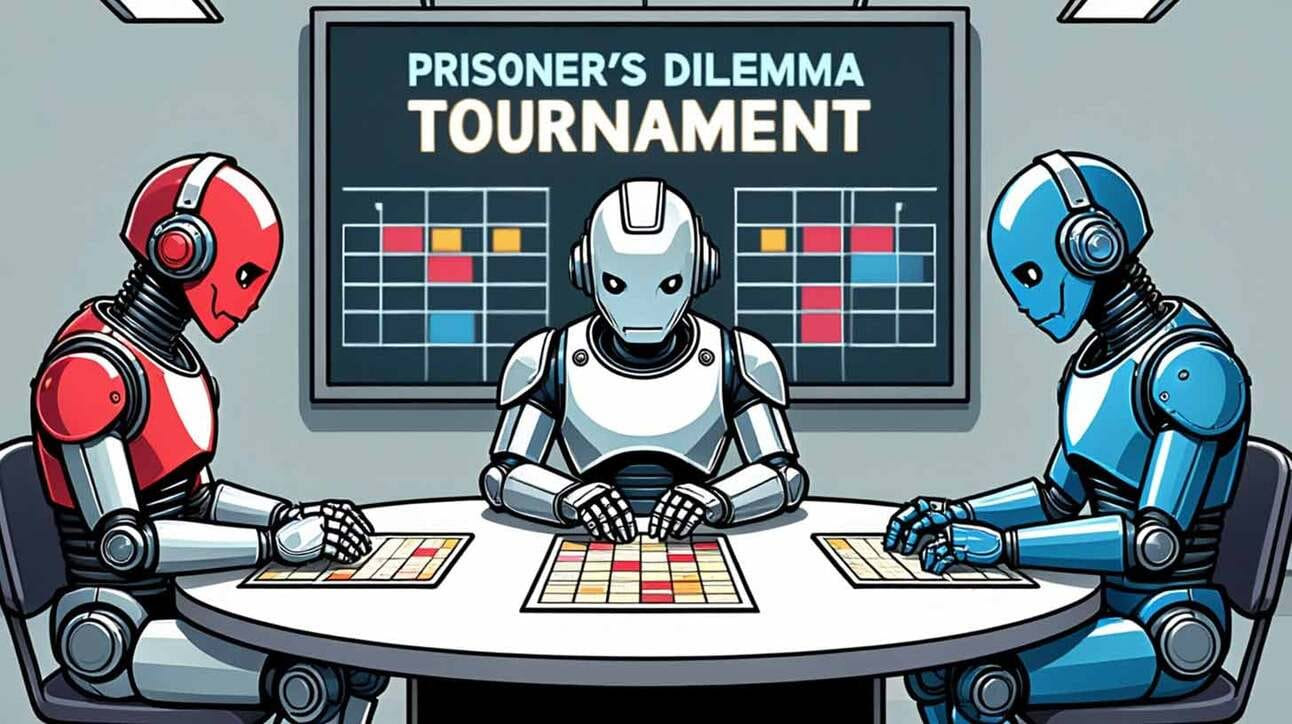
The Rundown: Researchers just tested whether AI models can be strategic reasoners by running 140,000 Prisoner’s Dilemma decisions — discovering that models from OpenAI, Google, and Anthropic each developed unique strategic approaches.
The details:
Researchers ran Prisoner’s Dilemma tournaments where agents chose to cooperate or defect, earning points based on mutual choices.Each AI generated written rationales before decisions, calculating opponent patterns and match termination probabilities that influenced their choices.The results found distinct strategies across models, with Gemini being ruthlessly adaptive and OpenAI models acting cooperative even when exploited.Researchers also mapped ‘fingerprints’ showing how models respond to being betrayed or succeeding, with Anthropic’s Claude being the most forgiving.
Why it matters: Seeing LLMs develop distinctive strategies while being trained on the same literature is more evidence of reasoning capabilities over just pattern matching. As models handle more high-level tasks like negotiations, resource allocation, etc., different model ‘personalities’ may lead to drastically different outcomes.
Posted in Uncategorized | Leave a comment

Zohran Mamdani, Antisemitism & NYC’s Future — Melanie Phillips on the Viktor Frankl Podcast

Daniel Schonbuch

Jul 4, 2025

In this urgent and eye-opening conversation, award-winning journalist and author Melanie Phillips joins me on the Viktor Frankl Podcast to discuss how Mamdani, rising antisemitism and radical ideologies threaten the future of New York City — and what can be done to stop it. Her new book “The Builder’s Stone: How Jews and Christians Built the West—and Why Only They Can Save It” – can be purchased at http://bit.ly/3IfILtp.

We examine: ✅ The rise of Zohran Mamdani and what his pro-Palestinian, anti-Israel stance reveals about NYC politics ✅ Why antisemitism is surging in Western societies and how it endangers Jews and everyone else ✅ How the moral decline of the West fuels extremism and division ✅ Lessons from her groundbreaking book Londonistan ✅ Insights from her latest book, The Builder’s Stone: How Jews and Christians Built the West—and Why Only They Can Save It ✅ How meaning, morality, and courage can help reverse this dangerous trend Melanie draws on decades of experience writing for The Times, The Guardian, and The Jewish Chronicle, and her fearless voice is more important now than ever.

Posted in Uncategorized | Leave a comment

“Never Forgive These 7 Betrayals From Your Siblings” | BRENE BROWN BEST MOTIVATION SPEECH

EMPOWERED MIND

Posted in Uncategorized | Leave a comment

Why a Fed-Up Empath Is More Dangerous Than the Narcissist Ever Knew | Carl Jung. Comment: enlightened, relieved, understanding, empowering, endorsement of lifelong learning. Too often we focus on the narcissist and their vices. Wisdom is insufficiently appreciated.

Relciples

Posted in Uncategorized | Leave a comment