


-
Archives
- October 2026
- September 2026
- August 2026
- July 2026
- June 2026
- May 2026
- April 2026
- March 2026
- February 2026
- January 2026
- December 2025
- November 2025
- October 2025
- September 2025
- August 2025
- July 2025
- June 2025
- May 2025
- April 2025
- March 2025
- February 2025
- January 2025
- December 2024
- November 2024
- October 2024
- September 2024
- August 2024
- July 2024
- June 2024
- May 2024
- April 2024
- March 2024
- February 2024
- January 2024
- December 2023
- November 2023
- October 2023
- September 2023
- August 2023
- July 2023
- June 2023
- May 2023
- April 2023
- March 2023
- February 2023
- January 2023
- December 2022
- November 2022
- October 2022
- September 2022
- August 2022
- July 2022
- June 2022
- May 2022
- April 2022
- March 2022
- February 2022
- January 2022
- September 2021
- August 2021
- July 2021
- June 2021
- May 2021
- April 2021
- February 2021
- January 2021
- December 2020
- November 2020
- October 2020
- September 2020
- August 2020
- July 2020
- June 2020
- May 2020
- April 2020
- March 2020
- February 2020
- January 2020
- December 2019
- November 2019
- October 2019
- September 2019
- August 2019
- July 2019
- June 2019
- May 2019
- April 2019
- March 2019
- February 2019
- January 2019
- December 2018
- November 2018
- October 2018
- September 2018
- July 2018
- June 2018
- May 2018
- April 2018
- March 2018
- February 2018
- January 2018
- December 2017
- November 2017
- October 2017
- September 2017
- August 2017
- July 2017
- June 2017
- May 2017
- April 2017
- March 2017
- February 2017
- January 2017
- December 2016
- November 2016
- October 2016
- September 2016
- August 2016
- July 2016
- June 2016
- May 2016
- April 2016
- March 2016
- February 2016
- January 2016
- December 2015
- November 2015
- October 2015
- September 2015
- August 2015
- July 2015
- June 2015
- March 2015
- January 2015
-
Meta
Scott Ritter Warns … Judge Napalitano. Ukraine on Brink of Collapse
Posted in Uncategorized
Leave a comment
Grok4 AI: Michael Comyn K.C. and his friend Erskine Childers, and the execution
Books TU Dublin Grangegorman
2020
Walking through the Wars: From Grangegorman to the Four Courts.
During the War of Independance and the Civil War
Sean O’hOgain
Technological University Dublin, Sean.Ohogain@tudublin.ie
Thomas Power
Technological University Dublin, thomas.power@tudublin.ie
Collins before the treaty and the War of Independence.
Childers was tried by military tribunal and sentenced to death. It was the assassination of Collins that lead to the establishment of military tribunals under the Army Emergency Powers Resolution.
On Saturday 18 November 1922, an application for habeas corpus was made at
the home of Sir Charles O’Connor, Master of the Rolls. The following Monday, 20
November, the habeas corpus hearing was opened in the Kings Inn Hall. The Four
Courts was, at the time, uninhabitable, following its destruction at the outbreak of
the Civil War. A variety of legal arguments were advanced on behalf of Mr. Childers
over the course of a three-day hearing. It appears that the partial purpose of this
may have been to simply delay Mr Childers’ execution for as long as possible so that
clemency might be granted by the Free State government. Quite a large number of
people petitioned the Free State government not to execute Childers. At the end of
the third day of hearing, Michael Comyn, for Mr. Childers, asked that the case be
adjourned to a fourth day. Despite Mr Comyn’s assertion that he was exhausted and
could not do full justice to his client, the Master of the Rolls decided that the case
had been argued in full. He delivered his judgment immediately, by candlelight.
The application to adjourn for a fourth day was refused. Ironically Childers, an
Irish nationalist who in 1914 had imported arms for the Irish Volunteers, was
about to be executed on the orders of a provisional government which arose from
a treaty which he had helped negotiate but ultimately repudiated. An appeal was
lodged immediately, but Childers was nevertheless executed the following morning,
Thursday 23 November 1922, at Beggars Bush barracks.
The question addressed by Sir Charles O’Connor, in response to the defence, as to
whether or not a “state of war” existed thus justifying the use of military tribunals
makes interesting reading. He declared that
“I am sitting here in this temporary
makeshift for a Court of Justice. Why? Because one of the noblest buildings in this country,
which was erected for the accommodation of the King’s Courts and was the home of justice
for more than a hundred years, is now a mass of crumbling ruins, the work of revolutionaries,
who proclaim themselves soldiers of an Irish Republic.
I know also that the Public Record Office (a building that might well have been spared even
by the most extreme of irreconcilables) has been reduced to ashes, with its treasures, which
can never be replaced.
I know also that railways have been torn up, railway stations destroyed, the noblest mansions
burned down, roadways made impassable, bridges blown up, and life and property attacked
in almost every county in Southern Ireland.
If this is not a state of war, I would like to know what is”.
Posted in Uncategorized
Leave a comment
Futurism: AI … on Tinder using ChatGPT
People Are Rizzing on Tinder Using ChatGPT, Then Showing Up to Dates Completely Tongue-Tied
A man’s date “had none of the conversational pizzazz she had shown over text.”
/ Artificial Intelligence/ Ai Chatbots/ Chatgpt/ Dating Apps

Image by Getty / Futurism
Online dating apps have become a leading way to meet romantic partners, turning dating from an in-person experience into an often tedious, touchscreen-focused exercise.
And with the advent of generative AI, that bleak landscape of modern dating is continuing to evolve in dystopian — and perhaps predictable — ways.
As the Washington Post reports, a 31-year-old named Richard Wilson was startled when his date “had none of the conversational pizzazz she had shown over text.”
Her messages had included “long, multi-paragraph messages” and acknowledgments of “each of his points.” But in person she lacked those conversational chops, and when she mentioned that she used ChatGPT “all the time” for work, the pieces started to fall into place for Wilson.
It’s not just individual users writing romantic messages using AI; online dating companies are also stuffing the tech into their apps.
Firms like Match Group, which owns industry stalwarts such as Hinge and Tinder, are releasing new features to summarize dating profiles, suggest ways to maximize the number of matches, and flag unwanted messages.
Some apps go as far as to suggest “icebreaker” opening lines, drawing criticism and even scrutiny from regulators.
We’ve also come across apps that use AI to harass women, or create videos of people kissing without their consent. Earlier this year, the Financial Times reported that a woman’s recent date had used ChatGPT to write a psychological profile on her.
Last year, Gizmodo reported on a Moscow-based man who programmed OpenAI’s GPT large language models to talk to well over 5,000 women on his behalf — and eventually meet his future wife.
Bumble founder Whitney Wolfe Herd made headlines after saying that she believes the future of dating will involve having your personal AI “dating concierge” talk to hundreds of other AIs to find a perfect match.
Going even further, apps like Replika are allowing people to cut out human contact altogether, providing a platform for lonely people to create entirely AI-generated romantic partners.
Needless to say, harnessing the power of AI without turning dating into a data-focused race to the most matches possible is anything but easy. It’s a slippery slope that could lead to confusion and disappointment.
“People will use AI to alter their photos in ways that aren’t necessarily achievable for them, whereas when you use it for messages, you’re using it in a way that is amplifying yourself and your ability to have conversations,” Amanda Gesselman, a Kinsey Institute psychologist, who has done research with Match Group, told WaPo.
AI is already shaping user behavior on dating apps. Match’s head of trust and safety Yoel Roth told the newspaper that AI is successfully dissuading users from sending “something potentially offensive, abusive or weird” with prompts.
But is any of this really the pinnacle of authenticity, or the best way to find a romantic partner online?
For many, using ChatGPT to keep conversations going is unlikely to win over hearts in the real world, as Wilson’s disappointing date showed. He decided to give the woman a second chance, but ultimately found that they simply “weren’t a good pair.”
More on AI dating: Bumble Founder Says Future of Dating Is Your AI Will Date Other People’s AIs and Hook You Up With the Best Matches
Share This Article
Not all body fat is created equal when it comes to dementia risk. Quote: “New research led by Monash University aims to clarify the mixed messages arising from previous studies on the relationship between body composition, specifically lean body mass, fat mass, and abdominal fat, and the risk of dementia and cognitive decline.”

Not all body fat is created equal when it comes to dementia risk
By Paul McClure
July 07, 2025

Where body fat is located, not the amount, may influence dementia risk
A new study has found that your belly might reveal more about your brain health than your bathroom scales do, especially if you’re an older man. When it comes to dementia risk, the location of body fat, not just the amount, appears to be what’s important.
Being overweight or obese is a known risk factor for many health conditions, including diabetes and heart disease, which, in turn, are risk factors for dementia. However, some studies have associated a higher body mass index (BMI) and waist circumference (WC) with a lower risk of dementia.
New research led by Monash University aims to clarify the mixed messages arising from previous studies on the relationship between body composition, specifically lean body mass, fat mass, and abdominal fat, and the risk of dementia and cognitive decline.
The large-scale study examined the relationship between body composition and the risk of dementia and cognitive decline in individuals aged 65 and older, utilizing data from over 17,000 adults from Australia and the US, collected from the ASPREE clinical trial and follow-up study. They looked at the WC-to-BMI ratio as a proxy for abdominal fat, lean body mass (the non-fat components of the body, such as muscle, bone, organs, and water) and fat body mass (the total weight of fat in the body). They examined the results of cognitive tests, including global cognition, memory, mental speed, and verbal fluency (the ability to retrieve and produce words). Any dementia diagnosis was made according to strict criteria set out in the DSM-IV, using medical records and cognitive assessments.
What they found was that a higher WC-to-BMI ratio was linked to a 29% higher risk of dementia overall. The 25% of male participants with the most abdominal fat had a 46% higher risk of developing dementia compared to the 25% with the least abdominal fat. Put simply, older men with the most abdominal fat had nearly 1.5 times the risk of dementia as men with the least abdominal fat. The 25% of men with the most abdominal fat also showed faster declines in memory, global thinking ability, and mental speed over the follow-up period. No significant link was found between abdominal fat and verbal fluency.
More lean body mass was consistently linked to a 15% to 38% lower risk of dementia and slower cognitive decline, especially in memory and processing speed. The researchers observed some benefits related to verbal fluency, particularly in men. Somewhat surprisingly, higher overall fat mass was also protective; it produced up to a 38% reduction in dementia risk and slower cognitive decline (except in relation to verbal fluency). Taken altogether, the findings suggest that not all body fat is bad, but that its distribution is what matters.

The Rundown AI: Moonvalley, a startup founded by ex-DeepMind researchers, just released Marey — a filmmaker-focused AI video model trained exclusively on licensed content that gives directors granular control over scenes.
 Moonvalley debuts filmmaker-friendly video AI Moonvalley debuts filmmaker-friendly video AI |
 Image source: Moonvalley Image source: Moonvalley |
| The Rundown: Moonvalley, a startup founded by ex-DeepMind researchers, just released Marey — a filmmaker-focused AI video model trained exclusively on licensed content that gives directors granular control over scenes. |
| The details: |
| Marey is trained exclusively on licensed footage to avoid copyright issues that plague other AI startups, heavily sourced from indie filmmakers and agencies.The model gives directors precise control over camera moves, character motion, backgrounds, and lighting, integrating directly into VFX workflows. Pricing starts at $14.99 monthly for 100 credits, scaling up to $149.99 for 1,000 credits — with each five-second clip costing roughly $1-2 to render.The company has raised over $100M to date and launched Marey alongside Asteria Film Co., an AI animation studio acquired by Moonvalley. |
| Why it matters: As Hollywood’s AI anxiety peaks, Marey is a test of whether ethical AI can win over creators. With a “clean” training set and a platform that acts as a precise director tool instead of a “luck” based video slot machine, Marey could help shift AI’s narrative around tinseltown from existential threat to creative partnership. |
Posted in Uncategorized
Leave a comment
The Rundown AI … AI use in the classroom is here!
| Teachers’ union launches $23M AI academy |
 Image source: Reve / The Rundown Image source: Reve / The Rundown |
| The Rundown: The American Federation of Teachers partnered with Microsoft, OpenAI, and Anthropic to create a national AI training hub that will prepare 400,000 educators to integrate the technology into classrooms across the U.S. |
| The details: |
| The academy will offer workshops, online courses, and professional development, with its flagship campus in NYC, and plans to scale nationally.OpenAI is committing $10M in funding and technical support, with Microsoft and Anthropic also contributing to cover training, resources, and AI tool access.Teachers will gain access to priority support, API credits, and early education-focused AI features, with an emphasis on accessibility for high-needs districts. |
| Why it matters: With AI rapidly reshaping both the workforce and the classroom, this partnership helps better equip teachers for being on the frontlines of a tech revolution for the younger generation. The academy’s success could influence how AI is taught, governed, and trusted in education for years to come. |
Posted in Uncategorized
Leave a comment
X Investment Wisdom … Warren Buffett

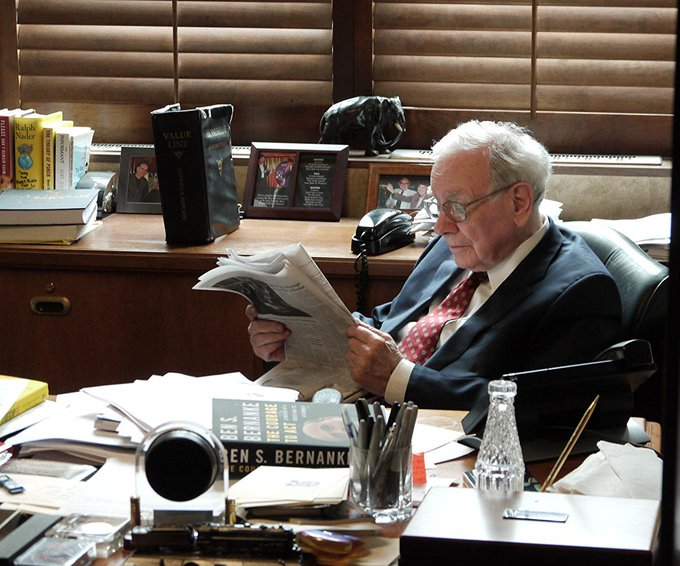
“Read 500 pages every week. That’s how knowledge works. It builds up, like compound interest. All of you can do it, but I guarantee not many of you will.” — Warren Buffett
Posted in Uncategorized
Leave a comment
X Pharmaceuticals and the implications for Ireland Inc. 60% of all Irish exports are pharmaceuticals.
Posted in Uncategorized
Leave a comment
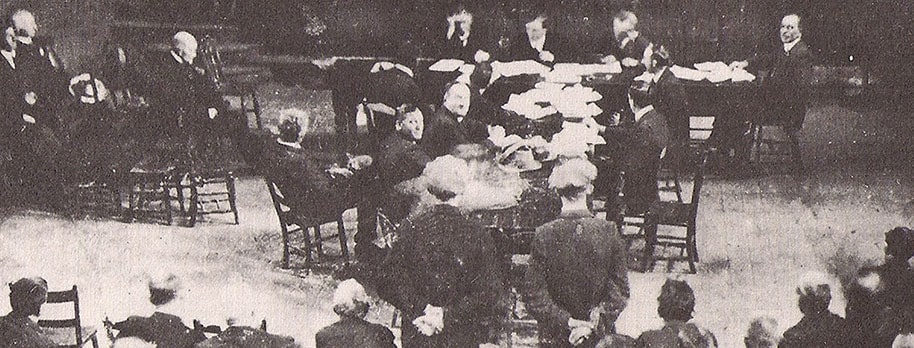
Improvised Justice: “When introducing legislation in 1923 to wind up the parallel courts’ system established during the War of Independence, Minister Kevin O’Higgins characterised them as “an improvised system of justice”. The true story, however, is one of complexity and resilience, write Barry Whelan and John Biggins”
Improvised justice
When introducing legislation in 1923 to wind up the parallel courts’ system established during the War of Independence, Minister Kevin O’Higgins characterised them as “an improvised system of justice”. The true story, however, is one of complexity and resilience, write Barry Whelan and John Biggins
After the Great War, land agitation – especially in the in the west of Ireland – saw many litigants turn to ad hoc ‘Republican’ or ‘Sinn Féin’ arbitration courts for fair justice, advocated by Arthur Griffith since 1905. This was in similar spirit to courts established by the Land League in the late 19th century.
The outbreak of the War of Independence and the spread of agrarian unrest accelerated the movement of litigants away from the official ‘Crown’ Courts (petty sessions, county courts) towards arbitration courts. Better organised arbitration schemes emerged in particular areas, such as West Clare.
They lifted the war to a higher plane – the independence movement stood not only for democracy, but also for the rule of law and equitable justice.
The money raised by donations and loans by the then underground government, Dáil Éireann, ensured parties could find an alternative and fair court system for restitution.
Regularised system
A Dáil decree in June 1920 moved the dial from arbitration courts to a more regularised courts system. Court rules were developed through the autumn of 1920.
By January 1921, a provisional constitution, including rules of court, had been issued by the Dáil Department of Home Affairs, though it may not have been in full circulation until after the 1921 Truce in hostilities in the War of Independence.
The system was divided between Parish and District Courts, with mostly lay people adjudicating in both, and legally qualified judges presiding over Circuit sittings of the latter. A Supreme Court, comprised solely of legally qualified judges, was also established.
In the District Courts, protection was provided by Republican police. These experienced IRA units were the only attendees who were permitted to wear caps in court, as a symbol of their office.
It became practice for judges of the Parish Courts to be appointed at conventions of Sinn Féin clubs, trades councils, members of the rural or urban authority, IRA Volunteers and Cumann na mBan.
The collective parish judges then elected the district judges. Women, such as Jennie Wyse Power, adjudicated at these courts, showing a progressive element to this judicial system.
There were no robes, wigs, raised platforms or symbolism in the courts – its plainness spoke of a justice system that could reach all and dispense rulings quickly.
Court sittings took place anywhere – in a school, pub, solicitor’s office or a barn. Urban sittings were usually riskier, as an enemy convoy could roll up and storm the premises before the court had time to hide any documentation or evade arrest.
Rural sittings allowed the IRA to establish look-out posts and cordons but, with much of the country under martial law during the war, the sittings of these courts and travelling to them were still highly dangerous for all involved.
In tandem with this, the IRA actively targeted the Crown Courts by destroying premises, threatening litigants, and forcing the British Army to deploy significant resources to guard their courts.
The net impact of this was the near-total collapse of the established court system and the movement of business to the Dáil courts: “The fact that Sinn Féin set its face against the use of violence for the settlement of disputes and that the courts gave a fair hearing to everybody quickly won respect for the courts, even from those who looked upon them as usurping the functions of the English court.”
Solicitors’ vital role
Solicitors played a vital role in the Dáil Courts process because they represented clients, briefed barristers, prepared legal cases, and handled monies.
The Law Society of Ireland supported their active participation in the Dáil Courts: “Where the interests of their clients require it, solicitors should be free to represent them in any court or before any tribunal.”
Hugh O’Brien Moran, Seán Ó hUadhaigh, William Corrigan, and Michael Noyk were some of the most prominent solicitors who practised in the Dáil Courts and risked arrest at every sitting from raids by enemy forces: “The court had hardly been in progress ten minutes when in came a number of British officers and Auxiliaries.”
Noyk himself achieved a great coup against the established court system by holding a Dáil Court sitting under the noses of the Crown Courts at the Four Courts building. He rented a consultation room for the hearing of one of his cases before Judge Cahir Davitt.
Once solicitors attended Dáil Courts, they were aware that their card was marked in the eyes of Dublin Castle and the British authorities as being sympathetic to the Republican movement.
However, again, the Law Society would defend their members against such charges by citing the privilege of the profession to act in their clients’ interests, and they presented this argument in person to General Nevil Macready – commander of the British forces in Ireland.
In contrast, the Bar Council had passed a controversial resolution in June 1920 declaring it professional misconduct for barristers to appear before Sinn Féin courts. Nonetheless, barristers appeared before the Dáil Courts and the subsequent winding-up commission, including John A Costello and Michael Comyn.
Transition year
The approval of the Anglo-Irish Treaty in Dáil Éireann on 7 January 1922 ushered in a period of administrative transition. The Treaty did not explicitly address the future status of the Dáil Courts, but it was no secret that British political opinion was hostile.
David Lloyd George – British prime minister and solicitor by profession – reportedly commented to his team during the Treaty negotiations that: “I shall have to tell them [the Irish delegation] that we shall have to scatter these courts.”
Even so, the Dáil Courts were in their heyday after the Treaty. By April 1922, regularised criminal trials before judge and jury were also being held in some Dáil Courts.
They were on borrowed time, however. Following publication of the draft Constitution of Saorstát Éireann and the outbreak of the Civil War in June 1922, the Dáil Courts came into sharper political focus.
In the wake of Cabinet discussions in July 1922, communications were issued to the Dáil Supreme Court and judges on circuit to cease sittings.
A more direct showdown between the Provisional Government and the Dáil Courts occurred when an order for habeas corpus was made by Judge Diarmuid Crowley, ordering the release of George Plunkett, son of Count Plunkett, from Mountjoy Jail after his capture at the Four Courts.
Orders were also made for the arrest of the Minister for Defence and Governor of Mountjoy.
In a public notice appearing on 1 August, the Minister for Home Affairs rescinded the original decree establishing the Dáil Courts, though initially limiting the effect to Dublin. Parish and District Courts outside Dublin were disestablished in late October 1922.
The status of claims and appeals pending when the Dáil Courts were abolished, as well as definitive registration and enforcement of court orders, went unresolved for some time.
Eventually, the Dáil Éireann Courts (Winding-Up) Act 1923 was enacted on 8 August 1923 (amended by a further act in 1924), establishing a statutory commission based at Dublin Castle.
James Creed Meredith, former president of the Dáil Supreme Court, was initially appointed as Chief Judicial Commissioner until his elevation to the High Court of Saorstát Éireann in 1924.
The commissioners were empowered to hear appeals against registered decrees; appeals against the registrar’s decisions to register (or refusals to register) decrees; outstanding proceedings and appeals pending before the Dáil Courts’ abolition; and to reopen certain other proceedings where defendants had previously abstained from the Dáil Courts on principle.
Under 1925 legislation, the jurisdictions and powers of the commissioners were transferred to the High Court, and so a fusion of the revolutionary legal system with that of the new State was finally rendered complete.
Trove of records
Perhaps one of the greatest legacies of the commission is its trove of records, which survive in the National Archives. The files reveal that a broad cross-section of Irish society came to rely on the Dáil Courts (and, later, the commission).
Legal actions were wide in variety, many of them still familiar today, including debt recovery, breach of contract, negligence, and land disputes.
Some of these materials are revealing of life at the ground level of society during a disturbed period, illustrated by the following examples from the Dublin files.
At a May 1922 circuit sitting in the North City District, two men were charged with armed robbery at Drumcondra Post Office, while a third was charged with threatening to kill the postmistress and the post office messenger, in February of that year.
A witness statement from the postmistress conveyed how an ordinary day took a terrifying turn when she recalled: “On Tuesday morning about 12 noon, while engaged in my duties in Drumcondra Post Office, I saw men rush into the office. I thought there was something wrong and immediately one of the men put a revolver through the brass railing on the counter. I stood for a moment afraid to move or call…”
Another employee recalled one of the men threatening the post office messenger that “if he stirred, he would shoot him dead”.
The perpetrators made admissions in custody and, while the archival record is not entirely clear, they seem to have entered guilty pleas.
Another case concerned a substantial breach of contract claim levelled against a garage on the Conyngham Road. The defendant had allegedly failed to carry out repairs to a Ford Laudette in reasonable time, putting the plaintiff to considerable expense, particularly in hiring ‘taxi-cars’.
It transpired in evidence that a damaged part from the plaintiff’s car had been sent by the defendant motor works to a third party works, but was then allegedly stolen from there by ‘Sinn Féiners’. It was accepted in evidence that ‘armed men’ had taken the part.
The plaintiff car owner was only awarded a fraction of his claim, while a claim of the defendant motor works was partially upheld in relation to the supply of petrol.
There was fluidity in the use of courts during this period, given that the inherited Crown Courts and the Dáil Courts functioned concurrently (albeit uneasily) in some places, particularly Dublin.
On occasion, the two systems were activated at different points in the same chain of events. For instance, a woman was charged with stealing a fur coat from Arnotts in December 1921. She was taken into custody and remanded until January 1922, when she was tried before the Recorder of Dublin and a jury at the Criminal Sessions.
When acquitted of the charge, she then initiated a claim against Arnotts at the North City Dáil District Court for false imprisonment. The plaintiff was successful at first instance, but Arnotts successfully appealed.
Consistent with the terms of their provisional constitution, it was also quite usual for the Dáil Courts and the commissioners to apply pre-existing law – that is, the common law and Westminster legislation.
For example, on 14 June 1922, a complaint was made by a sanitary officer under the Public Health (Ireland) Act 1878 about the bad state of repair and sanitation of certain properties at Kill o’ the Grange.
The orders made against the landlord required him to “provide two water closets for tenement houses … also new drains, gullies, intercepting trap, vent pipes etc, and connection with Rural District Council’s sewer in public road”.
Penalties for breaches of animal-disease regulations were also imposed by the Dáil Courts at a time when the keeping of cattle within the city was still widespread.
In January 1922, a ‘cowkeeper’ with an overcrowded cowshed on Bow Lane, off Aungier Street, was summonsed and cautioned for breaching the Dairies, Cowsheds and Milkshops (Ireland) Order 1908.
These examples perhaps serve to demonstrate that, by the time of their abolition, the Dáil Courts had become much more than an “improvised system of justice”.
Barry Whelan is a historian with DCU. He works in the Law Society and is currently writing a biography of Michael Noyk, solicitor. John Biggins is a practising barrister, lecturer and researcher. He is currently writing up new research on the Dáil Courts. He gratefully acknowledges the support of the Royal Irish Academy in conducting the National Archives of Ireland research referred to in this article. The content of this article is solely the responsibility of the authors and does not necessarily represent the official views of the Royal Irish Academy or any other organisations to which the authors may be affiliated
Grok3 AI: Michael Comyn K.C., Republican to the core and the unofficial court system named the Dail Courts or Sinn Fein Courts established during Ireland’s fight for Independence.
In contrast, the Bar Council had passed a controversial resolution in June 1920 declaring it professional misconduct for barristers to appear before Sinn Féin courts. Nonetheless, barristers appeared before the Dáil Courts and the subsequent winding-up commission, including John A Costello and Michael Comyn.
The Bar Council’s resolution in June 1920 deemed it professional misconduct for barristers to appear before Sinn Féin courts, reflecting the legal establishment’s opposition to the revolutionary Dáil Courts, which operated outside British authority. Despite this, barristers like John A. Costello and Michael Comyn defied the resolution, participating in the Dáil Courts and the later winding-up commission, demonstrating their support for the emerging Irish legal system. This contrast highlights the tension between professional regulations and individual barristers’ alignment with the Irish independence movement.
Explain Dáil Courts
The Dáil Courts were a system of revolutionary courts established in Ireland during the War of Independence (1919–1921) by the First Dáil, the parliament of the self-proclaimed Irish Republic. Created to challenge British legal authority, these courts operated as an alternative judicial system to administer justice in areas under Irish republican control, reflecting the push for national self-determination.
Key Features of the Dáil Courts:
- Establishment and Purpose:
- Formally set up in June 1919 following a decree by the Dáil Éireann.
- Aimed to supplant British courts, which were seen as illegitimate by Irish republicans, and to provide a functioning legal system for civil and criminal matters.
- Served as a symbol of Irish sovereignty and self-governance, undermining British rule.
- Structure:
- Parish Courts: Handled minor disputes, such as small debts or petty crimes, at a local level.
- District Courts: Dealt with more serious cases and appeals from parish courts, covering larger regions.
- Supreme Court: A national-level court for major cases and appeals, presided over by a judge appointed by the Dáil.
- Arbitration Courts: Often resolved disputes informally, especially land-related issues.
- Judges were typically local volunteers, including lawyers, clergy, or respected community figures, appointed by the Dáil or Sinn Féin.
- Jurisdiction and Operation:
- Covered civil matters (e.g., property disputes, contracts) and minor criminal cases. Major crimes like murder were generally avoided due to enforcement challenges.
- Operated in secret or semi-public settings, such as community halls or private homes, to avoid British authorities.
- Relied on community support and moral authority, as they lacked formal enforcement powers. Volunteers, including the Irish Republican Army (IRA), sometimes enforced rulings.
- Challenges:
- Faced opposition from the British authorities, who declared the courts illegal and raided their sessions.
- The Bar Council’s June 1920 resolution labeled it professional misconduct for barristers to appear before these courts, though some, like John A. Costello and Michael Comyn, participated regardless.
- Limited resources and the ongoing war created logistical difficulties, including inconsistent enforcement of rulings.
- Impact and Legacy:
- Demonstrated the Irish Republic’s ability to govern and provided practical governance experience.
- Handled thousands of cases, particularly land disputes, gaining significant public support in nationalist areas.
- Ceased operation after the Anglo-Irish Treaty of 1921, with a winding-up commission established to resolve outstanding cases during the transition to the Irish Free State’s legal system.
- Influenced the development of the Irish Free State’s judiciary, with figures like Costello later becoming prominent legal and political leaders (Costello served as Taoiseach).
Context and Significance:The Dáil Courts were a bold assertion of Irish independence, challenging British legal control and fostering a sense of national identity. Their success depended on community trust and the participation of legal professionals willing to defy British and Bar Council prohibitions. Despite their temporary nature, the courts laid a foundation for the Irish legal system post-independence.
Explain winding-up commission
The Winding-Up Commission was a transitional body established in Ireland following the Anglo-Irish Treaty of 1921 to manage the dissolution of the Dáil Courts and facilitate the transfer of their unresolved cases to the newly established Irish Free State’s legal system. The Dáil Courts, set up during the War of Independence (1919–1921) by the With the Treaty’s establishment of the Irish Free State in 1922, these courts ceased to function, necessitating a mechanism to address their pending cases and ensure a smooth transition to the new state’s judiciary.
Key Aspects of the Winding-Up Commission:
- Purpose:
- To resolve outstanding cases from the Dáil Courts, including civil disputes (e.g., property, contracts) and other legal matters that had not been finalized by the time the courts were disbanded.
- To bridge the gap between the revolutionary Dáil Courts and the formal judicial system of the Irish Free State, ensuring continuity of justice.
- Establishment:
- Created in 1922 as part of the transitional arrangements under the Irish Free State Constitution.
- Operated under the authority of the new Free State government to legitimize and finalize the work of the Dáil Courts.
- Function:
- Reviewed and adjudicated unresolved cases from the Dáil Courts.
- Determined which cases could be transferred to the Free State’s courts or required alternative resolution.
- Ensured that decisions made by the Dáil Courts were recognized or appropriately concluded under the new legal framework.
- Addressed legal disputes arising from the transition, such as enforcing Dáil Court rulings or handling appeals.
- Participation:
- Involved legal professionals, including barristers like John A. Costello and Michael Comyn, who had also participated in the Dáil Courts despite the Bar Council’s 1920 resolution declaring such involvement professional misconduct.
- Relied on cooperation between former Dáil Court officials and the new Free State judiciary to maintain legitimacy and public trust.
- Challenges:
- Faced logistical difficulties due to the informal and secretive nature of the Dáil Courts, which often lacked standardized records.
- Navigated tensions between supporters of the Treaty (who backed the Free State’s authority) and anti-Treaty republicans (who rejected the new state’s legitimacy).
- Had to reconcile the revolutionary legal principles of the Dáil Courts with the formal, British-influenced legal system of the Free State.
- Significance and Outcome:
- Played a critical role in legitimizing the Dáil Courts’ legacy by ensuring their cases were not abandoned, reinforcing the continuity of Irish self-governance.
- Facilitated the integration of revolutionary justice into the Free State’s legal system, helping to stabilize the new state during a turbulent period (including the Irish Civil War, 1922–1923).
- Marked the end of the Dáil Courts as a revolutionary institution, paving the way for the establishment of a permanent judiciary in the Irish Free State.
Context: The Winding-Up Commission was a pragmatic response to the challenges of transitioning from a revolutionary to a state-sanctioned legal system. It reflected the broader effort to consolidate the Irish Free State’s authority while honoring the contributions of the Dáil Courts to the independence movement. By involving prominent legal figures like Costello, who later became Taoiseach, the commission underscored the continuity of legal expertise from the revolutionary period to the new state.
Michael Comyn KC involved in Dail Courts and winding up are there any details.
Michael Comyn KC (King’s Counsel) was a prominent Irish barrister who played a significant role in the Dáil Courts during the Irish War of Independence (1919–1921) and the subsequent Winding-Up Commission in 1922. His involvement, alongside figures like John A. Costello, was notable given the Bar Council’s June 1920 resolution, which declared participation in the revolutionary Dáil Courts as professional misconduct for barristers. Below are the details of his involvement based on available historical context:Involvement in the Dáil Courts:
- Role and Participation:
- Michael Comyn was one of the barristers who defied the Bar Council’s prohibition to appear before the Dáil Courts, the revolutionary judicial system established by the First Dáil to challenge British legal authority.
- As a King’s Counsel, Comyn brought significant legal expertise to the courts, which handled civil disputes (e.g., property, contracts) and minor criminal matters in areas under republican control.
- His participation lent credibility to the Dáil Courts, which relied on the involvement of respected legal professionals to gain public trust and legitimacy.
- Comyn likely appeared in higher-tier Dáil Courts, such as District or Supreme Courts, given his status as a senior barrister, though specific cases he handled are not widely documented in available sources.
- Context of Involvement:
- The Dáil Courts operated in secrecy or semi-publicly to avoid British suppression, and Comyn’s willingness to participate reflected his alignment with the Irish independence movement.
- His involvement was part of a broader trend where some barristers, despite professional risks, supported the nationalist cause by lending their skills to the revolutionary legal system.
Involvement in the Winding-Up Commission:
- Role in the Commission:
- After the Anglo-Irish Treaty of 1921 and the establishment of the Irish Free State in 1922, the Dáil Courts were disbanded, and the Winding-Up Commission was created to resolve their outstanding cases.
- Comyn was involved in the commission, which reviewed and finalized unresolved Dáil Court cases, ensuring their integration into the Free State’s legal system.
- His role likely included adjudicating or advising on cases transferred from the Dáil Courts, leveraging his prior experience in the revolutionary system to ensure continuity and fairness.
- Significance:
- Comyn’s participation in the Winding-Up Commission helped bridge the revolutionary justice system with the formal judiciary of the Free State, maintaining the legitimacy of Dáil Court rulings.
- His legal expertise as a King’s Counsel was crucial in navigating the complex transition, especially given the informal record-keeping of the Dáil Courts and the political tensions of the period (e.g., the Irish Civil War, 1922–1923).
Additional Details on Michael Comyn:
- Background:
- Michael Comyn (1871–1952) was a well-regarded barrister and a committed Irish nationalist. He was known for his legal acumen and later served as a judge in the Irish Free State.
- His decision to participate in the Dáil Courts and Winding-Up Commission aligned with his republican sympathies, though he navigated the delicate balance of maintaining his professional standing.
- Legacy:
- Comyn’s involvement in both the Dáil Courts and the Winding-Up Commission underscores the critical role played by legal professionals in Ireland’s transition from revolutionary governance to statehood.
- His work, alongside figures like John A. Costello (later Taoiseach), helped legitimize the Dáil Courts’ legacy and facilitated the establishment of a stable judicial system in the Free State.
Limitations in Available Information:
- Specific details about individual cases Comyn handled in the Dáil Courts or Winding-Up Commission are sparse, as records from the revolutionary period were often incomplete or destroyed to avoid British raids.
- His contributions are typically noted in broader historical accounts of the Dáil Courts, emphasizing his defiance of the Bar Council and his role in the transitional legal process.
If you seek more granular details about Comyn’s specific cases or actions, I can attempt a deeper search for relevant historical sources or archives, though such records may be limited. Would you like me to pursue this further or focus on another aspect of his involvement?
Michael Comyn KC Old Munster Circuit and Dail Courts : David Foxton wrote about same. Judge Sean Enright also.
Michael Comyn KC (1871–1952) was a significant figure in the Irish legal and nationalist landscape, notably for his involvement in the Old Munster Circuit and the Dáil Courts during a pivotal period in Irish history. Below is a detailed account of his contributions to these institutions, with reference to the works of David Foxton and Sean Enright, who have written about this era.Michael Comyn KC and the Old Munster Circuit
- Background and Legal Career:
- Michael Comyn was born in Clareville, Ballyvaughan, County Clare, in 1871, into a family with strong nationalist ties. His father, James Comyn, was a tenant farmer and secretary of the local Land League, and the family faced eviction in 1879, shaping Comyn’s nationalist outlook.
- Comyn was called to the Irish Bar in 1898 and joined the Munster Circuit in 1900, a regional legal network where barristers practiced in courts across counties like Clare, Cork, and Limerick. Despite lacking a legal background or influential connections, he built a successful practice, becoming a King’s Counsel in June 1914.
- The Munster Circuit was a challenging environment for a barrister like Comyn, who described the bar as a “particularly hazardous profession” due to his lack of initial connections. His persistence and skill allowed him to establish a reputation, starting with appearances at quarter sessions in his home county of Clare.
- Michael Comyn was born in Clareville, Ballyvaughan, County Clare, in 1871, into a family with strong nationalist ties. His father, James Comyn, was a tenant farmer and secretary of the local Land League, and the family faced eviction in 1879, shaping Comyn’s nationalist outlook.
- Role in the Munster Circuit:
- As part of the Old Munster Circuit, Comyn handled a range of civil and criminal cases typical of the period, including land disputes and local legal matters, which were prevalent in rural Ireland.
- His work on the circuit positioned him as a respected legal figure, which later lent weight to his involvement in the revolutionary Dáil Courts, as his professional standing helped legitimize the republican legal system.
Michael Comyn and the Dáil Courts
- Involvement in the Dáil Courts:
- The Dáil Courts, established by the First Dáil in 1919, were revolutionary courts set up to challenge British legal authority during the War of Independence (1919–1921). Comyn, despite the Bar Council’s June 1920 resolution declaring participation in these courts as professional misconduct, actively participated, reflecting his nationalist convictions.
- His involvement likely included appearing as counsel in higher-tier Dáil Courts (e.g., District or Supreme Courts), given his status as a King’s Counsel. These courts handled civil disputes, such as property and contract issues, and minor criminal matters, often in secret to evade British authorities.
- Comyn’s participation was significant because it defied professional sanctions and aligned with his broader nationalist activities, including his association with Sinn Féin and his defense of republican prisoners after the 1916 Easter Rising.
- Specific cases Comyn handled in the Dáil Courts are not well-documented due to the clandestine nature of the courts and incomplete records, but his role as a senior barrister suggests he contributed legal expertise to complex disputes.
- Winding-Up Commission:
- Following the Anglo-Irish Treaty of 1921 and the establishment of the Irish Free State in 1922, the Dáil Courts were disbanded, and the Winding-Up Commission was created to resolve their outstanding cases. Comyn was involved in this commission, helping to transfer or finalize cases to the Free State’s legal system.
- His role likely involved reviewing Dáil Court decisions, advising on their integration into the new judiciary, and ensuring continuity of justice. This work was crucial in legitimizing the revolutionary courts’ legacy and stabilizing the Free State’s judicial framework during a turbulent period, including the Irish Civil War (1922–1923).
David Foxton’s Writings
- Revolutionary Lawyers (2008):
- Sir David Foxton, a British High Court judge and legal historian, authored Revolutionary Lawyers: Sinn Féin and Crown Courts in Britain and Ireland 1916–1923 (Four Courts Press, 2008). This book examines the complex relationship between Irish republicanism and the British legal system, focusing on lawyers like Michael Comyn who navigated both systems.
- Foxton’s work highlights Comyn’s dual role as a barrister in the British-administered courts (via the Munster Circuit) and his participation in the revolutionary Dáil Courts. It explores how nationalist lawyers used their legal skills to support the Irish independence movement, often at professional risk.
- Specifically, Foxton discusses Comyn’s involvement in defending republican prisoners and his work in the Dáil Courts, emphasizing the tension between professional duty and nationalist ideology. The book also likely references Comyn’s role in the Winding-Up Commission, though specific details from the text are not available in the provided sources.
- Sir David Foxton, a British High Court judge and legal historian, authored Revolutionary Lawyers: Sinn Féin and Crown Courts in Britain and Ireland 1916–1923 (Four Courts Press, 2008). This book examines the complex relationship between Irish republicanism and the British legal system, focusing on lawyers like Michael Comyn who navigated both systems.
- Context:
- Foxton’s analysis frames Comyn as a “revolutionary lawyer” who bridged the gap between the British legal establishment and the emerging Irish legal system, contributing to the broader narrative of how legal professionals supported the Irish Republic’s legitimacy.
Sean Enright’s Writings
- The Irish Civil War: Law, Execution and Atrocity (2019):
- Sean Enright, a judge and historian, has written extensively on Ireland’s revolutionary period, including The Irish Civil War: Law, Execution and Atrocity (Merrion Press, 2019). While this book primarily focuses on the legal and military aspects of the Civil War (1922–1923), it provides context for the transition from the Dáil Courts to the Free State judiciary, in which Comyn played a role.
- Enright’s work likely references the Dáil Courts and the Winding-Up Commission as part of the legal framework during this period, though specific mentions of Michael Comyn are not detailed in the provided sources. His broader discussion of revolutionary justice would include figures like Comyn, who were instrumental in both the Dáil Courts and the post-Treaty legal transition.
- Enright’s earlier book, After the Rising: Soldiers, Lawyers and Trials of the Irish Revolution (2016), may also touch on Comyn’s activities, particularly his defense of republican prisoners and involvement in the Dáil Courts, as it examines the role of lawyers in the revolutionary period.
Additional Context from Comyn’s Life
- Nationalist Activities:
- Comyn’s nationalist credentials were strengthened by his association with Sinn Féin founder Arthur Griffith during a 1916 trip to Kansas City, USA, and his subsequent defense of republican prisoners in British military courts.
- His legal work in 1921, including a notable case before the House of Lords challenging the jurisdiction of British military courts, demonstrates his willingness to confront British legal authority, a stance that carried over to his Dáil Courts involvement.
- Comyn’s nationalist credentials were strengthened by his association with Sinn Féin founder Arthur Griffith during a 1916 trip to Kansas City, USA, and his subsequent defense of republican prisoners in British military courts.
- Later Career:
- After the revolutionary period, Comyn served as a Fianna Fáil Senator and a Circuit Court judge, reflecting his continued influence in the Irish Free State’s legal and political spheres. His involvement in one of Ireland’s longest legal cases as a litigant further underscores his legal prominence.
- After the revolutionary period, Comyn served as a Fianna Fáil Senator and a Circuit Court judge, reflecting his continued influence in the Irish Free State’s legal and political spheres. His involvement in one of Ireland’s longest legal cases as a litigant further underscores his legal prominence.
Limitations and Notes
- Source Gaps:
- Detailed records of Comyn’s specific cases in the Dáil Courts or Winding-Up Commission are limited due to the secretive nature of the courts and the destruction of many records to avoid British detection. Neither Foxton’s nor Enright’s works are fully excerpted in the provided sources, so precise references to Comyn’s actions may require further access to their texts.
- The provided web results confirm Comyn’s general involvement but lack granular case details.
- Further Research:
- For more specific information, consulting Foxton’s Revolutionary Lawyers (available through academic libraries or publishers like Four Courts Press) or Enright’s After the Rising and The Irish Civil War would provide deeper insights into Comyn’s contributions.
- Archival sources, such as Dáil Court records at the National Archives of Ireland, might offer additional details, though many are incomplete.
Conclusion
Michael Comyn KC was a key figure in the Old Munster Circuit and the Dáil Courts, leveraging his legal expertise to support the Irish independence movement despite professional risks. His work in the Winding-Up Commission helped transition the revolutionary courts’ legacy into the Irish Free State’s judiciary. David Foxton’s Revolutionary Lawyers highlights Comyn’s role as a nationalist lawyer navigating both British and republican legal systems, while Sean Enright’s works provide broader context for his contributions during the revolutionary and Civil War periods. If you’d like me to search for additional sources or focus on a specific aspect (e.g., a particular case or author), please let me know


Google:
The winding up of the Dáil Courts, 1922–1925
An obvious duty
Mary Kotsonouris
Hardback €49.50
Catalogue Price: €55
ISBN: 1-85182-767-6
October 2004. 296pp; ills.
In 1923 the Irish Free State government established a judicial commission with extraordinary powers to revive the jurisdiction of the court system which had flourished under the authority of the First Dáil, so that the 5000 civil cases current when the Dáil courts were abruptly closed down at the outbreak of the Civil War, could be brought to a conclusion. Its registry and principal court were at Dublin Castle, but the commissioners also went out on circuit. After two years, their jurisdiction was transferred to the High Court where it remains. All its records are in the National Archives. This book describes not only the origins and progress of the commission and its importance in the early years of the Irish Free State, but its role at the centre of a power struggle between the shrewd mandarins then at the helms of the nascent departments of justice and finance. Figures such as Kevin O’Higgins, Hugh Kennedy, O’Friel, Meredith and Mathieson are prominent in the story.
Mary Kotsonouris is a retired district court judge and author of Retreat from revolution; the Dáil Courts, 1920–4 (1993).
The Irish Legal History Society examines, explores, and engages with all issues relating to the legal history of Ireland, from earliest time to the present day. Founded in 1988, the Society holds two Discourses annually, as well as publishing scholarly works on a range of legal history subjects. To find out about recent and future events and get information about how to join the Society, visit their website: http://www.ilhs.eu/

,,,,,,,,,,,,,,,
See new posts
When introducing legislation in 1923 to wind up the parallel courts’ system established during the War of Independence, Minister Kevin O’Higgins characterised them as “an improvised system of justice”. The true story, however, is one of complexity and resilience, write Barry Whelan and John Biggins
Kevin O’Higgins, as Minister for Home Affairs in the Irish Free State in 1923, described the Dáil Courts—established during the War of Independence (1919–1921)—as “an improvised system of justice” when introducing legislation to wind them up, notably through the Dáil Éireann Courts (Winding Up) Act 1923. This characterization, while not entirely inaccurate, oversimplifies the sophisticated and resilient judicial system that had operated under extraordinary circumstances. Historians Barry Whelan and John Biggins argue that the story of the Dáil Courts is one of complexity and resilience, reflecting their significant role in challenging British authority and laying the groundwork for an independent Irish judiciary.
Context and Establishment of the Dáil Courts
The Dáil Courts were established by a decree of the First Dáil on June 29, 1920, during the War of Independence, as a direct challenge to British rule in Ireland. Initiated by Austin Stack, the Minister for Home Affairs in the revolutionary Dáil Éireann, these courts were designed to supplant the British judicial system, which was seen as an instrument of colonial oppression. The courts operated at three levels: Parish Courts for minor civil and petty criminal cases, District Courts for broader jurisdictions, and a Supreme Court for appeals. They applied the law as it stood on January 21, 1919, the date the Dáil declared Ireland’s independence, effectively rejecting British legal authority.These courts were not merely a makeshift response to wartime conditions but a deliberate assertion of Irish sovereignty. They handled a wide range of cases, from civil disputes over land and property to criminal matters, and were staffed by local volunteers, including barristers, solicitors, and lay arbitrators.
By 1920–1921, the Dáil Courts had gained significant traction, particularly in rural areas, where they were often the only functioning judicial system due to the collapse of British courts amid IRA activity and public boycotts.
Complexity of the Dáil Courts
The Dáil Courts were a remarkable achievement in organizational terms, reflecting a level of sophistication that belies O’Higgins’ description of them as “improvised.” They operated under a formal structure, with detailed procedures for case registration, hearings, and appeals. For example:
- Parish Courts dealt with small claims (under £10) and minor offenses, making justice accessible at a local level.
- District Courts handled more significant cases, while the Supreme Court served as the final appellate body.
- The courts relied on a network of registrars and clerks to maintain records, and their judgments were enforced by IRA volunteers acting as bailiffs.

