A Microsoft executive has made a bold — if dubious — claim: that the company has already saved hundreds of millions of dollars as it automates thousands of jobs formerly held by humans.
As Bloomberg reports based on insider sources, Microsoft chief commercial officer Judson Althoff said during a recent employee presentation that the tech giant saved more than $500 million using AI in 2024 — and that’s just at its call centers.
Althoff’s comments came just days after the company announced layoffs of a whopping 9,000 workers, bringing its total number of job cuts this year up to around 15,000. During a separate event this week, Microsoft’s head lawyer, Brad Smith, claimed that boosting productivity was “not a predominant factor” in those job cuts. Given that those remarks came during an event announcing a hefty donation for AI education, however, that seems like a stretch.
During the internal presentation, Althoff boasted that AI is now assisting in sales, customer service, and software engineering — and it’s even being used to communicate with smaller customers. Though the latter use case is still new, the CCO said it has already brought in tens of millions of dollars in sales.
Obviously, there’s no real way for outside observers to determine how much Microsoft, or anyone else, is saving by replacing human labor with AI — and judging by the experiences of some other companies that have been forced to bring back human workers, it doesn’t always go that way.
There are also questions of methodology; because we don’t know what metrics the company uses to determine savings, we can’t say one way or another that the $500 million in savings that Althoff touted isn’t just the combined salaries of the thousands of people the company laid off in 2024.
Still, Microsoft did just announce in its second-quarter earnings report for 2025 that its revenue increased a whopping $7.6 billion, or 12 percent — and that many of those gains are thanks to its various AI endeavors.
With those figures in mind, it’s clear that the cost-benefit analysis going on behind the scenes at Microsoft supports the laying off of human workers en masse as it continues to push ever forward on AI. Whether that’s good business, only time will tell.
Why did Van Gogh eat yellow paint? The troubled obsession behind the masterpieces.
In “Human History on Drugs,” Sam Kelly explores what the research can tell us about one of history’s most brilliant — and troubled — artists.
‘Portrait du docteur Gachet,’ Vincent Van Gogh via Wikimedia Commons
Key Takeaways
Van Gogh’s compulsion to eat yellow paint and drink turpentine likely stemmed from a biochemical craving for terpenes.
His behavior reflects the psychiatric condition known as pica, compounded by multiple mental health disorders and an environment lacking effective treatment.
Despite his immense artistic talent, Van Gogh’s tragic life was marked by self-destructive episodes that science only now is beginning to fully understand.
Plenty of people know that Vincent van Gogh loved the color yellow, but did you know he loved it so much that he ate yellow paint? Questions about Van Gogh eating paint come up so often that the subject is addressed on the FAQs page of the official Van Gogh Museum website. Some people believe Van Gogh ate yellow paint because he thought it would make him more cheerful. Others, including Van Gogh’s psychiatrist, believed he ate paint because he was trying to kill himself. The truth is more elusive — even Van Gogh didn’t know why he ate paint. He wrote in a letter to his brother, “It appears that I pick up filthy things and eat them, although my memories of these bad moments are vague.” So what’s the real reason — why the heck did Van Gogh eat yellow paint?
Scientists now believe he had a biochemical craving for something called terpenes. To put it simply, terpenes are chemical building blocks found in nature, most often in plants. They give plants their distinctive aromas. Why do roses smell different from pine needles? That’s terpenes, baby! Cannabis enthusiasts might be familiar with the term because terpenes are what produce the wide variety of aromas found across different strains of weed.
But here’s the thing: Terpenes are pretty potent, so they’re usually found in very small concentrations. It doesn’t take a ton of terpenes to give a plant its distinctive scent. It’s like when you put on perfume or cologne — a little spritz of musk might draw people toward you, but if you use too much, people’s eyes are going to start watering and you’ll end up driving them away. Van Gogh had a strong nose for terpenes and sought them out relentlessly. But the twist is, he didn’t do it consciously. He had no idea what terpenes were or why he was drawn to them. He only knew that he wanted them.
That’s why he drank absinthe. Absinthe is a froufrou alcoholic beverage derived from wormwood and other plants. It’s emerald green in color, pungently woodsy in smell, and contains a terrifyingly high concentration of liquor. Nicknamed “the green fairy,” it typically clocks in at 60-something percent alcohol by volume. Absinthe is supposed to be heavily diluted before you drink it — in fact, there’s a whole stylized ritual you’re supposed to follow: First, you pour a shot of absinthe into a glass. Then you lay a slotted spoon across the top of the glass and gently place a sugar cube on top of the spoon. Then you drizzle ice-cold water onto the sugar cube. This dissolves the sugar, and the sugar-water solution drips through the slots in the spoon and mixes with the shot of absinthe. This imbues the liquid with a foggy green murk, and that’s when you drink it. Not pretentious at all, right?
Absinthe was super popular in France in the late 1800s, when Van Gogh lived there. When it was originally developed, absinthe was regarded as the drink of the intelligentsia and was consumed mostly by highbrow artist types. But in the 1880s, a disease infected the French vineyards, making wine ultra-expensive and absinthe a cheaper alternative, so absinthe quickly became the preferred beverage for the poor and downtrodden. This was ideal for Van Gogh because he was both a highbrow artist type and extremely poor and downtrodden. He craved the terpenes in absinthe and thus drank an insane amount of the stuff, far more than any human should. Unfortunately, while absinthe contains a ferocious amount of alcohol, it contains only a tiny amount of terpenes, so absinthe alone wasn’t sufficient to satisfy his terpene-related cravings.
He got the rest of his terpenes from even less salubrious sources. Some terpenes get processed into consumer products, such as perfumes, pesticides, and cleaning solvents. Obviously, this stuff isn’t meant to be eaten, but that didn’t stop Van Gogh. It’s a psychiatric condition known as pica — the unnatural compulsion to consume nonfood objects. Van Gogh was a painter, so his studio was equipped with a wide selection of art supplies that were positively teeming with terpenes, such as paint and turpentine. In fact, the word “terpene” is derived from an old, now-disused spelling of “turpentine.” The good news for Van Gogh was that paint and turpentine contain lots of terpenes; the bad news was they are highly poisonous and ingesting them causes brain damage.
Consuming too many terpenes causes mood swings, seizures, blackouts, hallucinations, and all sorts of psychotic behavior. No sane person would choose to suffer these dire consequences, so why did Van Gogh keep doing this to himself? Well, as you’ve probably guessed by now, someone who is eating paint and drinking turpentine might not be a paragon of rational thinking. Van Gogh made a host of poor life decisions — he smoked too much, drank too much, and visited brothels all too frequently, exposing himself to a cornucopia of sexually transmitted diseases, including syphilis, which can cause brain damage. On top of his already über-unhealthy lifestyle, he was eating paint that contained high levels of lead and other toxins, and drinking an industrial-grade solvent used to thin and strip paint. Things were not going to end well for this man.
As a result of his increasingly self-destructive behavior, Van Gogh realized he couldn’t live independently.
Pica wasn’t Van Gogh’s only mental disorder. Doctors have spent decades trying to diagnose the exact nature of his mental illness. There are literally dozens of different theories, including epilepsy, schizophrenia, bipolar disorder, syphilis, borderline personality disorder, cycloid psychosis, delirium tremens, manic-depressive disorder, even sunstroke — but his exact pathology remains unknown. Clearly, he had some sort of episodic psychotic disorder, meaning he experienced fits of madness during which he behaved in unpredictable and dangerous ways. It became a recurring pattern in Van Gogh’s life: He would black out and do something horrible; then, when he finally started recording memory again, people would stare in horror at him, but he’d have absolutely no clue what he had done.
The most notorious example is the time he sliced off his left ear. Everyone knows Van Gogh cut off his ear in a fit of rage, but do you know what crazy thing he did after cutting it off? He went to the brothel he frequented to deliver the lopped-off ear as a gift to an underage maid named Gabrielle, who was responsible for cleaning the rooms at the brothel. Of course, when he was later questioned at the hospital, Van Gogh didn’t remember anything about the event. Quite memorably, though, he painted a bunch of self-portraits that depicted bandages wrapped around his head, covering his now-missing ear.
As a result of his increasingly self-destructive behavior, Van Gogh realized he couldn’t live independently. He had himself committed to a mental institution, and it was definitely the right move, because just before he entered the asylum, he had to be restrained from drinking a quart of turpentine directly from the bottle. He moved into the asylum on May 8, 1889, at age 36, a few months after the infamous ear-cutting incident, with his wound still healing and his neighbors still terrified of him. He remained there for slightly more than a year, and the asylum and its gardens became the subject of most of the paintings he created during that time. Notably, it was during his stay at the asylum that he painted Starry Night — one of his most famous and beloved works. For the most part, life in the institution provided him with peace and stability, and because his commitment was voluntary, he was occasionally permitted to paint outside the grounds and to travel to Brussels and Paris for art shows.
The Starry Night by Vincent van Gogh (1889) (Credit: The Museum of Modern Art / Wikimedia Commons)
Unfortunately, one year after checking into the asylum, Van Gogh changed his mind, said he felt trapped, and insisted he needed to live independently. The asylum allowed him to leave (since he was there voluntarily), and he moved to a small village north of Paris, where he planned to reside in the country, paint all day, and live happily. As a safeguard, a sympathetic doctor named Paul Gachet, who lived nearby, agreed to keep an eye on him. However, Gachet’s occasional supervision was entirely ineffective at dealing with Van Gogh’s unpredictable bursts of insanity. Everything seemed to be going well for Van Gogh in the village — but on July 27, 1890, only two months after he left the asylum, he was struck by another fit of madness. This time he shot himself in the belly with a revolver.Even though he missed his vital organs and received medical care soon after, it wasn’t enough to save him. The injury became infected, and he died two days later. His final words were: “The sadness will last forever.”
Today, Van Gogh is regarded as one of the most talented artists who ever lived, and his paintings are worth hundreds of millions of dollars. During his lifetime, however, he experienced almost no success. He was a madman who died broke and unappreciated, saying in a letter to his brother: “I can’t change the fact that my paintings don’t sell.”
Maybe if he’d lived longer, he would have eventually found fame, and possibly even a small degree of happiness. But it wasn’t to be. The weight of his insanity was too heavy to bear; he simply couldn’t escape his fits of madness and self-harm. Even in modern times, it would be challenging to treat someone like Van Gogh, but at least there would be medications and therapies that might give him some degree of control over his actions. But in the time period in which he lived, there was no way for doctors to give him what he most desperately wanted — a peaceful life in the French countryside, where he could paint and feel happy.
President Donald Trump and Israeli Prime Minister Benjamin Netanyahu speak before a dinner in the Blue Room, Monday, July 7, 2025, at the White House. (Official White House Photo by Daniel Torok)
Trump Secures Iran Deal With Eye On New Middle East – OpEd
Even in the darkest hour of the US-Iran standoff since the 1979 Islamic Revolution, it was never lost on perceptive observers that the acrimonious rift was more of an estranged relationship longing for reconciliation rather than a fractured, irretrievably lost debris. If it took so long to reconcile, that was because it was a relationship where memory mixed with desire.
That is why the unfolding drama since the US dropped the ‘bunker buster’ bombs on the Fordow nuclear site on June 22 wore a surreal look with images mixing together in a strange way like in a dream.
If anyone could have navigated such a complex all-or-nothing transition from fantasy to reality, it was only someone like the US President Donald Trump who once hosted a reality show The Apprentice, which ran in various formats across fifteen seasons on NBC from 2004 to 2017 featuring aspiring businesspeople who would vie for a one-year $250,000 starting contract to promote one of Trump’s properties.
The property on offer today is the Gaza Riviera. Like The Apprentice, which had twenty local versions, Gaza Riviera is also a many-splendored thing that offers something to everyone, including Iran and Israel. But that’s jumping the gun.
Coming down to brass stacks, what did Midnight Hammer achieve? Hardly anyone noticed that Trump requited an ancient wrong-doing on Iran’s part. And the beauty of it is that while it took 444 agonising days to bring down the curtain on Iran hostage crisis, Trump needed less than an hour to close that dark chapter conclusively and take the time machine to a priori history of US-Iran relationship.
From this point onward, it becomes a lot easier for Trump to turn around the American opinion to accept a full-bodied engagement with Iran. Iranophobia is getting a decent burial. This is the first thing.
Second, Trump resolved the Iran nuclear issue at midnight on June 22 when he “obliterated” that country’s nuclear sites. Trump’s announcement engendered a whole new industry by his detractors who insisted that Iran’s nuclear programme was still alive and kicking, including IAEA Director-General Rafael Grossi. Trump stuck to his narrative, regardless. At one stroke, he slammed the door shut on any alibi for Israel to interfere in the US-Iran normalisation talks
Yesterday, Trump signalled that he had no reason any longer to brag about Midnight Hammer as an “attack”. Trump’s ellipsis appeared fleetingly in his remarks at a working dinner for Israel’s Prime Minister Benjamin Netanyahu and wife Sara, a trained career psychologist, at the White House on Monday.
Trump’s intuitive cognition and confidence is so strong that he actually preferred to let Netanyahu speak to the media to explain the raison d’être of the resumption of US-Iran talks. It was a delight to watch Trump’s expressionless face as Netanyahu spoke eloquently. But when a journalist asked Netanyahu whether Israel still seeks a regime change in Iran, he replied curtly that it is for the Iranian people to decide!
Trump prompted Steve Witkoff to announce that the US-Iran talks could take place as early as next week. He forecast that a document may be formalised at the talks and voiced appreciation for Iran’s positive approach.
Third, Tehran lost no time to acknowledge that talks with the US are under consideration. Of course, Tehran claims that the initiative came from the American side. The Iranian media claimed that “After failing to halt Iran’s nuclear capabilities, the US officials said, “In this regard, Iran’s Ministry of Foreign Affairs is mulling over the necessity and validity of the US claims and how to hold a new round of negotiations to lift sanctions, to determine the level of uranium enrichment and to get compensation for the imposed 12-day war.”
There is nothing unusual in a bit of sparring ahead of tough negotiations. However, Iran’s rhetoric, like Trump’s, has mellowed. In a half-hour interview, with Tucker Carlson, the hugely influential American conservative political commentator, President Masoud Pezeshkian reached out to the elite audience in the Beltway on Sunday. He mostly spoke about the criticality of reining in Netanyahu and disclosed that Israeli intelligence tried to assassinate him, but refrained from any negative references to the US.
Meanwhile, FM Abbas Araghchi also penned an article for Financial Times along similar lines. Araghchi disclosed that the Israeli attack on June 13 came at a critical juncture when the talks were “on the cusp of a historic breakthrough” on the “future of Iranian uranium enrichment,” with several ideas for a win-win solution, and on the termination of sanctions and “US involvement in wider economic co-operation that constituted a trillion-dollar opportunity … that would electrify the Iranian economy.”
Notably, Araghchi no longer alleged that the US and Israel were moving in tandem. He now says that Israel is manipulating Washington. True, they aren’t contradictory statements but Araghchi, a brilliant career diplomat, senses a subtle shift in Trump’s approach to Israel lately. Araghchi wrote,
“Trump’s promise of “America First” is, in practice, being twisted into “Israel First”… Americans appear to have had enough.”
Trump couldn’t agree with Araghchi more. But then, there is also a regional factor in the shift in tectonic plates. The point is, Riyadh is playing a big role, at Tehran’s request, by using its influence with the Trump administration to eschew military force and instead use the political and diplomatic track with Iran.
Pezeshkian personally spoke with Crown Prince Mohammed bin Salman; accordingly, Prince Khalid bin Salman, Saudi Minister of Defense, shuttled between Riyadh, Tehran and Washington in recent days.
The Saudi mediatory efforts climaxed at a secret meeting between Prince Khalid and Trump in the White House on July 3 to discuss Iran de-escalation after which the Saudi prince spoken with Iran’s military chief. Araghchi visited Riyadh on July 9 and met both Prince Mohammed and Prince Khalid to convey Tehran’s appreciation. Apparently, Trump conveyed an assurance via the Prince Khalid that there’ll be no more attack on Iran.
The Arab outrage to Israel’s Gaza war and Riyadh’s wariness of Israel as an increasingly militaristic and destabilising force have drawn Saudi Arabia and Iran closer together than at any time in recent history. Saudi Arabia’s trump card is its restraint to establish formal ties with Israel without which all of Trump’s efforts to advance Tel Aviv’s regional integration won’t fly and his New Middle East vision remains a bridge too far.
Trump knows it; Prince Mohammed knows it; Netanyahu knows it — and of course Araghchi knows it. And this becomes the most crucial moving part in the Gaza conundrum, which is indeed directly linked to the Palestine problem, the core issue in the Middle East which Israel deftly sidestepped by drawing attention away to the so-called Iran nuclear issue.
From Trump’s recent optimism about Abraham Accords, he’s sized up the criticality of the Gaza ceasefire.I wrote in the New Indian Express today, “Suffice to say, Trump has a grand bargain in mind to draw Iran and Israel into a regional matrix of economic interlinkages with the West devolving upon trade deals, economic ties, investment and connectivity to create a new West Asia. Trump hopes to seize upon a Gaza ceasefire to jumpstart the plan with Iran’s neighbours and navigate towards Abraham Accords 2.0.”
The agreement to resume the US-Iran talks must, therefore, be seen as a defining moment and a big step forward in the making of a New Middle East by America’s peacemaking president.
Summary: New research shows how the brain replays and organizes memories, even compressing long experiences into short, fixed-length neural sequences. Scientists recorded hundreds of hippocampal neurons in freely flying bats to study phenomena called neural replay and theta sequences, previously observed only in rodents.
They discovered that bats’ replay events occur minutes after an experience, are time-compressed regardless of flight length, and align with wingbeat rhythms rather than brain oscillations. These findings shed light on how the brain encodes, stores, and plans behavior, offering clues about memory and navigation in humans as well.
Key Facts:
Bats’ neural replay compresses long or short flight experiences into equal time spans.
Theta-like sequences in bats align with their wingbeats, not hippocampal oscillations.
Replay events often occur minutes later and at locations different from the original experience.
Source: UC Berkeley
Every day, our brain takes countless fleeting experiences — from walks on the beach to presentations at work — and transforms them into long-term memories.
How exactly this works remains a mystery, but neuroscientists believe that it involves a phenomenon called neural replay, in which neurons rapidly recreate the same activation sequences that occurred during the original experience.
The team’s next question concerned theta sequences, a type of ensemble phenomenon that is believed to support replay and to rely on theta oscillations in the hippocampus. Credit: Neuroscience News
Surprisingly, neural replays can happen both before and after an experience, suggesting they help in both memory storage and also future planning.
In a new study, neuroscientists at the University of California, Berkeley, recorded activity from hundreds of neurons simultaneously in freely flying bats. It is the first time that an ensemble of neurons — rather than just individual neurons — have been studied in concert in bats as they fly around and behave naturally.
The data provided surprising new insights into neural replay and theta sequences, another phenomenon which is believed to be involved in memory and planning.
“For the past 20 years, we’ve been recording single neurons in bats and asking the question, ‘When animals are doing interesting things, what do individual neurons do?’” said study senior author Michael Yartsev, an associate professor of neuroscience and bioengineering and a Howard Hughes Medical Institute Investigator at UC Berkeley.
“But in the brain, there are emerging properties that you only see when you’re looking at ensembles of neurons. In this study, we looked at these two phenomena — replay and theta sequences — that are only visible when you track many neurons at the same time.”
Better understanding the role of replay and theta sequences in the brains of animals could shed light on how long-term memories are formed and stored in humans, potentially leading to new treatments for neurological disorders like Parkinson’s disease and Alzheimer’s.
The study, which was published online today (July 9) in the journal Nature, was supported by grants from the Air Force Office of Scientific Research, the National Institute of Neurological Disorders and Stroke and the Office of Naval Research.
‘A whole different ball game’
Studying neural replay and theta sequences is tricky because it requires listening in on tens or hundreds of neurons in the brain simultaneously. Over the past decade, Michael Yartsev’s lab has pioneered wireless neural recording technologies in Egyptian fruit bats, giving his team an unprecedented view inside the brains of these navigational experts as they forage in large environments.
Previously, the wireless recording devices were only able to detect signals from small numbers of neurons at a time. In the new study, co-first authors Angelo Forli, Wudi Fan and Kevin Qi successfully utilized high-density silicon electrode arrays that can record hundreds of neurons at once from flying bats. These electrodes can also record local field potentials, a measure of the overall electrical activity in a region of the brain.
“It’s a whole different ball game to record such large ensembles of neurons wirelessly in a flying animal,” Yartsev said. “This was never possible before now.”
To study neural replay and theta sequences, the researchers tracked the activity of “place cells,” a type of neuron that is found in the hippocampus of many species. Individual place cells fire when an animal is in a specific location in space, creating an internal spatial map of their environment.
“If you know that a place cell corresponds to a specific location in space, and the cell is active, then you can infer that the bat is in that location,” said Angelo Forli, who is a postdoctoral researcher at UC Berkeley. “If you can track multiple cells, you can know the path that the bat took.”
But place cells aren’t only active when an animal is moving around. Experiments in rodents have shown that they exhibit hippocampal replay during rest, essentially refiring in the same sequence as they did during the movement but in a shorter, time compressed format.
Place cells in rodents also exhibit patterns called theta sequences, which happen during movement, and are believed to represent the animal “looking ahead” just a few steps from its current location.
“Previously, these phenomena were exclusively investigated in rodents, because that’s what the technology allowed. We wanted to find out if they also exist in bats, and if they do, are they any different from what we see in rodents?” said Forli. “We discovered a series of differences that challenge established models.”
A fundamental unit of information processing
In the experiment, the researchers recorded the activity of bats’ place cells as they flew freely around a large flight room and identified which sequences of place cells corresponded with specific trajectories. They were then able to identify replay events, or moments when these same neural sequences occurred when the bats were at rest.
Most of what we know about replay has been gleaned from experiments on rodents in unnatural settings, such as a “sleep box,” to record replay events following behavioral runs. This introduces artificial boundaries between active and inactive states.
In contrast, bats have many natural active periods and rest periods within the same experimental session, allowing for the capture of replay under less restrictive conditions. This led to the discovery that replays mostly occur minutes after the experience, and often at locations distant from where the experience took place.
Surprisingly, the researchers also found that the length of these replay events was the same for all flight trajectories, no matter how long the flight was. Essentially, if one neural sequence corresponded to a 10-meter flight, and another neural sequence corresponded to a 20-meter flight, the replays of both of those sequences were time-compressed to the same length.
“We saw that replays for short versus long trajectories had the same duration,” Forli said. “It seems that information is cut down to the same chunk of time regardless of the length of the experience.”
The researchers hypothesize that this constant replay duration may represent an elemental unit of information processing in the brain.
“From a computational perspective, it’s incredibly advantageous to send fixed packets of information,” Yartsev said. “It’s very efficient because whatever is reading that information out knows it will arrive in these fixed sizes.”
The team’s next question concerned theta sequences, a type of ensemble phenomenon that is believed to support replay and to rely on theta oscillations in the hippocampus. However, unlike rodents, bats and humans both lack continuous theta oscillations, which occur at a frequency of approximately 8 Hertz, or eight wingbeats per second.
Interestingly, the researchers found sequential network activity during flight in bats, akin to theta sequences in rodents, but with one major difference: unlike rodents, the fast sequences in bats had no relationship to theta oscillations, but were, instead, synced to the bats’ 8 Hz wingbeats.
From the quivering of a mouse’s whiskers to the rhythms of human speech, there are countless other animal behaviors that occur at frequencies around 8 Hz. The researchers hypothesize that these theta sequences might provide a universal neural mechanism for how these behaviors are organized and directed in the animal brain.
“There’s something about this frequency which is ubiquitous across species, particularly mammalian species,” Yartsev said.
“Our findings may provide the beginning of a mechanistic understanding of the neural basis of these behaviors, not only in rats and bats, but maybe also in other species like humans.”
Funding: Additional support for this research was provided by the New York Stem Cell Foundation, the Vallee Foundation and the Howard Hughes Medical Institute.
About this memory research news
Author: Kara Manke Source: UC Berkeley Contact: Kara Manke – UC Berkeley Image: The image is credited to Neuroscience News
Replay and representation dynamics in the hippocampus of freely flying bats
Cognitive functions for navigation and memory rely on emergent properties of neural ensembles in the hippocampus, such as activity replay and theta sequences. Yet, whether and how these phenomena generalize across species with distinct navigational demands and neurophysiological properties remain unclear.
Here, we wirelessly recorded neural activity from large populations of cells and local field potentials (LFPs) from the hippocampus of freely flying bats engaged in free, spontaneous foraging behavior.
During rest, we identified time-compressed forward and reverse replay of multiple flight trajectories coinciding with sharp-wave ripples (SWRs). Yet, replays occurred predominantly at locations that were both spatially and temporally distant from the replayed behavior, and their speed scaled with trajectory length, challenging existing models of replay mechanisms.
During flight, neural ensembles exhibited fast representational sweeps, where the decoded location cyclically moved ahead of the bat’s position. In contrast to reports in rodents, sweeps occurred in the absence of theta oscillations and were instead phase-locked to a prominent motor behavioral rhythm – the bat’s wingbeat cycle.
This suggests that behaviorally-relevant sensorimotor rhythms can interact with hippocampal ensemble dynamics in a highly structured manner.
Combined, our findings challenge existing models of ensemble dynamics in the mammalian hippocampus and highlight the importance of comparative studies under ethologically relevant conditions for elucidating brain function.
The Rundown: To avoid disastrous bird strikes on multimillion-dollar aircraft, the U.S. Army Engineer Research and Development Center (ERDC) is swapping out traditional scare tactics for something a bit more cyberpunk: robotic coyotes.
The details:
Dubbed “Coyote Rovers,” these four-wheeled unmanned ground vehicles are topped with life-size plastic coyote figures and programmed to patrol airfields.Developed with wildlife biologists, the Coyote Rovers have already been tested at bases like Naval Air Station Pensacola, the home of the Blue Angels.With speeds of 20 mph, these rovers can quickly cover large areas and react to wildlife presence in real time, outperforming earlier robot dog prototypes.The Coyote Rovers are programmed to autonomously patrol airfields, following set routes, and can operate continuously for days.
Why it matters: Future upgrades aim to add AI and machine learning, letting the bots identify specific species and customize their deterrent tactics. This smart, adaptable approach promises to minimize dangerous wildlife strikes and offers a scalable, cost-saving solution for protecting not only airfields but also other vital infrastructure.
The Rundown: A Johns Hopkins robot just nailed a key part of gallbladder surgery with no human hands on deck. Named SRT-H, the robot performed the surgery eight times like a seasoned pro, self-correcting and adapting in real time.
The details: In trials, the team said SRT-H took spoken commands and adapted throughout the procedure, mirroring a junior surgeon’s learning curve.The robot operated on a synthetic patient model, using organs from dead pigs, simulating the complexity and unpredictability of live human tissue.Unlike traditional surgical robots, which follow pre-set instructions, this system demonstrated adaptive learning, adjusting its actions on the fly. Backed by federal funding, the team calls this a leap toward robots that combine machine precision with a surgeon’s improvisational skill.
Why it matters: SRT-H marks a new era for surgical robots, adapting and learning in real time instead of just following scripts, and even acing simulated medical emergencies. But don’t expect fully automated robot surgeries on humans just yet; human trials aren’t expected until later this decade.
MIRROR MEChinese robot dog breaks speed recordImage source: Mirror MeThe Rundown: When it comes to robot dogs, Boston Dynamics’ Spot often steals the show. But this time, China’s Mirror Me startup is turning heads with Black Panther II — a four-legged robot that just set a new record by sprinting 100m in 13 seconds.The details:Weighing in at 38 kg and standing just over half a meter tall, Black Panther II ran a record-breaking 100m dash on live TV, topping 10.4m/second.The pace beats Boston Dynamics’ WildCat, which has been shown to reach 8.8m/second in testing, and is on par with top human sprinters.Black Panther II’s legs are crafted from carbon fiber and mimic the anatomy of jumping mice and cheetahs to take giant leaps.AI-driven algorithms enable the robot dog to adapt its gait in real time, adjusting to different terrains and optimizing stride patterns for speed.Why it matters: While Usain Bolt still holds the 100m record, China’s Black Panther outpaces almost all humans except the world’s top sprinters. Its AI-driven gait adaptation and biomimetic design, blending animal-inspired mechanics with real-time machine learning, hint that much smarter and faster robots are on the way.
Historian and broadcaster David Starkey delivers an honest critique of modern Britain’s decline—from constitutional vandalism to the death of democratic accountability. Starkey traces the unraveling of centuries-old English liberties, exposing how Tony Blair’s government dismantled parliamentary sovereignty, politicised the judiciary, and empowered unelected quangos to rule by decree. In this interview, Starkey explains why Britain is no longer a true democracy, how legal and cultural revolutions hollowed out national identity, and why the country stands at a historic crossroads. Starkey makes the case for restoring tradition, courage, and a politics rooted in freedom.
00:00:00 – Introduction 00:01:12 – Britain’s Moral and Political Decline 00:03:41 – Magna Carta and English Liberty 00:06:54 -The Damage of Blair 00:17:53 – Origins of English Individualism 00:20:00 – Why British Liberty Is Unique 00:27:36 – French vs. American Revolutions 00:34:35 – Conservatism Meaning 00:36:02 – Blair’s EU Obsession 00:40:00 – Rise of the Quangocracy 00:45:00 – Human Rights Act 00:50:25 – Equality Act’s Catastrophic Impact 01:05:00 – Judicial Overreach 01:10:00 – Cameron Continued Blairism 01:11:22 – Net Zero and Speech Laws 01:22:05 – Reform Needs Trump-Style Agenda 01:28:42 – Rebuilding Duty and Legacy 01:33:14 – Economic Collapse Ahead 01:36:30 – Courage Is the Essential Virtue 01:37:43 – Get Politically Involved 01:42:22 – Elon Musk Broke the Blob
“The U.S. has NO interest in Ukraine!” That’s the bombshell from renowned economist Jeffrey Sachs, who just tore into Washington’s arms supply to Kyiv—calling it nothing more than a Deep State project. In a blistering takedown, Sachs accused U.S. elites of dragging the country into a proxy war with Russia under the guise of defending democracy, while ignoring the real costs to American taxpayers. #US#ukraine#trump
Earlier this year, the US President imposed tariffs on over 180 countries and territories shocking the world. Sir Niall Ferguson, a senior fellow at the Hoover Institution at Stanford University and senior faculty fellow at Harvard, says there is no end in sight to the trade war. He told Four Corners reporter Steve Cannane why Trump’s tariffs won’t work and what he sees as the dangers of the trade war escalating into a real war. Note: This interview was filmed on June 4, 2025. #ABCNewsIndepth#ABCNewsAustralia






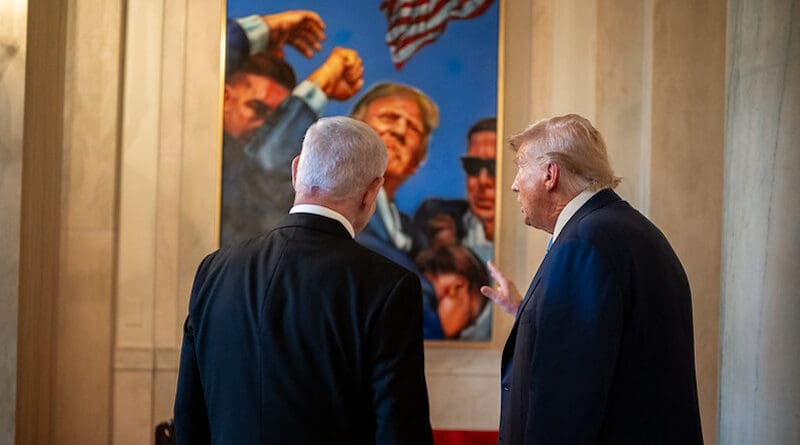


 Image source: ERDC
 Image source: Juo-Tung Chen/Johns Hopkins University
 Image source: Mirror MeThe Rundown: When it comes to robot dogs, Boston Dynamics’ Spot often steals the show. But this time, China’s Mirror Me startup is

