In this motivational speech, Jack Ma shares a powerful message about why you should never tell everyone your plans. Drawing from his personal experiences with building Alibaba, Jack Ma explains the dangers of sharing your ideas too early and why it’s essential to stay quiet and focused on execution. With humor, emotion, and wisdom, he delves into the importance of keeping your dreams close to your heart, avoiding negative influences, and letting your success speak for itself. If you’re a young entrepreneur, student, or anyone with big dreams, this speech is for you! Learn why silence is your superpower and how to protect your vision from doubts, jealousy, and fear. 🌟 Key Takeaways: Why silence is powerful when it comes to achieving your goals How to deal with negativity and doubt from others The dangers of seeking validation too soon Real-life lessons from Jack Ma’s journey with Alibaba 🎯 Watch till the end for valuable insights that will inspire you to protect your dreams and let your success speak louder than words.
Have you ever asked, “Do I have anxiety?” An expert panel is recommending that all adults be screened for anxiety. Photo: Getty Images.
A panel of influential national health experts recommends anxiety screenings for all U.S. adults, and a Colorado behavioral health expert calls the greater focus on anxiety a wise move.
Dr. Justin Rosshas witnessed a dramatic rise in people who are coping with anxiety and endorses universal anxiety screening.
“Anxiety is one of the most common and pervasive human experiences,” Ross said.
To get help with anxiety — if it’s proving problematic for you — it’s key to first recognize it, and that’s where universal anxiety screening could help.
“Anxiety can serve as a reminder that something we care about either is, or is perceived to be under threat. For many people, anxiety is a daily occurrence that ebbs and flows with our various life circumstances,” Ross said.
“For many others, anxiety is a pervasive mental health condition that significantly impacts the mind, body and spirit. Collectively, we need to do a better job of understanding the impacts of anxiety, not only for ourselves but for our community, and work to provide appropriate resources to help those in need,” said Ross, a licensed clinical psychologist and UCHealth’s director of workplace well-being.
People with anxiety disorders experience persistent worries and intense fears even when they’re in non-threatening situations.
There are multiple types of anxiety disorders. They include generalized anxiety disorders, panic disorders, social anxiety and phobia-related disorders.
Do I have anxiety?
Ross said the simplest way to know if you have anxiety sounds silly but is pretty straightforward.
“The starting point is, ‘do you feel anxious?’ And if the answer is ‘yes,’ you start there to better understand what that means more specifically for that individual.”
It’s also common for people to do what’s known as ruminating or perseverating. Many people with anxiety will keep repeating an action or continuously thinking about something that is bothering them.
“People experiencing anxiety may spend a lot of time and energy running over the same scenario in their minds,” Ross said.
If you have anxiety, you may feel symptoms associated with your mind like nervousness, distraction or repetitive thoughts. Are physical symptoms common with anxiety too?
Yes, absolutely. There’s an emotional experience of feeling anxious or nervous. Physical symptoms of anxiety disorder also are very common, Ross said.
“The physical response could be a sense of agitation, an increased heart rate or a higher body temperature. It can also manifest with gastrointestinal distress, stomachaches, or headaches.”
How do I know if my anxiety is normal or if I need help from a medical provider or mental health professional?
Many people don’t know if they’re dealing with normal anxiety levels or if they need help. That’s why screenings and increased knowledge about the prevalence of anxiety are so valuable.
“One of my favorite sayings is, ‘you can’t change what you’re not aware of,’” Ross said.
First, we all need to be aware that anxiety is a common human experience.
“From there, you’ll want to understand how anxiety may manifest for you. It’s about understanding what it looks like for each person so they can learn to manage the symptoms.”
Ross said it’s wise to get help with anxiety if it’s interfering with daily living. If you’re dealing with distractions or intrusive thoughts at school or work or having trouble getting to sleep or staying asleep, then it’s time to ask your primary care provider or a therapist for help.
What are the treatments for anxiety?
Psychotherapy — especially a method called cognitive behavioral therapy — can be very effective in helping people cope with anxiety. Meditation also proves helpful.
Various medications can also reduce anxiety. Options range from antidepressants to antihistamines, beta-blockers, anticonvulsant medications and benzodiazepines, according to task force experts.
Some people who have anxiety also have depression. That’s another reason that routine screenings could be so helpful. Experts can help detect anxiety and assist with treatment.
Which questionnaires would primary care providers use to screen people for anxiety?
The most common screening tools in the U.S. include various questionnaires that patients fill out. They include the Generalized Anxiety Disorder scale, the Edinburgh Postnatal Depression Scale, the Geriatric Anxiety Scale and the Geriatric Anxiety Inventory.
If answers to a questionnaire result in flags, then a provider needs to follow up to determine if a patient is indeed suffering from anxiety.
What if people aren’t comfortable talking about anxiety? Is that common?
Yes. Ross said it’s very common for people who are coping with anxiety and other mental or behavioral health challenges not to feel comfortable talking about their experiences.
The idea of a standard screening is to encourage doctors and patients to increase awareness about anxiety and to openly discuss it.
If screenings for anxiety become standard in doctors’ offices, Ross said it’s vital for patients to answer the screening questions honestly.
How important is it for patients who are struggling with anxiety to tell the truth when they respond to screening questions about anxiety?
Primary care providers and behavioral health experts like counselors and therapists can’t help people with anxiety if patients don’t share their symptoms and honest responses with their medical team.
Responses to anxiety screening questions could be similar to those related to substance use. Doctors routinely ask patients how much alcohol they’re consuming or whether they’re using drugs. If patients don’t answer these screening questions honestly, doctors can’t help them.
“The potential biggest concern with this approach is that some people may find that the screening is another formality, another checklist that they need to complete but will not perceive it as the first step in getting help,” Ross said. “If there’s no trust in this being the first step in treatment, there may be a tendency to just check ‘no’ to boxes.”
Medical providers know that patients aren’t always frank with them. That can be due to shame or a sense of hopelessness.
“In screenings, we may not be honest if we don’t think we’re going to get the help or support we need,” Ross said. “People need to know that when they’re honest, there will be the right support, treatment and resources available to them.”
What is one of the best models you’ve seen to give patients good support for anxiety and other mental or behavioral health challenges?
One of the best models is one in which patients can easily see both their primary care providers and a behavioral health provider in the same location in primary care clinics, Ross said.
UCHealth has been expanding seamless, easy access to behavioral health experts throughout primary care clinics in Colorado. If patients come in for a medical checkup and share concerns about behavioral health challenges like anxiety, substance use or depression, for example, they can easily follow up with a behavioral health expert who works in the same primary care clinic. Visits with the behavioral health expert typically are covered through health insurance. (Read more about how integrated care for both physical and mental or behavioral health works.)
Providing easy, affordable access to counselors and therapists in a primary care setting reduces stigma about mental health challenges and makes it easier for people to get the treatment they need, Ross said.
I hear there’s a shortage of behavioral health experts and therapists who can treat anxiety and other mental health challenges. Is that true?
Yes. That’s true. Across the U.S., many people are struggling to find or afford visits with a therapist or counselor. That’s why the integrated model that combines access to primary care and therapy is so promising.
If you are in crisis or a family member needs help urgently, try the 988 Suicide & Crisis Lifeline: Call or text 988.
Other resources for finding a therapist:
Ask you primary care provider.
Call your health insurance company (or check online) to get a list or providers.
Seek confidential support through an Employee Assistance Program. If your employer offers this benefit, you and family members might receive invaluable access to therapists and counselors.
Check the Open Path Collective, a national nonprofit network that aims to offer affordable access to therapists. (Always be sure that the provider is properly licensed and has good reviews from patients.)
How common is anxiety?
Anxiety is very common. In their recommendations, the U.S. Preventive Services Task Force cited data from the early 2000s showing that during a person’s lifetime more than 40% of women and 26% of men were likely to deal with anxiety. It’s especially common during pregnancy and after women give birth.
Task Force members also cited data from the 2019 National Household Interview Survey, which found that 9.5% of adults had experienced anxiety in the previous two weeks, while 3.4% reported moderate anxiety and 2.7% of adults experienced severe symptoms over the previous two weeks.
Yes. It’s common for anxiety to begin in childhood. The median age of onset for kids is 11. Experts say the prevalence continues to increase throughout adulthood.
While more studies are needed, researchers believe that anxiety rates are the lowest among adults ages 65 to 79.
Is it common for people who have anxiety not to know they have it?
Yes. Experts at the U.S. Preventive Task Force say “under detection” appears to be common.
Few people with anxiety share their concerns with their doctors, and only 11% of people with anxiety are getting help for it within the first year after diagnosis.
The median age for people to get help with anxiety is age 23.
Screening for anxiety in both children and adults may help with earlier diagnosis and treatment. Many people who have anxiety visit their doctors and report other problems like pain or trouble sleeping.
What can people do on their own to decrease anxiety?
“There are a lot of things we can do to help manage anxiety,” Ross said. “These include relatively simple daily behaviors like deep breathing, exercising and getting fresh air.”
Tell me more about breathing. Do you have to do formal meditation or do simple breathing exercises help?
Deep breathing can be a great place to start. Ross recommends slowing down and scheduling quick, deliberate deep breathing sessions lasting at least three times a day. These micro-breaks need not be long. Each session can be as brief as one minute.
“Breathing exercises are the simplest way to reduce stress and anxiety in the short term,” Ross said. “Slow your breathing to tell your body that there’s no immediate threat. We’re built to kick into gear quickly if we need our ‘fight or flight’ response. But stress also can trigger the same systems. And our bodies don’t do well if we’re constantly on high alert. Breathing communicates this in our nervous system and gets us back to a place of balance.”
Ross said breathing is incredibly valuable because it helps us manage the anxiety response on a physical, physiological and mental level.
The physical level is how the body reacts. The physiological response centers on the nervous system. And of course, our mental responses relate to how our brain is responding to stress, Ross said.
Breathing deeply has the remarkable power to affect people on all three levels.
“One minute of deep breathing helps slow down the sympathetic nervous system — the fight or flight response associated with anxiety. Breathing also helps turn on the parasympathetic nervous system, which helps us restore balance and can provide a sense of calm and focus,” Ross said.
Aside from deep breathing, what are some other self-care methods for reducing anxiety?
Ross recommends deliberately carving out breaks. And physical activity is enormously helpful.
“Take a walk. Take a bath. Read a book. Do things that are deliberately calming. Sitting on the couch and binging Netflix can seem relaxing, but it also can be avoidance behavior that isn’t actually restorative at all,” Ross said.
In order to take care of ourselves in restorative ways, we need to make deliberate decisions.
You also recommend ‘active self-care.’ What is that?
“Physical activity, exercise and anything that connects you to meaning and purpose all has the potential to work,” Ross said.
Finding balance and being deliberate about your choices are vital. If you’re constantly going on runs, but aren’t taking time to check in on your mental health or to rest and recharge, then you might not feel better, even after a long run.
Ross, himself, loves to run and cycle.
He recently set a major goal for himself. He trained for and completed the extremely challenging Leadville 100 mountain bike race over the summer.
“There’s a lot of evidence to show that exercise is a really helpful treatment for both anxiety and depression,” Ross said.
Physical activity clearly has benefits for our physical health, but also for our mental health. Exercise also serves as a proactive outlet to deal with stress.
“Plus, we give ourselves something to look forward to.That’s really important for our mental health. For me, training and competing in endurance events is not only important for me personally, but the daily training provides me an outlet and helps me manage my own stress and anxiety. Yes, even trained psychologists experience stress and anxiety, and we have to utilize the same strategies that we recommend to our patients and to the public.”
While setting goals is helpful, you don’t need to run a marathon, climb a 14-er or accomplish a huge feat.
Setting exercise goals and making plans with friends are great. Make plans to walk, run, hike, cycle or play a sport like pickleball with a friend.
If the weather is lousy, call a friend and challenge each other to work out indoors.
“People say, ‘I don’t have time,’” Ross said. “But if you make movement a priority, you will find a way to make it happen. Prioritizing time to exercise and meditate by putting it in your schedule and protecting that time is going to make a huge difference in your mental health.”
You also emphasize the value of connecting with people. Why are social interactions so critical to fostering better physical and mental health?
Social connections are vital to human beings, Ross said.
Ross thinks anxiety reports skyrocketed over the last two years because people need to connect with one another and they need milestones — from vacations to work gatherings to birthday parties — to look forward to.
“All of these things are near and dear to our psychological well-being,” Ross said.
Implementing new, universal primary care screenings for anxiety could be challenging, but invaluable.
“It’s a huge lift. But anxiety is a very common human experience,” Ross said. “We need to capture how pervasive it is and help create pathways for resources, treatment, and support.”
Can AI translations of medical test results reduce confusion and anxiety for patients?
The dense clinical language of medical test results can be challenging for patients to understand. Researchers are exploring whether AI versions of radiology reports can produce simpler explanations that are also accurate.
Patients often receive complex medical reports through their online health portals, sometimes before their doctors have a chance to explain them. Two studies are exploring whether AI tools can help translate radiology reports to bridge the gap and ease patient anxiety. Photo: Getty Images.
Have you ever opened a medical test result and found it utterly incomprehensible?
You are not alone.
While patient care is central to the U.S. health care system, patients can sometimes find themselves in the dark when it comes to understanding vital drivers of their care, like radiology results.
Enter AI.
Researchers in Colorado are conducting a pair of studies that investigate how artificial intelligence (AI) might help to shine a light for patients on the often dense language of radiology reports. Medical experts are evaluating whether patient-friendly AI language will improve care without sacrificing accuracy of the results patients receive. Both studies involve UCHealth researchers and patients and rely on the too-often excluded voice of patients for input.
One of those voices is Liz Salmi, communications & patient initiatives director for OpenNotes at Beth Israel Deaconess Medical Center in Boston. OpenNotes studies the effect that transparent communication has on doctors, patients and care partners.
Salmi was just 29 when she received a tough diagnosis while living in San Francisco. She learned she had a malignant brain tumor. Staring at the technical language of the radiology report was initially discouraging.
“Most people don’t speak radiology,” Salmi said. “When I have received imaging results on my own, the technical language can feel impenetrable. It can be confusing, scary, or misleading.”
Even routine terms can be unintentionally misleading, Salmi said.
“The first time I read the phrase ‘unremarkable’ in an MRI report, I took offense, only to find out later it means ‘normal.’ That kind of reaction is avoidable.”
The case for AI translations: When the law requires transparency, not understanding
Indeed, the bad news Salmi received about her own health spurred her to work toward finding ways to clear the fogs of fear and anxiety for other patients looking for medical answers. Among other patient-centered projects, she is now involved in a collaboration that is now underway with UCHealth that focuses on addressing a knotty provider-patient communication challenge spawned by legislation written nearly a decade ago.
Congress passed the sprawling 21st Century Cures Act near the end of 2016. In addition to many measures that aimed to spur medical research and innovation, there was a strong commitment to ensuring that patients would have access to their electronic health records in a “format that is easy to understand, secure, and may be updated automatically.”
Not quite five years later, Congress strengthened that access with the Information Blocking Final Rule. Simply put, the rule ensures that health care providers must respond promptly to patients who request their medical information – including clinical notes, test results, medical histories and more – from their electronic health record. Blocking or unnecessarily delaying that access is against the law nationally.
That might seem straightforward and positive for patients, but it illuminates a major challenge. Specifically, patients now have immediate electronic access to their radiology reports – even before the medical providers who ordered them. While the reports contain rich information for patients about their health, the clinical language they contain may leave patients with more questions – and anxiety – than they had before they received them.
How complex health information can lead to patient anxiety
Salmi recalls a formative incident after she received her brain tumor diagnosis. She faxed a copy of her pathology report to a family member before she had a chance to speak with her neurosurgeon.
“I had no medical training and no context, and the language in the report sent us spiraling with worry,” she said. “That experience – what we sometimes call ‘scanxiety’ – highlighted both the power and pitfalls of transparency. It taught me that timely access to information is critical, but so is clarity and context.”
Clinicians have a responsibility to help patients navigate newfound access to their medical records, said Dr. CT Lin, UCHealth’s chief medical informatics officer, and a collaborator with Salmi and the OpenNotes team.
UCHealth Chief Medical Informatics Officer Dr. CT Lin collaborated with Liz Salmi on a study of patients’ attitudes toward receiving their test results immediately rather than waiting for contact by their provider. Photo by UCHealth.
“We all have to adapt to the new landscape of patients receiving results immediately, which is positive for the vast majority of patients,” Lin said.
Lin and Salmi were among the co-authors of a 2023 study through the OpenNotes Learning Collaborative that examined how patients felt about immediately gaining access to their test results. Of the more than 8,000 patients surveyed, 96% preferred the immediate delivery – even before discussing the results with their provider.
However, “concerns remain about unintended effects of releasing abnormal test results to patients,” the authors cautioned.
“Viewing these results before speaking with the doctor increases worry in 8% of patients,” Lin said. “At present, we do not do a good job helping the 8% with their worry.”
Among the patients’ worries, Lin explained, are understanding what words in the reports mean, when they will be able to discuss the results with their doctors, and the health implications contained in the reports.
Using AI to translate radiology reports for patients
That insight encapsulates Salmi’s goal in the new study, which will recruit cancer patients treated by oncologists at the University of Colorado Cancer Center. Working alongside radiologists and oncologists, the patients will review radiology reports summarized by AI in accurate, patient-friendly language, said UCHealth neuroradiologist Dr. Justin Honce, who is collaborating with Lin, Salmi and the OpenNotes team on the project.
UCHealth neuroradiologist Dr. Justin Honce completed a pilot study of AI’s ability to translate radiology reports into patient-friendly, accurate language. He now collaborates with Liz Salmi and Dr. CT Lin on a study that will use AI to translate the radiology reports of patients treated at the University of Colorado Cancer Center. Photo: University of Colorado.
“We still want radiologists to assess the reports for accuracy, but we also want oncologists to assess them from their perspective,” Honce said.
He noted that a radiologist might find a summary satisfactory, while an oncologist might see nuance that needs to be addressed before releasing the report to patients.For example, “progressive disease” – cancer that is growing and spreading – and “post-treatment changes,” such as damage to healthy tissue caused by radiation treatments, can look very similar on imaging, Honce said.
“The oncologist can bring to bear the patient’s overall treatment history and clinical context in interpreting the report, helping to clarify uncertainty,” he said.
Completed study at UCHealth used AI to help patients improve understanding of radiology reports
Honce lends his expertise to the work of Salmi and Lin. He recently completed a pilot study (currently under review for publication) that tested using the AI application ChatGPT to translate 30 brain, spine, neck, and head and neck CT and MRI imaging reports into patient-friendly verbiage for UCHealth patients whose identities were concealed.
Honce’s pilot project demonstrates both the promise and the uncertainty of using AI to translate complex and nuanced radiology reports – and by extension – other medical information that patients have access to.
The tempered optimism of using AI as a translator
One goal of Honce’s study was to use AI to improve the readability of the reports, which a number of tools successfully validated, he said. But several questions followed.
Did patients understand the content of the reports?And did they want to see only the AI-generated summary or also the full radiology report? Most importantly, were the summaries accurate? Did the AI translations miss or downplay key information or overemphasize relatively insignificant findings?
Neuroradiologists reviewed the original reports and summaries to answer these types of questions, Honce said. In about 85% of the cases, the specialists found that the summaries encapsulated the originals well.
“There were cases of underemphasis and overemphasis,” Honce acknowledged.
For example, a summary described the vertebral artery, which supplies blood to the brain and spine, as “a smaller artery in your neck” – clearly downplaying its role.
Conversely, some summaries overemphasized relatively minor findings such as “mild sinus disease” and recommended unneeded follow-up care.
“If we want to eventually deploy something like this clinically, we’ll need to work on fixing those kinds of things,” Honce said.
A patient pleaser, but plenty of questions remain
“Patients uniformly loved” the summaries, Honce said.
They felt they grasped the main points well and quickly, and many of them also expressed that they would want to see both the summary and the full report if they were reviewing their own scans, he added.
Honce said he and his team have submitted a paper that discusses the findings of the pilot study to the Journal of Medical Internet Research, and it is currently under review for publication. Broadly, he believes AI has “a ton of potential” for helping patients better understand their medical care, but at the same time, there are questions that have to be addressed.
“AI summarization of radiology reports is not yet perfect,” he said.
For example, in his study, while the majority of patients saw an increase in overall understanding of the report, there was a relatively small but significant group of patients whose understanding of the radiology reports decreased after they read the AI-generated summaries.
“That’s clearly an important thing to think about because one of the main questions is safety,” Honce said. “We want to at least maintain, if not increase, their understanding.”
Rapidly advancing AI technology opens new potential opportunities in health care
Meanwhile, Honce said the explorations of AI in health care are only beginning. For example, he noted that in his pilot project, he worked with ChatGPT 4. Since then, many new models, such as o3 and o4-mini, have emerged. These are “reasoning” models that are capable of breaking down complex clinical and scientific questions into multiple problem-solving steps and approaches and evaluating their work before returning an answer, Honce explained.
In theory, the reasoning models could produce more accurate and helpful summaries of radiology reports, but Honce stressed that he has not yet evaluated them to see how well they work.
“One of the main questions we have is what kind of models should we be using for this process,” Honce said.
Nonetheless, Honce sees longer-term possibilities for using AI to help patients participate in their care. For example, in the future, patients might be able to generate a summary of a radiology report simply by clicking a button on the screen. Patients might also have the ability to interact with AI and ask for additional information on defined subjects, such as definitions of key terms.
Ensuring the accuracy of AI translations is essential and time-consuming
The biggest hindrance to all of these advances, however, is that at this point, radiologists would have to check AI-generated summaries for accuracy.
“That’s very time-consuming,” Honce said.
For that reason, he doesn’t expect doctors and health systems to start using AI translations for complex radiology reports anytime soon.
But he emphasized that exploring new options is “the right thing to do” for patients, who, too frequently, are left out of discussions about their own care.
“I think the biggest payoff is empowering patients,” Honce said. “There is good research that shows that the more information patients have, the more likely they are to have good outcomes because they can advocate for themselves.”
AI’s promise in helping to achieve a more prominent voice for patients
For her part, Salmi relishes new opportunities, like the work with Honce, Lin and her OpenNotes colleagues, to amplify the voices of patients in health care.
“What excites me most is the opportunity to co-create AI tools with patients, not just for them,” she said. “I’d like to see AI-generated summaries that reflect what real patients need: clear explanations, relevant context and supportive language – not just what researchers think patients need. If done right, these tools can empower patients, improve communication and reduce unnecessary distress. We have a chance to model what ethical, human-centered AI can look like in oncology care.”
Ultimately, Salmi wants us to understand that the stark words of a radiology report need not be frightening. They have the power to reassure people during their most vulnerable times.
“If we can translate radiology findings into clear, compassionate language, we can spare patients unnecessary distress and help them prepare for conversations with their clinicians,” she said.
Restoring memory and mental sharpness in older adults isn’t just about fighting disease; it’s about decoding the subtle shifts inside the aging brain.
Surprisingly, cognitive decline in healthy aging isn’t as simple as neurons dying, but rather neurons losing their spark at the synapse, the tiny junctions where signals leap from cell to cell. While many molecular changes accompany age, only a few have been identified as true culprits of cognitive decline, with one long-standing suspect being iron.
In a recent study published in Nature Aging, researchers at UC San Francisco sought to identify the molecular troublemakers that cause our brains to age prematurely.Their goal? Find the sneaky agents behind age-related memory decline, and figure out how to stop them.
They zoomed in on the hippocampus, a brain region responsible for regulating learning and memory, and highly vulnerable to the effects of aging. Using a process called neuronal nuclei RNA sequencing they identified ferritin light chain 1 (FTL1), an iron-associated protein, as a pro-aging neuronal factor that impairs cognition.
Using transcriptomics and mass spectrometry, researchers found that older mice had more FTL1 in their hippocampus, the brain’s memory HQ. This iron-handling protein wasn’t just loitering; it was actively disrupting neural connections and dimming cognitive performance.
To test its power, researchers cranked up FTL1 in young mice. The result? Their brains started behaving like those of elderly mice: fewer synaptic links, weaker memory, and simplified neural wiring. In Petri dishes, nerve cells flooded with FTL1 grew stubby, single-armed neurites instead of the usual branching networks.
Then came the twist: when researchers dialed down FTL1 in older mice, their brains bounced back. Neurons reconnected, memory improved, and the hippocampus lit up with youthful energy. It was as if the brain had remembered how to be young again.
“It is truly a reversal of impairments,” said senior author Saul Villeda. “It’s much more than merely delaying or preventing symptoms.”
Turns out, FTL1 doesn’t just mess with memory; it also slows down metabolism in hippocampal cells. But researchers found a clever workaround: when they treated these cells with a compound that revs up metabolism, the damage was blocked.
Villeda is hopeful that targeting FTL1 could spark a new wave of brain-rejuvenating therapies. “We’re seeing more opportunities to alleviate the worst consequences of old age,” he said. “It’s a hopeful time to be working on the biology of aging.”
Billionaire tech boss Marc Benioff isn’t the only one replacing customer service and sales roles with AI—Klarna and Microsoft have also slashed the departments.
Bloomberg / Contributor / Getty Images
Billionaire CEO Marc Benioff said his $248 billion Salesforce has cut about 4,000 customer service roles as AI agents step in to do the work. Just like Klarna and Microsoft, the Silicon Valley mogul revealed he just “needs less heads” now that the technology can handle over a million consumer conversations and has reduced support costs by 17% since around the start of 2025. It’s a change of tune from Benioff’s previous comments that AI wouldn’t lead to a white-collar wipeout.
ChatGPT launched only three years ago. Since then, leaders including Marc Benioff and Jensen Huang have been adamant that cheaper alternatives to labor won’t cause mass unemployment.
But in reality, the technology is slashing human headcounts at major companies—including Salesforce, which has cut 4,000 of its customer support roles for AI agents to pick up the work.
“I was able to rebalance my headcount on my support,” Marc Benioff, CEO of the $248 billion computer software company, recently revealed on the podcast The Logan Bartlett Show. “I’ve reduced it from 9,000 heads to about 5,000, because I need less heads.
“If we were having this conversation a year ago and you were calling Salesforce, there would be 9,000 people that you would be interacting with globally on our service cloud, and they would be managing, creating, reading, updating, deleting data,” he added. Today, those same interactions are happening, but “50% are with agents, 50% are with humans.”
And he doesn’t see his hybrid AI-human workforce as an otherworldly future. “I don’t think it’s dystopian at all,” he added. “This is reality, at least for me.
“At the start of this year we deployed help.agentforce.com. Because of the benefits and efficiencies of Agentforce, we’ve seen the number of support cases we handle decline, and we no longer need to actively backfill support engineer roles,” a Salesforce spokesperson tells Fortune. “We’ve successfully redeployed hundreds of employees into other areas like professional services, sales, and customer success.”
A change of tune from months ago
The tech titan has shown an interest in automating customer support jobs for some months now, previously telling Fortune that AI agents have completed over a million conversations with customers over the past six to nine months. But at the time, he said that mass layoffs weren’t on the table.
“I keep looking around, talking to CEOs, asking, What AI are they using for these big layoffs? I think AI augments people, but I don’t know if it necessarily replaces them,” Benioff revealed. “The reason is because a lot of this is still built on word models. Maybe there’s a future AI model that will be more accurate, but that’s not where we are right now. This is about humans and AI working together.”
And while the customer service department gets heavily slashed, he’s still adamant that it’s an “exciting” time for the wider company—and that humans will remain at the core of the function.
“There’s also an omni-channel supervisor now that’s helping those agents and those humans work together,” Benioff said on the podcast. “And this is the most exciting thing that’s happened in the last nine months for Salesforce.”
Plus, Salesforce’s elimination of support roles in particular should come as no surprise. The tech CEO has said that agents are already doing 30% to 50% of work within the company and that two roles in particular had the potential to be automated by AI agents: support and sales. By pushing humans out in favor of the advanced technology, Benioff said Salesforce has reduced its support cost by 17% so far.
But further automation beyond sales and support could be on the cards as the Salesforce boss revealed he’s looking at “every single function” to see how it can become an agentic business.
Other companies slashing staff in favor of AI workers
CEOs once denied the fact that rapid AI adoption will slash staffers across organizations, but now leaders are openly sharing their plans to replace humans with bots. More than 64,000 have been laid off across the tech sector this year as industry heavyweights lead the charge in job automation.
In early July, Microsoftannounced that it will cut about 9,000 roles—its largest round of layoffs since 2023.That plan brings the $3.74 trillion company’s total layoffs this year to a whopping 15,000 jobs, despite the company doing well financially; Microsoft posted a 18% year-to-year increase in net income last quarter. However, not all workers get to stick around after bringing home the bacon: The latest round of cuts is expected to hit sales and customer-facing roles, alongside the Xbox gaming division.
Metajoined in on the automation push, laying off 3,600 employees in February, and CEO Mark Zuckerberg even said that AI could be “effectively be a sort of mid-level engineer” sometime this year, with the ability to code. Google also wasn’t shy about reducing hundreds of roles across its Android, Pixel, and Chrome sectors. In reasoning about the mass firings, both Silicon Valley giants claimed the need to streamline human operations and invest more in AI.
And Benioff is far from being the first leader to cut down specifically customer service jobs; fintech company Klarna’s AI agents are doing the work of 700 customer service employees. And among the professions most impacted by generative AI, sales representatives rank fourth and customer service agents rank sixth.
“We have so many leads that we can’t follow up on them all. Salespeople basically cherry-pick what leads they want to call back. Thousands of leads, tens of thousands of leads, hundreds of thousands of leads have never been called back,” Benioff told Fortune earlier this year. “But in the agentic world, there’s no excuse for that. Every lead can be followed up on.”
Fortune Global Forum returns Oct. 26–27, 2025 in Riyadh. CEOs and global leaders will gather for a dynamic, invitation-only event shaping the future of business. Apply for an invitation.
Emma Burleigh is a reporter at Fortune, covering success, careers, entrepreneurship, and personal finance. Before joining the Success desk, she co-authored Fortune’s CHRO Daily newsletter, extensively covering the workplace and the future of jobs. Emma has also written for publications including the Observer and The China Project, publishing long-form stories on culture, entertainment, and geopolitics. She has a joint-master’s degree from New York University in Global Journalism and East Asian Studies.
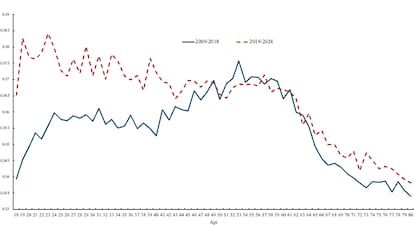
The unhappiness curve is disappearing… but this isn’t good news. Until now, life satisfaction had the shape of a smile. It started high in youth, sank in middle age — in what has become known as the “midlife crisis” — and then rebounded. Unhappiness, on the other hand, used to be shaped like a hump, or an inverted smile. However, a comprehensive study published on August 27 in the scientific journal PLOS One shows how this curve has eroded to the point of almost disappearing. It’s not that the midlife crisis has subsided, but rather that we’ve begun to see something we could easily define as a quarter-life crisis. Unhappiness now starts at a high level — at very early ages — and tends to decline throughout life.
The study was conducted with responses from more than 10 million adults in the United States (they did so between 1993 and 2024), with a longitudinal analysis involving 40,000 households in the United Kingdom. There were also two million questionnaires administered by the Global Minds Project in 44 countries. Lots of data, many countries… but one unequivocal conclusion. “The truth is, we were surprised that the results were so [universal],” acknowledges David G. Blanchflower, an economist at Dartmouth College and the study’s lead author.
The researchers didn’t ask about the reasons for this, but they point to the consequences of the pandemic, the housing crisis and — above all — the widespread use of smartphones. This would explain the uniformity of the data in very diverse contexts.“What a boy from Germany and another from New York have in common, for example, is access to the internet and smartphones,” Blanchflower explains. “In developing countries, however, we saw that those without internet access didn’t [seem to have] as poor mental health.”
The author doesn’t believe this is due so much to the effect of cell phones themselves, but rather to the way they deplete free time, squeezing it away until it disappears. “Cell phones have displaced beneficial activities. Children no longer play, they no longer talk… spending too much time on the internet distances people from useful activities.”
In blue, the old unhappiness curve, with a hump in midlife. The color red depicts the new curve: a downward line.
This could explain another of the study’s notable findings: in all the countries analyzed, young women report significantly higher levels of distress than young men. In fact, this is a constant in all studies analyzing the impact of the internet and social media on perceived well-being. The most recent example was provided via a study conducted by Health Behaviour in School-aged Children (HBSC), a WHO collaborative cross-national study. It indicated that this problem affects girls twice as often (with a prevalence of 51.2%) as boys (25.2%).
This study is important because of the large amount of data on which it’s based. Additionally, it places the distress of younger generations in a broader context, comparing it with the self-perceived satisfaction of their elders. Its conclusions are devastating, but not surprising.
Something began to go wrong starting in 2010. A wealth of scientific literature has clearly documented this. Rates of depression and anxiety among adolescents soared by 50%. Suicides rose by 32%. Members of Generation Z — those born after 1996 — began to suffer from anxiety, depression, and other mental health disorders, reaching higher levels than any other generation in recorded history.
The midlife crisis has shattered the unhappiness curve. But it’s important to keep in mind that this is a snapshot that will need to be updated. Young people in Generation Z, who suffer from more mental health problems than their elders, will eventually reach their 40s and 50s. And there’s no guarantee that they won’t then face the same life-threatening consequences that have plagued previous generations. Meanwhile, new generations will be added to the curve… and nothing suggests that they’ll be less dependent on their cell phones. In other words, the happiness curve has only disappeared for the moment. It’s expected to return in a few years, although it will be more extreme. Hitting “rock bottom” will mean going even further down.
“I don’t know how the situation will evolve,” Blanchflower acknowledges. “Every year, a new cohort of 12-year-olds joins and the rest age a year, but nothing changes. The group born [after the year] 2000 seems to have poor mental health. I hope we can stop this.”
It doesn’t seem easy, the author explains. Hospitalizations among young people for depression continue to rise, as do suicides and antidepressant use. The recent study is based on self-perceived mental health, but it’s underscored by all the data. In the United States, according to the National Healthcare Quality and Disparities Report (NHQDR), between 2016 and 2019 the rates of emergency department visits with a primary diagnosis related to mental health increased in the 0-17 age group, from 784.1 per 100,000 people to 869.3 per 100,000 people.
The midlife crisis began to be formally described in 2008. Since then, it’s been documented in more than 600 studies in different countries. The increase in worry, stress, and depression with age has been widely documented in sociology over the past 20 years. Blanchflower himself examined the phenomenon in previous studies. “In a whole series of articles, I argued that the U-shaped curve was an important finding… until it wasn’t! The data was correct, but something has changed; it doesn’t seem to be inscribed in the genes,” he notes.
Maite Garaigordobil Landazabal, a professor of psychological assessment and diagnosis at the University of the Basque Country, praises the recent study for its large database. Speaking in an interview published by the scientific website SMC, she notes that “it’s relevant because it questions a well-established empirical finding: the existence of the U-shaped curve of well-being and the hump of ill-being throughout life.” Garaigordobil considers the results to be “very novel,” noting that they “break with one of the most-cited regularities in the social sciences.”
On the same website, Eduard Vieta, a professor of psychiatry at the University of Barcelona, elaborates on the quality of the data and agrees with the diagnosis. But he adds another possible cause. “I think the contrast between expectations and reality is missing. The younger generations in most of the countries included in the study have received a very overprotective education and have developed a low tolerance for frustration. I think this aspect is also relevant to explaining their emotional distress,” he adds.
The article concludes that this global trend demands urgent attention from governments, researchers and civil society to reverse the decline in youth well-being. When asked about any specific ideas or measures, Blanchflower suggests restricting access to phones as one possibility. But, above all, he emphasizes the importance of offering alternatives. Migrating social life again, but in reverse: from the screen to the streets. We must encourage play, socializing, and outdoor time. “[We must] encourage children to behave like children,” he says.
Sign up for our weekly newsletter to get more English-language news coverage from EL PAÍS USA Edition





 By
By