A groundbreaking MIT brain-scan study shows relying on ChatGPT weakens critical thinking and memory wiring.
A recent MIT study, titled ”The Cognitive Cost of Using LLMs,” monitored the brain activity of 54 students using electroencephalography (EEG) devices.
Researchers from the MIT Media Lab discovered that participants who consistently relied on ChatGPT for essay-writing tasks demonstrated significantly lower neural engagement in brain regions tied to memory and analytical reasoning.
Rather than actively synthesizing information, these users increasingly defaulted to a state of ‘mental passivity,’ struggling to recall their own work shortly after completion and producing increasingly generic, uninspired content.
However, the research also highlights a path forward: AI does not have to be a cognitive detriment. Students who initially worked unaided and later transitioned to using ChatGPT showed an increase in brain activity, suggesting that AI is highly beneficial when used to enhance and scaffold human thought rather than replace it entirely. To avoid a future of algorithmic echo chambers and cognitive decline, experts urge users to remain active, critical participants when collaborating with digital tools.
source: Chow, A. (2025). ChatGPT’s Impact On Our Brains According to an MIT Study. TIME.
High-profile infanticide trial fuels debate over postpartum illness, malpractice claims, and whether psychiatrists should be judged for patients’ crimes rather than care quality.
oksa_studio/AdobeStock
Lindsay Clancy is currently being tried for the murder of her 3 children. The question for the jury is about whether or not Clancy is criminally responsible. The prosecution argues that she is guilty despite her history of postpartum depression and anxiety, while the defense counters that she had postpartum psychosis. The defense further argues that the diagnosis was missed, and that she was overmedicated anyway.
A good portion of the public and the media appear to support the defense theory as they struggle to understand how a mother could commit such a crime. The defendant and her then-husband have filed malpractice lawsuits against her psychiatric providers. They argue that the psychiatrists’ negligence led to the events. None of the psychiatrists who evaluated Clancy as a patient before the murders documented evidence of psychosis. Yet public opinion appears to favor a simple narrative: she is not to be blamed because she asked for help, and therefore the mental health system should be blamed.
But what are the implications of these trials? Can psychiatry, or the mental health system, be responsible for a patient’s criminal behavior?The litigation places psychiatrists and other mental health providers under scrutiny, looking for possible errors or inconsistencies to demonstrate that they did not provide adequate care.
The Role of Psychiatry & Psychopharmacology
In regular psychiatric care, where caseloads are large and time is limited, physicians rely on the medical record and on information provided by the patient, family members, and other treating providers. Psychiatrists must work with the information available.They cannot approach every patient as detectives whose primary task is to uncover or disprove every piece of information they are given. Clinical care requires judgment, and that judgment is necessarily based on incomplete information.
Similarly, in clinical psychiatry, the quality of care cannot be defined solely by the outcome. Patients can receive excellent psychiatric care and still have devastating outcomes. Imagine an oncologist providing the best possible treatment to a patient with stage IV cancer. If the patient ultimately dies, would that alone demonstrate that the oncologist provided poor care? Of course not. The outcome is heavily influenced by the severity and biology of the disease, not simply by the quality of medical care. Psychiatry is no different in this regard. Despite the best care, occasionally there are bad outcomes and deaths—suicides and homicides both.
In clinical psychiatry, the treatment of depression, including postpartum depression, may include psychotherapy and medication when indicated. In severe depression with suicidal ideation, antidepressant treatment combined with psychotherapy is a standard approach.Characterizing the prescription of an antidepressant together with a medication for sleep as evidence of inappropriate or excessive treatment, without considering the clinical circumstances, oversimplifies psychiatric practice.
Misdiagnosis vs Different Diagnoses
Another argument commonly raised in malpractice litigation is that a patient may have been misdiagnosed.But psychiatric diagnosis is different from the diagnosis of many medical conditions for which objective laboratory findings or biomarkers can confirm a disease. Psychiatric diagnoses are based primarily on clinical observation, history, reported symptoms, collateral information, and interpretation of the patient’s presentation. Presentations can change from one encounter to another, and reasonable clinicians can sometimes arrive at different diagnostic formulations.
This does not mean that psychiatric diagnosis is arbitrary. It means that psychiatry operates within a degree of uncertainty that is inherent to clinical medicine. There is often no laboratory test that can definitively confirm depression, psychosis, or a personality disorder at the time of an outpatient encounter. Treatment decisions are therefore based on the information available at that moment, and psychiatric treatment often involves adjusting medications and therapeutic approaches according to the patient’s response over time. Trial and error is not necessarily evidence of poor care; it can be an unavoidable component of treating many psychiatric disorders.
Responsibility of Clinicians
But ultimately, the most important question is one of responsibility.If a person is found not criminally responsible for a crime because of mental illness, can the psychiatrist then become responsible for the crime? And if so, should that responsibility depend primarily on the outcome? Can psychiatrists be held responsible for their patients’ behavior?
Tarasoff-like cases consider psychiatrists’ duties to third parties who are potential victims. But this is different—the perpetrator suing their psychiatrists. Decades ago, Wendell Williamson was found insane after killing 2 people in Chapel Hill, North Carolina. He then sued his former psychiatrist. Initially the jury returned a $500k verdict against the retired psychiatrist, but this was overturned by an appeals court—due to the specific facts of the case and the lack of foreseeability.
Can malpractice litigation become an additional legal strategy for defendants and their families following catastrophic acts?If the legal system shifts responsibility for patients’ behavior toward their physicians, will psychiatrists respond by practicing more defensively? The consequences could extend far beyond individual lawsuits. More defensive psychiatry could mean more documentation, more testing, more hospitalizations when there is any concern of risk, more consultations, more time spent obtaining records, and more effort devoted to protecting clinicians from future litigation. That would come at a cost. Time spent protecting oneself from a possible future lawsuit is time that cannot be spent treating the patient in front of you. And, if this becomes increasingly common, will anyone want to practice psychiatry in the future?
The question should not be, “Given what happened, what should the psychiatrist have known?” The question should be, “Given what was reasonably knowable at the time, what would a reasonable psychiatrist have done?” That distinction is essential. Otherwise, psychiatry risks being judged not by the quality of the care provided, but by whether the patient ultimately had a good outcome. And if we begin to judge psychiatric care by the crimes our patients commit rather than by the care we provide, psychiatry itself may end up on trial.
Dr Forcen is a psychiatrist at McLean Hospital in the division of depression and anxiety disorders.
Dr Hatters Friedmanis the Phillip J. Resnick Professor of Forensic Psychiatry; professor of psychiatry, reproductive biology, and pediatrics; and adjunct professor of law at Case Western Reserve University in Cleveland, Ohio. She served as editor of the Group for the Advancement of Psychiatry volume Family Murder: Pathologies of Love and Hate, which won the Manfred S. Guttmacher Award. an editor of the textbook Malpractice and Liability in Psychiatry.
Roughly 200 accounts from a suspected Chinese bot farm have quietly tried to influence Americans to oppose AI data centers on social media, X said Thursday night.
Why it matters: The U.S. and China are racing to build the world’s most advanced AI systems — and it appears Chinese propaganda has infiltrated American circles with the hope of slowing the U.S. down.
Driving the news: The X Safety team probed suspected Chinese accounts involved in influence operations and identified 200,000 accounts, including 200 accounts “posting in a manner that could manipulate a legitimate debate about American AI and energy policy,” the team said in a tweet.
The posts included content on how AI strains the electricity grid and increases utility prices and “cartoons that depicted data-center operators enriching themselves at the public’s expense.”
It’s unclear what, if any, action X will take to suspend or delete accounts from the bot farm.
X, owned by Elon Musk, whose billions rely on data centers to boost his AI enterprises, did not respond to Axios’ request for comment.
State of play: Congressional Republicans have been digging into influence campaigns from foreign adversaries designed to stall American AI development.
The House Energy and Commerce Committee sent a letter in June asking the FBI and White House advisers to brief lawmakers on alleged propaganda campaigns by foreign adversaries, specifically China, Russia and Iran, aimed at hindering U.S. AI development and data center expansion.
The letter cited several reports, including one estimating that opposition campaigns have delayed or obstructed roughly $45.8 billion in data center projects in Virginia alone.
Nonetheless, Democrat and Republican officials alike have increasingly backed data center moratoriums and embraced a not-in-my-backyard stance toward the massive infrastructure projects.
Thought bubble from Axios’ Madison Mills: Data center pushback has become a financial liability for the AI buildout.
Several Wall Street banks have recently cited political opposition as a risk to the entire AI sector.
The AI boom relies on expanding data centers because they provide the computing that massive AI companies need to keep growing.
The other side: “The ‘All In’ chattering class ‘Chinese psyop’ thing is worrying and frustrating,” Jim Prosser, a Silicon Valley communications consultant and former Twitter head of corporate communications, told Axios.
He noted that this is the new messaging Big Tech wants to use to change the conversation on data centers.
“If you can get both Greg Abbott and Kathy Hochul agreeing on something, it’s probably not a Chinese psyop, it’s probably not a mass delusion people are having on these issues.”
“It’s about touching grass and actually being somewhere. If you’re a [venture capitalist] in Atherton or Menlo Park opining about how somebody in Ohio should feel, and you’ve never been to Ohio, that’s a problem.”
By the numbers: Whatever role foreign influence campaigns may play, organic opposition to data centers is very real.
Sixty-one percent of Americans oppose building new data centers in their area, according to an early August University of Pennsylvania survey. That’s up 12 percentage points from a previous UPenn survey conducted in February and March.
That squares with a YouGov survey released Tuesday that found only 24% of Americans say building new data centers is very or somewhat good for the country. 47% say it’s bad.
Flashback: OpenAI disrupted two Chinese-linked covert networks using ChatGPT to create fake content to influence U.S. debates on AI energy consumption and tech tariffs, the company said in a June report.
The campaigns failed to catch on, but they signaled an active push by foreign adversaries to exploit American economic anxieties.
Yes, but: It doesn’t take much social media scrolling to see real videos of real people showing up in droves to local council meetings to fight back against data centers.
Livestreamed insanity trials reshape public opinion, exposing myths, bias, and psychiatry’s educator role, in cases like the M’Naghten trial to the curent Clancy trial.
Anonymous/AdobeStock
High-profile cases involving the insanity plea have always caught people’s attention. With Lindsay Clancy’s trial currently underway, we are seeing in real time how increased access to information through social media, live streaming, and various online communities can impact public involvement, perception, and opinion. This trial underscores both the importance of understanding the insanity plea and the educative role of psychiatrists.
At its core, the purpose of an insanity defense is that we, as a civilized society, do not punish someone who did not mean to do wrong.1,2
The M’Naghten Standard
In modern history, in 1843 London, Daniel M’Naghten shot and killed Edward Drummond.M’Naghten had mistaken Drummond for his target, Prime Minister Robert Peel. M’Naghten had paranoid and persecutory delusions. M’Naghten’s acquittal by reason of insanity resulted in intense public backlash, prompting the creation of a new insanity standard known as the M’Naghten standard.3
The M’Naghten standard considers that someone is insane, if by a “defect of reason” caused by a “disease of the mind,” the person did not know the “nature and quality” of the act or its wrongfulness.4 This new standard emphasized the power of public opinion in shaping jurisprudence. It has been argued that had the M’Naghten standard been applied to M’Naghten’s own case, he likely would have been found guilty.3
Hinckley Trial (1982)
More than a century later, in 1982, John Hinckley’s trial was a high-profile not guilty by reason of insanity (NGRI) case in the United States.In an attempt to gain the attention of actress Jodie Foster, Hinckley shot President Ronald Reagan and 3 other people in the District of Columbia. Hinckley was tried under a relatively lenient standard for insanity, referred to as the Model Penal Code standard. In addition to the wrongfulness component that the M’Naghten standard considers, the Model Penal Code also considers the defendant’s volitional capacity (to conform his conduct to the requirements of the law) at the time of the offense. Under this standard, Hinckley, who was represented by a top-notch defense team hired by his family, was found NGRI.5
Again, the public backlash from the Hinckley decision was tremendous, as many people were skeptical of Hinckley’s schizophrenia diagnosis.People were also misinformed about the frequency and success of the insanity defense, thinking of it as a “get out of jail free” card. The public was also skeptical about whether the expert witnesses were “for hire” and if the field of psychiatry was too imprecise to rely on for such critical cases.5Following the trial, Congress passed the Insanity Defense Reform Act of 1984, which raised the bar for insanity by eliminating the volitional component of the law, shifting the burden of proof for insanity from the prosecution to the defense, raising the standard of proof, and preventing expert opinion testimony about the ultimate issue.5 The high-profile Hinckley case then, similarly to the M’Naghten case, demonstrated society’s mistrust in psychiatric diagnosis, with misunderstandings about the defense and leading to more stringent criteria for a successful insanity defense federally. (Most states similarly have M’Naghten standards.) Another case 2 decades later would have a different trajectory.
Yates Trials (2002 and 2006)
In 2001, in Texas, Andrea Yates drowned and killed her 5 children. Texas had a M’Naghten style NGRI statute.She had a long history of serious mental illness, including postpartum psychosis, and killed her children while she was acutely psychotic. Though she pled NGRI in her first trial, the jury rejected the defense and found her to be guilty. However, at her retrial, Yates again utilized the insanity defense, and this time was found NGRI.6
The Yates case put a spotlight on maternal mental illness.7,8In distinction to the Hinckley case, in the Yates case, forensic psychiatrists called by both sides agreed that she suffered from a mental illness at the time of the offense6; the disagreement between experts instead focused on whether or not she understood the wrongfulness of her acts at the time.
Clancy Trial (2026)
Now 2 decades later, the public is following another high-profile murder case involving a postpartum mother. Lindsay Clancy is a former labor and delivery nurse who is currently on trial for killing her 3 children in Massachusetts, a state famous for its very public trials involving women from the Salem Witch trials,9 to the more recent high-profile case of Karen Read.10 Massachusetts’s sanity law contains both the cognitive M’Naghten arm and the volitional component (similar to the law Hinckley was tried under).New in the high-profile Clancy trial, in comparison to the Hinckley and Yates trials, is the role of technology. Increased public access to the details of the case through livestreaming has resulted in millions of viewers across the days of the trial.
Learn More About Postpartum Psychosis
For those interested in learning more about postpartum psychosis, read our FAQ here.
Social media has also expanded public awareness of this case and increased the discussion around various psychiatric topics, including postpartum psychosis,11 suicide, and difficulties with accessing psychiatric care. While a greater understanding of mental health can be seen as a win for psychiatry, this conversation must be thoughtful. The public is learning about mental illness through the lens of a murder trial, thus potentially linking mental illness and homicide in the public eye.This is despite the actual data that people with mental illness are more likely to be victims of violence rather than perpetrators.12 Social media also has the potential to amplify false narratives.13 Increased interest in “forensic fandoms” where internet sleuths examine evidence independently and present their own interpretations and theories14—with the potential to further distort information on psychiatric illnesses and treatment.
Finally, the Lindsay Clancy trial has highlighted an important issue in psychiatry and the law: the potential for gender and racial biases.15,16Not all defendants who kill their children, and not even all defendants with suspected psychosis, are treated equally. In 2022, Latarsha Sanders, a Black woman, was found guilty of killing her children in the same Massachusetts county. Her trial was not high profile and she did not have a GoFundMe. The same presiding judge as viewers watch in the Clancy case did not allow the defendant to submit her medical records containing details of her mental illness. During the Clancy trial, the Massachusetts Supreme Judicial Court ordered a retrial for Sanders, as the decision impeded her ability to use the NGRI defense.17
Concluding Thoughts
Public opinion has the potential to sway case outcomes. Public impression can lead to scrutiny and reconsideration of the legal standard for NGRI. The high-profile nature of the Clancy trial should remind psychiatrists about our role in public discussion. First, it is important to recognize that psychiatric illness is not synonymous with an insanity verdict. Psychiatrists should recall that a trial is a basic part of the justice system, existing for a reason—rather than asserting that certain defendants should not have to stand trial.
Second, psychiatrists should be cautious of biases, highlighting that every defendant should have equal access to the insanity defense when appropriate.High-profile cases also remind us that race, gender, and socioeconomic status may ultimately influence perceptions in NGRI cases.18
Finally, psychiatrists should remember that while our role as educators on psychiatric diagnoses and treatment is essential, we must maintain strict professional boundaries and adhere to the ethical principles underlying the Goldwater Rule by avoiding diagnostic commentary on public figures.19
Dr Shetty is a psychiatry resident at New York University Grossman School of Medicine.
Dr Hatters Friedmanis the Phillip J. Resnick Professor of Forensic Psychiatry; professor of psychiatry, reproductive biology, and pediatrics; and adjunct professor of law at Case Western Reserve University in Cleveland, Ohio. She served as editor of the Group for the Advancement of Psychiatry volume Family Murder: Pathologies of Love and Hate, which won the Manfred S. Guttmacher Award.
4. Kaplan J, Weisberg R, Binder G. Criminal Law: Cases and Materials. 7th ed. Wolters Kluwer Law & Business; 2012.
5. Newman AW. The Insanity Defense: United States v. Hinckley (1982). In: From courtroom to clinic: Legal cases that changed mental health treatment. Cambridge University Press; 2019:139-157.
Twenty-six years ago, her story of environmental activism and advocacy for community rights became the basis for one of Hollywood’s biggest box-office successes. Erin Brockovich, the film directed by Steven Soderbergh and released in 2000, grossed nearly $260 million and made its star, Julia Roberts, the highest-paid actress in history at the time: she earned $20 million for the role and went on to win the Academy Award for Best Actress.
But the real Erin Brockovich, the woman who took on Pacific Gas & Electric Company (PG&E) with unwavering determination, did not remain just another heroine fashioned by Hollywood’s capitalist, and often patriarchal, storytelling instincts.
Julia Roberts and Aaron Eckhart in the film ‘Erin Brockovich.’Getty Images
The powerful California gas and electric utility had spent years contaminating the groundwater in the desert town of Hinkley with hexavalent chromium, a highly carcinogenic chemical. Brockovich, who had no college degree, was a single mother of three and was still coping with the severe physical and psychological aftermath of a car accident, took on the corporate giant.
Against all odds, she won. The lawsuit culminated in a landmark 1996 settlement worth $333 million, to be divided among roughly 600 current and former residents.
Erin Brockovich at the 2001 Golden Globes.Frank Trapper (Corbis via Getty Images)
Often dismissed as “the environmentalist with cleavage,” Brockovich frequently saw her blonde hair and striking looks turned into weapons against her. She had been crowned Miss Pacific Coast in 1981 at just 21 years old, and her appearance was repeatedly used as a pretext for the sexism and condescension directed her way.
Yet Brockovich, who by then had already gone through two divorces and was working as a legal assistant at a small law firm, had been raised by parents who instilled in her an extraordinary sense of resilience and self-confidence: her father was an industrial engineer, her mother a journalist and sociologist. It is one reason she has become such an enduring feminist role model.
An ecofeminist icon against Big Tech
Today, nearly three decades later, Brockovich has herself become the kind of U.S. phenomenon the country loves to celebrate: a celebrity activist with television shows, bestselling books and a lucrative speaking career. Yet she is back in the spotlight once again, offering a reminder that, whether or not she has been absorbed into the machinery of pop culture that so often consumes its heroines, her achievements were never fiction. Nor have they ever felt more relevant.
If in the 1990s she took on the powerful PG&E, today she has turned her activism toward the rapid and opaque expansion of artificial intelligence data centers across the United States. Armed with a more sophisticated operation, a strong social media presence and the infrastructure of her own environmental consultancy, Brockovich Research & Consulting, she has once again set her sights on a formidable target.
She has also launched Brockovich Data Center Reporting, an interactive citizen-reporting platform designed to gather information about the large-scale rollout of these facilities by technology giants such as Meta, Google and Microsoft. Brockovich has questioned the extraordinary secrecy surrounding the acquisition of vast tracts of land for projects that can span thousands of acres, as well as the enormous demands they place on energy and water resources.
Much of the water used in cooling systems does not immediately return to the local water cycle, as it evaporates during the process, reducing the effective availability of groundwater. She also points to other potential harms, including around-the-clock noise pollution, the use of persistent chemicals known as PFAS, the generation of electronic waste and the relatively limited number of quality local jobs created compared with the amount of land these facilities occupy.
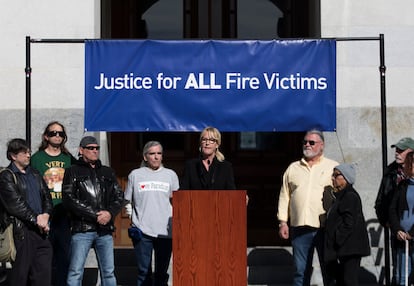
The activist in 2019 during a protest over the lack of aid for victims of the 2017 and 2018 California wildfires.Jessica Christian (San Francisco Chronicle/Hearst Newspapers via Getty Images)
But Brockovich’s impact as an environmental activist is only part of her legacy. Her significance as a feminist role model is equally important. This is despite the fact that she has always preferred to describe herself as an advocate for consumer rights and women’s health rather than as a feminist, let alone an ecofeminist.
Today, demanding transparency from the giants of Silicon Valley requires the same courage she showed when she stood up to gas-industry executives in Hinkley in the 1990s. That is why her story still resonates today. Brockovich proved that she did not need to alter her body, her wardrobe or her way of speaking to conform to the norms of corporate masculinity in order to defeat a major company. Her example continues to undermine the stereotype of the conventional activist: her feminism, and her ecofeminism, were born not from theory or academia, but from instinct, working-class pride and lived experience. But born they were, and in remarkable fashion.
Alicia H. Puleo, a renowned philosopher and co-director of the University of Valladolid’s online course Ecofeminism: Thought, Culture and Praxis, which has run for six editions and has been replicated at universities across Latin America, argues that Erin Brockovich is indeed a feminist role model.And an ecofeminist one too, even if she has never described herself that way. “She is part of this movement because she has fought, and continues to fight, to defend the Earth, the common home we all share,” Puleo says. “She also rejects the androcentric nature of authority and values emotion and the ability to empathize with people who have suffered.”
Eva Saldaña, executive director of Greenpeace Spain, makes a similar point. She argues that women’s leadership in climate and environmental activism is not a biological matter, as some claim, since that would amount to “an essentialist view.” Rather, many of these forms of leadership stem from women’s structural position in society because “the burden of care work and sustaining life has historically fallen on them.” She explains: “They are often the first to detect and experience the consequences of environmental degradation. They are characterized by putting life at the center, seeking to protect the environment and promote collective well-being, in contrast to models of domination and oppression that place the interests of a few above people, the planet and democracy.”
Charles Barthold, a lecturer at the Open University in the United Kingdom, a researcher in human resource management and organizational studies, and a PhD graduate of the University of Leicester, has also examined Brockovich through an ecofeminist lens. Together with David Bevan and Hervé Corvellec, he co-authored the 2022 paper An Ecofeminist Stance in Critical Practice: Challenging Corporate Truth in the Anthropocene, which analyzes three ecofeminist figures: U.S. environmentalist Rachel Carson and her campaign against DDT; Indian activist Vandana Shiva and her opposition to genetically modified organisms; and Erin Brockovich and her fight against hexavalent chromium.
Barthold argues that Brockovich embodies ecofeminist principles because “there is an inherent connection between feminism and environmentalism, particularly through an ethic of care that recognizes the interdependence of human beings and their environment. Patriarchy, by contrast, is grounded in an ontological dualism that separates human beings from the rest of nature.”
The legitimacy of lived experience
Without ever intending to, the environmental activist shattered many of the stereotypes traditionally associated with environmental campaigners. In return, she faced no shortage of criticism and discrimination. Partly because she was a woman and projected a form of femininity that many considered more suited to a Hollywood actress than an environmental advocate. But she was also dismissed because of her lack of formal academic credentials. During the Hinkley case, a number of lawyers and legal professionals sought to discredit her work, even refusing to treat her as a valid interlocutor.
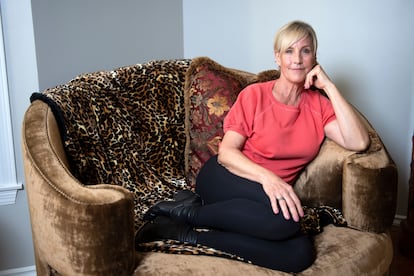
Erin Brockovich, photographed at her home at the time the film about her life was being shot.Mel Melcon (Los Angeles Times via Getty Images)
But Brockovich showed, and continues to show, that empathizing with a community’s suffering and bringing to light health problems and harms that have been deliberately overlooked can be just as valuable as earning a stack of academic degrees. She demonstrated that lay knowledge, meaning the everyday, intuitive understanding rooted in personal experience, can be every bit as legitimate as expert or specialized knowledge.
“What she teaches us,” says Alfredo Menéndez Navarro, professor of the history of science at the University of Granada, “is that the experience of affected communities can help identify problems that have not yet been recognized by scientific or administrative institutions or by experts. Brockovich’s case can be understood as part of the process of democratization of knowledge about risk, in which communities and citizens do not merely demand the right to know, but acquire the capacity to investigate, produce knowledge and challenge established definitions of risk.”
Menéndez Navarro, author of the 2011 academic article The Claim for Lay Knowledge in the Defense of Public Health, which draws on the film Erin Brockovich, notes that although Brockovich had neither scientific nor legal training, “she was able to listen to those affected, connect individual experiences, gather documentation and relate that local knowledge to official records and expert evidence.” In his article, he describes this approach as a form of “human-scale epidemiology.”
For her part, Alicia H. Puleo also highlights Brockovich’s self-taught background, arguing that her lack of scientific training in no way diminishes the value of either her work or its results. “Ecofeminism is both a theory and a practice,” the philosopher says, affirming Brockovich’s practical achievements.
Eva Saldaña of Greenpeace Spain likewise points to Brockovich as “an example of how empathy and outrage in the face of injustice can be transformed into a force for political change.” “We live in a world dominated by technocratic and patriarchal knowledge that makes ecological and social impacts invisible in favor of economic growth at all costs,” she argues.
Saldaña maintains that “you do not need to belong to any political elite to stop destruction; rather, resistance from citizens and community bases where it most often originates, should be legitimized, while fully defending our right to protest.”
She also stresses the importance of “citizen knowledge”: the understanding that emerges from everyday experience, caregiving, ties to local communities and places, observation of one’s surroundings, mutual-support networks, and the collective effort to solve real-world problems affecting specific communities.
Breaking the hegemony of expert knowledge is particularly relevant in an age of misinformation and fake news. “We cannot invoke the defense of lay knowledge as a way of legitimizing disinformation,” warns Alfredo Menéndez Navarro. “There is a fundamental difference between the situated knowledge of a community, which is tested, seeks evidence and engages in dialogue with scientific knowledge, and a false claim presented as truth simply because someone shares it based on personal experience or conviction.”
Do we need more role models like Brockovich?
For Puleo, the answer is clear: “Figures like hers are even more necessary today than they were in the past. Despite the fact that we are heading toward ecological and civilizational collapse,” she says, noting that some commentators now speak of a “Pyrocene” because of the growing number of major wildfires around the world, “society seems increasingly dominated by indifference and a narcissistic hedonism focused on living in the moment, without thinking about the future or about others. Nor do people think about their own lives or those of other creatures on Earth. “Many people do care, but the vast majority do not recognize the danger here and now; it is not something that belongs to the future.”
Puleo believes younger generations could learn a great deal from Brockovich, particularly from “her sense of justice, born out of outrage at deception and the violation of rights.”They could also learn “the value of perseverance, because perseverance in the pursuit of justice is essential. Without it, everything becomes mere posturing.”
Saldaña also stresses the importance of role models like Brockovich “at a time of overlapping crises, with seven of the planet’s nine boundaries already breached.” Brockovich, she argues, like many other women, communities and grassroots movements leading struggles today, offers younger generations a set of essential values: “the determination to challenge authority when it threatens life, the importance of community action, and the understanding that defending nature also means defending human rights and social justice.”
“Younger generations could look to Erin Brockovich and ecofeminism as sources of intellectual inspiration, both ethically and in terms of how they understand the world,” suggests Charles Barthold.
He argues that they can learn from an activist practice capable of combining radical convictions with tangible results achieved through legal victories, avoiding the twin pitfalls that often characterize contemporary activism: rigid ideological purity on the one hand and pragmatic co-optation on the other.
Barthold also notes that “leadership tends to be perceived as inherently masculine while women tend to be sidelined. This is a real problem for democracy and could be one reason climate action is not taken seriously enough.”
Or, as philosopher, professor and writer Puleo concludes: “We need more Erin Brockovichs.”
Sign up for our weekly newsletter to get more English-language news coverage from EL PAÍS USA Edition
John Mearsheimer breaks down the current state of the Iran War, and how the conflict increasingly appears to look like the most dire strategic mistake in US history. Support my independent journalism at Substack: https://chrishedges.substack.com/ Follow The Chris Hedges Report on social media: https://linktr.ee/chrishedges Photo in thumbnail: STRAIT OF HORMUZ, IRAN – MAY 16: An Iranian flag flutters in the wind as ships remain anchored on May 16, 2026 in the Strait of Hormuz near Larak Island, Iran. Negotiations between the U.S. and Iran over opening this critical waterway have largely stalled as the countries have rejected each other’s proposals to end the war that began when the U.S. and Israel attacked Iran on February 28. (Photo by Majid Saeedi/Getty Images)
Some Icelanders see joining the EU as the best way to protect the island nation’s sovereignty amid US President Donald Trump’s ambitions to annex Greenland.
Supporters argue closer ties with the EU would strengthen Iceland’s security and influence, while opponents warn membership could weaken national sovereignty and put control of key sectors such as fisheries at risk. The issue has deeply divided Icelandic society ahead of the vote on Saturday.
For more episodes from Focus in Europe, follow this link.