Feb 4, 2024 ✪ Members first on February 4, 2024🌿 Embracing Sensitivity | Navigating Life as a Highly Sensitive Person (HSP) 💫The Advantage of Being a Highly Sensitive and Gifted Child Nobody Tells You | Dr. Gabor Maté Are you or someone you know a highly sensitive child? In this eye-opening video, Dr. Gabor Maté delves into the unique challenges and strengths that come with being a gifted and sensitive child. Discover the surprising truth about sensitivity, as Dr. Maté explores how these children experience emotions more intensely, leading to both extraordinary abilities and significant struggles. Join us as we unpack the origins of the word “sensitive” and how it profoundly impacts the lives of gifted children. Learn about the emotional turmoil they often face and why embracing their sensitivity can be a powerful trait rather than a burden. Through insightful discussions and practical tips, this video aims to validate the feelings of those who may feel like outsiders in a world that often misunderstands them. Key topics include: The connection between sensitivity and childhood trauma How to prevent trauma and promote emotional well-being Insights from Dr. Maté’s influential book, “The Prisoners of Childhood” Strategies for parents and caregivers to support gifted, sensitive children Whether you’re a parent, educator, or someone passionate about understanding the complexities of giftedness, this video is a must-watch. Unlock the potential of sensitivity and help empower the next generation to thrive! Don’t forget to like, share, and subscribe for more insights on parenting, mental health, and personal growth! 🔔 Credit and connect: Very Special Thanks To Dr. Gabor Mate and Tim Ferris
Illustration by Tag Hartman-Simkins / Futurism. Source: Getty Images
For any young job seekers struggling in today’s horrible labor market, experts working for one of the wealthiest companies in the world have a little tough love for you: you’re pretty much cooked, fam.
In an analysis of recent economic trends in the US, Goldman Sachs economists David Mericle and Pierfrancesco Mei wrote that “jobless growth” is pretty much the new normal.
“The modest job growth alongside robust GDP growth seen recently is likely to be normal to some degree in the years ahead,” Mei and Mericle said, according to Fortune, which obtained the note. The two expect that the majority of GDP growth will come from productivity gains boosted by AI progress, with only a “modest contribution” from labor supply growth, or the increase in available workers.
“History also suggests that the full consequences of AI for the labor market might not become apparent until a recession hits,” they added. When it comes to tech innovation, “some transitional friction has been normal historically, and is certainly possible in the future.”
The effect of all this, Fortune observes, is that hiring in every industry except healthcare has turned net on negative over the past few months, as executives and management teams double down on AI in order to streamline operations and cut out expensive overhead — in the form, mainly, of paychecks.
This unfortunate insight piggybacks off Federal Reserve Chair Jerome Powell’s comments in September, when he said the labor market had become “low-hire, low-fire.” Powell’s insight: “kids coming out of college and younger people, minorities, are having a hard time finding jobs.”
It’s a bitter pill to swallow, but there’s also plenty of reason to be skeptical of all the AI doomsaying.
Yes, it’s true that hiring has slowed to a crawl — one report found that hiring in the US is now the slowest its been since 2009,when the economy was still in the throes of one of the worst financial disasters in history. However, economists are nowhere near a consensus on the cause, and AI is more likely a scapegoat than a culprit.
For example, as the Goldman Sachs analysts noted, AI’s overall impact on the macroeconomy is still limited, a conclusion also put forward by the Yale Budget Lab. Given the hundreds of billions of dollars invested into AI so far, investors clearly expect to see an unprecedented shakeup of the US economy — if the AI revolution comes to pass.
But at the moment, prospects for that new technological epoch look dim. AI is far from the golden goose business executives assumed it would be, failing at 95 percent of the companies that roll it out. After betting the farm on AI to automate its workers, company after company has eaten crow, either being forced to hire back their workers, or scrap their AI programs in favor of outsourced labor.
In each case, the real issue isn’t AI’s purported ability to do everyone’s job, but the same old class of ruling elites who’ve always fought tooth and nail to keep every penny which they’ve never toiled to earn in the first place.
I’m a tech and transit correspondent for Futurism, where my beat includes transportation, infrastructure, and the role of emerging technologies in governance, surveillance, and labor.
The world wide web was meant to unite us, but is tearing us apart instead. Is there another way?
Published: October 15, 2025 8.10pm BST
Authors
George Buchanan Deputy Dean, School of Computing Technologies, RMIT University
Dana McKay Associate Dean, Interaction, Technology and Information, RMIT University
Disclosure statement
Dana McKay has received funding from the Australian Research Council, the Australian Digital Health Agency, and Google (this last ruing her PhD).
George Buchanan does not work for, consult, own shares in or receive funding from any company or organisation that would benefit from this article, and has disclosed no relevant affiliations beyond their academic appointment.
Partners
RMIT University provides funding as a strategic partner of The Conversation AU.
Republish our articles for free, online or in print, under Creative Commons licence.Republish this article
Share article
Print article
The hope of the world wide web, according to its creator Tim Berners-Lee, was that it would make communication easier, bring knowledge to all, and strengthen democracy and connection. Instead, it seems to be driving us apart into increasingly small and angry splinter groups. Why?
We have commonly blamed online echo chambers, digital spaces filled with people who largely share the same beliefs – or filter bubbles, the idea that algorithms tend to show us content we are likely to agree with.
However, these concepts have both been challenged by a number of studies. A 2022 study led by one of us (Dana), which tracked the social media behaviours of ten respondents, found people often engage with content they disagree with – even going so far as to seek it out.
When an individual engages with a disagreeable post on social media – whether it’s “rage bait” or something else that offends you – it drives income for the platform. But on a societal scale, it drives antisocial outcomes.
One of the worst of these outcomes is “affective polarisation”, where we like people who think similarly to us, and dislike or resent people who hold different views. Research and global surveys both show this form of polarisation is growing across the world.
Changing the economics of social media platforms would likely reduce online polarisation. But this won’t be possible without intervention from governments, and each of us.
Our mission is to share knowledge and inform decisions.
Online, we can be influenced by the opinions of people we agree or disagree with – even on topics we had previously been neutral towards. For instance, if there’s an influencer you admire, and they express a view on a new law you hadn’t thought much about, you’re more likely to adopt their viewpoint on it.
When this happens on a large scale, it gradually separates us into ideological tribes that disagree on multiple issues: a phenomenon known as “partisan sorting”.
Research shows our encounters on social media can lead to us developing new views on a topic. It also shows how any searches we do to get more insight can solidify these emerging views, as the results are likely to contain the same language as the original post that gave us the view in the first place.
For example, if you see a post that inaccurately claims taking paracetamol during pregnancy will give your baby autism, and you search for other posts using the key words “paracetamol pregnancy autism”, you will probably get more of the same.
Being in a heightened emotional state has been linked to higher susceptibility to believing false or “fake” content.
Why are we fed polarising content?
This is where the economics of the internet come in. Divisive and emotionally laden posts are more likely to get engagement (such as likes, shares and comments), especially from people who strongly agree or disagree, and from provocateurs. Platforms will then show these posts to more people, and the cycle of engagement continues.
Social media companies leverage our tendency towards divisive content to drive engagement, as this leads to more advertising money for them. According to a 2021 report from the Washington Post, Facebook’s ranking algorithm once treated emoji reactions (including anger) as five times more valuable than “likes”.
Simulation-based studies have also revealed how anger and division drive online engagement. One simulation (in a yet to be peer-reviewed paper) used bots to show that any platform measuring its success and income by engagement (currently all of them) would be most successful if it boosted divisive posts.
Where are we headed?
That said, the current state of social media need not also be its future.
People are now spending less time on social media than they used to. According to a recent report from the Financial Times, time spent on social media peaked in 2022 and has since been declining. By the end of 2024, users aged 16 and older spent 10% less time on social platforms than they did in 2022.
Droves of users are also leaving bigger “mainstream” platforms for ones that reflect their own political leanings, such as the left-wing BlueSky, or the right-wing Truth Social. While this may not help with polarisation, it signals many people are no longer satisfied with the social media status quo.
Internet-fuelled polarisation has also resulted in real costs to government, both in mental health and police spending. Consider recent events in Australia, where online hate and misinformation have played a role in neo-Nazi marches, and the cancellation of events run by the LGBTQIA+ community, due to threats.
For those of us who remain on social media platforms, we can individually work to change the status quo. Research shows greater tolerance for different views among online users can slow down polarisation. We can also give social media companies less signals to work from, by not re-sharing or promoting content that’s likely to make others irate.
Fundamentally, though, this is a structural problem. Fixing it will mean reframing the economics of online activity to increase the potential for balanced and respectful conversations, and decrease the reward for producing and/or engaging with rage bait. And this will almost certainly require government intervention.
When other products have caused harm, governments have regulated them and taxed the companies responsible. Social media platforms can also be regulated and taxed. It may be hard, but not impossible. And it’s worth doing if we want a world where we’re not all one opinion away from becoming an outcast.
90,000 experts have written for The Conversation. Because our only agenda is to rebuild trust and serve the public by making knowledge available to everyone rather than a select few. Now, you can receive a curated list of articles in your inbox twice a week. Give it a go?
The Rundown: U.S. startup HistoSonics just nabbed a $250M lifeline from Peter Thiel, K5 Global, and Jeff Bezos — a massive late-stage cash infusion to fuel its push toward next-gen, scalpel-free cancer treatments.
The details:
The company’s Edison System uses focused ultrasound to destroy tumors, turning diseased tissue into microscopic debris that the body naturallyclears.The tech, called histotripsy, uses rapid bursts of ultrasound to create microscopic bubble clouds inside tumors that shred cancer cells into debris.It’s already earned FDA clearance for liver tumor ablation and is running trials for prostate, pancreatic, and kidney cancers.If it works at scale, histotripsy could join robotic surgery and proton therapy as another premium, high-margin procedure hospitals race to offer.
Why it matters: HistoSonics is betting that ultrasound can replace scalpels and radiation for certain tumors, which would be a genuine breakthrough for patients. But histotripsy still has to prove it works across cancer types, matches long-term survival rates of existing treatments, and can scale beyond specialized academic centers.
Artificial intelligence is transforming the global workforce, but its impact looks different across economies.
Christine Qiang, Global Director in the World Bank’s Digital Vice Presidency, tells GZERO Media’s Tony Maciulis that while “every single job will be reshaped,” developing countries are seeing faster growth in demand for AI skills than high-income nations.
Connectivity remains a critical foundation. “So many people still don’t have energy, and many have digital access, but they are not using it,” Qiang notes, stressing the importance of affordable, reliable infrastructure.
She highlights data as “the new electricity” for developing economies to leapfrog into the AI era, provided global governance keeps large language models open and inclusive.
This conversation is presented by GZERO in partnership with Microsoft. The Global Stage series convenes global leaders for critical discussions on the geopolitical and technological trends shaping our world.
Summary: A global study reveals that our most emotionally resonant music tends to come from our teenage years—typically peaking around age 17. This “reminiscence bump” marks the period when our developing brains most strongly imprint musical memories that help form identity.
The research also found gender differences: men’s music memories peaked earlier, while women’s formed later and evolved more flexibly over time. Surprisingly, younger generations are now forming deep emotional ties to songs from decades before they were born, creating a cross-generational “cascading reminiscence bump.”
Key Facts:
Peak Musical Memory: Emotional attachment to music peaks around age 17, reflecting adolescence as a key time for identity formation.
Gender Differences: Men’s strongest music memories occur earlier (around 16), while women’s peak later (after 19) and evolve over life.
Cross-Generational Effect: Younger listeners often bond with music from about 25 years before their birth, showing cultural continuity.
Source: University of Jyväskylä
A new global study led by the University of Jyväskylä reveals that our most emotionally resonant music tends to come from our teenage years—peaking around age 17. This pronounced pattern, known as the “reminiscence bump”, reflects our tendency to form the strongest emotional ties to music from our teenage years.
This “bump” helps explain why songs from adolescence often remain deeply meaningful even decades later. Yet the pattern isn’t fixed: its intensity shifts across the lifespan and reveals different trends for men and women.
The study led by researchers at the Centre of Excellence in Music, Mind, Body and Brain (University of Jyväskylä, Finland) drew responses from nearly 2,000 participants from 84 countries. The participants were asked to identify a piece of music that held profound personal meaning for them.
Music shapes identity
According to Dr. Iballa Burunat, the lead author of the study, the reminiscence bump for music exists because it hits a perfect neurological and biographical sweet spot.
“Think of the adolescent brain as a sponge, supercharged by curiosity and a craving for reward, but without a fully developed filter. And it’s because it’s still maturing that our strong emotional experiences, such as the songs we love, get absorbed more deeply and vividly, and leave a lasting impression; so the persistence of this reminiscence effect just shows how fundamental music is in identity formation.”
A surprising gender divide in musical memory
The research found that in men, the reminiscence bump peaked earlier, around age 16, while in women the peak came later, after age 19.
“As we do not have rich qualitative data from the participants, we can only speculate based on previous work on psychology and gender differences,” Burunat notes.
Psychology research suggests that men often cement their musical identity earlier through adolescent bonding and independence. Women’s musical identity, by contrast, develops over a longer period, shaped by emotional connections and relationship milestones into young adulthood, a pattern often reinforced for women by society. This could explain why women’s strongest music memories peak slightly later.
“Music unfolds over time. Its rhythm, melody, and structure provide a kind of sequential framework, a timeline”, says Dr. Iballa Burunat.
Music genres also matters
Another key factor may be the musical genres themselves. Men often gravitate toward intense, rebellious genres that fuel teenage identity and independence—a phase that peaks early.
Women, however, tend to engage with a wider spectrum of music, from pop to soul to classical, often using it also as a tool for strengthening social bonds. These broader purposes extend well beyond the teenage years and are often tied to vivid memories of specific social moments and relationships and may therefore contribute to a later peak in musical memory.
Music evolves with us through the lifespan
The study also shows that our connection to music continues to evolve throughout life – and differently for men and women.
“Our data clearly shows that for men, music from adolescence becomes a lasting anchor for personal meaning, a finding that could be explained by society’s focus on youth and rebellion in shaping masculine identity”, explains Dr. Burunat.
“Conversely, for women, the connection to music tends to shift over time, particularly starting in their mid-forties onward, as they commonly use music as a flexible tool for emotional expression and social bonding throughout their lives.
“This may explain why their most meaningful musical connections often shift to recent songs tied to current relationships, personal growth, or new experiences, sometimes even holding more emotional weight than the music from their youth.”
But there’s a twist that defies generational boundaries: younger listeners, both men and women, often form deep connections to music released decades before they were born—typically from about 25 years earlier.
Researchers term this phenomenon the “cascading reminiscence bump,” and they believe it reflects strong cross-generational influence, likely shaped by music introduced by parents, family, or enduring cultural icons from earlier eras.
“Music is far more than just entertainment.”
From your dad’s favorite classic rock tune, through the 90’s hip-hop that defined your youth, to the recent pop song that got you through a tough time, music remains one of the most powerful tools we have for connecting to our past.
“I think it helps to think of music like a scent: it bypasses our brain’s language centers and brings a past moment to life in a non-verbal, immediate way”, Burunat explains.
“But unlike a smell, music unfolds over time. Its rhythm, melody, and structure provide a kind of sequential framework, a timeline. And it’s this extraordinary combination that allows music to act as both a time machine and a storyteller, helping us recall not just a feeling but the entire context of an event”.
“What our findings make clear is that music is far more than just entertainment”, Burunat concludes. Undoubtedly, music is an archive of our most meaningful memories and, ultimately, a foundation for our sense of self because it tells the story of who we are, who we were, and how we’ve grown.
Key Questions Answered:
Q: Why do songs from our teenage years feel so special?
A: Because the adolescent brain is highly plastic and emotionally charged, making musical experiences deeply ingrained and long-lasting.
Q: How do gender differences shape musical memory?
A: Men tend to anchor their music identity earlier through rebellion and independence, while women’s memories form later through emotional and social bonds.
Q: Can we connect deeply to music from before our time?
A: Yes—many young listeners form strong emotional ties to older music through family and cultural influence, a trend called the “cascading reminiscence bump.”
About this music and memory research news
Author: Reetta Kalliola Source: University of Jyväskylä Contact: Reetta Kalliola – University of Jyväskylä Image: The image is credited to Neuroscience News
Memory bumps across the lifespan in personally meaningful music
Some songs stay with us for a lifetime. Even decades later, a few familiar notes can unlock vivid memories. Yet the life periods from which these songs originate and their prominence across age and gender remain underexplored.
This study examines lifespan patterns in music-related memory, focusing on age trends, gender differences, and the global presence of the “reminiscence bump”, a peak in emotional connection to music from adolescence and early adulthood.
While this phenomenon is well-documented in Western samples, its global manifestation, gendered dimensions and variation across life stages remains unexplored.
At 09:31 on Wednesday, 2nd October 2025, police received a call reporting that a vehicle had struck pedestrians outside the Heaton Park Hebrew Congregation Synagogue in Manchester. According to Greater Manchester Police, the suspect drove into worshippers gathered for Yom Kippur, the holiest day of the Jewish calendar,then exited his vehicle and began stabbing synagogue attendees, including a security guard who was left seriously wounded.
Officers arrived on the scene within seven minutes of the first call, fatally shooting the attacker at 09:38. Because the assailant was believed to be wearing an explosive vest, a bomb disposal unit carried out a controlled explosion before confirming the device was not actually viable. Despite a rapid response from police, the attack left two dead and four seriously injured.The efforts of the security guard and attendees prevented the attacker from entering the synagogue itself. All those inside the premises were kept inside until police confirmed it was safe to leave.
The authorities declared Operation PLATO, the national counterterrorism protocol for marauding attacks. Police patrols have been stepped up nationwide, particularly around synagogues and community centres in London and other major cities. Chief Constable Stephen Watson of Greater Manchester Police urged vigilance but reassured the public that there is “no ongoing wider threat”.
Two individuals have since been arrested in connection with the incident, and investigations are ongoing to determine whether the attacker had accomplices. The police have named the man responsible as Jihad al-Shamie, a 35-year-old of Syrian origin. There has been much speculation about whether the man was motivated by Islamism, with details of the attack strongly supporting that assumption.
Become a Free Member
Enjoy independent, ad-free journalism – delivered to your inbox each week
Prime Minister Keir Starmer, who cut short a visit to Copenhagen to chair an emergency COBRA meeting, condemned the assault as “vile” and confirmed it was motivated by antisemitism. “This man attacked Jews because they are Jews” he said, pledging increased security for Jewish communities across the country. The King and Queen expressed their condolences, while Israel’s embassy in London called the violence “abhorrent and deeply distressing”.
As mourners gather at the site of the attack, floral tributes have begun to appear outside the synagogue in Crumpsall, where a police cordon remains in place.
Why Did this Attack Happen?
Despite the attacker’s motive not being formally confirmed, there has been much discussion about Islam and Islamist terror attacks. Given that he is a Syrian man named Jihad, a word that means “struggle” or in common usage “holy war” against the enemies of Islam, it seems a reasonable assumption. The attack comes only a couple of weeks after a spokesman for the Islamic State, Abu Hudhaifa al-Ansari, encouraged his supporters to “Shoot, stab and ram” both Christians and Jews alike throughout America, Europe, and the rest of the world. It instructed that explosive devices, firearms, bladed weapons, and vehicles should be used as weapons against such people. His release also urged followers to:
“Break into their homes, kill them, and punish them by any means you can…Keep in mind that you are the hand of the Islamic State today, striking at the heart of the infidels, and avenging Muslims in Palestine, Iraq, Syria, and all Muslim lands.”
Against the backdrop of the Israel–Palestine conflict, tensions between Muslim and Jewish communities seem to have reached a historic peak worldwide. An attack like this one was entirely predictable. This is particularly evident in the Manchester neighbourhoods surrounding the site of the attack. Broughton Park, where the synagogue is located, is majority Jewish (56.7%), and it directly borders Crumpsall South, a majority Muslim area (69%), according to the 2021 census.The area has become a microcosm of the wider Israel–Palestine conflict.
Such ethnic ghettoisation only exacerbates community tensions, and, in the age of mass migration, the importation of foreign grievances has become an all-too-common problem. Authorities seem unwilling to prevent or remove dangerous foreign extremists from the country. This is epitomised by the recent case of a Taliban commander’s nephew who was granted refugee status in Britain, along with the right to bring seven of his relatives.
There has also been a considerable and deliberate political campaign in Britain to downplay the threat of Islamic terror. This is even in the face of a growing Islamic population. Nevertheless, there has been an increasing emphasis on Prevent, the governmental strategy to identify potentially dangerous extremists, to focus on the “far-right” rather than that of Islamic terror.
Colonel Richard Kemp, a terror expert who has chaired the government’s COBRA Intelligence group, has been critical of these attempts. Stating:
“I know that the authorities are trying to emphasise far-right extremism rather than Islamic extremism… I can tell you that the threat between the two is not comparable. Of course there is a marginal threat from the left and right, but not comparable.”
“In the interests of trying to appear even-handed and appease people that criticised the Prevent programme for focusing on Islamic extremists, I know they are looking at far-right extremism more to counter those accusations… The authorities have tried to inflate that threat to try and appease critics of those policies.”
This shift in focus from Islam to the “far-right” has led to the absurd situation where the terror threat from old-age-pensioners allegedly went up by 90% between 2016 and 2019, presumably for the extremity of their right-wing beliefs. Of course, a terror attack by a “far-right pensioner” has yet to materialise, but there have been several notable Islamic attacks since. This also relates to the increasing Islamic influence within the Home Office. Currently, there is a network of more than 700 Muslim staff members lobbying to recruit more Muslim staff members, increase Muslim migration, and discourage Prevent from monitoring Islamic terror.
In a time where the government takes the threat of terror less seriously, is importing dangerous individuals from abroad, and in a climate of mounting tension, an attack like this was inevitable. Unless there is a radical shift in approach, another attack is not a question of if but when.
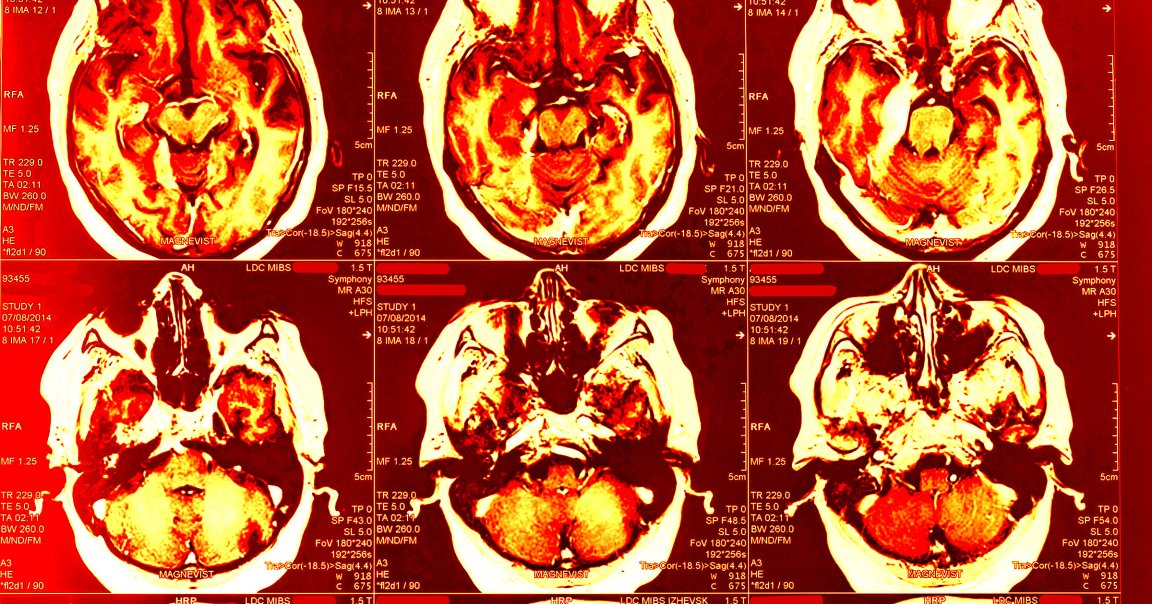
A medical examiner has found that former high school football player Shane Tamura — who shot and killed four people before taking his own life in the Manhattan building that houses the NFL headquarters in July — had chronic traumatic encephalopathy (CTE).
CTE is a degenerative brain disease that has repeatedlybeen found in the brains of American football players, alongside athletes from other contact sports and soldiers.
The grim findings about Tamura’s brain highlight how prevalent the disease has become among football players. A 2023 study by researchers at the Boston University CTE Center found that 345 of 376 deceased former National Football League players had CTE.
Symptoms include depression, cognitive impairment, and suicidal thoughts.
According to a statement quoted by the New York Times, the examiner “found unambiguous diagnostic evidence” of CTE in Tamura’s brain tissue.
“The findings correspond with the classification of low-stage CTE, according to current consensus criteria,” the statement reads.
After taking his own life, the 27-year-old Tamura left behind a note that expressed anger at the National Football League. The former player accused the NFL of hiding the effects of CTE in favor of profits. He also asked for his brain to be studied and therefore chose to shoot himself in the chest, not the head.
Confusingly, Tamura appears to have targeted the wrong office in the building, though he did injure one NFL employee.
In a statement to the NYT, the NFL carefully sidestepped any culpability.
“There is no justification for the horrific and senseless acts that took place,” the sports league wrote. “As the medical examiner notes, ‘the science around this condition continues to evolve, and the physical and mental manifestations of CTE remain under study.’”
CTE arises from blows to the head and affects the region of the brain responsible for cognition and executive function. It can also affect the amygdala, which is associated with emotional control.
“There is damage to the frontal lobes, which can damage decision making and judgment,” Boston University CTE Center director Ann McKee told the NYT in July following the shooting. “It can also cause impulsivity and rage behaviors, so it’s possible that there’s some connection between brain injury and these behaviors.”
Tamura isn’t the first football player to perpetrate a mass shooting. In 2021, former NFL player Rock Hill killed six people before turning his gun on himself.
Examiners later found that he had an “unusually severe” form of CTE.
How should the security needs of great powers be balanced with the sovereignty of smaller nations on their border? The concept of Spheres of Security limits the activity of other borders of other great powers. Mexico has the freedom to engage in political and economic cooperation with any state, yet Mexico does not have the freedom to host Russian missiles or Chinese military bases. This is common sense and must be applied to all great powers, yet how feasible is such an agreement between the great powers? John J. Mearsheimer is the R. Wendell Harrison Distinguished Service Professor of Political Science at the University of Chicago, where he has taught since 1982. Jeffrey D. Sachs is a world-renowned economics professor, bestselling author, innovative educator, and global leader in sustainable development. Follow Prof. Glenn Diesen: Substack: https://glenndiesen.substack.com/ X/Twitter: https://x.com/Glenn_Diesen Patreon: / glenndiesen YouTube: / @gdiesen1




 Image source: HistoSonics