Sibling betrayal, narcissistic family dynamics, and covert childhood trauma. If your sibling protected the narcissistic parent, denied your reality, or made you question your sanity — this video is the one they never wanted you to find. This isn’t just about narcissistic abuse. It’s about the silent accomplice. The sibling who stood by, stayed quiet, and called it “keeping the peace.” We’ll unpack the psychological grooming, trauma bonding, survival roles, and how enabler siblings are often rewarded for your suffering. You’ll learn: • How narcissistic parents train one child to become the enabler • Why the enabler becomes emotionally aligned with the narcissist • How gaslighting can come from inside the family • Why your craving for sibling validation keeps the trauma alive • What it takes to break the cycle and name your truth—without needing their approval This video combines cold clarity with psychological insight, backed by trauma experts like Gabor Maté and Alice Miller, and philosophical anchors from Sartre, Arendt, and Jung. 🧠 If you’ve been the scapegoat, the truth-teller, or the invisible one—this is for you. 👇 Drop your story in the comments. 💬 What did your sibling pretend not to see?
By 2029 global debt will be higher than it’s been since the end of World War II, says IMF
The global organization calculates that public debt will skyrocket to up to 100% of the planet’s GDP, and advises countries with low tax revenues to raise them
Managing director of the IMF Kristalina Georgieva, at the organization’s annual meeting on Tuesday.Jose Luis Magana (AP)
The planet has faced various unforeseen crises in recent years. There has been the Covid pandemic and its lasting effects; the Russian invasion of Ukraine, which has set off an energy crisis as well as inflation; not to mention the most recent blow of President Donald Trump’s trade war. To cope with such disruptions, countries have opened up their wallets to alleviate the impact on households and businesses. The world has managed to weather one high-voltage crisis after another — but in consequence, it has also racked up hefty debts.
According to the International Monetary Fund (IMF), worldwide public debt will rise above 100% of the planet’s GDP in 2029, representing its highest level since 1948, after World War II. “This reflects a higher and steeper path than projected before the pandemic,” states the IMF’s Fiscal Monitor, the annual report that analyzes fiscal imbalances, and whose latest edition was published on Wednesday as part of the organization’s annual assembly.
The institution, which was born from the 1944 Bretton Woods meetings, explains that the situation does not look the same in every part of the world. There are a handful of wealthy countries that have accumulated a heavy load of debt exceeding 100% of their GDP, including the United States, Canada, China, France, Italy, Japan and the United Kingdom.“These countries typically have deep and liquid sovereign bond markets and often broad policy choices, resulting in their fiscal risk considered moderate,” allows the IMF report.
But there are other nations, the document continues, those with developing economies and low income levels, that despite carrying much lower levels of debt, face larger fiscal challenges because “their policy options and funding access are limited.” Since 2021, over 100 states have increased their debt load to more than 60% of their GDP, a figure that will continue to grow.
Among those hundred territories with seemingly manageable debt, almost half (around 55) are experiencing debt difficulties, or are at risk of experiencing them. “When countries falter on debt, timely debt restructuring is critical to containing the damage,” states the report.
“It is not only the size of debt but also the cost,” the paper adds. The organization’s economists offer a reminder that the years following the pandemic offered flexible monetary conditions, with falling interest rates that allowed debt to remain manageable. “But the situation is now starkly different,” they warn in the report.After the inflationary crisis of the last two years, central banks have been pressured to raise interest rates. The consequence has been an increase in the cost of debt financing, which puts pressure on national governments.
This comes at a time when many countries’ budgets are being strained by other needs.In addition to higher defense spending, more funds are needed to deal with natural disaster caused by climate change, an aging population (which puts pressure on pensions and healthcare spending), as well as resources needed to drive energy and technological transitions.
“The conclusion is inescapable: starting from too high deficits and debts, the persistence of spending above tax revenues will push debt to ever higher heights threatening sustainability and financial stability,” states the report.
Such is the diagnosis, and governments must act to reduce public debt. The IMF has this prescription: “Prioritizing fiscal policy is essential to support debt sustainability and prepare fiscal buffers to use in case of severe adverse shocks including financial crises,” indicates the Fiscal Monitor.
The report recognizes that reducing debt means reducing spending or raising taxes, never easy political tasks to undertake. But, “the time to prepare is now,” it states.
Another piece of advice offered by the IMF is to change the makeup of public spending.Without reducing the total amount, allocations can be altered by directing more funds to areas that increase productivity and promote growth, such as education and infrastructure investments.
There is also room for maneuvering when it comes to taxes, although this is one of the thorniest issues for many governments. Be that as it may, the IMF advises countries with low tax revenues to “aim at gradually surpassing tax revenues above 15 percent of GDP for a growth takeoff.”
The report estimates that if low-tax-collecting developing countries tackle these tax reforms, “growth dividends from such an approach are estimated to be in double digits over the long term,” a significant figure, indeed. “Unfortunately, more than 70 developing countries still have tax-to-GDP ratios below this level, concentrated in fragile and low-income countries,” the analysis concludes.
Sign up for our weekly newsletter to get more English-language news coverage from EL PAÍS USA Edition
A hopeful and imaginative approach to social housing that focuses on comfort, community and socialization has earned Appleby Blue Almshouse the UK’s top architecture award. The Royal Institute of Architects (RIBA) praised its radical reimagining of the traditional almshouse, turning the senior housing project into something special.
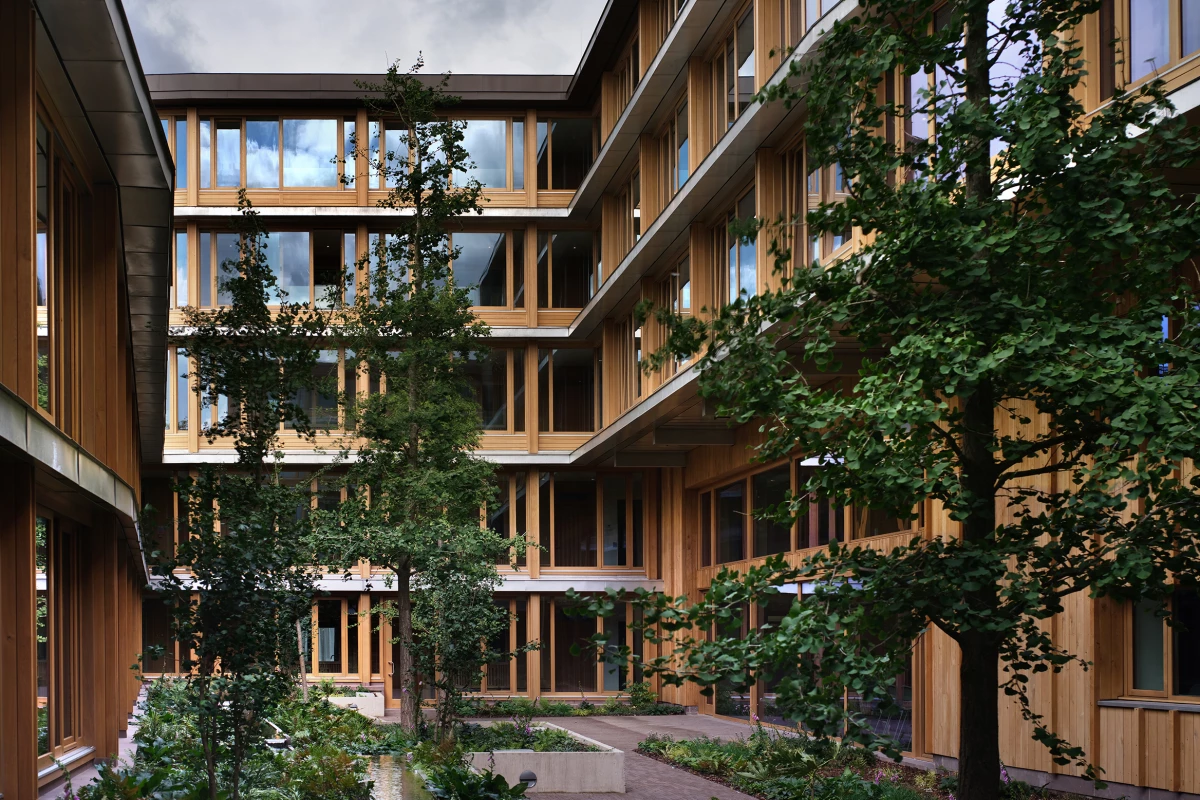
The Appleby Blue Almshouse was designed by Witherford Watson Mann and is located in London. Replacing an abandoned care home that previously stood on the site, the building contains 59 bright and colorful apartments that are arranged around a central courtyard filled with greenery and a variety of trees, as well as a water feature.
While not exactly the most exciting or eye-catching project to win an architecture award in recent years, the brick-and-wood building does ooze class and showcases a deft touch for the little details that make life more pleasant.
Light-filled, terracotta-paved hallways connect the apartments and include customizable planters and benches. These form a so-called “social corridor” that facilitates spontaneous interaction among residents. Automated vents alongside windows are designed to allow the corridors to collect heat in the winter to form a kind of winter garden, while also releasing that heat to maintain a comfortable temperature in the summer.
Additionally, a spacious roof terrace provides a communal space for residents that encourages them to get fresh air. It continues the understated approach to accessibility with small touches like planting beds that have been raised to make them easier to use and hand rails for support.
The Appleby Blue Almshouse includes a rooftop terrace with planters and a courtyard full of greenery
“Designing social housing for later life is too often reduced to a simple provision of service,” says RIBA Stirling Prize Jury member Ingrid Schroder. “Appleby Blue, however, is a provision of pure delight.Its architects have crafted high-quality spaces that are generous and thoughtful, blending function and community to create environments that truly care for their residents.
“This project is a clarion call for a new form of housing at a pivotal moment. Built against the backdrop of two crises, an acute housing shortage and a growing loneliness epidemic among older people, Appleby Blue offers a hopeful and imaginative response, where residents and the surrounding community are brought together through the transformative nature of the design.”
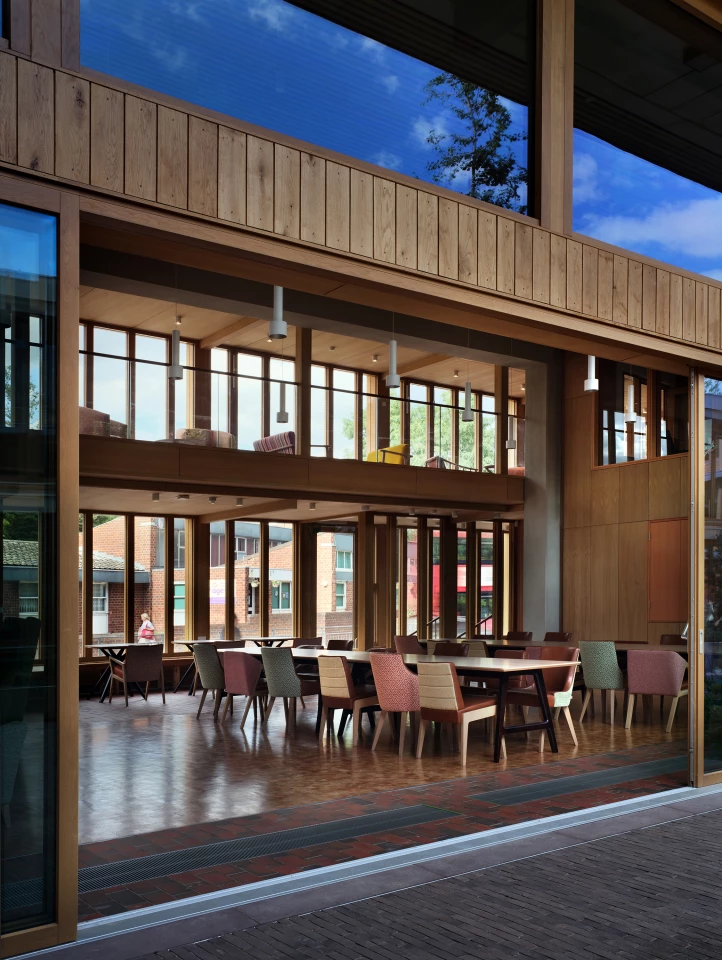
The Appleby Blue Almshouse includes multiple social areas to encourage new friendships
The Appleby Blue Almshouse is the 29th annual winner of the RIBA Stirling Prize. The winner was announced during a ceremony on October 16 in London and reflects a growing focus from the influential body on highlighting projects that enrich communities, with recent winners including social housing, a seniors’ daycare center, and a rail network. Despite this, there has been some controversy that the prize is too London-centric.
As AI wealth pours into San Francisco, rents and evictions are skyrocketing—leaving disabled, low-income, and longtime residents on the brink of homelessness.
As Rents Soar Past $3,400 For A One-Bedroom, Tech-Fueled Gentrification and Political Inaction Deepen Inequality Across the Bay Area
The average price of a 1-bedroom apartment in San Francisco has risen by 8% over the last year, with the city seeing the sharpest increases in rental prices among any major city in the US. An average one-bedroom apartment in the city now costs $3,400 per month.
According to a rental rate report by the rent tracking website Zumper, the monthly rental price for a 2-bedroom apartment in San Francisco has reached an all-time record high of $5,000 for the first time since the website began tracking data a decade ago. That marks an eye-watering 16.3% increase in price over the course of the last year.
The Rent is High Across the Country
Even at a median price of $3,400 a month, San Francisco is still not the country’s most expensive city for renters. That dubious honor goes to New York City, where a 1-bedroom apartment will cost you $1,000 more per month, for a total rental cost of $4,400.
Compared to those figures, the national average rental price for a 1-bedroom apartment may sound low at $1,520, but many people are struggling to pay even that much.
The rent is way too high, and the unmitigated greed of landlords and corporations is unsustainable. Homeownership has moved from a distant dream to a pipedream, leaving more and more people at the mercy of their landlords if they hope to stay housed. When local and state governments see rising rents as an economic boon, we need national legislation to protect the people.
The New Wave of High-Income Renters is Pushing Others Out
Alongside this surge in rental prices, we are also seeing a surge in eviction notices. The number of eviction notices served throughout San Francisco has nearly doubled in the last year alone and is now at the highest level seen since 2018.
As more and more tech workers are mandated to return to the office and local AI companies are spending millions to secure a single engineer (plus bonuses), the market is seeing an increase in people willing to pay for an entire year’s worth of rent up front or even make offers on apartments that far exceed the monthly asking price. Seeing these lucrative bidding wars intensify, more unscrupulous landlords may seek ways to evict current tenants in order to secure a higher profit.
Despite the citizens who are struggling to navigate this landscape, city politicians seem to be interpreting these events as an economic boon for San Francisco. Even though 30% of the city’s residents are rent burdened, spending more than 30% of their monthly income on housing, and 20% are severely rent burdened, spending more than 50% of their monthly earnings on rent, the city controller reported on the rise in rental costs as, “emerging as a bright spot for the city’s recovery.”
With AI companies leasing nearly 1 million square feet of the city, a figure that makes up about one-fifth of San Francisco’s total available office space, local leaders seem to be putting a lot of faith in this famously unstable industry.
Some Residents Are Disproportionately Affected
While very few San Francisco residents can afford to compete with the new influx of AI workers, who often receive multi-million-dollar annual compensation packages, the strain on the housing market is not affecting everyone equally. As is so often the case, the negative effects of these changes are affecting the city’s poorest people the most, as well as Black San Franciscans, Latino San Franciscans, and disabled San Franciscans. These groups have been priced out of the city at a disproportionate rate compared to the general population.
Disabled San Franciscans also face another hurdle to affordability in the form of California Governor Gavin Newsom’s proposal to limit access to Medi-Cal healthcare to those with less than $2,000 in assets at any given time.Obviously, someone who is not allowed to have more than $2,000 in their bank account would have a hard time paying a $3,400 rent, effectively forcing disabled Californians to choose between keeping their current homes and networks of support in the place they live or maintaining access to the healthcare they need to live.
And if you think it’s difficult to find a place to live in the current housing market, adding accessibility requirements makes it even more difficult still.
While Newsom’s proposal didn’t pass this time, California has instated an asset cap of $130,000 for individuals or $195,000 for couples, where none existed before. Not only does this put marriage out of the question for many disabled Californians, but it also effectively reminds everyone relying on Medi-Cal that their lives are in the hands of the state, which could choose to abandon them at any time.
AI Industry ‘Gives Back’ to Poor People It Displaced
By this point, you may think that rising rents and evictions into a hostile housing market are a recipe for increased homelessness, and you would be right. But don’t pass judgment too soon, because the AI industry that’s fueling this fire may also be able to provide a helpful solution!
Remember the ban on RV parking that’s going into effect in San Francisco? The city is testing a new AI chatbot to assist people who are once again being displaced from their only access to shelter. Doesn’t that make you feel better?
For a technology that struggles to accurately answer basic customer service questions or suggest recipes that won’t land you in the hospital, helping people navigate their legal rights in the face of impending displacement may be a bit too much to ask. But, like so many things in the tech industry, it may take a trail of human suffering before anyone in power stops to ask if they should do it just because they could do it.
Kayla Robbins is a freelance writer who works with big-hearted brands and businesses. When she’s not working, she enjoys knitting socks, rolling d20s, and binging episodes of The Great British Bake Off.
Why do narcissistic parents turn siblings into enemies? If you grew up with toxic family roles, sibling rivalry, or felt emotionally pitted against a brother or sister — this video reveals the hidden system behind it. “He who fights with monsters should be careful lest he thereby become a monster.” — Nietzsche Narcissistic family dynamics don’t just cause tension — they engineer it. This video exposes how narcissistic parents manufacture division between siblings through role casting, manipulation, and emotional scarcity. If you ever felt like you were forced to compete for love, this is for you. We explore how these systems create resentment, how to unlearn the roles, and what healing really requires — even when your sibling still feels like a stranger. 🔍 Chapters: 00:00 – The Lie You Inherited 04:32 – Divide & Conquer: The Psychology of Control 10:12 – The Roles You Were Assigned 15:44 – What You Blamed Each Other For 21:20 – Why Reconnection Feels Impossible 26:03 – What You Needed Instead 30:42 – Breaking the Pattern — Even If They Don’t Change
Why the Empaths’ Light Triggers Envy in People Who Pretend to Love Them | Carl Jung Original). “Wherever light appears, the shadow sharpens.” — Carl Jung 🌑 Some people say they love your light — until it starts to reveal what they’ve kept hidden. Their warmth turns cold. Their praise turns into quiet judgment. Their love becomes something that feels more like control than connection. This is the forbidden law of human relationships — the unspoken truth that authenticity provokes resentment in the unhealed. Because when you stop performing, you stop protecting the illusions that keep others comfortable. And what they call “change” is really just your liberation from compliance. In this video, we’ll uncover: ✨ Why your peace feels like a threat to those still living in chaos ✨ How empathy is born from hypervigilance, not magic ✨ Why authenticity awakens envy — and what that reaction truly means ✨ The hidden shadow of the empath: when helping becomes control ✨ How to cross the threshold from absorption to sovereignty ✨ Why resentment from others is proof you’re on the path to wholeness 🔥 Jungian psychology meets trauma integration in this deep exploration of light, shadow, projection, and individuation. If you’ve ever been told you’re “too sensitive,” “too intense,” or “too much,” this will help you understand the deeper reason your presence provokes discomfort — and why that’s not punishment, but proof of awakening. 💬 Reflection Prompt: What part of yourself have you been dimming to keep others comfortable? Write it below, and claim it back. 🩶 Reply Phrase: “I made peace with my light.” 🕯️Chapters The Forbidden Law of Human Relationships The Alchemy of Sensitivity (how empaths are made) Why Light Provokes Resentment The Collapse of False Harmony The Empath’s Shadow From Absorption to Sovereignty Envy as Proof of Light Reflection & Closing #CarlJung#EmpathAwakening#ShadowWork#TraumaHealing#Boundaries#PeoplePleasing#Individuation#Envy#SelfDiscovery#TheSelf 💫 Disclaimer: This content is for informational, educational, and entertainment purposes only. It is not intended to be a substitute for professional mental health advice, diagnosis, or treatment.