A year later, DeepSeek is preparing to launch its new V4 model — a development which could have major implications for US tech companies and the firms backing them.
According to a CNBC bulletin, DeepSeek’s latest version is “expected to be imminent” given the release-schedule of previous versions. Depending on how impressive V4 is when it hits, the AI-heavy Nasdaq could be in for a major upset, as could the tech companies listed on it.
Per CNBC, the Nasdaq composite fell 3 percent when DeepSeek V3 made its debut last year, and shares for the chip giant Nvidia plummeted 17 percent, wiping out $600 billion in a flash. While both recovered from the hits over time, it was a defining moment for DeepSeek, securing its reputation as a global player in the California-dominated AI space.
If the stock market gets its “part two moment” — a DeepSeek able to compete with current-gen models from Anthropic and OpenAI — things could get ugly.Amazon, Microsoft, Meta, and Google spent hundreds of billions of dollars on AI across 2025, and are expected to shell out another $650 billion in 2026.
Simply put, there’s a lot more money in the pot at this point, and even more being shuffled around based on those future spending forecasts.
Given that DeepSeek V3 was able to confound the American tech industry for a total reported production cost of under $6 million — using lower-powered Nvidia chips, no less — there’s only one thing the AI industry can do this week: buckle up.
I’m a tech and transit correspondent for Futurism, where my beat includes transportation, infrastructure, and the role of emerging technologies in governance, surveillance, and labor.
MONKEY BUSINESS America needs to get the monkey off its back
I remember sitting in the back of a bus in South Lebanon in 1977 and arguing that. Now in 2026 it's still clinging. It needs to be removed by the US bolstering its friendship and trade with the Arab world rather than… pic.twitter.com/6zilGpewlA
Claude, the AI for finding the patients lost in the data
Life-saving care. Fragmented data makes it hard to find critical interventions. Qualified Health used Claude, built by Anthropic, to screen over 1 million heart failure patients in the University of Texas Health System. Hospitals digitized records years ago. Claude makes them usable.
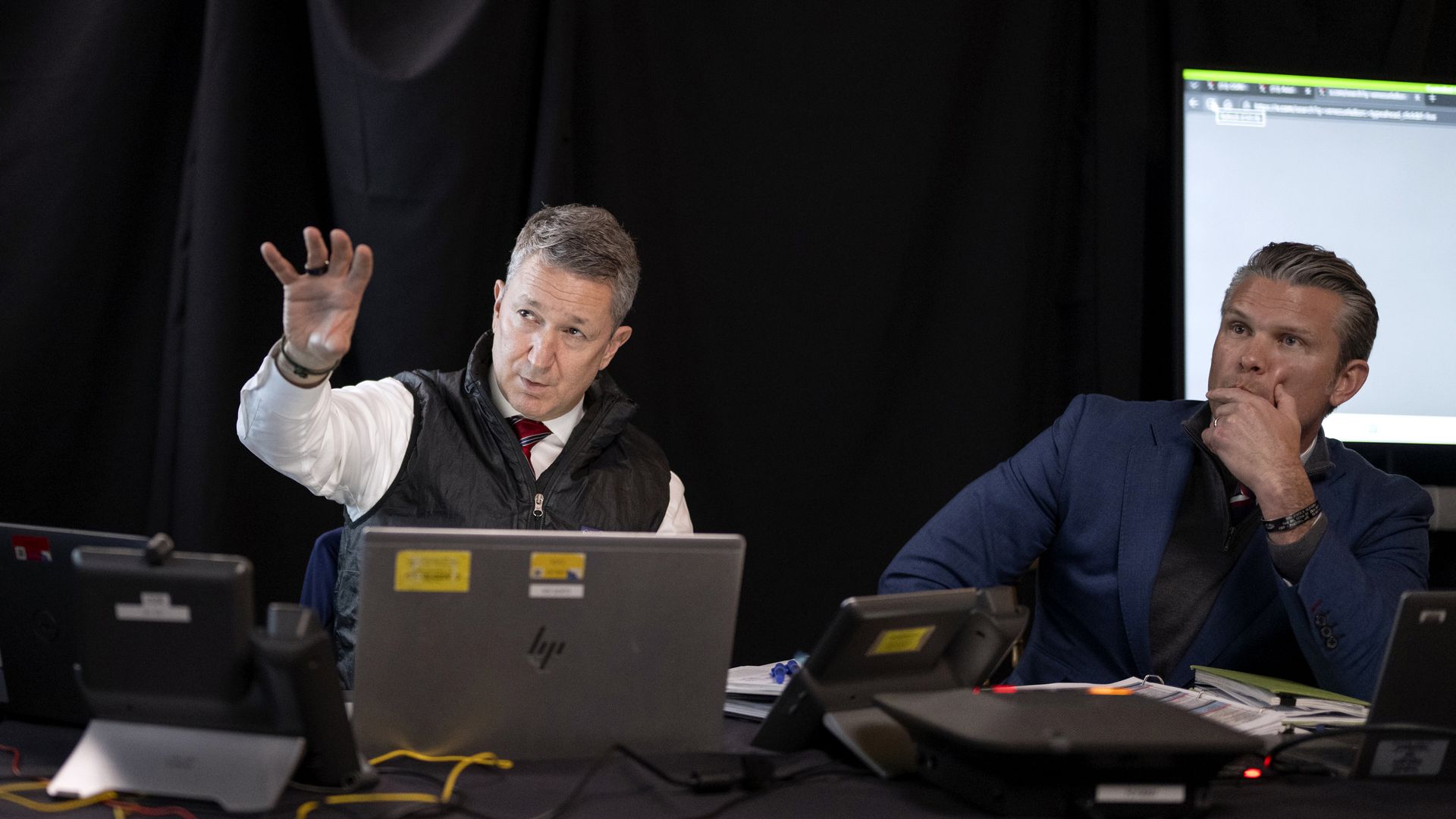
Defense Secretary Hegseth (R) and Joint Chiefs Chairman Gen. Dan Caine during the Maduro raid, in which Claude was used. Photo: Molly Riley/The White House via Getty
Defense Secretary Pete Hegseth gave Anthropic CEO Dario Amodei until Friday evening to give the military unfettered access to its AI model or face harsh penalties, Axios has learned.
The big picture: Hegseth told Amodei in a tense meeting on Tuesday that the Pentagon will either cut ties and declare Anthropic a “supply chain risk,” or invoke the Defense Production Act to force the company to tailor its model to the military’s needs.
Why it matters:The Pentagon wants to punish Anthropic as the feud over AI safeguards grows increasingly nasty, but officials are also worried about the consequences of losing access to its industry-leading model, Claude.
“The only reason we’re still talking to these people is we need them and we need them now. The problem for these guys is they are that good,” a Defense official told Axios ahead of the meeting.
Anthropic has said it is willing to adapt its usage policies for the Pentagon, but not to allow its model to be used for the mass surveillance of Americans or the development of weapons that fire without human involvement.
Anthropic’s Claude is the only AI model currently used for the military’s most sensitive work.
Driving the news: A senior Defense official said the meeting was “not warm and fuzzy at all.” Another source told Axios it remained “cordial” with no voices raised on either side, and that Hegseth praised Claude to Amodei.
Hegseth told Amodei he won’t let any company dictate the terms under which the Pentagon makes operational decisions, or object to individual use cases.
Amodei denied that Anthropic raised any such concerns or even broached the topic with Palantir beyond standard operating conversations.
He reiterated that the company’s red lines have never prevented the Pentagon from doing its work or posed an issue for anyone operating in the field.
In the room: In a sign of how seriously the Pentagon is taking this dispute, Hegseth was joined in the meeting by Deputy Secretary Steve Feinberg, Under Secretary for Research and Engineering Emil Michael, Under Secretary for Acquisition and Sustainment Michael Duffy, Hegseth’s chief spokesperson Sean Parnell and general counsel Earl Matthews, the Pentagon’s top lawyer.
The other side: Anthropic continued to strike a conciliatory tone after the meeting.
“During the conversation, Dario expressed appreciation for the Department’s work and thanked the Secretary for his service,” an Anthropic spokesperson said.
“We continued good-faith conversations about our usage policy to ensure Anthropic can continue to support the government’s national security mission in line with what our models can reliably and responsibly do.”
How it works: The Defense Production Act gives the president the authority to compel private companies to accept and prioritize particular contracts as required for national defense.
It was used during the COVID-19 pandemic to increase production of vaccines and ventilators, for example.
The law is rarely used in such a blatantly adversarial way. The idea, the senior Defense official said, would be to force Anthropic to adapt its model to the Pentagon’s needs, without any safeguards.
Anthropic could theoretically take the administration to court, arguing it’s not providing the sort of commercially available product for which the DPA can be used to expedite production, but custom-built software already tailored to sensitive government uses, according to one defense consultant.
The Pentagon is also considering severing its contract with Anthropic and declaring the company a supply chain risk, which would require a plethora of other companies that work with the Pentagon to certify that Claude isn’t used in their workflows.
Friction point: Cutting ties would require the Pentagon to have a replacement ready for Claude, which is currently the only model used in classified systems.
The use of Claude in the Venezuela operation came through Anthropic’s partnership with Palantir, the AI software company.
It’s also used for a wide variety of more bureaucratic functions within the military.
What to watch: Elon Musk’s xAI recently signed a contract to bring its model, Grok, into classified settings, though it’s unclear whether it would be able to fully replace Claude.
The Pentagon has been speeding up conversations with OpenAI and Google about moving their models — already available for unclassified uses — into classified systems, sources tell Axios.
One source familiar with the discussions said that right now, it appears Claude is ahead of the others in a number of applications relevant to the military, such as offensive cyber capabilities.
The one source said Gemini is seen as a potential replacement if and when a deal is reached. That would require Google to let the Pentagon uses its model for “all lawful purposes,” the same terms that Anthropic rejected.
China’s ageing population means that something like 66 million people could be living with dementia there by 2050 — an estimate that is driving the country to push research forward. Scientists have been working on new drugs and innovative — if controversial — surgical techniques. The government has also encouraged the development of treatments derived from traditional Chinese medicine. And researchers are accelerating the search for biological markers that precede the onset of Alzheimer’s disease to help identify it earlier.
Driven by a rapidly aging population and a projected 66 million people living with dementia by 2050, China is accelerating its assault on Alzheimer’s. The country is investing in new drug development, controversial surgical techniques, and traditional Chinese medicine. Researchers are also intensifying the search for early biological markers to enable earlier diagnosis.Nature
Key Initiatives and Challenges:
Massive Burden: Dementia cases in China could hit 66 million by 2050, or even up to 115 million by some estimates.
Diverse Research Approaches: Projects include developing conventional drugs, exploring controversial surgical interventions, and utilizing traditional Chinese medicine.
Early Detection: Intense focus is placed on finding biomarkers that appear years before symptom onset.
Preventive Measures: Researchers are looking into lifestyle interventions, such as the potential role of Chinese ink painting and tea drinking for prevention.
Rapid Aging Factor: The rapid increase in individuals over 60 and, particularly, those over 85, is driving this urgent, large-scale research effort. Nature +4
This concerted effort aims to combat the significant health and economic challenges posed by the rising dementia, which has tripled in cases over the last 30 years
Republish our articles for free, online or in print, under Creative Commons licence.Republish this article
Share article
Print article
A baby macaque monkey named Punch has gone viral for his heart-wrenching pursuit of companionship.
After being abandoned by his mother and rejected by the rest of his troop, his zookeepers at IchikawaCity Zoo in Japan provided Punch with an orangutan plushie as a stand-in mother. Videos of the monkey clinging to the toy have gone viral worldwide.
But Punch’s attachment to his inanimate companion is not just the subject of a heartbreaking video. It also harks back to the story of a famous set of psychology experimentsconducted in the 1950s by US researcher Harry Harlow.
The findings from his experiments underpin many of the central tenets of attachment theory, which positions the bond between parent and child as crucial in child development.
What were Harlow’s experiments?
Harlow took rhesus monkeys from birth, and removed them from their mothers. These monkeys were raised in an enclosure in which they had access to two surrogate “mothers”.
One was a wire cage shaped into the form of a “mother” monkey, which could provide food and drink via a small feeder.
Our mission is to share knowledge and inform decisions.
About us
The other was a monkey-shaped doll wrapped in terry towelling. This doll was soft and comfortable, but it didn’t provide food or drink; it was little more than a furry figure the baby monkey could cling to.
So, we have one option that provides comfort, but no food or drink, and one that’s cold, hard and wiry but which provides dietary sustenance.
These experiments were a response to behaviourism, which was the prevailing theoretical view at the time.
Behaviourists suggested babies form attachments to those who provide them with their biological needs, such as food and shelter.
Harlow challenged this theory by suggesting babies need care, love and kindness to form attachments, rather than just physical nourishment.
A behaviourist would have expected the infant monkeys to spend all their time with the wire “mother” that fed them.
In fact, that’s not what happened. The monkeys spent significantly more time each day clinging to the terry towelling “mother”.
Harlow’s 1950s experiments established the importance of softness, care and kindness as the basis for attachment. Given the opportunity, Harlow showed, babies prefer emotional nourishment over physical nourishment.
How did this influence modern attachment theory?
Harlow’s discovery was significant because it completely reoriented the dominant behaviourist view of the time. This dominant view suggested primates, including humans, function in reward and punishment cycles, and form attachments to whoever fulfils physical needs such as hunger and thirst.
Emotional nourishment was not a part of the behaviourist paradigm. So when Harlow did his experiments, he flipped the prevailing theory on its head.
The monkeys’ preference towards emotional nourishment, in the form of cuddling the furry terry towel-covered surrogate “mother”, formed the foundation for the development of attachment theory.
Attachment theory posits that healthy child development occurs when a child is “securely attached” to its caregiver.This is achieved by the parent or caregiver providing emotional nourishment, care, kindness and attentiveness to the child. Insecure attachment occurs when the parent or caregiver is cold, distant, abusive or neglectful.
Much like the rhesus monkeys, you can feed a human baby all they need, give them all the dietary nourishment they require, but if you don’t provide them with warmth and love, they’re not going to form an attachment to you.
What can we learn from Punch?
The zoo was not conducting an experiment, but Punch’s situation inadvertently reflects the controlled experiment Harlow did. So, the experimental setup was mimicked in a more natural setting, but the outcomes look very similar.
Just as Harlow’s monkeys favoured their terry towelling mother, Punch has formed an attachment to his IKEA plushie companion.
Now, what we don’t have with the zoo situation is the comparison to a harsh, physically nourishing option provided.
But clearly, that’s not what the monkey was looking for. He wanted a comforting and soft safe place, and that’s what the doll provided.
Were Harlow’s experiments ethical?
Most of the world now recognises primates as having rights that are, in some cases, equivalent to human rights.
Today, we would see Harlow’s experiments as a cruel and unkind thing to do. You wouldn’t take a human baby away from its mother and do this experiment, so we shouldn’t do this to primates.
It’s interesting to see people so fascinated by this parallel to an experiment conducted more than 70 years ago.
Punch the monkey is not just the internet’s latest animal celebrity – he’s a reminder of the importance of emotional nourishment.
We all need soft spaces. We all need safe spaces. Love and warmth are far more important for our wellbeing and functioning than physical nourishment alone.
Muslims will kill and enslave infidels until the end of time, this is the word of Allah and Muhammad and they cannot abolish it, when they have the power they will do it in barbaric way pic.twitter.com/pA6YOqtXuX




 Nature
 Nature +4


 canisgallicus
