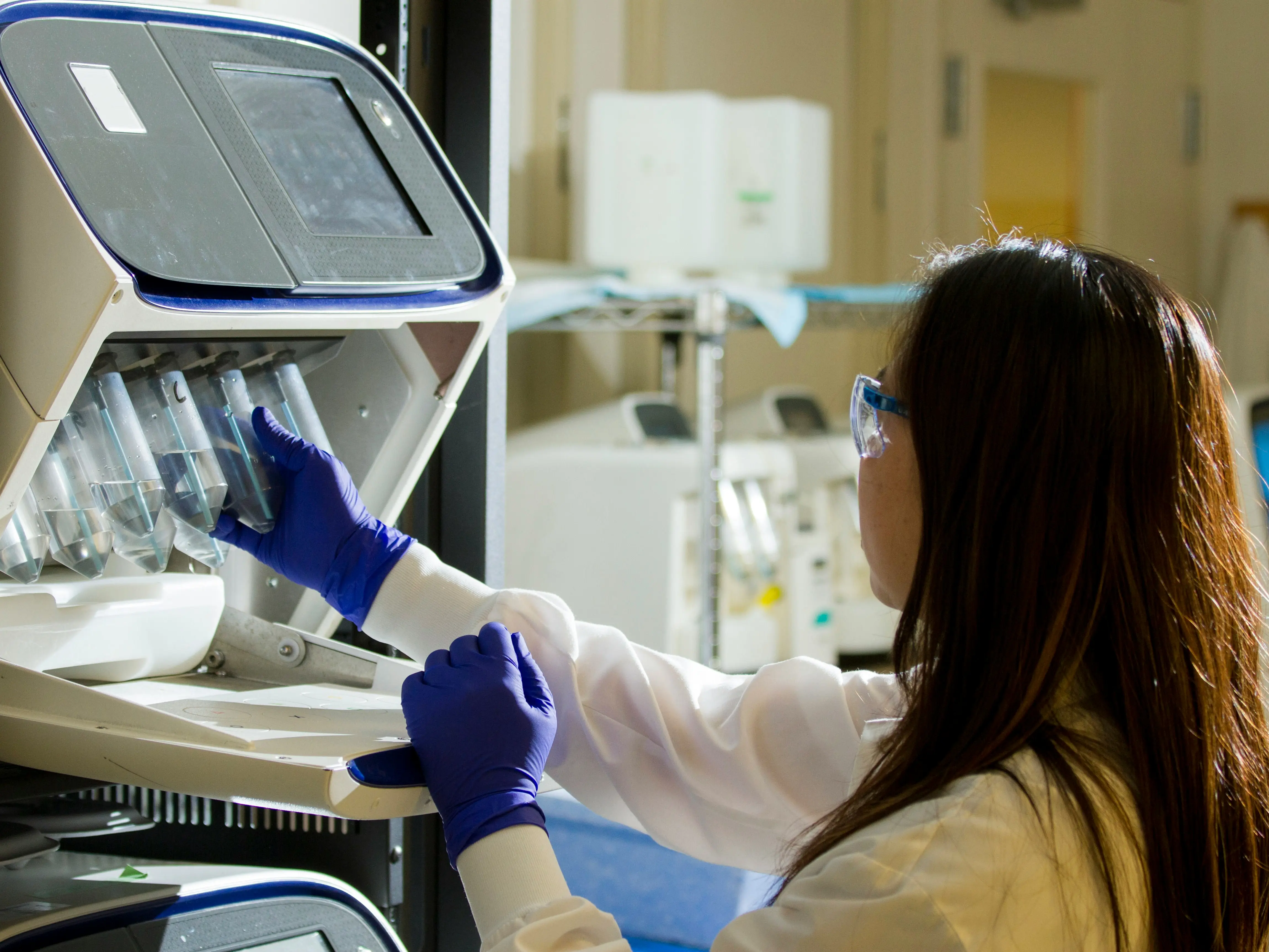
The Harvard Gazette: After rare condition robbed drummer of ability to play music, science led him back. Comment: my blog is partially influenced by recommendations for improvements in health for people who have suffered from TBI (hearing vision 50% no taste no smell, amnesia et al), bipolar, anxiety, chronic fatigues, breast cancer (see book Fortune Favours the Brave on Amazon by Michelle Marcella Clarke). Hence this article is very important.

Christy DeSmith

Harvard Staff Writer

February 25, 2026 4 min read

After rare condition robbed drummer of ability to play music, science led him back

The first symptoms appeared during a concert.

In 2009, Satoshi Yamaguchi, a drummer with the Japanese rock quartet RADWIMPS, found himself lost during a familiar bridge.

“The sound stopped suddenly,” Yamaguchi recalled in a 2023 TV news interview with NHK World-Japan. “I wanted to use my right foot to hit the drum twice, but I ended with the first try. At that instant, my brain really drew a blank. I thought, ‘What’s going on?’”

It took five years to receive the diagnosis of musician’s dystonia, which causes involuntary muscle spasms. The neurological disorder, impacting roughly 1 percent of professional musicians globally, eventually forced Yamaguchi’s exit from the band he had co-founded in 2003. But it also opened a remarkable new chapter in the percussionist’s story.

In a recent event hosted by the Reischauer Institute of Japanese Studies, Yamaguchi recalled his journey from rock stardom to scientific researcher intent on solving the mysteries of his condition. He also showed off the voice-activated drum kit that enabled his return to live performance in 2024, nearly a decade after he left RADWIMPS.

“My children had only ever seen me play the drums on the screen,” Yamaguchi recalled, sharing a photo of his family of five. “This was the first time they heard me perform live.”

Key to Yamaguchi’s trajectory was drummer-turned-scientist Shinya Fujii of Keio University’s NeuroMusicLab. The pair, who met when Yamaguchi arrived as a visiting researcher in 2021, went on to pursue a series of academic inquiries into musician’s dystonia.

Their first paper, published in 2024, charted the disorder’s impact on Yamaguchi’s musicianship. The effects may seem subtle to the untrained ear. But when symptoms appeared, the researchers confirmed, the drummer fell out of rhythm with a metronome.

For Yamaguchi, the findings came as a relief. “When I was still active in the band, I had no way to share the difference or the struggle with the people around me,” he told a packed house at Smith Campus Center. “But through science, I was finally able to reveal the true nature of that ghost.”

“When I was still active in the band, I had no way to share the difference or the struggle with the people around me. But through science, I was finally able to reveal the true nature of that ghost.”Satoshi Yamaguchi

Inspired, Yamaguchi went on to conduct a large-scale survey of professional and amateur Japanese musicians. Results show musician’s dystonia is more prevalent among pros, with the right lower limbs most frequently afflicted.

Also uncovered was a potential link with the stress caused by in-ear metronomes, increasingly used in the music world by drummers, conductors, and other designated timekeepers. The devices dictate the rhythm of each piece, with a click track delivered directly to the eardrum.

“In recent years,” Yamaguchi explained, “large-scale live performance has evolved into a total entertainment experience that includes not only listening to performance, but also synchronizing the music with visuals, lighting, special effects, and programmed sound sources.”

In 2023, Yamaguchi moved to the Bay Area for a residency at Stanford University’s Center for Computer Research in Music and Acoustics. It was an unlikely place to discover the joys of taiko drumming, a traditional Japanese art form. He ended up performing in a 50th anniversary concert with the group San Jose Taiko.

The art form’s whole-body rhythms are taught orally — not via sheet music, Yamaguchi noted. While learning this way, he was struck by an idea. “What if I could use my voice to create the sound of the bass drum?” he recalled wondering. “My voice could become my instrument.”

Developed in collaboration with Yamaha, VXD is a bass-drum interface operated via vocal cues and throat sensor. Yamaguchi met privately last week with scientists from the Harvard Biodesign Lab, who wanted to understand how the system works. At the public event, Yamaguchi showed off VXD by playing a few RADWIMPS favorites.

An audience member gasped with delight when he started drumming “Sparkle,” featured in the 2016 hit anime film “Your Name.” Also performed were early releases “25-kome no senshokutai” (“The 25th Chromosome”) and “Iindesuka?” (“Is It Alright?”).

“Music has given me life,” Yamaguchi said near the end of his talk. “Music has also caused me pain. I lost it once, and then I found my way back to it — and it saved me.”

The event closed with the high-energy “Zenzenzense” (“Past Past Past Life”), which was also featured in “Your Name.” Yamaguchi pursed his lips into the microphone as he repeated the “don” syllable that triggers the VXD system’s bass drum. His right foot, pressed firmly to the floor, appeared as an anchor. The rest of his body was lifted by the beat.

Share this article

Posted in Uncategorized | Tagged , , , , | Leave a comment

Axios: 250 Years. TRUMP TAUNTS DEMS at the 2026 State of the Union

Trump taunts Dems
 
President Trump’s State of the Union address last night. Photo: Kenny Holston/The New York Times

President Trump used last night’s State of the Union address to portray himself as America’s savior and protector, as the country marks its 250th birthday, Axios CEO Jim VandeHei says in a “Behind the Curtain” video. 

VandeHei says Trump “wanted to prove that he is the strong and patriotic one, and that Democrats, by contrast, are weak and weird. You saw this in the choreography from the moment he walked onto the stage until he left.”

The president “knows that while he’s unpopular, Democrats are equally unpopular. Democrats haven’t done a good job of proving themselves to be an acceptable alternative to Trump.”

“The most poignant moment was where he isolated on this idea of: Will you stand for U.S. citizens, or will you stand for illegal immigrants?” VandeHei added. 

“He just taunted and taunted the Democrats. He let it hang in the air for what felt like minutes — because he understood that the imagery of Democrats sitting down when he’s saying ‘stand up if you stand for U.S. citizens’ is brilliant politics.”Cover: New York Post 

Another moment to tuck away and think about, VandeHei says: Trump started to lay the predicate for war with Iran.

Trump said last night“One thing is certain: I will never allow the world’s No. 1 sponsor of terror — which they are by far — to have a nuclear weapon. Can’t let that happen.”

 Trump mostly dismissed Americans’ affordability concerns, Axios’ Neil Irwin and Courtenay Brown report.

Rather than present an I-feel-your-pain message paired with a litany of policy proposals, he argued that things are looking great.Watch the video … Follow Axios on YouTube.
Posted in Uncategorized | Leave a comment

Irish Central: 250th anniversary of U.S. what an ideal time to progress film about historic Native American legal case.

Jim Sheridan to co-direct film about historic Native American legal case. 2023: Anything further about this historical drama?

Jim Sheridan and Andrew Troy will write, produce, and co-direct the long-anticipated historical drama, “I Am a Man: The True Story of Chief Standing Bear.”

IrishCentral Staff

@IrishCentral

Apr 17, 2023

Jim Sheridan (Courtesy of Hell’s Kitchen) and Andrew Troy (Courtesy of Troy Entertainment).

Jim Sheridan (Courtesy of Hell’s Kitchen) and Andrew Troy (Courtesy of Troy Entertainment). 

Irish playwright and director Jim Sheridan will co-direct a new feature film on Ponca Chief Standing Bear with director and producer Andrew Troy.

The filmmakers are set to co-direct, write, and produce the long-anticipated historical drama, “I Am a Man: The True Story of Chief Standing Bear.”

The film, which has formal Resolutions of Support from the Ponca Tribe, will depict the Ponca’s “trail of tears” march that led to the 1879 landmark trial of Standing Bear vs. the United States of America. 

This relatively unknown legal case helped all Native Americans to be considered “human beings” under the law and set a legal precedent for many future civil rights matters within the US courts.

Read more

Sheridan’s films, which include “My Left Foot,” “In the Name of the Father,” and “In America,” have garnered 16 Oscar nominations and have won two Academy Awards as well as numerous prestigious international awards.

Troy, whose films include “Salinger,” “The Runaways,” and “Growing Up Smith,” has spent the past decade developing the project and gaining the support of US and State Officials and Native Americans alike who are enthusiastic about the telling of Standing Bear’s legacy.

Troy is a 2021 AMPAS Nicholl’s screenwriting fellowship semi-finalist for a previous draft of his script of “I Am a Man,” and he recently directed the upcoming film “Midnight in the Orange Grove,” which he co-wrote with “American Psycho” writer Guinevere Turner. 

Troy says: “Standing Bear has been completely left out of our school textbooks.

“Traveling the country, I learned that even Native people are unfamiliar with his name and the impact he had on their lives. Chief Standing Bear’s story needs to be told.”

In 2019, Troy. who is part Chiricahua Apache, attended the unveiling ceremony of a new Chief Standing Bear Statue placed in the US Capitol in Washington D.C., making Standing Bear one of the first Native persons to be inducted into Statuary Hall.

Direct descendants of Chief Standing Bear attend the unveiling ceremony of the Chief Standing Bear statue at Statuary Hall in the U.S. Capitol Building. (Photo Courtesy of Troy Entertainment)

2Gallery

Direct descendants of Chief Standing Bear attend the unveiling ceremony of the Chief Standing Bear statue at Statuary Hall in the U.S. Capitol Building. (Photo Courtesy of Troy Entertainment)

Posted in Uncategorized | Tagged , , , , | Leave a comment

So much fighting for women’s rights over the last few decades in the West yet they forgot to include women who were violently subjugated to the creed of Islam

Posted in Uncategorized | Leave a comment

On the Shoulders of Giants … Irish Justice system should fall in line and skip the bureaucracy. GOV.UK Landmark bill to deliver swifter justice for victims

Menu

  1. Home
  2. Crime, justice and law
  3. Courts, sentencing and tribunals

Press release

Landmark bill to deliver swifter justice for victims

Faster and fairer justice for victims is at the heart of the Courts and Tribunals bill. From:Ministry of JusticeHM Courts & Tribunals Service and Sarah Sackman KC MPPublished25 February 2026

  • Courts and Tribunals Bill puts victims at the heart of a faster, fairer courts system
  • Government sets out pragmatic package of court reform to turn the tide on years of neglect
  • Highest ever investment so Crown Court can sit unlimited sitting days and run at maximum capacity next year
  • Only reform, investment and modernisation will deliver the Government’s Plan for Change to fix the justice system

Faster and fairer justice for victims is at the heart of a new bill introduced in Parliament today (Wednesday 25 February), as the government delivers on its Plan for Change to repair the justice system after years of neglect.

The Courts and Tribunals Bill sets out a pragmatic reform of the criminal courts, and structural changes to the criminal justice system as a result of increasing charges, and a much greater volume of complex cases involving more digital evidence. 

Currently 80,000 cases are waiting for justice, nearly 20,000 have been waiting for over a year, including around 2,000 rape cases. The average length of time to complete a Crown Court case is now 255 days, and for adult rape cases is 423 days.

And for the first time ever, Ministers have launched a new website detailing the scale of the challenge faced in our Crown Courts – and how only reform will reduce demand and deliver faster justice for victims. The data, independent audited by Hartley McMaster shows that without structural reform or increased spending, projections show the backlog continuing to grow across this decade: reaching around 130,000 cases by 2030 and 200,000 by 2035. Doing nothing would mean longer waits, more collapsed trials, more criminals roaming the streets, and more victims walking away from the system entirely.

As Sir Brian Leveson concluded in his independent review, investment alone cannot fix a system designed for the 20th century. Only structural reform – alongside investment and efficiencies – can tackle the backlog and deliver the swifter justice victims deserve.

Among the pragmatic reforms included within the new Bill is handing power to judges to decide where cases are heard, ending the ability of criminals to game the system by dragging out proceedings and tormenting their victims.

These measures address fundamental changes to how the criminal justice system operates in the modern era and a failure to renew justice at the pace the modern world demands. Police are arresting and charging more people and in the digital era cases have been increasingly complex with 90% of all crime having some form of digital evidence.

Deputy Prime Minister, David Lammy said:

The criminal courts we inherited were on the brink of collapse, with victims waiting years for justice while the backlog spiralled out of control. For too long, victims have paid the price for a system left to crumble by those who should have acted to reform our justice system for the modern realities of crime.

Our courts reform will deliver record investment, serious reform and practical modernisation to get cases heard faster, protect jury trials for the most serious crimes, and set us on a path to turn the corner on the rising backlog by the end of this parliament. This is the only way to deliver the swift and fair justice victims deserve.

The Bill will also allow technical and lengthy fraud cases to potentially be heard by a judge alone, freeing up jurors from the personal and financial burdens created by complex, months-long trials.

Alongside this the legislation will create a new Bench Division where cases with a likely sentence of three years or less will be heard by a judge – estimated to take 20% less time than a jury trial. Jury trials will be guaranteed for the most serious offences, including rape, murder, aggravated burglary, blackmail, people trafficking, grievous bodily harm and the most serious drug offences.

Magistrates will be able to hand down sentences of up to 18 months – with the Government also taking the power to increase that to two years if needed – freeing up Crown Court time for the most serious offences.

They are pragmatic and are essential to tackling the crisis in our courts and restoring confidence in a justice system that is faster and puts victims first.

The new bill comes as the Deputy Prime Minister set out his vision for the justice system. New measures include a National Listing Framework to standardise court listings and end the postcode lottery for victims.

Alongside this, the Government will support the courts and the judiciary in clearing older cases through “Blitz” courts – bringing similar cases together over a short period of time by concentrating court resources and the expertise required.

This week, the Government also confirmed a landmark agreement for every single Crown Court in England and Wales to be funded to hear as many cases as possible next year so victims can see justice done – and more offenders face the full force of the law.

This investment, the highest ever given to the courts, will also mean the magistrates’ courts will also be funded to its highest operational capacity.

A further £287 million will be invested in the fabric of the court estate itself- almost 50% more than last year – to deliver vital repairs and bring the system into the 21st century.

The new bill also includes:

  • Replacing the automatic right of appeal in magistrates’ courts with a new filter to check claims to better protect victims.
  • New rules on giving evidence to tackle harmful myths influencing trials, with special measures made easier for victims to access and practitioners to navigate.
  • Repealing the presumption of parental involvement from the Children Act 1990, ensuring courts focus on what is best for the child, protecting children from abusive parents.
  • Bringing tribunals under unified leadership of the Lady Chief Justice, supporting career development and recruitment for staff.
  • Additional powers allowing magistrates’ expenses rules to be updated more easily, ensuring they reflect modern working patterns and the changing profile of those serving as magistrates.

Share this page

The following links open in a new tab

Posted in Uncategorized | Tagged , , , , | Leave a comment

Karl Deeter on X: New particle accelerators can turn nuclear waste into electricity, and cut the radioactive lifetime by 99.7% by converting radioactive isotopes via neutron bombardment…

karldeeter 

@karldeeter

·

Quote

Martin Bauer

@martinmbauer

·

Feb 24

New particle accelerators can turn nuclear waste into electricity, and cut the radioactive lifetime by 99.7% by converting radioactive isotopes via neutron bombardment This could recycle the entire US commercial used nuclear fuel stockpile in 30 years https://interestingengineering.com/energy/us-tech-nuclear-waste-into-power

Show more

🎯MEGA WIN!🎯

Quote

Martin Bauer

@martinmbauer

·

Feb 24

New particle accelerators can turn nuclear waste into electricity, and cut the radioactive lifetime by 99.7% by converting radioactive isotopes via neutron bombardment This could recycle the entire US commercial used nuclear fuel stockpile in 30 years https://interestingengineering.com/energy/us-tech-nuclear-waste-into-power

Show more

Posted in Uncategorized | Leave a comment

Futurism: Kalshi Says It’s Busted a MrBeast Staffer for Insider Trading

Kalshi Says It’s Busted a MrBeast Staffer for Insider Trading

He got a massive fine and was reported to federal regulators.

By Victor Tangermann

Published Feb 25, 2026 2:01 PM EST

Video editor Artem Kaptur, who works for MrBeast, YouTube's most popular content creator, has now been accused by Kalshi of insider trading.
Michael M. Santiago/Getty Images

Sign up to see the future, today

Can’t-miss innovations from the bleeding edge of science and techEmail address Sign Up

There are plenty of reasons to suspect that insider trading could be rampant on prediction platforms Kalshi and Polymarket.

Earlier this year, an anonymous account perfectly predicted the United States’ invasion of Venezuela, netting over $400,000. Another account correctly guessed 17 out of around 20 bets about this month’s Super Bowl half-time show, making it statistically hard to imagine they didn’t have access to inside information.

Other accounts are seemingly treading far less carefully — and getting caught. Video editor Artem Kaptur, who works for James “MrBeast” Donaldson, YouTube’s most popular content creator, has now been accused by Kalshi of insider trading and has been reported to federal regulators as a result, NPR reports.

It’s a notable development, as the first time the company has discussed findings of its investigations into market manipulation. However, whether Kaptur will be a part of a broader crackdown on insider trading by prediction platforms remains to be seen.

Accounts on Polymarket can make bets anonymously through cryptocurrencies, which could make future investigations exceedingly difficult, turning them into a prolonged investigative cat-and-mouse game.

But Kalshi may end up having an easier time than Polymarket as it’s approved and regulated by the Commodity Futures Trading Commission (CFTC) and requires users to verify their identities.

Of course, that means that for anyone looking to make some unethical cash, the takeaway from the MrBeast bust is simple: if you’re going to engage in insider trading, do it on Polymarket, not Kalshi.

In a “notice of disciplinary action” document, company officials accused Kaptur of breaking the platform’s insider trading rules in August and September of last year. His employment by Donaldson barred him from making bets related to MrBeast content, the company says, meaning that he traded on “non-public information.”

Apart from reporting him to the CFTC, Kaptur has been barred from Kalshi for two years and fined just over $20,000, $5,000 of which was “disgorgement,” or the surrendering of ill-gotten gains.

“We have a longstanding policy in place against employees using proprietary company information in order to safeguard the highest standards and ethics throughout our organization,” a Kalshi spokesperson told NPR.

Kaptur’s employer was equally unimpressed.

“Beast Industries has no tolerance for this behavior, whether by contestants or our own employees,” a spokesperson for Beast Industries, Donaldson’s media company, told Futurism in an email. “We have a longstanding policy in place against employees using proprietary company information which safeguards the highest standards and ethics throughout our organization.”

“With regard to this particular matter, we’ve already initiated an independent investigation as part of our overall ongoing efforts to ensure the integrity of our workplace and trust with our global audiences,” the spokesperson added. “We welcome Kalshi — and hopefully others in the space — also taking this issue seriously, but it only works if they are willing to communicate their findings, so we’re hopeful they’ll be more open to that in the future.”

Kalshi also revealed that Republican candidate for California governor Kyle Langford had been investigated after he tweeted last year that he was betting on himself on the platform. As a result, Langford was barred for five years and fined $1,000.

Prediction markets have flourished, particularly since the beginning of Trump’s second term just over a year ago. His administration has been amenable to the trend, allowing the industry to thrive in a largely unregulated environment. Multiple federal investigations have been prematurely terminated. Officials have even promised to sue any states that take legal action against Kalshi, per NPR.

Even Trump’s own Trump Media and Technology Group — the company that runs Truth Social — announced in October that it would enter the prediction markets business, meaning the president himself has a personal interest in the success of the prediction market industry.

“No system is perfect,” Kalshi’s head of enforcement, Robert DeNault, told the public broadcaster. “No financial exchange is immune from bad actors. Not stock exchanges, not banks, not prediction markets.”

“We’re committed to deterring and finding the bad actors, manipulators, and those who willingly cheat,” he added.

However, whether the company will be able to get ahold of the problem remains as uncertain as ever. In the absence of any meaningful and enforced prediction market regulations, insider traders are likely to continue.

Worst of all, while a knowledgeable few, including insiders and professional gamblers, make the majority of the gains, many other less-informed users will be left holding the bag — an unfortunate reality as sports betting and gambling continue to soar in popularity.

Updated with a statement from Beast Industries.

More on Kalshi: An Analysis Just Found Something Extremely Unflattering About What Happens to Users of Prediction Markets

Victor Tangermann

Senior Editor

I’m a senior editor at Futurism, where I edit and write about NASA and the private space sector, as well as topics ranging from SETI and artificial intelligence to tech and medical policy.

Posted in Uncategorized | Tagged , , , , | Leave a comment

Wion: Hope for millions? China shocks the world with breakthrough diabetes cure: Here’s how it succeeded

Google Preferred

LOGIN

Hope for millions? China shocks the world with breakthrough diabetes cure: Here’s how it succeeded

Vinay Prasad Sharma

Edited By Vinay Prasad Sharma

Published: Feb 25, 2026, 19:28 IST | Updated: Feb 25, 2026, 19:28 IST

Hope for millions? China shocks the world with breakthrough diabetes cure: Here's how it succeeded

Representative image. Photograph: (Unsplash)

Story highlights

Type 2 diabetes occurs when the body is unable to use insulin effectively, leading to elevated blood sugar levels. To manage the condition, patients are often prescribed insulin or other medications. 

In a historic development, scientists in China have reversed the type-2 diabetes using stem-cell therapy, marking a globally significant milestone. The Chinese researchers succeeded after they established stem cell therapy to transplant healthy pancreatic cells to copy the work of insulin that is regulated inside our body. The experiment succeeded for the first time, wherein the patient isn’t dependent on injectable insulin or medication while managing their blood sugar.

Posted in Uncategorized | Leave a comment

The Harvard Gazette: Tracing Harvard’s ties to slavery: Recovering names and histories

Gabriel Raeburn and Christine Bachman-Sanders inspect archival documents.
Researchers Gabriel Raeburn and Christine Bachman-Sanders review documents.Photo courtesy of Claire Vail at American Ancestors

Campus & Community

Tracing Harvard’s ties to slavery: Recovering names and histories

Researchers delve into probate records, tax lists, and estate inventories to identify enslaved people

Jacob Sweet

Harvard Staff Writer

February 20, 2026 6 min read

Second in a series about the ongoing work of American Ancestors and the Harvard & the Legacy of Slavery Initiative

When the Presidential Committee on Harvard & the Legacy of Slavery released its 2022 report, it identified 79 people who had been enslaved by Harvard leaders, faculty, and staff before the Civil War but noted the figure would likely rise as research continued.

After building a list of about 3,000 members of Harvard’s faculty, staff, and leadership who worked at the University when slavery was legal in the U.S., American Ancestors has turned to the next critical step: determining which individuals enslaved people and uncovering the names of those they enslaved.

The work reflects the Harvard & the Legacy of Slavery Initiative’s founding commitment to identify, engage, and support direct descendants of people enslaved by Harvard leaders, faculty, and staff.

To date, researchers have identified 1,314 formerly enslaved people connected to Harvard and 601 living descendants.

The process of identifying enslaved people is complicated. Institutions often didn’t keep robust records on them the way they did for free people. Instead, the records of the enslaved are often connected to those who owned them. To discover living descendants, researchers at American Ancestors, a genealogical nonprofit that has partnered with Harvard, examine the family histories of both enslavers and the people they enslaved.

“There’s an incredible interconnectedness between all of these families,” said the organization’s chief research officer, Lindsay Fulton, “not just between the enslaver family and the enslaved family, but also in the greater community of Harvard faculty, leadership, and staff. It’s a community of people.”

Understanding whether a certain member of Harvard’s community held enslaved people involves careful research. For each member of Harvard’s faculty, leadership, and staff, researchers go through a specified list of documents. These include probate records, land and property deeds, birth and death records, marriage records, town records, newspaper records, court records, tax records, church records, census data, and personal papers.

The group also uses targeted internet searches and an AI-assisted search tool to search quickly through large amounts of archival material.

A rigorous search for humans once considered property

Often, not every source proves fruitful. Some documents have disappeared. In other cases, information that would indicate whether someone held enslaved people is missing or excluded. Some families have well-preserved sets of personal papers; others have none at all.

Different sources vary in usefulness for free versus enslaved people — largely because the enslaved were considered property.

Harvard faculty, leadership, and staff are much more likely than enslaved people to have accessible birth, marriage, and death records. They are also easier to search in a database than enslaved people, in part because they are likelier to be recorded with a first and last name.

When identifying enslaved people in documents, researchers are often most successful looking through Colonial probate, church, vital, and tax records. Probate filings might note that enslaved people were bequeathed in wills and appraised by estate inventories. Enslaved people within a certain age range were considered taxable property, and so would appear in the tax records of their enslavers.

Church records are also useful, often recording baptisms, as well as the civil marriages of enslaved people, which Massachusetts began to allow in 1705. The First Church of Cambridge, for example, recorded the 1729 baptism of “Titus, an Indian manservant of Pres. Wadsworth” — one of four enslaved people who lived and worked in Harvard’s Wadsworth House.

Puritan churches also recorded the public confessions of churchgoers, which sometimes included enslaved people, who were often identified as property of their enslaver.

Court records are also useful for identifying enslaved people throughout the Colonial period and beyond. They appeared in various legal proceedings, including property disputes and criminal cases. In the second half of the 18th century, enslaved people increasingly sued for their own freedom, appearing in records alongside the person who enslaved them.

However, even when enslaved people are referred to in historical documents, they are not always easy to identify. Some probate records are brief, but in estate disputes, filings can stretch to several hundred pages — with the names of the enslaved mentioned only in passing. Names can also shift over time, with enslaved people sometimes being referred to only by first name, sometimes in association with their owner, and sometimes with a different first or last name.

In personal papers, those discovered to be enslavers often reference free and enslaved people without clear distinctions. Gabriel Raeburn, senior research project manager at American Ancestors, recalled reading someone’s letters that referenced family members alongside people they were enslaving. He knew one man was enslaved only because he had previously reviewed his bill of sale.

Researchers also point out that the term “slave” was often not used in official documents. Instead, enslaved people are often referred to as servants along with a racial descriptor. Raeburn adds, “The archives are created by the enslavers themselves for the most part,” and they often didn’t seem to believe it was worth recording the life events of those they enslaved.

The complexity of the research makes it crucial that American Ancestors researchers systematically study and record every source that could be associated with a member of faculty, staff, and leadership.

Building on collaborative work

Researchers at American Ancestors underscore that their efforts build on archival work by Harvard-affiliated researchers and exist among a broader landscape of organizations seeking to document American slavery. Those include the Universities Studying Slavery (USS) consortium, run out of the University of Virginia, as well as the Northeast Slavery Index, which indexes records and identifies enslaved people throughout the region.

Raeburn also pointed to research by organizations like the Boston Task Force on Reparations, Medford’s Royall House and Slave Quarters, the Longfellow House, and local churches and historical societies, whose work has helped document enslaved people in Massachusetts.

Kirt von Daacke, managing director of USS and an assistant dean and professor at the University of Virginia, emphasized the importance of schools working together as they research institutional slavery.

“[O]ne cannot really tell the history of slavery at a university without expanding the research lens to include the many communities beyond the university gates that the school was embedded in,” he said.

He thinks that the efforts universities have taken in the past 10 years to collaborate on best practices and share findings have produced “excellent results, even if they are all imperfect and incomplete.”

Fulton agrees.

“Standing on the shoulders of people who have done this before is really important to this particular work,” she said, “because we’re looking for records that are typically overlooked.”

As the work continues, researchers expect to identify many more enslaved people connected with the University. The team will continue to build on existing research — and leave a fuller picture of a long-obscured history.

Share this article

Posted in Uncategorized | Tagged , , , , | Leave a comment

Futurism: AI Could Cause Workers to Rise Up Against the Corporations Driving Them Into Poverty

AI Could Cause Workers to Rise Up Against the Corporations Driving Them Into Poverty

“Larger working-class movements for dignity are possible.”

By Joe Wilkins

Published Feb 22, 2026 6:00 AM EST

A large crowd of angry people holding various weapons and tools such as axes, pitchforks, bats, and brooms, raising their fists and weapons in protest or revolt. The image has a halftone effect with a strong orange background.
Illustration by Tag Hartman-Simkins / Futurism. Source: Getty Images

Looking at the state of labor in the US, it can be hard to believe that 35 percent of all workers once belonged to a union. That was back in the 1940s, the peak of American organized labor. Since then, unions have been systematically neutered by corporate lobbying, hostile legislation, and half-century of manufactured consent about the virtues of the free market.

It might be hard to imagine it regaining that former glory, but according to some labor experts, AI might be what finally forces the issue — a potentially existential threat to workers’ livelihoods that could unite them against a common enemy.

In an interview with the Guardian, Sarita Gupta, the Ford Foundation’s vice-president of US programs and co-author of The Future We Need, argued that AI is “creating an opportunity” for a resurgent labor movement.

“Over time, unions have lost collective bargaining power, and a lot of that is due to the lack of laws that we need and enforcement of laws,” she said. “For four decades, productivity soared while wages stayed flat, and unionization hit historic lows.”

But, Gupta continued, “when you have a young Silicon Valley software engineer realize that their performance is tracked or undermined by the same logic as a working-class warehouse picker, class divisions dissolve, and larger working-class movements for dignity are possible. That is what we’re starting to see.”

It’s worth noting that the Ford Foundation has a documented history of providing funding and cover for State Department infiltration of labor and progressive movements during the Cold War. That said, Gupta’s point could be prophetic — the conditions for broad-spectrum unrest among workers do seem more ripe than they’ve been in years.

White-collar office drones and blue collar stiffs alike are both suffering through one of the harshest layoff periods since 2009. Recent polling, meanwhile, found that 71 percent of Americans fear AI will put “too many people out of work permanently.” And according to the Economic Policy Institute, more than more than 50 million American workers across all industries wanted union representation in 2025, but couldn’t get it.

As discontent rises, business moguls are sounding increasingly nervous about the blowback. After more than 50,000 Minnesotans walked off the job in a union-led protest following the murder of Renee Good and Alex Pretti by federal agents, more than 60 local executives penned a letter calling for an “immediate deescalation of tensions” — citing “widespread disruption” and asking, in the delicately worded missive, to be allowed to “resume our work to build a bright and prosperous future.”

For anything to come of that fear relies entirely on workers turning discontent into organized power, as Gupta observes.

“We have to always remind ourselves that the direction of technology is a choice, right? We can use AI to build a surveillance economy that squeezes every drop of value out of a worker, or we can use it to build an era of shared prosperity,” Gupta concluded. “We know if technology were designed and deployed and governed by the people doing the work, AI wouldn’t be such a threat.”

More on AI: It Turns Out That Constantly Telling Workers They’re About to Be Replaced by AI Has Grim Psychological Effects

Joe Wilkins

Correspondent

I’m a tech and transit correspondent for Futurism, where my beat includes transportation, infrastructure, and the role of emerging technologies in governance, surveillance, and labor.

Posted in Uncategorized | Tagged , , , , | Leave a comment