A “revolutionary” new procedure at London’s St Thomas’ Hospital can identify the cause of an infection with a single test, potentially within hours instead of days. Using an Oxford Nanopore GridION, it sequences genetic material in a patient sample and searches simultaneously for bacteria, viruses and fungi. For critically ill patients, that could mean finding the infection and choosing the right treatment far faster, while reducing unnecessary use of broad-spectrum antibiotics. It’s not yet clear when the test could be made widely available, but it’s the first step of a massive shift in the efficiency of diagnosing health issues everywhere. Writer: Mhedi https://x.com/SkyNews/status/2095024075286409459/video/1
‘Harvard Thinking’: How memory works (and doesn’t)
Illustrations by Liz Zonarich/Harvard Staff
Samantha Laine Perfas
Harvard Staff Writer
December 3, 2025 long read
In podcast, scientists explain why remembering is more reconstruction than replay
Many people have had the experience of smelling something — maybe a perfume or food — that triggers a memory, often from early childhood.Venki Murthy, a neuroscientist and director of the Center for Brain Science, admits we don’t really know why this happens, but he has some theories.
“There’s just this deep-seated belief that somehow smells evoke these very old autobiographical memories,” Murthy said. Murthy’s lab has learned by observing neural connections in mice that memory comes down to patterns of activity in the brain. But a lot remains unknown.
Margaret O’Connor, an associate professor of neurology at Mass General Brigham, said certain cues, including those from our five senses, can be powerful triggers for memory — especially when combined with something unique. “When I work with patients and I talk about memory strategies, I use the term ‘bizarre is best.’ Distinctiveness matters. If something is unique and it stands out, you tend to remember it better,” she said.
Still, our memories are fallible and open to suggestibility. Dan Schacter, a psychologist and the author of “The Seven Sins of Memory: How the Mind Forgets and Remembers,” said that it’s helpful not to think of memory as a tape recorder or photograph, but rather a constructive process that builds and compresses experiences in a — hopefully — helpful way.
“We’re integrating things we know in general with what happened at a particular time,” he said. “But sometimes it’s in that combination where things can go awry.”
In this episode of “Harvard Thinking,” host Samantha Laine Perfas talks with Murthy, O’Connor, and Schacter about the science of memory — and what we can do to remember better.
Venki Murthy:Memory is just not something that’s stored on a tape and it just sits around, right? It’s really astonishing how you can remember anything at all. So for me, this now really brings to the point — where is the stability in the face of this constant onslaught? And that almost seems miraculous, even if it’s flawed.
Samantha Laine Perfas:We rely on our memory for so much. In many ways, it’s the foundation of everything, from our sense of self to how we stay safe to how we build relationships. But it turns out memory is quite fallible, and there’s still a lot we don’t know about how our brains store and retrieve information.
So how do we build our capacity to remember, knowing it might lead us astray?
Welcome to “Harvard Thinking,” a podcast where the life of the mind meets everyday life. Today I’m joined by:
Margaret O’Connor: Dr. Margaret O’Connor, an associate professor of neurology at Mass General Brigham.
Laine Perfas: For many years, she was chair of the medical advisory board of the Alzheimer’s Association and was the past president of the International Neuropsychological Society. Then:
Murthy: Venki Murthy. I’m a professor in the college here in one of the biology departments, and I’m also the director of this entity called Center for Brain Science.
Laine Perfas: His research involves mostly animal models, studying a variety of things related to sensory perception, learning, and memory. And finally:
Dan Schacter:Dan Shachter. I’m a professor in the Harvard Department of Psychology.
Laine Perfas:He studies memory and has written multiple books, including “The Seven Sins of Memory,” which looks at the different ways our memories fail us.
And I’m Samantha Laine Perfas, your host and a writer for The Harvard Gazette. Today we’ll talk about the science of memory, including methods that can help strengthen it.
I think a good place to start the conversation would be, how does memory work?
Schacter: Oh boy. Maybe it’s easiest to start the conversation by saying how it doesn’t work, because that is a common misperception: that our memory is basically something like a video recorder or a photograph that maybe doesn’t capture all of the details, but pretty much lays down a copy of what’s going on. It’s really not like that. Memory is a much more constructive process. So when we remember, for example, a past experience, rather than just literally replaying a photograph or recording as we would do with the physical video recorder, typically we’re combining different elements of different experiences. We’re integrating things we know in general with what happened at a particular time. And often, that combination of our general knowledge of how things work and our specific knowledge emanating from a particular experience will produce an accurate memory for what actually happened. But sometimes it’s in that combination where things can go awry.
O’Connor: And just adding to that, in the context of certain medical problems, the construction and reconstruction of memories can really be quite off target, particularly when someone has a medical problem that affects their frontal lobes.If someone is aging badly, they may be prone to making up memories. The term for that is confabulation, which has some element of truth, some element of the real memory in there. But it’s been detached of the precise temporal and spatial source of the original memory.
Schacter:We know some of the critical structures in the brain that contribute to this constructive process of memory. Most people who study memory are very familiar with the hippocampus, a structure in the middle of the brain that we know is important both for encoding and retrieval of information. We know that when you have damage to this region and some nearby structures in the inner part of the temporal lobe, that you can have a devastating impairment in memory. And most people think that the hippocampus and these related structures are in communication with other parts of the brain. And it’s in this interaction of the hippocampus and the other cortical regions that we can reconstruct past experiences, and one of the reasons why we think of memory as a constructive process.
Murthy:As somebody who studies maybe a bit more granular at the level of populations of neurons and getting into the details of the circuits, it might be worth saying explicitly that all our experiences, and when have memories, it all comes down to patterns of activity in the brain. We think that when you recall a memory, you basically have a pattern of activity that is somewhat similar, sometimes very closely, sometimes somewhat similar, to the thing that happened, and therefore you call it memory. At that granularity, you can understand what Dan and Margaret are saying in the sense like, how can you ever possibly replay the exact same pattern unless everything was profoundly deterministic?All of this recreating construction comes from the fact when you get a memory out, you are basically letting the brain replay the dynamic pattern, and therefore it’s going to be maybe slightly different. If you rehearse it a lot, maybe you can solidify it. So I think for us, in animal models, we have the luxury, if you will, of recording from lots of neurons. Therefore, you see, oh look, that pattern of activity resembled when the animal formed that memory; it was sitting in a cage and was doing something, we made it remember it. Now that’s a pattern. It’s all basically coming to that in terms of the dynamism of what the phenomenon actually is.
Schacter: And we can see some of that activity also that Venki is describing in non-human animals, we can see some of that through neuroimaging studies of people. And we know that reinstating those initial patterns is very important for the experience of remembering.
Laine Perfas:Thinking about that pattern and sort of replaying and retrieving that information, I imagine that plays into the strength of a memory. Why are some memories stronger than others? And Venki, maybe you can kick this off because you actually research smell, which is really interesting, because as we know, there is a really strong connection between our senses, and being able to evoke a very visceral experience from our past.
Murthy:You are exactly right.There’s just this deep-seated belief, if you will, that somehow smells really evoke these very old autobiographical memories. And everybody cites Proust. There are some beautiful poems that I always recite at the beginning of these kinds of talks. I’ll start with the skeptical view, which is that if we really look at the kinds of studies that Dan and Margaret do, if we really do this carefully in the control setting, does this actually hold out? Is it really true? I think there’s some evidence that the regions of the brain that Dan mentioned, like the limbic system, hippocampus, and maybe amygdala, evolutionally, there’s close proximity to the pathways, the neural pathways; they all happen to be in the ventral side of the brain and the geography of brain development is that. So there’s some sense in which maybe there’s a more direct access to those things. But having said that, every part of the brain can access another part with just a few synapses, a few connections. If you were push me to the wall, I would say the one thing that I would love to study — and I think with somebody like Dan — that maybe it’s about when the memory is formed at some point, smells are just a really good provoker of storing something; it somehow gives this amazing saliency signal that you then store that and therefore when the next trigger comes, you’re able to retrieve that. And I just want to finish by saying, all these descriptions, typically the things that people remember are not the smells themselves; it’s about the episodes. If you read Proust, the madeleine that everybody talks about, he goes on and on about the town square, his and his grandmother’s kitchen, this and that, but not necessarily the description of the actual smell.
“There’s just this deep-seated belief, if you will, that somehow smells really evoke these very old autobiographical memories.”
Laine Perfas: I wonder if people are so curious because it’s such a common experience. My example is there’s this very specific brand of shampoo that I never used except when I was at summer camp. So if I use this strawberry scented shampoo, suddenly I’m 8 years old taking a shower in this freezing cold, very outdated bathroom. That smell will just out of nowhere, it just whisks you away.
Murthy:I completely agree, and I think my lament is that it would be amazing to study this in humans because we cannot do the neural basis as easily. In animals, we can do that, but how do I tell a mouse to, in its adolescence, remember something, come back? Not too easy. But, anyway…
O’Connor: I guess I’m wondering, Venki, if what you are saying is that the activation of the limbic lobe may activate, because of the geography of smell, an episodic memory of the hippocampus — whether it’s a serendipitous event, that those two things have just co-activated and, as a result — because of the bind, because of the reverberating circuit — you can smell, can reactivate this complex memory?
When I work with patients, I don’t hear a lot about smell activating past memories, but I do hear the occasional — exactly what Sam said — that this particular memory was evoked by a smell. It doesn’t seem like a frequent event, but it does seem like a powerful event.
Schacter: And I think that it’s that lack of frequency that may contribute to why it may be powerful, that there’s a more general principle of distinctive experiences that stand out being accessible in memory, whether they’re evoked by smells or other cues. And how many memories do you have that are really defined by unique smell? For most people, probably not very many. That’s probably why Margaret doesn’t hear about that very often from patients. I tend to look at it as an example of the more general principle that distinctive events are going to be those that you have a better chance of remembering well over a long period of time, whether they’re evoked by smell or anything else.
I think a couple of other general principles related to that are how one encodes information and how you link it up with things you already know. We know from decades of work in cognitive psychology that when you’re able to use your past knowledge to encode new information in a meaningful way, that makes a huge difference for subsequent memorability. And the act of retrieving information — I ask you a question, you retrieve that information, and if I’m doing a laboratory experiment, I ask you to recall some words or some pictures. That’s how I find out what’s in memory. But it turns out that it’s much more than that, that the act of retrieval probably is one of the best ways of strengthening a memory over time. Sometimes distorting it, but experiences that we have that are very meaningful to us are likely to be the ones that we retrieve and think about after an event has occurred. And that very retrieval further strengthens what’s probably already, to us, a meaningful experience. So you get into kind of a positive feedback cycle: Something that’s meaningful to you, you have a stronger encoding because you’re activating your past knowledge. And then that is probably something you’re more likely to think about and rehash and retrieve. And that is not a neutral act; that is one of the most potent ways of strengthening a memory so it lasts over time.
O’Connor:When I work with patients and I talk about memory strategies. I use the term “bizarre is best.” Distinctiveness matters. If something is unique and it stands out, you tend to remember it better and you may reflect on it more. And as a result of reflection, of doing exactly what Dan was saying, of revisiting a memory, if you revisit it enough, it becomes more stable. Ultimately, it may become independent of the hippocampus. It ultimately may be transferred from something that is hippocampally dependent to a fact that you believe about yourself, which may or may not be representative of a true event, but somehow seems real to you. And I think a lot of our long-term memories, including what we remember about the teachers who taught us during grammar school, have undergone that type of transformation so that they become stable and factually based.
“Distinctiveness matters. If something is unique and it stands out, you tend to remember it better and you may reflect on it more. And as a result of reflection … it becomes more stable.”
Laine Perfas: There’s another type of memory that I think is really fascinating, and that’s the flashbulb memory. The, Where were you when — fill in the blank, this big thing happened? And it is another experience that sometimes feels like you’re teleported back in time. What’s going on with those types of memories?
Schacter:The term flashbulb memory originated in a 1977 paper that actually came out of the Harvard Psychology Department, published by Roger Brown and his graduate student at the time, Kulik. They observed that anybody who was talking, for example, at that time about the Kennedy assassination would say, “I remember exactly where I was and what happened.” I’m old enough that I claim to have a memory of being in my sixth grade class and the dean walking in and telling the teacher, whispering into the teacher’s ear, and we learned of that horrible event. And so based on their study of that event and the Martin Luther King assassination, they came up with the idea that for these highly salient, unexpected, shocking events, that it’s as if a flashbulb went off and you captured that event in full photographic detail. And this is a different kind of memory than any other kind of memory. It took about 15 years, but then Ulric Neisser and his student published a paper in the early ’90s where they did something very interesting. You remember that the Challenger blew up in the 1980s. It was again, a shocking event. And they were ready after that incident happened to ask students to record their memories, within a day or two, with the idea that if they told us what they remember, that would be pretty accurate. So they got these recordings and then they did something very interesting. They came back to the students a year later, a couple years later, and what they found is that while the students were still very confident — “I remember exactly where I was” — they were wildly inaccurate. They had all kinds of details mixed up from what they said a day later. And so then that has led people to view flashbulb memories in a very different light. That even though they give us a strong sense of confidence and maybe transporting back to the original event that they — like other memories — are very much products of constructive processes and we’re just not aware for the most part of the possible distortions that get introduced.
Murthy: Maybe to just say this explicitly — I think we’ve all been implying this in some sense — a lot of perception and recognizing events and encoding involves a lot of compression. You’re not basically, as Dan said, recording. You just can’t, we don’t have the bandwidth, you don’t have enough bits and bytes to do it. This process of sort of compression can put things in — but they may be ambiguous — for later retrieval. They keep getting modified. I think that may be really a key point about when we think of memory being stored: It’s not the thing that hits the eyes or the ears, but it’s something that the brain just decided, this is the compressed version of this.
“A lot of perception and recognizing events and encoding involves a lot of compression. You’re not recording. You just can’t, we don’t have the bandwidth, you don’t have enough bits and bytes to do it.”
Laine Perfas: It’s so interesting that you can have the experience of a situation and, in recalling it, you’re so confident. And then it turns out that your brain and your memory totally led you astray.So, what are other common mistakes our brains make when it comes to memory? What is it going to twist and recreate?
Schacter: I’ll say, one of the most important ones involves eyewitness misidentification, where we know that based on DNA evidence, wrongful convictions of people who were put in jail for allegedly committing crimes that they did not actually commit, and then were exonerated based on DNA evidence, that somewhere in the neighborhood of 70 percent of those individuals were put in jail initially by an eyewitness misidentification, a mistake in memory. Our memories are very flexible, and we use that flexibility for some constructive purposes, putting together bits and pieces of our past to think about the future. That’s something that we’ve studied in our lab quite a bit. Because our memories are flexible and we want a flexible memory that allows us to access the past in a flexible manner, we can sometimes miscombine elements of experience.
Some people will be old enough to remember back in 1995, the Oklahoma City bombing — a terrible event. People were killed in the Murrah Building in Oklahoma City. And shortly after that, there was a nationwide manhunt for two individuals. John Doe Number One and John Doe Number Two. John Doe Number One was Timothy McVeigh, who was ultimately convicted and executed for his role in the bombing. John Doe Number Two was never found. Was there a search for John Doe Number Two? It’s because of an eyewitness memory of a person. His name was Tom Kessinger, who was at the body shop where McVeigh rented the van that he used to carry out the bombing. And this fellow Kessinger said, there were two people there, McVeigh, who he described very accurately, and this other guy. The other guy turned out to be an innocent man, a private in the army by the name of Todd Bunting, who was at that body shop. The problem was he was there the next day with somebody who looked like McVeigh and Kessinger mis-combined these two elements and had a very confident memory of having seen the two together because he had actually experienced those two events. What he didn’t realize is that they were from separate episodes. So that’s what we call in memory research a source misattribution, where you recall some aspect of an event correctly, but you get the source wrong.It’s a consequence of having a flexible memory where you can mix up these different elements of experience. So one bleeds into the other. I think that’s one fairly common memory error with sometimes grave consequences.
O’Connor: And one of the areas that Dan has contributed to a lot is the role of bias. Sort of what you think of upfront, how you approach a new event. In a study that I did many years ago, I looked at whether people with severe depression were more likely to see negative words that were presented on a computer screen for 17 milliseconds very quickly.And the answer was yes.And later on, they remembered the negative words more, showing that a depressed mood in and of itself affects what is taken in and what is later retrieved. Bias has a tremendous effect on what people see and therefore what they remember.
Schacter:Yeah, I would agree with that. And in fact, we’ve covered two of the three distortion-related sins I refer to: misattribution we just talked about, and what Margaret just mentioned, bias. And the third of the distortion-related sins I talk about is suggestibility, where suggestions about what might have happened to you can alter your memory of what actually did happen in ways, again, that can have very severe consequences in the legal domain.And we know that when people are questioned about their past experiences, if they’re given suggestions about what might have happened, that can increase their confidence in a memory that’s actually wrong and sometimes lead to some of those wrongful convictions that we talked about earlier.
Murthy: When you first hear about it and study it, it’s pretty shocking to find that the degree of confidence often can be quite uncorrelated with the actual factual perception or decision. And even in rats and mice, if you query something like confidence, by how often will they take a second chance? If you give them a second chance or some indirect way of querying confidence, it’s shocking how they will get it wrong, but then the confidence is super high.
O’Connor:And, at one end of the spectrum in the clinical world, we see people who have delusions. And that’s the ultimate sort of form of the uncoupling of confidence and accurate memories that someone comes to believe for one reason or another that — I don’t know, their husband is cheating on them or their neighbor is spying on them — when in actuality it’s not true and they don’t really have evidence. But perhaps they saw a television show, perhaps they had a dream. Who knows what fragment of a memory penetrated that? But they’ve come to believe it with such confidence that it can become a real problem in their lives.
Laine Perfas: I’m going to change gears a little bit, but I wanted to talk about how we remember and how that can change or evolve throughout the human lifespan. I have a toddler, and it’s just amazing to me what he absorbs and what he remembers and recalls. But later in life, our ability to retain information starts to fade away.
O’Connor: I will talk a little bit about the early development of memory and childhood and the period of what is known as infantile amnesia, which really varies for different people. There are some people who think that they can retrieve very well-articulated memories very early in life. My first memory is around age 6 or so. And I have always attributed that to the fact that I came from a very large family, 11 children in my family. So my parents didn’t talk to us a lot about our day. They talked to us about brushing your teeth and washing your hands and having dinner. And there is literature on exactly that point, that the way that you talk to your child from a young age has an effect on their development of autobiographical memories. Because you reinforce that from a young age and people who have parents who talk to them in that elaborative way tend to create better autobiographical memories for their children. So from an early age, the development of memory varies a great deal among different people. And then there’s a period of your teenage years, and Dan can probably speak to this better than I can, but there’s a period of time from age 15 to age 25 when people feel that they have much better memories over the course of their lifespan. It’s called the reminiscence bump, and the underpinnings of that are not entirely clear. I’d be very interested in hearing what you think about the reminiscence bump, Dan.
Schacter:I think it’s a real thing. It’s been shown in many studies of autobiographical memory that when you ask people to reflect on the past, there is this bump, this disproportionate recall of experiences from a particular time in your life. We still don’t have a complete understanding of exactly why it occurs.
Murthy: Actually the one piece of fully controlled, done experiment is this group from Sweden.Maria Larsson has a series of studies where they asked people in their 70s and 80s — they would give them prompts and they say, “OK, does it evoke some old memory? And if so, what age were you and what was it?” So it’s very narrative. And exactly what I think Dan and Margaret were referring to in the second decade of life is when people remember a lot of verbal and visually evoked memories. Of course, the most recent, like if they’re 75, what happened in the last decade, of course they remember, but the earliest bump. So smell, it turns out, doesn’t evoke memories as often as Dan alluded to, but if they did, they actually did in the first decade.
Again, it goes back to this idea that things are stored very long-term. If there’s something distinctive and salient and in the first decade, weirdly smells seem to impact. And that may also relate to, if at all we have an aha, amazing experience, it tends to be from very early childhood.
Laine Perfas:If memory is such this fluid thing that we still don’t fully understand, how do we improve it? How do we get better at remembering things and remembering them accurately, not just confidently?
O’Connor: I run a lot of memory strategies programs for people, and most of the strategies that are somewhat effective focus on encoding. They focus on intake. They focus on the management of new information as it comes in, because we have a narrow bandwidth. Too much information is a real problem for us as we get older, but also in the context of medications and all sorts of other things.
So I teach them ways to chunk, a way of organizing information or the use of visual memory.Visual memory is really underrated, and it’s very important in terms of making memory stronger. It allows you to integrate disparate information, make it smaller, so you organize it better. But some of the strategies that we focus on also are on spaced repetition. And that’s something that we have known for a century from Ebbinghaus and others: that if you expose yourself to information at spaced time intervals, and in particular if you hear from multiple sources rather than one source, you tend to have a more robust representation of that information.
“Visual memory is really underrated and it’s very important in terms of making memory stronger. It allows you to integrate disparate information, make it smaller, so you organize it better.”
And that partly has to do with something Dan was talking about earlier. The distinctiveness.If you revisit something three times in a row, it loses its distinctiveness. Whereas if you space it out over the course of a week, every time you’re exposed to it, it’s more distinctive. So those are some of the things that are internal memory strategies. There’s lots of acronyms and other things. But I also encourage people to use their iPhones, to use the camera as a photographic journal to capture their daily events.
Murthy: The other point I wanted to make — for those of us studying neural activity at a very detailed, granular level, if you create, let’s say, new associations in an animal model, like here are some smells that are good, here’s some smells I’m going punish you for, right? You can show that mice remember that. But even though the mice remember this perfectly well, they perform perfectly well, the pattern of activity evoked by those seems to constantly change. So there is this really puzzling phenomenon. But it fits with this idea that memory is just not something that’s stored on a tape and it just sits around, right? It’s really astonishing how you can remember anything at all. So for me, this now really brings to the point — where is the stability in the face of this constant onslaught? And that almost seems miraculous, even if it’s flawed.
Laine Perfas: Thank you all for joining me for this conversation.
Schacter: Thank you.
O’Connor: Thanks for inviting us.
Murthy: Thank you.
Laine Perfas: Thanks for listening. To find a transcript of this episode and to listen to all of our other episodes, visit harvard.edu/thinking. This episode was hosted and produced by me, Samantha Laine Perfas, with additional production and editing support from Sarah Lamodi. Additional editing by Ryan Mulcahy, Paul Makishima, and Max Larkin. Original music and sound design by Noel Flatt, produced by Harvard University. Copyright 2025.
By the summer of 1945, the defeat of Japan was a foregone conclusion.The Japanese navy and air force were destroyed. The Allied naval blockade of Japan and intensive bombing of Japanese cities had left the country and its economy devastated. At the end of June, the Americans captured Okinawa, a Japanese island from which the Allies could launch an invasion of the main Japanese home islands. U.S. General Douglas MacArthur was put in charge of the invasion, which was code-named “Operation Olympic” and set for November 1945.
The invasion of Japan promised to be the bloodiest seaborne attack of all time, conceivably 10 times as costly as the Normandy invasion in terms of Allied casualties. On July 16, a new option became available when the United States secretly detonated the world’s first atomic bomb in the New Mexico desert. Ten days later, the Allies issued the Potsdam Declaration, demanding the “unconditional surrender of all the Japanese armed forces.” Failure to comply would mean “the inevitable and complete destruction of the Japanese armed forces and just as inevitable the utter devastation of the Japanese homeland.” On July 28, Japanese Prime Minister Kantaro Suzuki responded by telling the press that his government was “paying no attention” to the Allied ultimatum. U.S. President Harry S. Truman ordered the devastation to proceed, and on August 6, the U.S. B-29 bomber Enola Gay dropped an atomic bomb on the Japanese city of Hiroshima, killing an estimated 80,000 people and fatally wounding thousands more.
World War II History
After the bombing of Pearl Harbor on December 7, 1941, President Franklin Roosevelt committed American forces to the Allied cause.
After the Hiroshima attack, a faction of Japan’s supreme war council favored acceptance of the Potsdam Declaration, but the majority resisted unconditional surrender. On August 8, Japan’s desperate situation took another turn for the worse when the USSR declared war against Japan. The next day, Soviet forces attacked in Manchuria, rapidly overwhelming Japanese positions there, and a second U.S. atomic bomb was dropped on the Japanese coastal city of Nagasaki.
Just before midnight on August 9, Japanese Emperor Hirohito convened the supreme war council. After a long, emotional debate, he backed a proposal by Prime Minister Suzuki in which Japan would accept the Potsdam Declaration “with the understanding that said Declaration does not compromise any demand that prejudices the prerogatives of His Majesty as the sovereign ruler.” The council obeyed Hirohito’s acceptance of peace, and on August 10 the message was relayed to the United States.
Early on August 12, the United States answered that “the authority of the emperor and the Japanese government to rule the state shall be subject to the Supreme Commander of the Allied Powers.” After two days of debate about what this statement implied, Emperor Hirohito brushed the nuances in the text aside and declared that peace was preferable to destruction. He ordered the Japanese government to prepare a text accepting surrender.
In the early hours of August 15, a military coup was attempted by a faction led by Major Kenji Hatanaka. The rebels seized control of the imperial palace and burned Prime Minister Suzuki’s residence, but shortly after dawn the coup was crushed. At noon that day, Emperor Hirohito went on national radio for the first time to announce the Japanese surrender. In his unfamiliar court language, he told his subjects, “we have resolved to pave the way for a grand peace for all the generations to come by enduring the unendurable and suffering what is insufferable.” The United States immediately accepted Japan’s surrender.
Photo illustration: Sarah Grillo/Axios. Photos: Getty Images
The Pentagon has entered a period of profound institutional turmoil, as a crisis of leadership at home converges with a crisis of capacity abroad, Axios’ Zachary Basu writes.
Why it matters: Six months into the Iran war, Pete Hegseth presides over a Pentagon with fewer senior leaders, fewer critical weapons and less public accountability than at any point in President Trump’s two terms.
Zoom in: The most striking departure yet came Monday with the resignation of Army Secretary Dan Driscoll — Vice President Vance’s close friend and Yale Law classmate, once viewed as a potential successor to Hegseth himself.
Driscoll, a rising star tapped by Trump for sensitive diplomacy in Ukraine, is stepping down after months of clashes with Hegseth over the Army’s leadership and modernization.
Driscoll’s exit, following Hegseth’s firing of Army chief Gen. Randy George last spring, leaves the service without Senate-confirmed civilian or uniformed leadership in the midst of the Iran war.
Zoom out: Hegseth has fired or forced out senior officers across nearly every service, including the chairman of the Joint Chiefs, the Navy’s top admiral and the Army chief of staff.
The Washington Postcounts more than two dozen top officers dismissed under Hegseth, who has remade nearly the entire Joint Chiefs. Only the Marine Corps and Space Force chiefs Hegseth inherited are still serving.
The New York Timesreports that Hegseth has personally removed at least 45 officers from promotion lists this year — an extraordinary intervention in a system traditionally insulated from political leadership.
NBC Newsreported yesterday that Hegseth has blocked more promotions in recent weeks, including more than a dozen Black, Hispanic or female officers across the services.
Between the lines: The cumulative effect is a thinner senior command at the precise moment the Iran war is testing the limits of what the U.S. military can sustain.
The WashPost reports that the commanders overseeing Europe, the Pacific and Latin America — along with the replacement top admiral — formally objected to extending forces for the Iran war. They warned that prolonged deployments are degrading their ability to confront threats elsewhere.
Adm. Daryl Caudle, chief of Naval Operations, told Hegseth that barely one-quarter of U.S. destroyers are ready to deploy, according to the Post.
The only dedicated Pacific carrier has also been diverted to the Middle East.
The war has consumed 65% of the U.S. Patriot interceptor inventory, squeezing supplies for NATO and forcing the Pentagon to preserve weapons that would also be critical in a war with China. (AP)
BREAKING: Iran issued a statement claiming its drones struck Bahrain, home of the American Fifth Fleet
The Army claims a large number of attack drones targeted radar sites and US personnel at Sheikh Isa base, describing it as one of the most sensitive American installations in the Persian Gulf and promising severe revenge on the aggressors.
No confirmation has come from the US or Bahraini authorities.
Statement:
“In the 29th phase of the “Thunder” operation, and in response to the enemy’s aggression against southern regions of the country, the Iranian Army, a few hours ago, targeted radar facilities and centers where U.S. terrorist forces were gathered at the Sheikh Isa base in Bahrain with a large number of attack drones.
The Sheikh Isa base in Bahrain is one of the most important and sensitive U.S. bases in the Persian Gulf region, and it is a major center for the maintenance and repair of helicopters and drone parts, and also hosts reconnaissance aircraft.
The Public Relations of the Army emphasized that the soldiers of the Iranian Army have given a resounding and comprehensive response to the enemy’s acts of aggression, and will take severe and regrettable revenge on the aggressors.”
Can’t-miss innovations from the bleeding edge of science and tech Email address Sign Up
When Nvidia unveiled its new DLSS 5 feature, which uses AI to overhaul the visuals of video games, gamers knew what they were getting into.
The official demos Nvidia had shared previously looked uncanny, disjointed from the game’s original aesthetic, and worst of all, bore that unmistakable AI sheen.Gamers reviled it as “slop tracing” — a play on Nvidia’s ray tracing graphics tech — and it spurred so much backlash that even Nvidia CEO Jensen Huang, who nowadays is usually too busy hyping the AI boom to pay attention to the company’s gaming roots, got dragged into defending it.
Now, adding to Nvidia’s woes, an unfinished version of the upcoming feature was accidentally leaked, and modders have jumped on the opportunity to see just how bad it can get. The results have been horrors far beyond what anyone could’ve anticipated.
One viral video shows a cutscene from the classic 2001 title Halo: Combat Evolved. With the bootleg DLSS 5 enabled, it looks less like it’s been injected with cutting edge tech and more like it’s been put through fourteen different stages of compression to make a deep fried meme.The colors are blotchy, bordering on cheap HDR, and faces are rendered in disturbingly hyperrealistic detail. Bringing back the magic of how these old games look in your childhood, right?
That’s how it looks with the settings cranked up to the max. But as that tester opined, “even in the BEST circumstances it takes out everything and makes it look incredibly generic.”
Nvidia’s AI feature also, apparently, absolutely tanks your frame rate.
The Verge spotted one user who tried running it on the 2024 game Final Fantasy VII Rebirth and said their frames per second were cut in half. Another who tried slapping it on GTA V saw their frames drop from 90 to 29 frames per second.
A particularly egregious DLSS abomination making the rounds shows the iconic Final Fantasy character Cloud Strife — or at least what’s supposed to be Cloud Strife, since it looks more like someone cosplaying as him with a heavy helping of makeup. In other words, Cloud was “yassified.”
To be clear, this isn’t an official release of DLSS 5, and many examples we’re seeing are pushing it to its absurd extreme.
Still, it illustrates just how drastically the AI tech can trample a game’s original aesthetic, replacing it with something cheap and gaudy. It also stands in stark contrast to how it was originally hyped up. After DLSS was announced in March, Huang hailed it as gaming’s “GPT moment for graphics.” He sounded less evangelical, though, as the backlash didn’t die down, claiming to also hate “AI slop” while insisting that DLSS 5 was doing something different.
I’m a tech and science correspondent for Futurism, where I’m particularly interested in astrophysics, the business and ethics of artificial intelligence and automation, and the environment.
We track so manyelements of our well-being: steps, workouts, sleep. Maybe our friendships deserve a little attention too, Axios’ Natalie Daher writes.
Why it matters:We know social ties are good for our health. But unlike exercise or hydration, maintaining our relationships rarely makes it onto the daily wellness checklist.
The New York Times’ Jancee Dunn recently posed the idea of “social rings” akin to an Apple Watch’s movement-based rings, which users are challenged to “close” every day.
Have you connected with a friend lately? If not, maybe your social rings are still open, she says.
Jaimie Arona Krems, director of UCLA’s Center for Friendship Research, told Dunn she’s surprised friendship isn’t treated as more of a basic health recommendation, alongside eating well, drinking water and getting enough sleep.
Flashback: We brought you a similar idea earlier this year with the rise of “social prescribing.”
The science:Research has linked friendships with better heart health, greater resilience to stress and a stronger immune system, Dunn notes.
Even if we understand the benefits, the challenge is often finding time. Dunn offers some suggestions that don’t require adding another dinner or weekend plan to an already packed calendar:
Find your window. Learn when a friend tends to have a free pocket — during a commute, dog walk or dinner prep — and use it for a quick call. We’d all love more intimate, in-person time with our dearest people. But when that’s hard to come by, a quick connection still counts.
Combine friendship with chores. Go to the grocery store together, or put a friend on speaker while you fold laundry or tackle your Sunday cleaning.
Bring back the chatty email. Maybe you’d appreciate the modern-day pen pal. Drop a line!
Remember the follow-up. If a friend tells you about a doctor’s appointment, big interview or family problem, check back in afterward.
The bottom line: Friendship can feel like something that should happen naturally. But as life gets busier, a little intentionality becomes essential.Read the NYT story(gift link).
Around a million young people in the UK are not in education, employment or training (Neet). The consequences for their health and income can be significant and long lasting, with costs to the economy too.
There’s pressure on the government to do something about it. To act effectively, we need to understand why some young people become Neet. Most explanations focus on things like exam results, family socioeconomic background or access to job opportunities.
Our new research points to something else shaping job prospects: whether a child has peers around them growing up.
Social isolation describes having very few social relationships or interactions. For children, who are typically embedded in family and school life, isolation is about being cut off from friends and peers, regardless of how they feel about it.
This is different from loneliness, which is about how a young person feels about their connections. Loneliness arises when there’s a mismatch between the relationships we’d like to have and those we have in reality.
Although loneliness and isolation often happen together, they can also be experienced separately.For example, a socially isolated child who is left out of activities or sits alone at break times may not feel lonely, just as a child with plenty of friends could still feel lonely.
Join our readers who subscribe to free evidence-based news
Get newsletter
The toll on young people
Loneliness and social isolation have attracted attention for their toll on young people’s mental health, fuelling concern over a “loneliness epidemic” and prompting a World Health Organization report on the importance of social connection for health. But health isn’t the only thing at stake. Loneliness and isolation may also shape a young person’s life chances.
Our earlier research showed that lonelier secondary school students go on to have lower education and worse job prospects when they reach young adulthood. But loneliness may only be part of the picture. How socially isolated a young person actually is, not just how disconnected they feel, could matter just as much.
To investigate this, we drew on a study that has followed 2,232 people from birth into young adulthood.We assessed loneliness and social isolation separately at age 12, then looked at how they related to participants’ education, employment and other outcomes when they were 18.
We found that although loneliness and social isolation were both important for a young person’s job prospects, isolation was especially influential. More socially isolated secondary school students went on to have fewer qualifications and be less employable in young adulthood than their less isolated peers. This association is two to three times stronger than that for other important risk factors like childhood mental health difficulties.
The risk of becoming Neet was particularly striking. The most isolated children’s odds of being Neet at 18 was around 2.4 times higher than their peers. These links weren’t explained by the participants’ earlier mental health, loneliness or socioeconomic background, suggesting that social isolation, not just the other difficulties that often come with it, likely shapes young people’s futures.
Does loneliness prompt connection?
Some influential theories suggest that loneliness could help socially isolated kids rebuild their social connections. They argue that loneliness is like hunger: an uncomfortable experience that signals to us that a basic need isn’t being met, and motivates us to act on it. In this case, loneliness signals that we have unmet social needs, and pushes us to connect with others.
Think of a child sitting alone at lunchtime. Feeling lonely might be distressing, but it could also be what encourages them to seek out new friendships. Following this logic, isolated children who feel lonely should go on to reconnect more than isolated children who don’t feel lonely.
We tested this by looking at whether isolated children who felt lonely at 12 became less isolated by 18, compared with isolated children who didn’t feel lonely. They didn’t. Isolated children who felt lonely at 12 were just as isolated at 18 as those who weren’t.
Loneliness might not translate into reconnection because many young people cope with loneliness by withdrawing, or because when they try to reconnect, other difficulties that often go along with loneliness, like social difficulties or anxiety, make those attempts less successful.
Rather than assuming these children will find their own way through it, our findings suggest that loneliness and social isolation should be tackled directly.
Why this matters now
Youth employment and Neet are a major and growing policy priority. The UK government has committed £2.5bn to improving youth employment, with strategies that focus on increasing job skills and opportunities.
Our findings suggest that social connection should also be a part of this picture. Helping young people build positive, supportive relationships early on could be just as important as building their job-specific skills, while also benefiting their health and wellbeing.
Schools and youth services are often well placed to notice when a child is withdrawn or excluded from their peers, long before this shows up in exam results or job applications. Our findings suggest that we shouldn’t assume loneliness and social isolation will resolve on their own, but should be tackled head-on.

 Events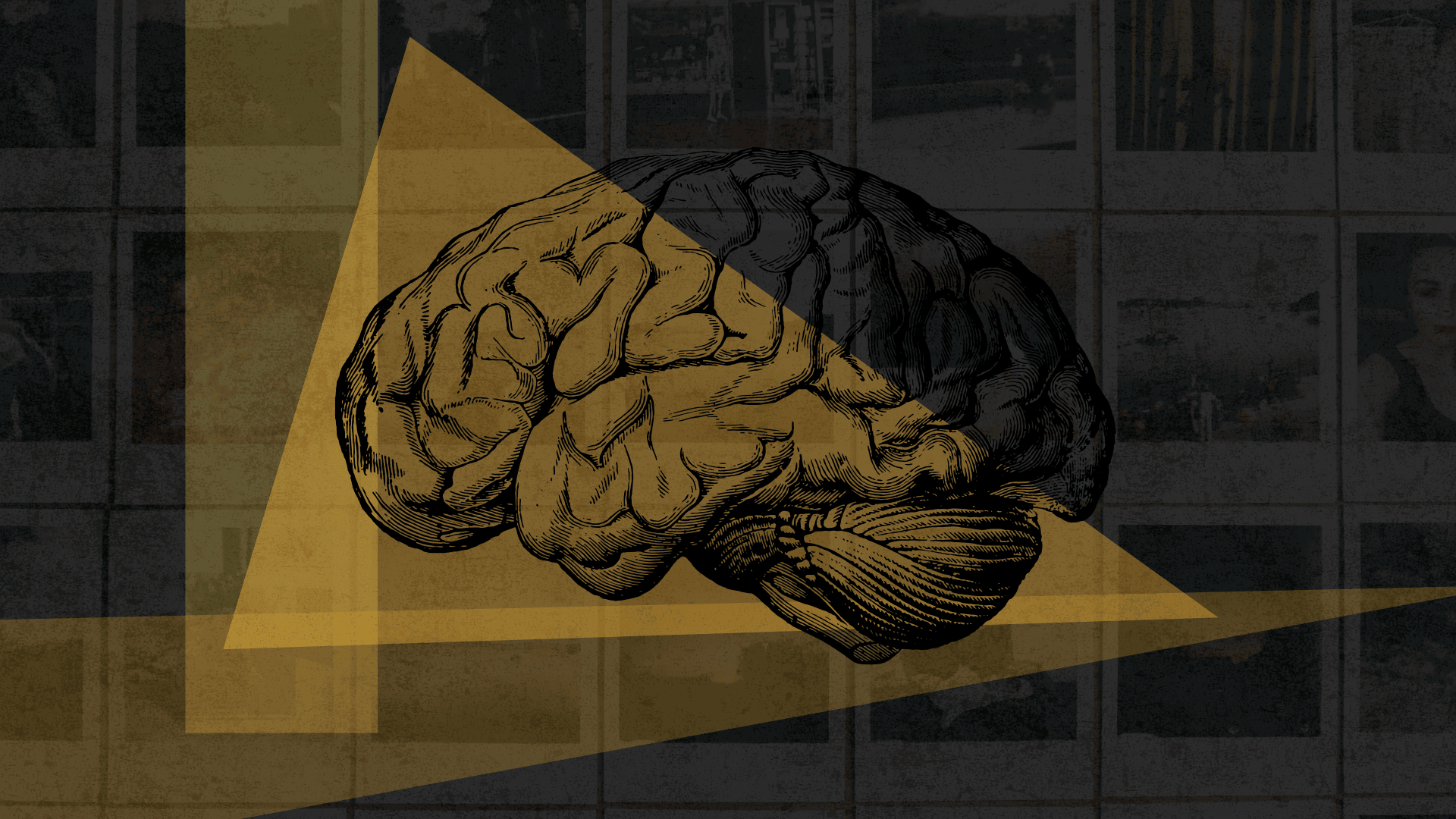


 Zoom in: The most striking departure yet came Monday with the resignation of Army Secretary
  Zoom out: Hegseth has
  Between the lines: The cumulative effect is a thinner senior command at the precise moment the Iran war is testing the limits of what the U.S. military can sustain.



 Why it matters: We know social ties are good for our health. But unlike exercise or hydration, maintaining our relationships rarely makes it onto the daily wellness checklist.
 Jaimie Arona Krems, director of UCLA’s Center for
  Even if we understand the benefits, the challenge is often finding time. Dunn offers some suggestions that don’t require adding another dinner or weekend plan to an already packed calendar:
 Find your window. Learn when a friend tends to have a free pocket — during a commute, dog walk or dinner prep — and use it for a quick call. We’d all love more intimate, in-person time with our dearest people. But when that’s hard to come by, a quick connection still counts.
 Combine friendship with chores. Go to the grocery store together, or put a friend on speaker while you fold laundry or tackle your Sunday cleaning.
 Bring back the chatty email. Maybe you’d appreciate the modern-day pen pal. Drop a line!
 Remember the follow-up. If a friend tells you about a doctor’s appointment, big interview or family problem, check back in afterward.