During our planet’s latest and seemingly interminable revolution around the Sun, the tech industry’s obsession with AI soared to ever more implausible heights. CEOs began openly gloating about replacing their underlings with AI “agents.” The phenomenon of so-called AI psychosis became a national news story as more people were seemingly driven over the edge by their silver-tongued chatbot companions. “Slop” took on a new meaning. And the word “circular” suddenly started being used a whole lot in the same sentence as “billions of dollars” or even “hundreds of billions of dollars.”
Will 2026 finally deliver us from this endless cavalcade of large language model madness? Not likely, according to computer scientist and “godfather” of AI Geoffrey Hinton. AI will only continue to improve next year, he predicts, reaching a point where it will liberate us from all our horrible low-paying jobs.
“I think we’re going to see AI get even better,” Hinton said during an interview on CNN’s State of the Union on Sunday. “It’s already extremely good. We’re going to see it having the capabilities to replace many, many jobs. It’s already able to replace jobs in call centers, but it’s going to be able to replace many other jobs.”
Hinton was one of three recipients of the prestigious Turing Award in 2018 for his work on neural networks that formed the bedrock of modern AI, earning him the moniker of being a “godfather” of the field.
In 2023, Hinton declared that he regretted his life’s work after stepping down from his role at Google, where he had been for over a decade. Since then, he’s become one of the tech’s most prominent doomsayers.
During the CNN interview, Hinton was asked whether he was more or less worried about AI since making that now infamous declaration.
“I’m probably more worried,” Hinton replied. “It’s progressed even faster than I thought. In particular, it’s got better at doing things like reasoning and also at things like deceiving people.”
AI is progressing so quickly, according to Hinton, that around every seven months it can complete tasks that took twice as long before.He predicted that it’s only a matter of years until an AI will effortlessly perform software engineering tasks that take a human a month to complete.
“And then there’ll be very few people need for software engineering projects,” Hinton added.
Hinton made similarly gloomy predictions in a talk with Senator Bernie Sanders last month, saying that tech leaders are “betting on AI replacing a lot of workers.”
It still remains to be seen, though, if AI will actually make those strides. Many efforts to replace workers with semi-autonomous AI models have failed, while some new models, like OpenAI’s GPT-5, showed only lackluster improvements.
I’m a tech and science correspondent for Futurism, where I’m particularly interested in astrophysics, the business and ethics of artificial intelligence and automation, and the environment.
"What Israel has been up against is not just a people of death, but a cult of death which wishes to annihilate an entire race. And which after dealing with that race, has made very clear what it wants to do with Christians." pic.twitter.com/DfZf1Fh0uK
ENTERPRISE AI Agents in 2025: Breakthrough or overhyped?
It’s clear that 2025 was the year tech companies became obsessed with humans doing less. Practically every big tech firm went crazy over AI agents last year. The constant refrain at major conferences was agentic innovation, as these firms repeatedly touted the astonishing productivity gains that could result from installing digital coworkers alongside existing human workforces.
The big takeaway? We’ve built foundational models with formidable intelligence. Agents let us actually do something with them, Steve Zisk, principal data strategist for Redpoint Global, told The Deep View. “We’re finally at a point where the AI pattern recognition engines, if you will, start to actually resemble what people think of as human interactions,” said Zisk. “That has meant that a lot of people on both sides of the equation, the consumers, the big brands, big companies and so on, are reassessing what they can actually hand off to the machine.”Agents are the natural evolution of where AI and technology broadly are going, Prasidh Srikanth, senior director of product management at Palo Alto Networks, told me. Search engines democratized information, chatbots democratized intelligence, and now agents democratize work, he said. “It’s behaving on behalf of a human being, thinking about our intelligence and actually making sense of what you need to do to fulfill an objective,” Srikanth said.
But despite all the buzz, anticipation and starry-eyed hopes, agents are far from ready to be our actual work companions, Neil Dhar, global managing partner at IBM Consulting, told me. As it stands, we’re still in the “first or second inning of the whole agent race,” he said. And while enterprises are aware that agents have the potential to upend the way we work, “people are just getting in tune with what an agent actually is.”
The Rundown: Elon Musk said on X that Neuralink aims for “high-volume production” of its brain implants and automated neurosurgery this year — pushing brain-computer interfaces out of bespoke experiments and into scalable medicine.
The details:
Neuralink says about a dozen severely paralyzed patients now use its implant to control a computer cursor and play games using only their thoughts.The first wave of applications targets people with serious neurological disorders, helping them communicate and manage daily tasks. Musk said the device’s threads will pass through the dura — the protective membrane around the brain — without surgeons needing to remove it. Neuralink still needs to clear clinical trials and secure full FDA approval before it can move from tightly controlled experiments to routine medical use in the U.S.
Why it matters:Musk has previously talked about scaling to more than a thousand patients by 2026, backed by a hiring spree. If he can pull that off ahead of rivals like Synchron and Precision Neuroscience, the company will be first to test whether BCIs can move from a medical moonshot to something closer to a commercial product.
ELON MUSK: "I came to realize that really there's two choices here, either be a spectator or or a participant. And if I'm a spectator, I can't really influence the direction of AI, but if I'm a participant, I can try to influence the direction of AI and have a maximally true… pic.twitter.com/Hxj2d27LRE
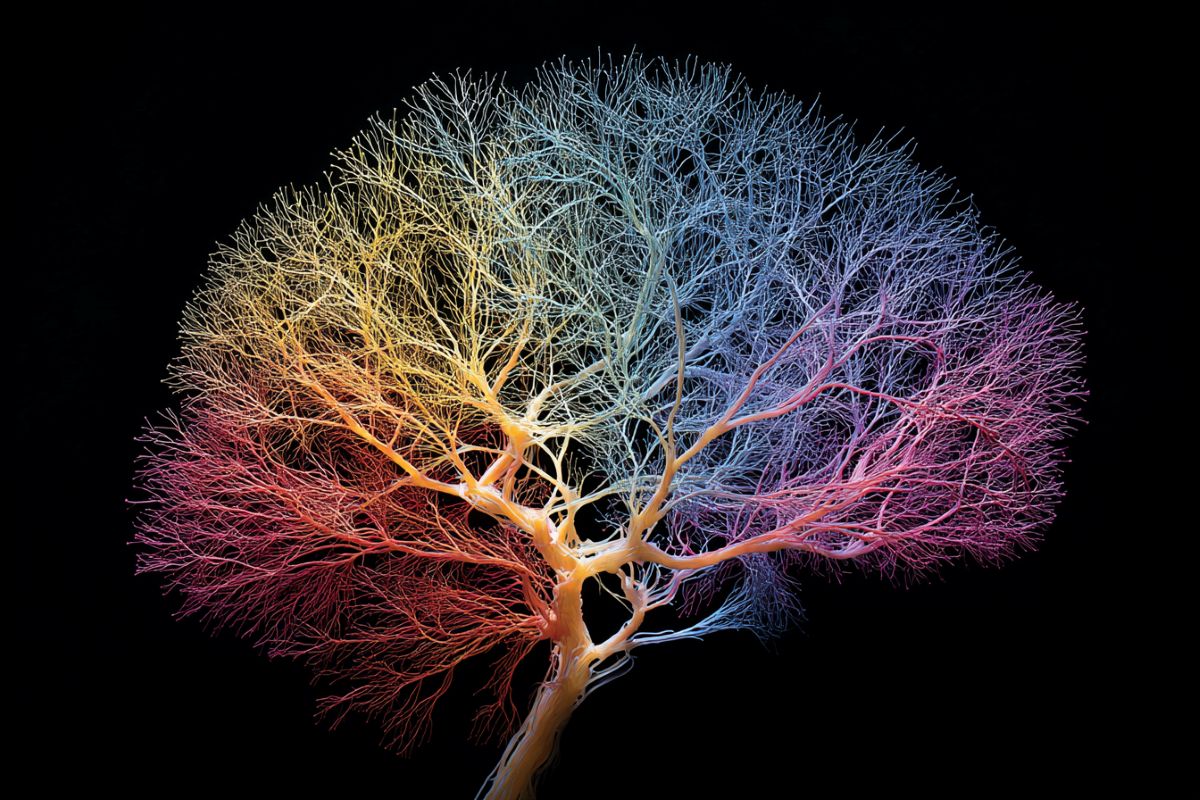
But the model also presented the researchers with a group of neurons—about 20 percent—whose activity appeared highly predictive of error. Credit: Neuroscience News
AI Brain Model Shows How Neurons Learn, and Where They Fail
Summary: A biologically grounded computational model built to mimic real neural circuits, not trained on animal data, learned a visual categorization task just as actual lab animals do, matching their accuracy, variability, and underlying neural rhythms. By integrating fine-scale synaptic rules with large-scale architecture across cortex, striatum, brainstem, and acetylcholine-modulated systems, the model reproduced hallmark patterns of learning, including strengthened beta-band synchrony between regions during correct decisions.
It also revealed a set of “incongruent neurons” that predicted errors, a signal researchers only recognized in their animal data after the model exposed it. This biomimetic platform provides a powerful blueprint for exploring disease-related circuit changes and testing therapeutic interventions in silico, offering a new path for developing next-generation neurotherapeutics.
Key Facts
Biology-First Design: The model embeds real neuronal connectivity rules, neurotransmitter dynamics, and multi-region architecture to replicate biological computation.
Emergent Realism: It produced learning behavior, beta synchrony, and decision patterns that matched lab animals—even without being trained on biological datasets.
Hidden Signals Exposed: The discovery of “incongruent neurons” reveals overlooked error-predictive activity present in real brains.
Source: Picower Institute at MIT
A new computational model of the brain based closely on its biology and physiology not only learned a simple visual category learning task exactly as well as lab animals, but even enabled the discovery of counterintuitive activity by a group of neurons that researchers working with animals to perform the same task had not noticed in their data before, said a team of scientists at Dartmouth College, MIT, and the State University of New York at Stony Brook.
Notably, the model produced these achievements without ever being trained on any data from animal experiments. Instead, it was built from scratch to faithfully represent how neurons connect into circuits and then communicate electrically and chemically across broader brain regions to produce cognition and behavior.
Then, when the research team asked the model to perform the same task that they had previously performed with the animals (looking at patterns of dots and deciding which of two broader categories they fit), it produced highly similar neural activity and behavioral results, acquiring the skill with almost exactly the same erratic progress.
“It’s just producing new simulated plots of brain activity that then only afterward are being compared to the lab animals. The fact that they match up as strikingly as they do is kind of shocking,” said Richard Granger, a professor of Psychological and Brain Sciences at Dartmouth and senior author of a new study in Nature Communications that describes the model.
A goal in making the model, and newer iterations developed since the paper was written, is not only to offer insight into how the brain works, but also how it might work differently in disease and what interventions could correct those aberrations, added co-author Earl K. Miller, Picower Professor in The Picower Institute for Learning and Memory at MIT.
Miller, Granger, and other members of the research team have founded the company Neuroblox.ai to develop the models’ biotech applications. Co-author Lilianne R. Mujica-Parodi, a biomedical engineering professor at Stony Brook who is Lead Principal Investigator for the Neuroblox Project, is CEO of the company.
“The idea is to make a platform for biomimetic modeling of the brain so you can have a more efficient way of discovering, developing and improving neurotherapeutics. Drug development and efficacy testing, for example, can happen earlier in the process, on our platform, before the risk and expense of clinical trials.” said Miller, who is also a faculty member of MIT’s Brain and Cognitive Sciences department.
Making a biomimetic model
Dartmouth postdoc Anand Pathak created the model, which differs from many others in that it incorporates both small details, such as how individual pairs of neurons connect with each other, and large-scale architecture, including how information processing across regions is affected by neuromodulatory chemicals such as acetylcholine.
Pathak and the team iterated their designs to ensure they obeyed various constraints observed in real brains, such as how neurons become synchronized by broader rhythms. Many other models focus only on the small or big scales but not both, he said.
“We didn’t want to lose the tree, and we didn’t want to lose the forest,” Pathak said.
The metaphorical “trees,” called “primitives” in the study, are small circuits of a few neurons each that connect based on electrical and chemical principles of real cells to perform fundamental computational functions.
For example, within the model’s version of the brain’s cortex, one primitive design has excitatory neurons that receive input from the visual system via synapse connections affected by the neurotransmitter glutamate.
Those excitatory neurons then densely connect with inhibitory neurons in a competition to signal them to shut down the other excitatory neurons—a “winner takes all” architecture found in real brains that regulates information processing.
At a larger scale, the model encompasses four brain regions needed for basic learning and memory tasks: a cortex, a brainstem, a striatum and a “tonically active neuron” (TAN) structure that can inject a little “noise” into the system via bursts of aceytlcholine.
For instance, as the model engaged in the task of categorizing the presented patterns of dots, the TAN at first ensured some variability in how the model acted on the visual input so that the model could learn by exploring varied actions and their outcomes.
As the model continued to learn, cortex and striatum circuits strengthened connections that suppressed the TAN, enabling the model to act on what it was learning with increasing consistency.
As the model engaged in the learning task, real-world properties emerged including a dynamic that Miller has commonly observed in his research with animals. As learning progressed, the cortex and striatum became more synchronized in the “beta” frequency band of brain rhythms, and this increased synchrony correlated with times when the model (and the animals) made the correct category judgement about what they were seeing.
Revealing ‘incongruent’ neurons
But the model also presented the researchers with a group of neurons—about 20 percent—whose activity appeared highly predictive of error. When these so-called “incongruent” neurons influenced circuits, the model would make the wrong category judgement. At first, Granger said, the team figured it was a quirk of the model. But then they looked at the real-brain data Miller’s lab accumulated when animals performed the same task.
“Only then did we go back to the data we already had, sure that this couldn’t be in there because somebody would have said something about it, but it was in there and it just had never been noticed or analyzed,” he said.
Miller said these counterintuitive cells might serve a purpose: It’s all well and good to learn the rules of a task but what if the rules change? Trying out alternatives from time to time can enable a brain to stumble upon a newly emerging set of conditions. Indeed, a separate Picower Institute lab recently published evidence that humans and other animals do this sometimes.
While the model described in the new paper performed beyond the team’s expectations, Granger said, the team has been expanding it to make it sophisticated enough to handle a greater variety of tasks and circumstances. For instance, they have added more regions and new neuromodulatory chemicals. They’ve also begun to test how interventions such as drugs affect its dynamics.
In addition to Granger, Miller, Pathak and Mujica-Parodi, the paper’s other authors are Scott Brincat, Haris Organtzidis, Helmut Strey, and Evan Antzoulatos.
Funding: The Baszucki Brain Research Fund, United States, the Office of Naval Research, and the Freedom Together Foundation provided support for the research.
Key Questions Answered:
Q: How closely did the biomimetic model match real animal behavior?
A: It learned the visual category task with nearly identical patterns of progress, neural activity, and learning dynamics—even without training on biological data.
Q: What surprising neural pattern did the model uncover?
A: It revealed a population of “incongruent neurons” that predicted errors. When researchers checked old animal data, the same pattern was present but had gone unnoticed.
Q: Why does this model matter for neuroscience and therapeutics?
A: It offers a platform for probing brain computation, simulating disease states, and testing neurotherapeutics before moving to risky and expensive trials.
Editorial Notes:
This article was edited by a Neuroscience News editor.
Journal paper reviewed in full.
Additional context added by our staff.
About this AI, learning, and neuroscience research news
Author: David Orenstein Source:Picower Institute at MIT Contact: David Orenstein – Picower Institute at MIT Image: The image is credited to Neuroscience News
As a kid growing up in South Africa, Elon knew pain and learned how to survive it. When he was 12, he was taken by bus to a wilderness survival camp, known as a ‘veldskool’. The kids were each given small rations of food and water, and they were allowed—indeed encouraged—to fight over them. “Bullying was considered a virtue,” his younger brother Kimbal says. Elon, who was small and emotionally awkward, got beaten up twice. He would end up losing ten pounds. Near the end of the first week, the boys were divided into two groups and told to attack each other. “It was so insane, mind-blowing,” Musk recalls. Every few years, one of the kids would die. The counselors would recount such stories as warnings. “Don’t be stupid like that dumb fxck who died last year,” they would say. “Don’t be the weak dumb fxck.”
In decades past, as the effects of climate change slowly became undeniable, some looked to the super-rich — the billionaires with enough cash to really make a splash — for solutions.
By the early 2020s, billionaires had positioned themselves as the masters of climate change policy, taking advantage of their great fortunes to become indispensable to environmentalism.
Now, however, many of those same billionaires are pulling support at an alarming rate. And Bill Gates — Microsoft founder, sixth richest man in the world, and alleged sex pest — is the latest among them.
New reporting by Heatmap is signaling the end of a “major chapter in climate giving,” as Breakthrough Energy — Gates’ climate change nonprofit — has locked the doors on its policy and advocacy office, laying off dozens of employees throughout Europe and the US.
Breakthrough’s lobbying was central to advancing climate policy through legislation championed by the Biden administration, including the Inflation Reduction Act, the CHIPS Act, and the bipartisan Infrastructure Law.
Though the billionaire’s for-profit green energy investments at companies like Arnergy and Mission Zero Technologies remain in place, Breakthrough’s belt-tightening will very likely end the nonprofit’s grant writing efforts. That’s a major blow to climate nonprofits, and further evidence that, for all their feel-good bluster, the mega-rich never forget their bottom line.
Ever since billionaire real estate mogul Donald Trump won his second presidential election, tech barons like Mark Zuckerberg, Jeff Bezos, Sundar Pichai, and of course Elon Musk have made no bones about shedding their progressive skin and embracing the new administration.
Gates, too, is cozying up to the returning president. In early January, the Microsoft founder spent three hours dining with his fellow billionaire, telling the Wall Street Journal he was “frankly impressed” by Trump’s grasp on the issues dear to him.
Though many no doubt feel betrayed by what seems like a sudden rightward turn, billionaires like Gates have always behaved like wolves in sheep’s clothing, prioritizing their fortunes above all.
For example, Gates was heavily involved in establishing the Global Fund, a privately-funded rival to the World Health Organization. While the Global Fund did improve global vaccination rates, the cost of basic medicines skyrocketed thanks to his introduction of for-profit actors into global health efforts — another sector made to rely on the generosity of billionaires.
I’m a tech and transit correspondent for Futurism, where my beat includes transportation, infrastructure, and the role of emerging technologies in governance, surveillance, and labor.




 Image source: Ideogram / The Rundown